• FluTrackers.com Inc. does not provide medical advice. Information on this web site is collected from various internet resources, and the FluTrackers board of directors makes no warranty to the safety, efficacy, correctness or completeness of the information posted on this site by any author or poster. The information collated here is for instructional and/or discussion purposes only and is NOT intended to diagnose or treat any disease, illness, or other medical condition. Every individual reader or poster should seek advice from their personal physician/healthcare practitioner before considering or using any interventions that are discussed on this website. By continuing to access this website you agree to consult your personal physican before using any interventions posted on this website, and you agree to hold harmless FluTrackers.com Inc., the board of directors, the members, and all authors and posters for any effects from use of any medication, supplement, vitamin or other substance, device, intervention, etc. mentioned in posts on this website, or other internet venues referenced in posts on this website.
  • We are not asking for any donations. Do not donate to any entity who says they are raising funds for us.

South Sudan - Africa CDC Supports South Sudan in Investigating and Responding to Suspected Viral Haemorrhagic Fever Outbreak - measles, malaria confir

alert

Senior Moderator
https://promedmail.org/promed-post/?id=8711087

Published Date: 2023-07-11 20:07:22 EDT
Subject: PRO/AH/EDR> Undiagnosed hemorrhagic fever - South Sudan: RFI
Archive Number: 20230712.8711087

UNDIAGNOSED HEMORRHAGIC FEVER - SOUTH SUDAN: REQUEST FOR INFORMATION
************************************************** ******************
A ProMED-mail post
http://www.promedmail.org
ProMED-mail is a program of the
International Society for Infectious Diseases
http://www.isid.org

Date: Tues 11 Jul 2023
Source: an entity known to ProMED


ProMED received the following information from a reliable source:

Two potential hemorrhagic fever clusters were reported in South Sudan on or around 30 Jun 2023.

--
Communicated by:
ProMED

[No additional information was received on symptoms other than hemorrhage nor on details such as age and sex of those affected, date and specific location of occurrence, or outcome of the infections. One hopes that additional information will be forthcoming from knowledgeable sources. - Mod.TY​
 
WEEKLY BULLETIN ON OUTBREAKS
AND OTHER EMERGENCIES

Week 29: 17 - 23 July 2023
Data as reported by: 17:00; 23 July 2023

...

All events currently being monitored by WHO AFRO
...

South Sudan

Unknown disease


Grade Ungraded
Date notified to WCO 17-Jul-23
Start of reporting period 18-Jul-23
End of reporting period 18-Jul-23

Total cases 359
Cases Confirmed
Deaths 19
CFR 5.30%


On 16 June 2023, an alert of deaths of an unknown disease was raised by health partners conducting supportive supervision in Darjo, Longechuk County, Upper Nile State in South Sudan. Cases reportedly presented with vomiting blood, bloody diarrhoea, sore throat, red eyes, running nose, blurry vision, cough, and itching. As of 18 July 2023, a total of 359 cases with 19 deaths (CFR 5.3%) have been reported. Of 45 samples collected from the case patients, 13 have been tested for viral hemorrhagic fevers (VHFs), malaria, measles, and shigellosis, while the rest are being processed. All tested samples are negative for VHFs, 10 are positive for malaria, and six for measles and shigellosis, respectively. Further analysis and investigation are ongoing.

https://apps.who.int/iris/bitstream/handle/10665/371956/OEW29-1723072023.pdf​
 
Africa CDC Supports South Sudan in Investigating and Responding to Suspected Viral Haemorrhagic Fever Outbreak

3 August 2023
...

20230725_112408-1024x517.jpg


The Africa Centres for Disease Control and Prevention (Africa CDC) is working closely with the Ministry of Health in the Republic of South Sudan to manage a suspected disease outbreak, exhibiting symptoms similar to those of Viral Haemorrhagic Fever (VHF) in the remote areas of Dukubela, Pacime, and Dajo areas of Longechuck County, Upper Nile State.

The outbreak was initially reported on June 16, 2023 by the Nile Initiative Development Organization (NIDO) during a supervisory visit to Dajo Primary Health Care Unit. NIDO found that the disease seemed to have originated from Dukubela, a mountainous area of Longechuk county that borders the Southern Blue Nile in Sudan and Assosa areas in Ethiopia. This area has recently seen an influx of returning residents and refugees from the ongoing conflict in Sudan.

The Africa CDC deployed technical experts to support the Ministry of Health in conducting a comprehensive risk assessment, support the development of a comprehensive national response plan, and strengthen capacity in coordination, surveillance, laboratory operations and risk communication and community engagement (RCCE).

Symptoms observed in the affected individuals include high fever, bloody vomiting and stool, rash, cough, sore throat, red eyes, runny nose, blurred vision, and generalized weakness. NIDO reported that the disease had affected approximately 150 people, resulting in 23 deaths. These deaths occurred within three days of the onset of the disease. However, those who survived past the initial five days showed signs of improvement.

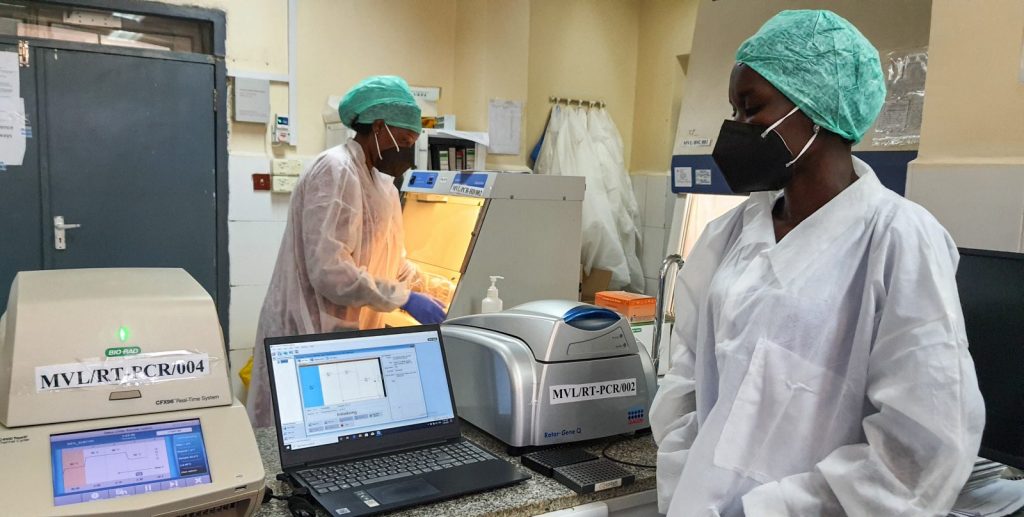
In response to the health crisis, the Ministry of Health, alongside the World Health Organization, swiftly dispatched a multidisciplinary Rapid Response Team to Longechuk. This team delivered medical supplies, carried out disease-specific consultations and conducted active case finding in the Dajo & Pacime communities.

After a thorough field investigation, the Rapid Response Team line-listed 227 suspected cases and 29 related deaths. Laboratory tests for 45 samples confirmed cases of malaria and measles, with 71% of samples testing positive for malaria, 58% for measles and a co-infection rate of 45%. Despite that all the 45 samples tested negative for viral haemorrhagic fevers, ruling it out as a potential source of the outbreak, health authorities remain on high alert by maintaining surveillance measures in place to promptly identify and respond to any disease threat.

“Our strategy includes escalating preparedness and response activities, intensifying cross-border collaboration for improved surveillance and information sharing, and rolling out an integrated campaign for Measles vaccination and Malaria control in Longechuck County and surrounding areas. We are appealing to our partners, including Africa CDC, to strengthen our laboratory capacity, particularly in pathogen genomic sequencing for timely detection of diseases threat,” said Hon. Dr. Ader Macar Aciek, Undersecretary, Ministry of Health.

Longechuck is a remote location bordering Ethiopia and Sudan, and the difficult terrain, particularly in Pacime, poses unique challenges to managing this health crisis. Residents face a challenging nine-hour walk to the nearest healthcare facility in Dajo. The influx of returnees and refugees further strains the existing scarce medical resources in the area.

Communication infrastructure like phones and the Internet are unavailable in the area, leaving the only feasible means of communication as satellite phones. Despite these hurdles, an integrated response plan is underway.

Africa CDC is working closely with the Ministry of Health to identify priority areas of intervention with greater impact. Ongoing initiatives include coordinating emergency response systems at national and sub-national levels, procuring lab equipment and supplies, and boosting laboratory capabilities for efficient sample handling. Communications are underway between the Ministry of Health and Africa CDC’s technical team to explore the possibility of institutionalizing sequencing capacities in the Republic of South Sudan.

In these difficult circumstances, the coordinated efforts of the Ministry of Health, Africa CDC, and partners aim to alleviate the current emergency and strengthen healthcare systems to manage future disease outbreaks better.

For more information, please contact:

Mathew Tut M. Kol, PHEOC Operations Officer – Emergency Preparedness and Response; Africa CDC |Tel: +251974324423 | Email: mathewk@africa-union.org

Sheila Mwebaze, Risk Communication and Community Engagement Officer – Policy, Health Diplomacy & Communication; Africa CDC | Tel: +256 785854385 | Email: mwebazes@africa-union.org

https://africacdc.org/news-item/afr...-suspected-viral-haemorrhagic-fever-outbreak/

 
WHO: Responding to a Suspected Viral Hemorrhagic Fever Outbreak in Remote Dajo: Lessons and Triumphs (16 October 2023)

Source: https://www.afro.who.int/countries/...ver-outbreak-remote-dajo-lessons-and-triumphs


WHO Africa CountriesSouth SudanNews

Responding to a Suspected Viral Hemorrhagic Fever Outbreak in Remote Dajo: Lessons and Triumphs
16 October 2023

In the wake of a concerning development, authorities in Longochuk County, Upper Nile State, reported a series of fatalities on May 15th, 2023, believed to be linked to a suspected viral hemorrhagic fever outbreak in the secluded villages of Dajo and Pacime. Patients displayed concerning symptoms, including fever, headache, and diarrhea, with many cases reported among children.

Swift Action in Challenging Conditions
Despite the challenges posed by the location's isolation, limited healthcare infrastructure, and poor road infrastructures, responders acted swiftly, employing a multi-pronged approach that included leadership and coordination, rigorous surveillance, meticulous contact tracing, and effective risk communication.

The World Health Organization (WHO) dispatched a multidisciplinary team comprising clinicians, nurses, and public health experts to investigate the suspected viral hemorrhagic fever (VHF) outbreak and augment surveillance measures in Longochuk County. Their concerted efforts gathered 45 patient samples and conducted tests at the National Public Health Laboratory in Juba, with 26.58% of the samples testing positive for Measles and 32.71% for Malaria.

A Lifeline in a Crisis
Moreover, WHO delivered 42 essential health emergency kits, including vital supplies such as Malaria rapid diagnostic test kits, Inter-Agency Emergency Health kits, sample collection and transportation kits, cholera investigation and treatment kits, and pneumonia kits; these provisions were estimated to cater to the immediate needs of up to 10 000 people over the ensuing three months.

WHO also coordinated an integrated mass vaccination campaign aimed at providing vital protection against communicable diseases, and over a remarkable [Number of People Reached] individuals received urgently required healthcare services during the initial response.

A Grueling Journey to Save Lives
Despite formidable challenges posed by Dajo's isolated location compounded by severe flooding, responders heroically embarked on a grueling 20-hour journey on foot through treacherous terrain to reach the remote village.

Logistics and Adaptability
To mitigate some of these challenges, WHO employed helicopters to facilitate the team's deployment and expedite the delivery of crucial medical supplies, contributing to collective immunity and safeguarding the community, particularly children, from infectious diseases. This experience underscores the necessity of logistical preparedness, an integrated approach, rapid diagnosis, and adaptability of responders when facing adversity.

A Remarkable Testament to the Human Spirit
The resilience and dedication of healthcare workers and organizations working in the most challenging and remote environments offer an inspiring testament to the human spirit's remarkable capacity to overcome even the most daunting obstacles. In the face of adversity, their hard work and commitment serve as a beacon of hope and a reminder of the incredible impact that can be achieved through determined, coordinated efforts to save lives and preserve the health of communities in need.

This response was made possible through generous funding from the U.S. Agency for International Development (USAID)’s Bureau for Humanitarian Assistance.

 
Back
Top