
• FluTrackers.com Inc. does not provide medical advice. Information on this web site is collected from various internet resources, and the FluTrackers board of directors makes no warranty to the safety, efficacy, correctness or completeness of the information posted on this site by any author or poster. The information collated here is for instructional and/or discussion purposes only and is NOT intended to diagnose or treat any disease, illness, or other medical condition. Every individual reader or poster should seek advice from their personal physician/healthcare practitioner before considering or using any interventions that are discussed on this website. By continuing to access this website you agree to consult your personal physican before using any interventions posted on this website, and you agree to hold harmless FluTrackers.com Inc., the board of directors, the members, and all authors and posters for any effects from use of any medication, supplement, vitamin or other substance, device, intervention, etc. mentioned in posts on this website, or other internet venues referenced in posts on this website.
  • We are not asking for any donations. Do not donate to any entity who says they are raising funds for us.

South Africa - H5, H5N1 avian flu in wild birds - 2024-2026

Lance

MPH, CSP & CIT Retired, CHMM Emeritus
South Africa - Influenza A viruses of high pathogenicity (Inf. with) (non-poultry including wild birds) (2017-) - Follow up report 13


GENERAL INFORMATION

COUNTRY/TERRITORY OR ZONE
ZONE

ANIMAL TYPE
TERRESTRIAL

DISEASE CATEGORY
Listed disease

EVENT ID
5034

DISEASE
Influenza A viruses of high pathogenicity (Inf. with) (non-poultry including wild birds) (2017-)

CAUSAL AGENT
Highly pathogenic avian influenza virus

GENOTYPE / SEROTYPE / SUBTYPE
Untyped or partially typed

START DATE
2023/03/08

REASON FOR NOTIFICATION
Recurrence of an eradicated disease

DATE OF LAST OCCURRENCE
2023/02/27

CONFIRMATION DATE
2023/04/25

EVENT STATUS
On-going

END DATE - SELF-DECLARATION

NO REPORT INFORMATION

REPORT NUMBER
Follow-up report 13

REPORT ID
FUR_164758

REPORT REFERENCE
HPAI_H5_W_2023_FU13

REPORT DATE
2024/01/03

REPORT STATUS
Validated

NO EVOLUTION REPORT

EPIDEMIOLOGY

SOURCE OF EVENT OR ORIGIN OF INFECTION
  • Unknown or inconclusive
EPIDEMIOLOGICAL COMMENTS
Coordinates modified to protect confidentiality as required by South African Legislation. H5 has been identified, N identification is ongoing.

QUANTITATIVE DATA SUMMARY

MEASURING UNIT
Animal

SpeciesSusceptibleCasesDeathsKilled and Disposed ofSlaughtered/ Killed for commercial useVaccinated Wildlife (species unspecified) (WILD)NEW------TOTAL-182000 Egyptian Goose (WILD)NEW------TOTAL-10100 Gray Crowned-Crane (WILD)NEW------TOTAL-4040000 Birds (DOMESTIC)NEW722500TOTAL63124500 Rock Pigeon (Rock Dove) (WILD)NEW------TOTAL1204040000 Pied crow (WILD)NEW------TOTAL-11000 Kelp Gull (WILD)NEW------TOTAL-31200 Cape cormorant (WILD)NEW------TOTAL-30300 Jackass Penguin (WILD)NEW------TOTAL-32000 Common Tern (WILD)NEW------TOTAL-72500 Swift tern (WILD)NEW------TOTAL-127500 All speciesNEW722500TOTAL183140992100

DIAGNOSTIC DETAILS

CLINICAL SIGNS
YES

METHOD OF DIAGNOSTIC
Clinical, Diagnostic test
Reverse transcription-polymerase chain reaction (RT-PCR)Onderstepoort Veterinary Institute (OVI)Wildlife (species unspecified)12023/04/252023/04/25Positive

https://wahis.woah.org/#/in-review/5034
 
South Africa - Influenza A viruses of high pathogenicity (Inf. with) (non-poultry including wild birds) (2017-) - Follow up report 14


GENERAL INFORMATION

COUNTRY/TERRITORY OR ZONE
ZONE

ANIMAL TYPE
TERRESTRIAL

DISEASE CATEGORY
Listed disease

EVENT ID
5034

DISEASE
Influenza A viruses of high pathogenicity (Inf. with) (non-poultry including wild birds) (2017-)

CAUSAL AGENT
Highly pathogenic avian influenza virus

GENOTYPE / SEROTYPE / SUBTYPE
Untyped or partially typed

START DATE
2023/03/08

REASON FOR NOTIFICATION
Recurrence of an eradicated disease

DATE OF LAST OCCURRENCE
2023/02/27

CONFIRMATION DATE
2023/04/25

EVENT STATUS
On-going

END DATE - SELF-DECLARATION

NO REPORT INFORMATION

REPORT NUMBER
Follow-up report 14

REPORT ID
FUR_165173

REPORT REFERENCE
HPAI_H5_W_2023_FU14

REPORT DATE
2024/01/22

REPORT STATUS
Validated

NO EVOLUTION REPORT

EPIDEMIOLOGY

SOURCE OF EVENT OR ORIGIN OF INFECTION
  • Unknown or inconclusive
EPIDEMIOLOGICAL COMMENTS
Coordinates modified to protect confidentiality as required by South African Legislation. H5 has been identified, N identification is ongoing.

QUANTITATIVE DATA SUMMARY

MEASURING UNIT
Animal

SpeciesSusceptibleCasesDeathsKilled and Disposed ofSlaughtered/ Killed for commercial useVaccinated Wildlife (species unspecified) (WILD)NEW------TOTAL-182000 Egyptian Goose (WILD)NEW------TOTAL-10100 Gray Crowned-Crane (WILD)NEW------TOTAL-4040000 Birds (DOMESTIC)NEW------TOTAL63124500 Rock Pigeon (Rock Dove) (WILD)NEW------TOTAL1204040000 Pied crow (WILD)NEW------TOTAL-11000 Kelp Gull (WILD)NEW------TOTAL-31200 Cape cormorant (WILD)NEW------TOTAL-30300 Jackass Penguin (WILD)NEW270022000TOTAL270054000 Common Tern (WILD)NEW------TOTAL-72500 Swift tern (WILD)NEW------TOTAL-127500 All speciesNEW270022000TOTAL28831421012100

DIAGNOSTIC DETAILS

CLINICAL SIGNS
YES

METHOD OF DIAGNOSTIC
Clinical, Diagnostic test
Reverse transcription-polymerase chain reaction (RT-PCR)Onderstepoort Veterinary Institute (OVI)Wildlife (species unspecified)12023/04/252023/04/25Positive
https://wahis.woah.org/#/in-review/5034
 
South Africa - Influenza A viruses of high pathogenicity (Inf. with) (non-poultry including wild birds) (2017-) - Follow up report 15


GENERAL INFORMATION

COUNTRY/TERRITORY OR ZONE
ZONE

ANIMAL TYPE
TERRESTRIAL

DISEASE CATEGORY
Listed disease

EVENT ID
5034

DISEASE
Influenza A viruses of high pathogenicity (Inf. with) (non-poultry including wild birds) (2017-)

CAUSAL AGENT
Highly pathogenic avian influenza virus

GENOTYPE / SEROTYPE / SUBTYPE
Untyped or partially typed

START DATE
2023/03/08

REASON FOR NOTIFICATION
Recurrence of an eradicated disease

DATE OF LAST OCCURRENCE
2023/02/27

CONFIRMATION DATE
2023/04/25

EVENT STATUS
On-going

END DATE- SELF-DECLARATION

NO REPORT INFORMATION

REPORT NUMBER
Follow-up report 15

REPORT ID
FUR_166779

REPORT REFERENCE
HPAI_H5_W_2023_FU15

REPORT DATE
2024/04/04

REPORT STATUS
Validated

NO EVOLUTION REPORT

EPIDEMIOLOGY

SOURCE OF EVENT OR ORIGIN OF INFECTION
  • Unknown or inconclusive
EPIDEMIOLOGICAL COMMENTS
Coordinates modified to protect confidentiality as required by South African Legislation. H5 has been identified, N identification is ongoing.

QUANTITATIVE DATA SUMMARY

MEASURING UNIT
Animal

SpeciesSusceptibleCasesDeathsKilled and Disposed ofSlaughtered/ Killed for commercial useVaccinated Wildlife (species unspecified) (WILD)NEW------TOTAL-182000 Egyptian Goose (WILD)NEW------TOTAL-10100 Gray Crowned-Crane (WILD)NEW------TOTAL-4040000 Birds (DOMESTIC)NEW------TOTAL63124500 Rock Pigeon (Rock Dove) (WILD)NEW------TOTAL1204040000 Pied crow (WILD)NEW------TOTAL-11000 African black oystercatcher (WILD)NEW-10100TOTAL-10100 Kelp Gull (WILD)NEW------TOTAL-31200 Cape cormorant (WILD)NEW------TOTAL-30300 Jackass Penguin (WILD)NEW-106400TOTAL27001510400 Common Tern (WILD)NEW-11000TOTAL-83500 Swift tern (WILD)NEW-8172900TOTAL-93791400 All speciesNEW-93791400TOTAL28832351803500

DIAGNOSTIC DETAILS

CLINICAL SIGNS
YES

METHOD OF DIAGNOSTIC
Clinical, Diagnostic test
Reverse transcription-polymerase chain reaction (RT-PCR)Onderstepoort Veterinary Institute (OVI)Wildlife (species unspecified)12023/04/252023/04/25Positive
https://wahis.woah.org/#/in-review/5034
 
South Africa - Influenza A viruses of high pathogenicity (Inf. with) (non-poultry including wild birds) (2017-) - Follow up report 16


GENERAL INFORMATION

COUNTRY/TERRITORY OR ZONE
ZONE

ANIMAL TYPE
TERRESTRIAL

DISEASE CATEGORY
Listed disease

EVENT ID
5034

DISEASE
Influenza A viruses of high pathogenicity (Inf. with) (non-poultry including wild birds) (2017-)

CAUSAL AGENT
Highly pathogenic avian influenza virus

GENOTYPE / SEROTYPE / SUBTYPE
Untyped or partially typed

START DATE
2023/03/08

REASON FOR NOTIFICATION
Recurrence of an eradicated disease

DATE OF LAST OCCURRENCE
2023/02/27

CONFIRMATION DATE
2023/04/25

EVENT STATUS
On-going

END DATE- SELF-DECLARATION

NO REPORT INFORMATION

REPORT NUMBER
Follow-up report 16

REPORT ID
FUR_167484

REPORT REFERENCE
HPAI_H5_W_2023_FU16

REPORT DATE
2024/05/28

REPORT STATUS
Validated

NO EVOLUTION REPORT

EPIDEMIOLOGY

SOURCE OF EVENT OR ORIGIN OF INFECTION
  • Unknown or inconclusive
EPIDEMIOLOGICAL COMMENTS
Coordinates modified to protect confidentiality as required by South African Legislation. H5 has been identified, N identification is ongoing.

QUANTITATIVE DATA SUMMARY

MEASURING UNIT
Animal

SpeciesSusceptibleCasesDeathsKilled and Disposed ofSlaughtered/ Killed for commercial useVaccinated Wildlife (species unspecified) (WILD)NEW------TOTAL-182000 Egyptian Goose (WILD)NEW------TOTAL-10100 Gray Crowned-Crane (WILD)NEW------TOTAL-4040000 Birds (DOMESTIC)NEW------TOTAL63124500 Rock Pigeon (Rock Dove) (WILD)NEW------TOTAL1204040000 Pied crow (WILD)NEW------TOTAL-11000 African black oystercatcher (WILD)NEW------TOTAL-10100 Kelp Gull (WILD)NEW------TOTAL-31200 Cape cormorant (WILD)NEW------TOTAL-30300 Jackass Penguin (WILD)NEW------TOTAL27001510400 Common Tern (WILD)NEW------TOTAL-83500 Swift tern (WILD)NEW-10100TOTAL-94791500 All speciesNEW-10100TOTAL28832361803600

DIAGNOSTIC DETAILS

CLINICAL SIGNS
YES

METHOD OF DIAGNOSTIC
Clinical, Diagnostic test
Reverse transcription-polymerase chain reaction (RT-PCR)Onderstepoort Veterinary Institute (OVI)Wildlife (species unspecified)12023/04/252023/04/25Positive
https://wahis.woah.org/#/in-review/5034
 
image.png

/https://en.wikipedia.org/wiki/Western_Cape
-------------------------------------------------------------------------------------------
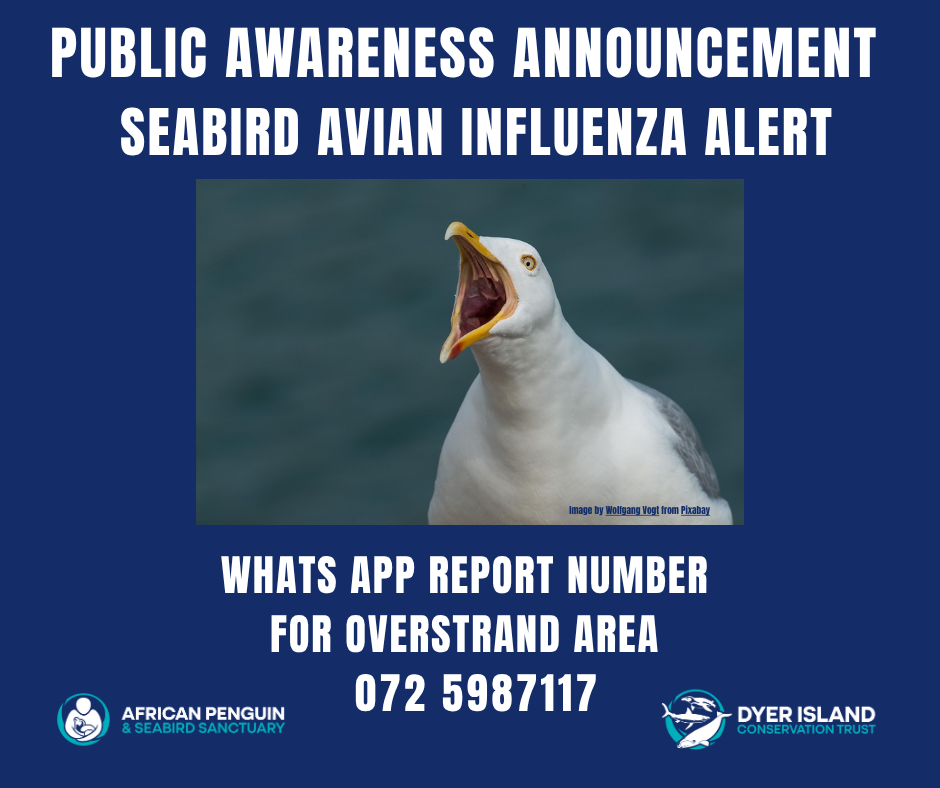
Alert: Avian Influenza (Bird Flu) detected in SEABIRDS


PUBLIC-AWARENESS-ALERT-2.png


The highly pathogenic H5 strain of Avian Influenza has once again been detected in seabirds along the Western Cape coastline.

Seabirds affected thus far during the current outbreak: Hartlaub’s Gulls near Cape Town and Great White Pelicans near Malmesbury. These are the first detections of HPAI in wild birds in the Western Cape since April 2024 and the first reports of mass mortalities since late 2022.

What to look out for:
Infected birds may display neurological symptoms such as head tremors, twitching, and loss of coordination. They may appear dazed, unbalanced, or unusually tame. Affected birds may struggle to breathe, lose the ability to fly, or be seen flapping weakly on land or in shallow water.

What you can do:
If you come across any sick or dead seabirds on the beach:
  • Do not touch the birds.
  • Take a photo or short video, if possible.
  • Note the location, number of birds, and species (if known).
  • Report the sighting via WhatsApp with a location pin: 072 598 7117 or Email: penguin@dict.org.za
Your report will help us monitor and manage the spread of this virus.

What is being done:
Seabird colonies and rehabilitation centres across the coastline are actively monitoring the situation. All necessary biosecurity and containment protocols have been implemented. Cross-sector collaboration is aiding further disease surveillance and research.

Can the disease be treated?
Unfortunately, there is no cure or treatment for Avian Influenza in wild birds. Culling or disturbing habitats is not effective and may worsen the situation.

How it spreads:
Avian Influenza spreads through direct contact between infected and healthy birds. The virus is found in the secretions from the mouth, nose, and eyes, and in the droppings of infected birds.

Risk to humans and pets:
The risk to humans is very low, but precaution is essential:
  • If you spot a seabird in trouble, contact the rescue line for advice.
  • Do not handle dead birds.
  • Keep pets, especially dogs, away from carcasses.
August 6th, 2025|

https://dict.org.za/blog/alert-avian-influenza-bird-flu-detected-in-seabirds/
 
Public urged to stay away from South Africa's coastline due to avian influenza outbreak

Weekend Argus Reporter | Published 54 minutes ago

Members of the public across South Africa are being urged to stay away from the coastline and avoid any contact with wildlife as a highly pathogenic strain of avian influenza continues to devastate wild bird populations along the Western Cape.
...
The scale of the crisis has prompted conservation bodies to scale up monitoring efforts, with experts warning that certain strains of the virus can cross the species barrier to infect humans. Although human infections remain rare, beachgoers are being advised to seek immediate medical advice if they develop flu-like symptoms following any potential exposure.

Dr Ashley Naidoo, the chief executive of CapeNature, stressed that seabirds act as critical indicators of the health of fragile marine and coastal ecosystems. He stated that by reporting suspected cases and rigorously following safety guidelines, the public can actively support conservation agencies in responding effectively while drastically reducing the health risks to both wildlife and people.
...
In alarming cases where multiple dead birds are discovered in close proximity, the public must immediately alert local stranding networks, the municipality, CapeNature, or SANParks by calling 083 236 2924 or emailing estuaries@capenature.co.za so that teams can be dispatched for safe bio-secure removal.
...

https://iol.co.za/weekend-argus/new...as-coastline-due-to-avian-influenza-outbreak/
 
Back
Top