Ronan Kelly
Retired 2020
Re: Somalia Health updates 2012
Re: Somalia Health updates 2012
Somalia Emergency Weekly Health Update
Reporting dates 28 July ? 3 August 2012
(reflecting Epidemiological week 30)
...
SITUATION OVERVIEW:
The number of suspected cholera cases is expected to remain relatively stable with the rains having reduced across
Somalia. Health facility visits are observed to have remained stable in most regions.This particular trend is expected
to be sustained over the next coming weeks.
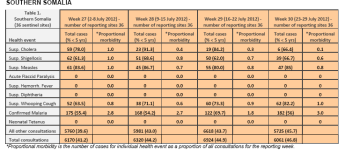
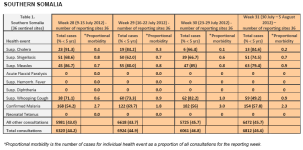
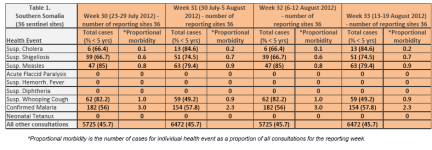
Continued decline in reported suspected cholera cases have been observed in South Zone where the number of
reported cases and the proportional morbidity have declined possibly due to an end of the rainy season along with
prevention activities. While the number of reported suspected shigellosis cases is higher, the trend is similar to
that of suspected cholera cases. However the trend in suspected whooping cough cases raises concerns while
suspected measles cases remain stable. Immunization coverage in the South Zone is low due to reduced access
and insecurity. Sixty percent of all confirmed malaria cases were reported from three districts namely Afgooye,
Baidoa and Kismayo. The reasons for the increase in reported confirmed malaria cases and proportional morbidity
are being investigated. In comparison to the month of June, in July the number of reported cases for suspected
cholera decreased by 84%, suspected measles by 6% and confirmed malaria by 45% (see chart below).
...
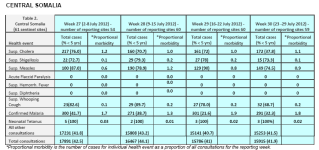
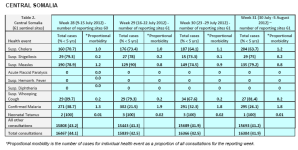
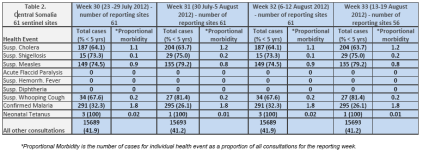
There was a 6.8% increase observed in reported suspected cholera cases in Central Zone, but a decrease seen
among children under the age of five. Adherence to surveillance case definition still remains a challenge. About
98.8% of the cases were reported from Banadir region which is densely populated with the internally displaced
persons (IDPs) moving into Mogadishu. Suspected shigellosis cases were reported from 11 of the 36 districts in
the Central Zone. High numbers of suspected measles cases continue to be reported. Huruwaa district in Banadir
region reported 67.8% of suspected shigellosis cases and suspected measles cases in week 30. Confirmed
malaria cases among children under the age of five increased in week 30 after steady decline since week 26.
Wadajir District accounted for 60% of the confirmed malaria cases reported in the zone. Central Zone continues to
report neonatal cases mainly from Wadajir district where the three cases were reported. This district has reported
at least one case since week 16, which may point to the low immunization coverage, poor cord care practices or
poor application of the case definition. In comparison to the month of June, in July the number of reported cases for
suspected cholera decreased by 38% and confirmed malaria by 15%. Suspected measles cases increased by 38%
...
...
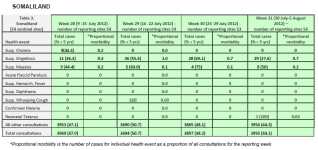
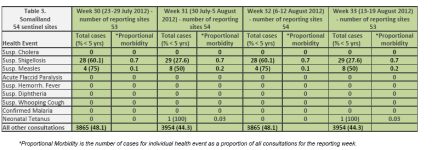
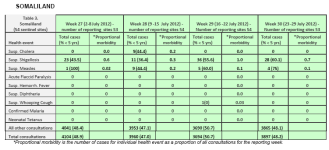
Somaliland reported cases of suspected shigellosis and suspected measles. Sixty-four percent of the suspected
shigellosis cases were reported from Borama Hospital in Borama District (seven cases after at least 6 weeks without
a reported case). Follow up of these cases is been undertaken. No suspected cholera cases have been reported for
two consecutive weeks, attributable to the success of the prevention campaign including hygiene promotion and
water chlorination that was undertaken by the Ministry of Health and health cluster partners.
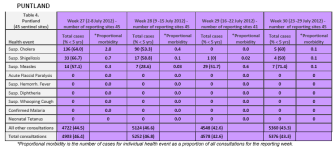
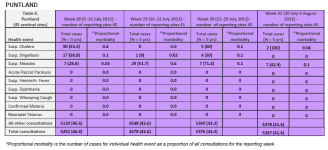
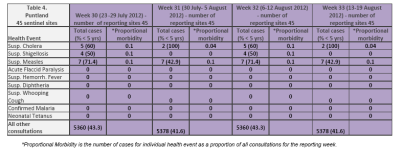
Reported cases of suspected cholera and suspected shigellosis have reduced. In week 30, only five suspected
cholera cases were reported from districts of Galdogob and Galkacyo. This reduction in cases is possibly attributed
to ongoing capacity building of health workers in communicable disease surveillance and response.
...
Re: Somalia Health updates 2012
Somalia Emergency Weekly Health Update
Reporting dates 28 July ? 3 August 2012
(reflecting Epidemiological week 30)
...
SITUATION OVERVIEW:
The number of suspected cholera cases is expected to remain relatively stable with the rains having reduced across
Somalia. Health facility visits are observed to have remained stable in most regions.This particular trend is expected
to be sustained over the next coming weeks.
Continued decline in reported suspected cholera cases have been observed in South Zone where the number of
reported cases and the proportional morbidity have declined possibly due to an end of the rainy season along with
prevention activities. While the number of reported suspected shigellosis cases is higher, the trend is similar to
that of suspected cholera cases. However the trend in suspected whooping cough cases raises concerns while
suspected measles cases remain stable. Immunization coverage in the South Zone is low due to reduced access
and insecurity. Sixty percent of all confirmed malaria cases were reported from three districts namely Afgooye,
Baidoa and Kismayo. The reasons for the increase in reported confirmed malaria cases and proportional morbidity
are being investigated. In comparison to the month of June, in July the number of reported cases for suspected
cholera decreased by 84%, suspected measles by 6% and confirmed malaria by 45% (see chart below).
...
There was a 6.8% increase observed in reported suspected cholera cases in Central Zone, but a decrease seen
among children under the age of five. Adherence to surveillance case definition still remains a challenge. About
98.8% of the cases were reported from Banadir region which is densely populated with the internally displaced
persons (IDPs) moving into Mogadishu. Suspected shigellosis cases were reported from 11 of the 36 districts in
the Central Zone. High numbers of suspected measles cases continue to be reported. Huruwaa district in Banadir
region reported 67.8% of suspected shigellosis cases and suspected measles cases in week 30. Confirmed
malaria cases among children under the age of five increased in week 30 after steady decline since week 26.
Wadajir District accounted for 60% of the confirmed malaria cases reported in the zone. Central Zone continues to
report neonatal cases mainly from Wadajir district where the three cases were reported. This district has reported
at least one case since week 16, which may point to the low immunization coverage, poor cord care practices or
poor application of the case definition. In comparison to the month of June, in July the number of reported cases for
suspected cholera decreased by 38% and confirmed malaria by 15%. Suspected measles cases increased by 38%
...
...
Somaliland reported cases of suspected shigellosis and suspected measles. Sixty-four percent of the suspected
shigellosis cases were reported from Borama Hospital in Borama District (seven cases after at least 6 weeks without
a reported case). Follow up of these cases is been undertaken. No suspected cholera cases have been reported for
two consecutive weeks, attributable to the success of the prevention campaign including hygiene promotion and
water chlorination that was undertaken by the Ministry of Health and health cluster partners.
Reported cases of suspected cholera and suspected shigellosis have reduced. In week 30, only five suspected
cholera cases were reported from districts of Galdogob and Galkacyo. This reduction in cases is possibly attributed
to ongoing capacity building of health workers in communicable disease surveillance and response.
...