

Pathfinder
Editor, Senior Moderator
Translation Google
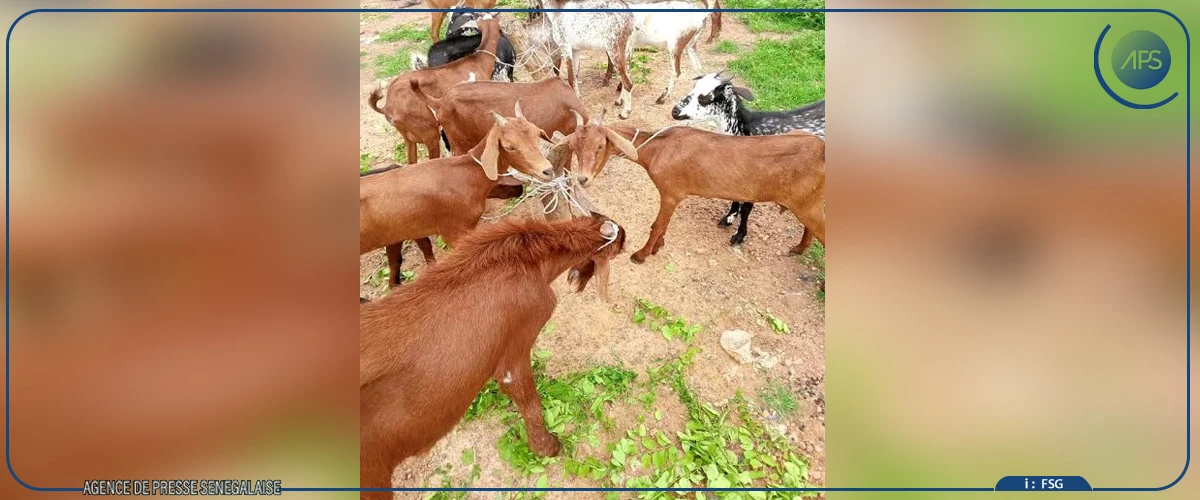
Louga: A technician reports a strong suspicion of contagious pleuropneumonia in goat farms.
Friday, October 23, 2026 at 11:58 AM
Louga, October 23 (APS) – The suspicious death of goats in several localities in the Louga region, particularly in the Niayes area, raises strong suspicions of contagious caprine pleuropneumonia (CPCP), an infectious disease affecting small ruminants, said Aya Ndiaye, head of the Departmental Service for Livestock and Animal Production (SDEPA) of Louga.
“For some time now,” unusual mortality has been reported in goat farms in the region, “especially in the Niayes area,” he explained in an interview with APS.
He explained that on this basis, a letter had been sent to the governor of the region by the president of a cooperative society located in the Thieppe area, to draw the authorities' attention to the situation.
According to Aya Ndiaye, investigations were carried out after the first cases were reported. Cases had notably been reported in the Léona area, where samples had been taken for laboratory analysis.
Initially, pasteurellosis in small ruminants was suspected. “However, the evolution of the disease, marked by periods of calm followed by new waves of mortality in other localities, did not allow us to conclude with certainty that this hypothesis was the cause,” he explained.
The results of analyses carried out in the department of Kébémer have confirmed the presence of contagious caprine pleuropneumonia, indicated the departmental head of livestock services, believing that this reinforces suspicions concerning a probable circulation of the disease in the Louga region.
Infectious caprine pleuropneumonia can manifest in two forms, acute or chronic.
In its acute form, he explains, it is characterized in particular by a high fever, loss of appetite, lethargy, frequent cough, breathing difficulties and nasal discharge.
The chronic form is mainly characterized by a persistent cough and weight loss in the animals. Goats that have survived the disease can also remain carriers of the infectious agent, explained Aya Ndiaye.
He stressed that this disease, caused by a pathogen responsible for infections in goats, is contagious and can lead to significant mortality within affected herds.
The head of the Louga Departmental Livestock Service clarified, however, that the disease does not pose a danger to humans, while emphasizing its potential consequences for livestock.
In light of this situation, he adds, monitoring animals and promptly reporting any suspected cases to veterinary services remain essential to facilitate investigations and limit the spread of the disease.
CMS/BK
 aps.sn
Louga: A technician reports a strong suspicion of contagious pleuropneumonia in goat farms.
Friday, October 23, 2026 at 11:58 AM
Louga, October 23 (APS) – The suspicious death of goats in several localities in the Louga region, particularly in the Niayes area, raises strong suspicions of contagious caprine pleuropneumonia (CPCP), an infectious disease affecting small ruminants, said Aya Ndiaye, head of the Departmental Service for Livestock and Animal Production (SDEPA) of Louga.
“For some time now,” unusual mortality has been reported in goat farms in the region, “especially in the Niayes area,” he explained in an interview with APS.
He explained that on this basis, a letter had been sent to the governor of the region by the president of a cooperative society located in the Thieppe area, to draw the authorities' attention to the situation.
According to Aya Ndiaye, investigations were carried out after the first cases were reported. Cases had notably been reported in the Léona area, where samples had been taken for laboratory analysis.
Initially, pasteurellosis in small ruminants was suspected. “However, the evolution of the disease, marked by periods of calm followed by new waves of mortality in other localities, did not allow us to conclude with certainty that this hypothesis was the cause,” he explained.
The results of analyses carried out in the department of Kébémer have confirmed the presence of contagious caprine pleuropneumonia, indicated the departmental head of livestock services, believing that this reinforces suspicions concerning a probable circulation of the disease in the Louga region.
Infectious caprine pleuropneumonia can manifest in two forms, acute or chronic.
In its acute form, he explains, it is characterized in particular by a high fever, loss of appetite, lethargy, frequent cough, breathing difficulties and nasal discharge.
The chronic form is mainly characterized by a persistent cough and weight loss in the animals. Goats that have survived the disease can also remain carriers of the infectious agent, explained Aya Ndiaye.
He stressed that this disease, caused by a pathogen responsible for infections in goats, is contagious and can lead to significant mortality within affected herds.
The head of the Louga Departmental Livestock Service clarified, however, that the disease does not pose a danger to humans, while emphasizing its potential consequences for livestock.
In light of this situation, he adds, monitoring animals and promptly reporting any suspected cases to veterinary services remain essential to facilitate investigations and limit the spread of the disease.
CMS/BK
Louga : un technicien fait état d’une forte suspicion de pleuropneumonie contagieuse dans des élevages de chèvres - APS
Louga, 23 octobre (APS) - La mort suspecte de chèvres dans plusieurs localités de la région de Louga, notamment dans la zone des Niayes, suscite une forte suspicion de pleuropneumonie contagieuse caprine (PPCC), une maladie infectieuse affectant les petits ruminants, a indiqué Aya Ndiaye, chef...
aps.sn