• FluTrackers.com Inc. does not provide medical advice. Information on this web site is collected from various internet resources, and the FluTrackers board of directors makes no warranty to the safety, efficacy, correctness or completeness of the information posted on this site by any author or poster. The information collated here is for instructional and/or discussion purposes only and is NOT intended to diagnose or treat any disease, illness, or other medical condition. Every individual reader or poster should seek advice from their personal physician/healthcare practitioner before considering or using any interventions that are discussed on this website. By continuing to access this website you agree to consult your personal physican before using any interventions posted on this website, and you agree to hold harmless FluTrackers.com Inc., the board of directors, the members, and all authors and posters for any effects from use of any medication, supplement, vitamin or other substance, device, intervention, etc. mentioned in posts on this website, or other internet venues referenced in posts on this website.
  • We are not asking for any donations. Do not donate to any entity who says they are raising funds for us.

Scientists: Iceland's Grimsvotn volcano erupting - Eruption ended on May 28, 2011

Pathfinder

Editor, Senior Moderator
Scientists: Iceland's Grimsvotn volcano erupting

REYKJAVIK, Iceland (AP) ? Scientists say Iceland's most active volcano, Grimsvotn, has started erupting.

Iceland's Meteorological Office confirmed Saturday that an eruption had begun, and local media said smoke could be seen coming from the volcano.

Grimsvotn lies under the uninhabited Vatnajokull glacier in southeast Iceland.

More...
http://www.usatoday.com/news/world/2011-05-21-iceland-volcano_n.htm
 
Re: Scientists: Iceland's Grimsvotn volcano erupting

Re: Scientists: Iceland's Grimsvotn volcano erupting


Posted on21 May 2011​

It has been confirmed that Grimsvotn volcano underneath the Vatnajokull glacier in southeast Iceland has begun erupting.​

A plume of ash is visible, which has led scientists to confirm earlier reports of an eruption. Vidir Reynisson at the public safety unit of the Icelandic police says it is too early to tell how big an eruption it will be.​

Earthquake activity began in the area after 18.00 this evening (local time) ? which was taken as a clear sign of an imminent eruption. The emergency co-ordination centre at Skogarhlid in Reykjavik is in operation.​


Re: Scientists: Iceland's Grimsvotn volcano erupting

Re: Scientists: Iceland's Grimsvotn volcano erupting

Current map of the activity


Iceland Quake Grimsvotn.webp
 
Re: Scientists: Iceland's Grimsvotn volcano erupting

Re: Scientists: Iceland's Grimsvotn volcano erupting

A little history lesson:

Gr?msv?tn, Iceland's most frequently active volcano in historical time, lies largely beneath the vast Vatnaj?kull icecap. The caldera lake is covered by a 200-m-thick ice shelf, and only the southern rim of the 6 x 8 km caldera is exposed. The geothermal area in the caldera causes frequent j?kulhlaups (glacier outburst floods) when melting raises the water level high enough to lift its ice dam. Long NE-SW-trending fissure systems extend from the central volcano. The most prominent of these is the noted Laki (Skaftar) fissure, which extends to the SW and produced the world's largest known historical lava flow during an eruption in 1783. The 15-cu-km basaltic Laki lavas were erupted over a 7-month period from a 27-km-long fissure system. Extensive crop damage and livestock losses caused a severe famine that resulted in the loss of one-fifth of the population of Iceland.

http://www.volcano.si.edu/world/volcano.cfm?vnum=1703-01=
 
Re: Scientists: Iceland's Grimsvotn volcano erupting

Re: Scientists: Iceland's Grimsvotn volcano erupting

Eruption has started in Gr?msv?tn

An eruption began at Gr?msv?tn volcano at approximately 17:30 UTC, May 21st 2011.

Eruptions in Gr?msv?tn start as subglacial eruptions, which quickly break the ice cover. At 21:00 UTC, the eruption plume had risen to an altitude of over 65,000 ft (~20 km). Initially, the plume is expected to drift to the east and subsequently to the north. Thus, the ash is not expected to impact aviation in Europe, at least not during the first 24 hours.

More...
http://en.vedur.is/about-imo/news/2011/nr/2174
 
Re: Scientists: Iceland's Grimsvotn volcano erupting

Re: Scientists: Iceland's Grimsvotn volcano erupting

Eruption of Gr?msv?tn volcano, begins 21 May 2011

The subglacial Gr?msv?tn volcano, Iceland, began erupting on 21 May 2011, around 18-19 GMT. The eruption was preceded by intensive earthquake activity lasting for about 1 hour. An ?ash-loaded? eruption plume rose rapidly up to about 17 km height (estimated 55000 feet from ground based radar, overview flights, and pilot reports). Ash from the lower part of the eruption plume was deflected southwards and from a higher level towards the east. Few hours after the onset of the eruption ash fall began over wide area in the nearest populated areas south of the Vatnaj?kull ice cap, at a distance of more than 50 km from the eruption site.
...
Initial overview flight, with limited visibility, and earthquakes locations suggest an eruption site in the southwestern part of the Gr?msv?tn caldera. Ice cover there is relatively thin (50-200 m) and meltwater is anticipated to accumulate within the Gr?msv?tn caldera lake. From there, it may eventually drain in a sudden glacial outburst flood, j?kulhlaup, along a subglacial channel and issue from the Skei?ar?rj?kull outlet glacier.

The height of the initial plume in the present eruption, 17 km, is much higher than in a preceding eruption at Gr?msv?tn in 2004. Then an eruption produced a plume reaching an estimated height of 6-10 km above vent.

The present plume is also higher than recorded in the Eyjafjallaj?kull eruption in Iceland last year.
...
London VAAC forecasts air-traffic interruption limited to Iceland and surroundings.

Information contacts: Icelandic Meteorological Office (www.vedur.is), Institute of Earth Sciences and the Nordic Volcanological Centre, University of Iceland (www.earthice.hi.is).

Prepared by: Freysteinn Sigmundsson (fs@hi.is), Steinunn Jakobsd?ttir (ssj@vedur.is), Bj?rn Oddsson (bjornod@hi.is), ??rd?s H?gnad?ttir (disah@raunvis.hi.is), Sigurlaug Hjaltad?ttir (slauga@hi.is), Gu?r?n Larsen (glare@raunvis.hi.is), Magn?s Tumi Gu?mundsson (mtg@hi.is).
1016673


Photos from the eruption site in the evening of May 21st. Photographer: ??rd?s H?gnad?ttir


Full text:
http://www.earthice.hi.is/
 
Re: Scientists: Iceland's Grimsvotn volcano erupting

Re: Scientists: Iceland's Grimsvotn volcano erupting

Eruption of Grimsv?tn

22 MAY 2011
Eruption of Grimsv?tn

Eruption of Grimsv?tn volcano in Iceland: no impact expected on European airspace

On 21 May 2001 at 21:00 CET, EUROCONTROL was advised by the Icelandic Met Office that the Grimsv?tn volcano in Iceland had erupted.

The plume of ash has reached a height of 12 km or higher around Iceland and is currently drifting in north-eastern direction.

There is currently no impact on European or transatlantic flights and the situation is expected to remain so for the next 24 hours.

Aircraft operators are constantly being kept informed of the evolving situation.

For further information:


EUROCONTROL Press Office: press@eurocontrol.int

http://www.eurocontrol.int/news/eruption-grimsvoetn
 
Re: Scientists: Iceland's Grimsvotn volcano erupting

Re: Scientists: Iceland's Grimsvotn volcano erupting

Ash could reach Scotland by Tuesday, airlines warned

Published: Sunday, 22 May 2011 | 10:07 AM ET

PARIS - Ash from an erupting Icelandic volcano could reach northern Scotland by Tuesday and parts of Britain, France and Spain by Thursday or Friday if the eruption continues at the same rate, airlines were warned on Sunday.

The warning is based on latest 5-day weather forecasts, but must be treated with caution...

More...
http://www.cnbc.com/id/43126094
 
Re: Scientists: Iceland's Grimsvotn volcano erupting

Re: Scientists: Iceland's Grimsvotn volcano erupting

Update on European air traffic situation following Grimsv?tn eruption

23 MAY 2011

Brussels, Belgium - As of 10:00 CET today, EUROCONTROL has the following update to make with regard to the situation of air traffic in Europe.

No significant impact is expected today on flights as a result of the eruption of the Grimsv?tn volcano in Iceland.

However, according to the Volcanic Ash Advisory Centre (VAAC) in London, depending on the continuing eruption of the volcano and the meteorological conditions, there is a risk that some ash cloud may reach parts of northern Europe in the next 48 hours.

The European Aviation Crisis Coordination Cell (EACCC), comprising representatives from EUROCONTROL, the European Commission, the European Aviation Safety Agency (EASA), States and air transport stakeholders, has been activated in order to coordinate a response that can mitigate any potential impact while maintaining established safety levels.

The next traffic update will be issued around 16:00 CET today.

...
http://www.eurocontrol.int/news/update-european-air-traffic-situation-following-grimsvoetn-eruption
 
Re: Scientists: Iceland's Grimsvotn volcano erupting

Re: Scientists: Iceland's Grimsvotn volcano erupting

sto-grimsvotn-ashcloud-concentration-chart.png


Update on European air traffic situation following Grimsv?tn eruption 10:00 CET

24 MAY 2011

Brussels, Belgium - As of 10:00 CET today, EUROCONTROL has the following update to make with regard to the situation of air traffic in Europe as a result of the eruption of the Grimsv?tn volcano in Iceland.

This morning, an area of high ash concentration is over the north of the United Kingdom and part of Ireland and with some flights cancelled as a result. For the moment, the number of cancelled flights is approximately 250 in UK airspace.

According to the Volcanic Ash Advisory Centre (VAAC) in London, there is a strong possibility that the ash cloud may impact parts of Denmark and southern Scandinavia in the course of the day. This would have some impact on flights.

Due to unstable meteorological conditions, it is not possible to identify with certainty the movements of the ash cloud beyond that time frame.

The next traffic update will be issued around 16:00 CET today.

http://www.eurocontrol.int/news/upd...tion-following-grimsvoetn-eruption-1000-cet-0
 
Re: Scientists: Iceland's Grimsvotn volcano erupting

Re: Scientists: Iceland's Grimsvotn volcano erupting

Grimsv?tn eruption, Iceland

A new eruption began on Iceland on 21 May, from Grimsv?tn volcano. Volcanic ash is falling on Iceland and the Volcanic Ash Advisory Centre, London ( www.metoffice.gov.uk/aviation/vaac)/) has an advisory predicting an ash cloud over northern UK and Ireland from early Tuesday (24 May) morning (see image below).

For those in Iceland, please visit our Pamphlets page to download information on the health hazards of ash and preparedness for ashfall, in Icelandic.

For those concerned about potential ashfall across the UK or Europe, please read the following statement (below) regarding the hazard of the Grimsv?tn and Eyjafjallaj?kull ash.

Help the scientists: If you do experience ashfall and would like to help us to understand about the ash, please visit the BGS website to read information on how to collect a sample and send it to us. If you are in Iceland and have substantial ashfall, please follow the IVHHN guidelines on ash collection and send samples to Claire Horwell.

IVHHN Statement: Ash fallout from Icelandic eruptions across the United Kingdom and Europe

As we saw with the Eyjafjallaj?kull eruption of April-May 2010, and now the Grimsv?tn eruption of May 2011, explosive eruptions of Icelandic volcanoes can occasionally inject volcanic ash particles into the atmosphere under conditions where the windfields may then bring that ash across the United Kingdom and Europe. In April-May 2010, the Eyjafjallaj?kull eruption was unusually violent (probably because of the thick ice cap on the volcano, and the explosive interaction of molten rock with this ice), and produced an unusual quantity of fine to very fine ash, which was then transported across the UK and Europe at relatively low levels in the atmosphere (less than a few kilometres altitude), with well documented consequences for aviation. The current eruption of the Grimsv?tn volcano is likely to produce a far smaller proportion of fine ash; initial reports from Iceland suggest that less than ten percent of the ash is ?fine ash?, which is about half the value during the Eyjafjallaj?kull eruption.

In the early stages of the Grimsv?tn eruption, the ash layer was injected at a higher altitude in the atmosphere than in the 2010 eruption, but the ash level will typically descend to lower altitudes as the cloud is blown further away from the volcano. The coarser ash particles will probably fall out of the plume much closer to Iceland, and as a consequence there may be very little ash fallout across the UK when the ash plume passes over.

Our experience from last year?s Eyjafjallaj?kull eruption is that even in areas of the UK where the fine ash from the eruption fell out of the plume and was deposited on the ground, there were no unusual consequences: most of the ash particles were too coarse (20 ? 50 microns) and at too low a concentration to have any detectable impact on air quality. In fact, in most ?dust? samples which were collected at the time (whether on sticky tape, or on car windscreens, or at air sampling sites), most of the dust particles were not of volcanic ash at all, but a mixture of natural mineral grains and pollen grains, both of which are usually found in airborne dust.

Written by Prof. David Pyle, Oxford University, for IVHHN on 23 May 2011, updated 24 May 2011.


...
http://www.ivhhn.org/
 
Re: Scientists: Iceland's Grimsvotn volcano erupting

Re: Scientists: Iceland's Grimsvotn volcano erupting

http://www.icelandreview.com/icelandreview/daily_news/Search_and_Rescue_for_Farmers_in_Eruption_Zone_0_378196.news.aspx
24.05.2011 | 13:00

Search and Rescue for Farmers in Eruption Zone

Approximately 60 search and rescue team members are currently at work in the Gr?msv?tn eruption zone in southeast Iceland. They are mostly assisting farmers with herding sheep and other livestock.

There have been a few cases of animals being killed, some were blinded by the ash fall and stumbled into ditches where they drowned. ?The ash goes into their eyes and the animals cannot see any more than we do,? district veterinarian in Vestur-Skaftafellss?sla county, Gunnar Thorkelsson, told Fr?ttabladid.

However, the situation is better than originally feared, mostly because the content of fluorine in the ash is low - fluorine can prove hazardous for animals. Thorkelsson said farmers are trying to secure their animals? access to fodder and running water......
 
Re: Scientists: Iceland's Grimsvotn volcano erupting

Re: Scientists: Iceland's Grimsvotn volcano erupting

Update on European air traffic situation following Grimsv?tn eruption 10:00 CET

26 MAY 2011


Volcanic ash concentration chart for Grimsvotn ash plume on 26 May 2011


Brussels, Belgium - As of 10:00 CET today, EUROCONTROL has the following update to make with regard to the situation of air traffic in Europe as a result of the eruption of the Grimsv?tn volcano in Iceland.

According to the Volcanic Ash Advisory Centre (VAAC) in London, there are still some limited areas of ash concentration across Europe. However, these are expected to have very little or no impact on European air traffic in the coming 48 hours.

No airspace is currently closed due to volcanic ash. In total, around 900 flights were cancelled in Europe between Monday 23 May and Wednesday 25 May of a total of 90,000 expected flights.

There will be no further update unless volcanic ash has an impact on European air traffic.
...

http://www.eurocontrol.int/news/upd...tion-following-grimsvoetn-eruption-1000-cet-1
 
Scientists: Iceland's Grimsvotn volcano erupting - Eruption ended on May 28, 2011

Gr?msv?tn volcano
Status Report: 14:00 GMT, 30 May 2011


Icelandic Meteorological Office and Institute of Earth Sciences, University of Iceland

Compiled by: Steinunn S. Jakobsd?ttir and Magn?s Tumi Gu?mundsson.
Based on: IMO seismic monitoring; observation at site.

Saturday morning at 6:30 UTC the volcanic tremor on Gr?msfjall
(Gr?msv?tn) rapidly decreased and had disappeared at 7 UTC. Since
Thursday the tremor had been intermittent. Today, Monday 30 May, it
has been confirmed by the participants of Iceland Glaciological
Society's spring expedition that the eruption has ended.

The end of the Gr?msv?tn eruption is set to 7 UTC Saturday morning
28 May 2011.

http://en.vedur.is/media/jar/Grimsvotn_status_2011-05-30_IES_IMO.pdf
 
Re: Scientists: Iceland's Grimsvotn volcano erupting - Eruption ended on May 28, 2011

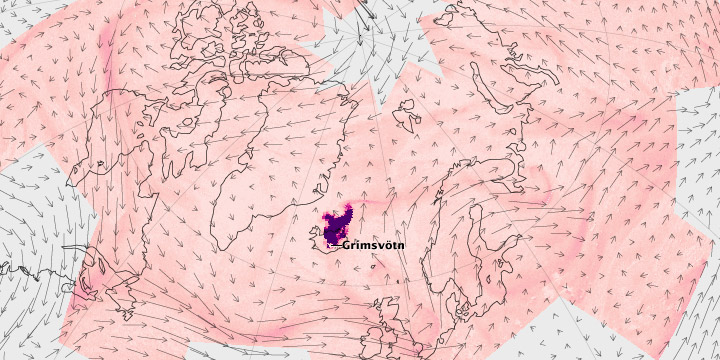
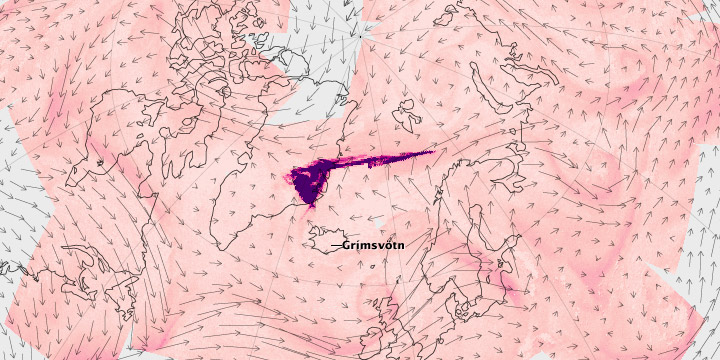
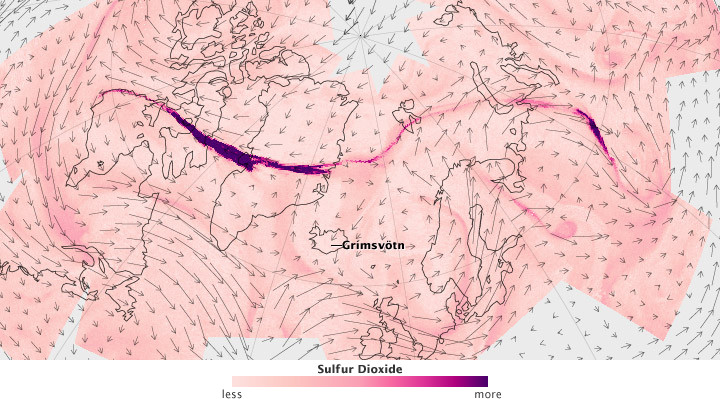
Sulfur Dioxide plume from Gr?msv?tn

Jun 2, 2011

grimsvotn_air_201105142.jpg


acquired May 22, 2011

grimsvotn_air_201105143.jpg


acquired May 23, 2011


grimsvotn_air_201105144.jpg


acquired May 24, 2011

grimsvotn_air_201105_palette.png

acquired May 22 - 26, 2011 download high definition animation (13 MB, QuickTime)
acquired May 22 - 26, 2011 download web resolution animation (5 MB, QuickTime)


Sulfur dioxide, or SO<SUB>2</SUB>, is a colorless, pungent gas that can be both air pollutant and important atmospheric component, depending on where it resides. Along with water vapor and carbon dioxide, sulfur dioxide is one of the most abundant gas emissions during volcanic eruptions.

The images above, along with the linked animation, show the emission and transport of sulfur dioxide from the Gr?msv?tn Volcano in Iceland at the end of May 2011. The images are based on measurements from the Atmospheric Infrared Sounder (AIRS) on NASA?s Aqua spacecraft that were input into the Goddard Earth Observing System, Version 5 (GEOS-5) experimental model, which characterizes the background wind fields. The concentration of SO<SUB>2</SUB> is represented in purple, with the small arrows depicting dominant wind direction.

As the days pass, the plume spreads north and then thousands of kilometers to the east and west, carried by complex polar winds in the upper atmosphere. In the animation, the plume is still visible over Canada nearly five days after the eruption, when the polar jet stream starts carrying the SO<SUB>2</SUB> east again.

Sulfur dioxide near the surface of Earth can harm human breathing, particularly for people with asthma. It also blends with water in the atmosphere to produce acid rain and volcanic smog, or vog. Most immediately after an eruption, corrosive sulfur dioxide aerosols can damage aircraft windows, though they do not necessarily pose an immediate hazard to aircraft operations.

When injected into higher reaches of the atmosphere, SO<SUB>2</SUB> can react with other gases and particles to create aerosols that block sunlight and can cool the climate. That's not likely in this case, as the eruption that began on May 21, 2011, ended by May 28, according to the Icelandic Met Office.

.../
http://earthobservatory.nasa.gov/IOTD/view.php?id=50766

 
Re: Scientists: Iceland's Grimsvotn volcano erupting - Eruption ended on May 28, 2011


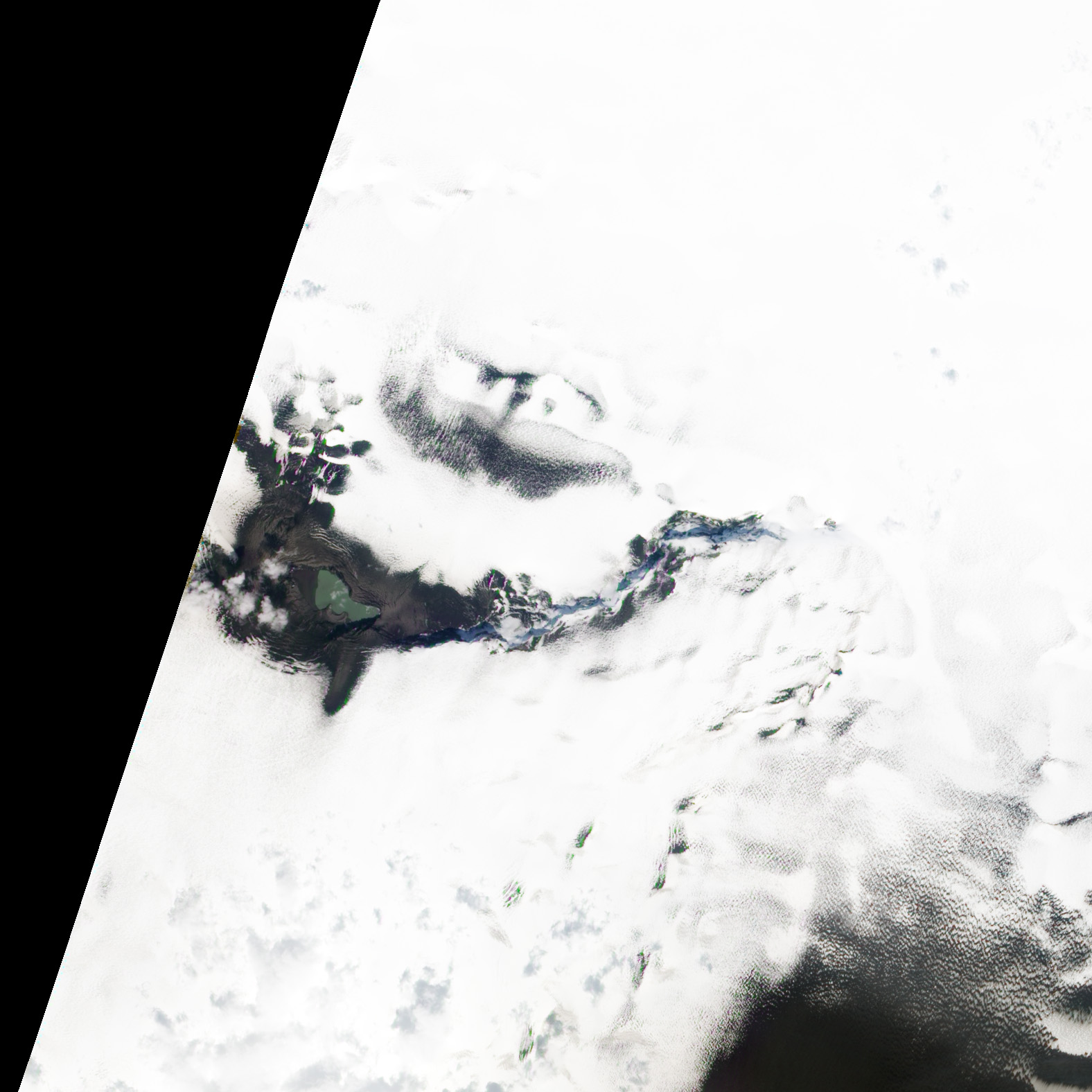
acquired June 11, 2011 download large image (341 KB, JPEG)
acquired June 11, 2011 download GeoTIFF file (2 MB, TIFF)


After covering a large portion of Iceland with ash in late May 2011, Gr?msv?tn Volcano left behind a small lake filled with melt water and a hole in the Vatnaj?kull Glacier. This natural-color satellite image was acquired by the Advanced Land Imager (ALI) aboard Earth Observing-1 (EO-1) on June 11, 2011. The lake covers much of the site of the eruption, with the possible exception of the crescent-shaped feature along the southern shore of the lake. This may be a tephra cone left behind by the eruption. Gray ash covers the ice of Vatnaj?kull Glacier near the vent. Further away, the ash layer itself is obscured by snow.
  1. Reference
  2. Institute of Earth Sciences. (2011). Eruption in Gr?msv?tn 2011. Accessed June 22, 2011.
http://earthobservatory.nasa.gov/NaturalHazards/view.php?id=51156
 
Back
Top Bottom