• FluTrackers.com Inc. does not provide medical advice. Information on this web site is collected from various internet resources, and the FluTrackers board of directors makes no warranty to the safety, efficacy, correctness or completeness of the information posted on this site by any author or poster. The information collated here is for instructional and/or discussion purposes only and is NOT intended to diagnose or treat any disease, illness, or other medical condition. Every individual reader or poster should seek advice from their personal physician/healthcare practitioner before considering or using any interventions that are discussed on this website. By continuing to access this website you agree to consult your personal physican before using any interventions posted on this website, and you agree to hold harmless FluTrackers.com Inc., the board of directors, the members, and all authors and posters for any effects from use of any medication, supplement, vitamin or other substance, device, intervention, etc. mentioned in posts on this website, or other internet venues referenced in posts on this website.
  • We are not asking for any donations. Do not donate to any entity who says they are raising funds for us.

Schmallenberg Virus - News and updates - 2013

Gert van der Hoek

In Memoriam - Editor, Senior Moderator
Update Schmallenberg virus in France

jan 3, 2012

From september 1 2012 tot januari 2 2013 221 holdings were suspected to have animals infected with SBV.

180 holdings were confirmed: 112 sheep, 14 goat and 95 cattle holdings.

Depuis le 1er septembre 2012, ce sont au total 221 suspicions qui ont été enregistrées (112 élevages ovins, 14 élevages caprins, et 95 élevages bovins).

180 élevages ont été confirmés atteints par des formes congénitales de SBV, répartis dans 45 départements : 02, 03, 04, 05, 08, 10, 12, 15, 17, 18, 19, 2A, 21, 22, 24, 25, 26, 27, 28, 31, 34, 35, 37, 38, 42, 44, 52, 54, 56, 58, 64, 65, 67, 68, 69, 70, 73, 74, 76, 77, 81, 84, 85, 86 et 89.

Sont concernés : 95 élevages ovins, 10 élevages caprins et 75 élevages bovins.

More, incl. map: Survepi


For previous reports and updates please see:

Schmallenberg virus : new Akabane-like virus in cattle, sheep and goats in Europe - 2011/2012
 
Re: Schmallenberg virus : new Akabane-like virus in cattle, sheep and goats in Europe

Re: Schmallenberg virus : new Akabane-like virus in cattle, sheep and goats in Europe

machinetranslation

Belarus (White Russia) announced import restrictions from Hungary.


"In Hungary, one case of Schmallenberg virus observed".

05/01/2013

Reacted to the Ministry of Rural Development (VM) press office for the Saturday news that Belarus is temporary restrictions introduced from Hungary ruminants - cattle, sheep, and goats - import and transit in Germany in 2011, appeared to and from said further spread of epizootic disease.

A White Russian veterinary service to the limit Saturday's report argued that in Hungary "was found in animals that are carriers of the virus Schmallenberg".

The VM press offices of MTI interest, he declared, "In Hungary, only one disease case was observed by the Ministry of Rural Development and reported to the World Health Organisation (OIE)." the agriculture ministry effectively manages the situation - said, adding that more information on Monday they serve.

Ma.hu


250px-EU-Hungary.svg.png


Belarus imposes temporary restrictions on transit, import of cattle from Hungary


05.01.2013

MINSK, 5 January (BelTA) - Belarus has imposed temporary restrictions on transit and import of cattle from Hungary, BelTA learnt from the Veterinary and Food Supervisory Department of the Ministry of Agriculture and Food.

The animals seropositive to Schmallenberg virus were detected in Hungary, the department informed. In this connection, Belarus has imposed temporary restrictions on transit and import of cattle and genetic material retrieved from the specified species from Hungary to the country.

BELTA
 
Re: Schmallenberg virus : new Akabane-like virus in cattle, sheep and goats in Europe

Re: Schmallenberg virus : new Akabane-like virus in cattle, sheep and goats in Europe

machinetranslation

A large proportion of Swedish herds have been exposed to infection

Schmallenbergvirus (SBV), which is spread by midges have been only a few months been widely adopted throughout Sweden. Surveillance Results autumn 2012 and Map of results bulk milk survey (pdf).

A first bulk milk screening was done in May-June 2012, when found only one positive herd, located in Blekinge. In a second bulk milk screening conducted in november, 75% of the surveyed herds positive for antibodies. The large spread of Schmallenbergvirus in Sweden has occurred between June / July to October 2012th

Your participation as owners needed to monitor the presence of the virus in Sweden. Below we describe the viral disease signs. But these signs may also have several other causes as to whether they are caused by Schmallenbergvirus have samples taken from the animals and analyzed at SVA after contact with the veterinarian. To evaluate the effects of crews, two types of studies to be done;

First By analyzing fetuses and stillborn animals will closely study the types of injuries that can be attributed to Schmallenbergvirus. There are indications that infection can cause symptoms wider than just malformed offspring. This collection will continue until enough materials come in to get a clear picture. This sampling is not done to confirm the SBV in each herd, but to give an idea of the impact the disease has had on fetal

2nd Several questionnaires to owners will be constructed to obtain a more comprehensive picture of the effects of infection on herd level.

SVA (National Veterinary Institute)

Surveillance Results autumn 2012 and Map of results bulk milk survey (pdf).
 
Re: Schmallenberg virus : new Akabane-like virus in cattle, sheep and goats in Europe

Re: Schmallenberg virus : new Akabane-like virus in cattle, sheep and goats in Europe

Wales

Farmer: "Schmallenberg disease has killed half of my lambs"

Last updated Tue 8 Jan 2013

A farmer has told ITV Wales News that 50 per cent of his lambs have died because of the Schmallenberg disease (SBV).

Tim Prichard, who has a farm in Llamntrisant, Pontyclun, says he expected 180 lambs to be born this season but 60 have died already.

Mr Prichard says other farmers are experiencing the same thing with one losing all but one of his 23 lambs.

Schmallenberg is a disease that causes late abortion or birth defects in newborn cattle, sheep and goats.

In December last year the Chief Veterinary Officer Christianne Glossop said that there was evidence the infection was "across most if not all counties in Wales" and the disease had been detected in a deformed lamb.

Ms Glossop added: "It is likely that malformed lambs and calves will be born in Wales in the spring 2013 as a result of some Welsh sheep and cattle being infected with SBV around the time of mating this year."

ITV
 
Re: Schmallenberg virus : new Akabane-like virus in cattle, sheep and goats in Europe

Re: Schmallenberg virus : new Akabane-like virus in cattle, sheep and goats in Europe

machinetranslation

Apparently in a livestock shipment from Hungary to Belarus (White Russia) 4 out of 29 samples tested positive for the Schmallenberg virus.

Hungary says their testresults of the shipment were all negative.

Negociations are ongoing.


Hungarian beef was banned in Belarus

2013 January 8, Tuesday

The Belarusian the veterinary service banned ruminants from Hungary. Decision of the Belarusian authorities argued that the shipment is received in animals have found that the Schmallenberg virus carriers, according to agra-net.com .

The Schmallenberg virus does not affect humans, mainly infects sheep and cattle in , presumably by mosquitoes. The pathogenic effect of miscarriage and birth defects can occur in animals - said earlier Spiegel Elke Reinking, the Friedrich-Loeffler-Institute (FLI) spokesman. Its name from the German town where it was first identified last year and appeared in Britain in January.

The VM does not know the official notification
The fact of limiting the Belarusian party to the competent Hungarian authority has no formal or informal form is not published, a notice is not received by the Rural Development Ministry.

December in the middle of the Belarusian authorities have informed the ministry that Hungary, Belarus and delivered 29 tenyészüsző (suspension cultures", ed) subsequent examination of four cases of serological tests positive, the animal virus that was previously encountered. The competent Belarusian authorities in the investigation of the case called for a ban on imports letter is not foreseen.

Hungarian animal health authorities of Belarus sent a response letter indicated that the animals are delivered to the Board before the individual blood tested by, each of which produced negative results. The case clarified the National Chief Veterinary Officer Andrew Kardeván to initiate further discussion with the Belarusian people vet - read the VM communication.

MTI
 
Re: Schmallenberg virus : new Akabane-like virus in cattle, sheep and goats in Europe

Re: Schmallenberg virus : new Akabane-like virus in cattle, sheep and goats in Europe

Germany: current Information on Schmallenberg virus

last updated January 8, 2013

As of 21 May case numbers and map will be updated weekly.

In Germany animals from 2057 holdings have been tested positive for Schmallenberg virus (SBV) so far.

The cases occurred in 1088 cattle holdings, 921 sheep holdings and 48 goat holdings.

Affected federal states are North Rhine-Westphalia (272 cattle, 273 sheep, 13 goat holdings), Lower Saxony (226 cattle, 143 sheep, 6 goat holdings), Hesse (124 cattle, 137 sheep holdings, 9 goat holdings), Schleswig-Holstein (111 cattle, 107 sheep holdings, 1 goat holding), Rhineland-Palatinate (1 Bison holding, 50 cattle, 43 sheep, 5 goat holdings), Baden-Wuerttemberg (43 cattle, 35 sheep, 6 goat holdings), Brandenburg (24 cattle, 21 sheep holdings), Thuringia (28 cattle, 42 sheep, 2 goat holdings), Saxony-Anhalt (19 cattle, 23 sheep, 2 goat holdings), Hamburg (2 cattle, 6 sheep holdings), Bavaria (163 cattle, 37 sheep holdings, 1 goat holding), Saxony (11 cattle holdings, 39 sheep holdings), Mecklenburg-Western Pomerania (13 cattle, 11 sheep holdings, 1 goat holding), Saarland (1 cattle holding, 4 sheep, 2 goat holdings) and Berlin (1 sheep holding).

FLI

Link to map


On sept 11 FLI reported 1,801 positive holdings in Germany.

.
 
Re: Schmallenberg virus : new Akabane-like virus in cattle, sheep and goats in Europe

Re: Schmallenberg virus : new Akabane-like virus in cattle, sheep and goats in Europe

Surveillance terminated in UK.SBV confirmed in aprox 1,200 holdings

UK - Schmallenberg virus – updated testing results


jan 14, 2013

This table includes additional serology results provided by laboratories at Liverpool University and Scotland's Rural College.

Results from Scotland have not been listed by county as they all relate to animals introduced into Scotland from English counties where Schmallenberg Virus has been reported.

In 2012 AHVLA introduced two enhanced surveillance initiatives for Schmallenberg Virus in England and Wales:

 In January 2012 for foetal deformities
 In July 2012 for acute disease in cattle

Both surveillance initiatives were based on free testing of cases that met certain criteria in previously unaffected counties. As Schmallenberg Virus had been identified in most counties of England and Wales by the end of 2012, the enhanced surveillance had served the purpose for which it was introduced: to identify cases in previously unaffected areas as early as possible. The two initiatives therefore ceased on 14 December 2012.

Farmers should contact their veterinarians if they have concerns and vets should contact their local AHVLA Investigation Centre if they require advice.


10 January 2013

Schmallenberg Virus – updated testing results
(figures correct at date of publication)


SBV in cattle: number of holdings 811

SBV in sheep: number of holdings 377


MOre: AHVLA
 
Re: Schmallenberg virus : new Akabane-like virus in cattle, sheep and goats in Europe

Re: Schmallenberg virus : new Akabane-like virus in cattle, sheep and goats in Europe

ITALY: EPIDEMIOLOGICAL SITUATION

machinetranslation

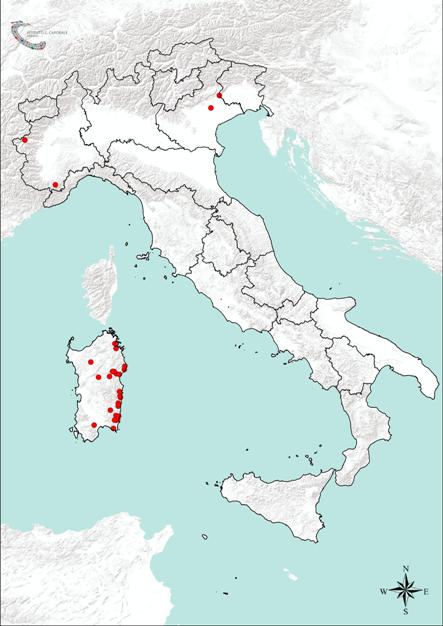
Confirmed cases of SBV in ruminants in Italy (Source SIMAN, 08 January 2013)

On 16 February 2012 has been confirmed in Italy the first case of Schmallenberg virus in a holding in Veneto in Treviso: a goat fetus considered that had malformations, subcutaneous edema, scoliosis, artrogrifosi, ankylosis of some joints of the limbs.

The fetus tested positive for Real Time RT-PCR for virus Schmallenberg. Farm were also one male bovine and other five goats that had symptoms in place and who have given birth kids healthy. The diagnostic tests have ruled out the viremia in all the actual, but the calf, the kid sister of the fetus considered and 3 goats of the flock were positive tests for serum-neutralization (SN) and indirect immunofluorescence (IIF).

In another holding in the Province of Treviso a cow tested positive for serum-neutralization test. The animal was tested as the mother of a fetus died 24 hours after birth, sent to CESME for the detection of virus Schmallenberg and negative to the test of real-time RT-PCR. In the month of April 2012 , in a herd of dairy cattle in the Province of Treviso, a cow tested positive for the PCR test for the virus Schmallenberg. It was an abortion at the end where there were no malformations or pathological lesions evident.

During the months of November and December 2012 the presence of Schmallenberg virus has been confirmed in Sardinia on 26 holdings in the provinces of Cagliari, Ogliastra, Sassari, Nuoro Olbia and Tempio. Samples of the organs of sheep fetuses with malformations (artrogrifosi, brachignatia, torticollis and scoliosis), were sent to CESME for diagnosis and the test were positive in PCR for the detection of the Schmallenberg virus. In addition, in the same month two cases have been confirmed in Piedmont in the provinces of Turin and Cuneo ( Figure 1 ).

Italy joins the many European countries that have confirmed the presence of the virus in their territories.

SBV_8GENNAIO.jpg


Istituto Zooprofilattico Sperimentale dell'Abruzzo e del Molise "G. Caporale"
 
Re: Schmallenberg virus : new Akabane-like virus in cattle, sheep and goats in Europe

Re: Schmallenberg virus : new Akabane-like virus in cattle, sheep and goats in Europe

Two weblogs from sheepfarmers in Estonia have stories and pictures on malformed lambs. It seems SBV has reached Estonia,
skipping other counties? Seems highly improbable.

All countries between Estonia and Germany could have widespread SBV: Poland, Latvia, Lithuania and the Russian enclave / Kaliningrad.


The story mentions cases from other farms, from different regions in Estonia, so SBV seems to be all over Estonia.


machinetranslation

Estonia%20in%20Europe.jpg


Schmallenberg virus in Estonia?

Posted 8th January 2013


Recent holidays in our family, so calm did not last as expected and it is mainly because of our daily work. One flock of sheep came malformed having troubled a number of notices was born lambs. The initial assumption mineral deficiency progresses, the change in time and adding new cases as suspicious. Good sheep owner also sent pictures and video of him on it as well, and was pretty sure the last poegimishooajal suspicion of central tendency for Schmallenberg virus in Europe.

Then it became clear that the virus and the antibodies against the virus is able to determine the Tartu Veterinary Laboratory. A case diligently joined the national health system, and last week a herd blood samples were taken at the beginning of this week's lab to a positive response to the presence of antibodies in the blood. Now the virus is still determining the presence of malformed fetus. This is because of the complex nature of the disease activity. Given the clinical picture occurring in a herd blood test results and may very likely be the cause of this ailment Schmallenberg virus.

Schmallenberg virus distributors are mosquitoes. The virus is not transmitted through normal contact between animals. Vector without the aid of a virus can be spread from mother to fetus through the placenta. The viruses are susceptible to sheep, goats and cattle. Wild animals are not available. People on the basis of current knowledge is not a dangerous virus. All of this information should be considered on the virus, the virus was isolated only in 2011. November. Thus, it is a very new disease and its information is collected only on the behavior of all known at the time this information with our need to be taken critically.

Schmallenberg virus usually causes mild symptoms in adult animals. Most suffer from dairy cows, representing approximately a week, up to a half smaller. In sheep, the disease is difficult to observe. In contrast, fetuses disease is very sensitive, especially during the first few months of pregnancy.

The result of abortions, malformed and not viable or dead lambs. Abnormalities are mostly erect in different positions of joints, spinal curvature, nervous system malfunction, malformed skull. In addition to the removal of lambs as well to deal with obstetric dead and deformed lambs are often unable to fit through the birth canal without help.

Now I know in six sheep farms, where such malformed lambs are born and those farms are located at the ends of the different Estonia. Lambafarmides calving is only just beginning and is expected to meet this progresses, more and more cases. The experience is more at risk with earlier calving herds, and the reason is that at the beginning of pregnancy was still active mosquito-vector operation. Those animals receiving anti tiinusevälisel time and subsequently mated, the offspring should not be any problems arise. Well, this coming spring winter gives us the doctrine.

What would you recommend for animal owners who flock to such emergencies. Tirelessly strength to help the animals at parturition, the offspring, in addition to not lose emaloomi. Next year they will once again brave poegijad. Contact your authorized vet - know the spread of the disease will help to give you a future and suggestions for other farmers. Planning for the coming mating Consider whether it would be possible to delay insect free time.

This is a brief overview of the current situation, as new information is received, then we will know.

Best Regards

Ants

Source: blog of a sheepfarmer http://www.maavillane.ee/?7 thanks to David Mardiste

The blog shows some pictures of malformed lambs.

Another blog with a similar story and similar pictures: http://lambadkitsed.blogspot.nl/
 
Re: Schmallenberg virus : new Akabane-like virus in cattle, sheep and goats in Europe

Re: Schmallenberg virus : new Akabane-like virus in cattle, sheep and goats in Europe

Finland: Schmallenberg virus found in deformed lambs

15.01.2013 10:34

Schmallenberg virus has been identified in Finland for the first time in lambs. Previously, only antibodies of the virus have been found in Finland. Discovery of the virus is not unexpected, as antibody studies indicated that the virus has become widespread in Finland during the summer and autumn 2012. The virus does not affect humans.

The virus was identified using the PCR method at the Finnish Food Safety Authority Evira in three deformed lambs, all from the same flock and born at full term at the end of December. The ewes had been infected at the end of August or early September in the early stages of pregnancy. The lambs had arthrogryposis of the limbs, either straight of flexed, and hydrocephalus, which are typical deformities caused by the Schmallenberg virus. Deformed lambs are not viable.

Since the Schmallenberg virus has spread into Finland in summer and autumn 2012, it is expected that deformed lambs are born between December and February and calves most likely in the period between March and May. The virus is spread by midges from one ruminant to another. When the temperatures drop, midges become inactive and the spread of the virus stops. The risk of deformities concerns lambs born between December and February, as midges were active at the start of the ewe’s pregnancy. Most lambs are usually born later, in March-May.

The virus causes symptoms as it spreads to new areas, where ruminants do not have protection created by the infection. If the virus is endemic, ruminants are usually infected at such an early age that they are protected before the first pregnancy.

It is not known at present whether or not the virus is capable of overwintering in Finland. It is likely that midges carrying the virus will continue to arrive in Finland carried by southerly and south-westerly winds.

Finnish Food Safety Authority Evira
 
Re: Schmallenberg virus : new Akabane-like virus in cattle, sheep and goats in Europe

Re: Schmallenberg virus : new Akabane-like virus in cattle, sheep and goats in Europe

Malformed and stillborn lambs reported in Sweden

machinetranslation

Deformed and stillborn lambs. Many sheep breeders have been affected by the aggressive Schmallenbergvirus.

PUBLISHED JANUARY 16, 2013

The virus is spread by midges - and pregnant ewes that were infected by the virus in late summer last year give birth now deformed and stillborn lambs.

The virus found in Södermanland and Gotland - and a suspected case has been reported from Östergötland.


SVT

Link leads to video/pictures
 
Re: Schmallenberg Virus - News and updates - 2013

machinetranslation

jan 16 2013

Estonia: Schmallenberg virus detected in sheep in Võrumaa and Hiiumaa

Võrumaa and Hiiumaa sheep fetuses recently detected Schmallenberg virus started spreading in Europe, confirmed the Veterinary and Food Board.

"So if Hiiumaa Võrumaa some farms have been laboratory studies of aborted fetuses and Schmallenberg virus has been detected," said the Food and Veterinary Office Animal Health, Animal Feed Division and Head of Mary Kristian.

Kristian says is a virus disease that does not present a very high risk, and is not particularly dangerous diseases.

«Quarantine or restrictions or limitations are (not? ,ed) imposed," said Kristian. "This is such a new virus disease in Europe a few years ago went off to no treatment and no variations in vaccine development have not reached the end."

Kristian said that has not been previously identified in Schmallenberg virus. These cases were found, as informed by the keeper increased the number of abortions in the herd.

"It is primarily a disease of sheep and goats, which can occur in cattle," explained Kristian. «Abortions occur in females and fetuses are aborted deformities."

Postimees


Location of Estonia - Võrumaa is a region in the South East and Hiiumaa Island is in the North West
en-large-locator.gif
map_eesti_eng.gif
255px-Voru_in_Estonia.svg.png
 
Re: Schmallenberg Virus - News and updates - 2013

Germany: current Information on Schmallenberg virus

last updated January 15, 2013

As of 21 May case numbers and map will be updated weekly.

In Germany animals from 2069 holdings have been tested positive for Schmallenberg virus (SBV) so far.

The cases occurred in 1096 cattle holdings, 925 sheep holdings and 48 goat holdings.


Affected federal states are North Rhine-Westphalia (270 cattle, 271 sheep, 13 goat holdings), Lower Saxony (226 cattle, 143 sheep, 6 goat holdings), Hesse (124 cattle, 137 sheep holdings, 9 goat holdings), Schleswig-Holstein (112 cattle, 109 sheep holdings, 1 goat holding), Rhineland-Palatinate (1 Bison holding, 50 cattle, 43 sheep, 5 goat holdings), Baden-Wuerttemberg (44 cattle, 35 sheep, 6 goat holdings), Brandenburg (24 cattle, 21 sheep holdings), Thuringia (28 cattle, 44 sheep, 2 goat holdings), Saxony-Anhalt (19 cattle, 23 sheep, 2 goat holdings), Hamburg (2 cattle, 6 sheep holdings), Bavaria (170 cattle, 39 sheep holdings, 1 goat holding), Saxony (11 cattle holdings, 39 sheep holdings), Mecklenburg-Western Pomerania (14 cattle, 11 sheep holdings, 1 goat holding), Saarland (1 cattle holding, 4 sheep holdings, 2 goat holdings) and Berlin (1 sheep holding).

FLI

Link to map
 
Re: Schmallenberg Virus - News and updates - 2013

Update Schmallenberg virus in France

jan 16, 2013

From september 1 2012 tot januari 16 2013 369 holdings were suspected to have animals infected with SBV.

299 holdings were confirmed: 111 sheep, 10 goat and 178 cattle holdings.

Nombre et localisation des foyers

Depuis le 1er septembre 2012, ce sont au total 369 suspicions qui ont ?t? enregistr?es (131 ?levages ovins, 16 ?levages caprins, et 222 ?levages bovins).

299 ?levages ont ?t? confirm?s atteints par des formes cong?nitales de SBV, r?partis dans 49
d?partements : 02, 03, 04, 05, 08, 10, 12, 15, 16, 17, 18, 19, 2A, 21, 22, 24, 25, 26, 27, 28, 31, 33, 34, 35,
37, 38, 42, 44, 45, 52, 54, 56, 58, 62, 64, 65, 67, 68, 69, 70, 73, 74, 76, 77, 81, 84, 85, 86 et 89.

Sont concern?s : 111 ?levages ovins, 10 ?levages caprins et 178 ?levages bovins.

Survepi

Link to document and map
 
Re: Schmallenberg Virus - News and updates - 2013

machinetranslation


Schmallenberg virus also is prevalent in Slovenia

Posted: 18/01/2013

According to available data, the experts concluded that transmission of the virus from sheep to humans can not be excluded, but it is highly unlikely.


LJUBLJANA - In Slovenia, in sheep confirmed the presence of Schmallenberg virus, reported the Veterinary Chamber. Schmallenberg Virus was first discovered in 2011 in Germany and since then the disease has spread rapidly in the northern and western Europe.

Abortion and defective animals

Schmallenberg virus causes the acute form of severe diarrhea, chills and drop in milk yield in cattle (50 percent). If you are infected pregnant female ruminants virus izvrgavanje pregnancies, mainly sheep and cows. Reported that in infected herds abortira to 25 percent of pregnant females. In addition to abortion are born in a significant number of defective animals that are unfit for life and fattening, the message noted in the staff room. Infected herds may suffer significant economic harm.

Human transmission is not excluded, but is unlikely

According to available information, the experts concluded that transmission of the virus to humans can not be excluded, but it is highly unlikely.

Scmallenberg virus is a new virus belonging to the family Orthobunyaviridae and is related to Akabane virus. Akabane virus is spread mainly in ruminants in Japan, Australia and Africa. Like the related viruses are also transmitted by the insects. Given the prevalence of insects and almost impossible to combat remains the only option preventive vaccination. In some EU Member States have already introduced a systematic control of the disease, in explaining the Veterinary Association.

Slovenske Novice

europe.jpg
 
Re: Schmallenberg Virus - News and updates - 2013

Reading the abstract, the report suggests import of SBV from France into Poland. Infected bulls could have spread the virus and local midges could have picked up the virus for further spread?


First report of Schmallenberg Virus Infection in Cattle and Midges in Poland

M. Larska1,*, M. P. Polak1, M. Grochowska2, L. Lechowski2, J. S. Związek3, J. F. Żmudziński1

Article first published online: 18 JAN 2013

DOI: 10.1111/tbed.12057

Summary

Two outbreaks of Schmallenberg virus (SBV) infection that coincided with the introduction of two bulls imported from France into two herds located in West Pomerania and Silesia provinces in Poland are described in detail. The first SBV real-time RT-PCR-positive result was obtained during routine testing of one of the imported bulls. The second bull and the affected farms were tracked by further investigation.

Transmission of SBV into Polish cattle herds where the bulls were imported was confirmed by viral RNA detection in real-time RT-PCR, virus isolation followed by immunoperoxidase (IPX) staining and seroconversion.

SBV RNA was detected also in Culicoides obsoletus pools caught in a trap located 5 km from one of the outbreaks. Testing nearly 900 samples collected prior to the two outbreaks from the same areas or provinces neighbouring with Germany where SBV cases had previously been detected gave negative results for the presence of SBV or specific antibodies.

These cases are the first ones detected in cattle in Poland and provide evidence of recent transmission of the pathogen into the country and involvement of midge vectors.


-----------------------------------------------------

Transbound Emerg Dis. 2013 Feb;60(1):1-3. doi: 10.1111/tbed.12039. Epub 2012 Nov 26.

Schmallenberg virus antibodies detected in poland.
Kaba J, Czopowicz M, Witkowski L.
Source
Unit of Veterinary Epidemiology and Economics, Faculty of Veterinary Medicine, Warsaw University of Life Sciences, Warsaw, Poland.

Abstract

Between 24 and 30 July 2012 230 adult goats from three western provinces of Poland bordering on Germany (Western Pomerania, Lubuskie and Lower Silesia) were blood-sampled and tested for antibodies to Schmallenberg virus (SBV) using indirect immunoenzymatic test (ID Screen® Schmallenberg virus indirect, IDvet Innovative Diagnostics).

The ELISA test identified 21 seropositive goats - 15 in Western Pomerania (16% of all goats tested in this province), five in Lubuskie (6%) and one in Lower Silesia (2%). Our study demonstrates for the first time the presence of antibodies to SBV in Poland.

Pubmed
 
Re: Schmallenberg Virus - News and updates - 2013

Germany: current information on Schmallenberg virus

last updated January 29, 2013

As of 21 May case numbers and map will be updated weekly.

In Germany animals from 2110 holdings have been tested positive for Schmallenberg virus (SBV) so far.

The cases occurred in 1124 cattle holdings, 937 sheep holdings and 49 goat holdings
.

Affected federal states are North Rhine-Westphalia (274 cattle, 272 sheep, 13 goat holdings), Lower Saxony (227 cattle, 143 sheep, 6 goat holdings), Hesse (124 cattle, 140 sheep holdings, 9 goat holdings), Schleswig-Holstein (112 cattle, 110 sheep holdings, 1 goat holding), Rhineland-Palatinate (1 Bison holding, 50 cattle, 39 sheep, 5 goat holdings), Baden-Wuerttemberg (47 cattle, 37 sheep, 7 goat holdings), Brandenburg (24 cattle, 21 sheep holdings), Thuringia (30 cattle, 47 sheep, 2 goat holdings), Saxony-Anhalt (19 cattle, 23 sheep, 2 goat holdings), Hamburg (3 cattle, 6 sheep holdings), Bavaria (187 cattle, 41 sheep holdings, 1 goat holding), Saxony (11 cattle holdings, 42 sheep holdings), Mecklenburg-Western Pomerania (14 cattle, 11 sheep holdings, 1 goat holding), Saarland (1 cattle holding, 4 sheep holdings, 2 goat holdings) and Berlin (1 sheep holding).

FLI

Link to map
Map: Distribution of 'Schmallenberg virus' since January 1, 2013, in Germany, updated January 29, 2013
 
Re: Schmallenberg Virus - News and updates - 2013

?Grim return? of Schmallenberg virus in U.K.

Geni Wren, Bovine Veterinarian Magazine | Updated: 01/28/2013


Schmallenberg virus has been associated with brief mild/moderate disease (milk drop, pyrexia, diarrhea) in adult cattle and deformities and neurological defects in unborn lambs and calves, has made a ?grim return? in 2013, according to researchers at The University of Nottingham Veterinary School.

The university says data indicates that this year losses could be as high as 30% on some severely affected sheep operations. Identified in the U.K. in 2011, by the end of 2012 Schmallenberg has been found in most counties in England and Wales, and is widely distributed in northern and western Europe.
University of Nottingham veterinary surgeon Rachael Tarlinton says it will generally cause mild or no disease in adult animals but if the animal is pregnant the virus replicates in the nerve cells of the fetus and, depending at what stage they have reached in the pregnancy, this leads to abortion, abnormalities of the skeleton and neurological defects.

Almost a year ago a Bovine Veterinarian article said that Defra, the U.K. government department responsible for policy and regulations on the environment, food and rural affairs, indicated that evidence suggests that Schmallenberg virus was brought into the U.K. from infected biting midges blown across the Channel. The disease has not been shown to be transmissible to humans and has not been identified in the U.S.

Risk to cattle
Though the effects of Schmallenberg have mainly been seen in sheep and goats, cattle are susceptible to the virus.

A January report by DEFRA indicates that 752 cattle have tested positive for Schmallenberg virus, and 59 calves have presented with fetal malformations.
A report in ProMed, a program of the International Society for Infectious Diseases, says based on trail data using bull semen containing Schmallenberg virus (SBV) inoculated into calves, it has to be concluded that samples with a medium as well as with a low viral genome load (Cq values over 30) can be potentially infectious for bovines. The report said that these results confirm the requirement for a sensitive viral RNA-extraction as well as SBV-genome detection system for testing of semen from SBV-infected bulls.

Risk to U.S.
In an early 2012 statement, USDA Chief Veterinary Officer John Clifford, DVM, said: ?USDA?s Animal and Plant Health Inspection Service is taking action to mitigate the entry of Schmallenberg virus, a pathogen that has been reported from a number of European Union countries since late 2011 but is not known to exist in the United States.?

Also in 2012 the USDA Animal Plant Health Inspection Services Veterinary Services placed additional restrictions on shipments of ruminant semen and embryos (germplasm) originating from the European Union (EU), and from countries that are not formally part of the EU but which follow EU legislation. These restrictions became effective February 21, 2012. Read more here.

Bovinevetonline
 
Re: Schmallenberg Virus - News and updates - 2013

Ireland: rise in number of Schmallenberg virus reports in Co Wexford

05-01-2013

There has been a significant increase in the number of suspected cases of Schmallenberg virus reported in Co Wexford in the last week. The frequency of reports has intensified and coincides with the start of lambing in early lambing flocks. Flockowners, vets and scanners report individual or multiple cases, within a flock, of ewes giving birth to lambs with congenital deformities. There are also reports of suspected cases of the virus in newborn calves.

While there has been a significant increase in suspected cases reported among flockowners, the Department's of Agriculture's Regional Veterinary Laboratories have not witnessed a sharp rise in lambs or calves presented for post mortem examination. Over the past two weeks four separate submissions of aborted/stillborn ovine foetuses were received at Kilkenny Regional Veterinary Laboratory (from four different flocks in the South East) in which Schmallenberg virus infection is suspected because of congenital abnormality in the foetuses.

Schmallenberg virus infection has been confirmed in only one of these submissions; confirmatory test results are awaited on the other three cases.

Based on this information, it is too early to say how widespread a problem this is likely to be in early lambing flocks in 2013 but it is reasonable to make flock owners aware of the potential problem of dystocia.

DAFM is finalising a structured nationwide survey of cattle herds and sheep flocks to try and establish with a reasonable degree of confidence the extent of virus infection in the national herd/flock at the end of the 2012 vector season. The results of this survey should be available for communication to the farming community and veterinary practitioners within the next two weeks.

The first case of the virus was confirmed in a bovine foetus submitted for post mortem examination from a farm in Co Cork on Tuesday, 30 October. It was feared at the time that the virus could be widespread but there is still no real way of gauging the actual potential severity of the risk (confirmed in 11 herds in late November).

Confirmed cases to date remain small, but, with many mid-season lambing flocks or spring calving herds still a considerable distance from lambing and calving, the virus could be contained in other herds and flocks in the area or further afield. The hope against this happening is the mechanisms by which the virus spreads.

Potential risk

The virus is spread from animal to animal by biting midges. Cattle, sheep and goats are all susceptible to the disease. The high risk period for spreading the disease is during the vector season (midges active) which is normally April to November in Ireland. The most susceptible time for infected animals to pass the virus through to a foetus is during month three and four in cattle and during month two in sheep. However, the risk will be influenced by midge activity in the area which is also largely influenced by climatic conditions.

For example, mid-season lambing ewes farmed in milder areas such as the south east, east and south may be more at risk than those farmed along the western coast where temperatures may have been cooler.

It can also be influenced by the landscape where animals are grazing with increased midge activity generally seen in sheltered areas. Taking these factors into account and the milder weather in the latter half of the year, it remains hard to predict exactly how widespread the risk could be.

The virus also cannot be spread in the absence of biting midges and it is therefore likely that there will only be a percentage of the total animals infected in a flock or herd.

The disease has been rampant in countries across mainland Europe since 2011 and reports suggest that the prevalence within a flock or herd is averaging between 15% and 20% but this can fluctuate, depending on midge activity and the level of infection in an area.

More: Farmers Journal
 
Back
Top