• FluTrackers.com Inc. does not provide medical advice. Information on this web site is collected from various internet resources, and the FluTrackers board of directors makes no warranty to the safety, efficacy, correctness or completeness of the information posted on this site by any author or poster. The information collated here is for instructional and/or discussion purposes only and is NOT intended to diagnose or treat any disease, illness, or other medical condition. Every individual reader or poster should seek advice from their personal physician/healthcare practitioner before considering or using any interventions that are discussed on this website. By continuing to access this website you agree to consult your personal physican before using any interventions posted on this website, and you agree to hold harmless FluTrackers.com Inc., the board of directors, the members, and all authors and posters for any effects from use of any medication, supplement, vitamin or other substance, device, intervention, etc. mentioned in posts on this website, or other internet venues referenced in posts on this website.
  • We are not asking for any donations. Do not donate to any entity who says they are raising funds for us.

Schmallenberg virus : new Akabane-like virus in cattle, sheep and goats in Europe - 2011/2012

Re: Schmallenberg virus : new Akabane-like virus in cattle, sheep and goats in Europe

Re: Schmallenberg virus : new Akabane-like virus in cattle, sheep and goats in Europe

Switzerland: majority of tested cattleholdings positive for Schmallenberg virus

Until 14 october malformed offspring related to SBV was confirmed on 87 holdings in 20 kantons (provinces).

Serological tests indicated 268 from 274 cattle farms were positive for SBV.

Aktuelle Untersuchungszahlen

Aus den Meldungen von Missbildungen bei Neugeborenen und Föten sind vom Februar bis zum 14. Oktober 2012 beim Institut für Viruskrankheiten und Immunprophylaxe (IVI) Einsendungen von insgesamt 87 Betrieben aus 20 verschiedenen Kantonen und dem Fürstentum Liechtenstein eingegangen.

Es wurden insgesamt 90 missgebildete Föten und Neugeborene diagnostisch abgeklärt: 54 Rinder, 22 Schafe und 14 Ziegen. Davon wurden bisher 2 missgebildete Kälber positiv auf das Schmallenberg-Virus getestet. Bei weiteren 3 Tieren wurden Schmallenberg-Virus-Antikörper nachgewiesen.

Zusätzlich sind 28 Kälber, 1 Lamm und 1 Zicklein ohne Missbildungen auf Schmallenberg-Virus untersucht worden, da in den Herkunftsbetrieben gehäuft unerklärbare Aborte und lebensschwache bzw. kranke Kälber und Mutterkühe festgestellt worden sind. In diesem Zusammenhang diagnostizierte man das Virus bei fünf Kälbern sowie Antikörper bei einem sechsten Kalb.

Bei den Untersuchungen von ausgewachsenen Rindern, welche akute Symptome wie Fieber und Durchfall zeigen, sind 268 von 274 getesteten Betrieben positiv. Entweder wurde dort das Virus selber oder Antikörper dagegen nachgewiesen, die auf eine Infektion schliessen lassen.

Stand 15.10.2012:
index.html


BVET
 
Re: Schmallenberg virus : new Akabane-like virus in cattle, sheep and goats in Europe

Re: Schmallenberg virus : new Akabane-like virus in cattle, sheep and goats in Europe

UK - Update Schmallenberg virus - Oct 29 2012

NFU

some snips:

The UK has reported to date 278 premises with SBV positive offspring: 224 in lambs and 57 in calves with 3 premises where affected lambs were first identified and then affected calves several weeks later.

In addition, there have been 21 premises with acute disease identified in dairy cattle over the last three
months, from North Yorkshire and Cheshire to Cornwall. Evidence of historical infection with the virus
has been found throughout most of England, from Northumberland to Cornwall and also in Wales, in
Carmarthenshire, Ceredigion and Powys.

It is therefore reasonable to suppose infection is throughout England and Wales and the low level of
reporting reflects the low impact of disease.

It is clear that disease has circulated throughout the year across Europe and it is possible that regions
which did not experience SBV-infected deformities in offspring may see a low level of deformities in
offspring during the coming season. Farmers may therefore wish to discuss with their private vets what
to expect and whether any action is worth taking, such as commercial testing of flocks or herds to
check past exposure to the virus, and optimising the timing for mating within the herd or flock.

Full article, incl. maps
 
Re: Schmallenberg virus : new Akabane-like virus in cattle, sheep and goats in Europe

Re: Schmallenberg virus : new Akabane-like virus in cattle, sheep and goats in Europe

Source: http://www.rte.ie/news/2012/1030/schmallenberg-virus.html

Schmallenberg virus detected in sample from farm in Co Cork
Updated: 19:45, Tuesday, 30 October 2012

The Department of Agriculture has confirmed that a virus that causes death and deformities in unborn cattle and sheep has been detected in Ireland for the first time...
 
Re: Schmallenberg virus : new Akabane-like virus in cattle, sheep and goats in Europe

Re: Schmallenberg virus : new Akabane-like virus in cattle, sheep and goats in Europe

IRELAND

30 October 2012

Schmallenberg virus confirmed in a bovine foetus in County Cork


The Department of Agriculture, Food and the Marine has today confirmed that tests carried out at the Central Veterinary Research Laboratory, have identified the presence of Schmallenberg virus (SBV) in samples from a bovine foetus submitted for post mortem examination from a farm in Co. Cork.

The Department has been carrying out surveillance since February 2012 and this is the first time that the presence of the virus has been identified in Ireland. As the virus has been spreading rapidly across Europe over the past year, finding evidence of the virus in Ireland is not unexpected.

The Department is carrying out epidemiological investigations seeking to establish the likely source of infection. The virus does not given rise to any human health concerns, nor has it any food safety implications. In general, the virus causes mild disease in adult cattle, whilst it is not seen to cause any clinical signs in adult sheep or goats.

The clinical signs which were seen in cattle in Europe during 2011 and 2012 are transient, and include fever, a drop in milk production and sometimes diarrhoea. When infection occurs in animals that are not pregnant, the impact is very limited. However if ruminant animals are infected during the early stages of pregnancy, they may subsequently abort or give birth to malformed offspring.

Whilst Schmallenberg virus is not a notifiable disease, the Department will continue to carry out surveillance for Schmallenberg virus. Farmers are asked to contact their veterinary practitioner if they encounter cases of aborted foetuses or newborn animals showing malformations or nervous signs. Veterinary practitioners should then contact their Regional Veterinary Laboratory if they suspect infection with the virus.

Currently there is no licensed vaccine available.

Department of Agriculture

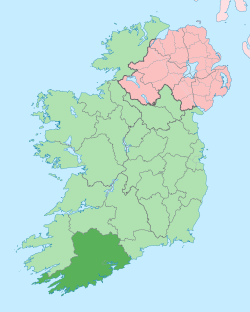
County Cork in the south of Ireland
250px-Island_of_Ireland_location_map_Cork.svg.png
 
Re: Schmallenberg virus : new Akabane-like virus in cattle, sheep and goats in Europe

Re: Schmallenberg virus : new Akabane-like virus in cattle, sheep and goats in Europe

Website DARD NI

31 October 2012

Schmallenberg Virus: First case in Northern Ireland confirmed

Schmallenberg Virus - a disease which can cause fever and birth defects in farm animals - has been detected in Northern Ireland for the first time.

It follows tests carried out on a malformed calf from a farm near Banbridge in County Down.

The Department of Agriculture and Rural Development (DARD) said the results confirmed the presence of the virus.


Read more: BBC News
 
Last edited:
Re: Schmallenberg virus : new Akabane-like virus in cattle, sheep and goats in Europe

Re: Schmallenberg virus : new Akabane-like virus in cattle, sheep and goats in Europe

Second case of midge bourne livestock virus confirmed in Ireland

Wednesday October 31 2012

A VIRUS that causes fever in cattle and sheep was detected for the first time in Northern Ireland today, after the first case in the Republic was confirmed yesterday.

The Department of Agriculture in Northern Ireland said tests on a malformed calf in Co Down had found traces of Schmallenberg Virus.

Another calf from the same herd tested negative but has displayed signs consistent with those associated with the disease, the department said.

Read more: Independent

See also: Department of Agriculture

County Cork in the south of Ireland
250px-Island_of_Ireland_location_map_Cork.svg.png
 
Re: Schmallenberg virus : new Akabane-like virus in cattle, sheep and goats in Europe

Re: Schmallenberg virus : new Akabane-like virus in cattle, sheep and goats in Europe

UK : Schmallenbergvirus confirmed in 429 holdings

Tip of the iceberg? Serological evidence from several countries indicates the majority of adult cattle, sheep and goats in affected regions is positive for Schmallenbergvirus.


1 November – Schmallenberg virus update on testing results

UK - Schmallenberg Virus – update on testing results (figures correct as of 24 October 2012).

Fetal malformation (1)
Cattle Holdings - 57
Sheep Holdings - 224

Total - 281

Serology (2)
Cattle Holdings - 114
Sheep Holdings - 13

Total - 127

Acute Disease (3)
Cattle Holdings - 21


(1) - Fetal malformation and positive SBV PCR testing to detect virus or positive SBV fetal fluid serology to detect antibody
evidence of historical infection

(2) - Positive SBV serology, to detect antibody evidence of historical infection in either healthy animals or clinical cases which have
not been confirmed by tests in 1and 3.

(3) - Clinical signs in cattle including diarrhoea and milk drop associated with rising antibody titre to SBV or positive SBV PCR
testing for virus in blood


DEFRA
 
Re: Schmallenberg virus : new Akabane-like virus in cattle, sheep and goats in Europe

Re: Schmallenberg virus : new Akabane-like virus in cattle, sheep and goats in Europe

France is starting up SBV surveillance again

France is starting up SBV surveillance again, after reports of malformed lambs in several departments in september.

ESA will take into account actual cases of malformed offspring from September 1, 2012.

Link to document

Survepi

Latest update.

.
 
Re: Schmallenberg virus : new Akabane-like virus in cattle, sheep and goats in Europe

Re: Schmallenberg virus : new Akabane-like virus in cattle, sheep and goats in Europe

The Irish Times - Friday, November 9, 2012

Ireland: second case of livestock virus found

ALISON HEALY

A second case of a newly discovered livestock disease has been confirmed.

The first Schmallenberg virus case was confirmed by the Department of Agriculture last week following tests on a bovine foetus which came from a farm in Co Cork. This latest case was discovered on another Cork farm. A cow had aborted a foetus and a postmortem confirmed the presence of the virus.

The Schmallenberg virus does not pose a risk to human health or have food safety implications, but if cows, sheep or goats come in contact with the virus during the early stages of pregnancy, they may subsequently abort or give birth to malformed offspring.

The disease is thought to be spread by midges.
 
Re: Schmallenberg virus : new Akabane-like virus in cattle, sheep and goats in Europe

Re: Schmallenberg virus : new Akabane-like virus in cattle, sheep and goats in Europe

Germany: current Information on Schmallenberg virus

last updated November 6, 2012

As of 21 May case numbers and map will be updated weekly.

In Germany animals from 1910 holdings have been tested positive for Schmallenberg virus so far.

The cases occurred in 988 cattle holdings, 874 sheep holdings and 48 goat holdings.


Affected federal states are North Rhine-Westphalia (269 cattle, 273 sheep, 13 goat holdings), Lower Saxony (226 cattle, 143 sheep, 6 goat holdings), Hesse (122 cattle, 137 sheep holdings, 9 goat holdings), Schleswig-Holstein (110 cattle, 101 sheep holdings, 1 goat holding), Rhineland-Palatinate (1 Bison holding, 51 cattle, 43 sheep, 5 goat holdings), Baden-Wuerttemberg (35 cattle, 25 sheep, 6 goat holdings), Brandenburg (24 cattle, 21 sheep holdings), Thuringia (28 cattle, 31 sheep, 2 goat holdings), Saxony-Anhalt (18 cattle, 23 sheep, 2 goat holdings), Hamburg (2 cattle, 6 sheep holdings), Bavaria (80 cattle, 21 sheep holdings, 1 goat holding), Saxony (9 cattle holding, 36 sheep holdings), Mecklenburg-Western Pomerania (12 cattle, 10 sheep holdings, 1 goat holding), Saarland (1 cattle holding, 4 sheep, 2 goat holdings) and Berlin (1 sheep holding).

FLI

Link to map
 
Re: Schmallenberg virus : new Akabane-like virus in cattle, sheep and goats in Europe

Re: Schmallenberg virus : new Akabane-like virus in cattle, sheep and goats in Europe

Germany - Current Information on Schmallenberg virus

last updated November 13, 2012

As of 21 May case numbers and map will be updated weekly.

In Germany animals from 1930 holdings have been tested positive for Schmallenberg virus so far.

The cases occurred in 1006 cattle holdings, 876 sheep holdings and 48 goat holdings.


Affected federal states are North Rhine-Westphalia (269 cattle, 273 sheep, 13 goat holdings), Lower Saxony (226 cattle, 143 sheep, 6 goat holdings), Hesse (123 cattle, 137 sheep holdings, 9 goat holdings), Schleswig-Holstein (111 cattle, 102 sheep holdings, 1 goat holding), Rhineland-Palatinate (1 Bison holding, 51 cattle, 43 sheep, 5 goat holdings), Baden-Wuerttemberg (38 cattle, 25 sheep, 6 goat holdings), Brandenburg (24 cattle, 21 sheep holdings), Thuringia (28 cattle, 31 sheep, 2 goat holdings), Saxony-Anhalt (19 cattle, 23 sheep, 2 goat holdings), Hamburg (2 cattle, 6 sheep holdings), Bavaria (92 cattle, 22 sheep holdings, 1 goat holding), Saxony (9 cattle holding, 36 sheep holdings), Mecklenburg-Western Pomerania (12 cattle, 10 sheep holdings, 1 goat holding), Saarland (1 cattle holding, 4 sheep, 2 goat holdings) and Berlin (1 sheep holding).

FLI

Link to map
 
Re: Schmallenberg virus : new Akabane-like virus in cattle, sheep and goats in Europe

Re: Schmallenberg virus : new Akabane-like virus in cattle, sheep and goats in Europe

From the United Kingdom

Mystery surrounds calf and lamb losses

Rhian Price

Friday 16 November 2012

Mystery surrounds pregnancy scanning results, which show potentially devastating numbers of calf and lamb losses on UK farms.

Livestock producers face early lambing losses as high as two-thirds on some farms, suggest initial results. Many scanners are reporting barren ewes, failed pregnancies or dead foetuses. Cattle losses are almost as bad in some places.

There is a "strong suspicion" that the Schmallenberg virus could be to blame, say some vets. But other causes, such as poor nutrition following a year of extreme wet weather, have been cited by other vets and animal health experts.

John Barnes, a scanner in the north east of England, told Farmers Weekly he had recorded problems in about two-thirds of 10,000 ewes across 80 flocks. One farm later tested positive with the Schmallenberg virus, which can cause death and deformity in unborn livestock.

Cattle scans revealed up to 50% of 4,000 cows scanned were showing either empty or with dead calves.


Other operators have begun to report similar problems as scanning gets into full swing ahead of next spring's lambing season.

In the West Midlands, scanner Phil Preece reported anomalies in about a third of 8,000 early lambing ewes examined so far this year. Mr Preece said it was a "real one-off" and he had not experienced results like it in 14 years of scanning.

Both men said they had spoken to other scanners who reported similar issues.

It is not known if these cases are linked to the Schmallenberg virus, but flocks at highest risk from the virus would have been those tupped in late summer or early autumn when midge activity was at its highest.

Read more: Farmers Weekly
 
Re: Schmallenberg virus : new Akabane-like virus in cattle, sheep and goats in Europe

Re: Schmallenberg virus : new Akabane-like virus in cattle, sheep and goats in Europe

machinetranslation

Norway: antibodies to Schmallenberg virus detected in milk

Published: 11/14/2012

The Veterinary Institute found antibodies against Schmallenberg virus in milk samples from cattle herds in eastern Norway. Detection of antibodies means that the animal has been infected by the virus at one time or another. Schmallenberg virus is not contagious to humans. It is not dangerous to drink milk or eat meat from animals that are infected.

25. October this year, the National Veterinary Institute that Schmallenberg virus was detected in Norway for the first time. The virus was found in biting midges. When biting midges sucking blood from infected animals can transmit the virus to other animals they suck blood from. The virus can cause brief illness in cattle and sheep. Animals that are infected early in pregnancy may have babies that are stillborn or who have severe deformities.

Not dangerous to drink milk or eat meat

Now, antibodies against the virus detected in samples of milk from Norway. The samples are examined as part of a monitoring program that FSA and Veterinary Institute collaborate. It is not dangerous to drink milk or eat meat from animals in the herds milk comes from ..

Mapping the extent

Schmallenberg is not considered a dangerous disease, but may have implications for those engaged in livestock. Veterinary Institute and the FSA are now working to examine milk from throughout southern Norway to get a picture of the spread. Currently there are 532 milk samples examined, and of these 72 samples were positive. Veterinary Institute, believes the results from the remaining 1700 samples have been received will be ready within the next week. FSA is now underway to probe into some of the herds who delivered milk that contains antibodies against the virus.


Read more: Mattilsynet

schmallenberg_virus-_soer_norge_web.jpg


More details (in Norwegian).

.
 
Re: Schmallenberg virus : new Akabane-like virus in cattle, sheep and goats in Europe

Re: Schmallenberg virus : new Akabane-like virus in cattle, sheep and goats in Europe

Germany: current Information on Schmallenberg virus

last updated November 20, 2012

As of 21 May case numbers and map will be updated weekly.

In Germany animals from 1951 holdings have been tested positive for Schmallenberg virus so far.

The cases occurred in 1026 cattle holdings, 877 sheep holdings and 48 goat holdings.


Affected federal states are North Rhine-Westphalia (269 cattle, 273 sheep, 13 goat holdings), Lower Saxony (226 cattle, 143 sheep, 6 goat holdings), Hesse (123 cattle, 137 sheep holdings, 9 goat holdings), Schleswig-Holstein (111 cattle, 102 sheep holdings, 1 goat holding), Rhineland-Palatinate (1 Bison holding, 51 cattle, 43 sheep, 5 goat holdings), Baden-Wuerttemberg (40 cattle, 25 sheep, 6 goat holdings), Brandenburg (24 cattle, 21 sheep holdings), Thuringia (28 cattle, 31 sheep, 2 goat holdings), Saxony-Anhalt (19 cattle, 23 sheep, 2 goat holdings), Hamburg (2 cattle, 6 sheep holdings), Bavaria (109 cattle, 23 sheep holdings, 1 goat holding), Saxony (10 cattle holdings, 36 sheep holdings), Mecklenburg-Western Pomerania (12 cattle, 10 sheep holdings, 1 goat holding), Saarland (1 cattle holding, 4 sheep, 2 goat holdings) and Berlin (1 sheep holding).

FLI

Link to updated map
 
Re: Schmallenberg virus : new Akabane-like virus in cattle, sheep and goats in Europe

Re: Schmallenberg virus : new Akabane-like virus in cattle, sheep and goats in Europe

Untill today SBV was reported from northern Italy, Veneto region. Now the the first cases from Sardinia: malformed lambs were found which tested postive.

machinetranslation

A Tertenia case of Schmallenberg virus alarm for livestock

November 22, 2012

Found in the island's new pathogen that affects ruminants discovered in 2011 in Germany. The confirmation of the outbreak reached by the Zooprofilattico after the first clinical suspicion and the analyzes carried out in a herd of Tertenia Ogliastra.

Are immediately taken protective measures required by health protocols and around the area, within a radius of 4 km has been strengthened entomological surveillance.

La Prima Pagina

SCHMALLENBERG VIRUS, THE FIRST CONFIRMED CASE IN OGLIASTRA. TWO SUSPECTS IN SASSARI

Institute zooprofilattico of Sardinia has found in Ogliastra, in a herd of Tertenia , the first case of Schmallenberg virus (SBV ), disease identified in Germany last year that can 'hit sheep, cattle and goats. Two more suspected cases have been reported in the territory of the ASL of Sassari in as many sheep Mores and Sassari.La confirmation of the first confirmed case in the island and 'arrived this morning from Cesme-Reference Centre of exotic diseases of Teramo.

Already 'taken protective measures and health protocols and animals from the affected were subjected to new tests. Within a radius of four kilometers around breeding and 'been strengthened surveillance for the presence entomology insect vector, C. imicola, whose presence and 'Ogliastra favored by high temperatures this month. The Schmallenberg virus is named after the German town where it was isolated for the first time in affected animals and causes fever, decreased milk production, involvement of the genital sphere of pregnant animals, fetuses, stillbirths, birth defects and miscarriages.

Radiopress


sardinia.gif
 
Re: Schmallenberg virus : new Akabane-like virus in cattle, sheep and goats in Europe

Re: Schmallenberg virus : new Akabane-like virus in cattle, sheep and goats in Europe

SBV all over France

Emerging Infectious Disease Journal

Acute Schmallenberg Virus Infections, France, 2012

To the Editor: After unexpected emergence of bluetongue virus serotype 8 in northern Europe in 2006 (1), another arbovirus, Schmallenberg virus (SBV), which is transmitted by Culicoides spp. biting midges, emerged in Europe in 2011 and caused disease outbreaks among ruminants (2). Nonspecific clinical signs such as fever, decreased milk production, and diarrhea were associated with acute infection in cattle, and late abortions and birth defects in newborns were associated with infection of pregnant cows, ewes, and goats (2,3).

SBV, which belongs to the family Bunyaviridae and genus Orthobunyavirus, was detected in Germany, the Netherlands, and Belgium in 2011. This virus was later detected in the United Kingdom, France, Italy, Luxembourg, Spain, Denmark, and Switzerland (4). As of August 1, 2012, a total of 5,701 infected farms were reported in Europe (2,498 sheep farms, 3,124 cattle farms, and 79 goats farms) (www.survepi.org/cerepi/). France has been the country most affected: it had 2,650 SBV-infected farms (5), (i.e., in which >1 malformed offspring was positive for SBV by real-time reverse transcription PCR [RT-PCR] on 1,128 sheep farms, 1,505 cattle farms, and 17 goat farms).
Abnormalities detected in offspring in 2011 and in early 2012 were caused by infections acquired in 2011 (4). At that time, it was unclear whether SBV could survive the 2011–2012 winter and remain a threat to Europe. We report data suggesting that SBV overwintered or was reintroduced in France.
Figure

On May 16, 2012, a herd of 75 dairy cows in southwestern France (Pyrénées-Atlantiques) had hyperthermia and decreased milk production. Of 18 cows tested by the Agence Nationale de Sécurité Sanitaire (Maisons-Alfort, France), 9 were positive for SBV by PCR (6) (cycle threshold [Ct] range 17–36.5) and negative for SBV by ELISA (IDVet, Montpellier, France), 1 was positive by PCR and ELISA, and 8 were negative by PCR and ELISA (Figure).

On May 23, a week after the first samples were collected, all cows tested were positive by ELISA and only 1/18 cows were positive by RT-PCR. On June 29, all 18 cows tested were negative by RT-PCR. Detection of SBV-neutralizing antibodies by virus neutralization assay in serum samples obtained on May 23 confirmed SBV ELISA results and showed that a commercial IgG ELISA is suitable for detection of acute cases of SBV.

Viremia, as measured by RT-PCR, occurs during the first 5 days after acute infection (2). Antibody response against SBV, as measured by ELISA, is detected during or after the first 10 days after experimental infection (C. Sailleau et al., unpub. data). Accordingly, serologic and molecular data showed that acute SBV infection occurred in cattle in southwestern France in May 2012, suggesting that SBV overwintered or was reintroduced.

Moreover, in July 2012, another case of acute SBV infection was identified in Finistère (Brittany). A cow with hyperthermia and diarrhea was SBV positive by RT-PCR (Ct 31) and negative by ELISA, which indicated a recent SBV infection.

Three blood samples (each 170 µL) from RT-PCR–positive cows (Ct range 15–21) (1 from the Finistère and 2 from Pyrénées-Atlantiques) were injected into 3 adult IFNAR−/− mice. Seventy microliters of each sample was injected intraperitoneally and 100 μL was injected into the neck scruff of the same mice. After 4 days, the mice showed no clinical signs and their weights were unchanged. Blood samples were collected and tested for SBV by RT-PCR. All mice were positive for SBV RNA (Ct range 15–21). These data showed that blood samples from cows contained virus RNA and confirmed that SBV reemerged in 2012.

On July 25, 2012, SBV infection was identified in a cow in Jura Canton in the northwestern, French-speaking region of Switzerland (Romandie) (7). A serologic study conducted in the United Kingdom showed that several cattle and sheep seroconverted for SBV in 2012 (8). However, our data show that SBV survived the winter, when midge numbers decreased. The precise mechanisms of SBV overwintering are not known and need to be explored.

The consequences of SBV recirculation should be investigated, particularly in pregnant cows, ewes, and goats. The 2 SBV-positive farms described in this report are located in a previously SBV-free area (Finistère-Brittany) or an area in which the infection rate was low (Pyrénées-Atlantiques) in the winter of 2011–2012, during which seroprevalence for most herds was probably weak (C. Sailleau et al., unpub. data). Therefore, reemergence of cases of congenital forms of SBV infection in France and others areas of Europe can be expected.
 
Re: Schmallenberg virus : new Akabane-like virus in cattle, sheep and goats in Europe

Re: Schmallenberg virus : new Akabane-like virus in cattle, sheep and goats in Europe

More reports coming in from Sardinia, Italia.

machinetranslation

In Ozieri the third suspected case of Sassari in Schmallenberg

23/11/2012

SASSARI. rises to three cases of suspected disease of Schmallenberg in the area of jurisdiction of the ASL of Sassari.

The third case of infection was reported today to Ozieri, in Location "salatu." In a herd consists of 534 sheep were reported 13 suspected abortions.

In the meantime, expect confirmatory analysis by IZS of Teramo, for infections reported last night in two other farms of Sassari .

The company surveyed in the town of Morecambe is located in loc. "Sa Cunzessione", where present of 295 sheep, 28 leaders have experienced symptoms while 15 lambs died with birth defects.

Holding of Sassari, located in loc. "Baratz," of 392 leaders present, four sheep showed symptoms, 10 lambs were killed with birth defects.

's Crisis Unit met last night in Sassari, Department of Prevention has taken steps to assign tasks and define tasks: survey of companies, delimitation of 4 km surveillance area around the suspected case, identification of the animal movement.

Areas of surveillance rise, therefore, three with 156 companies involved, 3,649 cattle, 37,933 sheep and 203 goats in the range of 4 km delimited.

Read more: Sassari Notizie
 
Re: Schmallenberg virus : new Akabane-like virus in cattle, sheep and goats in Europe

Re: Schmallenberg virus : new Akabane-like virus in cattle, sheep and goats in Europe

Pressrelease National Veterinary Institute SVA - Sweden

machinetranslation

november 27, 2012

New virus in sheep and cattle in Sweden

For the first time, the proliferation of Schmallenbergvirus confirmed in Sweden and studies show that the infection is widespread in the country.

Viruses have also been demonstrated in the midges that spread the disease. Infection with the virus can lead to malformed fetuses in sheep, goats and cattle. The infection will not lead to any restrictions imposed by the Board of Agriculture and the keepers will be able to move their animals as usual.

In late 2011 found a new virus in ruminants in Germany, Holland and Belgium. In 2012 it spread to many more countries in Europe. The virus is named after the place where it was first discovered, Schmallenberg. The virus does not spread to humans and it is not dangerous to drink milk or eat meat from animals that have had the infection. Agriculture and the National Veterinary Institute (SVA) has conducted a national survey of cow's milk from many farms investigated because antibodies to the virus is excreted in the milk . A large proportion of the samples indicates that there are antibodies. SVA also demonstrated virus in samples from three midges, the insect that spreads the disease. - In view of the reports of contamination levels we have received from the neighboring countries in recent times, the results are not unexpected. Since the infection is spread by midges, no contamination during the winter, says Erika Chenais, epidemiologist at SVA.

The pregnancy of ruminants affected by the virus

The virus has affected pregnancy in ruminants in Sweden suspected of including in a sheep herd in south-eastern Sweden. Several of the animals that did not become pregnant also had antibodies to the virus. This implies a relationship but is no definitive evidence that virus infection has caused the symptoms, which may also have other causes. Earlier this year found evidence of infection in Sweden last autumn, but it is not until now has anyone seen a proliferation and possible links between the infection and the symptoms of ruminants in the country. A major outbreak involving cattle and sheep in early pregnancy can cause serious production losses.

SVA

Link to map

.
 
Re: Schmallenberg virus : new Akabane-like virus in cattle, sheep and goats in Europe

Re: Schmallenberg virus : new Akabane-like virus in cattle, sheep and goats in Europe

machinetranslation

Pressrelease Norwegian Veterinary Institute

Schmallenbergvirus widespread along the coast of southern Norway

Published: 11/27/2012

Examination of milk samples for Scmallenbervirus shows that many herds in southern Norway have been infected by the virus.

Fisheries and Veterinary Institute has conducted a survey of bulk milk samples for antibodies against Schmallenbergvirus from herds in southern Norway. By ca. 2400 herds that have been examined have more than 400 herds antibodies against the virus, most infected situated along the coast and rivers. There are large regional differences regarding the proportion of positive herds, with more than 50% positive in the counties of Østfold, Vestfold, Aust-Agder, while it is less than 2% positive herds in Rogaland.

Schmallenbergvirus transmitted by biting midges and can infect cattle, sheep, goats and wild ruminants and cause serious birth defects when infection in the first half of gestation. Surveys in Europe in 2011 and 2012 has proven Schmallenbergvirus approx. 4% bovine herd and about 7% of sheep farms.

FSA monitors the situation and follow up with further studies in 2013.

Kart-Schmallenberg-i-Norge-nov-2012.jpg


More: Norwegian Veterinary Institute
 
Re: Schmallenberg virus : new Akabane-like virus in cattle, sheep and goats in Europe

Re: Schmallenberg virus : new Akabane-like virus in cattle, sheep and goats in Europe

France, update - 31 new holdings confirmed

In september France restarted SBV surveillance.

Until november 27 38 holdings were suspected, 31 holdings with malformed offspring were confirmed: sheep (24), goats (3), cattle (6).

These new confirmed farms are scattered all over France: map via this link.


SBV cong?nital : Situation ?pid?miologique

Traitement 1 du 27 novembre 2012

La reprise de la circulation virale est ?tablie sur notre territoire depuis mai 2012 et on note
l?apparition de foyers de SBV cong?nital chez des ovins dans plusieurs d?partements depuis
d?but septembre 2012.

Depuis le 1er septembre 2012, ce sont au total 38 suspicions qui ont ?t? enregistr?es
(24 ?levages ovins, 5 ?levages caprins, et 9 ?levages bovins).

31 ?levages ont ?t? confirm?s atteints par des formes cong?nitales de SBV, r?partis dans
17 d?partements : 03, 04, 08, 10, 18, 31, 34, 38, 42, 44, 65, 69, 74, 76, 81, 84 et 86.

Sont concern?s : 22 ?levages ovins, 3 ?levages caprins et 6 ?levages bovins.

survepi
 
Back
Top