• FluTrackers.com Inc. does not provide medical advice. Information on this web site is collected from various internet resources, and the FluTrackers board of directors makes no warranty to the safety, efficacy, correctness or completeness of the information posted on this site by any author or poster. The information collated here is for instructional and/or discussion purposes only and is NOT intended to diagnose or treat any disease, illness, or other medical condition. Every individual reader or poster should seek advice from their personal physician/healthcare practitioner before considering or using any interventions that are discussed on this website. By continuing to access this website you agree to consult your personal physican before using any interventions posted on this website, and you agree to hold harmless FluTrackers.com Inc., the board of directors, the members, and all authors and posters for any effects from use of any medication, supplement, vitamin or other substance, device, intervention, etc. mentioned in posts on this website, or other internet venues referenced in posts on this website.
  • We are not asking for any donations. Do not donate to any entity who says they are raising funds for us.

Rwanda - MoH announces "a few" Marburg cases - September 27, 2024 - MoH confirms 66 cases/15 deaths - declared over on December 20, 2024

In today's Africa CDC ongoing presser, the Rwanda Minister of Health is reporting about Marburg:

62 total cases,
38 recovered,
15 deaths,
9 under treatment with most improving,
24% cfr,
856 vaccinated,
200-300 tests per day, > 4000 total tested,
Trend is "very encouraging", "new infections declining significantly".

https://www.youtube.com/watch?v=z1R26gY1b_0
 

Kai Kupferschmidt

@kakape


Main take-away so far from very interesting presser on #Marburg outbreak in Rwanda:
@nsanzimanasabin
says all cases are linked to known infection chains. The outbreak is one major cluster with three branches.
Image
8:45 AM · Oct 20, 2024
·
10.5K
Views


2


22


54


16

FluTrackers.com
Post your reply


Reply
Kai Kupferschmidt

@kakape
·
3h


Draft genome of the virus has also been completed. Strain is being called "October strain" and is closely related to the strain that caused the second biggest Marburg outbreak ever in 2014 in Uganda.
Image


1


1


10

2.1K


Kai Kupferschmidt

@kakape
·
3h


"Most of the patients we had were young, around the age of 30, 35, which is the workforce among these health workers. Maybe that is a factor too to think about in terms of case fatality and recovery rate, but also early detection and treatment", says
@nsanzimanasabin


1


4

1.8K


Kai Kupferschmidt

@kakape
·
3h


And here is the feel good graphic of the day:
Image


1


9

2.3K


Kai Kupferschmidt

@kakape
·
3h


He has been impressed with level of critical care in Rwanda, says
@DrTedros
: "Two of the patients we met had experienced all of the symptoms of Marburg, including multiple organ failure, but they were put on life support. They were successfully intubated and extubated, and are
Show more


2


1


17

2.3K


Kai Kupferschmidt

@kakape
·
3h


Understandably,
@nsanzimanasabin
is celebrating the successes so far in handling the outbreak but also sounding appropriately cautious on trajectory, noting an outbreak is declared over after 42 days: "Now we're six days down the road", says alert will remain at highest level.


1


4

1.8K


Kai Kupferschmidt

@kakape
·
2h


Glad that
@nsanzimanasabin
took my question on the index case: Says it was a 27-year old man who "has been exposed in a particular area, in a cave with specific species of bat that has been sequenced before in the region". Would love more details of course, but sounded definite
Show more


1


5


12

3.8K


Kai Kupferschmidt

@kakape
·
2h


Okay, presser is over. Will try to find out more details in coming days. Was listening and transcribing on a train on the way to the airport, so apologies for typos etc...


Marburg virus disease - Rwanda

18 October 2024

Situation at a glance

As of 17 October 2024, a total of 62 Marburg virus disease cases, including 15 deaths (CFR: 24.2%), have been reported in Rwanda, with forty-three recoveries. Contact tracing is underway, with over 800 contacts under follow-up as of 14 October 2024. In October, a surge team from WHO was deployed to support the in-country response across the functions of incident management: epidemiology, health operations, case management, health logistics, vaccines research, partner coordination and infection prevention and control.

Description of the situation


Since the last Disease Outbreak News on this event was published on 11 October 2024, four additional laboratory-confirmed cases of Marburg virus disease (MVD) have been reported in Rwanda. As of 17 October 2024, a total of 62 cases, including 15 deaths (CFR: 24.2%), have been reported. Most of the cases have been reported from the three districts in Kigali city.

Since the declaration of the outbreak on 27 September and as of 17 October, 43 confirmed cases have recovered, the remaining four cases are under care at the designated Marburg treatment center. Health workers from two health facilities in Kigali account for over 80% of confirmed cases. All new confirmed cases reported within the past week, have been associated with the two hospital clusters in Kigali. As of 17 October 2024, a total of 4486 tests for Marburg virus have been conducted, with approximately 200-300 samples being tested daily at the Rwanda Biomedical Center.

Contact tracing is underway, with over 800 contacts under follow-up as of 14 October 2024. Both contacts who travelled internationally, to Belgium and Germany, have completed the 21 days follow-up period and no longer pose a public health risk.

The source of the outbreak is still under investigation and additional information will be provided when available.

Epidemiology


MVD is a highly virulent disease that can cause haemorrhagic fever and is clinically similar to Ebola virus disease. Marburg and Ebola viruses are both members of the Filoviridae family (filovirus). People are infected with Marburg virus when they come into close contact with Rousettus bats, a type of fruit bat, that can carry the Marburg virus and are often found in mines or caves. Marburg virus then spreads between people via direct contact (through broken skin or mucous membranes) with the blood, secretions, organs or other bodily fluids of infected people, and with surfaces and materials (e.g. bedding, clothing) contaminated with these fluids. Health workers have previously been infected while treating patients with suspected or confirmed MVD. Burial ceremonies that involve direct contact with the body of the deceased can also contribute to the transmission of Marburg virus.

The incubation period varies from two to 21 days. Illness caused by Marburg virus begins abruptly, with high fever, severe headache and severe malaise. Severe watery diarrhoea, abdominal pain and cramping, nausea and vomiting can begin on the third day. Although not all cases present with haemorrhagic signs, severe haemorrhagic manifestations may appear between five and seven days from symptoms onset, and fatal cases usually have some form of bleeding, often from multiple areas. In fatal cases, death occurs most often between eight and nine days after symptom onset, usually preceded by severe blood loss and shock. There is currently no approved treatment or vaccine for MVD. Some candidate vaccines and therapeutics are currently under investigation.

Seventeen outbreaks of MVD have previously been reported globally. The most recent outbreaks were reported in Equatorial Guinea and the United Republic of Tanzania between February and June 2023. Additional countries that previously reported outbreaks of MVD in the African Region include Angola, the Democratic Republic of the Congo, Ghana, Guinea, Kenya, South Africa, and Uganda.

Public health response
  • The Government of Rwanda is coordinating the response with support from WHO and partners.
  • A surge team from WHO was deployed to support the in-country response across the functions of incident management, epidemiology, health operations, case management, infection prevention and control, health logistics, therapeutics and vaccines research, and partner coordination.
  • WHO engaged with its collaborating centers and other reference laboratories and partners to support Rwanda in assessing test performance.
  • Given the increasing number of survivors, WHO is supporting the Government in the establishment of a programme for survivors, by sharing technical guidance and protocols for the establishment of a national programme.
  • WHO, the Government of Rwanda, and partners have launched Marburg therapeutics clinical trials.
  • WHO and partners supported the Ministry of Health (MOH) in developing and finalising the national Infection Prevention and Control (IPC) operational guidance for MVD adopted/adapted from WHO-IPC guideline. This operational guidance together with IPC standard operating procedures will be rapidly disseminated to all health facilities.
  • WHO supplied 12 000 personal protective equipment (PPE) which is sufficient to run a 50-bed treatment center for 30 days.
  • As part of ongoing efforts to strengthen IPC, a Joint WHO and MOH IPC team has trained 520 healthcare workers on IPC measures.
  • WHO has provided technical advice to public health authorities in Rwanda and at-risk countries on the implementation of evidence-informed and risk-based health measures; the strengthening of detection, reporting and management capacities at points of entry and across borders; and travel advice.
  • WHO has published interim guidance on the Considerations for border health and points of entry for filovirus disease outbreaks, which applies to but is not limited to the current MVD outbreak in Rwanda.
  • WHO has also published a statement advising against any travel restrictions and against any trade restrictions with Rwanda in the context of the ongoing MVD outbreak.
  • WHO is providing support in surrounding countries to assess the readiness of healthcare facilities, points of entry and border communities within surrounding countries and specifically risk mapping for areas bordering Rwanda.
WHO risk assessment


Marburg virus disease (MVD) is caused by the same family of viruses (Filoviridae) that causes Ebola virus disease. MVD is an epidemic-prone disease associated with high CFR (24-88%). In the early course of the disease, MVD is challenging to distinguish from other infectious diseases such as malaria, typhoid fever, shigellosis, meningitis and other viral haemorrhagic fevers. Epidemiologic features can help differentiate between viral hemorrhagic fevers (including history of exposure to bats, caves, or mining) and laboratory testing is important to confirm the diagnosis.

With 62 confirmed cases reported, this is the third largest MVD outbreak reported, with the majority of confirmed cases reported among healthcare workers. Healthcare-associated infections (also known as nosocomial infections) of this disease can lead to further spread if not controlled early. The importance of screening all persons entering health facilities as well as inpatient surveillance for prompt identification, isolation, and notification cannot be overemphasized. This is in addition to the importance of contact identification and monitoring of all probable and confirmed cases. The source of the outbreak, the likely date of onset of the first case and additional epidemiological information on cases are still pending further outbreak investigation.

On 30 September WHO assessed the risk of this outbreak as very high at the national level, high at the regional level, and low at the global level. However, based on the evolution of the outbreak and ongoing investigations, this risk assessment may be revised. MVD is not easily transmissible (i.e. in most instances it requires contact with the body fluids of a sick patient presenting with symptoms or with surfaces contaminated with these fluids). In addition, there are ongoing public health measures in place, including active surveillance in facilities and communities, testing suspected cases, isolation and treatment of cases and contact tracing.

WHO advice


MVD outbreak control relies on using a range of interventions, including prompt isolation and case management; surveillance including active case search, case investigation and contact tracing; a laboratory service; infection prevention and control, including prompt safe and dignified burial; and social mobilization – community engagement is key to successfully controlling MVD outbreaks. Raising awareness of risk factors for Marburg virus infection and protective measures that individuals can take is an effective way to reduce human transmission. WHO advises the following risk reduction measures as an effective way to reduce MVD transmission in healthcare facilities and in communities:
  • To reduce human infections and deaths, it is essential to raise community awareness about the risk factors for Marburg virus infection particularly of human-to-human transmission, and the protective measures individuals can take to minimize exposure to the virus. This includes encouraging anyone with symptoms to seek immediate care at a health facility or designated treatment center to lower the risk of community transmission and improve their chances for recovery.
  • Surveillance activities, including the wide dissemination of the MVD case definition, should be strengthened in all affected districts, including contact tracing and active case finding.
  • Critical infection prevention and control measures should be implemented and/or strengthened in all health care facilities, per WHO’s Infection prevention and control guideline for Ebola and Marburg disease. Health workers caring for patients with confirmed or suspected MVD should apply Transmission-based precautions in addition to: Standard precautions, including appropriate use of PPE and hand hygiene according to the WHO 5 moments to avoid contact with patient’s blood and other body fluids and with contaminated surfaces and objects
  • A comprehensive strategy to manage deceased individuals in communities should be implemented in communities. Safe and dignified burials should be carried out, with strong engagement communities.
  • Rapid qualitative assessments should be implemented to collect socio-behavioural data, which can then be utilized to guide the response.
  • Timely laboratory testing of all suspected cases needs to be maintained and supported with a reliable sample transportation system.
  • Border health readiness and response capacities should be strengthened at points of entry and in communities bordering areas reporting MVD cases and onboard conveyances, and public health advice should be provided to travellers in line with WHO’s interim guidance on considerations for border health and points of entry for filovirus disease outbreaks.
  • WHO encourages all countries to send the first samples that tested positive for Marburg virus and a subset of negative samples to a WHO Collaborating Centre or a regional reference laboratory for inter-laboratory comparison.
  • WHO recommends that clinical data from suspected and confirmed Marburg virus disease cases be systematically collected to improve the limited understanding of the clinical course and direct causes and risk factors for poor outcomes. This can be done by contributing anonymized data to the WHO Global Clinical Platform for viral haemorrhagic fevers.
Based on the current risk assessment, WHO advises against any travel restrictions and against any trade restrictions with Rwanda. For further information, please see WHO advice for international traffic in relation to the Marburg virus disease outbreak in Rwanda.

...
https://www.who.int/emergencies/disease-outbreak-news/item/2024-DON540

----------------------------------

WHO Director-General's remarks at the media briefing on the outbreak of Marburg virus disease in Rwanda – 20 October 2024


20 October 2024 Honourable Minister Dr Sabin Nsanzimana,

Members of the press,

Dear colleagues and friends,

It’s an honour to be back in Rwanda, and I thank the Minister for his hospitality, and also for his leadership in the response to the outbreak of Marburg virus disease.

Last night I also had the opportunity to meet with His Excellency President Kagame, and it is clear that he is closely engaged in the response to the outbreak.

Leadership from the highest levels of government is essential in any outbreak response, and that’s what we see here in Rwanda. Thank you Mr President and Mr Minister for your leadership.

We’re pleased to see that there have been no new cases in the past six days, and we hope that remains the case.

Yesterday we visited the treatment centre, where there are still a few patients receiving treatment, although most are now negative for Marburg and we expect them to be discharged shortly.

We were impressed with the level of critical care for patients, which has not been used before in an outbreak of a viral haemorrhagic fever in our Continent (Africa).

Two of the patients we met had experienced all of the symptoms of Marburg, including multiple organ failure, but they were put on life support, they were successfully intubated and extubated, and are now recovering. We believe this is the first time patients with Marburg virus have been extubated in Africa. These patients would have died in previous outbreaks.

This reflects the work Rwanda has done over many years to strengthen its health system, to develop capacities for critical care and life support that can be deployed both in regular hospital care, and in emergencies. I have heard this not only from local doctors but foreign nationals working in the hospitals and treatment centres in Rwanda.

Although there are no approved vaccines or therapeutics for Marburg, we congratulate Rwanda for the speed with which it initiated trials of both vaccines and therapeutics, and we hope that these trials will help to generate the data to support approval of these products for future outbreaks.

This also demonstrates the work Rwanda has done to strengthen its regulatory system, which has been working towards reaching WHO maturity level 3. We hope the agency will reach maturity level 3 by the end of this year.

I thank the many partners who have supported these trials, including the Sabin Vaccine Institute and the University of Oxford – and I’m glad that the CEO of the Sabin Institute, Amy Finan, is able to join us today.

As you know, we have three other candidate vaccines in the pipeline, from Oxford University, Public Health Vaccines and IAVI, and I am really glad that tropical diseases like Marburg virus, which is dangerous, is getting attention, and we have vaccines in the pipeline.

Yesterday we also visited the National Command Post, and we were impressed with the way technology is being used to provide real-time information for action, and enhance operational efficiency. Borrowing the words of President Kagame, I saw smart Rwanda in action.

And we also visited the BioNTech vaccine manufacturing facility. I was here in Kigali for the groundbreaking ceremony two years ago, so I was very pleased to see the significant progress in construction.

One of the key lessons of the COVID-19 pandemic was the need to expand local production of vaccines to avoid the inequitable access to vaccines that we saw, and we’re pleased to see the way Rwanda and BioNTech are investing in local production. You know how Africa was treated when the vaccines arrived, with vaccine inequity and vaccine nationalism, and we hope these strategic investments will fix the inequity problems we faced during COVID.

So, as I said, we’re very pleased that there have been no new cases and deaths in the past six days, and I can see the outbreak is being managed under strong leadership. But we are dealing with one of the world’s most dangerous viruses, and continued vigilance is essential.

Enhanced surveillance, contact tracing and infection prevention and control measures must continue at scale until the outbreak is declared over.

WHO will continue to support the government in the response. Together with our partners we have provided technical experts, personal protective equipment, test kits and other supplies.

I thank especially the United States, the European Union and the United Kingdom for the funding they have provided to WHO and other partners.

I salute the dedicated health workers who have put themselves in harm’s way to save their colleagues, and who have continued to work despite the risks. And I honour the memory of those we have lost.

I would like to reiterate that based on a risk assessment, WHO advises against restrictions on travel or trade, because they are unnecessary and can harm Rwanda’s economy. Except harm, it does not bring anything.

Most countries have respected that advice, but some have imposed travel restrictions, and we ask those countries to reverse those restrictions.

Honourable Minister, thank you once again for your leadership, and I assure you of WHO’s complete commitment to supporting you in any way we can.


Murakoze cyane!

Thank you so much.​

https://www.who.int/news-room/speec...k-of-marburg-virus-disease----20-october-2024

 
Source: https://x.com/RwandaHealth/status/1849157681426190476/photo/2

image.png
 
NEWS

24 October 2024

Animal-to-human viral leap sparked deadly Marburg outbreak

The man with the first known Marburg infection of Rwanda’s outbreak had visited a cave hosting a particular species of bat — one with a history of carrying the deadly pathogen.

By Max Kozlov
...
Single source

To help inform outbreak control, researchers at the Rwanda Biomedical Centre in Kigali sequenced the Marburg virus genome of several infected people. They found that all samples closely resembled one another, suggesting that the virus spread rapidly in a short period of time and that they shared a common origin. They also found that the virus strain is closely related to one detected in Uganda in 2014 and to one found in bats in 2009, Yvan Butera, Rwanda’s minister of state for health, who co-led the research, tells Nature.

Comparison of the 2014 strain with the one causing the current outbreak shows a “limited mutation rate”, Butera says, suggesting that there have probably been few changes to the virus’s transmissibility or lethality over the past decade. Generally, viruses collect mutations as they replicate over time; if it is true that the mutation rate is low, Rasmussen wonders how the virus lingers in its animal reservoir — the Egyptian fruit bat (Rousettus aegyptiacus) — without major changes.
...
Butera says that the genomic analyses are being finalized; he and his colleagues hope to share the full data by the end of the week, he says.

doi: https://doi.org/10.1038/d41586-024-03457-4

https://www.nature.com/articles/d41586-024-03457-4
 
Not Yet Over: New Marburg Virus Cases Emerge

written by Jean De La Croix Tabaro October 25, 20241:18 am
...
From only one patient in isolation at the start of the week, the country is now registering new infections which calls for renewed vigilance.

Two new infections have brought the number of patients in isolation to three as of October 24.

And from what we already know, one of the two new patient, is a medical doctor, who join another big number of his colleagues who were also infected in the past, some even being among the 15 patients who succumbed to the virus.

“Today, we confirmed a new infection and it consists of a medical personnel who has been treating Marburg patients effectively. We wish him well,” writes Dr. Sabin Nsanzimana, Minister of Health.
...
https://www.ktpress.rw/2024/10/not-yet-over-new-marburg-virus-cases-emerge/
 
Marburg virus disease - Rwanda

25 October 2024

Situation at a glance

As of 24 October 2024, a total of 64 Marburg virus disease cases, including 15 deaths (case fatality ratio (CFR) 23.4%), have been reported in Rwanda. Among the initial 62 confirmed cases with available data, 70% were males, and 48% were aged between 30 to 39 years. The highest number of new confirmed cases were reported in the first two epidemiological weeks of the outbreak with 26 cases reported in epidemiological week 39 (23 to 29 September 2024) and 23 cases in week 40 (30 September to 6 October). This was followed by a sharp decline in weeks 41 and 42, with 12 and one case reported respectively. Contact tracing is ongoing, with 1146 contacts under follow-up as of 20 October 2024. Based on available updates from the outbreak investigation, the index case was a male between 20 and 30 years old with a history of exposure to bats in a cave.

Description of the situation

Since the last Disease Outbreak News on this event was published on 18 October 2024, two additional laboratory-confirmed cases of Marburg virus disease (MVD) were reported in Rwanda on 23 and 24 October. The new cases include a healthcare worker who had been treating MVD cases since the start of the outbreak and a case linked to the site where the index case was exposed. Both cases are currently in isolation and receiving treatment. As of 24 October 2024, a total of 64 confirmed cases, including 15 deaths (CFR: 23.4%), have been reported. Excluding the recently confirmed cases, 70% of the 62 initially confirmed cases were among males, and 48% were among adults between 30 and 39 years of age. Health workers from two health facilities in Kigali account for over 82% of confirmed cases. Most of the cases have been reported from the three districts in Kigali city.

The highest number of new confirmed cases were reported in the first two epidemiological weeks of the outbreak with 26 cases reported in the epidemiological week 39 (23 to 29 September 2024) and 23 cases in week 40 (30 September to 6 October). This was followed by a sharp decline in epi weeks 41 (7 to 13 October) and 42 (14 to 20 October), with 12 and one cases reported respectively.

Since the declaration of the outbreak by the Government of Rwanda on 27 September and as of 23 October, 46 confirmed cases have recovered, and three cases are under care at the designated Marburg treatment center. The 62 confirmed cases reported since the start of the outbreak have been part of one major cluster with three branches. As of 24 October 2024, a total of 5074 tests for Marburg virus have been conducted, with approximately 100-300 samples being tested daily at the Rwanda Biomedical Center.

Contact tracing is ongoing, with 1146 contacts under follow-up as of 20 October 2024.

WHO continues to support the Government of Rwanda. Enhanced surveillance, contact tracing and infection prevention and control measures must be maintained until the outbreak is declared over.

Based on available updates from the outbreak investigation, the index case was a male between 20 and 30 years old with a history of exposure to bats in a cave. Preliminary phylogenetic analyses indicate a close evolutionary relationship to a viral sequence from Orthomarburgvirus marburgense (Marburg virus, MARV) that was observed in the MVD outbreak in East Africa in 2014.[SUP]1[/SUP]

Figure 1. MVD cases by week of reporting in Rwanda, as of 24 October 2024, (n=64)

MVD Epi curve

[SUP]* [/SUP]The epidemiological week 43 is not complete as it will end on 27 October 2024.

Epidemiology


MVD is a highly virulent disease that can cause haemorrhagic fever and is clinically similar to Ebola virus disease. Marburg and Ebola viruses are both members of the Filoviridae family (filovirus). People are infected with Marburg virus when they come into close contact with Rousettus bats, a type of fruit bat, that can carry the Marburg virus and are often found in mines or caves. Marburg virus then spreads between people via direct contact (through broken skin or mucous membranes) with the blood, secretions, organs or other bodily fluids of infected people, and with surfaces and materials (e.g. bedding, clothing) contaminated with these fluids. Health workers have previously been infected while treating patients with suspected or confirmed MVD. Burial ceremonies that involve direct contact with the body of the deceased can also contribute to the transmission of Marburg virus.

The incubation period varies from two to 21 days. Illness caused by Marburg virus begins abruptly, with high fever, severe headache and severe malaise. Severe watery diarrhoea, abdominal pain and cramping, nausea and vomiting can begin on the third day. Although not all cases present with haemorrhagic signs, severe haemorrhagic manifestations may appear between five and seven days from symptoms onset, and fatal cases usually have some form of bleeding, often from multiple areas. In fatal cases, death occurs most often between eight and nine days after symptom onset, usually preceded by severe blood loss and shock. There is currently no approved treatment or vaccine for MVD. Some candidate vaccines and therapeutics are currently under investigation.

Seventeen outbreaks of MVD have previously been reported globally. The most recent outbreaks were reported in Equatorial Guinea and the United Republic of Tanzania between February and June 2023. Additional countries that previously reported outbreaks of MVD in the African Region include Angola, the Democratic Republic of the Congo, Ghana, Guinea, Kenya, South Africa, and Uganda.

Public health response
  • The Government of Rwanda is coordinating the response with support from WHO and partners.
  • A surge team from WHO was deployed to support the in-country response across the functions of incident management, epidemiology, health operations, case management, infection prevention and control, health logistics, therapeutics and vaccines research, and partner coordination.
  • On 19-20 October, WHO Director-General Dr Tedros Adhanom Ghebreyesus visited Kigali, where he met with the national authorities and WHO staff taking part in the national response.
  • WHO is continuously engaged with its viral hemorrhagic fever collaborating centers and other reference laboratories and partners to support Rwanda in assessing laboratory test performance.
  • WHO is supporting the Government in the establishment of a programme for recovered patients, by sharing technical guidance and protocols for the establishment of a national programme and by supporting Rwanda Ministry of Health (MOH) implementation effort.
  • WHO, the Government of Rwanda, and partners have launched Marburg therapeutics clinical trials, which is currently enrolling patients.
  • WHO and partners supported MOH in developing and finalising the national Infection Prevention and Control (IPC) operational guidance for MVD adapted from WHO IPC guideline. This operational guidance together with IPC standard operating procedures is being rapidly disseminated to all health facilities.
  • WHO supported MOH in the enhancing of IPC measures in the isolation sites.
  • WHO has provided technical advice to public health authorities in Rwanda and at-risk countries on the implementation of evidence-informed and risk-based health measures; the strengthening of detection, reporting and management capacities at points of entry and across borders; and travel advice.
  • WHO has published interim guidance on the Considerations for border health and points of entry for filovirus disease outbreaks, which applies to but is not limited to the current MVD outbreak in Rwanda.
  • WHO has also published a statement advising against any travel restrictions and against any trade restrictions with Rwanda in the context of the ongoing MVD outbreak.
  • WHO is providing support in surrounding countries to assess the readiness of healthcare facilities, points of entry and border communities within surrounding countries and specifically risk mapping for areas bordering Rwanda.
  • WHO is supporting the MVD treatment center with direct support from clinical experts in infectious disease, ICU and nursing as well as health logistics and WASH.
WHO risk assessment


Marburg virus disease (MVD) is caused by the same family of viruses (Filoviridae) that causes Ebola virus disease. MVD is an epidemic-prone disease associated with high CFR (24-88%). In the early course of the disease, MVD is challenging to distinguish from other infectious diseases such as malaria, typhoid fever, shigellosis, meningitis and other viral haemorrhagic fevers. Epidemiologic features can help differentiate between viral hemorrhagic fevers (including history of exposure to bats, caves, or mining) and laboratory testing is important to confirm the diagnosis.

With 64 confirmed cases reported, this is the third largest MVD outbreak reported to date, with 82% of confirmed cases reported among healthcare workers. Healthcare-associated infections (also known as nosocomial infections) of this disease can lead to further spread if not controlled early. The importance of screening all persons entering health facilities as well as inpatient surveillance for prompt identification, isolation, and notification cannot be overemphasized. This is in addition to the importance of contact identification and listing and daily follow-up of all contacts.

Based on the outbreak investigation which included record review in health facilities, review of epidemiological data, serology and genomic sequencing, as well as environmental and animal testing, the source of the outbreak is reported to be of zoonotic origin, linked to exposure in a cave inhabited by fruit bats. However, the dates of symptom onset of cases is still unknown to WHO.


On 30 September, WHO assessed the risk of this outbreak as very high at the national level, high at the regional level, and low at the global level. However, based on the evolution of the outbreak and ongoing investigations, this risk assessment may be revised. MVD is not easily transmissible (i.e. in most instances it requires contact with the body fluids of a sick patient presenting with symptoms or with surfaces contaminated with these fluids). In addition, there are ongoing public health measures in place, including active surveillance in facilities and communities, testing suspected cases, isolation and treatment of cases and contact tracing.


WHO advice


MVD outbreak control relies on using a range of interventions, including prompt isolation and case management; surveillance including active case search, case investigation and contact tracing; a laboratory service; infection prevention and control, including prompt safe and dignified burial; and social mobilization – community engagement is key to successfully controlling MVD outbreaks. Raising awareness of risk factors for Marburg virus infection and protective measures that individuals can take is an effective way to reduce human transmission. WHO advises the following risk reduction measures as an effective way to reduce MVD transmission in healthcare facilities and in communities:
  • To reduce human infections and deaths, it is essential to raise community awareness about the risk factors for Marburg virus infection particularly of human-to-human transmission, and the protective measures individuals can take to minimize exposure to the virus. This includes encouraging anyone with symptoms to seek immediate care at a health facility or designated treatment center to lower the risk of community transmission and improve their chances for recovery.
  • Reducing the risk of bat-to-human transmission arising from prolonged exposure to mines or caves inhabited by fruit bat colonies. People visiting or working in mines or caves inhabited by fruit bat colonies should wear gloves and other appropriate protective clothing (including masks).
  • Surveillance activities, including the wide dissemination of the MVD case definition, should be strengthened in all affected districts, including contact tracing and active case finding.
  • Patient-care activities should be undertaken in a clean and hygienic environment that facilitates practices related to the prevention and control of health-care-associated infections (HAIs) as outlined in Essential environmental health standards in health care. Safe water, adequate sanitation and hygiene infrastructure and services should be provided in healthcare facilities. For details on recommendations and improvement, follow the WASH FIT implementation Package
  • A comprehensive strategy to manage deceased individuals in communities should be implemented in communities. Safe and dignified burials should be carried out, with strong engagement communities.
  • Rapid qualitative assessments should be implemented to collect socio-behavioural data, which can then be utilized to guide the response.
  • Results of the phone Knowledge, Attitude and Practices (KAP) survey and other surveys should be integrated into the response strategy and interventions.
  • Timely laboratory testing of all suspected cases needs to be maintained and supported with a reliable sample transportation system.
  • Border health readiness and response capacities should be strengthened at points of entry and in communities bordering areas reporting MVD cases and onboard conveyances, and public health advice should be provided to travellers in line with WHO’s interim guidance on considerations for border health and points of entry for filovirus disease outbreaks.
  • WHO encourages all countries to send the first samples that tested positive for Marburg virus and a subset of negative samples to a WHO Collaborating Centre or a regional reference laboratory for inter-laboratory comparison.
  • WHO recommends that clinical data from suspected and confirmed Marburg virus disease cases be systematically collected to improve the limited understanding of the clinical course and direct causes and risk factors for poor outcomes. This can be done by contributing anonymized data to the WHO Global Clinical Platform for viral haemorrhagic fevers.
  • WHO advises that all patients with MVD receive holistic care including optimized supportive care including critical care and mental health services in a treatment center designed for optimal patient care and patient centered experience with biosecurity measures such as unidirectional patient and staff flow and WASH services in place.
Based on the current risk assessment, WHO advises against any travel restrictions or any trade restrictions with Rwanda. For further information, please see WHO advice for international traffic in relation to the Marburg virus disease outbreak in Rwanda.​

...

https://www.who.int/emergencies/disease-outbreak-news/item/2024-DON541
 
Marburg virus disease - Rwanda

1 November 2024

Situation at a glance

It has been over a month since the declaration of the Marburg virus disease (MVD) outbreak in Rwanda on 27 September 2024. As of 31 October 2024, 66 confirmed cases, including 15 deaths (CFR: 23%), have been reported including two new confirmed cases since the previous Disease Outbreak News report. WHO continues to support the Government of Rwanda in responding to the outbreak. Enhanced surveillance, contact tracing and infection prevention and control measures must be maintained until the outbreak is declared over.

Description of the situation


Since the last Disease Outbreak News on this event was published on 25 October 2024, two additional laboratory-confirmed cases of Marburg virus disease (MVD) were reported in Rwanda on 26 and 30 October respectively. These cases are known contacts of a previously confirmed case and are currently in isolation and receiving treatment. As of 31 October 2024, 66 confirmed cases, including 15 deaths (CFR: 23%), have been reported. Among confirmed cases, 68% are males, and 45% are adults between 30 and 39 years of age. Health workers from two health facilities in Kigali account for almost 80% of all confirmed cases. Most cases are reported from the three districts in Kigali city.

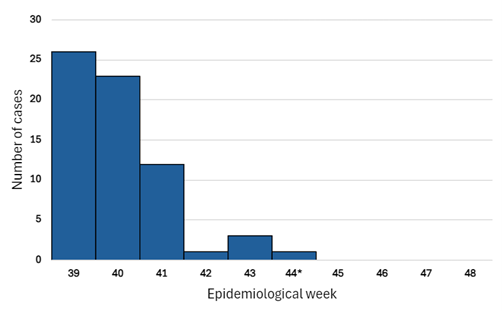
The highest number of new confirmed cases were reported in the first two epidemiological weeks of the outbreak with 26 cases reported in epidemiological week 39 (23 to 29 September 2024) and 23 cases in week 40 (30 September to 6 October). Following just one case reported in epidemiology week 42 (14 to 20 October), three cases were reported in epidemiology week 43 (21 to 27 October) and one case in week 44 (reported on 30 October).

Since the declaration of the outbreak by the Government of Rwanda on 27 September and as of 31 October, 49 confirmed cases have recovered, and two cases are still receiving care at the designated Marburg treatment centre. As of 31 October 2024, 6099 tests for Marburg virus have been conducted, with approximately 100-350 samples being tested daily at the Rwanda Biomedical Center.

Contact tracing is ongoing, with 559 contacts listed under follow-up as of 31 October 2024.

WHO continues to support the Government of Rwanda to respond to the ongoing outbreak. Enhanced surveillance, contact tracing and infection prevention and control measures must be maintained until the outbreak is declared over.

Figure 1. MVD cases by week of reporting in Rwanda, as of 31 October 2024, (n=66)

Rwanda MVD epi curve

[SUP]* [/SUP]The epidemiological week 44 is not complete at the time of publication, it ends on 3 November 2024. Epidemiology


MVD is a highly virulent disease that can cause haemorrhagic fever and is clinically similar to Ebola virus disease. Marburg and Ebola viruses are both members of the Filoviridae family (filovirus). People are infected with Marburg virus when they come into close contact with Rousettus bats, a type of fruit bat, that can carry the Marburg virus and are often found in mines or caves. Marburg virus then spreads between people via direct contact (through broken skin or mucous membranes) with the blood, secretions, organs or other bodily fluids of infected people, and with surfaces and materials (e.g. bedding, clothing) contaminated with these fluids. Health workers have previously been infected while treating patients with suspected or confirmed MVD. Burial ceremonies that involve direct contact with the body of the deceased can also contribute to the transmission of Marburg virus.

The incubation period varies from two to 21 days. Illness caused by Marburg virus begins abruptly, with high fever, severe headache and severe malaise. Severe watery diarrhoea, abdominal pain and cramping, nausea and vomiting can begin on the third day. Although not all cases present with haemorrhagic signs, severe haemorrhagic manifestations may appear between five and seven days from symptoms onset, and fatal cases usually have some form of bleeding, often from multiple areas. In fatal cases, death occurs most often between eight and nine days after symptom onset, usually preceded by severe blood loss and shock. There is currently no approved treatment or vaccine for MVD. Some candidate vaccines and therapeutics are currently under investigation.


Seventeen outbreaks of MVD have previously been reported globally. The most recent outbreaks were reported in Equatorial Guinea and the United Republic of Tanzania between February and June 2023. Additional countries that previously reported outbreaks of MVD in the African Region include Angola, the Democratic Republic of the Congo, Ghana, Guinea, Kenya, South Africa, and Uganda.

Public health response
  • The Government of Rwanda is coordinating the response with support from WHO and partners.
  • A surge team from WHO has been deployed to support the in-country response across the functions of incident management, epidemiology, health operations, case management, infection prevention and control, laboratory, health logistics, therapeutics and vaccines research, and partner coordination.
  • WHO is continuously engaged with its viral hemorrhagic fever collaborating centers and other reference laboratories and partners to support Rwanda in assessing laboratory test performance and providing technical support.
  • WHO is supporting the Government in the establishment of a programme for recovered patients, by sharing technical guidance and protocols for the establishment of a national programme and by supporting the Rwanda Ministry of Health (MOH) implementation effort.
  • WHO is supporting the implementation of the nationally approved and recently launched Marburg therapeutics clinical trial. The trial is enrolling patients as they are admitted to the established MVD treatment center. WHO supported MOH in assessing the national Infection Prevention and Control (IPC) and Water, Sanitation and Hygiene (WASH) readiness for response capabilities to MVD outbreak
  • WHO and partners supported MOH in developing and finalising the national IPC operational guidance for MVD adapted from WHO IPC guidelines. This operational guidance, together with IPC standard operating procedures, is being rapidly disseminated to all health facilities.
  • WHO supported MOH in developing and finalizing the training materials for the upcoming national IPC training of trainers targeting the national IPC focal persons.
  • WHO is collaborating with MOH to enhance IPC capacities by continuing onsite training activities for healthcare workers and providing mentorship and supervision in different priority health facilities.
  • WHO supported MOH in the enhancing of IPC measures in the isolation sites.
  • WHO has provided technical advice to public health authorities in Rwanda and at-risk countries on the implementation of evidence-informed and risk-based health measures; the strengthening of detection, reporting and management capacities at points of entry and across borders; and travel advice.
  • WHO has published interim guidance on the Considerations for border health and points of entry for filovirus disease outbreaks, which applies to but is not limited to the current MVD outbreak in Rwanda.
  • WHO has also published a statement advising against any travel restrictions and against any trade restrictions with Rwanda in the context of the ongoing MVD outbreak.
  • WHO is providing support in surrounding countries to assess the readiness of healthcare facilities, points of entry and border communities within surrounding countries and specifically risk mapping for areas bordering Rwanda.
  • WHO is supporting the MVD treatment center with direct support from clinical experts in infectious disease, ICU and nursing as well as health logistics and WASH expertise.
  • WHO is conducting training of clinical staff at MVD treatment on general aspects of MVD health operations, case management and optimized supportive care. MoH providing to trainees.
  • WHO is supporting the national case management pillar to collect standardized patient level data based on WHO electronic case report form from the WHO Global Clinical Platform and making descriptive reports of case management responses to outbreak.
WHO risk assessment


Marburg virus disease (MVD) is caused by the same family of viruses (Filoviridae) that causes Ebola virus disease. MVD is an epidemic-prone disease associated with high CFR (24-88%). In the early course of the disease, MVD is challenging to distinguish from other infectious diseases such as malaria, typhoid fever, shigellosis, meningitis and other viral haemorrhagic fevers. Epidemiologic features can help differentiate between viral hemorrhagic fevers (including history of exposure to bats, caves, or mining) and laboratory testing is important to confirm the diagnosis.

With 66 confirmed cases reported, this is the third largest MVD outbreak reported to date, with almost 80% of confirmed cases reported among health workers. Healthcare-associated infections (also known as nosocomial infections) of this disease can lead to further spread if not controlled early. The importance of screening all persons entering health facilities as well as inpatient surveillance for prompt identification, isolation, provision of care and notification cannot be overemphasized. This is in addition to the importance of contact identification and listing and daily follow-up of all contacts.

Based on the outbreak investigation which included record review in health facilities, review of epidemiological data, serology and genomic sequencing, as well as environmental and animal testing, the source of the outbreak is reported to be of zoonotic origin, linked to exposure in a cave inhabited by fruit bats. However, the dates of symptom onset of cases are still unknown to WHO.

On 30 September, WHO assessed the risk of this outbreak as very high at the national level, high at the regional level, and low at the global level. However, based on the evolution of the outbreak and ongoing investigations, this risk assessment may be revised. MVD is not easily transmissible (i.e. in most instances it requires contact with the body fluids of a sick patient presenting with symptoms or with surfaces contaminated with these fluids). In addition, there are ongoing public health measures in place, including active surveillance in facilities and communities, testing suspected cases, isolation and treatment of cases and contact tracing.

WHO advice


MVD outbreak control relies on using a range of interventions, including prompt isolation and case management; surveillance including active case search, case investigation and contact tracing; a laboratory service; infection prevention and control, including prompt safe and dignified burial; and social mobilization – community engagement is key to successfully controlling MVD outbreaks. Raising awareness of risk factors for Marburg virus infection and protective measures that individuals can take is an effective way to reduce human transmission. WHO advises the following risk reduction measures as an effective way to reduce MVD transmission in healthcare facilities and in communities:
  • To reduce human infections and deaths, it is essential to raise community awareness about the risk factors for Marburg virus infection particularly of human-to-human transmission, and the protective measures individuals can take to minimize exposure to the virus. This includes encouraging anyone with symptoms to seek immediate care at a health facility or designated treatment center to lower the risk of community transmission and improve their chances for recovery.
  • Reducing the risk of bat-to-human transmission arising from prolonged exposure to mines or caves inhabited by fruit bat colonies. People visiting or working in mines or caves inhabited by fruit bat colonies should wear gloves and other appropriate protective clothing (including masks).
  • Surveillance activities, including the wide dissemination of the MVD case definition, should be strengthened in all affected districts, including contact tracing and active case finding.
  • Patient-care activities should be undertaken in a clean and hygienic environment that facilitates practices related to the prevention and control of health-care-associated infections (HAIs) as outlined in Essential environmental health standards in health care. Safe water, adequate sanitation and hygiene infrastructure and services should be provided in healthcare facilities. For details on recommendations and improvement, follow the WASH FIT implementation Package
  • A comprehensive strategy to manage deceased individuals in communities should be implemented. Safe and dignified burials should be carried out, with strong engagement of communities.
  • Rapid qualitative assessments should be implemented to collect socio-behavioural data, which can then be utilized to guide the response.
  • Results of the phone Knowledge, Attitude and Practices (KAP) survey and other surveys should be integrated into the response strategy and interventions.
  • Timely laboratory testing of all suspected cases needs to be maintained and supported with a reliable sample transportation system.
  • WHO encourages the sharing of genomic sequencing data to inform the public health response.
  • Border health readiness and response capacities should be strengthened at points of entry and in communities bordering areas reporting MVD cases and onboard conveyances, and public health advice should be provided to travellers in line with WHO’s interim guidance on considerations for border health and points of entry for filovirus disease outbreaks.
  • WHO encourages all countries to send the first samples that tested positive for Marburg virus and a subset of negative samples to a WHO Collaborating Centre or a regional reference laboratory for inter-laboratory comparison.
  • WHO recommends that clinical data from suspected and confirmed Marburg virus disease cases be systematically collected to improve the limited understanding of the clinical course and direct causes and risk factors for poor outcomes. This can be done by contributing anonymized data to the WHO Global Clinical Platform for viral haemorrhagic fevers.
  • WHO advises that all patients with MVD receive holistic care including optimized supportive care including critical care and mental health services in a treatment center designed for optimal patient care and patient centered experience with biosecurity measures such as unidirectional patient and staff flow and WASH services in place.
Based on the current risk assessment, WHO advises against any travel restrictions or any trade restrictions with Rwanda at this time. For further information, please see WHO advice for international traffic in relation to the Marburg virus disease outbreak in Rwanda.​

...
https://www.who.int/emergencies/disease-outbreak-news/item/2024-DON543
 
medRxiv

Genomic characterization uncovers transmission dynamics of Marburg Virus in Rwanda following a single zoonotic spillover event


Posted November 05, 2024.​

View ORCID ProfileYvan Butera, View ORCID ProfileLeon Mutesa, View ORCID ProfileEdyth Parker, View ORCID ProfileRaissa Muvunyi, View ORCID ProfileEsperance Umumararungu, View ORCID ProfileAlisen Ayitewala, View ORCID ProfileJean Pierre Musabyimana, View ORCID ProfileAlhaji Olono, View ORCID ProfilePlacide Sesonga, View ORCID ProfileOlusola Ogunsanya, Emmanuel Kabalisa, View ORCID ProfileOluwatobi Adedokun, Nelson Gahima, Laetitia Irankunda, Chantal Mutezemariya, Richard Niyonkuru, Arlene Uwituze, Ithiel Uwizera, James Kagame, Arlette Umugwaneza, John Rwabuhihi, Fidele Umwanankabandi, Valens Mbonitegeka, View ORCID ProfileEdouard Ntagwabira, View ORCID ProfileEtienne Kayigi, Gerard Izuwayo, Herve Murenzi, Therese Mukankwiro, Nasson Tuyiringire, Jean Marie Vianney Uwimana, Agnes Gasengayire, Reuben Sindayiheba, Glory-Ugochi Onyeugo, Merawi Aragaw, Lenny Gitundu, Radjabu Bigirimana, Mosoka Fallah, Adaora Ejikeme, Senga Sembuche, Alice Kabanda, Jean Claude Mugisha, Emmanuel Edwar Siddig Francis, Pierre Gashema, Jerome Ndayisenga, View ORCID ProfileAlexis Rugamba, View ORCID ProfileFaustin Kanyabwisha, View ORCID ProfileGad Murenzi, View ORCID ProfileAnise Happi, Jean Claude Semuto Ngabonziza, View ORCID ProfileMisbah Gashegu, View ORCID ProfileAyman Ahmed, View ORCID ProfileNoella Bigirimana, Edson Rwagasore, Muhammed Semakula, View ORCID ProfileJean Paul Rwabihama, View ORCID ProfileClarisse Musanabaganwa, View ORCID ProfileEric Seruyange, View ORCID ProfileMenelas Nkeshimana, View ORCID ProfileTheogene Twagirumugabe, David Turatsinze, Eric Remera, View ORCID ProfileNoel Gahamanyi, View ORCID ProfileSofonias Kifle Tessema, View ORCID ProfileIsabelle Mukagatare, Sabin Nsanzimana, View ORCID ProfileChristian Happi, View ORCID ProfileClaude Mambo Muvunyi
doi: https://doi.org/10.1101/2024.11.01.24316374


This article is a preprint and has not been certified by peer review [what does this mean?]. It reports new medical research that has yet to be evaluated and so should not be used to guide clinical practice.
00000052
Abstract


The ongoing outbreak of Marburg virus disease (MVD) in Rwanda marks the third largest historically, though it has exhibited the lowest fatality rate. Genomic analysis has identified a lineage with limited internal diversity most closely related to a genome sequence from a sporadic case sampled in 2014 in Uganda, though the lineages have diverged from a common ancestor that was circulating for decades in the animal reservoir. Notably, the data also provide evidence that the outbreak resulted from a single zoonotic transmission event with limited human-to-human transmission, rather than multiple independent zoonotic transmission events. The Rwandan MVD outbreak prompted a thorough investigation that included contact tracing, clinical assessment, travel history, sequencing, and serology testing, to trace the virus's origin. Results of investigations linked the index case to a mining cave inhabited by Rousettus aegyptiacus (the Egyptian fruit bat), where three individuals tested seropositive for IgG and IgM, further supporting the zoonotic origin of the outbreak through human-animal interactions.

...

https://www.medrxiv.org/content/10.1101/2024.11.01.24316374v1
 
Translation Google

Recovered Marburg patients are urged not to breastfeed and not to have unprotected sex

By André Gakwaya — November 3, 2024

Do not breastfeed and do not have unprotected sex, this is the final recommendation made by the Ministry of Health (MINISANTE) to people who have been cured of the Marburg virus. This message is justified by the fact that the Marburg virus remains intact in some parts for more than a year and that the cured person can still contaminate his fellow men.

The virus is still intact in the tear secretions of the eye, sperm and breast milk. This is why a person who has recovered from Marburg should avoid unprotected sex, throw away used condoms or breastfeed their child.

The MINISANTE recommends that these precautions should remain in effect until the treating physician confirms that the patient does not have Marburg in any part of the body.

Dr. Menelaus Nkeshimana, Director of Personnel Reinforcement at MINISANTE, says that the Marburg virus remains in certain parts of the human body of the cured person for more than a year.

"The cured person looks like other normal humans. But the virus continues to remain intact in some parts such as the eye and sperm. People cured of Marburg can contaminate other people if care is not taken. The health care staff must be more vigilant and attentive when the person cured of Marburg goes to be treated for another disease. These cured people will be more hygienic in their lives. They will be followed by the health care staff, because they are likely to show other after-effects, certainly less serious, following Marburg," he indicated.

The person cured of Marburg may suffer from retinal damage and may not have good vision. He may sometimes display extreme fatigue. He may suffer from pain in the joints and veins. He may display severe anxiety problems. This is why such cases are closely monitored by medical personnel. (End)

http://www.rnanews.com/les-patients...-pas-avoir-des-rapports-sexuels-non-proteges/

------------------------------​

Ministry of Health | Rwanda
@RwandaHealth

"Those who have recovered from the Marburg virus may still retain parts of the virus in specific areas of their body, particularly in semen and the inner parts of their eyes. For this reason, they undergo follow-up monitoring for several weeks"~ Minister @NsanzimanaSabin

image.png - Click image for larger version  Name:	image.png Views:	1 Size:	408.2 KB ID:	999944

12:05 PM · Nov 4, 2024​​
 
Back
Top