• FluTrackers.com Inc. does not provide medical advice. Information on this web site is collected from various internet resources, and the FluTrackers board of directors makes no warranty to the safety, efficacy, correctness or completeness of the information posted on this site by any author or poster. The information collated here is for instructional and/or discussion purposes only and is NOT intended to diagnose or treat any disease, illness, or other medical condition. Every individual reader or poster should seek advice from their personal physician/healthcare practitioner before considering or using any interventions that are discussed on this website. By continuing to access this website you agree to consult your personal physican before using any interventions posted on this website, and you agree to hold harmless FluTrackers.com Inc., the board of directors, the members, and all authors and posters for any effects from use of any medication, supplement, vitamin or other substance, device, intervention, etc. mentioned in posts on this website, or other internet venues referenced in posts on this website.
  • We are not asking for any donations. Do not donate to any entity who says they are raising funds for us.

Russia - The woman died of the plague in Shelekhov? - October 2, 2026 - gov. denies - says pneumonia of unknown etiology cause of death

1791375030018.webp


Since the first media reports, @WHO has been actively following up on the reported death of a laboratory worker at the Irkutsk Antiplague Research Institute in Irkutsk oblast, Russian Federation. The individual died on 2 October 2026 after being hospitalised with severe pneumonia. Initial media reports suggested pneumonic plague following an alleged accidental laboratory exposure.

In response to WHO’s verification request under the International Health Regulations, the Russian health authorities reported that no case of plague had recently been registered in Irkutsk oblast. They informed WHO that an epidemiological investigation had been conducted, preventive and control measures implemented, and identified contacts placed under medical observation and tested. They reported that no high-threat pathogens had been detected among the contacts and that medical observation of all identified contacts had been completed.

WHO has remained in contact with the Russian health authorities and has offered technical support. WHO has requested further information to clarify the cause of the severe pneumonia, the pathogen that prompted the public health measures, and media reports of a second employee with pneumonia of undetermined cause.

Timely, complete and transparent information sharing under the International Health Regulations is essential to clarify conflicting reports and enable an accurate assessment of potential public health risks.

1791375065808.webp

Last edited5:00 PM · Oct 6, 2026
-------------------------------------------------------------------
WHO presses Russia for details on plague institute worker's death, Kremlin turns on media


By Jennifer Rigby and Andrew Osborn
October 7, 20264:06 AM CDT
Updated 21 mins ago
...
Some Western media outlets have reported - citing unnamed "Russian media" - that a second person in Siberia had died, ⁠saying they had died of plague.

Reuters was unable to find any such stories in Russian media or any evidence that a second person in Siberia had died although some bloggers on social media were making - without evidence - such assertions.

Contacted by Reuters, the WHO said it had nothing further to add on the matter beyond what ⁠Tedros - who was due to give a press conference later on Wednesday - had already posted on X.


Tedros' call for more information echoed that of US Secretary of State Marco Rubio who has said Moscow needs to share more information about the incident.
...
--------------------------------------------------------------------------------------------
Translation Google

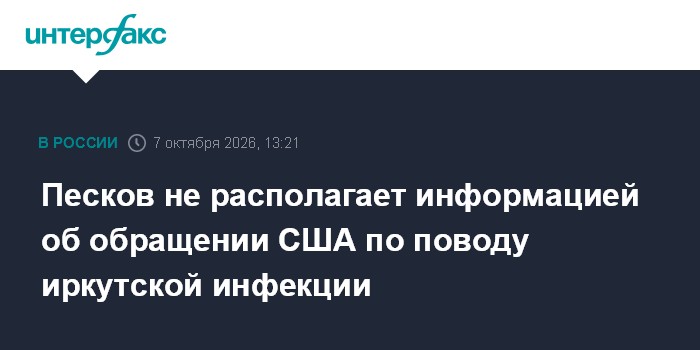
In Russia 1:21 PM, October 7, 2026

Peskov has no information about the US appeal regarding the Irkutsk infection

Moscow. October 7. INTERFAX.RU - The Kremlin has no information about the US Embassy's diplomatic appeal to Russian authorities regarding the epidemiological situation in the Irkutsk region, said Dmitry Peskov, press secretary of the Russian president.

The question of whether such an appeal actually took place was asked to Peskov during a conversation with journalists on Wednesday.

"I don't have that information. And here, of course, we need to rely, I repeat, on the statements and information from our agency, the head agency, Anna Popova (Rospotrebnadzor – IF), who, incidentally, posted additional, detailed information on her website yesterday. Furthermore, the World Health Organization has been informed accordingly, in accordance with existing practice," Peskov said.

When asked to comment on media reports cited in the WHO statement about a possible second institute employee who was also diagnosed with pneumonia of unknown etiology, Peskov noted that "the media is currently reporting a lot, and the overwhelming majority of what the media is reporting about this situation is false information."

He again called for people to rely on information from Rospotrebnadzor and statements from the agency’s leadership.


On October 4, Rospotrebnadzor reported that the sanitary and epidemiological situation in the Irkutsk region and the cities of Irkutsk and Shelekhov was stable. "A special set of measures has been organized and implemented in connection with the case of an employee of the Irkutsk Anti-Plague Institute of Siberia and the Far East who was diagnosed with pneumonia of unknown etiology," the Rospotrebnadzor press service stated.

The Irkutsk Anti-Plague Institute of Siberia and the Far East's biosafety compliance monitoring committee found no emergencies involving pathogenic microorganisms. The committee's findings were confirmed by an expert commission sent to the institute at the request of the head of Rospotrebnadzor.

"Due to the patient's professional activities, upon receiving information, a comprehensive set of anti-epidemic measures was immediately and fully implemented in accordance with sanitary legislation. This included identifying the widest possible circle of people who had been in contact with the patient, inpatient medical observation, and daily laboratory testing. The results revealed two cases of Covid-19 and two cases of rhinovirus infection, while pathogens for other infectious diseases were not detected," Rospotrebnadzor stated. "None of the contacts showed any changes in health related to infectious pathology," the press service added.

On October 6, US Secretary of State Marco Rubio called on Russia to provide countries with more information about the infection detected in the Irkutsk region. "We call on Russia to be transparent and provide the world with more information so that everyone can respond appropriately," Rubio told reporters.

An unnamed State Department official told CNN that US authorities had been in contact with the Russian government since last Friday, including State Department health experts who spoke with the Russian Foreign Ministry. The administration official said this work is ongoing.

On October 7, The Washington Post, citing informed sources, reported that the United States plans to send Russia an official diplomatic request for additional information about the infection detected in the Irkutsk region. "The official U.S. request, known in diplomatic parlance as a demarche, is intended to remind Russia that, in accordance with international law, it is obligated to promptly share information about disease outbreaks with other states," the publication's sources stated.
 
It is already a good idea not to be in Russia if you are an American for obvious war reasons....now this.....


Health Alert – U.S. Embassy Moscow, Russia (October 6, 2026)

By U.S. Mission Russia
4 MINUTE READ

October 6, 2026


Location: Irkutsk, Russia


Event: The U.S. Embassy is aware of press reports from the Irkutsk region of suspected pneumonic plague resulting in the death of an individual and of associated quarantine measures in, and closures of, hospitals in Irkutsk. We continue to track the situation closely. The U.S. government has limited ability to help U.S. citizens in Russia, especially outside of Moscow. U.S. government personnel may face additional restrictions for personal and official travel to specific regions due to health and security concerns.


The State Department’s Level 4 Travel Advisory (Do Not Travel) for Russia remains in place and states U.S. citizens currently in Russia should depart immediately. U.S. citizens planning travel to Russia are again strongly advised not to travel to Russia due to risk of wrongful detention and security concerns.


Actions to Take:

  • U.S. citizens in the area should follow the guidance of local health authorities, avoid affected facilities, and seek medical care promptly if they develop fever or respiratory symptoms.
  • Visit the CDC Page on Plague for additional information about the disease.
  • Visit the CDC Travelers’ Health Page for Russia for country-specific health updates.
  • Monitor your health for 14 days following travel if you traveled to an area experiencing the outbreak.
  • Review the U.S. Embassy country page for general health information.
  • Refer to the Embassy’s list of medical providers.
  • Check with your travel insurance provider about medical evacuation options should you fall ill while overseas.
  • Have a plan to depart in an emergency that does not depend on U.S. Government help.
  • Monitor local media for updates. Be prepared to adjust your plans.
  • Enroll in the Smart Traveler Enrollment Program (STEP ) to receive health and security updates.


Assistance:

U.S. Embassy Moscow, Russia
+7 495 728-5577
MoscowACS@state.gov
U.S. Embassy Moscow web page
State Department – Consular Affairs (+001) 888-407-4747 or (+001) 202-501-4444
Russia Country Information

Follow us on Facebook and Twitter


State Department – Consular Affairs

1-888-407-4747 or 1-202-501-4444


1791396023933.webp

WHO Director-General's opening remarks at the media briefing – 7 October 2026​

7 October 2026 Remarks Geneva
...
Good morning, good afternoon and good evening.

Last Friday, the 2nd of October, the first media reports emerged of a suspected case of pneumonic plague in a laboratory worker at the Irkutsk Antiplague Research Institute in the Russian Federation.

The lab worker died after being hospitalized with severe pneumonia. Initial media reports suggested pneumonic plague following an accidental lab exposure.

WHO is aware that the Russian government held a meeting on the 2nd of October because they suspected a resident of the Irkutsk oblast had contracted a dangerous infection.

On Saturday, WHO asked the Russian Federation for more information, in accordance with the International Health Regulations.

Yesterday, the Russian Federation responded, saying that no case of plague had recently been reported in the Irkutsk oblast, and that they had placed about 200 contacts in quarantine.

However, WHO has requested further information on the laboratory tests conducted on the individual who died and the contacts, more detail on what prompted the public health measures, and details about the health status of the contacts.

We have also sought verification of media reports of a second employee with pneumonia of undetermined cause.


WHO has offered technical support related to plague and lab biosafety and biosecurity.

As we don’t yet have the full picture of this event, we are not able to conduct a full risk assessment.

Timely, complete and transparent information sharing under the International Health Regulations is essential to clarify conflicting reports and enable an accurate assessment of potential public health risks.

===
 
Translation Google

In Russia 12:08, October 8, 2026

No dangerous pathogens were detected in contacts of the anti-plague institute employee.


Moscow. October 8. INTERFAX.RU - Medical observation of contacts of an employee of the Irkutsk Anti-Plague Institute, who was previously diagnosed with community-acquired pneumonia, has been completed; no dangerous pathogens have been detected, Rospotrebnadzor reported on Thursday.

"On October 8, 2026, the entire range of preventive measures was completed. All contacts have completed medical observation. No health problems related to infectious pathology were detected, and the results of nearly 5,000 laboratory tests revealed no dangerous pathogens," the agency's press service said in a statement.

The sanitary and epidemiological situation in the Irkutsk region and the cities of Irkutsk and Shelekhov is calm, according to Rospotrebnadzor.


On October 4, Rospotrebnadzor announced that it had organized and implemented a special set of measures in response to a case involving an employee of the Irkutsk Anti-Plague Institute of Siberia and the Far East, diagnosed with pneumonia of unknown etiology. Extensive testing revealed no microorganisms associated with her professional activities in the patient's specimen.

------------------------------------------------------------------------------
In Russia 12:17, October 8, 2026

Rospotrebnadzor has dismissed reports of a second case of the disease in the Irkutsk region as fake news.​

Moscow. October 8. INTERFAX.RU - Reports of a second case of the disease in a person who had contact with an employee of the Irkutsk Anti-Plague Institute, who had previously been diagnosed with community-acquired pneumonia, are inaccurate, Rospotrebnadzor reported.

"In connection with the fake information that has appeared on social media about a second case of the disease in someone who had contact with an employee of the Irkutsk Anti-Plague Institute, who had previously been diagnosed with community-acquired pneumonia, Rospotrebnadzor reports that this information is not true," the agency's press service said in a statement on Thursday.
...

 
Translation Google

Rospotrebnadzor has ruled out new cases of the disease in Irkutsk.

Polina Tudachkova
News
October 8, 2026, 2:44 PM

Rospotrebnadzor (the Federal Service for Surveillance on Consumer Rights Protection and Human Wellbeing) reported that reports of a second case of the disease in a person who had contact with an employee of the Irkutsk Anti-Plague Institute are false. The agency noted that preventive measures and medical observation of all contacts were completed on October 8. No health problems were identified: nearly 5,000 laboratory tests revealed no dangerous pathogens.

The information about a second case of the disease following the death of an employee at the Anti-Plague Institute in Irkutsk is unreliable, according to the press service of Rospotrebnadzor.

"In connection with the fake information that has appeared on social media about a second case of the disease in someone who had contact with an employee of the Irkutsk Anti-Plague Institute, who had previously been diagnosed with community-acquired pneumonia, Rospotrebnadzor reports that this information is not true," the statement reads.

The agency noted that on October 8, a series of preventive measures and medical observation of all contacts were completed. No health problems were identified: nearly 5,000 laboratory tests revealed no dangerous pathogens, Rospotrebnadzor clarified. They described the sanitary and epidemiological situation in the Irkutsk region, Irkutsk, and Shelekhov as calm.

The WHO also did not confirm the presence of new cases of the disease, Rospotrebnadzor emphasized. They clarified that in response to the organization's inquiries, the agency provided "comprehensive information" on the measures taken, confirming the absence of risks to public health.

On October 2, Buryatia Governor Alexey Tsydenov reported that a woman in the Irkutsk Region had died of plague. That same day, the Irkutsk Region held an extraordinary meeting of the sanitary and anti-epidemic commission, attended by the head of Rospotrebnadzor, due to a suspected "particularly dangerous infection," Governor Igor Kobzev announced. Rospotrebnadzor later clarified that the woman died of "pneumonia of unknown etiology."

On October 7, WHO Director-General Tedros Adhanom Ghebreyesus wrote in his official website that the organization had requested information from Russia to determine the cause of severe pneumonia and asked for clarification on media reports of a second case among institute employees. He stated that the organization is in contact with Russian authorities. The Kremlin reported that Russia had informed the WHO accordingly regarding the situation in the Angara region. Russian Presidential Press Secretary Dmitry Peskov once again urged that the agency adhere to statements from Rospotrebnadzor regarding the epidemiological situation in the region.

------------------------------------------------------------------
In Russia 12:07, October 8, 2026

WHO does not confirm information about new cases of the disease in the Irkutsk region.

Moscow. October 8. INTERFAX.RU - The World Health Organization (WHO) has not confirmed any new cases of the disease in someone who had contact with an employee of the Irkutsk Anti-Plague Institute who had previously been diagnosed with community-acquired pneumonia, Rospotrebnadzor reported.

"The World Health Organization also does not confirm the existence of information about new cases of the disease," the agency's press service said in a statement on Thursday.

In response to WHO requests, Rospotrebnadzor, in accordance with the International Health Regulations, provided full and comprehensive information on the measures taken, confirming the absence of public health risks. The WHO publicly acknowledged receipt of this information during a briefing on October 7, the agency noted.

The WHO confirms that there is no risk of a sanitary and epidemiological emergency in connection with the situation in Irkutsk, Rospotrebnadzor emphasized.


On October 4, Rospotrebnadzor announced that it had organized and implemented a special set of measures in response to a case involving an employee of the Irkutsk Anti-Plague Institute of Siberia and the Far East, diagnosed with pneumonia of unknown etiology. Extensive testing revealed no microorganisms associated with her professional activities in the patient's specimen.

The Irkutsk Anti-Plague Institute of Siberia and the Far East's biosafety compliance monitoring committee found no emergency situations involving pathogenic microorganisms. The committee's findings were confirmed by an expert commission sent to the institute at the request of Anna Popova, head of Rospotrebnadzor.

On October 6, US Secretary of State Marco Rubio called on Russia to provide countries with more information about the infection detected in the Irkutsk region. "We call on Russia to be transparent and provide the world with more information so that everyone can respond appropriately," Rubio told reporters.

An unnamed State Department official told CNN that US authorities had been in contact with the Russian government since last Friday, including State Department health experts who spoke with the Russian Foreign Ministry. The administration official said this work is ongoing.

On October 7, the Washington Post, citing informed sources, reported that the United States plans to send Russia an official diplomatic request for additional information about the infection detected in the Irkutsk region. "The official U.S. request, known in diplomatic parlance as a demarche, is intended to remind Russia that, in accordance with international law, it is obligated to promptly share information about disease outbreaks with other states," the publication's sources stated.

On October 7, Russian Presidential Press Secretary Dmitry Peskov stated that the Kremlin has no information about the US Embassy's diplomatic appeal to Russian authorities regarding the epidemiological situation in the Irkutsk region.

--------------------------------------------------
Regarding the UN’s response, see posts 19, 21, and 24.

This morning, the WHO Director-General reiterated on X his earlier request for more information.


Last edited:
TASS is a sanctioned Russia media.....


The quarantine in the Angara region has been lifted following a pneumonia case.​


Work is proceeding as usual, noted regional governor Igor Kobzev.

TASS website editors
10:41
updated 10:44

IRKUTSK, October 8. /TASS/. The quarantine in the Irkutsk region due to a case of pneumonia has been lifted. Regional Governor Igor Kobzev announced this in a video broadcast on the "Max" channel .


WHO DON : Pneumonia of undetermined etiology - Russian Federation​


image.png


#19,368

For the past week we've been following unverified media reports (see here, here, and here) of a Russian lab leak - supposedly of plague - (vigorously denied by Rospotrebnadzor) after the death of a lab worker from severe pneumonia in early October.

Despite the Russian denials and reassurances, we really don't know exactly what happened - or may still be happening - at that Siberian lab.
Today the WHO published a lengthy DON (Disease Outbreak News) report on the incident. While it provides several new details from the Russians, this report continues to stress that there are still a number of unknowns.

The WHO now offers a limited-confidence risk assessment, but it is tempered by the lack of a confirmed diagnosis in the deceased laboratory worker, and ongoing uncertainty over the `source and mode of exposure'.
Due to its length, I've only posted the link, and a few excerpts. Follow the link to read the DON in its entirety.

Pneumonia of undetermined etiology - Russian Federation
10 October 2026

Situation at a glance

On 2 October 2026, WHO became aware through media reports of the death of an employee of the Irkutsk Antiplague Research Institute (APRI) of Siberia and the Far East, the Russian Federation. According to these reports, the individual died on 2 October following hospitalization for severe pneumonia on 29 September, and pneumonic plague was suspected as the cause of death, following occupational exposure in laboratory settings.

Following requests for verification from WHO, the National Focal Point for the International Health Regulations (2005) (NFP) of the Russian Federation confirmed the death and informed WHO that no case of plague had been registered recently in Irkutsk Oblast, that preventive and control measures had been implemented in accordance with national sanitary legislation, and that the laboratory testing of contacts detected no high-threat pathogens.

The authorities also reported that no biosecurity incidents had occurred in the laboratory, contrary to reports in the media, and that there were no further case of severe pneumonia linked to this case. The NFP informed WHO that the case and all contacts had been tested for a range of microorganisms, including high-threat pathogens. Test results were negative for the tested high-threat pathogens. All contacts had been medically followed up in healthcare facilities or at home, and all remained asymptomatic throughout. Quarantine measures were instituted in the hospital where the patient was being treated.

Based on the information provided by NFP, WHO has not identified evidence of ongoing transmission associated with this event. A key uncertainty remains the absence of a confirmed diagnosis in the deceased laboratory worker. WHO will continue to monitor the situation and assess any potential public health implications as further information becomes available.


(SNIP)

WHO risk assessment
WHO’s rapid risk assessment is a systematic and continuous process that characterizes the risk posed by a public health event and informs measures to reduce its impact and prevent international spread.

A key uncertainty for this event is the absence of a confirmed diagnosis in the deceased laboratory worker. According to information provided by the national authorities, testing did not identify plague or other tested high-threat pathogens, and the death has been classified as pneumonia of undetermined etiology. However, WHO has not received information identifying the causative agent responsible for the fatal illness. Given the absence of a confirmed diagnosis, WHO is not in a position to independently assess whether the duration of the reported monitoring period for contacts was sufficient to exclude all plausible causes of the fatal illness.

The occupational setting of the case remains an important consideration. The deceased individual worked at an institution that handles high-consequence pathogens, and precautionary public health measures were reportedly implemented because of the individual's professional activities. While the information provided by the authorities does not indicate infection with tested high-threat pathogens or identify additional linked cases, the source of the fatal illness remains undetermined. A laboratory-associated exposure therefore cannot be fully excluded at this stage.

Based on the information provided by NFP, WHO has not identified evidence of ongoing transmission associated with this event.

However, confidence in the assessment remains limited by the absence of a confirmed etiological diagnosis, and the remaining uncertainty regarding the source and mode of exposure. Additional clinical, epidemiological and laboratory information, including confirmation of the diagnosis in the deceased laboratory worker, is required to improve confidence in the assessment. WHO will continue monitoring the situation and assess any potential public health implications as further information becomes available.
(Continue . . . )


https://afludiary.blogspot.com/2026/10/who-don-pneumonia-of-undetermined.html
 
[emphasis is mine]
Hong Kong
CHP closely monitors case of pneumonia of undetermined etiology that resulted in death in Russia
Ends/Monday, October 12, 2026

Regarding the death of a laboratory worker in Irkutsk Oblast of Siberia, Russia, due to severe pneumonia of undetermined etiology, the Centre for Health Protection (CHP) of the Department of Health (DH) said today (October 12) that, according to the World Health Organization (WHO)'s latest announcement, information obtained from the Russian authorities indicated that no evidence of ongoing transmission associated with the event had been identified. Nevertheless, for the sake of prudence, the CHP has implemented a series of control and prevention measures. The CHP will continue to closely monitor the latest developments, respond swiftly, and strictly guard against imported cases in order to safeguard public health.

After noticing media reports of the above-mentioned death case in Russia in early October, the CHP immediately and proactively sought further information from the WHO and the Russian health authorities. According to the latest information from the WHO, citing data provided by Russian authorities, no case of plague had been recorded recently in Irkutsk Oblast, the laboratory testing of the deceased's contacts detected no high-threat pathogens, and that there were no further cases of severe pneumonia linked to this case. The Russian authorities reported that no biosecurity incidents had occurred in the laboratory, and quarantine measures were instituted in the hospital where the patient was being treated. According to the WHO's assessment, no evidence of ongoing transmission associated with this event has been identified so far. Nevertheless, a key uncertainty remains the absence of a confirmed diagnosis in the deceased laboratory worker. The WHO will continue to monitor the situation and assess any potential public health implications as further information becomes available.

In recent months, the CHP has not received any reports of residents or travellers arriving in Hong Kong from Russia with cases of pneumonia of undetermined etiology. Based on current information, there is no evidence indicating ongoing transmission. The CHP assesses that the immediate public health impact to Hong Kong is low. For the sake of prudence, the CHP has implemented a series of control and prevention measures to guard against imported cases, including:

(i) strengthening health surveillance for passengers arriving on relevant flights from Russia at the airport, including arranging for Port Health Division officers to conduct temperature checks at the relevant flight gates, and conducting health assessments for passengers exhibiting symptoms;

(ii) displaying signages and broadcasting announcements in the airport arrival area and through airlines to urge passengers who have visited Irkutsk Oblast of Siberia, Russia, within the past 14 days to proactively declare their travel history to the on-site staff of the DH for further health assessment;

(iii) if an inbound traveller exhibits symptoms of pneumonia, after assessment by Port Health Division officers, arrangements will be made immediately to transfer the individual to a public hospital for further testing; and

(iv) providing the Airport Authority Hong Kong and airlines with the latest information regarding the case in Russia, and urging airlines to remind their flight crews to strictly enforce established prevention and control measures if they identify suspected cases on their flights.

Through existing mechanisms, Hong Kong has the capacity to detect cases of unexplained infections and emerging infectious diseases at boundary control points and in hospitals.

In addition, the CHP will send letters to all doctors and hospitals in Hong Kong, reminding them to remain highly vigilant and to strengthen surveillance. Any patient who has visited Irkutsk Oblast of Siberia, Russia, within 14 days prior to the onset of symptoms and has developed pneumonia of undetermined etiology must immediately report to the CHP so that further testing can be arranged.
 
The CHP reminds travellers that if they develop respiratory symptoms after returning to Hong Kong, they should wear a face mask, seek medical attention and report their travel history to a doctor. The CHP will continue to maintain close liaison with the WHO and other relevant health authorities, closely monitor developments, and adjust disease prevention strategies as necessary to safeguard public health.

 
Translation Google

1791898454417.webp

#Infectious Diseases

October 12, 2026 | By Inserm (Press Room)

While the case of a Russian lab technician who reportedly died of the plague in Russia is making headlines in numerous media outlets, while interest in the keyword "plague" on Google has increased more than tenfold in a week, and while a segment of the conspiracy theory community has seized upon the topic, Canal Détox takes stock of what we know about this disease. Beyond the rumors and alarmist scenarios, what do we really know about this illness? How is it transmitted, what are the treatments, and how is research preparing the development of new antibiotics useful not only against the plague but also for more common diseases?

PhotoCP-web-52.png

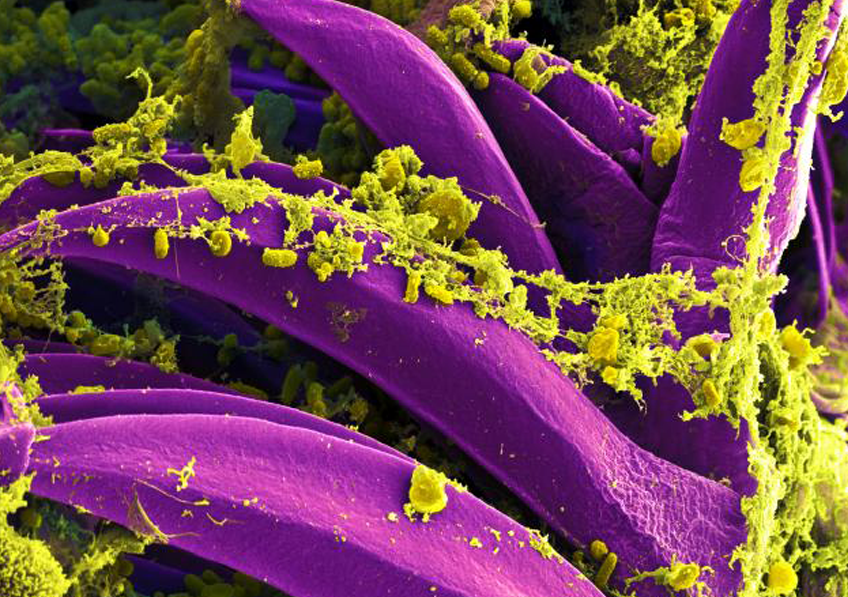
© Yersinia pestis Bacteria. National Institute of Allergy and Infectious Diseases/NI

What exactly do we know today about the case of a laboratory technician who reportedly reported symptoms of infectious pneumonia of undetermined origin detected in Russia?​

The available information does not allow us to determine the origin of this fatal pneumonia. Is it linked to a laboratory accident, an infection acquired during travel or field investigations, or some other circumstance? Is it Yersinia pestis , the bacterium responsible for plague, or another pathogen, bacterial or viral, that is re-emerging or emerging? Russian authorities indicate that tests have not detected Y. pestis . Current diagnostic techniques can help identify the cause of this pneumonia, but rapid identification is not guaranteed. In any case, to date, several facilities have been quarantined. Contact cases have also been placed under medical observation. Whatever the cause of this fatal pneumonia, it is clear that the measures taken by the Russian authorities demonstrate that the situation is being taken seriously and that they are aimed at preventing any possible spread of the pathogen. A second case was also mentioned in the media and then denied by the Russian authorities.

The agent responsible for the plague is not a virus but a bacterium​

The agent of plague is a Gram-negative bacterium called Yersinia pestis . Isolated in 1894 during the third plague pandemic, this bacterium continues to circulate in animal populations today. Human infections occur primarily when people come into contact with infected animals or are bitten by fleas carrying the bacterium.

Several forms of plague, but with varying degrees of severity.​

The different forms of plague are linked to the mode of transmission of the bacteria. When transmitted to humans via a flea bite, it results in bubonic plague: once in the body, the bacillus migrates to the lymph nodes, which swell and become painful; these are called "buboes." If the infection progresses and is not contained, the bacteria can enter the bloodstream, where it causes septicemia. This form is fatal in 40 to 60% of cases without early treatment at the first sign of symptoms, or even before symptoms appear.

Sometimes, blood dissemination following the bite of an infected flea allows colonization of the lungs, producing a fatal pneumonia known as secondary pneumonic plague. But before dying, the infected person coughs and emits respiratory droplets containing the bacteria, which can be inhaled by someone in close proximity. This person can develop primary pneumonic plague and, in turn, transmit the bacillus. This human-to-human transmission therefore no longer requires the intermediary of fleas. Pneumonic plague is almost always fatal without prompt treatment. This mode of human-to-human transmission does not have the same characteristics as that of more contagious respiratory infections, such as COVID-19. The severity of a disease does not necessarily mean that it is easily transmitted.

When transmission occurs directly into the bloodstream via flea bite, it leads to primary septicemia that is difficult to detect and therefore difficult to manage.

Finally, transmission via the digestive tract has been reported, particularly in cases of ingestion of contaminated meat.

What are the current treatments?​

Antibiotic treatments are very effective. However, time is of the essence, as treatment must be administered very early to be effective, even before symptoms appear, when possible. Among the standard antibiotics are fluoroquinolones, streptomycins, and tetracyclines.

These antibiotics can also be used as preventive treatments (known as prophylaxis) in people who have been exposed or potentially exposed.

Do people still die from the plague?​

Yes, deaths still occur, particularly when diagnosis and treatment are delayed. They are not necessarily linked to antibiotic resistance.

To date, most strains are susceptible to existing antibiotics. Although low, the risk of antibiotic resistance remains a concern. Two cases of naturally occurring multidrug-resistant strains have been identified in the past—one in Mongolia, the other in Madagascar isolated in 1997—but no epidemics have been reported.

These initial observations show why surveillance remains necessary, even for a disease that has become rare in many countries.

Are there regular cases of this around the world?​

The plague bacillus regularly re-emerges in Africa, Asia, and the Americas. Europe and Oceania are currently spared. It is therefore not surprising that cases of human plague are regularly reported each year, particularly in the Democratic Republic of Congo and Madagascar, which account for the majority of recorded cases. Countries like the United States are not spared, but the number of cases is limited and more or less sporadic.

And what about research?​

Some online content expresses surprise that around twenty plague vaccine candidates are already in development, interpreting this as a sign that the epidemic was anticipated. In reality, plague vaccine research is long-standing and publicly available, as *Y. pestis* is classified as a priority agent in biodefense.

For researchers, the challenge is threefold: to understand the biological, environmental and societal mechanisms that allow the bacterium to persist in nature and spread in human populations, and to preserve the means to detect and rapidly contain human infections.

At Inserm, an ERC Synergie-Plague program, of which Inserm research director Florent Sebbane is one of the principal investigators, aims to understand why and how the plague re-emerged, circulated, and then disappeared in different regions of Eurasia between the 14th and 19th centuries. It combines environmental, biological, and societal dimensions to explain its spread as well as the variations in its clinical manifestations and demographic consequences across space and time.

Another project, funded under the French Emerging Infectious Diseases 2030 program and led by ANRS-MIE, aims to understand the environmental and biological conditions that would allow for the sustained establishment and re-emergence of plague outbreaks in metropolitan France and its overseas territories, in order to identify at-risk areas and the mechanisms that promote the maintenance and spread of the bacillus. "We cannot understand human plague epidemics if we do not understand what happens in nature ," explains Florent Sebbane.

The researchers also aim to better understand the molecular mechanisms of infection in both rodents and fleas. The ultimate goal of this research is to identify new therapeutic targets and develop innovative strategies to eliminate the bacteria in these species.

The search for new antibiotics against plague may also open up prospects against other bacteria, particularly when it targets mechanisms common to several pathogens.

Finally, research aims to find new therapeutic targets and develop new classes of antibiotics. The advantage of finding an antibiotic effective against a bacterium as dangerous as the one that causes the plague is that it is highly likely to be effective against more common diseases for which antibiotic resistance is a real concern.

What is the level of security in a research laboratory that handles the​

The bacterium *Yellow pestis* belongs to the category of risk 3 pathogens and must be handled in a biosafety level 3 (BSL-3) laboratory. Risk 3 pathogens are pathogens that can cause serious illness in humans, but for which effective medical countermeasures exist. BSL-3 containment laboratories are designed to limit the exposure of handlers to the bacterium and prevent its spread into the environment.

They must have a Class 2 microbiological safety cabinet. This means that handling must be carried out under a fume hood to prevent exposure of the operator and the dispersion of the pathogen in the room. Personnel trained and authorized to handle pathogens must wear two pairs of gloves, a coverall, an overgown, a hairnet, and overshoes.

The ventilation and pressurization of the facility are also specific, as are the entry conditions (airlocks with interlocked doors that cannot be opened simultaneously) to prevent the spread of pathogens to the outside. These facilities where such pathogens are handled are also subject to the control of the relevant authorities.

Text written with the support of Hervé Raoul , Inserm research director and deputy director of ANRS-MIE, and Florent Sebbane , Inserm research director at the Pasteur Institute of Lille.

 
Back
Top Bottom