Follow along with the video below to see how to install our site as a web app on your home screen.
Note: This feature may not be available in some browsers.
FluTrackers.com Inc. does not provide medical advice. Information on this web site is collected from various internet resources, and the FluTrackers board of directors makes no warranty to the safety, efficacy, correctness or completeness of the information posted on this site by any author or poster.
The information collated here is for instructional and/or discussion purposes only and is NOT intended to diagnose or treat any disease, illness, or other medical condition. Every individual reader or poster should seek advice from their personal physician/healthcare practitioner before considering or using any interventions that are discussed on this website.
By continuing to access this website you agree to consult your personal physican before using any interventions posted on this website, and you agree to hold harmless FluTrackers.com Inc., the board of directors, the members, and all authors and posters for any effects from use of any medication, supplement, vitamin or other substance, device, intervention, etc. mentioned in posts on this website, or other internet venues referenced in posts on this website.
We are not asking for any donations. Do not donate to any entity who says they are raising funds for us.
Pneumonia, caused by swine flu (influenza A H1N1), has led to the first fatal case of the virus in Russia's far eastern Kamchatka Territory, local health authorities said Wednesday.
VLADIVOSTOK (Sputnik) ? Pneumonia, caused by swine flu (influenza A H1N1), has led to the first fatal case of the virus in Russia's far eastern Kamchatka Territory, local health authorities said Wednesday.
[h=1]Flu epidemic kills seven in Moscow[/h] MOSCOW, January 27. /TASS/. At least seven people have died of flu complications in Moscow since December, Alexey Khripun, a deputy head of the Moscow health department, said on Wednesday.
"As for today, seven lethal cases caused by flu complications were reported for December and January," Khripun said, adding that the figure is lower than in 2009, when the swine flu, officially known as influenza virus A/H1N1, first appeared in Moscow.
A resident of Khabarovsk territory has died of flu complications
REGNUM In Khabarovsk territory with diagnosis ОРВИ 122 persons are hospitalized. In region one lethal outcome from a pneumonia which became complication of a seasonal flu is fixed, have informed correspondent ИА REGNUM in the press-service of the government of region. 8 cases of disease by pork flu H1N1 and one case ? virus H3N2 are laboratory confirmed.
Epidemic of a pork flu in Moscow 2016 ?12 person died from virus H1N1
Epidemic of a pork flu in Moscow 2016 in January illness has carried away twelve lives of residents of Moscow suburbs. Such message has been received from the press-service of the government of area. The chapter of department of health protection, Alexey Hripun, approves, that from the beginning of winter in hospitals of Moscow seven death from a pork flu are fixed. More truly from complications to which progress this штамм a flu assists. In all Russia it is already counted more than hundred fatal outcomes. This list includes four pregnant women and eight children. A principal cause of death in all cases ? a pork flu.
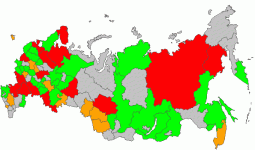
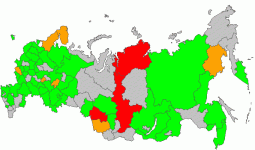
Epidemiological data show significant increase of influenza activity in Russia in comparison with previous week. The nationwide ILI & ARI morbidity level (91.9 per 10 000 of population) exceeded the national baseline (69.5 per 10 000) by 32.2%.
ILI and ARI epidemic thresholds were exceeded in 28 of 59 cities collaborating with two WHO NICs in Russia.
Cumulative number of diagnosed influenza cases
Laboratory diagnosis data. Results of influenza laboratory diagnosis by different tests were submitted by 54 RBLs and two WHO NICs. According to these data as a result of 4924 patients investigation the overall proportion of respiratory samples positive for influenza virus was estimated as 1654 (33.6%) including 1520 (91.9%) influenza A(H1N1)pdm09 cases, 33 (2.0%) influenza A(H3N2) cases, 97 (5.9%) influenza A cases and 4 (0.2%) influenza B cases.
... Conclusion
Influenza and ARI morbidity data. Influenza activity increased significantly on the week 04.2016. The nationwide ILI & ARI morbidity level (91.9 per 10 000 of population) exceeded the national baseline by 32.2%. Etiology of ILI & ARI morbidity. The overall proportion of respiratory samples positive for influenza in traditional surveillance system was estimated as 33.6%. Influenza A(H1N1)pdm09 dominated (91.9% of influenza cases). Influenza A(H3N2) and B cases registered sporadically. Percent of positive ARI cases of non-influenza etiology (PIV, adeno- and RSV) was estimated as 19.6% of investigated patients by IFA and 7.3%by PCR.
In sentinel surveillance systemclinical samples from 68 SARI and 60 ILI/ARI patients were investigated by rRT-PCR. 21 (30.8%) influenza A(H1N1)pdm09 cases among SARI patients and 10 (16.7%) influenza A(H1N1)pdm09 cases among ILI/ARI patients were detected. Antigenic characterization. Totally 84 influenza A(H1N1)pdm09 and 2 influenza A(H3N2) viruses were characterizated antigenically in HI in two NICs of Russia since the beginning of the season. 43 (51.2%) influenza A(H1N1)pdm09 strains were related closely to influenza A/California/07/09 virus, 41 (48.8%) influenza A(H1N1)pdm09 viruses had decreased up to 1/8 - 1/16 titers in interaction with antiserum to this virus. Two A(H3N2) strains were similar to influenza A/Hong-Kong/4801/2014 virus, with antiserum to influenza A/Switzerland/9715293/2013 they reacted up to 1/4 - 1/8 of homological titer. Genetic characterization. 11 investigated influenza A(H1N1)pdm09 virus strains were A/South Africa/3626/2013-like. All viruses bear clade 6B specific mutations in HA (S84N, S162+N and I216T) and formed new genetic group according to phylogenetic analysis. One A(H1N1)pdm09 sequence obtained directly from autopsy sample showed the presence of additional mutation D222G in HA1.
[h=1]126 people die from influenza virus in Russia[/h] Baku. 29 January. REPORT.AZ/ Number of registered deaths from influenza virus in Russia reached 126 people.
Report informs citing the Tass director of the Department of Public Health and Communications Ministry of Health of Russia Oleg Salagaev told reporters.
"Currently, 126 deaths from the flu confirmed" - he said.According to the Ministry of Health, exceedance of the thresholds weekly incidence of influenza and SARS on this week is 48%.
In region continue to locate growth of desease by a flu and ОРВИ. Schools and kindergartens are closed
Vologda, on January, 29th 2016, 18:50 ? REGNUM Since January, 11th local doctors have registered 48,7 thousand cases of sharp respiratory virus infections and 134 cases of a flu. In the sum the quantity ill makes 4,1 % of the population of area. Almost half from them (21,8 thousand person) were ill from the beginning of this week. The parameter of desease was made 183 infected on 10 thousand by person, that on 33 % above a level of the last week. The Most part sick (66 %) ? children. On it to correspondent ИА REGNUM have informed in regional department of healthcare. Physicians locate the highest level of desease in age group from 3 till 6 years (851 the ill child on 10 thousand вологжан). Also from the beginning of week 384 patients, from them of 82,8 % ? children till 14 years are hospitalized. Among viruses of a flu circulating in the Vologda area the flu, And seasonal H1N1 and пандемический a "pork" flu And (H1N1) 2009 prevails.
33 persons have died of complications of flu A/H1N1 in the Odessa area
From the beginning эпидсезона in the Odessa area 33 lethal cases from complications of a flu (pneumonia) are officially registered. As reported by Central administrative board GosSeS in the Odessa area, in one case is fixed in the city of Ilyichevsk, in Арцизском, Berezovsky, Belgorod-?????ӫ?߬??, Болградском, Беляевском, Nikolaevsk, Раздельнянском, Татарбунарском and areas Saratskom of area. In Odessa ? 23 cases.
All died ? the adults who late have addressed medical aid. At all availability of virus А/H1N1-пандемический is laboratory confirmed. At the same time, according to облСЭС, the general level of desease of a flu and ОРВИ in the field of below an epidemic threshold on 39,8 %.
In the Volgograd area from virus H1N1 was lost 12 person
According to chairman of regional committee of healthcare Vladimir Shkarina, a death-roll of residents of the Volgograd area from complications of " a pork flu ? has increased up to 12 person.
Only today волгоградцы have received hope from committee of healthcare of the Volgograd area which has informed on recession of desease owing to the entered quarantine and carrying out of restrictive actions, however news about 12 victim of a flu has forced all to be guarded again. As of today it is known, that victims are not fixed among children and the imparted citizens. In connection with last events, волгоградцам настоятельно it is recommended to not relax, as, in opinion of physicians, the peak of a flu and ОРВИ is necessary on this and next week.
In the Rostov region from the H1N1 flu died 13 people.
This was told in the press service of the Ministry of Health of the Rostov region.
As of the morning on February 2 in the Rostov region registered 1857 cases of pneumonia, which has become a complication of the flu.
About 1500 people were hospitalized, including 221 children.
The region also confirmed 431 cases of influenza at the same time 412 cases of infection with H1N1. Of complications from swine flu have died
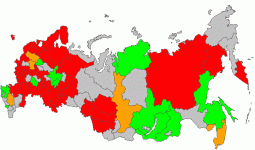
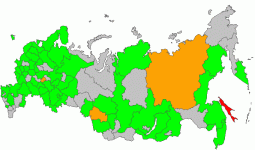
Epidemiological data show significant increase of influenza activity in Russia in comparison with previous week. The nationwide ILI & ARI morbidity level (134.3 per 10 000 of population) exceeded the national baseline (69.5 per 10 000) by 93.4%.
ILI and ARI epidemic thresholds were exceeded in 47 of 59 cities collaborating with two WHO NICs in Russia.
Cumulative number of diagnosed influenza cases
Laboratory diagnosis data. Results of influenza laboratory diagnosis by different tests were submitted by 53 RBLs and two WHO NICs. According to these data as a result of 9882 patients investigation the overall proportion of respiratory samples positive for influenza virus was estimated as 3523 (35.7%) including 3248 (92.2%) influenza A(H1N1)pdm09 cases, 118 (3.3%) influenza A(H3N2) cases, 130 (3.7%) influenza A cases and 27 (0.8%) influenza B cases. [h=3]Conclusion[/h] Influenza and ARI morbidity data. Influenza activity increased significantly on the week 05.2016. The nationwide ILI & ARI morbidity level (134.4 per 10 000 of population) exceeded the national baseline by 93.4%. Etiology of ILI & ARI morbidity. As a result of investigation of 9882 patients in 53 cities of Russia the overall proportion of respiratory samples positive for influenza in traditional surveillance system was estimated as 35.7%. Influenza A(H1N1)pdm09 dominated (92.2% of influenza cases). Influenza A(H3N2) and B cases registered sporadically.
In sentinel surveillance systemclinical samples from 95 SARI and 83 ILI/ARI patients were investigated by rRT-PCR. 43 (45.3%) influenza cases including 42 influenza A(H1N1)pdm09 and 1 influenza B cases were detected among SARI patients and 37 (44.6%) influenza cases including 35 influenza A(H1N1)pdm09 and 2 influenza A(H3N2) cases were detected among ILI/ARI patients. Antigenic characterization.
Totally 108 influenza A(H1N1)pdm09, 2 influenza A(H3N2) and 5 influenza B viruses were characterizated antigenically in two NICs of Russia since the beginning of the season. According to St.Petersburg NIC data 6 influenza A(H1N1)pdm09 strains were related closely to influenza A/California/07/09 virus. Most of 102 influenza A(H1N1)pdm09 viruses investigated in Moscow NIC were similar to vaccine A/California/07/09 virus however 10 of them had decreased up to 1/16 titer in interaction with antiserum to this virus. Two A(H3N2) strains were similar to influenza A/Hong-Kong/5738/2014 virus, with antiserum to influenza A/Switzerland/9715293/2013 they reacted up to 1/4 - 1/8 of homological titer in HI. All investigated 5 influenza B viruses belonged to Victorian limeage and were similar to influenza B/Brisbane/60/2008 reference strain reacting with antiserum to this virus up to 1/4 - 1/8 of homological titer in HI. Genetic characterization. 55 investigated influenza A(H1N1)pdm09 virus strains were A/South Africa/3626/2013-like. All viruses bear clade 6B specific mutations in HA (S84N, S162+N and I216T) and formed new genetic group according to phylogenetic analysis. Two A(H1N1)pdm09 sequences obtained directly from autopsy sample showed the presence of additional mutation D222G in HA1.
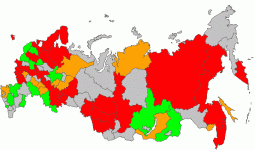
Epidemiological data slight (by 13.3%) decrease of influenza activity in Russia in comparison with previous week. However the nationwide ILI & ARI morbidity level (125.2 per 10 000 of population) exceeded the national baseline (69.5 per 10 000) by 80.1%.
ILI and ARI epidemic thresholds were exceeded in 44 of 58 cities collaborating with two WHO NICs in Russia.
Cumulative number of diagnosed influenza cases
Laboratory diagnosis data. Results of influenza laboratory diagnosis by different tests were submitted by 53 RBLs and two WHO NICs. According to these data as a result of 13246 patients investigation the overall proportion of respiratory samples positive for influenza virus was estimated as 4321 (32.6%) including 3982 (92.2%) influenza A(H1N1)pdm09 cases, 128 (3.0%) influenza A(H3N2) cases, 174 (4.0%) influenza A cases and 37 (0.9%) influenza B cases
... [h=3]Conclusion[/h] Influenza and ARI morbidity data. Influenza activity decreased slightly on the week 06.2016 however the nationwide ILI & ARI morbidity level (125.2 per 10 000 of population) exceeded still the national baseline by 80.1%. Etiology of ILI & ARI morbidity. As a result of investigation of 13246 patients in 53 cities of Russia the overall proportion of respiratory samples positive for influenza in traditional surveillance system was estimated as 32.6%. Influenza A(H1N1)pdm09 dominated (92.2% of influenza cases). Influenza A(H3N2) and B cases registered sporadically.
The overall proportion of respiratory samples tested positive for parainfluenza, adenovirus and RSV was estimated in total as 4.5% (PCR) and 13.4% (IFA) of investigated samples.
In sentinel surveillance systemclinical samples from 86 SARI and 112 ILI/ARI patients were investigated by rRT-PCR. 59 (68.8%) influenza cases including 55 influenza A(H1N1)pdm09 and 4 influenza A(H3N2) cases were detected among SARI patients. A total 40 (35.7%) influenza cases including 37 influenza A(H1N1)pdm09 and 3 influenza A(H3N2) cases were detected among ILI/ARI patients. Antigenic characterization. Totally 123 influenza A(H1N1)pdm09, 2 influenza A(H3N2) and 5 influenza B viruses were characterizated antigenically in two NICs of Russia since the beginning of the season. According to St.Petersburg NIC data 21 influenza A(H1N1)pdm09 strains were related closely to influenza A/California/07/09 virus. Most of 102 influenza A(H1N1)pdm09 viruses investigated in Moscow NIC were similar to vaccine A/California/07/09 virus however 10 of them had decreased up to 1/16 titer in interaction with antiserum to this virus. Two A(H3N2) strains were similar to influenza A/Hong-Kong/5738/2014 virus, with antiserum to influenza A/Switzerland/9715293/2013 they reacted up to 1/4 - 1/8 of homological titer in HI. All investigated 5 influenza B viruses belonged to Victorian lineage and were similar to influenza B/Brisbane/60/2008 reference strain reacting with antiserum to this virus up to 1 - 1/8 of homological titer in HI. Genetic characterization. 54 investigated influenza A(H1N1)pdm09 virus strains were A/South Africa/3626/2013-like. All viruses bear clade 6B specific mutations in HA (S84N, S162+N and I216T) and formed new genetic group according to phylogenetic analysis. Two A(H1N1)pdm09 sequences obtained directly from autopsy sample showed the presence of additional mutation D222G in HA1. Susceptibility to antiviral drugs. According to genetic investigations 54 influenza A(H1N1)pdm09 viruses were susceptible to oseltamivir and resistant to rimantadine. These results coincided with Munana testing of 10 strains isolated in St.-Petersburg. http://www.influenza.spb.ru/en/influenza_surveillance_system_in_russia/epidemic_situation/
The first victim of virus А/H1N1 in Bashkiria: a pregnant woman has died
The pregnant woman was lost in republican medical clinic it. Куватова in Ufa, maybe, as a result of disease by a pork flu, the representative of Ministry of Health of Bashkiria on Thursday has informed to agency " Interfax-Volga region ".
Айгуль was on the seventh month of pregnancy. Supposedly, the reason for death became a virus, And H1N1. The presumable reason for death had been named a pork flu.
At the woman, inhabitants of village Imendjash of area Gafurijskogo, have remained three more children. On January, 28th the woman have put on conservation in Красноусольскую regional clinic. The child ? малышку in weight ? to doctors managed to be rescueed 2,2 kg.
In total in republic 213 cases of infection by a pork flu, from which 98 ? at children are registered.
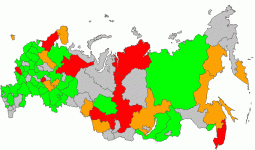
Epidemiological data showed continuing decrease of influenza activity in Russia in comparison with previous week. However the nationwide ILI & ARI morbidity level (94.5 per 10 000 of population) still exceeded the national baseline (69.5 per 10 000) by 36.0%.
ILI and ARI epidemic thresholds were exceeded in 21 of 59 cities collaborating with two WHO NICs in Russia.
Cumulative number of diagnosed influenza cases
Laboratory diagnosis data. Results of influenza laboratory diagnosis by different tests were submitted by 50 RBLs and two WHO NICs. According to these data as a result of 9972 patients investigation the overall proportion of respiratory samples positive for influenza virus was estimated as 2837 (28.4%) including 2522 (88.9%) influenza A(H1N1)pdm09 cases, 99 (3.5%) influenza A(H3N2) cases, 195 (6.9%) influenza A cases and 22 (0.8%) influenza B cases.
... [h=3]Conclusion[/h] Influenza and ARI morbidity data. Influenza activity decreased on the week 07.2016 however the nationwide ILI & ARI morbidity level (94.5 per 10 000 of population) exceeded still the national baseline by 36.0%. Etiology of ILI & ARI morbidity. As a result of investigation of 9972 patients in 50 cities of Russia the overall proportion of respiratory samples positive for influenza in traditional surveillance system was estimated as 28.4%. Influenza A(H1N1)pdm09 dominated (88.9% of influenza cases). Influenza A(H3N2) and B cases registered sporadically.
The overall proportion of respiratory samples tested positive for parainfluenza, adenovirus and RSV was estimated in total as 7.0% (PCR) and 14.6% (IFA) of investigated samples.
In sentinel surveillance systemclinical samples from 49 SARI and 76 ILI/ARI patients were investigated by rRT-PCR. 27 (55.1%) influenza cases including 26 influenza A(H1N1)pdm09 and 1 influenza B case were detected among SARI patients. A total 29 (38.2%) influenza cases including 26 influenza A(H1N1)pdm09 and 3 influenza A(H3N2) cases were detected among ILI/ARI patients. Antigenic characterization. Totally 203 influenza viruses including 186 influenza A(H1N1)pdm09 viruses, 10 influenza A(H3N2) strains and 7 influenza B viruses were characterizated antigenically in two NICs of Russia since the beginning of the season. Influenza A(H1N1)pdm09 strains were related closely to influenza A/California/07/09 virus. 10 A(H3N2) strains were similar to influenza A/Hong-Kong/5738/2014 virus, with antiserum to influenza A/Switzerland/9715293/2013 they reacted up to 1/4 - 1/8 of homological titer in HI. All investigated 7 influenza B viruses belonged to Victorian lineage and antigenically were similar to influenza B/Brisbane/60/2008 reference strain reacting with antiserum to it up to 1 - 1/8 of homological titer in HI. Genetic characterization. 63 investigated influenza A(H1N1)pdm09 virus strains were A/South Africa/3626/2013-like. All viruses bear clade 6B specific mutations in HA (S84N, S162+N and I216T) and formed new genetic group according to phylogenetic analysis. Two A(H1N1)pdm09 sequences obtained directly from autopsy sample showed the presence of additional mutation D222G in HA1. Susceptibility to antiviral drugs. According to genetic investigations 54 influenza A(H1N1)pdm09 viruses were susceptible to oseltamivir and resistant to rimantadine. These results coincided with Munana testing of 10 strains isolated in St.-Petersburg.
[h=2]Over 500 Russians Died in Flu Epidemic ? Health Ministry[/h] Over 500 people have died in Russia in this season's flu epidemic, a representative of the Health Ministry Oleg Salagai said, the TASS news agency reported Friday.
Salagai said that 503 people had died in Russia this year as a result of the flu, TASS reported.
The Health Ministry has declared that the flu epidemic is now over, given that, as of Feb. 26, flu cases have been recorded in only eight regions, with infection rates falling below the epidemic threshold.
In late January the Moscow branch of Rospotrebnadzor, Russia's consumer rights watchdog, declared an epidemic of flu and acute respiratory viral infection in the capital, with municipal institutions placed in quarantine.
Epidemiological data showed continuing decrease of influenza activity in Russia in comparison with previous week. However the nationwide ILI & ARI morbidity level (80.3 per 10 000 of population) still exceeded the national baseline (69.5 per 10 000) by 15.5%.
ILI and ARI epidemic thresholds were exceeded in 9 of 59 cities collaborating with two WHO NICs in Russia.
Epidemiological data showed continuing decrease of influenza activity in Russia in comparison with previous week. Tthe nationwide ILI & ARI morbidity level (60.0 per 10 000 of population) was below the national baseline (69.5 per 10 000) by 13.7%.
ILI and ARI epidemic thresholds were exceeded in 4 of 59 cities collaborating with two WHO NICs in Russia. Influenza.
Cumulative number of diagnosed influenza cases
Laboratory diagnosis data. Results of influenza laboratory diagnosis by different tests were submitted by 52 RBLs and two WHO NICs. According to these data as a result of 4043 patients investigation the overall proportion of respiratory samples positive for influenza virus was estimated as 1060 (26.2%) including 983 (88.9%) influenza A(H1N1)pdm09 cases, 29 (2.7%) influenza A(H3N2) cases, 29 (2.7%) influenza A cases and 25 (2.4%) influenza B cases.
... [h=3]Conclusion[/h] Influenza and ARI morbidity data. Influenza activity decreased on the week 09.2016. The nationwide ILI & ARI morbidity level (60.0 per 10 000 of population) was below the national baseline by 13.7%. Etiology of ILI & ARI morbidity. As a result of investigation of 4043 patients in 52 cities of Russia the overall proportion of respiratory samples positive for influenza in traditional surveillance system was estimated as 26.2%. Influenza A(H1N1)pdm09 dominated (88.9% of influenza cases). Influenza A(H3N2) and B cases registered sporadically.
The overall proportion of respiratory samples tested positive for parainfluenza, adenovirus and RSV was estimated in total as 5.7% (PCR) and 17.9% (IFA) of investigated samples.
In sentinel surveillance systemclinical samples from 61 SARI and 57 ILI/ARI patients were investigated by rRT-PCR. 16 (26.2%) influenza A(H1N1)pdm09 cases were detected among SARI patients. A total 23 (40.4%) influenza cases including 19 influenza A(H1N1)pdm09 and 4 influenza A(H3N2) cases were detected among ILI/ARI patients. Antigenic characterization. Totally 237 influenza viruses including 220 influenza A(H1N1)pdm09 viruses, 10 influenza A(H3N2) strains and 7 influenza B viruses were characterizated antigenically in two NICs of Russia since the beginning of the season. Influenza A(H1N1)pdm09 strains were related closely to influenza A/California/07/09 virus. 10 A(H3N2) strains were similar to influenza A/Hong-Kong/5738/2014 virus, with antiserum to influenza A/Switzerland/9715293/2013 they reacted up to 1/4 - 1/8 of homological titer in HI. All investigated 7 influenza B viruses belonged to Victorian lineage and antigenically were similar to influenza B/Brisbane/60/2008 reference strain reacting with antiserum to it up to 1 - 1/8 of homological titer in HI. Genetic characterization. 63 investigated influenza A(H1N1)pdm09 virus strains were A/South Africa/3626/2013-like. All viruses bear clade 6B specific mutations in HA (S84N, S162+N and I216T) and formed new genetic group according to phylogenetic analysis. Two A(H1N1)pdm09 sequences obtained directly from autopsy sample showed the presence of additional mutation D222G in HA1. Susceptibility to antiviral drugs. According to genetic investigations 54 influenza A(H1N1)pdm09 viruses were susceptible to oseltamivir and resistant to rimantadine. These results coincided with Munana testing of 10 strains isolated in St.-Petersburg. 5 influenza B viruses were susceptible to oseltamivir.
Epidemiological data showed decrease of influenza activity in Russia in comparison with previous week. Tthe nationwide ILI & ARI morbidity level (51.7 per 10 000 of population) was below the national baseline (69.5 per 10 000) by 25.6%.
ILI and ARI epidemic thresholds were exceeded in 2 of 59 cities collaborating with two WHO NICs in Russia. Influenza.
...
Cumulative number of diagnosed influenza cases
Laboratory diagnosis data. Results of influenza laboratory diagnosis by different tests were submitted by 53 RBLs and two WHO NICs. According to these data as a result of 3344 patients investigation the overall proportion of respiratory samples positive for influenza virus was estimated as 691 (20.7%) including 599 (86.7%) influenza A(H1N1)pdm09 cases, 38 (5.5%) influenza A(H3N2) cases, 19 (2.8%) influenza A cases and 35 (5.1%) influenza B cases.
... [h=3]Conclusion[/h] Influenza and ARI morbidity data. Influenza activity decreased on the week 11.2016. The nationwide ILI & ARI morbidity level (51.7 per 10 000 of population) was below the national baseline by 25.6%. Etiology of ILI & ARI morbidity. As a result of investigation of 3344 patients in 53 cities of Russia the overall proportion of respiratory samples positive for influenza in traditional surveillance system was estimated as 20.7%. Influenza A(H1N1)pdm09 dominated (86.7% of influenza cases). Influenza A(H3N2) and B cases registered sporadically.
The overall proportion of respiratory samples tested positive for parainfluenza, adenovirus and RSV was estimated in total as 6.4% (PCR) and 21.3% (IFA) of investigated samples.
In sentinel surveillance systemclinical samples from 40 SARI and 58 ILI/ARI patients were investigated by rRT-PCR. 10 (25.0%) influenza cases were detected including 4 influenza A(H1N1)pdm09, 3 influenza A(H3N2) and 3 influenza B cases. A total 17 (29.3%) influenza cases including 15 influenza A(H1N1)pdm09 and 2 influenza A(H3N2) cases were detected among ILI/ARI patients. Antigenic characterization. Totally 309 influenza viruses including 292 influenza A(H1N1)pdm09 viruses, 10 influenza A(H3N2) strains and 7 influenza B viruses were characterizated antigenically in two NICs of Russia since the beginning of the season. Influenza A(H1N1)pdm09 strains were related closely to influenza A/California/07/09 virus. 10 A(H3N2) strains were similar to influenza A/Hong-Kong/5738/2014 virus, with antiserum to influenza A/Switzerland/9715293/2013 they reacted up to 1/4 - 1/8 of homological titer in HI. All investigated 7 influenza B viruses belonged to Victorian lineage and antigenically were similar to influenza B/Brisbane/60/2008 reference strain reacting with antiserum to it up to 1 - 1/8 of homological titer in HI. Genetic characterization.
64 investigated influenza A(H1N1)pdm09 virus strains were A/South Africa/3626/2013-like. All viruses bear clade 6B specific mutations in HA (S84N, S162+N and I216T) and formed new genetic group according to phylogenetic analysis. Two A(H1N1)pdm09 sequence obtained directly from autopsy sample showed the presence of additional mutation D222G in HA1. Data on 54 influenza strains presented in GISAID base data. Two influenza B viruses belong to clade 1A B/Brisbane/60/2008. Susceptibility to antiviral drugs. According to genetic investigations of NA and M gene of 54 influenza A(H1N1)pdm09 all viruses were susceptible to oseltamivir and resistant to rimantadine. 72 influenza A(H1N1)pdm09 strains and 5 influenza B viruses were susceptibility to oseltamivir according to Munana test. http://www.influenza.spb.ru/en/influenza_surveillance_system_in_russia/epidemic_situation/
Epidemiological data showed increase of influenza activity in Russia in comparison with previous week. Tthe nationwide ILI & ARI morbidity level (60.8 per 10 000 of population) was below the national baseline (69.5 per 10 000) by 12.5%.
ILI and ARI epidemic threshold was exceeded in 1 of 59 cities collaborating with two WHO NICs in Russia. Influenza.
...
Cumulative number of diagnosed influenza cases
Laboratory diagnosis data. Results of influenza laboratory diagnosis by different tests were submitted by 53 RBLs and two WHO NICs. According to these data as a result of 3052 patients investigation the overall proportion of respiratory samples positive for influenza virus was estimated as 563 (18.4%) including 462 (82.1%) influenza A(H1N1)pdm09 cases, 25 (4.4%) influenza A(H3N2) cases, 14 (2.5%) influenza A cases and 62 (11.0%) influenza B cases.
... [h=3]Conclusion[/h] Influenza and ARI morbidity data. Influenza activity increased on the week 12.2016. The nationwide ILI & ARI morbidity level (60.8 per 10 000 of population) was below the national baseline by 12.5%. Etiology of ILI & ARI morbidity. As a result of investigation of 3052 patients in 53 cities of Russia the overall proportion of respiratory samples positive for influenza in traditional surveillance system was estimated as 18.4%. Influenza A(H1N1)pdm09 dominated (82.1% of influenza cases). Influenza A(H3N2) and B cases registered sporadically.
The overall proportion of respiratory samples tested positive for parainfluenza, adenovirus and RSV was estimated in total as 9.3% (PCR) and 19.3% (IFA) of investigated samples.
In sentinel surveillance systemclinical samples from 44 SARI and 71 ILI/ARI patients were investigated by rRT-PCR. 8 (18.2%) influenza cases were detected including 5 influenza A(H1N1)pdm09, 1 influenza A(H3N2) and 2 influenza B cases. A total 10 (14.1%) influenza cases including 7 influenza A(H1N1)pdm09 and 3 influenza A(H3N2) cases were detected among ILI/ARI patients. Antigenic characterization. Totally 309 influenza viruses including 292 influenza A(H1N1)pdm09 viruses, 10 influenza A(H3N2) strains and 7 influenza B viruses were characterizated antigenically in two NICs of Russia since the beginning of the season. Influenza A(H1N1)pdm09 strains were related closely to influenza A/California/07/09 virus. 10 A(H3N2) strains were similar to influenza A/Hong-Kong/5738/2014 virus, with antiserum to influenza A/Switzerland/9715293/2013 they reacted up to 1/4 - 1/8 of homological titer in HI. All investigated 7 influenza B viruses belonged to Victorian lineage and antigenically were similar to influenza B/Brisbane/60/2008 reference strain reacting with antiserum to it up to 1 - 1/8 of homological titer in HI. Genetic characterization.
64 investigated influenza A(H1N1)pdm09 virus strains were A/South Africa/3626/2013-like. All viruses bear clade 6B specific mutations in HA (S84N, S162+N and I216T) and formed new genetic group according to phylogenetic analysis. Two A(H1N1)pdm09 sequence obtained directly from autopsy sample showed the presence of additional mutation D222G in HA1. Data on 54 influenza strains presented in GISAID base data. Two influenza B viruses belong to clade 1A B/Brisbane/60/2008. Susceptibility to antiviral drugs. According to genetic investigations of NA and M gene of 54 influenza A(H1N1)pdm09 all viruses were susceptible to oseltamivir and resistant to rimantadine. 72 influenza A(H1N1)pdm09 strains and 5 influenza B viruses were susceptibility to oseltamivir according to Munana test.
... http://www.influenza.spb.ru/en/influenza_surveillance_system_in_russia/epidemic_situation/
Epidemiological data showed decrease of influenza activity in Russia in comparison with previous week. Tthe nationwide ILI & ARI morbidity level (54.3 per 10 000 of population) was below the national baseline (69.5 per 10 000) by 21.9%.
ILI and ARI epidemic threshold was exceeded in 1 of 59 cities collaborating with two WHO NICs in Russia. Influenza.
...
Cumulative number of diagnosed influenza cases
Laboratory diagnosis data. Results of influenza laboratory diagnosis by different tests were submitted by 53 RBLs and two WHO NICs. According to these data as a result of 2200 patients investigation the overall proportion of respiratory samples positive for influenza virus was estimated as 345 (15.7%) including 239 (69.3%) influenza A(H1N1)pdm09 cases, 11 (3.2%) influenza A(H3N2) cases, 10 (2.9%) influenza A cases and 85 (24.6%) influenza B cases.
... [h=3]Conclusion[/h] Influenza and ARI morbidity data. Influenza activity decreased on the week 14.2016. The nationwide ILI & ARI morbidity level (54.3 per 10 000 of population) was below the national baseline by 21.9%. Etiology of ILI & ARI morbidity. As a result of investigation of 2200 patients in 53 cities of Russia the overall proportion of respiratory samples positive for influenza in traditional surveillance system was estimated as 15.7%. Influenza A(H1N1)pdm09 dominated (69.3% of influenza cases). Influenza A(H3N2) and B cases registered sporadically.
The overall proportion of respiratory samples tested positive for parainfluenza, adenovirus and RSV was estimated in total as 11.2% (PCR) and 21.7% (IFA) of investigated samples.
In sentinel surveillance systemclinical samples from 31 SARI and 40 ILI/ARI patients were investigated by rRT-PCR. 6 (19.4%) influenza cases were detected including 2 influenza A(H1N1)pdm09, 1 inflluenza A(H3N2) and 3 influenza B cases. A total 6 (15.0%) influenza cases including 5 influenza A(H1N1)pdm09 and 1 influenza B case were detected among ILI/ARI patients. Antigenic characterization. Totally 386 influenza viruses including 347 influenza A(H1N1)pdm09 viruses, 17 influenza A(H3N2) strains and 22 influenza B viruses were characterizated antigenically in two NICs of Russia since the beginning of the season. Influenza A(H1N1)pdm09 strains were related closely to influenza A/California/07/09 virus. 17 influenza A(H3N2) strains were similar to influenza A/Hong-Kong/5738/2014 virus, with antiserum to influenza A/Switzerland/9715293/2013 they reacted up to 1/4 - 1/8 of homological titer in HI. 21 investigated influenza B viruses belonged to Victorian lineage and antigenically were similar to influenza B/Brisbane/60/2008 reference strain reacting with antiserum to it up to 1 - 1/8 of homological titer in HI. One influenza B virus was similar to influenza B/Massachusetts/02/2012 reference strains and belonged to Yamagata lineage. Genetic characterization. 64 investigated influenza A(H1N1)pdm09 virus strains were A/South Africa/3626/2013-like. All viruses bear clade 6B specific mutations in HA (S84N, S162+N and I216T) and formed new genetic group according to phylogenetic analysis. Two A(H1N1)pdm09 sequence obtained directly from autopsy sample showed the presence of additional mutation D222G in HA1. Data on 54 influenza strains presented in GISAID base data. Two influenza B viruses belong to clade 1A B/Brisbane/60/2008. Susceptibility to antiviral drugs. According to genetic investigations of NA and M gene of 54 influenza A(H1N1)pdm09 all viruses were susceptible to oseltamivir and resistant to rimantadine. 72 influenza A(H1N1)pdm09 strains and 5 influenza B viruses were susceptibility to oseltamivir according to Munana test.