• FluTrackers.com Inc. does not provide medical advice. Information on this web site is collected from various internet resources, and the FluTrackers board of directors makes no warranty to the safety, efficacy, correctness or completeness of the information posted on this site by any author or poster. The information collated here is for instructional and/or discussion purposes only and is NOT intended to diagnose or treat any disease, illness, or other medical condition. Every individual reader or poster should seek advice from their personal physician/healthcare practitioner before considering or using any interventions that are discussed on this website. By continuing to access this website you agree to consult your personal physican before using any interventions posted on this website, and you agree to hold harmless FluTrackers.com Inc., the board of directors, the members, and all authors and posters for any effects from use of any medication, supplement, vitamin or other substance, device, intervention, etc. mentioned in posts on this website, or other internet venues referenced in posts on this website.
  • We are not asking for any donations. Do not donate to any entity who says they are raising funds for us.

Russia Influenza Surveillance 2014-2015

Ronan Kelly

Retired 2020
Link to 2013-2014; http://www.flutrackers.com/forum/showthread.php?p=534432#post534432

Link to Research Institute of Influenza; http://www.influenza.spb.ru/en/influenza_surveillance_system_in_russia/epidemic_situation/

Week 44: 27.10.2014-02.11.2014

Influenza and ARI morbidity data

Epidemiological data show decrease of influenza and other ARI activity in Russia in comparison with previous week. The nationwide ILI & ARI morbidity level (57.6 per 10 000 of population) was lower than the national baseline (68.9) by 19.6%.
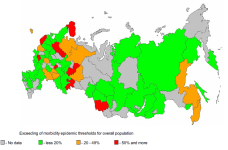
ILI and ARI epidemic threshold was exceeded in one city of 59 cities collaborating with two WHO NICs in Russia.
...
Conclusion

Influenza and ARI morbidity data. Decreased influenza and other ARI activity was registered during the week 44.2014 in traditional surveillance system in Russia. The nationwide ILI & ARI morbidity level (57.6 per 10 000 of population) was lower than the national baseline by 19.6%.

Etiology of ILI & ARI morbidity. The overall proportion of respiratory samples tested positive for influenza virus was estimated as 0.5%. Percent of positive ARI cases of non-influenza etiology (PIV, adeno- and RSV) was estimated as 21.3% of investigated patients by IFA and 16.5% by PCR.
In sentinel surveillance system clinical samples from 71 SARI and ILI/ARI patients were investigated by rRT-PCR. No influenza cases were detected.
 
Re: Russia Influenza Surveillance 2014-2015

Week 46: 10.11.2014-16.11.2014

Influenza and ARI morbidity data

Epidemiological data show increase of influenza and other ARI activity in Russia in comparison with previous week. The nationwide ILI & ARI morbidity level (53.0 per 10 000 of population) was lower than the national baseline (68.9) by 23.1%.
ILI and ARI epidemic thresholds were not exceeded in 59 cities collaborating with two WHO NICs in Russia.
...
Cumulative number of diagnosed influenza cases

Cumulative results of influenza laboratory diagnosis by different tests were submitted by 47 RBLs and two WHO NICs. According to these data as a result of 1314 patients investigation the overall proportion of respiratory samples positive for influenza virus was estimated as 0.8% including one influenza type A case and 10 influenza A(H3N2) cases.
...
Conclusion

Influenza and ARI morbidity data. Increased influenza and other ARI activity was registered during the week 46.2014 in traditional surveillance system in Russia. The nationwide ILI & ARI morbidity level (53.0 per 10 000 of population) was lower than the national baseline by 23.1%.
Etiology of ILI & ARI morbidity. The overall proportion of respiratory samples tested positive for influenza virus was estimated as 0.8%. Percent of positive ARI cases of non-influenza etiology (PIV, adeno- and RSV) was estimated as 19.3% of investigated patients by IFA and 12.3% by PCR.
In sentinel surveillance system clinical samples from 79 SARI and ILI/ARI patients were investigated by rRT-PCR. No influenza cases were detected.

http://www.influenza.spb.ru/en/influenza_surveillance_system_in_russia/epidemic_situation/
 
Re: Russia Influenza Surveillance 2014-2015

Week 47: 17.11.2014-23.11.2014

Influenza and ARI morbidity data

Epidemiological data show increase of influenza and other ARI activity in Russia in comparison with previous week. The nationwide ILI & ARI morbidity level (57.5 per 10 000 of population) was lower than the national baseline (68.9) by 16.6%.
ILI and ARI epidemic threshold was exceeded in one city of Far-Eastern Federal District (FD) from 59 cities collaborating with two WHO NICs in Russia.
...

Conclusion

Influenza and ARI morbidity data. Increased influenza and other ARI activity was registered during the week 47.2014 in traditional surveillance system in Russia. The nationwide ILI & ARI morbidity level (57.5 per 10 000 of population) was lower than the national baseline by 16.6%.

Etiology of ILI & ARI morbidity. The overall proportion of respiratory samples tested positive for influenza virus was estimated as 0.6%. Percent of positive ARI cases of non-influenza etiology (PIV, adeno- and RSV) was estimated as 19.4% of investigated patients by IFA and 9.7% by PCR.

In sentinel surveillance system clinical samples from 76 SARI and ILI/ARI patients were investigated by rRT-PCR. No influenza cases were detected.
...
http://www.influenza.spb.ru/en/influenza_surveillance_system_in_russia/epidemic_situation/
 
Re: Russia Influenza Surveillance 2014-2015

Week 48: 24.11.2014-30.11.2014
http://www.influenza.spb.ru/en/influenza_surveillance_system_in_russia/epidemic_situation/

Influenza and ARI morbidity data

Epidemiological data show increase of influenza and other ARI activity in Russia in comparison with previous week. The nationwide ILI & ARI morbidity level (61.7 per 10 000 of population) was lower than the national baseline (68.9) by 10.4%.
ILI and ARI epidemic thresholds were not exceeded in 59 cities collaborating with two WHO NICs in Russia.
...
Conclusion

Influenza and ARI morbidity data. Increased influenza and other ARI activity was registered during the week 48.2014 in traditional surveillance system in Russia. The nationwide ILI & ARI morbidity level (61.7 per 10 000 of population) was lower than the national baseline by 10.4%.

Etiology of ILI & ARI morbidity. The overall proportion of respiratory samples tested positive for influenza virus was estimated as 1.3%. Percent of positive ARI cases of non-influenza etiology (PIV, adeno- and RSV) was estimated as 22.0% of investigated patients by IFA and 14.1% by PCR.

In sentinel surveillance system clinical samples from 84 SARI and ILI/ARI patients were investigated by rRT-PCR. 2 influenza A(H3N2) cases were detected in Siberian Federal District.
 
Re: Russia Influenza Surveillance 2014-2015

Week 49: 01.12.2014-07.12.2014
http://www.influenza.spb.ru/en/influenza_surveillance_system_in_russia/epidemic_situation/

Influenza and ARI morbidity data

Epidemiological data show increase of influenza and other ARI activity in Russia in comparison with previous week. The nationwide ILI & ARI morbidity level (63.5 per 10 000 of population) was lower than the national baseline (68.9) by 7.8%.
ILI and ARI epidemic thresholds were not exceeded in 59 cities collaborating with two WHO NICs in Russia.

Cumulative number of diagnosed influenza cases

Cumulative results of influenza laboratory diagnosis by different tests were submitted by 44 RBLs and two WHO NICs. According to these data as a result of 1372 patients investigation the overall proportion of respiratory samples positive for influenza virus was estimated as 1.7% including 21 influenza A(H3N2) cases and 2 influenza type B cases.

...
Conclusion

Influenza and ARI morbidity data. Increased influenza and other ARI activity was registered during the week 49.2014 in traditional surveillance system in Russia. The nationwide ILI & ARI morbidity level (63.5 per 10 000 of population) was lower than the national baseline by 7.8%.
Etiology of ILI & ARI morbidity. The overall proportion of respiratory samples tested positive for influenza virus was estimated as 1.7%. Percent of positive ARI cases of non-influenza etiology (PIV, adeno- and RSV) was estimated as 24.2% of investigated patients by IFA and 10.5% by PCR.
In sentinel surveillance system clinical samples from 89 SARI and ILI/ARI patients were investigated by rRT-PCR. 2 influenza A(H3N2) cases were detected in Central and Siberian Federal Districts.
 
Week 51: 15.12.2014-21.12.2014
http://www.influenza.spb.ru/en/influ...mic_situation/

Influenza and ARI morbidity data

Epidemiological data show decrease of influenza and other ARI activity in Russia in comparison with previous week. The nationwide ILI & ARI morbidity level (65.1 per 10 000 of population) was lower than the national baseline (68.9) by 5.5%.
ILI and ARI epidemic threshold were exceeded in 3 cities of North-Western and Volga Federal Districts (FD) from 59 cities collaborating with two WHO NICs in Russia.
...
Cumulative number of diagnosed influenza cases

Cumulative results of influenza laboratory diagnosis by different tests were submitted by 46 RBLs and two WHO NICs. According to these data as a result of 1423 patients investigation the overall proportion of respiratory samples positive for influenza virus was estimated as 8.4% including 100 influenza A(H3N2) cases, 1 influenza A(H1N1)pdm09, 3 influenza type type A and 16 influenza type B cases.
...
Conclusion

Influenza and ARI morbidity data. Decreased influenza and other ARI activity was registered during the week 51.2014 in traditional surveillance system in Russia. The nationwide ILI & ARI morbidity level (65.1 per 10 000 of population) was lower than the national baseline by 5.5%.
Etiology of ILI & ARI morbidity. The overall proportion of respiratory samples tested positive for influenza virus was estimated as 8.4%. Percent of positive ARI cases of non-influenza etiology (PIV, adeno- and RSV) was estimated as 22.2% of investigated patients by IFA and 13.6% by PCR.
In sentinel surveillance system clinical samples from 97 SARI and ILI/ARI patients were investigated by rRT-PCR. 6 influenza A(H3N2) SARI cases, 1 influenza type B SARI case and 2 influenza A(H3N2) ILI/ARI cases were detected in Siberian and North-Western FDs.
 
[h=3]Week 52: 22.12.2014-28.12.2014[/h]
http://www.influenza.spb.ru/en/influenza_surveillance_system_in_russia/epidemic_situation/
Epidemiological data show decrease of influenza and other ARI activity in Russia in comparison with previous week. The nationwide ILI & ARI morbidity level (60.3 per 10 000 of population) was lower than the national baseline (68.9) by 12.5%.
ILI and ARI epidemic threshold were exceeded in 3 cities of Siberian and Volga Federal Districts (FD) from 59 cities collaborating with two WHO NICs in Russia.
...
[h=3]Cumulative number of diagnosed influenza cases[/h]
Cumulative results of influenza laboratory diagnosis by different tests were submitted by 48 RBLs and two WHO NICs. According to these data as a result of 1518 patients investigation the overall proportion of respiratory samples positive for influenza virus was estimated as 7.8% including 103 influenza A(H3N2) cases, 1 influenza A(H1N1)pdm09, 1 influenza type A and 14 influenza type B cases.
...
[h=3]Conclusion[/h]
Influenza and ARI morbidity data. Decreased influenza and other ARI activity was registered during the week 52.2014 in traditional surveillance system in Russia. The nationwide ILI & ARI morbidity level (65.1 per 10 000 of population) was lower than the national baseline by 5.5%.
Etiology of ILI & ARI morbidity. The overall proportion of respiratory samples tested positive for influenza virus was estimated as 7.8%. Percent of positive ARI cases of non-influenza etiology (PIV, adeno- and RSV) was estimated as 29.8% of investigated patients by IFA and 20.1% by PCR.
In sentinel surveillance system clinical samples from 87 SARI and ILI/ARI patients were investigated by rRT-PCR. 8 influenza A(H3N2) SARI cases, 1 influenza type B SARI case and 6 influenza A(H3N2) ILI/ARI cases were detected in Far-Eastern, Siberian, South and North-Western FDs.


Week 05.01.2015-11.01.2015
http://www.influenza.spb.ru/en/influenza_surveillance_system_in_russia/epidemic_situation/

Influenza and ARI morbidity data

Epidemiological data show decrease of influenza and other ARI activity in Russia in comparison with previous week. The nationwide ILI & ARI morbidity level (28.8 per 10 000 of population) was lower than the national baseline (68.9) by 58.2%.
ILI and ARI epidemic threshold was exceeded in one city of North-Western Federal District (FD) from 59 cities collaborating with two WHO NICs in Russia.

...
Cumulative number of diagnosed influenza cases

Cumulative results of influenza laboratory diagnosis by different tests were submitted by 13 RBLs and two WHO NICs. According to these data as a result of 124 patients investigation the overall proportion of respiratory samples positive for influenza virus was estimated as 16.9% including 6 influenza A(H3N2) cases, 1 influenza type A and 14 influenza type B cases.

... [h=3]Conclusion[/h]
Influenza and ARI morbidity data. Decreased influenza and other ARI activity was registered during the week 2.2015 in traditional surveillance system in Russia. The nationwide ILI & ARI morbidity level (28.8 per 10 000 of population) was lower than the national baseline by 58.2%.
Etiology of ILI & ARI morbidity. The overall proportion of respiratory samples tested positive for influenza virus was estimated as 16.9%. Percent of positive ARI cases of non-influenza etiology (PIV, adeno- and RSV) was estimated as 6.0% of investigated patients by IFA and 9.9% by PCR.
In sentinel surveillance system clinical samples from 44 SARI and ILI/ARI patients were investigated by rRT-PCR. 2 influenza A(H3N2) SARI cases and 4 influenza A(H3N2) ILI/ARI cases were detected in Far-Eastern, Siberian and North-Western FDs.
Antigenic characterization. Totally 20 influenza A(H3N2) viruses were characterizated antigenically since start of 2014-2015 season. Antigenically all 20 strains were drift variants of A/Texas/50/12 reference strain.
Genetic characterization: 1 influenza A(H3N2) viruses was shown to be genetically related to clade represented A/Victoria/208/2009 group 3C.2, subgroup3C.
 
Week 3: 12.01.2015-18.01.2015
http://www.influenza.spb.ru/en/influenza_surveillance_system_in_russia/epidemic_situation/

Influenza and ARI morbidity data

Epidemiological data show increase of influenza and other ARI activity in Russia in comparison with previous week. The nationwide ILI & ARI morbidity level (52.7 per 10 000 of population) was lower than the national baseline (68.9) by 23.5%.
ILI and ARI epidemic thresholds were exceeded in three cities of Far-Eastern, Siberian and Volga Federal Districts (FD) from 59 cities collaborating with two WHO NICs in Russia.
...
Cumulative number of diagnosed influenza cases


Cumulative results of influenza laboratory diagnosis by different tests were submitted by 47 RBLs and two WHO NICs. According to these data as a result of 1520 patients investigation the overall proportion of respiratory samples positive for influenza virus was estimated as14.6% including 9 A(H1N1)pdm09 cases, 147 influenza A(H3N2) cases, 1 influenza type A and 65 influenza type B cases.
Antigenic characterization. Totally 20 influenza A(H3N2) viruses were characterizated antigenically since start of 2014-2015 season. All 20 influenza A(H3N2) viruses antigenically characterized were drift variants of influenza A/Texas/50/12 with 4-8 decrease of antibody titers to this virus.
Genetic characterization. The first isolate of the current season (A/Astrakhan/23/2014) clusters with genetic subgroup 3C.2a related to A/Hong Kong/5738/14 virus.
...
Conclusion


Influenza and ARI morbidity data. Increased influenza and other ARI activity was registered during the week 3.2015 in traditional surveillance system in Russia. The nationwide ILI & ARI morbidity level (52.7 per 10 000 of population) was lower than the national baseline by 23.5%.
Etiology of ILI & ARI morbidity. The overall proportion of respiratory samples tested positive for influenza virus was estimated as 14.6%. Percent of positive ARI cases of non-influenza etiology (PIV, adeno- and RSV) was estimated as 19.3% of investigated patients by IFA and 13.4% by PCR.
In sentinel surveillance system clinical samples from 89 SARI and ILI/ARI patients were investigated by rRT-PCR. 24 influenza cases were detected including 16 influenza A(H3N2), 1 influenza, 3 influenza B SARI cases and 4 influenza A(H3N2) ILI/ARI cases in Far-Eastern, Siberian, Volga and North-Western FDs.
Antigenic characterization. Totally 20 influenza A(H3N2) viruses were characterizated antigenically since start of 2014-2015 season.
All 20 influenza A(H3N2) viruses antigenically characterized were drift variants of influenza A/Texas/50/12 with 4-8 decrease of antibody titers to this virus.
Genetic characterization. The first isolate of the current season (A/Astrakhan/23/2014) clusters with genetic subgroup 3C.2a related to A/Hong Kong/5738/14 virus.
 
Week 4: 19.01.2015-25.01.2015
http://www.influenza.spb.ru/en/influenza_surveillance_system_in_russia/epidemic_situation/

Influenza and ARI morbidity data

Epidemiological data show decrease of influenza and other ARI activity in Russia in comparison with previous week. The nationwide ILI & ARI morbidity level (57.2 per 10 000 of population) was lower than the national baseline (68.9) by 17.0%.
ILI and ARI epidemic thresholds were exceeded in 3 cities of Far-Eastern, Siberian and Ural Federal Districts (FD) from 59 cities collaborating with two WHO NICs in Russia.
...
Cumulative number of diagnosed influenza cases

Cumulative results of influenza laboratory diagnosis by different tests were submitted by 48 RBLs and two WHO NICs. According to these data as a result of 420 patients investigation the overall proportion of respiratory samples positive for influenza virus was estimated as 22.1% including 8 influenza A(H1N1)pdm09 cases, 295 influenza A(H3N2) cases and 117 influenza type B cases.
...
Conclusion

Influenza and ARI morbidity data. Increased influenza and other ARI activity was registered during the week 4.2015 in traditional surveillance system in Russia. The nationwide ILI & ARI morbidity level (57.2 per 10 000 of population) was lower than the national baseline by 17.0%.

Etiology of ILI & ARI morbidity. The overall proportion of respiratory samples tested positive for influenza virus was estimated as 22.1%. Percent of positive ARI cases of non-influenza etiology (PIV, adeno- and RSV) was estimated as 17.3% of investigated patients by IFA and 10.6% by PCR.
In sentinel surveillance system clinical samples from 113 SARI and ILI/ARI patients were investigated by rRT-PCR. 26 (48.1%) influenza cases were detected including 25 influenza A(H3N2) cases and 1 influenza B SARI case in Far-Eastern, Siberian, Volga and North-Western FDs. 7 (11.9%) influenza cases were detected including 5 influenza A(H3N2) cases and 2 influenza B ILI/ARI cases in Central and North-Western FDs.

Antigenic characterization. Totally one influenza A(H1N1)pdm09, 34 A(H3N2) and 2 influenza B viruses were characterizated antigenically since start of 2014-2015 season. All 34 influenza A(H3N2) strains were drift variants of A/Texas/50/12 reference strain. One influenza A(H1N1)pdm09 and 2 influenza B viruses were drift variants of A/California/07/09 и B/Massachusetts/02/2012 reference strains.

Genetic characterization: 5 influenza A(H3N2) viruses from 2 sities of Central and South FDs were shown to be genetically related to clade represented A/Hongkong/5738/2014 virus, group 3C.2, subgroup 3C.2a.15 A(H3N2) viruses from 2 sities of Siberian FD were shown to be genetically related to clade represented A/Switherland/9715293/2013 virus, group 3C.2, subgroup 3C.3a.
 
Week 5: 26.01.2015-01.02.2015
http://www.influenza.spb.ru/en/influenza_surveillance_system_in_russia/epidemic_situation/

Influenza and ARI morbidity data

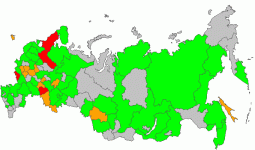
Epidemiological data show increase of influenza and other ARI activity in Russia in comparison with previous week. The nationwide ILI & ARI morbidity level (72.4 per 10 000 of population) was above than the national baseline (68.9) by 5.1%.
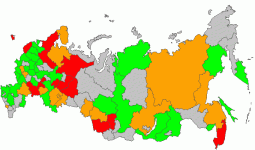
ILI and ARI epidemic thresholds were exceeded in 10 cities of Central, Nord-Western, Volga, Siberian and Ural Federal Districts (FD) from 59 cities collaborating with two WHO NICs in Russia.
file002.gif
[TABLE="align: center"]
[TR]
[TD="colspan: 6"]Exceeding of morbidity epidemic thresholds for overall population[/TD]
[/TR]
[TR]
[TD] [/TD]
[TD]
file003.gif
- No data
[/TD]
[TD]
file004.gif
- less 20%
[/TD]
[TD]
file005.gif
- 20 - 49%
[/TD]
[TD]
file006.gif
- 50% and more
[/TD]
[TD] [/TD]
[/TR]
[/TABLE]


Cumulative number of diagnosed influenza cases


Cumulative results of influenza laboratory diagnosis by different tests were submitted by 49 RBLs and two WHO NICs. According to these data as a result of 2091 patients investigation the overall proportion of respiratory samples positive for influenza virus was estimated as29.2% including 32 (1.5%) influenza A(H1N1)pdm09 cases, 366 (17.5%) influenza A(H3N2) cases, 12 (0.6%) and 200 (9.6%) influenza type B cases.

...
Conclusion


Influenza and ARI morbidity data. Increased influenza and other ARI activity was registered during the week 5.2015 in traditional surveillance system in Russia. The nationwide ILI & ARI morbidity level (72.4 per 10 000 of population) was above than the national baseline (68.9) by 5.1%.
Etiology of ILI & ARI morbidity. The overall proportion of respiratory samples tested positive for influenza virus was estimated as 29.2%. Percent of positive ARI cases of non-influenza etiology (PIV, adeno- and RSV) was estimated as 14.7% of investigated patients by IFA and 9.0% by PCR.
In sentinel surveillance system clinical samples from 96 SARI and ILI/ARI patients were investigated by rRT-PCR. 19 (41.3%) influenza SARI cases were detected including 15 influenza A(H3N2) cases and 4 influenza B SARI cases in Far-Eastern, Siberian and North-Western FDs. 11 (22.0%) influenza ILI/ARI cases were detected including 10 influenza A(H3N2) cases and 1 influenza B ILI/ARI case in Far-Eastern, Siberian and Central FDs.
Antigenic characterization. Totally one influenza A(H1N1)pdm09, 61 A(H3N2) and 8 influenza B viruses were characterizated antigenically since start of 2014-2015 season. All 61 influenza A(H3N2) strains were drift variants of A/Texas/50/12 reference strain. One influenza A(H1N1)pdm09 and 8 influenza B viruses were drift variants of A/California/07/09 и B/Massachusetts/02/2012 reference strains.
Genetic characterization: 12 influenza A(H3N2) viruses from 4 sities of Central, Nort-Western, Siberian and South FDs were shown to be genetically related to clade represented A/Hongkong/5738/2014 virus, group 3C.2, subgroup 3C.2a. 14 A(H3N2) viruses from one sity of Siberian FD were shown to be genetically related to clade represented A/Switherland/9715293/2013 virus, group 3C.3, subgroup 3C.3a.
Totally 3 lethal influenza cases were registered in this season including one influenza A(H3N2), one influenza A(H1N1)pdm09 and one influenza B case.
 
Week 6: 02.02.2015-08.02.2015
http://www.influenza.spb.ru/en/influenza_surveillance_system_in_russia/epidemic_situation/

Influenza and ARI morbidity data

Epidemiological data show increase of influenza and other ARI activity in Russia in comparison with previous week. The nationwide ILI & ARI morbidity level (88.0 per 10 000 of population) was above than the national baseline (68.9) by 27.7%.
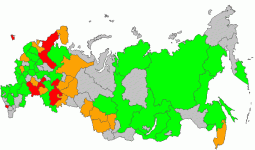
ILI and ARI epidemic thresholds were exceeded in 19 cities of Central, Nord-Western, Volga, Ural, Siberian and Far-Eastern Federal Districts (FD) from 59 cities collaborating with two WHO NICs in Russia.
[h=3]Russia.png

Cumulative number of diagnosed influenza cases[/h]

Cumulative results of influenza laboratory diagnosis by different tests were submitted by 50 RBLs and two WHO NICs. According to these data as a result of 2958 patients investigation the overall proportion of respiratory samples positive for influenza virus was estimated as29.3% including 25 (0.8%) influenza A(H1N1)pdm09 cases, 547 (18.5%) influenza A(H3N2) cases, 7 (0.2%) influenza type A and 285 (9.6%) influenza type B cases.


... [h=3]Conclusion[/h]
Influenza and ARI morbidity data. Increased influenza and other ARI activity was registered during the week 6.2015 in traditional surveillance system in Russia. The nationwide ILI & ARI morbidity level (88.0 per 10 000 of population) was above than the national baseline (68.9) by 27.7%.
Etiology of ILI & ARI morbidity. The overall proportion of respiratory samples tested positive for influenza virus was estimated as 29.3%. Percent of positive ARI cases of non-influenza etiology (PIV, adeno- and RSV) was estimated as 15.6% of investigated patients by IFA and 11.6% by PCR.
In sentinel surveillance system clinical samples from 109 SARI and ILI/ARI patients were investigated by rRT-PCR. 28 (42.4%) influenza SARI cases were detected including 22 influenza A(H3N2) cases and 6 influenza B SARI cases. 8 (18.6%) influenza ILI/ARI cases were detected including 6 influenza A(H3N2) cases and 2 influenza B ILI/ARI cases.
Antigenic characterization. Totally 2 influenza A(H1N1)pdm09, 72 A(H3N2) and 20 influenza B viruses were characterizated antigenically since start of 2014-2015 season. All 72 influenza A(H3N2) strains were drift variants of A/Texas/50/12 reference strain. 2 influenza A(H1N1)pdm09 and 20 influenza B viruses were drift variants of A/California/07/09 и B/Massachusetts/02/2012 reference strains, correspondingly.
Genetic characterization: 28 influenza A(H3N2) viruses, 1 influenza A(H1N1)pdm09 virus and 2 influenza type B viruses were investigated. 14 A(H3N2) strains from different sities were shown to be genetically related to clade represented A/Hong-Kong/5738/2014 virus, group 3C.2, subgroup 3C.2a. 14 A(H3N2) viruses from one sity of Siberian FD were shown to be genetically related to clade represented A/Switherland/9715293/2013 virus, group 3C.3, subgroup 3C.3a. 1 influenza A(H1N1)pdm09 virus were related to group 6B represented A/South Africa/3626/2013 virus. 2 influenza type B viruses were related to Yamagata line, clade 3, B/Phuket/3073-like, groupe B/Iceland/78/2014.
 
Week 7: 09.02.2015-15.02.2015
http://www.influenza.spb.ru/en/influenza_surveillance_system_in_russia/epidemic_situation/

Influenza and ARI morbidity data

Epidemiological data show increase of influenza and other ARI activity in Russia in comparison with previous week. The nationwide ILI & ARI morbidity level (101.6 per 10 000 of population) was above than the national baseline (68.9) by 47.5%.
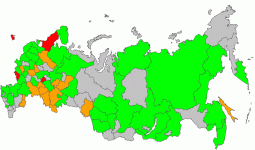
ILI and ARI epidemic thresholds were exceeded in 28 cities of all Federal Districts (FD) from 59 cities collaborating with two WHO NICs in Russia.


file002.gif

Cumulative number of diagnosed influenza cases

Cumulative results of influenza laboratory diagnosis by different tests were submitted by 49 RBLs and two WHO NICs. According to these data as a result of 3248 patients investigation the overall proportion of respiratory samples positive for influenza virus was estimated as 32.2% including 42 (1.3%) influenza A(H1N1)pdm09 cases, 638 (19.6%) influenza A(H3N2) cases, 20 (0.6%) influenza type A and 346 (10.7%) influenza type B cases.
... [h=3]Conclusion[/h]
Influenza and ARI morbidity data. Increased influenza and other ARI activity was registered during the week 7.2015 in traditional surveillance system in Russia. The nationwide ILI & ARI morbidity level (101.6 per 10 000 of population) was above than the national baseline (68.9) by 47.5%.
Etiology of ILI & ARI morbidity. The overall proportion of respiratory samples tested positive for influenza virus was estimated as 32.2%. Percent of positive ARI cases of non-influenza etiology (PIV, adeno- and RSV) was estimated as 13.6% of investigated patients by IFA and 10.6% by PCR.
In sentinel surveillance system clinical samples from 124 SARI and ILI/ARI patients were investigated by rRT-PCR. 40 (56.3%) influenza SARI cases were detected including 28 influenza A(H3N2) cases and 12 influenza B SARI cases. 9 (17.0%) influenza ILI/ARI cases were detected including 5 influenza A(H3N2) cases and 4 influenza B ILI/ARI cases.
Antigenic characterization. Totally 3 influenza A(H1N1)pdm09, 91 A(H3N2) and 26 influenza B viruses were characterizated antigenically since start of 2014-2015 season. 85 influenza A(H3N2) strains were drift variants of A/Texas/50/12 reference strain, 6 influenza A(H3N2) strains were like A/Switzerland/9715293/2013 virus. 3 influenza A(H1N1)pdm09 and 25 influenza B viruses were drift variants of A/California/07/09 и B/Massachusetts/02/2012 reference strains, correspondingly. 1 influenza type B strain was like B/Brisbane/60/2008 virus.
Genetic characterization: 28 influenza A(H3N2) viruses, 1 influenza A(H1N1)pdm09 virus and 4 influenza type B viruses were investigated. 14 A(H3N2) strains from different sities were shown to be genetically related to clade represented A/Hong-Kong/5738/2014 virus, group 3C.2, subgroup 3C.2a. 14 A(H3N2) viruses from one sity of Siberian FD were shown to be genetically related to clade represented A/Switherland/9715293/2013 virus, group 3C.3, subgroup 3C.3a. 1 influenza A(H1N1)pdm09 virus were related to group 6B represented A/South Africa/3626/2013 virus. 4 influenza type B viruses were related to Yamagata line, clade 3, B/Phuket/3073-like, groupe B/Iceland/78/2014.
 
Week 8: 16.02.2015-22.02.2015
http://www.influenza.spb.ru/en/influenza_surveillance_system_in_russia/epidemic_situation/

Influenza and ARI morbidity data

Epidemiological data show decrease of influenza and other ARI activity in Russia in comparison with previous week. The nationwide ILI & ARI morbidity level (100.9 per 10 000 of population) was above than the national baseline (68.9) by 46.4%.
ILI and ARI epidemic thresholds were exceeded in 24 cities of all Federal Districts (FD) from 59 cities collaborating with two WHO NICs in Russia.

file002.gif

Cumulative number of diagnosed influenza cases

Cumulative results of influenza laboratory diagnosis by different tests were submitted by 48 RBLs and two WHO NICs. According to these data as a result of 3618 patients investigation the overall proportion of respiratory samples positive for influenza virus was estimated as 35.7% including 64 (1.8%) influenza A(H1N1)pdm09 cases, 694 (19.2%) influenza A(H3N2) cases, 59 (1.6%) influenza type A and 475 (13.1%) influenza type B cases.
... [h=3]Conclusion[/h]
Influenza and ARI morbidity data. Decreased influenza and other ARI activity was registered during the week 8.2015 in traditional surveillance system in Russia. The nationwide ILI & ARI morbidity level (100.9 per 10 000 of population) was above than the national baseline (68.9) by 46.4%.
Etiology of ILI & ARI morbidity. The overall proportion of respiratory samples tested positive for influenza virus was estimated as 35.7%. Percent of positive ARI cases of non-influenza etiology (PIV, adeno- and RSV) was estimated as 10.4% of investigated patients by IFA and 7.6% by PCR.
In sentinel surveillance system clinical samples from 167 SARI and ILI/ARI patients were investigated by rRT-PCR. 35 (39.8%) influenza cases were detected including 1 influenza A(H1N1)pdm09 case, 20 influenza A(H3N2) cases and 14 influenza B SARI cases. 23 (29.1%) influenza cases were detected including 2 influenza A(H1N1)pdm09 cases, 11 influenza A(H3N2) cases and 10 influenza B ILI/ARI cases.
Antigenic characterization. Totally 4 influenza A(H1N1)pdm09, 96 A(H3N2) and 45 influenza B viruses were characterizated antigenically since start of 2014-2015 season. 90 influenza A(H3N2) strains were drift variants of A/Texas/50/12 reference strain, 6 influenza A(H3N2) strains were like A/Switzerland/9715293/2013 virus. 4 influenza A(H1N1)pdm09 and 44 influenza B viruses were drift variants of A/California/07/09 и B/Massachusetts/02/2012 reference strains, correspondingly. 1 influenza type B strain was like B/Brisbane/60/2008 virus.
Genetic characterization: 28 influenza A(H3N2) viruses, 1 influenza A(H1N1)pdm09 virus and 4 influenza type B viruses were investigated. 14 A(H3N2) strains from different sities were shown to be genetically related to clade represented A/Hong-Kong/5738/2014 virus, group 3C.2, subgroup 3C.2a. 14 A(H3N2) viruses from one sity of Siberian FD were shown to be genetically related to clade represented A/Switherland/9715293/2013 virus, group 3C.3, subgroup 3C.3a. 1 influenza A(H1N1)pdm09 virus were related to group 6B represented A/South Africa/3626/2013 virus. 4 influenza type B viruses were related to Yamagata line, clade 3, B/Phuket/3073-like, groupe B/Iceland/78/2014.
 
Week 9: 23.02.2015-01.03.2015

Influenza and ARI morbidity data

Epidemiological data show decrease of influenza and other ARI activity in Russia in comparison with previous week. The nationwide ILI & ARI morbidity level (87.5 per 10 000 of population) was above than the national baseline (68.9) by 27.0%.
ILI and ARI epidemic thresholds were exceeded in 18 cities from 59 cities collaborating with two WHO NICs in Russia.

file002.gif
[h=3]Cumulative number of diagnosed influenza cases[/h]
Cumulative results of influenza laboratory diagnosis by different tests were submitted by 47 RBLs and two WHO NICs. According to these data as a result of 3224 patients investigation the overall proportion of respiratory samples positive for influenza virus was estimated as33.7% including 73 (2.3%) influenza A(H1N1)pdm09 cases, 575 (17.8%) influenza A(H3N2) cases, 8 (0.2%) influenza type A and 433 (13.4%) influenza type B cases.
...
[h=3]Conclusion[/h]
Influenza and ARI morbidity data. Decreased influenza and other ARI activity was registered during the week 9.2015 in traditional surveillance system in Russia. The nationwide ILI & ARI morbidity level (87.5 per 10 000 of population) was above than the national baseline (68.9) by 27.0%.
Etiology of ILI & ARI morbidity. The overall proportion of respiratory samples tested positive for influenza virus was estimated as 33.7%. Percent of positive ARI cases of non-influenza etiology (PIV, adeno- and RSV) was estimated as 13.6% of investigated patients by IFA and 9.7% by PCR.
In sentinel surveillance system clinical samples from 115 SARI and ILI/ARI patients were investigated by rRT-PCR. 33 (55.9%) influenza SARI cases were detected including 1 influenza A(H1N1)pdm09 case, 20 influenza A(H3N2) cases and 12 influenza B SARI cases. 17 (30.4%) influenza ILI/ARI cases were detected including 9 influenza A(H3N2) cases and 8 influenza B ILI/ARI cases.
Antigenic characterization. Totally 7 influenza A(H1N1)pdm09, 131 A(H3N2) and 58 influenza B viruses were characterizated antigenically since start of 2014-2015 season. 121 influenza A(H3N2) strains were drift variants of A/Texas/50/12 reference strain, 10 influenza A(H3N2) strains were like A/Switzerland/9715293/2013 virus. 7 influenza A(H1N1)pdm09 and 56 influenza B viruses were drift variants of A/California/07/09 и B/Massachusetts/02/2012 reference strains, correspondingly. 2 influenza type B strains were like B/Brisbane/60/2008 virus.
Genetic characterization: 28 influenza A(H3N2) viruses, 1 influenza A(H1N1)pdm09 virus and 4 influenza type B viruses were investigated. 14 A(H3N2) strains from different sities were shown to be genetically related to clade represented A/Hong-Kong/5738/2014 virus, group 3C.2, subgroup 3C.2a. 14 A(H3N2) viruses from one sity of Siberian FD were shown to be genetically related to clade represented A/Switherland/9715293/2013 virus, group 3C.3, subgroup 3C.3a. 1 influenza A(H1N1)pdm09 virus were related to group 6B represented A/South Africa/3626/2013 virus. 4 influenza type B viruses were related to Yamagata line, clade 3, B/Phuket/3073-like, groupe B/Iceland/78/2014.

http://www.influenza.spb.ru/en/influenza_surveillance_system_in_russia/epidemic_situation/

 
Week 10: 02.03.2015-08.03.2015

Influenza and ARI morbidity data

Epidemiological data show decrease of influenza and other ARI activity in Russia in comparison with previous week. The nationwide ILI & ARI morbidity level (82.1 per 10 000 of population) was above than the national baseline (68.9) by 19.2%.
ILI and ARI epidemic thresholds were exceeded in 16 cities from 59 cities collaborating with two WHO NICs in Russia.
file002.gif
Cumulative number of diagnosed influenza cases


Cumulative results of influenza laboratory diagnosis by different tests were submitted by 49 RBLs and two WHO NICs. According to these data as a result of 3535 patients investigation the overall proportion of respiratory samples positive for influenza virus was estimated as29.5% including 62 (1.5%) influenza A(H1N1)pdm09 cases, 493 (13.9%) influenza A(H3N2) cases, 19 (0.5%) influenza type A and 476 (13.5%) influenza type B cases.
...
Conclusion


Influenza and ARI morbidity data. Decreased influenza and other ARI activity was registered during the week 10.2015 in traditional surveillance system in Russia. The nationwide ILI & ARI morbidity level (82.1 per 10 000 of population) was above than the national baseline (68.9) by 19.2%.
Etiology of ILI & ARI morbidity. The overall proportion of respiratory samples tested positive for influenza virus was estimated as 29.5%. Percent of positive ARI cases of non-influenza etiology (PIV, adeno- and RSV) was estimated as 15.7% of investigated patients by IFA and 10.9% by PCR.
In sentinel surveillance system clinical samples from 104 SARI and ILI/ARI patients were investigated by rRT-PCR. 18 (37.5%) influenza SARI cases were detected including 12 influenza A(H3N2) cases and 6 influenza B SARI cases. 15 (26.8%) influenza ILI/ARI cases were detected including 2 influenza A(H1N1)pdm09 cases, 8 influenza A(H3N2) cases and 5 influenza B ILI/ARI cases.
Antigenic characterization. Totally 9 influenza A(H1N1)pdm09, 145 A(H3N2) and 79 influenza B viruses were characterizated antigenically since start of 2014-2015 season. 135 influenza A(H3N2) strains were drift variants of A/Texas/50/12 reference strain, 10 influenza A(H3N2) strains were like A/Switzerland/9715293/2013 virus. 9 influenza A(H1N1)pdm09 and 76 influenza B viruses were drift variants of A/California/07/09 и B/Massachusetts/02/2012 reference strains, correspondingly. 3 influenza type B strains were like B/Brisbane/60/2008 virus
Genetic characterization: 28 influenza A(H3N2) viruses, 1 influenza A(H1N1)pdm09 virus and 4 influenza type B viruses were investigated. 14 A(H3N2) strains from different sities were shown to be genetically related to clade represented A/Hong-Kong/5738/2014 virus, group 3C.2, subgroup 3C.2a. 14 A(H3N2) viruses from one sity of Siberian FD were shown to be genetically related to clade represented A/Switherland/9715293/2013 virus, group 3C.3, subgroup 3C.3a. 1 influenza A(H1N1)pdm09 virus were related to group 6B represented A/South Africa/3626/2013 virus. 4 influenza type B viruses were related to Yamagata line, clade 3, B/Phuket/3073-like, groupe B/Iceland/78/2014.


http://www.influenza.spb.ru/en/influ...mic_situation/
 
Week 11: 09.03.2015-15.03.2015

Influenza and ARI morbidity data

Epidemiological data show decrease of influenza and other ARI activity in Russia in comparison with previous week. The nationwide ILI & ARI morbidity level (70.7 per 10 000 of population) was above than the national baseline (68.9) by 2.6%.
ILI and ARI epidemic thresholds were exceeded in 11 cities from 59 cities collaborating with two WHO NICs in Russia.
...

Cumulative number of diagnosed influenza cases


Cumulative results of influenza laboratory diagnosis by different tests were submitted by 50 RBLs and two WHO NICs. According to these data as a result of 2860 patients investigation the overall proportion of respiratory samples positive for influenza virus was estimated as28.8% including 40 (1.4%) influenza A(H1N1)pdm09 cases, 347 (12.1%) influenza A(H3N2) cases, 19 (0.7%) influenza type A and 4717 (14.6%) influenza type B cases.


... Conclusion


Influenza and ARI morbidity data. Decreased influenza and other ARI activity was registered during the week 11.2015 in traditional surveillance system in Russia. The nationwide ILI & ARI morbidity level (70.7 per 10 000 of population) was above than the national baseline (68.9) by 2.6%.
Etiology of ILI & ARI morbidity. The overall proportion of respiratory samples tested positive for influenza virus was estimated as 28.8%. Percent of positive ARI cases of non-influenza etiology (PIV, adeno- and RSV) was estimated as 15.1% of investigated patients by IFA and 13.2% by PCR.
In sentinel surveillance system clinical samples from 103 SARI and ILI/ARI patients were investigated by rRT-PCR. 15 (38.6%) influenza SARI cases were detected including 1 influenza A(H1N1)pdm09 case, 7 influenza A(H3N2) cases and 7 influenza B SARI cases. 17 (27.5%) influenza ILI/ARI cases were detected including 78 influenza A(H3N2) cases and 10 influenza B ILI/ARI cases.
Antigenic characterization. Totally 15 influenza A(H1N1)pdm09, 170 A(H3N2) and 85 influenza B viruses were characterizated antigenically since start of 2014-2015 season. 150 (88.3%) influenza A(H3N2) strains were drift variants of A/Texas/50/12 reference strain, 20 (11.8%) influenza A(H3N2) strains were like A/Switzerland/9715293/2013 virus. 15 (100%) influenza A(H1N1)pdm09 and 60 (70.6%) influenza B viruses were drift variants of A/California/07/09 и B/Massachusetts/02/2012 reference strains, correspondingly. 22 (25.9%) influenza type B viruses were like B/Phuket/3073/13 reference strain, 3 influenza type B strains were like B/Brisbane/60/2008 virus.
Genetic characterization: 30 influenza A(H3N2) viruses, 1 influenza A(H1N1)pdm09 virus and 4 influenza type B viruses were investigated. 16 A(H3N2) strains from different sities were shown to be genetically related to clade represented A/Hong-Kong/5738/2014 virus, group 3C.2, subgroup 3C.2a. 14 A(H3N2) viruses from one sity of Siberian FD were shown to be genetically related to clade represented A/Switherland/9715293/2013 virus, group 3C.3, subgroup 3C.3a. 1 influenza A(H1N1)pdm09 virus were related to group 6B represented A/South Africa/3626/2013 virus. 4 influenza type B viruses were related to Yamagata line, clade 3, B/Phuket/3073-like, groupe B/Iceland/78/2014.

http://www.influenza.spb.ru/en/influ...mic_situation/
 
Week 12: 16.03.2015-22.03.2015

Influenza and ARI morbidity data

Epidemiological data show decrease of influenza and other ARI activity in Russia in comparison with previous week. The nationwide ILI & ARI morbidity level (69.8 per 10 000 of population) was above than the national baseline (68.9) by 1.3%.
ILI and ARI epidemic thresholds were exceeded in 3 cities from 59 cities collaborating with two WHO NICs in Russia.
[h=3]Cumulative number of diagnosed influenza cases[/h]
Cumulative results of influenza laboratory diagnosis by different tests were submitted by 49 RBLs and two WHO NICs. According to these data as a result of 3111 patients investigation the overall proportion of respiratory samples positive for influenza virus was estimated as24.5% including 49 (1.6%) influenza A(H1N1)pdm09 cases, 320 (10.3%) influenza A(H3N2) cases, 21 (0.7%) influenza type A and 400 (12.9%) influenza type B cases.

...
[h=3]Conclusion[/h]
Influenza and ARI morbidity data. Decreased influenza and other ARI activity was registered during the week 12.2015 in traditional surveillance system in Russia. The nationwide ILI & ARI morbidity level (69.8 per 10 000 of population) was above than the national baseline (68.9) by 1.3%.
Etiology of ILI & ARI morbidity. The overall proportion of respiratory samples tested positive for influenza virus was estimated as 24.5%. Percent of positive ARI cases of non-influenza etiology (PIV, adeno- and RSV) was estimated as 16.2% of investigated patients by IFA and 16.4% by PCR.
In sentinel surveillance system clinical samples from 89 SARI and ILI/ARI patients were investigated by rRT-PCR. 11 (28.9%) influenza SARI cases were detected including 3 influenza A(H3N2) cases and 8 influenza B SARI cases. 15 (29.4%) influenza ILI/ARI cases were detected including 710 influenza A(H3N2) cases and 5 influenza B ILI/ARI cases.
Antigenic characterization. For the period from the week 20.2014 to week 12.2015 a total 334 influenza viruses were characterized, among them 23 influenza A(H1N1)pdm09, 174 A(H3N2) and 137 influenza B viruses.
13 (56.5%) influenza A(H1N1)pdm09 were antigenically related closely A/California/07/09 reference strain, 10 (43.5%) influenza A(H1N1)pdm09 viruses showed redused titers (1/8 and more) with antiserum prodused against A/California/07/09 virus.
55 (31.6%) influenza A(H3N2) strains were characterized as A/Texas/50/12 like, 101 (58.0%) influenza A(H3N2) strains showed redused titers (1/8 and more) with antiserum prodused against A/Texas/50/12 virus. 18 (37.5%) of 48 influenza A(H3N2) viruses investigated in St.-Petersburg WHO NIC were antigenically similar A/Switzerland/9715293/2013 influenza virus.
Accoding to WHO NIC in Moscow only 3 (3.5%) influenza B viruses were characterized as B/Massachusetts/02/2012 like, 80 (93.0%) influenza type B strains showed redused titers (1/8 and more) with antiserum prodused against B/Massachusetts/02/2012 virus. 3 (3.5%) influenza type B strains were characterized as Victoria-lineage viruses and interacted in HI with antiserum prodused against B/Brisbane/60/2008 virus to 1/4 - 1/16 of homologous titers.
All 51 (100%) characterized in in WHO NIC in St.-Petersburg influenza type B viruses were like B/Phuket/3073/13 reference strain.
Genetic characterization: 30 influenza A(H3N2) viruses, 1 influenza A(H1N1)pdm09 virus and 4 influenza type B viruses were investigated. 16 A(H3N2) strains from different sities were shown to be genetically related to clade represented A/Hong-Kong/5738/2014 virus, group 3C.2, subgroup 3C.2a. 14 A(H3N2) viruses from one sity of Siberian FD were shown to be genetically related to clade represented A/Switherland/9715293/2013 virus, group 3C.3, subgroup 3C.3a. 1 influenza A(H1N1)pdm09 virus were related to group 6B represented A/South Africa/3626/2013 virus. 4 influenza type B viruses were related to Yamagata line, clade 3, B/Phuket/3073-like, groupe B/Iceland/78/2014.

http://www.influenza.spb.ru/en/influenza_surveillance_system_in_russia/epidemic_situation/

 
Week 13: 23.03.2015-29.03.2015

Influenza and ARI morbidity data

Epidemiological data show decrease of influenza and other ARI activity in Russia in comparison with previous week. The nationwide ILI & ARI morbidity level (62.5 per 10 000 of population) was below than the national baseline (68.9) by 9.3%.
ILI and ARI epidemic thresholds were exceeded in 2 cities from 59 cities collaborating with two WHO NICs in Russia.
... [h=3]Cumulative number of diagnosed influenza cases[/h]
Cumulative results of influenza laboratory diagnosis by different tests were submitted by 53 RBLs and two WHO NICs. According to these data as a result of 2435 patients investigation the overall proportion of respiratory samples positive for influenza virus was estimated as22.0% including 54 (2.2%) influenza A(H1N1)pdm09 cases, 171 (7.1%) influenza A(H3N2) cases, 12 (0.5%) influenza type A and 302 (12.4%) influenza type B cases.
...
[h=3]Conclusion[/h]
Influenza and ARI morbidity data. Decreased influenza and other ARI activity was registered during the week 13.2015 in traditional surveillance system in Russia. The nationwide ILI & ARI morbidity level (62.5 per 10 000 of population) was below than the national baseline (68.9) by 1.3%.
Etiology of ILI & ARI morbidity. The overall proportion of respiratory samples tested positive for influenza virus was estimated as 22.0%. Percent of positive ARI cases of non-influenza etiology (PIV, adeno- and RSV) was estimated as 16.6% of investigated patients by IFA and 17.0% by PCR.
In sentinel surveillance system clinical samples from 106 SARI and ILI/ARI patients were investigated by rRT-PCR. 12 (25.0%) influenza cases were detected including 4 influenza A(H3N2) cases and 8 influenza B SARI cases. 12 (20.7%) influenza cases were detected including 7 influenza A(H3N2) cases and 5 influenza B ILI/ARI cas.
Antigenic characterization. For the period from the week 40.2014 to week 13.2015 a total 337 influenza viruses were characterized, among them 26 influenza A(H1N1)pdm09, 174 A(H3N2) and 137 influenza B viruses.
14 (53.8%) influenza A(H1N1)pdm09 were antigenically related closely A/California/07/09 reference strain, 12 (46.2%) influenza A(H1N1)pdm09 viruses showed reduced titers (1/8 and more) with antiserum produced against A/California/07/09 virus.
55 (31.6%) influenza A(H3N2) strains were characterized as A/Texas/50/12 like, 101 (58.0%) influenza A(H3N2) strains showed reduced titers (1/8 and more) with antiserum produced against A/Texas/50/12 virus. 18 (37.5%) of 48 influenza A(H3N2) viruses investigated in St.-Petersburg WHO NIC were antigenically similar A/Switzerland/9715293/2013 influenza virus.
Accoding to WHO NIC in Moscow only 3 (3.5%) influenza B viruses were characterized as B/Massachusetts/02/2012 like, 80 (93.0%) influenza type B strains showed reduced titers (1/8 and more) with antiserum produced against B/Massachusetts/02/2012 virus. 3 (3.5%) influenza type B strains were characterized as Victoria-lineage viruses and interacted in HI with antiserum produced against B/Brisbane/60/2008 virus to 1/4 - 1/16 of homologous titers.
All 51 (100%) characterized in in WHO NIC in St.-Petersburg influenza type B viruses were like B/Phuket/3073/13 reference strain.
Genetic characterization: 30 influenza A(H3N2) viruses, 1 influenza A(H1N1)pdm09 virus and 4 influenza type B viruses were investigated. 16 A(H3N2) strains from different sities were shown to be genetically related to clade represented A/Hong-Kong/5738/2014 virus, group 3C.2, subgroup 3C.2a. 14 A(H3N2) viruses from one sity of Siberian FD were shown to be genetically related to clade represented A/Switherland/9715293/2013 virus, group 3C.3, subgroup 3C.3a. 1 influenza A(H1N1)pdm09 virus were related to group 6B represented A/South Africa/3626/2013 virus. 4 influenza type B viruses were related to Yamagata line, clade 3, B/Phuket/3073-like, groupe B/Iceland/78/2014.
Susceptibility to antiviral drugs. Testing of 10 influenza A(H1N1)pdm09 viruses and 12 A(H3N2) viruses showed that al of them were susceptible to oseltamivir but resistance to rimantadine.
...
http://www.influenza.spb.ru/en/influenza_surveillance_system_in_russia/epidemic_situation/

 
Week 14: 30.03.2015-05.04.2015

Influenza and ARI morbidity data

Epidemiological data show decrease of influenza and other ARI activity in Russia in comparison with previous week. The nationwide ILI & ARI morbidity level (59.9 per 10 000 of population) was below than the national baseline (68.9) by 13.1%.
ILI and ARI epidemic thresholds were exceeded in 3 cities from 59 cities collaborating with two WHO NICs in Russia.
... [h=3]Cumulative number of diagnosed influenza cases[/h]
Cumulative results of influenza laboratory diagnosis by different tests were submitted by 54 RBLs and two WHO NICs. According to these data as a result of 2267 patients investigation the overall proportion of respiratory samples positive for influenza virus was estimated as18.8% including 51 (2.2%) influenza A(H1N1)pdm09 cases, 112 (4.9%) influenza A(H3N2) cases, 4 (0.2%) influenza type A and 260 (11.5%) influenza type B cases.
...
[h=3]Conclusion[/h]
Influenza and ARI morbidity data. Decreased influenza and other ARI activity was registered during the week 14.2015 in traditional surveillance system in Russia. The nationwide ILI & ARI morbidity level (59.9 per 10 000 of population) was below than the national baseline (68.9) by 13.1%.
Etiology of ILI & ARI morbidity. The overall proportion of respiratory samples tested positive for influenza virus was estimated as 18.8%. Percent of positive ARI cases of non-influenza etiology (PIV, adeno- and RSV) was estimated as 19.1% of investigated patients by IFA and 14.9% by PCR.
In sentinel surveillance system clinical samples from 94 SARI and ILI/ARI patients were investigated by rRT-PCR. 6 (17.1%) influenza cases were detected including 2 influenza A(H1N1)pdm09 cases, 3 influenza A(H3N2) cases and 1 influenza B SARI case.12 (20.3%) influenza cases were detected including 3 influenza A(H1N1)pdm09 cases, 4 influenza A(H3N2) cases and 5 influenza B ILI/ARI cases.
Antigenic characterization. For the period from the week 40.2014 to week 14.2015 a total 368 influenza viruses were characterized, among them 27 influenza A(H1N1)pdm09, 185 A(H3N2) and 156 influenza B viruses.
15 (55.6%) influenza A(H1N1)pdm09 were antigenically related closely A/California/07/09 reference strain, 12 (44.4%) influenza A(H1N1)pdm09 viruses showed reduced titers (1/8 and more) with antiserum produced against A/California/07/09 virus.
57 (30.8%) influenza A(H3N2) strains were characterized as A/Texas/50/12 like, 101 (58.0%) influenza A(H3N2) strains showed reduced titers (1/8 and more) with antiserum produced against A/Texas/50/12 virus. 18 (37.5%) of 48 influenza A(H3N2) viruses investigated in St.-Petersburg WHO NIC were antigenically similar A/Switzerland/9715293/2013 influenza virus.
Accoding to WHO NIC in Moscow only 3 (1.9%) influenza B viruses were characterized as B/Massachusetts/02/2012 like, 83 (93.3%) influenza type B strains showed redused titers (1/8 and more) with antiserum produced against B/Massachusetts/02/2012 virus. 3 (1.9%) influenza type B strains were characterized as Victoria-lineage viruses and interacted in HI with antiserum prodused against B/Brisbane/60/2008 virus to 1/4 - 1/16 of homologous titers.
All 67 (100%) characterized in in WHO NIC in St.-Petersburg influenza type B viruses were like B/Phuket/3073/13 reference strain.
Genetic characterization: 30 influenza A(H3N2) viruses, 1 influenza A(H1N1)pdm09 virus and 4 influenza type B viruses were investigated. 16 A(H3N2) strains from different sities were shown to be genetically related to clade represented A/Hong-Kong/5738/2014 virus, group 3C.2, subgroup 3C.2a. 14 A(H3N2) viruses from one sity of Siberian FD were shown to be genetically related to clade represented A/Switherland/9715293/2013 virus, group 3C.3, subgroup 3C.3a. 1 influenza A(H1N1)pdm09 virus were related to group 6B represented A/South Africa/3626/2013 virus. 4 influenza type B viruses were related to Yamagata line, clade 3, B/Phuket/3073-like, groupe B/Iceland/78/2014.
Susceptibility to antiviral drugs. Testing of 10 influenza A(H1N1)pdm09 viruses and 12 A(H3N2) viruses showed that al of them were susceptible to oseltamivir but resistance to rimantadine.
...
http://www.influenza.spb.ru/en/influenza_surveillance_system_in_russia/epidemic_situation/

 
Back
Top