• FluTrackers.com Inc. does not provide medical advice. Information on this web site is collected from various internet resources, and the FluTrackers board of directors makes no warranty to the safety, efficacy, correctness or completeness of the information posted on this site by any author or poster. The information collated here is for instructional and/or discussion purposes only and is NOT intended to diagnose or treat any disease, illness, or other medical condition. Every individual reader or poster should seek advice from their personal physician/healthcare practitioner before considering or using any interventions that are discussed on this website. By continuing to access this website you agree to consult your personal physican before using any interventions posted on this website, and you agree to hold harmless FluTrackers.com Inc., the board of directors, the members, and all authors and posters for any effects from use of any medication, supplement, vitamin or other substance, device, intervention, etc. mentioned in posts on this website, or other internet venues referenced in posts on this website.
  • We are not asking for any donations. Do not donate to any entity who says they are raising funds for us.

Quebec: Avian flu in wild birds 2022 - 2025

Shiloh

Editor, Senior Moderator
Source: https://finance.yahoo.com/news/three-cases-avian-influenza-discovered-184200678.html

Three cases of avian influenza discovered in wild birds in Québec
Mon, April 4, 2022, 2:42 PM·4 min read

QUÉBEC, April 4, 2022 /CNW Telbec/ - The first three cases of highly pathogenic avian influenza (HPAI), subtype H5N1, have been confirmed in a Canada goose, in Granby, and in two snow geese, one in Saint-Jean-sur-le-Richelieu and the other in Saint-Isidore-de-Laprairie in Montérégie. The cases were identified as part of the provincial avian influenza surveillance program.

Cases of HPAI H5N1 were expected in Québec. Several cases of HPAI have been identified among both wild and farmed birds elsewhere in Canada since December 2021, in the Maritime provinces, Ontario and British Columbia, as well as in the United States. This virus has been circulating in Europe since 2020 and wild birds can introduce and spread the virus along their migration routes...
 
Three cases of avian influenza discovered in wild birds in Quebec

April 4, 2022, 2:21 p.m.

Published by: Forests, Wildlife and Parks
In collaboration with: Agriculture, Fisheries and Food

QUEBEC CITY , April 4, 2022 /CNW Telbec/ - Three first cases of highly pathogenic avian influenza (HPAI), of the H5N1 subtype, have been confirmed in a Canada goose , in Granby , and in two snow geese, one in Saint-Jean-sur-le- Richelieu and the other in Saint-Isidore -de-Laprairie in Montérégie. This detection occurs as part of the provincial avian influenza surveillance program.

The detection of HPAI H5N1 cases in Quebec was expected. Indeed, several cases of HPAI in wild and farmed birds have been identified, since December 2021, elsewhere in Canada (Maritime provinces, Ontario and British Columbia) as well as in the United States. This strain has been circulating in Europe since 2020, and wild birds can introduce and spread the virus along migratory routes.

Risk for avian fauna

Avian influenza is a virus that occurs naturally in wild birds, primarily in aquatic species, such as geese, ducks and gulls. In general, avian influenza causes few clinical signs in wild birds and does not pose any problems for the conservation of the species. However, highly pathogenic strains can cause sporadic mortality.

Risk for domestic poultry

Unlike wild birds, domestic poultry are more susceptible to the virus. This can cause serious clinical signs and lead to significant mortality in poultry farms. The consequences can be devastating for the industry.

As the avian influenza virus is excreted in the droppings and secretions of infected birds, it can be introduced into a flock when wild birds, humans (carrying the virus on their hands, boots, etc.) or contaminated material (e.g. water or food, vehicles, etc.) comes into contact with domestic poultry.

The Ministry of Agriculture, Fisheries and Food of Quebec (MAPAQ) recalls the importance of avoiding any contact between farmed poultry and wild birds. Rigorous prevention and biosecurity measures must be applied, both on commercial farms and in backyards. Carefully monitor the health of your birds. In case of unusual mortality or other signs of disease, consult a veterinarian. If necessary, dial 1 844 ANIMALS.

Risk to human health

Avian influenza is difficult and rarely transmitted to humans. When this is the case, this virus generally affects workers in close and sustained contact with infected poultry in a closed environment (closed or confined space). If you have concerns about your health, you can call Info-Santé 811.

Preventative measures

Basic measures are recommended to reduce the risks of exposure to avian influenza and they can, in addition, reduce the risks associated with other zoonoses.

As a general rule, the public should not handle live or dead wild birds. If contact with them is unavoidable, gloves or a lined plastic bag should be worn and contact with blood, body fluids and feces should be avoided. Then wash your hands thoroughly with soap and warm water or with a hydroalcoholic solution.

As for waterfowl hunters, they are invited to apply the recommendations of the Public Health Agency of Canada to reduce the risk of exposure to avian flu. There is no scientific evidence that the consumption of properly cooked waterfowl meat is a source of human infection. The full list of tips can be found on the Wild Birds and Avian Influenza - General Handling Tips This link will open in a new window. page .

Finally, citizens can report the presence of a dead or sick wild bird by contacting the Ministère des Forêts, de la Faune et des Parcs (MFFP) at 1 877 346-6763, while avoiding handling it while waiting. the instructions.

Highlights:

Surveillance for avian influenza in wild birds has been carried out in Quebec since 2005. Its purpose is to quickly detect strains that could have serious consequences on the health of domestic poultry flocks or on human health.

The MFFP and MAPAQ are collaborating with the Quebec Center for Wild Animal Health to monitor this virus. Québec is thus joining its efforts with those of other partners such as the Canadian Wildlife Service of Environment and Climate Change Canada within the framework of a national monitoring program, coordinated by the Canadian Wildlife Health Network.

Related links:

Visit the following web pages for more details on avian influenza This link will open in a new window. , small game hunting This link will open in a new window. or wild bird feeding This link will open in a new window. .
For information on the MFFP and to learn more about its activities and achievements, visit mffp.gouv.qc.ca This link will open in a new window. and social networks:
https://www.facebook.com/ForetsFauneParcs This link will open in a new window.
https://twitter.com /MFFP_Quebec This link will open in a new window.
For information on MAPAQ and to learn more about its activities and achievements, visit mapaq.gouv.qc.ca. This link will open in a new window.
Information:
Media relations
Ministry of Forests, Wildlife and Parks
medias@mern-mffp.gouv.qc.ca
Phone. : 418 521-3875

Media relations
Ministry of Agriculture,
Fisheries and Food
relationsdepresse@mapaq.qc.ca
Phone. : 418 380-2100 #3512


QuoteView original content: http://www.newswire.ca/fr/releases/archive/April2022/04/c2119.html


https://www.quebec.ca/nouvelles/act...rts-chez-des-oiseaux-sauvages-au-quebec-39162
 
Translation Google

Quebec poultry farmers are on “high alert”

Avian flu could very soon hit commercial farms

JULIEN MCEVOY
Tuesday, 5 April 2022 13:51
UPDATE Wednesday, 6 April 2022 00:00

The Quebec poultry industry is on the alert. Avian flu strikes in Canada. Quebec farms are spared for the moment, but the appearance of this deadly flu could have dramatic consequences for producers and poultry here.

“We have been on high alert for a month,” concedes the president of the Poultry Breeders of Quebec, Pierre-Luc Leblanc, who recalls that a farm here has never been contaminated by the virus.

A virtual meeting is also scheduled for Wednesday with all of the 850 families of breeders he represents in order to alert them to the urgency of the situation.

Poultry entrepreneur Mathieu Brodeur, in Saint-Alphonse-de-Granby, is one of those who already know what to expect.


“It's the most scared time in ten years. We must remain vigilant and respect our biosecurity measures. If everyone is rigorous, we give ourselves a good chance,” he says.

Quebec reported on Monday the first three cases of highly pathogenic avian influenza (HPAI), of the H5N1 subtype, on its territory.

First wild cases

Cases have been confirmed in wild birds. A Canada goose in Granby and two snow geese in Montérégie are carriers of the disease.

“Quebec has never been too much at risk. But there, the virus is really different. It's a new strain that doesn't kill wild birds quickly,” explains Jean-Pierre Vaillancourt, from the Faculty of Veterinary Medicine at the University of Montreal.

The virus is spread through bird droppings. The more they scatter the territory, the greater the risk of contagion.

"At present, the environment of Canada and Quebec is already more contaminated than it has ever been," says the specialist.


The good news, he says, is that the virus does not easily transmit to humans. The worst? It would be “really spectacular” if no commercial farm in Quebec were infected.

Quebec still has no reported cases on its farms. In Ontario, however, authorities report at least five farms affected.

"The worst would be that it spreads in our buildings," believes the president of the Federation of Egg Producers of Quebec, Paulin Bouchard.

Already, no more visitors are allowed to enter the nests, and many other measures are in place. The most important: change your boots or shoes when you enter a building.

“We have been following the measures for a long time. Everyone has to do it, because we won't prevent the geese from flying,” says poultry farmer Mathieu Brodeur.

Steps to take to avoid disaster

Install a disinfection airlock in the chicken coop
Change boots before entering the building
Wash hands before touching “clean” boots
Make sure that puddles of water do not accumulate on the ground
Do not leave any food outside the buildings

https://www.journaldemontreal.com/2...e-alerte-maximale-chez-les-fermiers-du-quebec
 
Translation Google

A case of bird flu in Saint-Isidore

12 minutes ago
Modified at 1:12 p.m. on April 07, 2022
By Paula Dayan-Perez


One of the first three cases of avian flu in Quebec was reported in Saint-Isidore this week. While the experts do not fear for human health, it is above all the poultry industry that must remain vigilant, says the Ministry of Forests, Wildlife and Parks.

It was a citizen who reported the sick snow goose in Saint-Isidore. The animal passed screening tests at the Quebec Center for Wild Animal Health at the Faculty of Veterinary Medicine in Saint-Hyacinthe. In general, bird flu is manifested by tremors or difficulty moving. The bird may also have its neck cocked to the side. Some are asymptomatic.

The influenza strain identified in Quebec has been circulating in Europe since 2020. Only one case has been identified in humans, and the person has not experienced any symptoms, explains Ariane Massé, of the Biosecurity and Health Division. wild animals.

"It's still reassuring. It is a virus that is transmitted very rarely and with difficulty [to humans] but we always keep the precautionary principle, she says. The concern, really, is to protect breeders. It's really to make sure that this virus does not infect poultry because it is domestic poultry that is very sensitive to this virus.

The government advises the public never to touch or feed any wild animal, dead or alive. To hunters, he advises to avoid areas where an outbreak of avian flu has been reported, can we read on the Ministry's website. It also asks not to handle or eat sick or dead birds of unknown causes.

Tips for hunters

It is important to take the necessary measures not to abandon or waste game meat. When finished, tools and work surfaces should be cleaned and disinfected with hot soapy water, followed by a household disinfectant. Clothes and shoes that may be contaminated with the animal's blood, feces or respiratory secretions should be removed and washed immediately.

According to the Ministère des Forêts, de la Faune et des Parcs, there is no scientific evidence indicating that the consumption of properly cooked waterfowl meat is a source of infection for humans. To report a dead or sick wild bird, people can call 1-877-346-6763.

https://www.lereflet.qc.ca/un-cas-de...saint-isidore/


--------------------------------------------------------------------------------------------

Translation Google

Avian flu cases in wild birds in the region

News April 7, 2022 Writing

MARIEVILLE – The Ministry of Agriculture, Fisheries and Food of Quebec (MAPAQ) has informed the City of Marieville that a case of highly pathogenic H5N1 avian influenza has been detected in a wild bird in the region.

Public vigilance and cooperation is desirable to optimize surveillance to rapidly detect other potential cases in wild birds, which could have consequences for poultry health or human health. However, avian influenza is rarely transmitted to humans.

It is therefore essential to report the presence of dead or moribund birds by calling 1 877 346-6763. Do not handle the bird while waiting for instructions. Also, do not approach or touch wild birds.

For more information, consult the MAPAQ website or the vigilance notice below.

Vigilance notice from MAPAQ (April 4, 2022)

https://journallemonteregien.com/cas-de-grippe-aviaire-chez-des-oiseaux-sauvages-dans-la-region/
 
Translation Google

A first case of avian flu in a crow in Gaspésie

Alice Proulx
yesterday at 5:45 p.m.

The Ministry of Agriculture, Fisheries and Food of Quebec (MAPAQ) reports a first case of avian influenza in a crow in the MRC of Bonaventure.

On Monday, the City of New Richmond posted a warning on social media to inform citizens of this detected case.

In concert with MAPAQ as well as the Quebec Center for Wild Bird Health, the Ministère des Forêts, de la Faune et des Parcs (MFFP) is monitoring the progression of avian flu cases in the province in order to increase vigilance in poultry farms where the risk mortality due to this virus is higher.

Wild birds, mainly waterfowl, for example ducks, geese, barnacles and gulls are the natural carriers of the virus. They will spread it during migrations along the migratory corridors , indicates the biologist of the biosecurity and health of wild animals division of the MFFP, Ariane Massé.

The biologist specifies that certain species can be infected by the bird flu virus without developing symptoms, while others can die from it.

“ Every week, we have reports. »

— A quote from Ariane Massé, biologist, wildlife biosecurity and health division, MFFP

When a bird is found dead, wildlife protection officers send them to the Quebec Center for Wild Bird Health where a necropsy is performed.

We evaluate the causes of the animal's death, we take samples and, then, there are PCR testswhich are made at the MAPAQ laboratory to identify if it is indeed the avian influenza virus which is at the origin of the mortality of the bird , she mentions.

This is particularly what is happening with gannets found dead in the Magdalen Islands in recent days.

“ We are currently working to ensure that specimens are collected in order to have an analysis and find out the causes of mortality that are unusual in the sector. »

— A quote from Ariane Massé, Biologist, Biosecurity and Wildlife Health Division, Ministry of Forests, Wildlife and Parks
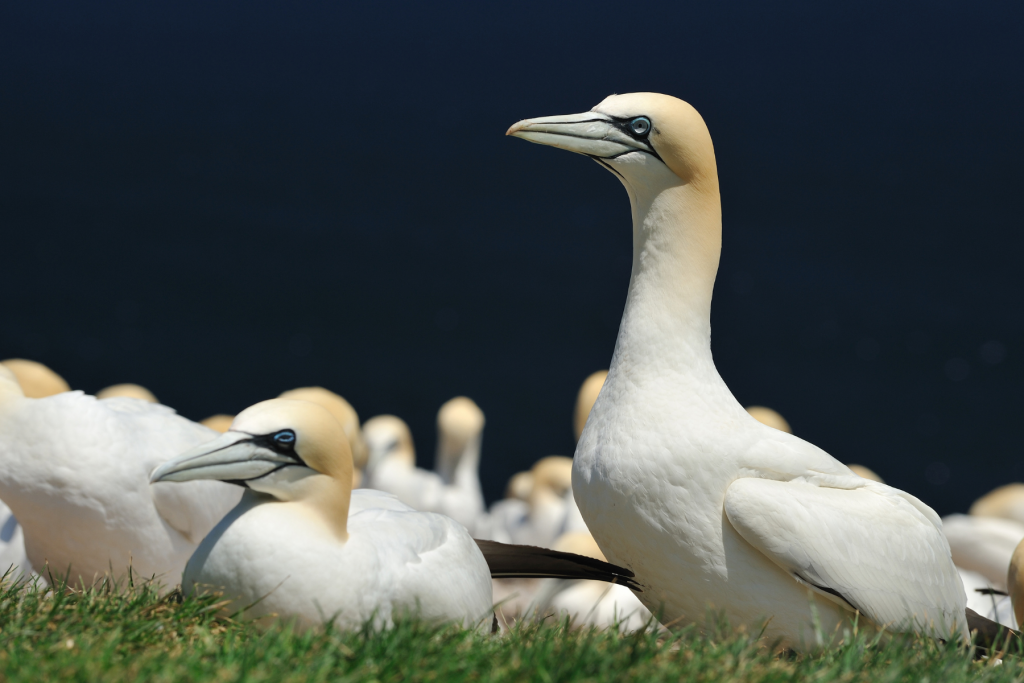
Gannets are grouped together.

Since the ministry does not yet have the results of the analyses, it is not in a position to indicate the cause of these mortalities.
...

https://ici.radio-canada.ca/nouvell...es-fous-bassan-morts-grippe-aviaire-influenza

-------------------------------------------------------------

First case of avian flu in Gaspésie

By Information Department-May 17, 2022

The Ministry of Agriculture, Fisheries and Food of Quebec confirms a first case of avian flu in Gaspésie.

Monday evening, the Town of New Richmond published a notice on its Facebook account informing its subscribers that the ministry had detected a case of highly pathogenic H5N1 avian influenza in a wild bird on the territory of the MRC Bonaventure.

Public vigilance is desirable in order to optimize surveillance to quickly identify other potential cases in wild birds, which could have consequences for poultry health or human health.

Avian influenza is rarely transmitted to humans, however.

Thus, the public is invited to report the presence of dead or moribund birds by calling 1-877-346-6763.

Do not handle the bird while waiting for instructions. MAPAQ advises that wild birds should not be approached or touched. Over the phone, instructions for the safe collection of the bird will be given.

And to owners of a backyard or small bird farm, be aware that the risk of your birds contracting the virus is high. Any link between backyard farms and between backyard farms and commercial farms must be avoided, in particular through visits, sharing of staff, equipment and exchanges.

https://www.radiogaspesie.ca/nouvelles/actualite/premier-cas-de-grippe-aviaire-en-gaspesie/
 
Translation Google

Birds die mysteriously in the Magdalen Islands

MARTIN LAVOIE
Monday, 23 May 2022 18:41
UPDATE Monday, 23 May 2022 18:41

According to initial analyses, the birds that litter the beaches of the Magdalen Islands archipelago did not die of avian flu, but this does not reassure two elected officials who are also calling on governments to act as quickly as possible to clean the beaches.

The avian flu epidemic hits Quebec hard. According to the Canadian Food Inspection Agency, the disease has been detected on four commercial farms and three small farms in the province since April 22.

The consequences can be terrible. Thus, Canard du Lac Brome had to slaughter at least half of its 350,000 animals. The company employs 300 people.

Last week, two cases of influenza were identified in wild birds in Gaspésie. At the same time, the carcasses of many birds, mainly northern gannets, began to litter the beaches of the Magdalen Islands.

The situation does not seem to be improving and affects the entire territory. Three residents sent the Journal photos of dead birds on Havre-Aubert Island, Havre-aux-Maisons and Grosse-Île.

"It's like that everywhere. I am from the Islands. I've lived in front of [the beach] for more than 15 years, I walk here every day and this is the first time it's happened. It's very sad,” said Myriam Vigneau, from Havre-aux-Maisons.

No explanation

“For more than a week, there have been several hundred on the beaches, dead or dying. They are also found along the roads, even at a gas station. A government observer estimates that more than 500 have died. Other species also seem to be affected, such as cormorants, gulls, alcids (puffins, guillemots) and ducks,” says Joël Arseneau, MP for the Magdalen Islands for the Parti Québécois.

And if avian flu was immediately suspected, the first reports do not point in this direction.

“The MAPAQ told me today (Monday) that the analyzes of the first gannet specimens did not point to avian flu. It's quite intriguing. But are we basing ourselves on the birds picked up in the Magdalen Islands or on those in the Gaspé?” asked Mr. Arseneau, who has not yet obtained all the answers.

The mayor of the municipality of Îles-de-la-Madeleine, Jonathan Lapierre, also had this information.

“We had discussions with biologists that the few specimens sent did not show signs of avian flu. Is it something in the water, in nature, a drastic change in the climate? There are several hypotheses under analysis,” he revealed.

Fears

Mr. Lapierre is surprised at the number of gannets who have died. “We don't have a large colony near the Islands. They tend to be on Île Brion and Rochers-aux-Oiseaux. And suddenly we find them here [dead].”

Joël Arseneau underlines the concerns of the people in his riding given the extent of the phenomenon.

“The population is worried about the cause of the mortality on the one hand, and because the cleaning has not yet been done. The communications [from the authorities] are not clear on the risks to humans,” he regrets.

The MP read a misinformation message on the internet that bird flu kills between 40% and 60% of those infected.

According to the quebec.ca website of the Quebec government, “avian flu represents a low risk for the population, the virus is rarely transmitted from birds to humans. There is no sustained transmission between people (…) The symptoms of a human case of influenza are generally similar to those of seasonal influenza”.

In the United States, the Centers for Disease Control and Prevention (CDC) has listed a single case in humans compared to 38 million infected birds.

Whose responsibility is it?

Despite everything, the watchword of the authorities is not to approach the carcasses.

“Avian influenza remains a notifiable disease because of the effects on livestock. And even if it was some other cause, there is something going on. You have to clean up for hygiene reasons because of the abundance of carcasses,” says Mr. Arseneau.

The latter is particularly concerned for the only egg producer in his riding if contamination spreads to his breeding.

The presence of domestic and wild animals near the carcasses also worries Mr. Arseneau who, until today (Monday), was going around in circles to have the beaches cleaned.

“Neither the MAPAQ, the MFFP or the Communauté maritime des Îles (the equivalent of the MRC) intend to clean the banks. The Ministry of the Environment could also have a role to play, but its only inspector is off work and has not been replaced. And the Canadian Wildlife Health Network has no respondent in the Magdalen Islands,” he first explained Monday morning.

Answer

Mr. Arseneau then learned that the Urgence-Environnement group had been commissioned to clean up.

"I don't know when and how yet. The MAPAQ taught me and the file is now the responsibility of the MFFP, “explained the deputy.

Jonathan Lapierre also recalled the fears in the population. And he said he was powerless to clean the banks in the current context.


“Public Health asks citizens not to touch the birds, we cannot send our employees blind without knowing how to recover them. We are having trouble finding employees to open our sites and maintain our roads. We are in labor shortage. We are talking about a vast operation, to cover 300 km of beach and pick up each of the dead birds. This is outside of normal waste management,” he says.

And the disposal of carcasses and elements that could be contaminated also causes headaches for the mayor.

"We bury them? I have a water table in the basement, is there a danger of contamination? We don't have an incinerator, we can't have an open fire. We need experienced people to dispose of these carcasses,” said Mr. Lapierre.

But the chosen one wants first and foremost to know the source of these deaths.

“Every day there are more and more. Starting tomorrow (Tuesday), we will put pressure on the government to determine the cause,” concluded Jonathan Lapierre.

https://www.journaldequebec.com/2022/05/23/oiseaux-morts-aux-iles-le-mystere-sepaissit

 
Translation Google

Cases of avian influenza have been confirmed in the Îles-de-la-Madeleine among northern gannets

Published on May 24, 2022 at 5:48 p.m., modified on May 24, 2022 at 5:48 p.m.

By: CIMTCHAU


Cases of avian influenza have been confirmed in the Magdalen Islands among northern gannets.

Several hundred gannets have been found dead on the beaches of the Magdalen Islands in recent weeks. The situation does not seem to be improving and affects the entire territory. Photos are circulating on social media showing several birds of different breeds stranded.

After laboratory analysis, the avian influenza virus was detected in wild birds.

The detection of cases in the Magdalen Islands was predictable according to the Ministry of Forests, Wildlife and Parks. Several cases of avian influenza have been detected in wild birds in Quebec since the beginning of April, as well as elsewhere in Canada and the United States since December 2021. This virus has been circulating in Europe since 2020, and wild birds can introduce and spread it along migratory routes.

The MFFP is monitoring the current situation closely with its partners.

Risk for domestic poultry

Domestic poultry is particularly susceptible to the virus. This can present serious clinical signs and lead to significant mortality in poultry farms. The consequences can be devastating for the industry.

As the avian influenza virus is excreted in the droppings and secretions of infected birds, it can be introduced into a flock when wild birds, humans (carrying the virus on their hands, boots, etc.) or contaminated material (e.g. water or food, vehicles, etc.) comes into contact with domestic poultry.

MAPAQ reiterates the importance of avoiding any contact between farmed poultry and wild birds. Rigorous prevention and biosecurity measures must be applied, both on commercial farms and in backyards. Owners should carefully monitor the health of their birds. In case of unusual mortality or other signs of disease, consult a veterinarian or, if necessary, call 1 844 ANIMALS.

Preventative measures

As a general rule, people should not handle or touch live or dead wild birds. If contact with them is unavoidable, gloves or a lined plastic bag should be worn and contact with blood, body fluids and feces should be avoided. Then wash your hands thoroughly with soap and warm water or with a hydroalcoholic solution.

As at all times, pet owners should avoid contact with wild animal carcasses. People who have questions about the health of their animals can contact their veterinarian.

https://cimtchau.ca/nouvelles/des-c...iles-de-la-madeleine-chez-les-fous-de-bassan/
 
Translation Google

Cases of avian influenza discovered in northern gannets in the Magdalen Islands


May 24, 2022, 5:40 p.m.

Published by: Forests, Wildlife and Parks


QUEBEC CITY, May 24, 2022 /CNW Telbec/ - Cases of avian influenza have been confirmed in northern gannets collected in the Magdalen Islands. This detection occurs as part of the provincial surveillance program for avian influenza in wild birds.

Several hundred gannets have been found dead on the beaches of the Magdalen Islands in the past week. Five specimens were then collected by the Ministry of Forests, Wildlife and Parks (MFFP) and sent for analysis to the Quebec Center for Wild Animal Health (CQSAS) and to the laboratory of the Ministry of Agriculture, Fisheries and of the Quebec Food Service (MAPAQ) to determine the cause.

Case detection in the Magdalen Islands was predictable. Indeed, several cases of avian influenza have been detected in wild birds in Quebec since the beginning of April, as well as elsewhere in Canada and the United States since December 2021. This virus has been circulating in Europe since 2020, and wild birds can introduce and spread it along migratory routes. The MFFP is monitoring the current situation closely with its partners.

Risk for avian fauna

Avian influenza is a virus found naturally in wild birds, primarily in aquatic species, such as geese, ducks and gulls. In general, avian influenza shows few clinical signs in wild birds and does not pose any problems for the conservation of the species. Highly pathogenic strains can, however, cause greater mortality in certain species, as has been observed in the northern gannets of the Magdalen Islands.

Gannet deaths have been recorded elsewhere in Canada and are currently under investigation. Cases of avian influenza were also detected in gannets in Ireland last April.

Risk to human health

Avian influenza is difficult and rarely transmitted to humans. When this is the case, this virus generally affects workers in close and sustained contact with infected poultry in a closed environment (closed or confined space). People who have concerns about their health can call Info-Santé 811.

Risk for domestic poultry

Domestic poultry is particularly susceptible to the virus. This can present serious clinical signs and lead to significant mortality in poultry farms. The consequences can be devastating for the industry.

As the avian influenza virus is excreted in the droppings and secretions of infected birds, it can be introduced into a flock when wild birds, humans (carrying the virus on their hands, boots, etc.) or contaminated material (e.g. water or food, vehicles, etc.) comes into contact with domestic poultry.

MAPAQ reiterates the importance of avoiding any contact between farmed poultry and wild birds. Rigorous prevention and biosecurity measures must be applied, both on commercial farms and in backyards. Owners should carefully monitor the health of their birds. In case of unusual mortality or other signs of disease, consult a veterinarian or, if necessary, call 1 844 ANIMALS.

Preventative measures

As a general rule, people should not handle or touch live or dead wild birds. If contact with them is unavoidable, gloves or a lined plastic bag should be worn and contact with blood, body fluids and feces should be avoided. Then wash your hands thoroughly with soap and warm water or with a hydroalcoholic solution.

As at all times, pet owners should avoid contact with wild animal carcasses. People who have questions about the health of their animals can contact their veterinarian.
Citizens can report the presence of a dead or sick wild bird by contacting the MFFP at 1 877 346-6763, while avoiding handling it while waiting for instructions.

Highlights:

  • Surveillance for avian influenza in wild birds has been carried out in Quebec since 2005. Its purpose is to quickly detect strains that could have serious consequences on the health of domestic poultry flocks or on human health.
  • The MFFP and MAPAQ are collaborating with the Quebec Center for Wild Animal Health to monitor this virus. Québec is thus joining its efforts with those of other partners such as the Canadian Wildlife Service of Environment and Climate Change Canada within the framework of a national monitoring program, coordinated by the Canadian Wildlife Health Network.
Related links:
https://www.facebook.com/ForetsFauneParcs
https://twitter.com/MFFP_Quebec
Information:
Media relations
Ministry of Forests, Wildlife and Parks
medias@mern-mffp.gouv.qc.ca
Such. : 418 521-3875


https://www.quebec.ca/nouvelles/act...fous-de-bassan-aux-iles-de-la-madeleine-40617
 
Translation Google

Northern gannets dead on Bonaventure Island: the tourist season will start as planned

Catherine Fish
May 28, 2022

The avian flu hypothesis is causing some concern as around 30 northern gannets have been found dead within the boundaries of Île-Bonaventure-et-du-Rocher-Percé National Park in the past few days, less one week before the opening of the park scheduled for May 30.

Four carcasses were sent to the Quebec Center for Wild Animal Health to determine the cause of these deaths.

It is still too early to know if it is avian flu. The director of the Île-Bonaventure-et-du-Rocher-Percé National Park, Rémi Plourde, expects to obtain the results of the analyzes at the end of next week.

“ With 110,000 gannets in one place, mortality happens. But 30 dead specimens, it was worth going for expertise to check what's going on. »

— A quote from Rémi Plourde, Director of the Île-Bonaventure-et-du-Rocher-Percé National Park
Gannet colony on Bonaventure Island.

In the Magdalen Islands, nearly a thousand northern gannets have been found dead on the beaches in the past two weeks. Five individuals were analyzed in the laboratory and the results showed that the five birds were infected with avian influenza.

Gannets found in New Brunswick

Analyzes are also underway on gannets collected on the beaches of Tracadie, New Brunswick, and which come from the colony of Bonaventure Island, according to the director of the Species at Risk program of Nature New Brunswick, Lewnanny Richardson.

Bonaventure Island boobies come to feed in our regions and, because of certain events such as avian flu, they will exhaust themselves at sea, die and wash up on the beaches , he explains.

He estimates that around 20 dead birds, mainly gannets and a few cormorants, have been seen on the region's beaches in the past few days, a situation that worries him.

“ It happens from time to time, at the beginning of spring, that we see a few dead specimens, but not in this quantity. Thursday, I found 11 gannets over 5 kilometers, which is not normal. »

— A quote from Lewnanny Richardson, Species at Risk Program Manager, Nature New Brunswick

Mr. Richardson reminds the public not to touch the birds, dead or alive.

Do not approach too close if it is still alive, it is a bird with a rather aggressive beak. We do not approach them, we let them die with dignity , he advises.

Observe the boobies from a safe distance

Parc national de l'Île-Bonaventure-et-du-Rocher-Percé will still open its doors as planned on Monday, May 30.

Mr. Plourde recalls that public health indicates that the risk for humans is extremely low, and that, even in normal times, visitors are never in contact with gannets.

There are 30, 40 feet between the colony and us, and it is a very ventilated environment , he specifies.

Nevertheless, some preventive measures will be taken to be extra careful, especially on the Moss trail, where the fence will be moved to keep visitors away from birds.

As a preventive measure, we delimit the extreme preservation zone, so that puts a distance between the clientele and the colony of northern gannets. There is just a place that is a little closer, where we will move the fence back a little , explains Mr. Plourde.

Every day, my naturalist park wardens, and during boat trips, we will make observations to document how the situation is changing , adds the park director.

With information from Isabelle Larose and Sarah Déry

https://ici.radio-canada.ca/nouvell...ppe-aviaire-ile-bonaventure-tracadie-tourisme
 
Source: https://montreal.ctvnews.ca/more-th...ound-on-shores-of-st-lawrence-river-1.5928308

More than 1,000 seabird carcasses found on shores of St. Lawrence River
Marc Larouche
The Local Journalism Initiative
Published June 1, 2022 4:24 p.m. EDT

The avian flu virus has hit colonies of Common Eiders and Great Black-backed Gulls of the St. Lawrence.

More than 850 duck carcasses and 250 gull carcasses were found on the St. Lawrence islands and on the shores of the river in the middle of the eider nesting period, According to Jean-François Giroux, a retired UQAM professor and administrator at Société Duvetnor, which owns two islands in the Bas-Saint-Laurent region of Quebec.

This is the first time that the avian flu virus has been observed in eiders. Three epidemics affecting the birds' population have already occurred, the last one in 2002, but it was caused by avian cholera, a bacterium and not a virus. Right now, it's difficult to know how widespread the contagion will be.

One of Société Duvetnor's main activities is harvesting eiderdown. With fewer birds, the group is less able to harvest down, as down from dead birds cannot be used. The harvest will certainly be lower than in previous years.

Given the number of carcasses found and the proximity of the Duvetnor islands to mainland Quebec, it is quite possible that people will see them. Giroux said that even if the risk of contamination is low, the birds should not be handled...
 
Source: https://globalnews.ca/news/8885906/avian-flu-quebec-h5n1/

The carcasses of thousands of white gannets have been covering the shores of Quebec’s Îles-de-la-Madeleine for the last two weeks, victims of highly pathogenic avian influenza.
70c8fc80

“Nobody had to tell me that this was happening; it’s obvious — we’re talking about thousands of dead birds,” Îles-de-la-Madeleine Mayor Jonathan Lapierre said in a recent interview.

“We’re not talking about waste or an ordinary situation. We’re talking about an extraordinary event outside of our own control. Especially since we don’t have an incinerator — we don’t have a landfill. We’re on an island!”

Quebec’s Wildlife Department says that since May 24, it has confirmed several hundred cases of highly pathogenic H5N1 on Îlles-de-la-Madeleine, an archipelago of islands in the Gulf of St. Lawrence...
 
Translation Google

Avian flu: unheard of

FREDERIC MARCOUX
Saturday, 4 June 2022 06:00
UPDATE Saturday, 4 June 2022 06:00

The avian flu crisis that is hitting at the moment is unprecedented in North America, for many professionals in the field, according to a professor from the Faculty of Veterinary Medicine at the University of Montreal.

"You can take a veterinarian with 30 or 35 years of experience in the field and I can assure you that he has never seen an avian flu attack as widespread as that in his career," says veterinary professor Carl Gagnon. We have seen specific outbreaks of avian influenza that were very well controlled in the past. It was nothing like what we are going through today.”

Since the first case of avian influenza in Newfoundland in December 2021, the virus, which originated in Asia and Europe, has mutated a few times.

“The virus has evolved over time and currently we find ourselves with strains, a bit like COVID-19, indicates Carl Gagnon. It is already different [...] It infects all birds in a very contagious way and it is transmitted very easily in all species. The virus has been found in nearly twenty different birds. This promotes its spread on the territory.


Biosecurity

In the long term, however, avian influenza is likely to return regularly, according to the professor. Compliance with biosecurity standards will be essential for poultry farmers in La Belle Province.

"The more wild birds are contaminated, the greater the risk will be for our farms," ​​says Carl Gagnon. Farmers are aware of the situation. You really have to ensure compliance with biosecurity measures. Avoid having visitors on the farm. It is enough for a bird's droppings to fall on a boot of an individual entering the barn and that is enough for an outbreak. People are asked to take showers when entering and leaving the farm and to change clothes.

“As for large producers who have different production sites, it's super important not to share staff and equipment, adds the man who has worked for 18 years in veterinary medicine at the University of Montreal. This is exactly the source of the propagation of the Canards du Lac Brome business. The virus has spread to different sites.”

In the short term, however, the peak of the avian flu crisis may have been reached. Carl Gagnon expects a period of calm in the coming weeks, due to the end of the bird migration period.

https://www.journaldemontreal.com/2022/06/04/grippe-aviaire-du-jamais-vu

-----------------------------------------------------------------------------------------


Avian flu and humans: Precautions to take

Frederic Marcoux and Frederic Marcoux | QMI Agency| Published on June 5, 2022 at 06:00
VAT News

The risk of bird flu infecting humans is low, but caution is advised, health experts say.

Since the beginning of the year, the number of bird carcasses found by the population has been significant. Avian flu has never been so present and so virulent as this year in Quebec. The chances of a person coming across a carcass of a bird carrying the disease therefore exist, especially in areas populated by seabirds, and vigilance is therefore required.

“You have to be very careful when you find the carcass of a dead bird,” insists retired virologist Jacques Lapierre. You must wear a protective suit, have gloves and an N95 mask. We must try to incinerate the carcass, rather than putting it in the trash.”

“If we are careful when handling dead birds, it would be surprising if the virus adapted to humans and then community transmission occurred,” he adds.

According to Mr. Lapierre, humans must keep a certain distance from wild species. The risk of a situation where the virus could be transmitted from animals to humans is low, but the danger is real, he stresses.

"We have become a little too friendly with wild animals," he says. We see that some people have chicken coops in town. If you have a hen and you give it a little kiss and cuddle, as I have already seen, there are risks. If migratory birds have passed through your house, the stools may have contaminated your hen. It is important to keep a certain distance with an animal.

'The immune system will struggle'

Microbiologist Marc Hamilton agrees. Even if the risk is minimal, good hygiene measures are essential.

“The risk is low,” says Hamilton. Generally, a virus will pass from a bird to another animal, such as a pig, before infecting humans. However, there are exceptional cases, when humans are in close contact with farm animals. There could be a mutation of an H5N1 flu that would be compatible with humans. These are flus that are much more serious than a conventional flu. The immune system will struggle”

“To prevent a low risk from becoming a reality, humans must avoid handling an infected animal and respect strict health rules to avoid contamination”, continues the president of Eurofins EnvironeX.

The current situation is not alarming, according to virology expert Benoit Barbeau, professor at the University of Quebec in Montreal (UQAM). However, he believes that an awareness is needed.

“People need to understand that whenever they come into contact with [individuals of] a wild animal species, they carry several viruses. A transmission can be done very quickly. Make sure you take precautions.”

Poultry farmers are also strongly sensitized by the government to comply with various biosecurity standards essential to their safety and that of their breeding.

Since 2003, the World Health Organization (WHO) has identified 864 cases of avian influenza (H5N1) in humans in 18 countries, and 53% of these cases have been fatal.

https://www.tvanouvelles.ca/2022/06/05/la-grippe-aviaire-et-lhumain-des-precautions-a-prendre-1
 
Translation Google

The Manicouagan does not escape dead birds

By Charlotte Paquet 8:52 AM - 16 June 2022

The phenomenon of dead or dying birds has reached Manicouagan. Discoveries have been reported, including that of a citizen of Pointe-Lebel, Sylvie Charest, who found three on the beach in the Pointe-Paradis sector.

It was while looking for her cat on Sunday June 12 that the Lebeloise came across a first dead bird in a state of decomposition. Then a little further, another was dying. It was a Common Eider.

“I went home to get some gloves and put them in a box. I took him away until I found a solution. It was not dead, but not strong,” underlines Ms. Charest who, the next day, also discovered another dead gull.

As early as Sunday, the lady tried to contact wildlife protection officers, but after waiting an hour on the phone, she gave up. She finally managed to speak to someone on Tuesday morning and that same afternoon an officer was on site to collect the three birds. The one who was still dying was euthanized.

Dead birds were also discovered in Ragueneau and the analysis of specimens confirmed that avian flu was involved, Sylvie Charest was told. "We consider that avian flu has spread to most regions of Quebec where there are migratory birds," said Daniel Labonté, spokesman for the Ministry of Forests, Wildlife and Parks.

https://www.lemanic.ca/2022/06/16/la-manicouagan-nechappe-pas-aux-oiseaux-morts/
 
Sans-titre-2022-06-16T110547.161-1024x683.png


Translation Google

June 29, 2022

Follow the bird picking operation

In recent weeks, many Gannets have been found dead or sick on the territory of the Magdalen Islands. The Ministry of Agriculture, Fisheries and Food of Quebec (MAPAQ) and the Ministry of Forests, Wildlife and Parks (MFFP) confirm that the mortality of its birds is due to avian influenza.

A first clean-up operation was coordinated by the Ministry of the Environment at the beginning of June. Unfortunately, new birds are found on the beaches and a new cleaning operation coordinated by the Maritime Community of the Islands began on June 16.


Beach cleaning

This web page will be updated daily to keep you informed of the beaches where the contractor will be. If you see dead birds on a beach that is not listed here, it means that it has not yet been cleaned and that the contractor in charge of the contract will go soon. If you see dead birds on a beach that appears lower, it means that it has already been cleaned but that other birds have come to die there.

Please note that the Maritime Community will follow up on the state of the beaches in mid-July to reassess the situation.

Daily report of operations:

  • June 15: cleaning of 4 km of beach from Anse-aux-Baleiniers, 4 carcasses collected
  • June 16: cleaning of 12 km of beach at the Dune du Nord (up to the barge), 226 carcasses collected
  • June 17: cleaning of 4 km of beach at the Dune du Nord, 101 carcasses collected
  • June 17: cleaning of 10 km of beach by municipal teams on about fifteen small beaches, 30 carcasses collected
  • June 20: cleaning of 8 km of beach at Dune du Nord (Grosse-Île), 249 carcasses collected
  • June 21: cleaning of 5 km of Grosse-Île beach, 199 carcasses collected
  • June 22: cleaning of 6 km of beach at Pointe de l'Est, 129 carcasses collected
  • June 23: cleaning of 4 km of beach at the Grande Échouerie, 290 carcasses collected
  • June 27: cleaning of 14 km of beach at the Grande Échouerie, 838 carcasses collected
  • June 28: cleaning of the beaches of chemin des Pealey, Bassin Ouest, Bassin Est and 3 km in Dune du Sud, 218 carcasses collected
  • June 29: cleaning of 8 km of beach at the Dune du Sud, 286 carcasses collected
  • June 30: cleaning of 6 km of beach at the Dune du Sud, 825 carcasses collected
  • July 1: cleaning of 5 km of beach at the Dune du Sud, 211 carcasses collected
Cleaning of private grounds

If a bird is dead on private land, follow the MAPAQ procedure to pick it up and throw it in a container designated by the Municipality (see below):

  • Wear disposable gloves if you have them. Use a double plastic bag.
  • Reach into the bag and grasp the carcass through the bag. Gradually turn it over the carcass, gently lifting it to fit it completely into the bag without touching it.
  • Tie the bag.
  • Put the gloves in your black bin and bring the bag containing the carcass in the identified container provided to one of the following places:
    • At the Capitol of the East
    • At the Grosse-Île barracks
    • At CGMR
    • At the municipal garage of L'Étang-du-Nord
    • At the municipal garage of L'Île-du-Havre-Aubert
    • At the L'Île-d'Entrée transshipment site
  • Wash your hands with soap and water. Avoid touching your eyes, mouth or nose before washing your hands.
For information about avian influenza in general, see the government website.


https://www.muniles.ca/actualites/operation-de-ramassage-des-oiseaux/
 
Minganie

[TD="colspan: 2"] Regional county municipality [/TD]

[TD="colspan: 2"] [/TD]

https://en.wikipedia.org/wiki/Minganie_Regional_County_Municipality

-----------------------------------------------

Translation Google

“Moyaks” and gulls dead from avian flu in Minganie, but no puffins

July 26, 2022 John St-Pierre Home , News

Sixty-six birds have been found dead this season in the Mingan Archipelago. These are mostly common eiders commonly known as "moyak", and gulls, but no Atlantic puffins. In Quebec, the avian flu epidemic has killed thousands of birds, mainly affecting marine species.

The common eider is the most abundant species on the islands off Havre-Saint-Pierre and Mingan. The two puffin colonies that are very popular with visitors to the Mingan Archipelago National Park Reserve of Canada are in good health, with 830 individuals inventoried.

Under surveillance

Resource Conservation Manager Aurore Pérot is concerned about the situation, but not worried. “Bird mortalities are on the rise this year. The portrait remains incomplete considering that Mingan Park extends over 152 km.

Parks Canada staff in Minganie monitor the situation and report each carcass to the Quebec Department of Wildlife. Awareness is raised with visitors.

More worrying in Gaspésie

The Îles-de-la-Madeleine Archipelago and the northern gannet colony on Bonaventure Island and Rocher Percé are the most affected. More than 5,000 carcasses have been found since mid-June in the Magdalen Islands.

Government of Quebec scientists estimate that the avian influenza virus is rife in all regions. There is no more countdown. Northern gannets, eider ducks, sea gulls, snow geese and bustards are the most affected by the epidemic.

https://macotenord.com/des-moyaks-e...ppe-aviaire-en-minganie-mais-pas-de-macareux/
 
Translation Google

CASES OF AVIAN FLU DETECTED IN SHERBROOKE

Posted by Jasmine Grégoire | Aug 10, 2022 | Regional News


The presence of avian flu has been detected on the territory of the city of Sherbrooke. The Ministry of Agriculture, Fisheries and Food of Quebec as well as the Ministry of Wildlife and Parks confirm the presence of wild birds infected with avian influenza. The virus is only rarely transmitted from animals to humans, but citizens are urged to be vigilant for the presence of dead animals. People with a chicken coop should also be careful. Avoid contact with farmed and wild birds and report dead wild birds.

Among the preventive measures that can be put in place, we note the cleaning of the facilities, equipment and clothing used when visiting a chicken coop. The number of cases present on the territory of the city of Sherbrooke has not been confirmed by MAPAQ for the moment.

https://cjan.media/des-cas-de-grippe-aviaire-detectes-a-sherbrooke/

-------------------------------------------

August 10, 2022 1:00 a.m.
Updated at 2:00 a.m.

Birds affected by avian flu in Sherbrooke

Remi Leonard
The gallery

The discovery of wild birds affected by avian flu in Sherbrooke has prompted the authorities to call on the population of the region to be cautious, particularly those who have a chicken coop at home.

“The risk for birds of contracting the avian influenza virus is currently high,” warns the Ministry of Agriculture, Fisheries and Food of Quebec (MAPAQ). However, he specifies at the same time that no new case has been detected in Estrie farms since last April.

Informed of the situation by MAPAQ and the Ministry of Forests, Wildlife and Parks (MFFP), the City of Sherbrooke issued a communication on Tuesday inviting people to prevent the spread of the disease. Vigilance is particularly required for owners of urban hens in the territory.

Recommendations

The Society for the Protection of Animals in Estrie, which raises awareness in particular among owners of chicken coops, recalls a few recommendations in order to minimize the risks. It is essential to avoid any contact between your animals and wild birds, for example by keeping water and food inside the henhouse, in addition to frequently cleaning the facilities, equipment and clothing used. The virus is rarely transmitted from animals to humans, although humans may contribute to the spread, authorities say.

Barn owners are also advised to watch their birds for symptoms, including lack of energy and appetite, decreased egg production and laying many eggs with soft shells or no shells, swelling of the head, eyelids, crest, wattles and hocks, diarrhea, lack of coordination, or sudden death, details the City of Sherbrooke.

Contacted by La Tribune , the MFFP could not specify on Tuesday how many cases were identified in Sherbrooke and when these dated. On the online map of reports listed by federal authorities, a single case of an infected wild bird appeared in Sherbrooke as of June 27.

Citizens can report the presence of wild birds that are dead or in poor condition as well as any signs of illness, unusual behavior or mortality in their hens by calling 1 877 346 6763.

At the height of the last wave of avian flu, in the spring, five farms in the Eastern Townships were declared positive for the disease, particularly affecting Canards du Lac-Brome, but also dealing a blow to the entire industry.

https://www.latribune.ca/2022/08/10...a-sherbrooke-397c19b683271e2bf45fc388a8030385
 
Back
Top