

Michael Coston
Editor, Senior Moderator
Preprint: Enhanced Replication of Contemporary Human HPAI H5N1 Virus Isolate in Human Lung Organoids Compared to Bovine Isolate

#18225
For reasons that are poorly understood, HPAI H5 viruses - of which there are several subtypes (H5N1, H5N2, H5N5, H5N6, etc.), dozens of subclades (2.3.4.4b, 2.3.4.4h, 2.3.2.1c, 2.3.2.1a, etc.) and hundreds of genotypes (eg. B3.13) currently circulating around the globe - vary greatly in their host range, transmissibility, and pathogenicity.
As the modified WHO chart below illustrates, the oft-cited 50% CFR (Case Fatality Rate) of HPAI H5N1 is only true in a handful of - mostly Asian - nations, and since 2020 has averaged 22% (8 of 35 cases).

Note: I've excluded countries that have only reported a single case (fatal or not). Does not include H5N6 cases.
Notably, all 8 fatal cases since 2020 have been reported in either Asia (7) or India (1). Cases reported by the UK, Spain, and the United States have all been mild. While Indonesia, which reported a > 80% CFR during the first decade of the 21st century, hasn't reported a case since 2017.
The HPAI H5 virus - in all of its incarnations - continues to mutate and evolve, sometimes gaining pathogenicity or transmissibility, and sometimes losing it. Each variant (subtype, clade, genotype, etc.) is on its own evolutionary path, meaning we continue to face multiple, highly unpredictable, threats.
The bovine B3.13 genotype currently affecting cattle has infected at least 13 American farm workers since March, but so far it has only produced mild illness in humans. The concern, of course, is that could change over time.
Yesterday, in Preprint: Bovine H5N1 Influenza Virus Binds Poorly to Human-type Sialic Acid Receptors, we looked at a study which reassuringly found the B3.13 genotype continues to bind preferentially to avian receptor cells.
Today we have a study which finds that the bovine B3.13 genotype doesn't replicate in lung tissues as well as earlier (A/Vietnam/1203/2004), more pathogenic (in humans), H5N1 variants.
I've reproduced some excerpts from the report, but you'll want to follow the link to read it in its entirety. I'll have a bit more after the break.
Enhanced replication of contemporary human highly pathogenic avian influenza H5N1 virus isolate in human lung organoids compared to bovine isolate
Meaghan Flagg, eBrandi N. Williamson, Johan A Ortiz-Morales, Tessa Lutterman, Emmie de Wit
doi: https://doi.org/10.1101/2024.08.02.606417
Preview PDF
Abstract
We compared virus replication and host responses in human alveolar epithelium infected with highly pathogenic avian influenza (HPAI) H5N1 viruses. A/Vietnam/1203/2004 replicated most efficiently, followed by A/Texas/37/2024, then A/bovine/Ohio/B24OSU-342/2024. Induction of interferon-stimulated genes was lower with A/Texas/37/2024 and A/bovine/Ohio/B24OSU-342/2024, which may indicate a reduced disease severity of these viruses.
Clade 2.3.4.4b highly pathogenic avian influenza (HPAI) H5N1 viruses have circulated in avian species in North America since 2022. Subsequently, these viruses have been detected in a wide range of mammalian species (1). In 2024, clade 2.3.4.4b HPAI H5N1 virus was detected in dairy cattle, in both tissue samples and milk from infected animals (2), and has subsequently spread to multiple herds around the United States. The broadened host range of clade 2.3.4.4b H5N1 viruses along with unprecedented levels of transmission between mammals has raised concerns about potential spillover into humans.
As of July 25, 2024, 13 human cases of HPAI H5N1 virus infection have been confirmed in the United States (3). Several of these cases are linked to exposure to infected cattle. However, recent outbreaks in Colorado have resulted in identification of additional human cases linked to infected poultry (3). Virus isolated from a worker at a Texas dairy farm (A/Texas/37/2024) was shown to be closely related to viruses circulating in cattle, and it is presumed that this case is a result of direct cow-to-human transmission (4).
Reported symptoms included conjunctivitis, as well as mild respiratory symptoms in one case (5). This is in stark contrast to prior cases of HPAI H5N1 virus infection in humans, which resulted in severe respiratory disease and mortality rates upwards of 50% (6).
In order to assess the risk of developing severe disease following infection with contemporary HPAI H5N1 virus, we evaluated virus replication, host cell survival, and induction of innate immune responses in human alveolar epithelium infected with A/Texas/37/2024 or cattle isolate A/bovine/Ohio/B24OSU-342/2024, compared to a historical H5N1 isolate A/Vietnam/1203/2004, which was derived from a fatal human case (7).
(SNIP)
Conclusions
The unusual transmission of clade 2.3.4.4b HPAI H5N1 viruses between mammals has raised concerns about the risk of spillover into the human population, and the possibility of outbreaks leading to severe disease. We assessed virus replication and host responses in human alveolar epithelium, since virus replication and host cell damage in this site is a key driver of severe respiratory disease.
The reduced replication levels of the A/Texas/37/2024 and A/bovine/Ohio/B24OSU-342/2024 isolates in lung organoids compared to the A/Vietnam/1203/2004 isolate may explain why recent human cases involving the clade 2.3.4.4b viruses resulted in mild illness (4,6), as opposed to the severe respiratory disease associated with previous outbreaks in Vietnam (13,14).
The presence of a lysine at position 627 in the PB2 protein has been associated with adaption of avian influenza viruses to mammalian hosts and is known to increase virus replication in the mammalian respiratory tract (15). This substitution (E627K) is present in both the A/Vietnam/1203/2004 and A/Texas/37/2024 viruses but not the A/bovine/Ohio/B24OSU342/2024 isolate (4), which may explain the increased replication observed for the A/Texas/37/2024 isolate compared to the bovine isolate.
Another factor contributing to the reduced disease severity in humans following infection with clade 2.3.4.4b viruses compared to previous HPAI H5N1 virus cases may be differential activation of the immune system. We observed significantly higher induction of ISGs in lung organoids infected with the A/Vietnam/1203/2004 isolate. An overly exuberant immune response, including cytokine storm, is known to play a role in the high mortality from HPAI H5N1 virus infections observed during the 2003 and 2004 outbreaks in Vietnam (14).
Despite differences in virus replication and ISG induction, we observed similar levels of cell death by 96 hours post-inoculation for all three viruses. Previous work has shown that direct virus-induced cytotoxicity is not always indicative of pathogenicity in vivo, as cytotoxicity was not observed in SARS-CoV-2-infected lung organoids (11), despite the ability of this virus to cause severe respiratory disease.
Taken together, these data suggest that epithelial-extrinsic factors, possibly related to immune activation, govern pathogenicity in vivo.
While this study is reassuring, influenza's superpower is its ability to continually reinvent itself, either slowly through antigenic drift, or rapidly via antigenic shift (reassortment).
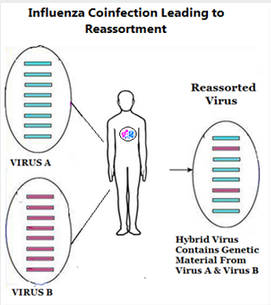
The current `mild' presentation of bovine (B3.13) H5N1 could change overnight with one or two `key' mutations, or reassortment with a more `humanized' virus.
Or not. Flu viruses are famously unpredictable.
While we are watching H5N1 in the Americas, we could easily be blindsided by another genotype or clade from elsewhere in the world, or even a different subtype altogether (i.e. H5N6, H5N2, H3N8, H10Nx, etc).
The point being, that whether H5N1 (and bovine B3.13 in particular) has the `right stuff' to spark a pandemic is unknowable, but history tells us that another novel flu will emerge.
And when that inevitably happens, we'd better be prepared for it.
https://afludiary.blogspot.com/2024/08/preprint-enhanced-replication-of.html
#18225
For reasons that are poorly understood, HPAI H5 viruses - of which there are several subtypes (H5N1, H5N2, H5N5, H5N6, etc.), dozens of subclades (2.3.4.4b, 2.3.4.4h, 2.3.2.1c, 2.3.2.1a, etc.) and hundreds of genotypes (eg. B3.13) currently circulating around the globe - vary greatly in their host range, transmissibility, and pathogenicity.
As the modified WHO chart below illustrates, the oft-cited 50% CFR (Case Fatality Rate) of HPAI H5N1 is only true in a handful of - mostly Asian - nations, and since 2020 has averaged 22% (8 of 35 cases).
Note: I've excluded countries that have only reported a single case (fatal or not). Does not include H5N6 cases.
Notably, all 8 fatal cases since 2020 have been reported in either Asia (7) or India (1). Cases reported by the UK, Spain, and the United States have all been mild. While Indonesia, which reported a > 80% CFR during the first decade of the 21st century, hasn't reported a case since 2017.
The HPAI H5 virus - in all of its incarnations - continues to mutate and evolve, sometimes gaining pathogenicity or transmissibility, and sometimes losing it. Each variant (subtype, clade, genotype, etc.) is on its own evolutionary path, meaning we continue to face multiple, highly unpredictable, threats.
The bovine B3.13 genotype currently affecting cattle has infected at least 13 American farm workers since March, but so far it has only produced mild illness in humans. The concern, of course, is that could change over time.
Yesterday, in Preprint: Bovine H5N1 Influenza Virus Binds Poorly to Human-type Sialic Acid Receptors, we looked at a study which reassuringly found the B3.13 genotype continues to bind preferentially to avian receptor cells.
Today we have a study which finds that the bovine B3.13 genotype doesn't replicate in lung tissues as well as earlier (A/Vietnam/1203/2004), more pathogenic (in humans), H5N1 variants.
It also doesn't appear to illicit as strong of an immune response, both of which may help explain it current mild presentation.
I've reproduced some excerpts from the report, but you'll want to follow the link to read it in its entirety. I'll have a bit more after the break.
Enhanced replication of contemporary human highly pathogenic avian influenza H5N1 virus isolate in human lung organoids compared to bovine isolate
Meaghan Flagg, eBrandi N. Williamson, Johan A Ortiz-Morales, Tessa Lutterman, Emmie de Wit
doi: https://doi.org/10.1101/2024.08.02.606417
Preview PDF
Abstract
We compared virus replication and host responses in human alveolar epithelium infected with highly pathogenic avian influenza (HPAI) H5N1 viruses. A/Vietnam/1203/2004 replicated most efficiently, followed by A/Texas/37/2024, then A/bovine/Ohio/B24OSU-342/2024. Induction of interferon-stimulated genes was lower with A/Texas/37/2024 and A/bovine/Ohio/B24OSU-342/2024, which may indicate a reduced disease severity of these viruses.
Clade 2.3.4.4b highly pathogenic avian influenza (HPAI) H5N1 viruses have circulated in avian species in North America since 2022. Subsequently, these viruses have been detected in a wide range of mammalian species (1). In 2024, clade 2.3.4.4b HPAI H5N1 virus was detected in dairy cattle, in both tissue samples and milk from infected animals (2), and has subsequently spread to multiple herds around the United States. The broadened host range of clade 2.3.4.4b H5N1 viruses along with unprecedented levels of transmission between mammals has raised concerns about potential spillover into humans.
As of July 25, 2024, 13 human cases of HPAI H5N1 virus infection have been confirmed in the United States (3). Several of these cases are linked to exposure to infected cattle. However, recent outbreaks in Colorado have resulted in identification of additional human cases linked to infected poultry (3). Virus isolated from a worker at a Texas dairy farm (A/Texas/37/2024) was shown to be closely related to viruses circulating in cattle, and it is presumed that this case is a result of direct cow-to-human transmission (4).
Reported symptoms included conjunctivitis, as well as mild respiratory symptoms in one case (5). This is in stark contrast to prior cases of HPAI H5N1 virus infection in humans, which resulted in severe respiratory disease and mortality rates upwards of 50% (6).
In order to assess the risk of developing severe disease following infection with contemporary HPAI H5N1 virus, we evaluated virus replication, host cell survival, and induction of innate immune responses in human alveolar epithelium infected with A/Texas/37/2024 or cattle isolate A/bovine/Ohio/B24OSU-342/2024, compared to a historical H5N1 isolate A/Vietnam/1203/2004, which was derived from a fatal human case (7).
(SNIP)
Conclusions
The unusual transmission of clade 2.3.4.4b HPAI H5N1 viruses between mammals has raised concerns about the risk of spillover into the human population, and the possibility of outbreaks leading to severe disease. We assessed virus replication and host responses in human alveolar epithelium, since virus replication and host cell damage in this site is a key driver of severe respiratory disease.
The reduced replication levels of the A/Texas/37/2024 and A/bovine/Ohio/B24OSU-342/2024 isolates in lung organoids compared to the A/Vietnam/1203/2004 isolate may explain why recent human cases involving the clade 2.3.4.4b viruses resulted in mild illness (4,6), as opposed to the severe respiratory disease associated with previous outbreaks in Vietnam (13,14).
The presence of a lysine at position 627 in the PB2 protein has been associated with adaption of avian influenza viruses to mammalian hosts and is known to increase virus replication in the mammalian respiratory tract (15). This substitution (E627K) is present in both the A/Vietnam/1203/2004 and A/Texas/37/2024 viruses but not the A/bovine/Ohio/B24OSU342/2024 isolate (4), which may explain the increased replication observed for the A/Texas/37/2024 isolate compared to the bovine isolate.
Another factor contributing to the reduced disease severity in humans following infection with clade 2.3.4.4b viruses compared to previous HPAI H5N1 virus cases may be differential activation of the immune system. We observed significantly higher induction of ISGs in lung organoids infected with the A/Vietnam/1203/2004 isolate. An overly exuberant immune response, including cytokine storm, is known to play a role in the high mortality from HPAI H5N1 virus infections observed during the 2003 and 2004 outbreaks in Vietnam (14).
Limited innate immune activation elicited by the A/Texas/37/2024 and A/bovine/Ohio/B24OSU-342/2024 isolates may contribute to their reduced pathogenicity.
Despite differences in virus replication and ISG induction, we observed similar levels of cell death by 96 hours post-inoculation for all three viruses. Previous work has shown that direct virus-induced cytotoxicity is not always indicative of pathogenicity in vivo, as cytotoxicity was not observed in SARS-CoV-2-infected lung organoids (11), despite the ability of this virus to cause severe respiratory disease.
Taken together, these data suggest that epithelial-extrinsic factors, possibly related to immune activation, govern pathogenicity in vivo.
In summary, this study provides a characterization of virus replication and host responses to infection in human alveolar epithelium between a contemporary clade 2.3.4.4b human HPAI H5N1 isolate compared to the highly virulent A/Vietnam/1203/2004 virus. Further studies are warranted to understand how these viruses interact with the innate immune system, and how this affects pathogenesis in vivo.
(Continue . . . )While this study is reassuring, influenza's superpower is its ability to continually reinvent itself, either slowly through antigenic drift, or rapidly via antigenic shift (reassortment).
The current `mild' presentation of bovine (B3.13) H5N1 could change overnight with one or two `key' mutations, or reassortment with a more `humanized' virus.
Or not. Flu viruses are famously unpredictable.
While we are watching H5N1 in the Americas, we could easily be blindsided by another genotype or clade from elsewhere in the world, or even a different subtype altogether (i.e. H5N6, H5N2, H3N8, H10Nx, etc).
The point being, that whether H5N1 (and bovine B3.13 in particular) has the `right stuff' to spark a pandemic is unknowable, but history tells us that another novel flu will emerge.
And when that inevitably happens, we'd better be prepared for it.
https://afludiary.blogspot.com/2024/08/preprint-enhanced-replication-of.html
