Follow along with the video below to see how to install our site as a web app on your home screen.
Note: This feature may not be available in some browsers.
FluTrackers.com Inc. does not provide medical advice. Information on this web site is collected from various internet resources, and the FluTrackers board of directors makes no warranty to the safety, efficacy, correctness or completeness of the information posted on this site by any author or poster.
The information collated here is for instructional and/or discussion purposes only and is NOT intended to diagnose or treat any disease, illness, or other medical condition. Every individual reader or poster should seek advice from their personal physician/healthcare practitioner before considering or using any interventions that are discussed on this website.
By continuing to access this website you agree to consult your personal physican before using any interventions posted on this website, and you agree to hold harmless FluTrackers.com Inc., the board of directors, the members, and all authors and posters for any effects from use of any medication, supplement, vitamin or other substance, device, intervention, etc. mentioned in posts on this website, or other internet venues referenced in posts on this website.
We are not asking for any donations. Do not donate to any entity who says they are raising funds for us.
Speech droplets generated by asymptomatic carriers of severe acute respiratory syndrome coronavirus 2 (SARS-CoV-2) are increasingly considered to be a likely mode of disease transmission.
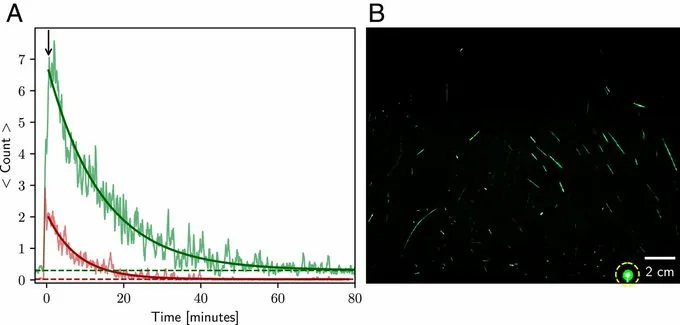
Highly sensitive laser light scattering observations have revealed that loud speech can emit thousands of oral fluid droplets per second.
In a closed, stagnant air environment, they disappear from the window of view with time constants in the range of 8 to 14 min, which corresponds to droplet nuclei of ca. 4 μm diameter, or 12- to 21-μm droplets prior to dehydration.
These observations confirm that there is a substantial probability that normal speaking causes airborne virus transmission in confined environments.
Simply talking in confined environments could lead to coronavirus transmission, researchers say
May 14, 2020
The droplets from simply talking can be enough to spread the coronavirus, according to researchers.
By using lasers, scientists found that one minute of talking loudly can produce more than 1,000 virus-containing droplets that could linger in the air for over 8 minutes, according to a new study published in the Proceedings of the National Academy of Sciences of the United States of America.
As states continue to gradually reopen, scientists fear that reopening too soon could worsen the virus outbreak. Dr. Anthony Fauci, director of the National Institute of Allergy and Infectious Diseases, testified in front of a Senate panel Tuesday and said the consequences for states reopening without following proper guidelines "could be really serious."