• FluTrackers.com Inc. does not provide medical advice. Information on this web site is collected from various internet resources, and the FluTrackers board of directors makes no warranty to the safety, efficacy, correctness or completeness of the information posted on this site by any author or poster. The information collated here is for instructional and/or discussion purposes only and is NOT intended to diagnose or treat any disease, illness, or other medical condition. Every individual reader or poster should seek advice from their personal physician/healthcare practitioner before considering or using any interventions that are discussed on this website. By continuing to access this website you agree to consult your personal physican before using any interventions posted on this website, and you agree to hold harmless FluTrackers.com Inc., the board of directors, the members, and all authors and posters for any effects from use of any medication, supplement, vitamin or other substance, device, intervention, etc. mentioned in posts on this website, or other internet venues referenced in posts on this website.
  • We are not asking for any donations. Do not donate to any entity who says they are raising funds for us.

Pakistan: Waterborne diseases - 1,300 suspected cholera cases in Hangu, gastro deaths 200+.

Re: Pakistan: Waterborne diseases - 1,300 suspected cholera cases in Hangu, gastro deaths 200+.

...
Meanwhile, two more children were died due to gastroenteritis here at Larkana relief camps on Friday.

According to reports, Asghar Ali (02) S/o Ameer Bux Soomro the resident of Mohammed Siyal of Mirokhan tehsil Kamber-Shahdadkot district died of gastro disease at Municipal Higher Secondary School relief camp Larkana on Friday.
On the occasion, the father of child, Ameer Bux Soomro told media men that another 3 years daughter Sawera has been hospitalized due gastroenteritis, while health of his daughter is much critical, he further told that due to poverty, could not arrange Kaffan for died child Asghar Ali and handed over body to Edhi for burial.

In another relief camp 2 year Zoya died at relief camp of Galib Nagar in Larkana. It has been observed that due unhygienic food and improper arrangements at relief camps, the fatal disease has claimed over 57 lives of innocent children and others at various parts of Larkana.

http://www.pakistanchristianpost.com/headlinenewsd.php?hnewsid=2263
 
Re: Pakistan: Waterborne diseases - 1,300 suspected cholera cases in Hangu, gastro deaths 200+.

Floods in Pakistan: Pakistan Health Cluster, Bulletin 16 - Focus on Sindh, 3 September 2010
Source: World Health Organization (WHO)

Date: 03 Sep 2010


......

Health impact
? Health needs remain great as relief efforts strive to cope with the scale of the challenges. Large numbers of people
continue being treated for diarrhoeal disease cases, skin diseases, acute respiratory and increasingly, malaria.
? OCHA Sukkur office reports that due to poor health and hygiene situations in camp settings, authorities want people
to leave temporary settlements to move to more organized camps, but waiting for enough shelter to accommodate
them.
? At least 452 of the 2957 health facilities in 33 flood-affected districts have been damaged or destroyed.
? Latest epidemiological data released by WHO, as of 3 September, shows that on 1 September, 135,719 patients were
recorded as having been treated in flood-affected districts. Of these consultations, 18,539 cases of skin diseases (14%
of total), 24,738 cases of acute respiratory infections (18%), 18,202 cases of acute diarrhoea (13%) and 6549 cases of
suspected malaria (5%) were reported.
? In all, almost 4.6 million people are reported to have been treated from 29 July to, and including, 1 September. Of
these, there were 610,606 cases of acute diarrhoea (13% of total consultations), 671,476 cases of acute respiratory
infection (15% of total consultations), 861,986 cases of skin disease (19% of total consultations) and 126,683 cases of
suspected malaria (3% of total consultations) were reported from flood-affected districts.
? The number of cases of suspected malaria is rising faster in Baluchistan and Sindh provinces. During the last 24
hours, the number of cases reported from suspected malaria comprised 20% of patients? consultations in Baluchistan
province and 12% in Sindh provinces.


http://www.reliefweb.int/rw/rwb.nsf/db900sid/VVOS-88XQKV/$File/full_report.pdf
 
Re: Pakistan: Waterborne diseases - 1,300 suspected cholera cases in Hangu, gastro deaths 200+.

At least 3.9m children, women need food support By Iftikhar A. Khan
Saturday, 04 Sep, 2010
The Actionaid report said there was an urgent need for nutrition assistance, especially for young children and pregnant and lactating women.

A hungry start to life for Pakistan's newest flood victim ISLAMABAD: Over 2.5 million children under the age of five have been affected by floods, says a report released by an international anti-poverty agency.

There are about 1.4 million (eight per cent) pregnant and lactating women among the affected people and over one million are elderly or otherwise vulnerable.

The Actionaid report said there was an urgent need for nutrition assistance, especially for young children and pregnant and lactating women.

It said also called for community-level programmes to fight acute malnutrition and dissemination of messages on feeding and hygiene for infants and young children in the affected areas.

The number of schools being used as shelters has decreased to 5,258 and 1.3 million people are living in them.

At least 9,484 schools have been damaged and there is a need to provide temporary structures and supplies such as tents, school-in-a-box kits and recreation kits to ensure continuation of education during the transition period from tents to permanent buildings.

Government schools in Punjab are due to reopen on Sept 14.

At least 436 health facilities have been damaged or destroyed and there is a need to prevent emerging health threats and outbreaks of diseases and to ensure that essential medical supplies reach affected communities in time.

Increased numbers of suspected malaria cases are being recorded in Sindh and Balochistan.

UN assessment teams have reported a 20 per cent increase in the use of unprotected water sources and confirmed a widespread need for sanitation assistance.

Households have indicated a need primarily for cash grants, material for repair of houses and rehabilitation of lost livelihoods. Movement of people back to their homes in areas where waters are receding requires relief and early recovery responses.

Some relief camps are being closed in southern Punjab, including three of the initial 11 camps managed by the army.

People in camps are being encouraged to return to their areas in order to register for compensation.


Many areas in Khyber Pakhtunkhwa, Sindh and Balochistan are still hard to reach or inaccessible.

The report says that specific needs of women and children in terms of health, hygiene and protection are not being addressed. There are security risks in some affected areas, including Balochistan and parts of Khyber Pakhtunkhwa and southern Punjab.

Camps do not offer enough space for people to keep their surviving livestock.


Some families have started to return to their damaged houses, while those who have lost their homes are putting up in the camps.

There is a serious risk of diseases, including malaria and diarrhoea, spreading in the affected areas.

Medical aid is not enough and essential medicines are scarce. The report stresses the need for a plan to ensure the displaced children?s right to education.

It calls for immediate launching of cash-for-work programmes to generate income for affected people, decrease their dependence on handouts and kickstart local economies.

The Actionaid said it was developing a framework for a longer-term response spanning over three years, covering coordination, financing, protection from violence against women, livelihoods, community participation, climate change, etc.
http://www.dawn.com/wps/wcm/connect...al/3.9m-children,-women-need-food-support-490
 
Re: Pakistan: Waterborne diseases - 1,300 suspected cholera cases in Hangu, gastro deaths 200+.

Eight children born in Karachi?s relief camps on Saturday
By Bachal Chandio and Saleem Chandio
KARACHI: For the flood affected people of Sindh, 33 regular medical camps and three mobile camps have been set up in different areas of Karachi by the provincial government. On Saturday, eight deliveries were carried out in the camps, 50 patients were referred to different hospitals, and 3908 patients were examined in OPDs, here on Saturday. So far 10 people have died in Karachi relief camps. In a statement, Dr. Khalid Bukhari, focal person for the medical camps, said there are eight camps in Gadap Town and 1366 patients were reported in their OPDs. He said 269 patients were found suffering from diarrhea, 26 from gastro, 301 from chest disease, 164 from skin disease, 68 from eye infections and 538 from other diseases. Four deliveries were carried out and 15 patients referred to other hospitals. He said, there are 10 medical camps in Bin Qasim Town, where 1222 patients were reported in OPD. Of them 183 were found suffering from diarrhea, 12 from gastro, 169 from chest diseases, 25 from Malaria, 391 from skin diseases, 122 from eye infections and 320 patients from other diseases. He said one delivery was reported and 19 patients were referred to different hospitals. There are three medical camps and two mobile camps operating in the SITE area. However, 468 people were reported in OPD. Of them 141 were found suffering from diarrhea, one from gastro, 162 from chest diseases, 49 from Malaria, 38 from skin diseases, 49 from eye infections and 28 from other diseases. One delivery was carried out and 12 patients were referred to different hospitals.
In Gulshan Iqbal Town, there are four medical camps, where 305 patients visited the OPD. Of them 26 were found suffering from diarrhea, 19 from motions, 73 from chest diseases, 26 from Malaria, 55 from skin diseases, 18 from eye infection, 88 patients were found suffering from other diseases, while one delivery was carried out and one patient referred to hospital. Seven camps are established in Keamari Town, where 520 patients were reported in OPD. Of them 98 were found suffering from diarrhea, 5 from motions, 94 from chest diseases, 10 from Malaria, 162 from skin diseases, 9 from eye infection and 142 from other diseases. One delivery was carried out and three patients referred to different hospitals. There is one medical camp and one mobile camp in Korangi Town, where 27 patients were seen. They include 5 patients of diarrhea and 22 of chest diseases.

http://regionaltimes.com/05sep2010/metrokarachinews/eight.htm
 
Re: Pakistan: Waterborne diseases - 1,300 suspected cholera cases in Hangu, gastro deaths 200+.

DADU: The authorities and locals struggled on Sunday to prevent surging floodwaters from entering Mehar city, after more than 100 villages in the Mehar taluka were swamped.

The floodwaters that flowed out of the Superio embankment as a result of a breach, reached Mehar bypass, one kilometre away from the city. The situation at the Ring embankment is continuously being monitored by the administration while efforts are being made to divert floodwaters towards Manchar Lake through Johi Barrage.

Mangwani Road has also been breached at several points to direct the flow of water. Sindh Assembly member Fayyaz Butt said that although the flow of water is very fast, every possible effort is being made to save the city.

Around 90 per cent of the city?s population has already shifted to higher ground while inmates of the Mehar sub-jail have also been transferred to Larkana. Those wanting to migrate however are forced to pay high fares due to a lack of transport. Meanwhile, the water level in Hammal Lake near Warah has also increased. Efforts were made to direct water out of the lake into MNV canal but the water level kept rising and has now reached a dangerous level.

Around 2,000 people are stranded in different areas of Mehar taluka and more than 2,500 flood survivors have been transferred to Mehar city while nine people living in various relief camps in the area have died due to gastroenteritis.

Published in The Express Tribune, September 6th, 2010.
http://tribune.com.pk/story/47114/desperate-efforts-to-save-mehar-city/
 
Re: Pakistan: Waterborne diseases - 1,300 suspected cholera cases in Hangu, gastro deaths 200+.

A dozen flies cover three-year-old Hina?s face. She is barely conscious. Her mother tries to swat the buzzing creatures away in vain as her father, Saeed Wali Shah, stifles his tears. ?She is bloating,? he says, clearly frustrated at his inability to help his daughter.

Hina?s suffering is painful to watch, but it is the reality that thousands of flood victims in Khyber-Pakhtunkhwa face everyday. Saeed Wali Shah and his family are residents of Choki Drab, a village in Pabbi near Peshawar. The family was forced to flee when rising flood waters washed their home away. They now live in a relief camp set up at the Degree College in Pabbi. Families in this relief camp are the ?unlucky? victims of the floods ? their camp has been abandoned by aid workers after a scuffle with the local administration.

Shah says doctors in the camp gave his daughter medicine for diarrhoea but it didn?t have any effect on her. He had to sell some salvaged kitchen utensils to collect enough money to take Hina to a private clinic, where an injection costs Rs140 ? a huge amount for the small family. ?She is better now,?he says with relief.

The foetid air in Hina?s room makes it impossible to breathe. She shares living space with 45 people, including 20 other sickly children. ?The children?s heads were covered with boils and their bodies were full of blisters,? says Samina Bibi, who is in her 60s. ?The filthy water caused this? she explains.

Conditions in the overcrowded relief camp, which houses 150 families, have only added to the miseries of the flood victims. The state of affairs in this camp mirrors the situation across Khyber-Pakhtunkhwa. Information from the Provincial Disaster Management
Authority (PDMA) reveals that approximately 25,234,144 people have been affected by floods in Khyber-Pakhtunkhwa. The lack of medical care means that the province could suffer more in the aftermath of the floods than it did during the initial disaster.

Statistics reveal that 172,868 people ? 32 per cent of the population in areas affected by floods in Khyber-Pakhtunkhwa ? need food on an immediate basis. 270,472 people do not have access to clean drinking water while 162,017 people lack hygiene facilities.

3,095,162 people or 81 per cent of the affected population do not have access to essential medication whereas 85 per cent of affected people cannot access anti-cholera medication.

Extensive damage to basic infrastructure in the province means that many areas like Shangla, Kohistan, parts of Upper Dir and the Northern areas have become inaccessible.

Around 74,521 kilometres of the area in which relief operations need to be carried out consists of mountainous, rugged terrain. Around 2,000 kilometres of roads in this area have been destroyed. Over 800 educational and 139 health facilities have also been destroyed.

Cholera: the threat of a deadly epidemic

Flood victims may have another disaster to contend with soon if this situation continues much longer ? an outbreak of cholera.

Cholera is a deadly intestinal infection that can cause death if left untreated. According to an update released by the NDMA on August 26, only 149 cholera kits have been distributed in one province ? the Punjab.

Given that 1,300 cases of acute diarrhoea have been registered in areas such as Hangu alone, the distribution of cholera medication is far from adequate.

Worryingly, Dr Muhammad Ishaq Bangash, the Executive District Officer (EDO) Health in Hangu, says that ?1,370 cases of cholera have been registered in the district?. Salehdin, a resident of Hangu, says: ?The epidemic is spreading fast ? and there are hardly any medicines at the hospital.?

According to a World Health Organisation (WHO) official, 18 cholera treatment centres will be set up in the province. However, if cholera spreads as an epidemic, it shall have severe consequences for the whole country.

According to the WHO, ?in addition to human suffering, cholera outbreaks cause panic, disrupt social and economic structures and can impede development. Unjustified panic-induced reactions by other countries include curtailing or restricting travel from countries where cholera outbreak is occurring, or import restrictions on certain foods. For example, the cholera outbreak in Peru in 1991 cost the country $770 million due to food trade embargoes and adverse effects on tourism.?

Unfortunately, even basic medicines are in short supply in relief camps. According to a highly-ranked official from the WHO,?The provincial
government lacks an alternative plan as thousands of people from the flood-hit areas are still left without essential medicinal facilities.?

Most medicines being supplied have been provided by the WHO and some small NGOs. The official warns that medicines could fall short because the supply was originally meant for people who had been displaced as a result of the military operation.

However, Dr Ziaul Hasnain, Provicial Coordinator for the
Emergency Cell of the province?s Health Department says: ?We are searching for alternatives ? several foreign aid agencies have asked for our demands.?

It is clear that the government and medical authorities don?t see eye to eye when it comes to medical supplies.

PDMA spokesperson Adnan Khan says, ?The government has provided the necessary funds to the District Coordination Officers of the respective districts on the basis of the assessed damage and population. Now it is their task to buy medicines.?

But Dr Abdul Malik Shah at Nowshera?s District Headquarter Hospital is not satisfied with the supply of medicines. ?The problems may subside to some extent only if medicines that are provided by the WHO are given to the patients. But this does not happen?. According to Shah, most medicines being sold over the counter to flood victims are fake ? and have no affect on the diseases they claim to cure.

For people like Saeed Wali Shah, the situation becomes more helpless everyday. Shah?s three-year-old son Hamza ? whose eyes are bloodshot because of conjunctivitis ? sits in his lap. Hamza?s right hand is attached to a catheter while two fingers of his other hand are bandaged. Pointing towards the water pump at the camp, which is thronged by children waiting to drink, Wali says, ?First, it was the water that infected my child with acute diarrhoea. Then he lost the tip of his finger while filling water from this pump.?

Barely able to speak, he is a man defeated. ?When the floods first washed away my house, I thought, ?We have a government and people will come to help us?. I can?t comprehend this ? why has everyone forsaken us??

Published in The Express Tribune, September 5th, 2010.
http://tribune.com.pk/story/45675/after-the-floods/

 
Re: Pakistan: Waterborne diseases - 1,300 suspected cholera cases in Hangu, gastro deaths 200+.

Behind the photograph: the human face of Pakistan's deadly floodMother of the child in image that went around the world tells of her family's struggle
Rania Abouzeid in Azakhel
guardian.co.uk, Sunday 5 September 2010 22.07 BST

Children-at-a-roadside-sh-001.jpg

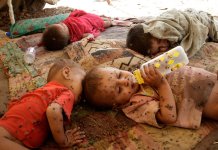
The photograph that went round the world. The Guardian tracked down the child with the bottle, two-year-old Reza Khan, and spoke with his mother about her family's struggles. Photograph: Mohammad Sajjad/AP

It was an image that conveyed the human cost of the Pakistani floods ? and the failure to deliver aid to those affected ? more powerfully than any statistic: four young children lying on a filthy patchwork quilt, one of them sucking on an empty yellow bottle, all of them covered by flies.

The photograph by Associated Press's Mohammad Sajjad went around the world and featured in the Guardian's Eyewitness slot last week. The Guardian identified the child with the bottle as two-year-old Reza Khan and tracked him down to a makeshift camp at a roadside in Azakhel, some 19 miles from Peshawar, the capital of the insurgency-plagued province of Khyber Pakhtunkhwa, bordering Afghanistan.

The camp is a hotchpotch of about two dozen tents donated by various aid organisations, but it is run by none. Its residents must fend for themselves, and rely on the charity of passersby. There are 19 families here, all of them Afghan refugees: people who were displaced once by conflict in their homeland have now been displaced again by the month-long deluge.

continues at; http://www.guardian.co.uk/world/2010/sep/05/pakistan-floods-photograph-children#
 
Re: Pakistan: Waterborne diseases - 1,300 suspected cholera cases in Hangu, gastro deaths 200+.

250 flood victims suffer food poisoning

By Irfan Aligi

KARACHI: More than 250 of the 1,400 flood victims at a relief camp set up in Bengali Boys Sindhi Section School in Ibrahim Hyderi fell unconscious immediately after consuming cooked food, sources said.

The victims started vomiting and the condition of around 59 of them started worsening until they had to be taken to a nearby hospital.

The medical teams available at the camp rushed to the scene and efforts were initiated to provide immediate medical assistance to them.

A local philanthropist had been providing cooked food to the flood victims after Mukhtiarkar Asadullah Abbasi had encouraged him to do so.

A well-placed officer in the City District Government Karachi (CDGK) Revenue Department told Daily Times that by the time the food carriage arrived at the relief camp, the cooked rice had turned stale.

However, since the rice did not show any sign of rotting, it was served to the flood victims.


Subsequently, they started vomiting and majority of them fell unconscious.

The authorities concerned immediately rushed to the scene and, according to them, the situation was under control and none of the victims was in serious condition.

A well-placed officer in the CDGK Health Department told Daily Times that the sanitary situation in and around the relief camps was very poor.

A similar incident had taken place three days ago at the Pak Swedish Technical Institute in Quaidabad, Landhi Town where more than 80 flood affectees had fallen victim to food poisoning and fallen unconscious after consuming stale food.

More than 10 victims whose condition had worsened were taken to the Sindh Government Hospital, Korangi No 5.

Sindh Home Minister Dr Zulfiqar Ali Mirza ordered registering a case, following which police registered FIR No 314/10 against the mukhtiarkar and two caterers.

Over 1m IDPs served by health department: Provincial Health Minister Dr Sagheer Ahmed has lauded the services of the Sindh Health Department (SHD) for providing medical services to over 1 million internally displaced persons (IDPs) across the province.

The minister was chairing a meeting of the SHD officials on Monday. Provincial Health Secretary Hashim Raza Zaidi also attended the meeting.

The minister emphasised on expediting efforts to address health problems and reviewing the medical camps, medicines, specialist doctors and other related medical requirements of the IDPs.

He was informed that the SHD Maternal, Neonatal and Child Health Programme (MNCHP) had managed 423 deliveries in medical camps. The minister urged to increase the number of gynaecologists in medical camps.

According to the SHD, 1,099,375 IDPs were provided medical services from July 31 to September 5 across the province including 186,407, 34,449, 173,592, 129,265, 196,580, 3,855, 76,413 and 298,814 for diarrhoea, gastroenteritis, acute respiratory infections, malaria, skin diseases, heat stroke, eye infections and other ailments, respectively. Meanwhile, 295,610 were vaccinated against various viral and seasonal diseases, and 66,352 against hepatitis. Moreover, 355 were given anti-venom against snakebites.

During the same period, 82 people died at the flood relief camps while the camps witnessed the births of 426 babies.

The health department established 305 on-ground and 70 mobile medical camps to address medical emergencies, where 227 male and 103 female doctors and paramedics, 262 health technicians, 67 lady health visitors and 119 vaccinators were stationed.

Although the authorities concerned especially SHD and its subordinate institutions have been making efforts to address the health concerns of IDPs, the situation remains bleak at the relief camps.

Unofficial camp: Around 6,000 flood victims have established a relief camp on Super Highway on their own, sources said. They have established huts and want to permanently settle there.

The CDGK and the law enforcement agencies reached the camp to help them to shift to official flood relief camps, but the victims refused and offered resistance.

The authorities quit their efforts to prevent any untoward situation.

http://www.dailytimes.com.pk/default.asp?page=2010\09\07\story_7-9-2010_pg12_2
 
Re: Pakistan: Waterborne diseases - 1,300 suspected cholera cases in Hangu, gastro deaths 200+.

3 die, more than 50 affected by gastro in Daharki
By Ramesh Raja
DAHARKI: Gastro disease is spreading fast in Daharki and its adjoining areas and in this regard it was learnt on Monday that several people including Sultan Ahmed Laghari, Abdul Jabbar Soomro and Shaheen Soomro died of gastro at different areas of the city. About 50 people who are living in the same relief camps have been affected by gastro. The affected people have also been shifted to different local hospitals. The gastro patients have complained against the non provision of medicines and other facilities.
While talking to newsmen, the flood affected people demanded of the Sindh Chief Minister to take notice of the matter and provide them medicines in the hospitals and medical camps.


http://regionaltimes.com/07sep2010/heartlandnews/3.htm
 
Re: Pakistan: Waterborne diseases - 1,300 suspected cholera cases in Hangu, gastro deaths 200+.

Flood body count rises

A three-year-old child and a man?s body were recovered in Khangarh on Tuesday, where locals protested against the administration. Resident?s accused the government of starving them. ?Those of us who were lucky enough to stay alive after the floods will now be killed by the government?s apathy,? said an enraged Shaukat Khattak. Thousands of hungry people protested in Khangarh when the bodies of three girls were recovered from a village in Mehmood Kot.
Meanwhile, in a relief camp set up in a government high school in Daira Shah one-month-old Mehtab and Ramzan Sheikh died from gastroentiritis. People from villages in Kotla, Meerani, Daira Shah, Balwaan and Nadir Shah complain that they have yet to receive any aid from the government. Ahmed Sheikh, Ghulam Hasan, Mustafa, Gunman Khan, Qalandar Khan, Shujaat Ahmed, Hasan Nawaz, Musa Khan said that they had not received food for over two days, adding that water and electricity in the relief camps was scarce. ?Not a single government or NGO official has visited these camps and we have little to go by,? said Shujaat Ahmed.In Khangarh village Sundela, Abdul Ghafoor came to Sheikhpur where his disabled daughter Tahira (also an epilepsy patient) fell into the water and died three days ago. Tahira?s body was discovered near the Khangarh nullah. Police officials handed over the body to the family for burial. Similarly, in Mehmood Kot near the Humdani Wala railway station a body was found after waters receded in the area. Police buried the body in a local graveyard.

In Dera Ghazi Khan, district coordination officer (DCO) Iftikhar Ali denied all reports of any deaths having occurred in the Taunsa relief camp due to food shortage. Flood victims said the police was downplaying the situation. Ali said that several NGOs were operating in the area and had been providing food and clothing for the camps.

Faisalabad:

Residents of Mohallah Garden Sitiana Road have dispatched five truckloads of relief goods to Mianwali. The relief items include 100 bags of flour, 1,200 packets of different food items, 7,000 bottles of drinking water, 2,000 packets of biscuits, 500 cans of water and necessary medicines. DCO Naseem Sadiq and MPA Chaudhary Shafiq Gujjar sent the relief consignment under their supervision. The DCO hailed the noble sentiment of donors for collecting relief goods at a large scale and said that relief activities initiated by people of Faisalabad would continue till the complete rehabilitation of flood victims in the district.

Pak Pattan:

Eight patients of gastroenteritis have been admitted in the DHQ Hospital Pakpattan in two days. According to doctors at the hospital, the epidemic is spreading in the area and over a dozen people had died from gastroenteritis over the past two weeks.
Meanwhile, the World Health Organisation (WHO) has set up diarrhea centres in the six flood-affected districts of the province. The WHO has started contacting doctors belonging to Faisalabad and other districts for these camps.

The reports prepared and sent to the WHO by the federal and the provincial governments state that about 300 to 500 children were being affected by diarrhea every day. Most of them, the report said, died as there was a severe shortage of appropriate medical facilities. The WHO has set up camps in district headquarter (DHQs) hospitals in Mianwali, Sargodha, Layyah, Muzaffargarh, Dera Ghazi Khan and Rahim Yar Khan. These camps will provide free of charge medical and laboratory facilities. The E-med has been directed to hire the required staff. About 18 doctors, 18 staff nurses and 18 ward boys are being hired from Faisalabad.

Published in The Express Tribune, September 8th, 2010.
http://tribune.com.pk/story/47806/flood-body-count-rises/
 
Re: Pakistan: Waterborne diseases - 1,300 suspected cholera cases in Hangu, gastro deaths 200+.

1.1m waiting for aid in Balochistan
Published: September 09, 2010
PrintFacebookDiggStumbleUponText Size
QUETTA ? The most devastating floods in Balochistan?s history have forced more than 1.1 million people to live in open sky in different parts of the province who are in a dire need of food, shelter, medicines and clean drinking water.
At least 80 people have so far died of gastroenteritis, cholera and other waterborne diseases in Dera Murad Jamali, Sibi, Quetta and Khuzdar where hundreds of others are experiencing the deadly effects.

Though the water level in Dera Allahyar town has receded from 10 to 12 feet to two to three feet, the dwellers are still unable to return to their homes.
?We are living on the roadside while waiting for government aid. We lost our home and other valuables when Dera Allahyar was inundated in floodwater,? Pir Bakhsh, an aged man told a group of journalists who visited the affected areas of Jaffarabad, adding that they were unable to save their cattle and other belongings.
?We fear thousands of flood-affected people would die of starvation if the international community fails to provide immediate relief to them,? PPP parliamentary leader Sadiq Ali Umrani said, adding that the Balochistan government did not have resources to tackle the crisis.
He also urged the foreign countries, the UN and other international donor agencies deliver the relief and financial assistance directly to the province.
?Any delay in providing food, drinking water and shelter to the affected people can cause another human tragedy,? he warned.
The official sources say the situation is worsening in the 11 affected districts of the province where 75,267 houses were damaged while the standing crops on 6,91,700 acres of land had also been destroyed.

The health officials said hundreds of cases of various diseases including that of eye and skin had become vary much rampant, as they also pointed to the acute shortage of medicines in hospitals and medical camps in the district while a large number of patients are being treated in Dera Murad Jamali, Sibi and Quetta.
Many dislocated people from the adjoining areas of Sindh are staying in different relief camps set up in Dera Murad Jamali, Sibi and other areas.
?Balochistan is hosting more then one million flood affected people and it is too difficult to provide each and every person the relief goods and food but the provincial govt is making all out efforts to deliver,? Raheela Durrani, the focal person for the relief efforts in Balochistan, told this scribe.
?A committee under the supervision of chief secretary had been set up to look after the matter,? she added.
Raheela mentioned that Prime Minister Yousuf Raza Gilani had so far provided only Rs 50 million while the provincial govt had so far released Rs 250 million for the flood-affected people of Balochistan.
On the other hand, Deputy Consul General Iran Ali Raza Kashifi said that his country had decided to send medical teams to Balochistan but the Pakistani authorities were not issuing visas to them. He said the unnecessary delay was complicating the relief efforts.
Meanwhile, the officials of some NGOs have warned that in case of failure in taking immediate steps for relief and rehabilitation, the situation would further worsen as the affectees have also lost their livelihood sources.
http://www.nation.com.pk/pakistan-n...Sep-2010/11m-waiting-for-aid-in-Balochistan/1
 
Re: Pakistan: Waterborne diseases - 1,300 suspected cholera cases in Hangu, gastro deaths 200+.

More than 45 gastro patients hospitalized in PMC within 8 hours
By Zulfikar Khaskheli
SHAHEED BENAZIRABAD: Gastro is spreading fast in relief camps and other areas of Shaheed Benazirabad District. In this regard it was on Thursday that more than 45 gastro patients including children, women and men were hospitalized in the Peoples Medical College Hospital (PMCH) within eight hours. The affected persons include Ramzan, Sajjad Ahmed, Khuda Bux, Muhammad Feroze, Bakhtawar daughter of Ali Gohar, Zulfikar, Imam Bux and others. According to doctors, consumption of contaminated water and poor sanitary conditions have caused gastro.
Shah Sachal Sami distributes clothes, Eid gifts amongst flood affected children
The members of the Shah Sachal Sami Welfare Association under the leadership of Zulfikar Khaskheli and others on Thursday distributed clothes, Eid gifts and Eidi amongst five hundred flood affected children. These articles were also distributed amongst the mothers of 30 newborn babies in the relief camps.
....

http://regionaltimes.com/10sep2010/heartlandnews/morethen.htm
 
Re: Pakistan: Waterborne diseases - 1,300 suspected cholera cases in Hangu, gastro deaths 200+.

Tale of woes doesn?t seem meeting an end

From Asadullah


KARACHI?With the number of Internally Displaced People (IDPs) from the flood-hit areas of Sindh swelling to 62,000 in the city alone, their tale of woes does not seem meeting an end in government-run camps, where the life is surely stranger than fiction. Imagine, over 12,500 IDPs, including women and children of all ages, living in an apartment complex without water and electricity for last 20 days. And that too in a Gadap Town?s flood relief camp, whose entrance is marked by large banners, heralding that the camp is under the auspices of KESC. Frustration runs high with the sundown, when workers of Sailani Welfare Trust (SWT) start doling out food in the last week of Ramzan.

Scores of children and men queue up holding a variety of pots to get the due share of the day?s food for their families. Not a single woman was seen out there. Though majority of dwellers have been issued ration card to get meal from SWT but Zareena, a former general councilor from Jacobabad, is neither lodged in any of the flats nor given a ration card.

?I only manage to get insufficient food for my nine children by showing someone else?s card.? Tears welled in her eyes when she mentioned her living on the pavement inside the complex premises. She said she was badly treated when she tried approaching the revenue officials. ?We were already poor and flooding made us poorer. Don?t accommodate us in a flat but at least take care of us. Where should we go?? she asked.

?Everyday turns out to be a survival test for us,? says Mohammad Ismail, a school teacher by profession, hailing from tehsil Thul of Jacobabad district. ?I wanted to volunteer myself at the make-shift school here but how could not, as I have to struggle to fast besides getting food and water for my family.? Sanitary and cleanliness conditions, at this major relief camp established in Labour Square, near Gulshan-e-Maymar, are also pathetic. At least four children have died of gastroenteritis and the camp faced the threat of disease outbreak owning to inadequate clean drinking water and medical facilities. ?We have to fetch water wherever we find it for using toilets.
We often don?t find enough water for such personal use. You can imagine the consequences,? Niaz Hussain from Qambar told The Daily Mail. ?Living here, in the absence of electricity, water supply and other basic necessities like bed and bath, is like staying in a concrete hole.?

The City District Government Karachi (CDGK) has been hosting over 62,000 flood-affected IDPs in its 47 relief camps in different parts of the city. ?The relief camp in Polytechnic School in Razzaqabad of Bin Qasim Town has received 7000 people while a total of 9000 IDPs have reached the relief camp established in Workers Welfare Board Flats in Gadap Town,? says a CDGK?s communique. Contrary to CDGK?s claims, the lack of amenities and relief goods eventually invited attention of NGOs to fill the gap to some extent.

For instance, Pakistan Institute of Labour Education and Research (PILER) came forward with interventions in clean drinking water, health and education. ?Keeping in view the dire need for safe drinking water in the camp, the PILER immediately installed three 1,800 gallon plastic water tanks along with motors pumps and water purifiers. This was a much-needed facility in the backdrop of the threat of the outbreak of water-borne diseases,? says a PILER?s communique.

Though the PILER has also assisted the camp authorities to run their medical facility more effectively at the camp, both aid workers and camp residents believe that the PILER?s clean water facility is not adequate for such a large number of IDPs lodged in Labour Square camp. ?They need more such facility,? even PILER acknowledges. A makeshift primary school for girls and boys has already been started by PILER enrolling 500 plus children in grades 1 to 4. ?This school is not enough for many other school-goers here and those in higher classes like myself have no place to study,? complains Nasim Hussain, an 8th grade student from Jacobabad, while pleading a case for proper schooling. Apart from this Labour Square camp near Gulshan-e-Maymar, the 7 different camps established in Lyari Resettlement Colony, Hawkesbay Road, Keamari Town have received a total of 10612 flood-affected IDPs and the relief camp in Polytechnic College in SITE area has so far accommodated 4000 people. Oblivious to the miseries of the IPDs, District Coordination Officer (DCO) Karachi, Fazlur Rehman has audaciously claimed of hosting over 62,000 flood-stricken people in an ?excellent manner despite facing difficulties? with the help of citizens of Karachi. ?They have been provided with all basic facilities,? he maintains. Mohmmad Anwar Chachar, a resident of Karampur city of Jacobabad district now lodged in Labour Square camp, says the camp authorities have no system in place regarding problems of the IDPs. ?Whenever we go to DDO for any complaint, we are threatened of losing the so-called flat accommodation.? Not even one per cent of the camp residents interviewed in a day offered any accolade for the government. Majority of them critically held the public representatives and government departments responsible for the flooding of their district in the first place and then for their unabated misery even in relief camps established in Karachi.
http://dailymailnews.com/0910/11/FrontPage/index.php?id=12
 
Re: Pakistan: Waterborne diseases - 1,300 suspected cholera cases in Hangu, gastro deaths 200+.

500 people leave Gizri camp in 2 days

KARACHI: An estimated 500 people have left the Gizri camp over the past two days, city government officials said. However, this is the tip of the ice berg as Karachi is housing 82,465 people in about 55 official camps.
The city district government issued certificates for people returning home and buses were arranged for them. Many people are going back by train free of charge as well. In a bid to bring them into the loop, the CDGK has set up a booth at Cantt station for the internally displaced people.

According to the health department, 600 medical camps have been set up across the province and more than 1.2 million people have been treated. About 1,200 children have been born in camps over the last month. About 3.1 million children have been vaccinated. Around four million rupees has been spent on their food each day. In Hyderabad, three million rupees is being spent on food each day.

The health department has set up 441 medical camps and 155 mobile camps across the province, where around 214,420 patients arrived with complaints of diarrhoea, 39,637 with gastroenteritis, 155,795 with malaria, 229,445 with skin diseases, 89,354 with eye infection, 4,355 with heat stroke, 380 with snake bites and 348,891 people arrived with other complaints. Around 1,267 babies were also born at these medical camps.

There was a report that a small boy died of gastroenteritis in Landhi Town on Monday. One-year-old Abid Lashari had come from Shahdadkot and was living in UC 7.

In the meanwhile, a Belgian government chartered aircraft carrying emergency relief items dispatched by the United Nations Children?s Fund (Unicef) will arrive in Karachi with Belgian Development Cooperation Minister Charles Michel, who will visit relief camps in Thatta.

The Belgian government provided free air freight to support Unicef?s humanitarian operations in Pakistan.

?Unicef greatly appreciates the logistical assistance, which will enable us bolster our humanitarian interventions in Pakistan,? said Martin Mogwanja, a Unicef representative in Pakistan. ?Air cargo has water and vaccination supplies that are critical for the lives of children and women.?

Published in The Express Tribune, September 14th, 2010.


http://tribune.com.pk/story/49458/500-people-leave-gizri-camp-in-2-days/
 
Re: Pakistan: Waterborne diseases - 1,300 suspected cholera cases in Hangu, gastro deaths 200+.

GOAL warns of massive wave of child mortality in Pakistan
Source: GOAL

Date: 13 Sep 2010


The Irish aid agency, GOAL, today warned of "a massive wave of mortality" among children displaced by floods which have affected the country for the last six weeks and disrupted the lives of some 20 million people.

Following a series of new field assessments in Sindh Province, GOAL's Head of Programmes, Jonathan Edgar, said: "The situation is deteriorating fast. Random nutritional screening assessments undertaken by GOAL in Larkana and Sukkur districts of Sindh Province reveal that the dietary requirements of children are being completely overlooked and there is little or no treatment currently available for those falling ill.

"Existing treatment services are often totally inappropriate for their condition. The international response is greatly under-resourced and must be re-focussed if we are to prevent a massive wave of child mortality in the coming weeks and months."

GOAL nutritionist, Hatty Newhouse, visited a camp for internally displaced people outside Larkana town in recent days and carried out screening of 23 children selected at random. Only four of the children did not show any signs of malnutrition; nine had severe malnutrition and were unlikely to survive, and ten others had mild to moderate malnutrition.

Similarly, one of GOALs partner organisations, Sindh Rural Support Organisation (SRSO), conducted a screening in seven camps of 260 children within Sukkur district, finding an average acute malnutrition rate of 40 per cent among children under five, with over half (23 per cent) of these already in the later stage of the illness with severe wasting.
"What we saw may not be representative of the camps as a whole but it is enough to set the alarm bells ringing and indicates that we are more than likely going to see huge mortality rates over the next month to two months," said Newhouse.
"In two hospitals we visited in Larkana town, there were five children to a bed in the paediatric wards and all of them had acute diarrhoea. The treatment of a child with severe acute malnutrition and dehydration from diarrhoea is very different from a normally nourished child. However, all children were being treated in the same fashion. Treatment was totally inadequate.
"More and more children will fall sick because mothers are not breastfeeding; there has been no adequate general food ration established as yet and hygiene and sanitation standards are exceptionally poor. The conditions in many places are perfect for the spread of cholera."

GOAL is now placing more programme emphasis on responding to malnutrition directly and is establishing a nutritional surveillance team and establishing feeding centres for pregnant and lactating mothers and infants which will support 41,400 people over the next six months.

Ends

For further information or interviews, please contact GOAL Media Officer, David Williams, at 01-2809779 or 087-4197140.

David Williams

Media & PR Officer, GOAL

Tel: + 353 1 2809779

Mob: + 353 87 4197140

Email: dwilliams@goal.ie

Skype: david.williams761


GOAL

An International Humanitarian Organisation

P.O. Box 19,

D?n Laoghaire,

Co. Dublin,

Ireland
http://www.reliefweb.int/rw/rwb.nsf...ReliefwebUpdates+(ReliefWeb+-+Latest+Updates)
 
Re: Pakistan: Waterborne diseases - 1,300 suspected cholera cases in Hangu, gastro deaths 200+.

No epidemic outbreak in flood-affected areas?

* Health minister says so far medicines worth Rs 15m distributed in 8 districts

By Mohammad Zafar

QUETTA: Provincial Health Minister Ainullah Shams has completely ruled out the possibility of an outbreak of epidemics in the flood-affected areas, where more than two million people have been dislodged from their homes.

Addressing a news conference for the first time after the floods, he confirmed that 145,724 people had been suffering from various flood and water-borne diseases. Shams said that although there was massive criticism from the affectees about the provincial Health Department, the performance of the department was satisfactory and the doctors were performing their duties beyond their capacity, without any replacements in the flood-affected regions. The doctors had also been registering those affectees who had not been registered by the local governments, he added.

The minister was highly offended by the deaths reported by various newspapers and TV channels in the flood-affected areas of Balochistan.

Shams said that the department had not been relying on the local administration, and had also provided medical facilities to those affectees who were forced to live in the open. ?Medical camps have been set up in all relief camps, and so far the department has distributed medicines worth Rs 15 million in eight districts of the province, where 785,769 people have been affected by the floods,? he said.

The Health Department had set up 130 healthcare centres and 33 medical camps, apart from medicines and medical kits provided by WHO. The minister said 145,724 affectees had been suffering from diarrhoea, skin infections, malaria and snakebites.

Responding to a question, Shams refuted that there was a shortage of medicines in Balochistan and said, ?We have sufficient medicines and also the capacity to provide medicines to 1.1 million people.? The claims made by different NGOs about the Health Department were merely propaganda, he added.
http://www.dailytimes.com.pk/default.asp?page=2010\09\19\story_19-9-2010_pg7_18
 
Re: Pakistan: Waterborne diseases - 1,300 suspected cholera cases in Hangu, gastro deaths 200+.

Health dept confirms 131 deaths at camps

KARACHI: The Sindh Health Department in its daily report issued on Monday confirmed that 131 people have died in the 516 camps in flood-affected areas of the province since July 31, mostly attributed to gastroenteritis followed by fever.
A total of 1,584,450 patients were registered at the camps while 260,663 were reported to be suffering from diarrhoea and 47,042 from gastroenteritis.

Moreover, 261,127 cases of Acute Respiratory Infections (ARIs), 187,423 of malaria, 275,723 of skin infections, 5,144 of heath stroke, 415 of snakebites and 43,680 cases of other ailments were also registered.

The health department authorities with particular focus on children administrated vaccines of BCG to 23,742 children, polio vaccine to 111,914, measles vaccine to 71,321 children.

According to health department sources, 14,822 pregnant women from the flood-hit areas have registered for safe delivery at the medical relief camps of the department. app

http://www.dailytimes.com.pk/default.asp?page=2010\09\21\story_21-9-2010_pg12_7
 
Re: Pakistan: Waterborne diseases - 1,300 suspected cholera cases in Hangu, gastro deaths 200+.

Gastro claims six lives at relief camps
Monday September 27, 2010 (1131 PST)


SUKKUR: Six people, including a child, died of gastroenteritis on Sunday at different relief camps.According to reports, six people died of gastroenteritis at a different relief camps at Kot Diji. As many as 2,000 children at different relief camps are suffering from gastroenteritis.

http://paktribune.com/news/index.shtml?231956
 
Re: Pakistan: Waterborne diseases - 1,300 suspected cholera cases in Hangu, gastro deaths 200+.

Epidemiological Bulletin - Flood Response in Pakistan, Volume 1, Issue 7
Source: Government of Pakistan; World Health Organization (WHO)

Date: 04 Oct 2010


Full_Report (pdf* format - 993.4 Kbytes) http://www.reliefweb.int/rw/rwb.nsf...gent&shortid=VVOS-89XP5Q&file=Full_Report.pdf


Highlights

Epidemiological week no 39 (25 September - 1 October 2010)

? Between 25 September - 1 October 2010 (epidemiological week no. 39), 41 of the 78 flood-affected districts provided surveillance data to the DEWS system. Of these 41 districts, 87% reported 6-7 days of the week.

? 715 fixed health and 192 mobile medical outreach centers provided surveillance data for this week.

? 433,890 consultations were reported through DEWS of which 19% were acute respiratory infections (ARI), 13% were acute diarrhoea, 13% were skin disease, and 8% were suspected malaria.

? 16 alerts were received and responded to this week; 6 alerts were for acute watery diarrhoea (AWD), 4 were for Dengue fever, 4 for Bloody diarrhoea, 1 was for measles and 1 was for unexplained fever.

? 7 deaths were reported to DEWS for this reporting week
http://www.reliefweb.int/rw/rwb.nsf/db900sid/VVOS-89XP5Q?OpenDocument
 
Back
Top Bottom