
• FluTrackers.com Inc. does not provide medical advice. Information on this web site is collected from various internet resources, and the FluTrackers board of directors makes no warranty to the safety, efficacy, correctness or completeness of the information posted on this site by any author or poster. The information collated here is for instructional and/or discussion purposes only and is NOT intended to diagnose or treat any disease, illness, or other medical condition. Every individual reader or poster should seek advice from their personal physician/healthcare practitioner before considering or using any interventions that are discussed on this website. By continuing to access this website you agree to consult your personal physican before using any interventions posted on this website, and you agree to hold harmless FluTrackers.com Inc., the board of directors, the members, and all authors and posters for any effects from use of any medication, supplement, vitamin or other substance, device, intervention, etc. mentioned in posts on this website, or other internet venues referenced in posts on this website.
  • We are not asking for any donations. Do not donate to any entity who says they are raising funds for us.

Pakistan: Human H5N1 Cluster December 2007

Re: Pakistan: December 18+, WHO Begins Investigations

Re: Pakistan: December 18+, WHO Begins Investigations

http://www.presstv.ir/detail.aspx?id=35518&sectionid=3510210

<TABLE cellPadding=10 width="98%" border=0><TBODY><TR><TD>Pakistan reports human bird flu cases
Tue, 18 Dec 2007 20:23:47
</TD></TR><TR><TD><TABLE cellSpacing=0 cellPadding=0 width=200 align=right border=0><TBODY><TR><TD>
khashayar20071218195935078.jpg

</TD></TR></TBODY></TABLE>The Pakistani Health Ministry has reported the first six human cases of H5N1 avian influenza in the North West Frontier Province.

According to health officials, the first known H5N1 case in Pakistan was a poultry culler who died as a result of the virus.

The statement says that two of the man's brothers also fell sick, one of whom died subsequently.

It has not been confirmed whether the second death occurred as a result of the man caring for his brother or from exposure to the infected birds kept in their home.

The Federal Health Secretary has claimed no more poultry or human cases have been detected over the last two weeks, but a World Health Organization (WHO) team will arrive in Pakistan in the next few days.

The Geneva-based WHO said it was aware of eight suspected human cases of H5N1 bird flu in Pakistan's Peshawar region.

PKH/HGH

</TD></TR></TBODY></TABLE>
 
Re: Pakistan: December 18+, WHO Begins Investigations

Re: Pakistan: December 18+, WHO Begins Investigations

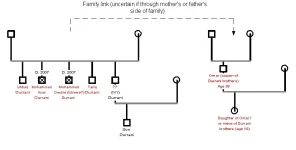
Here is my guess at the genealogy of family cluster in Pakistan.

Red names are postive or suspected human H5N1 cases. The brother from NY has tested negative. Information on the testing of his son is lacking, but the son is not a suspected case.

View attachment 2130
 

Attachments

  • Pakistan cluster 20071217.jpg
    Pakistan cluster 20071217.jpg
    37.9 KB · Views: 0
Re: Pakistan: December 18+, WHO Begins Investigations

Re: Pakistan: December 18+, WHO Begins Investigations

Great Job Laidback Al.

I have:
Riaz Hussain - Adm: 12/15 From: Palosai (town). Hospital: Peshawar Khyber Teaching Hospital.
 
Re: Pakistan: December 18+, WHO Begins Investigations

Re: Pakistan: December 18+, WHO Begins Investigations

Awesome! Thanks, Al!

Keep in mind that Pakistan has one of the highest rates of consanguineous marriages (i.e. mostly cousin marriages) in the world -- 50%+ of marriages in Pakistan are between (mostly) 1st or 2nd cousins:

http://www.consang.net/index.php/Global_prevalence

I'd expect the rates to be particularly high in the more remote, "tribal" areas of Pakistan such as the NWF Province.

So, in your genealogical charts there, the husbands and wives are likely to also be cousins (and probably paternal cousins -- I believe that FBD or Father's Brother's Daughter is the most common type of cousin marriage in Pakistan).
 
Re: Pakistan: December 18+, WHO Begins Investigations

Re: Pakistan: December 18+, WHO Begins Investigations

awesome chart! thnx!
 
Re: Pakistan: December 18+, WHO Begins Investigations

Re: Pakistan: December 18+, WHO Begins Investigations

Nassau man tests negative for bird flu

BY STEVE RITEA | steve.ritea@newsday.com; This story
December 17, 2007

A 38-year-old Nassau County man tested negative for bird flu after being quarantined for three days following his return from Pakistan, where health officials are investigating the cause of South Asia's first outbreak of the deadly virus.

The unidentified man landed at Kennedy Airport on Dec. 5 and the next day visited his doctor, who referred him to an unnamed local hospital for observation, according to the state health department.

Investigators with the Centers for Disease Control and Prevention flew to Albany Dec. 8 to collect a portion of a sample the Nassau County Health Department sent to the state health department for testing. All agencies confirmed the results were negative by Dec. 9 and the man's home quarantine was lifted. State officials said the man exhibited no symptoms.

CDC spokesman Dave Daigle said the man may have ties to people in Pakistan who have been infected with bird flu, but he was unable to elaborate.

He said the CDC's involvement is not uncommon, recalling some 50 instances where they have tested for bird flu around the nation since last year.

Bird flu has never been detected in the United States.

Daigle said there are no travel restrictions to Pakistan or South Asia and passengers returning from those countries are not subject to any special scrutiny.

In Pakistan, four brothers - two of whom died - and two cousins from Abbotabad, a small city about 30 miles north of Islamabad, were suspected of being infected by the virus, said World Health Organization spokesman Gregory Hartl in Geneva. A man and his niece from the same area who had slaughtered chickens were also suspected of having the virus.

Another person in a separate case who slaughtered poultry in Mansehra, 15 miles away, also tested positive for the disease, he said.

Details surrounding the cases remained confusing, with Pakistan's Health Ministry issuing a statement Saturday saying six people had initially tested positive for the virus last month, while the WHO said eight had been reported.

Hartl said a team of WHO experts have been sent to Pakistan to help determine the cause. He said all four brothers were believed to have worked on a farm and poultry outbreaks had earlier been reported in the area.

Hartl said WHO has not ruled out limited human-to-human transmission.

The H5N1 virus, also known as bird flu, has killed at least 208 people worldwide, mostly in Southeast Asia and China, since it began ravaging Asian poultry stocks in late 2003. So far, most human cases have been linked to contact with sick birds.

Pakistan has grappled with outbreaks of bird flu in poultry for the past two years, but had previously not confirmed cases in humans.

This story was supplemented with an Associated Press report.
 
Re: Pakistan: December 18+, WHO Begins Investigations

Re: Pakistan: December 18+, WHO Begins Investigations

Here is my guess at the genealogy of family cluster in Pakistan.

Red names are postive or suspected human H5N1 cases.

View attachment 2130
Bloomberg indicates there are five brothers (four positive and one dead but not tested), which I assume does not include the NY resident.
 
Re: Pakistan: December 18+, WHO Begins Investigations

Re: Pakistan: December 18+, WHO Begins Investigations

Bird Flu May Spread, Driven by Cooler Weather, Researcher Says

By Jason Gale
<!-- WARNING: #foreach: $wnstory.ATTS: null at /bb/data/web/templates/webmacro_en/newsarchive.wm:265.2 --><!-- WARNING: #foreach: $wnstory.ATTS: null at /bb/data/web/templates/webmacro_en/newsarchive.wm:279.19 -->Dec. 18 (Bloomberg) -- Bird flu outbreaks may spread in the Northern Hemisphere this winter, putting more people at risk, as cooler weather spurs infections in poultry, a researcher said.
World Health Organization doctors are investigating eight suspected human cases of the H5N1 avian influenza strain in Pakistan. If confirmed, the infections would bring to 13 the number reported worldwide this month, the most since March. Russia had its biggest H5N1 outbreak, while the virus infected poultry in Benin, Germany, and Saudi Arabia the past month.
``This virus is endemic among poultry species and it is continuing to expand its range,'' said Lance Jennings, a clinical virologist with the Canterbury District Health Board in Christchurch, New Zealand. ``I'm sure we will see more human cases'' in developing countries, where people and poultry often live close together amid poorer sanitation, he said.
At least one person has caught the disease every month during the past three years, mostly through contact with infected poultry, such as children playing with them or adults butchering them or plucking feathers. New cases provide opportunities for H5N1 ``to evolve into a virus that decides that it likes humans'' and potentially touch off a lethal pandemic, Jennings said in an interview today.
At least 340 people in 13 countries have contracted the virus since 2003, the Geneva-based WHO said on Dec. 14. Three of every five cases have been fatal. Millions could die if the virus adapts to humans and is spread by sneezing and coughing.
Myanmar, China
The other cases reported this month were in a 7-year-old girl from eastern Myanmar, a father and son in China and two people in Indonesia.
`Public health and veterinary authorities are being kept on their toes,'' Jennings said. ``The real concern if the epidemic goes on is the sustainability of the capacity that has been established in a number of countries.''
H5N1 infected a flock of 11 chickens in Germany's Brandenburg state, the European Commission said yesterday. In Saudi Arabia, agriculture officials ordered a further 22,500 ostriches to be culled to contain a new outbreak in the desert kingdom, Agence France-Presse reported yesterday.
Diseased fowl were reported in the U.K., Romania and Poland in November. More than 1,210 hens, ducks, geese, turkeys and wild birds were infected by the virus in central and northern Poland between Nov. 30 and Dec. 12, Chief Veterinary Officer Ewa Lech said in a Dec. 13 report to the World Organization for Animal Health.
Russian Outbreak
In western Russia, 42,959 hens died in an outbreak on a farm in Rostovskaya Oblast, Evgueny A. Nepoklonov, deputy head of the country's veterinary department in Moscow, told the Paris-based veterinary organization last week. He said 17 outbreaks are recorded as unresolved.
Ukraine reported its first H5N1 outbreaks in poultry in December 2005, about two months after the disease emerged in Romania, Croatia and Turkey, signaling its establishment in Eastern and Central Europe.
``Most of the activity in central Europe was associated with the winter months in poultry,'' Jennings said. ``What we might be seeing is the increased activity associated with the seasonality of this virus in poultry populations.''
To contact the reporter on this story: Jason Gale in Singapore at j.gale@bloomberg.net .
Last Updated: December 18, 2007 03:07 EST

http://www.bloomberg.com/apps/news?pid=newsarchive&sid=ar92IWO_wbxc
 
Re: Pakistan: December 18+, WHO Begins Investigations

Re: Pakistan: December 18+, WHO Begins Investigations

Great Job Laidback Al.

I have:
Riaz Hussain - Adm: 12/15 From: Palosai (town). Hospital: Peshawar Khyber Teaching Hospital.


With the chart above, I am trying to delineate the family members associated with the main cluster. Do you think that Riaz Hussain is a part of that cluster, or possible a related family member.

I would invite anyone from the Pakistan NIH, WHO, or the CDC to add any additional facts to this thread to help clarify the situation.
 
Re: Pakistan: December 18+, WHO Begins Investigations

Re: Pakistan: December 18+, WHO Begins Investigations

Sorry Laidback Al. No, he's not part of the family.
 
Re: Pakistan: December 18+, WHO Begins Investigations

Re: Pakistan: December 18+, WHO Begins Investigations

AVIAN INFLUENZA, HUMAN (169): PAKISTAN
***********************************************************
A ProMED-mail post
<http://www.promedmail.org>
ProMED-mail is a program of the
International Society for Infectious Diseases
<http://www.isid.org>

Date: Mon 17 Dec 2007
Source: Nature News [edited]
<http://www.nature.com/news/2007/071217/full/news.2007.383.html>


Human cases in Pakistan could hint of person-to-person spread.
---------------------------------------------------------------------
A team of experts from the World Heath Organization (WHO) is making
its way north in Pakistan to investigate a cluster of at least 8
cases of avian flu in people living near the Afghan border. They will
be seeking to establish whether the disease is spreading, and whether
the cases were caused by human-to-human transmission. Cases of bird
flu continue to occur worldwide, mostly in Indonesia, and this is the
colder time of year when flu is expected to hit hardest in the
northern hemisphere. But this latest outbreak is worrying in that it
involves the biggest batch of closely related cases since a cluster
of 8 infected people was reported in Indonesia in May 2006. "So far,
we are not seeing anything different than in previous instances of
H5N1 outbreaks," says Gregory Hartl, a spokesman for WHO, whose
current information comes from Pakistani authorities.

The Pakistan cases started in mid-November [2007], or possibly
earlier, when 5 family members fell ill in Abbottabad, north of
Islamabad. There, 2 of the brothers have died, one of whom was buried
before he could be tested for H5N1. In December [2007], a man and his
niece in the same town were found to have H5N1. They are thought to
have worked on the same farm as the 1st family affected. Another man
was found to have H5N1 in a nearby town some distance from there.
Another case is suspected but not yet confirmed, which would bring
the cluster to 9.

Pakistan has had repeated outbreaks of avian flu in poultry over the
past 2 years. The WHO team will be tracking down, treating and
testing people who came into contact with the infected cases.
Monitoring for cases in the area will be key to establishing whether
the virus has become more virulent or shows signs of spreading.
Meanwhile, Pakistani health authorities are poring over hospital
records from the past few months to see, retrospectively, whether
there has been any upsurge in the incidence of respiratory illnesses.
Human-to-human transmission cannot be ruled out, says Hartl, as it
has occurred on a limited basis on several occasions in the past.
Tests of 40 people who have had contact with the patients have so far
all turned up negative. Genetic sequencing will help to pin down the
mode of transmission and whether any important genetic changes have
occurred in the virus.

The Pakistan cluster highlights the obstacles faced by the WHO in
containing the spread should a pandemic strain of H5N1 appear. The
strategy calls for early diagnosis of cases, in the hope that blanket
treatment with antivirals will stamp out an emerging pandemic before
it spirals out of control. Computer models suggest that for this to
have any chance of succeeding, WHO would have a window of 3 weeks for
this diagnosis at most. But although the 1st cases occurred in
mid-November [2007] at the latest, Pakistan only officially informed
WHO on 12 Dec 2007, a day after the first media reports. WHO made the
cases public on 15 Dec 20007.

Last Friday [14 Dec 2007], the WHO also confirmed the 1st case in
Myanmar: a 7-year-old girl from Kyaing Tone Township, Shan State, who
was hospitalized in late November [2007], and has since recovered. A
WHO team has so far found no evidence of infections in any of the
case's contacts or in the area.

[Byline: Declan Butler]

--
Communicated by:
ProMED-mail
<promed@promedmail.org>

[Another version of events with the added information that the 2
deceased brothers and an H5N1-positive man and his H5N1-positive
niece all lived in the same town (Abbottabad), and all worked on the
same farm (previously located in Mansera). Circumstances consistent
with infection from a common source rather than by person-to-person
transmission of virus. - Mod.CP]

[see also:
Avian influenza, human (168): Pakistan 20071217.4059
Avian influenza, human (167): Pakistan 20071216.4049
Avian influenza, human (166): Pakistan, WHO 20071215.4038
Avian influenza, human (165): Pakistan 20071214.4023
Avian influenza, human (163): Pakistan 1st report 20071213.4008]
....................cp/ejp/lm
 
Re: Pakistan: December 18+, WHO Begins Investigations

Re: Pakistan: December 18+, WHO Begins Investigations

PIMS on the lookout for bird flu cases
Staff Report

ISLAMABAD: Pakistan Institute of Medical Sciences (PIMS) has directed its staff to record bird flu cases and reserved two isolation rooms for suspected patients.

PIMS Deputy Executive Director Dr Raja Amjid, has issued a circular directing the staff to adopt proper measures and protocols for handling bird flu suspects.

Officials told Daily Times that no bird flu case had been brought to the hospital so far. A polyclinic doctor said no bird flu case had been registered.

The Health Ministry, last week, confirmed six H5N1 Avian Influenza patients, five of them were in Abbotabad and one was in Mansehra. Five patients have recovered and one died, reportedly.

The National Institute of Health (NIH) tested suspects in late October.

Situation under control: A Health Ministry meeting has reviewed the situation and expressed its satisfaction.

Representatives of the Ministry of Food, Agriculture and Livestock, World Health Organisation, Food and Agriculture Organisation and UNICEF attended the meeting.

Health Ministry officials said the situation was completely under control. They called for better cooperation between the Health Ministry, Ministry of Food, Agriculture and Livestock (MINFAL) and the provinces.

An official said a three-member team of World Health Organisation experts was in Pakistan to assist federal and provincial health departments to contain the spread of avian influenza.

He said MINFAL had ensured that personal protective equipment had been provided to control teams. Early this year, 24 birds began dying and the dead tested positive for flu.

http://www.dailytimes.com.pk/default.asp?page=2007\12\18\story_18-12-2007_pg11_7
 
Re: Pakistan: December 18+, WHO Begins Investigations

Re: Pakistan: December 18+, WHO Begins Investigations

High-level meeting reviews situation

Tuesday, December 18, 2007
Our correspondent

Islamabad

Officials of the Ministry of Health, World Health Organization, Food and Agriculture Organization, Unicef, and the Ministry of Food, Agriculture and Livestock (MINFAL) met here Monday to take stock of the situation arising in the wake of the confirmed cases of human transmission of H5N1 Avian Influenza.

The daily coordination meeting, which was chaired by Secretary Health Khushnood Lashari, will be convened again today (Tuesday) and will have a representative of the WHO sharing latest findings of the three-member WHO team currently visiting Abbottabad, Mansehra and Peshawar, wherefrom confirmed cases of the disease among humans have been reported. ?The WHO teams will stay in those areas till need be,? an official of the Ministry of Health told this correspondent. The team is here to assist the federal and provincial health departments in formulating guidelines to contain the spread of Avian Influenza.

The health secretary is said to have expressed satisfaction over the response to the situation. He stressed on the need for better coordination between the ministries of health and MINFAL and the provincial government.

The meeting expressed satisfaction over the compensation being given to poultry farmers for culling of infected birds. The participants were informed that the last outbreak of Bird Flu occurred on November 30 in NWFP and culling of the infected chicken was done within 48 hours. Since then, the situation is under control. The MINFAL representative informed that personal protective equipment have been provided to the culling teams. Meanwhile, Lashari said, a media campaign is being launched to create awareness about preventive measures.


http://www.thenews.com.pk/daily_detail.asp?id=86906
 
Re: Pakistan: December 18+, WHO Begins Investigations

Re: Pakistan: December 18+, WHO Begins Investigations

AVIAN INFLUENZA, HUMAN (169): PAKISTAN
***********************************************************

[Another version of events with the added information that the 2
deceased brothers and an H5N1-positive man and his H5N1-positive
niece all lived in the same town (Abbottabad), and all worked on the
same farm (previously located in Mansera). Circumstances consistent
with infection from a common source rather than by person-to-person
transmission of virus. - Mod.CP]
The above commentary is the first time I have ever seen clustering (especially when most of the cluster members are related and the clustering is of clusters) used to argue against H2H transmission.

This commentary, coupled with the earlier remarks out of Pakistan arguing that sequencing would prove a common source, are among the most alarming comments to date, which is remarkable because the H2H question has been on the front burner since the first human H5n1 cases were reported in 1997.
 
Re: Pakistan: December 18+, WHO Begins Investigations

Re: Pakistan: December 18+, WHO Begins Investigations

INTERVIEW-Mixed scenario seen behind Pakistan birdflu spread
18 Dec 2007 18:52:43 GMT
<!-- 18 Dec 2007 18:52:43 GMT ## for search indexer, do not remove -->Source: Reuters

<!-- AN5.0 article title end -->
<SCRIPT language=JavaScript src="/bin/js/article.js"></SCRIPT>
</SPAN><INPUT id=CurrentSize type=hidden value=13 name=CurrentSize> <!-- INTERVIEW-Mixed scenario seen behind Pakistan birdflu spread --><!-- Reuters -->By Stephanie Nebehay
GENEVA, Dec 18 (Reuters) - The eight suspect human bird cases in Pakistan are likely a combination of infections from poultry and limited person to person transmission due to close contact, a top World Health Organisation expert said on Tuesday. Keiji Fukuda, coordinator of WHO's global influenza programme, said while unconfirmed, any human to human spread seemed similar to previous outbreaks in Thailand and Indonesia -- affecting close family members caring for sick loved ones.
There was no immediate cause for alarm and the United Nations agency was not raising its level of pandemic alert for the time being, he said, adding it was very reassuring that "we are not seeing large increases in the number of cases".
"Right now it doesn't look like pure human to human transmission. It looks like the veterinarian, who was the index case, and a number of other suspect cases had poultry exposure," Fukuda told Reuters in an interview.
"It is definitely possible that we have a mixed scenario where we have poultry to human infection and possible human to human transmission within a family, which is not yet verified."
But human to human transmission "would not be particularly surprising or unprecedented," he added.
Eight people have tested positive for the H5N1 bird flu virus in North West Frontier Province since late October, and one of the confirmed cases has died. A brother of the dead man also died, but was never tested, so is not counted among them.
H5N1 is mainly an animal disease, but experts fear it could mutate into a form that could spread easily between people, causing a pandemic which could kill millions of people. In Thailand, a mother was killed by the virus in 2004 after cradling her dying infected daughter all night. The largest known cluster of human bird flu cases worldwide occurred in May 2006 in Indonesia's North Sumatra province, where as many as seven people in an extended family died.
Three WHO experts, led by Hassan El-Bushra of its regional Cairo office, is in Pakistan helping investigate the outbreak.
The "index" case, who recovered, is a veterinarian who helped with culling operations and it is his two brothers who died after taking care of the ill man, according to Fukuda.
"This type of close contact we know can result in human to human transmission sometimes," he said.
"Right now, based on the information we have, the investigation going on and the feedback from the field team, we don't have anything pointing to push the alarm bells or increase the (pandemic alert) phase," he added.
The WHO uses a series of six phases of pandemic alert to gauge the level of threat. The world is currently in phase 3, a new influenza virus subtype is causing disease in humans, but is not yet spreading efficiently and sustainably among humans.
"In terms of public health implications, we are looking for human to human transmission where casual contact can lead to infections and allow big outbreaks in communities," Fukuda said.
A team from the U.S. Naval Medical Research Unit NAMRU-3 laboratory in Cairo was expected in Pakistan on Wednesday to carry out further tests on the samples from the suspect cases. (Editing by Sami Aboudi)


http://www.alertnet.org/thenews/newsdesk/L18866730.htm
<!-- news ## for search indexer, do not remove -->
 
Re: Pakistan: December 18+, WHO Begins Investigations

Re: Pakistan: December 18+, WHO Begins Investigations

Bloomberg indicates there are five brothers (four positive and one dead but not tested), which I assume does not include the NY resident.

The chart may be wrong and there could be six brothers total. Omar may be the other brother rather than a cousin. The young girl may be a daughter or niece of another positive culler not related to this cluster.

Theresa42's comments about cousin marriage above are very important. English translation of the kinship term "cousin" does not distinguish between cross and parallel cousins. Right now there is no data available to link the family cases patrilaterally or matrilaterally.
 
Re: Pakistan: December 18+, WHO Begins Investigations

Re: Pakistan: December 18+, WHO Begins Investigations

<TABLE><TBODY><TR><TD>
CDA takes steps against bird flu
</TD></TR><TR><TD>
</TD></TR><TR><TD>Associated Press of Pakistan
</TD></TR><TR><TD>ISLAMABAD: Following the threat of Bird Flu in the country especially in Islamabad, the Directorate of Health Services of the CDA has taken strict immediate preventive precautionary measures against spread of the disease.

The Eid holidays for the concerned staff has been cancelled and the authority has launched a special spray and fogging campaign in the different areas of the city usually being used for poultry business.

For this purpose, the federal capital has been divided into six zones and poultry shops of all the markets of the Capital City were properly sprayed and fogged with special anti-virus chemical.

A comprehensive awareness campaign has also been launched for the public, especially for the people attached with the poultry business and provided them proper guideline to avoid the spread and to combat the disease efficiently.

The shopkeepers and poultry businessmen have been advised to cover the eatable items properly and must be made their shops complete fly proofs and put the meat inside the shops.

The people concerning poultry, meat and hotels/motels have been advised for proper vaccination from Vaccination Section (DHS).

During the campaign, DHS has issued 58 notices to the poultry shopkeepers in the city markets due to poor hygienic conditions of their premises.

The Senior Director Health Services Dr Saeed Ahmed has constituted a special team to launch a special spray and fogging campaign during Eid holidays especially in the cattle markets to maintain hygienic conditions.


</TD></TR></TBODY></TABLE>

http://thepost.com.pk/IsbNews.aspx?dtlid=134873&catid=17
 
Re: Pakistan: December 18+, WHO Begins Investigations

Re: Pakistan: December 18+, WHO Begins Investigations

Thanks to all for the timely posts of reports as they become available.

:applause:
 
Re: Pakistan: December 18+, WHO Begins Investigations

Re: Pakistan: December 18+, WHO Begins Investigations

. . . .Theresa42's comments about cousin marriage above are very important. English translation of the kinship term "cousin" does not distinguish between cross and parallel cousins. Right now there is no data available to link the family cases patrilaterally or matrilaterally.

Some of the confusion over the family relationship of cases could be attributed to the translation of kin terms. The English term 'cousin' does not have an equivalent Pukhto term rather, as noted in the quote below, male and female cousins are generically called ror or khor; "brother" and "sister" respectively.

. . . Choice of marriage for girls is commonly determined by preference for parallel and cross-cousin marriage, as among other groups of Pakistani such as Punjabis (Shaw 2001). These alliances aim to consolidate patrimonial lands and strengthen political and social ties. Political leadership is thus reinforced through marriage alliances. While referring to first cousins by sibling names (?sister? {khor}, ?brother? {ror} rather than ?cousin? which lacks a Pukhto equivalent), Bibiane say that many of their relationships are ?six times? (shpag wara), that is multiply connected by marriage. . . .
<?xml:namespace prefix = o ns = "urn:schemas-microsoft-com:office:office" /><o:p></o:p>
From page 34, Sorrow and Joy Among Muslim Women: The Pukhtuns of Northern Pakistan, by Amineh Ahmed, 2006, <?xml:namespace prefix = st1 ns = "urn:schemas-microsoft-com:office:smarttags" /><st1:place w:st="on"><st1:PlaceName w:st="on">Cambridge</st1:PlaceName> <st1:PlaceType w:st="on">University</st1:PlaceType></st1:place> Press.
 
Back
Top