• FluTrackers.com Inc. does not provide medical advice. Information on this web site is collected from various internet resources, and the FluTrackers board of directors makes no warranty to the safety, efficacy, correctness or completeness of the information posted on this site by any author or poster. The information collated here is for instructional and/or discussion purposes only and is NOT intended to diagnose or treat any disease, illness, or other medical condition. Every individual reader or poster should seek advice from their personal physician/healthcare practitioner before considering or using any interventions that are discussed on this website. By continuing to access this website you agree to consult your personal physican before using any interventions posted on this website, and you agree to hold harmless FluTrackers.com Inc., the board of directors, the members, and all authors and posters for any effects from use of any medication, supplement, vitamin or other substance, device, intervention, etc. mentioned in posts on this website, or other internet venues referenced in posts on this website.
  • We are not asking for any donations. Do not donate to any entity who says they are raising funds for us.

Oregon: 2023-2026 Avian flu in wild birds

Public urged to avoid contact with sick or dead birds
  • 3 hrs ago
​Excerpt:

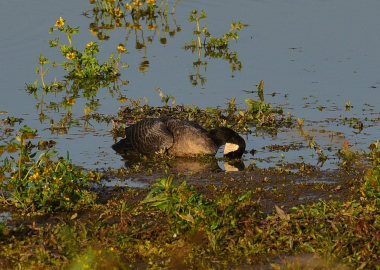
ODFW is currently receiving reports of HPAI-related bird deaths across Oregon, with most cases occurring in the Willamette Valley among migrating cackling geese and some raptors.
Additional detections have been reported in eastern Oregon, where early-season duck and raptor mortalities and snow goose deaths have occurred. Sporadic reports along the Oregon Coast also include cases in gulls and other waterbirds.
-snip-
What to do if you encounter groups of sick or dead wild birds​
Report groups of sick or dead wild birds to the Wildlife Health lab at 866-968-2600 or wildlife.health@odfw.oregon.gov. ODFW staff are monitoring and tracking continued mortalities. Samples may be collected in cases involving large numbers of dead birds or multiple species. Single dead bird reports are useful for tracking suspicious cases; however, due to limited staff, and resources ODFW will not be able to respond to all such reports.

Do not handle wildlife that is sick or found dead. If it is necessary to dispose of a carcass, use a shovel or wear impermeable gloves, wash hands with soap and water, and change clothing before having contact with domestic poultry or pet birds. 

Keep dogs away from sick or dead birds. There are no known cases of domestic dogs becoming sickened by contact with sick birds. But hunters should not feed dogs any raw meat, organs, or other tissues from harvested waterfowl, and they should not allow retrieving dogs to interact with sick or dead birds.
​-snip-

How to report illness in domestic animals
Death or illness among domestic birds (chickens, turkeys, Guinea fowl) should be reported immediately to ODA. Please report by calling 503-986-4711 (alt. phone 1-800-347-7028). Find more information on avian influenza in domestic birds and tips on protecting backyard flocks from ODA.
​
https://www.newportnewstimes.com/ne...cle_ba5f9d41-3ae4-4c3d-9cd7-6fbff57296d4.html
 
Detections of Highly Pathogenic Avian Influenza in Wild Birds

Last Modified: December 23, 2025
...
State County Collection Date Date Detected HPAI Strain Bird Species WOAH Classification
OregonJosephine11/12/202512/17/2025EA H5American wigeonWild bird
OregonBaker11/21/202512/17/2025EA H5Snow gooseWild bird
OregonJosephine10/18/202512/17/2025EA H5Red-tailed hawkWild bird
​...
https://www.aphis.usda.gov/livestoc...an/avian-influenza/hpai-detections/wild-birds
 
Detections of Highly Pathogenic Avian Influenza in Wild Birds

Last Modified: December 30, 2025

State County Collection Date Date Detected HPAI Strain Bird Species WOAH Classification Sampling Method​
OregonColumbia12/13/202512/23/2025EA H5Green-winged tealWild birdHunter harvest
OregonMorrow12/6/202512/23/2025EA H5MallardWild birdHunter harvest
OregonLincoln11/18/202512/23/2025EA H5N1Herring gullWild birdMorbidity/Mortality
OregonUmatilla12/7/202512/23/2025EA H5Red-tailed hawkWild birdMorbidity/Mortality
...

​https://www.aphis.usda.gov/livestoc...an/avian-influenza/hpai-detections/wild-birds
 
Detections of Highly Pathogenic Avian Influenza in Wild Birds


Last Modified: January 28, 2026
...
State County Collection Date Date Detected HPAI Strain Bird Species WOAH Classification Sampling Method
OregonJosephine12/23/20251/23/2026EA H5Canada gooseWild birdMorbidity/Mortality
OregonColumbia1/7/20261/21/2026EA H5Ring-necked duckWild birdHunter harvest
OregonColumbia1/7/20261/21/2026EA H5MallardWild birdHunter harvest
...

https://www.aphis.usda.gov/livestoc...an/avian-influenza/hpai-detections/wild-birds
 
Detections of Highly Pathogenic Avian Influenza in Wild Birds

Last Modified: March 10, 2026
...
State County Collection Date Date Detected HPAI Strain Bird Species WOAH Classification Sampling Method
​
OregonBenton12/1/20253/9/2026EA H5Red-tailed hawkWild birdMorbidity/Mortality
OregonBenton11/7/20253/9/2026EA H5Great horned owlWild birdMorbidity/Mortality
OregonBenton11/8/20253/9/2026EA H5Red-tailed hawkWild birdMorbidity/Mortality
OregonColumbia2/12/20263/3/2026EA H5MallardWild birdLive bird
OregonColumbia2/11/20263/3/2026EA H5MallardWild birdLive bird
​
OregonColumbia2/11/20263/3/2026EA H5MallardWild birdLive bird
OregonColumbia2/13/20263/3/2026EA H5MallardWild birdLive bird
​
OregonColumbia2/13/20263/3/2026EA H5MallardWild birdLive bird
...
https://www.aphis.usda.gov/livestoc...n-influenza/hpai-detections/wild-birds?page=1
 
1788969571116.webp

Klamath Falls, Oregon
/https://en.wikipedia.org/wiki/Klamath_Falls,_Oregon

---------------------------------------------------------------------------
(screenshots)
1788969203963.webp

1788969249829.webp


Detections of Highly Pathogenic Avian Influenza in Wild Birds​

Last Modified: October 09, 2026
...
StateCountyCollection DateDate DetectedHPAI StrainBird SpeciesWOAH ClassificationSampling Method
OregonKlamath9/15/202610/1/2026EA H5Northern shovelerWild birdMorbidity/Mortality
OregonKlamath9/15/202610/1/2026EA H5American white pelicanWild birdMorbidity/Mortality
OregonKlamath9/15/202610/1/2026EA H5Canada gooseWild birdMorbidity/Mortality
...


1794597456579.webp

/https://en.wikipedia.org/wiki/Willamette_Valley
-----------------------------------------------------------------------
1794597731183.webp

Newsroom
November 9, 2026

Reports of highly pathogenic avian influenza in ducks and geese increasing in Willamette Valley​

Press Release
News

Contact
Meghan Dugan, 541-315-6629, meghan.c.dugan@odfw.oregon.gov

SALEM, Ore. – Many of the geese migrating through Oregon are showing signs of highly pathogenic avian influenza (HPAI), with many other sick and dead birds being reported to ODFW. The majority of these reports currently are from the Willamette Valley and the Cackling goose (a smaller subspecies of the Canada goose) appears to be the most heavily affected.

ODFW urges people to avoid contact with sick birds and keep pets away. Dead birds can be disposed of – it is recommended to wear disposable gloves and a mask, and double-bag the carcass before putting it in the trash.

There is no effective treatment for HPAI-infected wild and domestic birds, and the virus can spread rapidly among bird populations and potentially to other wildlife. Because of this, sick birds cannot go to a wildlife rehabilitation center and should not be captured live by the public.

ODFW's Wildlife Health staff have been collecting and testing birds to track the outbreak. While the lab does not need additional collections of birds for HPAI testing, the public is encouraged to report groups of birds found dead without obvious signs of HPAI before death. The public can report these observations to the lab at 866-968-2600 or email wildlife.health@odfw.oregon.gov. With the high volume of reports, lab staff may not be able to call back.

Typical symptoms in wild waterfowl include lethargy, inability to fly, erratic behavior, loss of coordination, cloudy eyes, swimming in circles, and head shaking. However, some dabbling ducks may carry the virus without symptoms, spreading it through their feces to other birds and wetlands. Birds usually die within 72 hours of showing clinical signs.

Infected wild mammals may appear sick or neurologically abnormal, or be found dead after consuming infected birds, and should also be reported.

According to the U.S. Centers for Disease Control and Prevention (CDC), the risk to people is low. Since 2024, there have been 74 human cases of avian influenza in the United States, and three deaths. Check the CDCs avian influenza webpage for more information.

Report dead or sick domestic birds (chickens, turkeys, Guinea fowl) immediately to the Oregon Department of Agriculture by calling 503-986-4711 or 800-347-7028. Learn more on avian influenza in domestic bird and tips on protecting backyard flocks on ODAs webpage.

Check ODFW's avian influenza web page for more information.

A dead goose in the Willamette Valley likely died from avian influenza.

A dead goose in the Willamette Valley that likely died from avian influenza.


Detections of Highly Pathogenic Avian Influenza in Wild Birds​

Last Modified: November 13, 2026
...
StateCountyCollection DateDate DetectedHPAI StrainBird SpeciesWOAH Classification
OregonLane10/27/202611/9/2026EA H5Cackling gooseWild bird
OregonMarion10/29/202611/9/2026EA H5Cackling gooseWild bird
OregonLane10/30/202611/9/2026EA H5Cackling gooseWild bird
OregonWallowa10/13/202611/5/2026EA H5Great horned owlWild bird
OregonMarion10/27/202611/5/2026EA H5Herring gullWild bird
OregonMarion10/27/202611/5/2026EA H5Cackling gooseWild bird
...
 
1795110105148.webp


Highly Pathogenic Avian Influenza (H5N1) Update: What You Need to Know
There has been a recent surge in positive cases of Highly Pathogenic Avian Influenza (HPAI) H5N1 across multiple counties in Oregon. Increased cases have been reported in wild waterfowl, particularly Cackling geese, throughout the Willamette Valley and parts of Southern Oregon.
The most affected species identified in Oregon so far include Cackling geese, Canada geese, Great horned owls, Northern shovelers, Red-tailed hawks, and American white pelicans. HPAI primarily affects waterfowl, raptors, and other scavenging birds, while songbirds are considered at lower risk of contracting or spreading the virus. Infected wild birds can deteriorate rapidly, most dying within 72 hours of developing clinical signs. Symptoms may include neurological issues such as head shaking, twisted necks, or loss of coordination; behavioral changes such as lethargy, unusual tameness, or wandering; inability to fly; and visibly cloudy eyes.
Due to the increased risk, Wildlife Images will be unable to accept adult waterfowl for rehabilitation at this time. This precaution is necessary to help prevent the potential spread of HPAI to other wildlife patients and our resident educational ambassadors. We are also implementing additional biosecurity measures to protect our avian ambassadors and prevent any disease. Depending on how the situation develops, these precautions may include limiting bird encounters and temporarily removing some birds from public display to ensure their safety.
Wildlife Images is also proud to participate in the Highly Pathogenic Avian Influenza (H5N1) Surveillance in Wildlife Rehabilitation Facilities project conducted by the Translational Genomics Research Institute (TGen North). Through this project, we can collect swab and/or blood samples from native bird and mammal patients admitted to our clinic and submit them for testing. This research aims to better understand viral persistence in the environment and characterize the current spread of HPAI in wildlife. Wildlife rehabilitation facilities play an important role in disease surveillance and can serve as an early-warning system for regional virus activity.
What can you do to help?
Please do not approach, touch, or handle sick or dead wild birds. Report groups of sick or dead wild birds to the ODFW Wildlife Health Lab at 866-968-2600 or wildlife.health@odfw.oregon.gov.
If you keep chickens or other domestic poultry, implement appropriate biosecurity measures to help protect your flock.
For more information on poultry biosecurity, visit: oregon.gov/oda/animal-health-feeds-livestock-id/…/hpai-poultry.aspx

1795110055197.webp


Back
Top Bottom