

Michael Coston
Editor, Senior Moderator
OpenWHO: Online Learning Courses On Epidemics, Pandemics & Health Emergencies
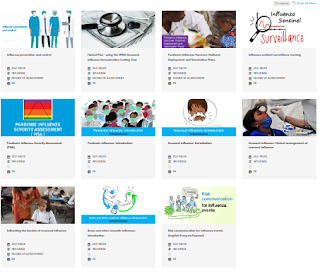
#17,428
Earlier this week I ran across an article in the BMC journal Archives of Public Health called Online learning for WHO priority diseases with pandemic potential: evidence from existing courses and preparing for Disease X by Heini Utunen, Anna Tokar, Mafalda Dancante & Corentin Piroux, that reminded me of a blog I wrote long ago (in 2017) on the opening of the WHO's online learning center (see below).
At that time, course offerings were quite limited (only 10 ), but more were promised. I fully planned to go back and explore further, but life got in the way, and so it sat on a back burner.
That is, until this week, when I returned to the OpenWHO site, registered (free, but requires answering a small questionnaire), and found over 200 English language courses offered (more in other languages).
I decided to take their basic course on avian influenza (see below) and then review it here
.
Overview: Avian influenza is an acute viral disease of the respiratory tract. It is one of several severe zoonotic diseases with pandemic potential in the presence of sustained human-to-human transmission. This course provides a general introduction to the disease through a short video lecture and quizzes to test your knowledge. It targets personnel involved in avian and other zoonotic influenza outbreak preparedness and response, including medical professionals, public health officials, incident managers and risk communication experts.
Learning objectives: By the end of this course, participants should be able to:describe transmission, symptoms and treatment for zoonotic influenza;
This one-hour course consisted of a pre-test (9 multiple choice questions) - followed by a 35 minute video lecture - and ended with a post-test (same questions, but answers in a different order).
I spent about 45 minutes in total.
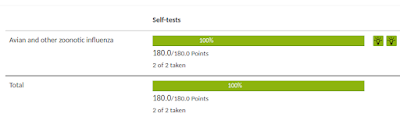
Although I aced the pre-test (9 out of 9 correct) it wasn't quite as easy as I expected. While most of the questions were fairly basic - there were a couple I actually had to think about. It genuinely helps to read the questions carefully.
The video - presented by Dr. Aspen Hammond - was detailed enough to be interesting, yet short enough not to wear out its welcome. A 35-slide PDF presentation was also available for download, along with the video, and audio files.
Based on this favorable first experience, I plan to explore further.
Currently there are 11 courses available dealing with influenza, 5 on Ebola, and 2 on MERS-CoV. Dozens of other topics are available, meaning you will probably find at least a few that will pique your interest.
https://afludiary.blogspot.com/2023/04/openwho-online-learning-courses-on.html
#17,428
Earlier this week I ran across an article in the BMC journal Archives of Public Health called Online learning for WHO priority diseases with pandemic potential: evidence from existing courses and preparing for Disease X by Heini Utunen, Anna Tokar, Mafalda Dancante & Corentin Piroux, that reminded me of a blog I wrote long ago (in 2017) on the opening of the WHO's online learning center (see below).
At that time, course offerings were quite limited (only 10 ), but more were promised. I fully planned to go back and explore further, but life got in the way, and so it sat on a back burner.
That is, until this week, when I returned to the OpenWHO site, registered (free, but requires answering a small questionnaire), and found over 200 English language courses offered (more in other languages).
I decided to take their basic course on avian influenza (see below) and then review it here
.
Overview: Avian influenza is an acute viral disease of the respiratory tract. It is one of several severe zoonotic diseases with pandemic potential in the presence of sustained human-to-human transmission. This course provides a general introduction to the disease through a short video lecture and quizzes to test your knowledge. It targets personnel involved in avian and other zoonotic influenza outbreak preparedness and response, including medical professionals, public health officials, incident managers and risk communication experts.
Learning objectives: By the end of this course, participants should be able to:describe transmission, symptoms and treatment for zoonotic influenza;
- describe why zoonotic influenza viruses are of potential concern to public health;
- describe the role of public health authorities in reducing the risk of human infections with zoonotic influenza viruses; and list key preventive strategies.
This one-hour course consisted of a pre-test (9 multiple choice questions) - followed by a 35 minute video lecture - and ended with a post-test (same questions, but answers in a different order).
I spent about 45 minutes in total.
Although I aced the pre-test (9 out of 9 correct) it wasn't quite as easy as I expected. While most of the questions were fairly basic - there were a couple I actually had to think about. It genuinely helps to read the questions carefully.
The video - presented by Dr. Aspen Hammond - was detailed enough to be interesting, yet short enough not to wear out its welcome. A 35-slide PDF presentation was also available for download, along with the video, and audio files.
Based on this favorable first experience, I plan to explore further.
Currently there are 11 courses available dealing with influenza, 5 on Ebola, and 2 on MERS-CoV. Dozens of other topics are available, meaning you will probably find at least a few that will pique your interest.
https://afludiary.blogspot.com/2023/04/openwho-online-learning-courses-on.html