• FluTrackers.com Inc. does not provide medical advice. Information on this web site is collected from various internet resources, and the FluTrackers board of directors makes no warranty to the safety, efficacy, correctness or completeness of the information posted on this site by any author or poster. The information collated here is for instructional and/or discussion purposes only and is NOT intended to diagnose or treat any disease, illness, or other medical condition. Every individual reader or poster should seek advice from their personal physician/healthcare practitioner before considering or using any interventions that are discussed on this website. By continuing to access this website you agree to consult your personal physican before using any interventions posted on this website, and you agree to hold harmless FluTrackers.com Inc., the board of directors, the members, and all authors and posters for any effects from use of any medication, supplement, vitamin or other substance, device, intervention, etc. mentioned in posts on this website, or other internet venues referenced in posts on this website.
  • We are not asking for any donations. Do not donate to any entity who says they are raising funds for us.

Omicron - COVID-19 Variant (B.1.1529) a "Variant of Concern" & BA.2 sub-variant, XE

https://en.newizv.ru/news/society/0...ron-strain-a-live-vaccine-against-coronavirus

Academician Pyotr Chumakov called the Omicron strain a live vaccine against coronavirus
8 December, 11:37Society

Virologist, Corresponding Member of the Russian Academy of Sciences, Head of the Cell Proliferation Laboratory at the Institute of Molecular Biology named after V.A. Engelhardt, Pyotr Chumakov, in an interview with Ura.ru, called the new strain a "live vaccine".

His words in an interview with radio Sputnik were explained by the leading specialist of the Vakcina.ru project, biophysicist Nelly Sosedova.

She expressed the opinion that the virus mutates in a direction that allows it to coexist better with humans...
 
1.2% hospitalised while
Denmark's weekly hospital admissions peaked at 997 in wave2 (currently 518)
Denmark's weekly cases peaked at 20000 in wave 2 (alpha, no vaccine) , currently 40000

so, that was 5% case/hospitalisation-rate
now 1.2% , 1.6% if we assume a 1-week-lag cases-->hospitalisations
 
https://www.washingtonexaminer.com/p...ity-than-delta
https://www.imperial.ac.uk/mrc-global-infectious-disease-analysis/covid-19/report-49-Omicron/


@jburnmurdoch , @mroliverbarnes , 2021-12-17
https://www.ft.com/content/020534b3-...1-167a5db50786
> There is currently “no evidence” that Omicron coronavirus is any less severe than Delta,
> according to early findings from Imperial, which also highlighted the risk of reinfection
> posed by Omicron need for boosters
----------------------------------------------------------------------------------------------
https://www.washingtonexaminer.com/p...ity-than-delta
no signs of lower severety , Imperial College London,
----------------------------------------------------------------------------------------------

I think, they have an agenda. They ignore the data from South Africa,
how the wave is already going down with little hosp/deaths in Tshwane,Gauteng,South Africa.
They don't argue why it may be different in England , as some other data shows ?
( No beta-wave immunity or such ? )
They are just trying to dismiss it, to not mention it.
Why ? Maybe not good for the headline, to attract ft-readers, to mention data
that non-UK-sources collected
 
Omicron largely evades immunity from past infection or two vaccine doses


by Emily Head, Dr Sabine L. van Elsland17 December 2021
newseventsimage_1639588774894_mainnews2012_x1.jpg


view large
main_image_shd.png

The Omicron variant largely evades immunity from past infection or two vaccine doses according to the latest Imperial modelling.

The new report (Report 49) from the Imperial College London COVID-19 response team estimates that the risk of reinfection with the Omicron variant is 5.4 times greater than that of the Delta variant. This implies that the protection against reinfection by Omicron afforded by past infection may be as low as 19%.

Researchers estimate the growth and immune escape of the Omicron variant in England. They used data from the UKHSA and NHS for all PCR-confirmed SARS-CoV-2 cases in England who had taken a COVID test between November 29th and December 11th 2021.
This level of immune evasion means that Omicron poses a major, imminent threat to public health.Prof Neil Ferguson​


The study includes people identified as having Omicron infection due to an S gene target failure (SGTF), as well as people with genotype data that confirmed Omicron infection. Overall, 196,463 people without S gene target failure (likely to be infected with another variant) and 11,329 cases with it (likely to be infected with Omicron) were included in the SGTF analysis, as well as 122,063 Delta and 1,846 Omicron cases in the genotype analysis.

Growth of Omicron


Firstly, the report looks at factors associated with testing positive for Omicron compared to non-Omicron (mostly Delta) cases. The results suggest that the proportion of Omicron among all COVID cases was doubling every 2 days up to December 11th, estimated from both S-gene Target Failure and genotype data. Based on these results they estimate that the reproduction number (R) of Omicron was above 3 over the period studied.

The distribution of Omicron by age, region and ethnicity currently differs markedly from Delta, with 18–29-year-olds, residents in the London region, and those of African ethnicity having significantly higher rates of infection with Omicron relative to Delta. London is substantially ahead of other English regions in Omicron frequency.

Omicron transmission is not yet uniformly distributed across the population. However, the researchers note that given its immune evasion, the age distribution of Omicron infection in the coming weeks may continue to differ from that of Delta.

The study finds no evidence of Omicron having lower severity than Delta, judged by either the proportion of people testing positive who report symptoms, or by the proportion of cases seeking hospital care after infection. However, hospitalisation data remains very limited at this time.

Reinfection rates


To assess the impact of Omicron on reinfection rates the researchers used genotype data, since even prior to Omicron, reinfection was correlated with negative S gene Target Failure data, likely due to random PCR target failure caused by the lower viral loads associated with reinfections.

Controlling for vaccine status, age, sex, ethnicity, asymptomatic status, region and specimen date, Omicron was associated with a 5.40 (95% CI: 4.38-6.63) fold higher risk of reinfection compared with Delta. To put this into context, in the pre-Omicron era, the UK “SIREN” study of COVID infection in healthcare workers estimated that prior infection afforded 85% protection against a second COVID infection over 6 months. The reinfection risk estimated in the current study suggests this protection has fallen to 19% (95%CI: 0-27%) against an Omicron infection.

Vaccine effectiveness against Omicron


The researchers found a significantly increased risk of developing a symptomatic Omicron case compared to Delta for those who were two or more weeks past their second vaccine dose, and two or more weeks past their booster dose (for AstraZeneca and Pfizer vaccines).

Depending on the estimates used for vaccine effectiveness against symptomatic infection from the Delta variant, this translates into vaccine effectiveness estimates against symptomatic Omicron infection of between 0% and 20% after two doses, and between 55% and 80% after a booster dose. Similar estimates were obtained using genotype data, albeit with greater uncertainty.

Prof Neil Ferguson from Imperial College London said: “This study provides further evidence of the very substantial extent to which Omicron can evade prior immunity given by both infection or vaccination. This level of immune evasion means that Omicron poses a major, imminent threat to public health.”

Prof Azra Ghani from Imperial College London said: “Quantifying reinfection risk and vaccine effectiveness against Omicron is essential for modelling the likely future trajectory of the Omicron wave and the potential impact of vaccination and other public health interventions.”

The work, which is not yet peer-reviewed, is presented in the latest report from the WHO Collaborating Centre for Infectious Disease Modelling within the MRC Centre for Global Infectious Disease Analysis, Jameel Institute, Imperial College London.

Since the emergence of the new coronavirus (COVID-19) in December 2019, the Imperial College COVID-19 Response Team has adopted a policy of immediately sharing research findings on the developing pandemic.

-

Read the full report ‘Report 49 - Growth, population distribution and immune escape of Omicron in England’

https://www.imperial.ac.uk/news/2326...icron-england/
 
Some possible hope here.

Full thread:
https://threadreaderapp.com/thread/1...470489089.html

Part about potential positive changes:
https://twitter.com/Kevin_McKernan/status/1469509653847429120


Kevin McKernan @Kevin_McKernan

Now look at Omicron spike protein 671-692. Two amino acid changes and one is the infamous proline change near the FCS. Prolines are right angle brackets in proteins. When they change, they alter structure. P681H N679K This may attenuate the SEB toxicity. Fewer Ckine storms.


9:29 PM · Dec 10, 2021·Twitter for iPhone
 
so, is it milder (South African data, HK-experiments) or not (Imperial College, UK-experts)?

> WHO Expects Severe Omicron Cases, Warns Against Treating Variant as Mild Disease


luckily we leaned that WHO can no longer be trusted on such statements
{IC shows 4-fold reduced hospitalisation-rate for omicron, I still don't understand why that's "no evidence" }
IC has a history of "warning" statements, a warning-agenda
just found their article at :;
https://www.imperial.ac.uk/news/2326...with-covid-19/
no mentioning, that it's mild in SA ?!? Strange.

mild SA-reports may not be good for vaccine motivation, so they are widely dismissed (Javid,Lauterbach,)

USA experts : "too early"

how government messaging is guided by agendas :
https://edition.cnn.com/2021/12/18/p...den/index.html
politicians mustn't just say what they really think
 

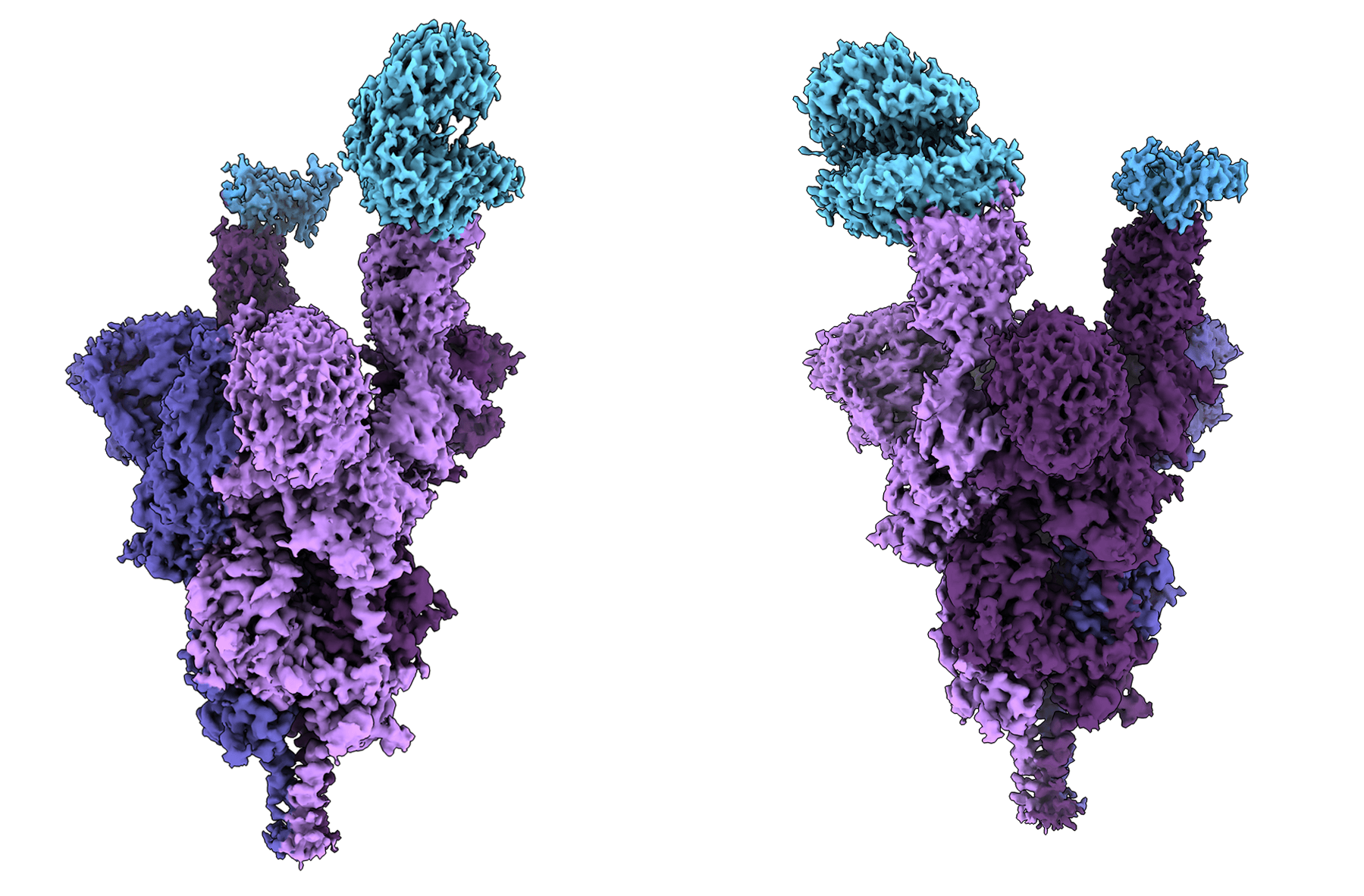
Atomic structure of the Omicron variant spike protein (purple) bound with the human ACE2 receptor (blue). Credit: Dr. Sriram Subramaniam

UBC scientists unveil world’s first molecular-level analysis of Omicron variant spike protein

Q&AS


Dec 22, 2021 | For more information, contact Brett Goldhawk

Findings show strong antibody evasion and binding with human cells that contribute to increased transmissibility—and that vaccination remains the best defence


UBC researchers are the first in the world to conduct a molecular-level structural analysis of the Omicron variant spike protein.

The analysis—done at near atomic resolution using a cryo-electron microscope—reveals how the heavily mutated variant infects human cells and is highly evasive of immunity. The findings shed new light on why Omicron is highly transmissible and will help accelerate the development of more effective treatments.

Dr. Sriram Subramaniam (he/him), professor in UBC faculty of medicine’s department of biochemistry and molecular biology, discusses the implications of his team’s research, which is currently under peer review and available as a preprint at bioRxiv.

What did you examine with this study?


Dr. Sriram Subramaniam

The Omicron variant is unprecedented for having 37 spike protein mutations—that’s three to five times more mutations than any other variant we’ve seen.

This is important for two reasons. Firstly, because the spike protein is how the virus attaches to and infects human cells. Secondly, because antibodies attach to the spike protein in order to neutralize the virus. Therefore, small mutations on the spike protein have potentially big implications for how the virus is transmitted, how our body fights it off, and the effectiveness of treatments.

Our study used cryo-electron microscopy and other tests to understand how mutations impact the behaviour of the Omicron variant at a molecular level.

What does your analysis reveal?


We see that several mutations (R493, S496 and R498) create new salt bridges and hydrogen bonds between the spike protein and the human cell receptor known as ACE2. This appears to increase binding affinity—how strongly the virus attaches to human cells—while other mutations (K417N) decrease the strength of this bond.

Overall, the findings show that Omicron has greater binding affinity than the original SARS-CoV-2 virus, with levels more comparable to what we see with the Delta variant. It is remarkable that the Omicron variant evolved to retain its ability to bind with human cells efficiently despite such extensive mutations.

What about the effectiveness of antibodies?


Our experiments confirm what we’re seeing in the real world—that the Omicron spike protein is far better than other variants at evading monoclonal antibodies that are commonly used as treatments, as well as at evading the immunity produced by both vaccines and natural infection.

Notably, Omicron was less evasive of the immunity created by vaccines, compared to immunity stemming from natural infection in unvaccinated COVID-19 patients. This suggests that vaccination remains our best defence against the Omicron variant.

What do these molecular-level changes tell us about the macro behaviour of the Omicron variant?


Both the characteristics we see as a result of spike protein mutations—strong binding with human cells and increased antibody evasion—are likely contributing factors to the increased transmissibility of the Omicron variant. These are the underlying mechanisms fuelling the variant’s rapid spread and why Omicron could become the dominant variant of SARS-CoV-2 very quickly.

How do we treat a variant that is so effective at evading immunity?


The good news is that knowing the molecular structure of the spike protein will allow us to develop more effective treatments against Omicron and related variants in the future. Understanding how the virus attaches to and infects human cells means we can develop treatments that disrupt that process and neutralize the virus.

An important focus for our team is to understand better the binding of neutralizing antibodies and treatments that will be effective across the entire range of variants, and how those can be used to develop variant-resistant treatments.

Interview language(s): English


https://news.ubc.ca/2021/12/22/ubc-...el-analysis-of-omicron-variant-spike-protein/

-----------------------------------------------------------------------------------------------------

SARS-CoV-2 Omicron Variant: ACE2 Binding, Cryo-EM Structure of Spike Protein-ACE2 Complex and Antibody Evasion

Dhiraj Mannar, James W. Saville, Xing Zhu, Shanti S. Srivastava, Alison M. Berezuk, Katharine S. Tuttle, Citlali Marquez, Inna Sekirov, Sriram Subramaniam
doi: https://doi.org/10.1101/2021.12.19.473380

This article is a preprint and has not been certified by peer review [what does this mean?].
...
https://www.biorxiv.org/content/10.1101/2021.12.19.473380v1.full.pdf+html
 
The sera of naturally infected patients had wide variations in time from infection to specimen collection. I read that the complex response of natural immunity can still be developing months later.

The vaccinated cohort happened to have optimal timing of their doses.

"We note that the majority of the doubly vaccinated cohort consisted
of individuals who were vaccinated with a schedule of at least 8 weeks between doses, recently
shown to generate a better humoral response than the manufacturer-recommended interval of 3-4
weeks (28). The longer interval between doses could result in less pronounced reduction in
neutralization of the Omicron variant."
 
https://www.forbes.com/sites/williamhaseltine/2021/12/02/omicron-origins/?sh=639ff9b91bc1
Coronavirus | Dec 2, 2021,03:07pm EST
Omicron Origin
William A. Haseltine

...
Molnupiravir-induced

The final theory, and perhaps the most troubling one, is that Omicron is a result of our own doing, through the treatment of a Covid-19 patient with the highly mutagenic antiviral drug molnupiravir. Molnupiravir works by introducing errors into the virus’ genetic code. When enough errors are introduced, virus replication slows and the patient clears the virus.

Under less than ideal conditions — when the full dose of molnupiravir is not taken over the full period of five days, for example — the drug could lead to the creation of highly mutated, but viable, strains of SARS-CoV-2. Even under ideal conditions, patients treated with molnupiravir produced viable virus a few days into their course of treatment. The extent of the mutations which appeared due to molnupiravir are significant. In the FDA analysis of Merck’s clinical trial results, the authors note that patients who received molnupiravir showed more viral variation than those who did not, including amino acid substitutions, deletions or insertions in the spike gene, and amino acid changes were scattered throughout the coding sequence. A total of 72 emergent spike substitutions or changes was detected among 38 molnupiravir-treated patients.

In South Africa, where Omicron was first detected, molnupiravir has been taken in both ideal and non-ideal conditions. Four different South African locations were used in Merck’s clinical trial of molnupiravir, which began in October 2020. The drug was given to patients at what we now know to be the “optimal” dosage, but also at lower doses to test the drug’s efficacy in smaller amounts. There is by no means a foolproof connection between molnupiravir and Omicron, but molnupiravir is known to induce a preponderance of two types of mutations: cytosine to uridine (C→U) and guanosine to adenosine (G→A). If you look at the difference in the Omicron genome and the original Wuhan variant, these C→U and G→A mutations comprise the majority of differences, with C→U mutations more prevalent to G→A. The same has been observed for molnupiravir-induced mutations in other coronaviruses (see Figure below). Agostini et al. note that exposure to molnupiravir resulted in up to 162 mutations in MHV and 41 mutations in MERS-CoV.


There is still much more study to be done before we will know with any degree of certainty which of these three scenarios led to Omicron’s evolution. But we know enough today to make a few assumptions and assertions.

First, until we can say with certainty that molnupiravir did not and could not create a highly infectious and highly mutated variant like Omicron, it should be pulled from the market and any debate over approval of the drug should be paused.
 
SARS-CoV-2 variants of concern and
variants under investigation in
England


Technical briefing 33
23 December 2021

This briefing provides an update on previous briefings up to 17 December 2021
...
Comparative demographics

Relative to Delta, Omicron is currently more concentrated in young adult age groups (20
to 29) and is less prevalent in children
. Whilst there were initially higher rates of Omicron
cases in persons of Black ethnicity, the rates of all ethnic groups have now converged
reflecting widespread community transmission. These demographic factors should be
borne in mind when interpreting comparative analyses.
Hospitalisation and death

Using data up until 20 December, 132 individuals with laboratory confirmed Omicron
have been admitted or transferred from emergency departments. Over 40% of
admissions were in London. Of those patients admitted to hospital, 17 (12.9%) had
received a booster dose, 74 (56.1%) a second dose and 27 (20.5%) were not vaccinated

(less than 10 were unlinked or had one dose). At the data cut off, 14 people were
reported to have died within 28 days of an Omicron diagnosis, age range 52 to 96 years.

Severity

The risk of hospital admission for a person detected as a case of Omicron appears
reduced compared to a case of Delta.
This analysis excludes known reinfections. The
current hazard ratio is 0.62 (95%CI 0.55-0.69) for emergency department attendance or
admission, and 0.38 (95% CI 0.3-0.5) for admission alone. This analysis is preliminary
because of the small numbers of Omicron cases currently in hospital and the limited
spread of Omicron into older age groups as yet. It has not been adjusted for
undiagnosed reinfections. It will be iterated regularly. In addition, Imperial reported
analysis using the same data set but imputing a potential previous infection variable and
estimated the intrinsic risk difference between Delta and Omicron as between 0 to 30%
and the reduced risk of hospitalisation in those previously infected estimated as 55 to
70%.
In the Scottish study, the range of estimates for their analysis was similar, though
based on only 18 total admissions detected for Omicron in the study and only 7
individuals admitted with 7 or more days of follow-up.

Vaccine effectiveness

Repeated VE analysis continues to show lower VE for symptomatic Omicron disease
compared to Delta. There is evidence of waning of protection against symptomatic
disease with increasing time after dose 2, and by 10 weeks after the booster dose, with
a 15 to 25% reduction in vaccine effectiveness after 10 weeks. This waning is faster for
Omicron than for Delta infections. There are insufficient severe cases of Omicron as yet
to analyse vaccine effectiveness against hospitalisation,
but this is expected to be better
sustained, for both primary and booster doses. This analysis will be iterated next week,
although numbers may still restrict a robust analysis of protection against more severe
outcomes. The VE data will also appear in the weekly COVID-19 vaccine surveillance
report published routinely on a Thursday.

Reinfections

The population reinfection rate has increased sharply and disproportionately to the
number of first infections. 9.5% of Omicron infections have been identified to have
previous confirmed infections, which is likely to be a substantial underestimate of the
proportion of reinfections.
The first infections of the individuals with Omicron reinfections
occurred in both the Alpha and Delta waves and are likely to have been undetected if in
the first wave. There were 69 identified cases with Omicron as a third episode of
infection and 290 cases where the Omicron infection was between a 60 to 89 day
interval after a confirmed first infection.

Secondary attack rates

Iterated secondary attack rates calculated using routine contact tracing continue to show
higher secondary attack rates for Omicron than for Delta
. The difference between
Omicron and Delta is currently greater for non-household contacts than for household
contacts

...
2.3 Severity

Descriptive epidemiology of severe outcomes of Omicron in England

To monitor the severe outcomes of Omicron infections, Omicron cases are linked to NHS data
on presentation to emergency care and to UKHSA data on deaths following confirmed COVID19 test results.
Hospitalisation was defined as attendance to emergency care which resulted in
admission or transfer, and the Omicron specimen date was between 14 days prior to
attendance and 1 day after attendance.

Using data up until 20 December 2021, a total of 132 individuals with laboratory-confirmed
(sequencing, genotyping or SGTF) Omicron have been admitted or transferred from emergency
departments.
Of these, 54 (40.9%) admissions were in London.

The age range of admitted individuals was 0 to 98, years (median: 45.5); 74 (56.1%) were aged
40 years or more; 25.8% were aged 70 years or more.
55% of Omicron hospitalisations
occurred in people whose self-reported ethnicity was White (British) and 8% among Black
(African) people.

A total of 14 people have been reported to have died within 28 days of an Omicron COVID-19
diagnosis. The median time from Omicron specimen date to death was 4 days (range 1 to 10).
The age of those dying ranged from 52 to 96 years.

...
2.4 Vaccine effectiveness
...

Vaccine effectiveness was estimated by period after dose 2 and dose 3. The final analysis
included 147,597 Delta and 68,489 Omicron cases. Vaccine effectiveness against symptomatic
disease by period after dose 2 and dose 3 is shown in Figure 7 for those who received a
primary course of the AstraZeneca vaccine (Figure 10A), Pfizer (Figure 10B) or Moderna
(Figure 10C). Booster estimates are separated for Pfizer and Moderna boosters. In all periods,
effectiveness was lower for Omicron compared to Delta. Among those who received an
AstraZeneca primary course, vaccine effectiveness was around 60% 2 to 4 weeks after either a
Pfizer or Moderna booster, then dropped to 35% with a Pfizer booster and 45% with a Moderna
booster by 10 weeks after the booster. Among those who received a Pfizer primary course,
vaccine effectiveness was around 70% after a Pfizer booster, dropping to 45% after 10-plus
weeks and stayed around 70 to 75% after a Moderna booster up to 9 weeks after booster.

...
https://assets.publishing.service.go...riefing-33.pdf

 
France -

Translation Google

Coronavirus: delay for booster dose reduced to 3 months tomorrow

Present at a press conference, Jean Castex announces that the deadline for receiving a booster dose will be reduced from 4 to 3 months from tomorrow.

Credit: GEOFFROY VAN DER HASSELT / AFP
Thibault Nadal & AFP
published on 12/27/2021 at 7:28 PM - updated on 12/27/2021 at 19:37

Another change for the French. After reducing the time to receive from 5 to 4 months in mid-December, Jean Castex has just announced that the time to receive the booster dose will be reduced, this time, from 4 to 3 months. This measure will enter into force tomorrow morning, if the High Authority of Health gives a favourable opinion.

As of Tuesday, "it will only take three months after your second injection or your first if you have had Covid to benefit from your booster," Prime Minister Castex announced at a press conference following a health defense advice.

https://www.rtl.fr/actu/politique/co...ain-7900109231
 
MONDAY 27 DECEMBER 2021 11:59 AM

South Africa jubilant as Omicron wave subsides rapidly with minimal Covid hospital admissions and Delta killed off: ‘Expect the same in other countries’

BY:MICHIEL WILLEMS

Optimism is growing rapidly in South Africa as the wave of Covid infections caused by the Omicron variant seems to subside as quickly as it came.
...
The Covid expert who has been leading the country’s pandemic response, Salim Abdool Karim – South Afrcia’s most important infectious-diseases scientist – said the peak of the Omicron wave has passed and he is convinced “every other country, or almost every other, will follow the same trajectory.”

“If previous variants caused waves shaped like Kilimanjaro, omicron’s is more like we were scaling the North Face of Everest,” Abdool Karim told The Washington Post, referring to the near-vertical increase in infections that South Africa recorded in the first weeks of December.
...
https://www.cityam.com/south-africa-...ta-killed-off/

-------------------------------------------------------------------------------

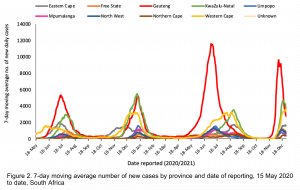
THE 7-DAY MOVING AVERAGE NUMBER OF NEW CASES BY PROVINCE

The proportion of positive new cases/total new tested today is 22.0% which is lower than yesterday (27.2%). The 7-day average is 27.4% today, which is lower than yesterday (28.5%). The 7-day moving average daily number of cases has decreased.


18-Dec-300x190.png


For more detailed information, visit the GIS Dashboard.

...
https://www.nicd.ac.za/latest-confir...december-2021/
 
Back
Top Bottom