

Pathfinder
Editor, Senior Moderator
Translation Google
Nigeria: Concern grows over rising noma cases
By Africanews Editorial Staff with AP
Last updated: 1 hour ago
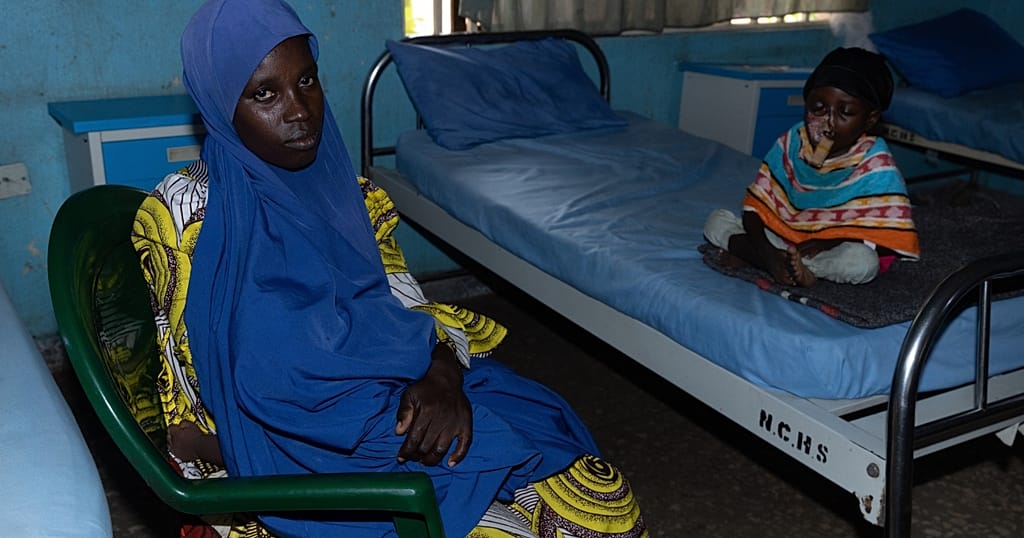
In Nigeria, cases of noma, a serious disease that causes facial disfigurement and often leads to death in children, are on the rise. Doctors Without Borders provides free surgery to children suffering from noma, provided their health allows them to undergo treatment.
They are still so young, but they are already fighting for their lives.
A painful and relentless struggle.
Cases of noma, a disease that disfigures children and can sometimes be fatal, are increasing sharply in Nigeria.
This is a progressive and often fatal infection of the face and mouth.
It begins with inflammation of the gums in malnourished children living in unsanitary environments, then spreads rapidly, destroying soft tissues and bones.
It mainly affects children aged 2 to 6 years, particularly in poor communities.
In the early stages of the disease, treatment includes antibiotics, wound care, and dietary improvements. But when the disease worsens, surgery becomes necessary.
In this specialized hospital, more than 500 children suffering from noma and originating from different regions of northern Nigeria were treated between 2023 and 2025.
"At first, it looked like a fever. We went to a local pharmacist, who gave him an injection. Immediately after the pharmacist administered the treatment, my child's skin began to turn reddish. So we went back to the pharmacist. At that point, he gave us a referral letter to go to the hospital. At the hospital, the doctor suggested that the boy be treated for symptoms suggestive of cancer (a malignant tumor). They started treatment, but without any improvement," Maryam Sabiu, the mother of a child with noma, told the AP.
In northern Nigeria, hard hit by the consequences of armed violence and economic hardship, experts say that more and more children are being diagnosed with noma.
According to MSF and medical officials, many of them arrive too late to be treated, due to a lack of awareness of the disease and its deadly progression.
Muhammad Dalhatu, another relative, recounts:
"It started with small, chickenpox-like sores around her neck. We didn't think it was noma at the time."
"The hospital then transferred us to this facility. I've been coming and going from this hospital for seven years now."
The World Health Organization (WHO) classifies noma as a neglected tropical disease, meaning it receives little or no attention and funding globally, despite its impact on those who suffer from it.
The WHO has not updated its noma data since 1998, when it estimated the number of annual cases at 140,000, with a mortality rate of 90%.
A study published last year in The Lancet Global Health, based on data from Sokoto Hospital, identified more than 50,000 cases of noma in 12 northern Nigerian states between 1999 and 2024.
According to the WHO, Nigeria reports more cases of noma than other countries, due to the presence of specialist hospitals, the size of its population and a response from the authorities which probably allows for more cases to be recorded than in most other countries.
However, it only has two specialized hospitals, one of which is in Abuja, built recently, in 2023.
 fr.africanews.com
Nigeria: Concern grows over rising noma cases
By Africanews Editorial Staff with AP
Last updated: 1 hour ago
In Nigeria, cases of noma, a serious disease that causes facial disfigurement and often leads to death in children, are on the rise. Doctors Without Borders provides free surgery to children suffering from noma, provided their health allows them to undergo treatment.
They are still so young, but they are already fighting for their lives.
A painful and relentless struggle.
Cases of noma, a disease that disfigures children and can sometimes be fatal, are increasing sharply in Nigeria.
This is a progressive and often fatal infection of the face and mouth.
It begins with inflammation of the gums in malnourished children living in unsanitary environments, then spreads rapidly, destroying soft tissues and bones.
It mainly affects children aged 2 to 6 years, particularly in poor communities.
In the early stages of the disease, treatment includes antibiotics, wound care, and dietary improvements. But when the disease worsens, surgery becomes necessary.
In this specialized hospital, more than 500 children suffering from noma and originating from different regions of northern Nigeria were treated between 2023 and 2025.
"At first, it looked like a fever. We went to a local pharmacist, who gave him an injection. Immediately after the pharmacist administered the treatment, my child's skin began to turn reddish. So we went back to the pharmacist. At that point, he gave us a referral letter to go to the hospital. At the hospital, the doctor suggested that the boy be treated for symptoms suggestive of cancer (a malignant tumor). They started treatment, but without any improvement," Maryam Sabiu, the mother of a child with noma, told the AP.
In northern Nigeria, hard hit by the consequences of armed violence and economic hardship, experts say that more and more children are being diagnosed with noma.
According to MSF and medical officials, many of them arrive too late to be treated, due to a lack of awareness of the disease and its deadly progression.
Muhammad Dalhatu, another relative, recounts:
"It started with small, chickenpox-like sores around her neck. We didn't think it was noma at the time."
"The hospital then transferred us to this facility. I've been coming and going from this hospital for seven years now."
The World Health Organization (WHO) classifies noma as a neglected tropical disease, meaning it receives little or no attention and funding globally, despite its impact on those who suffer from it.
The WHO has not updated its noma data since 1998, when it estimated the number of annual cases at 140,000, with a mortality rate of 90%.
A study published last year in The Lancet Global Health, based on data from Sokoto Hospital, identified more than 50,000 cases of noma in 12 northern Nigerian states between 1999 and 2024.
According to the WHO, Nigeria reports more cases of noma than other countries, due to the presence of specialist hospitals, the size of its population and a response from the authorities which probably allows for more cases to be recorded than in most other countries.
However, it only has two specialized hospitals, one of which is in Abuja, built recently, in 2023.
Nigeria : l’inquiétude monte face à la hausse des cas de noma | Africanews
Cette maladie, qui défigure et peut être mortelle, touche principalement les enfants et les populations défavorisées. Si son taux de létalité est estimé à 90 %, une prise en charge précoce peut considérablement améliorer les chances de survie.
fr.africanews.com