• FluTrackers.com Inc. does not provide medical advice. Information on this web site is collected from various internet resources, and the FluTrackers board of directors makes no warranty to the safety, efficacy, correctness or completeness of the information posted on this site by any author or poster. The information collated here is for instructional and/or discussion purposes only and is NOT intended to diagnose or treat any disease, illness, or other medical condition. Every individual reader or poster should seek advice from their personal physician/healthcare practitioner before considering or using any interventions that are discussed on this website. By continuing to access this website you agree to consult your personal physican before using any interventions posted on this website, and you agree to hold harmless FluTrackers.com Inc., the board of directors, the members, and all authors and posters for any effects from use of any medication, supplement, vitamin or other substance, device, intervention, etc. mentioned in posts on this website, or other internet venues referenced in posts on this website.
  • We are not asking for any donations. Do not donate to any entity who says they are raising funds for us.

Niger - 1 new outbreak of highly pathogenic avian influenza H5N1 in birds in farm, Niamey (OIE, January 06, 2022)

Pathfinder

Editor, Senior Moderator
Immediate notification
High pathogenicity avian influenza viruses (poultry) (Inf. with), Niger

...
General Information

COUNTRY OR ZONE
ZONE

DISEASE
High pathogenicity avian influenza viruses (poultry) (Inf. with)

STARTED ON
30-12-2021

ANIMAL TYPE
TERRESTRIAL

GENOTYPE/ SEROTYPE/ SUBTYPE
H5N1

CONFIRMED ON
03-01-2022

REASON
Recurrence of an eradicated disease

CAUSAL AGENT
Highly pathogenic avian influenza virus

ENDED ON
-

DISEASE CATEGORY
OIE-listed

REPORTED ON
06-01-2022

LAST OCCURRENCE
14-07-2021
...
Outbreaks

ob_95033 - Rive droite


OUTBREAK REFERENCE
-

STARTED ON
31-12-2021

EPIDEMIOLOGICAL UNIT
Farm

DETAILED CHARACTERISATION
-

NUMBER OF OUTBREAKS
-

ENDED ON
-

AFFECTED POPULATION DESCRIPTION
The affected subjects are 6-month-old laying hens in a farm.

APPROXIMATE LOCATION
Rive droite

FIRST ADMINISTRATIVE DIVISION
Niamey

SECOND ADMINISTRATIVE DIVISION
Niamey

THIRD ADMINISTRATIVE DIVISION
Lamorde

GEOGRAPHIC COORDINATES
Lat : 13.4985

Long : 2.0588


SPECIES MEASURING UNIT SUSCEPTIBLE CASES DEATHS KILLED AND DISPOSED OF SLAUGHTERED/KILLED FOR COMMERCIAL USE VACCINATED
Birds NEW Animal 18575 1400 1400 0 0 0
TOTAL Animal 18575 1400 1400 0 0 0
- NEW Animal 18575 1400 1400 0 0 0
TOTAL Animal 18575 1400 1400 0 0 0
...
https://wahis.oie.int/#/report-info?reportId=45989
 
Translation Google


Public health: avian flu back in Niger, several outbreaks confirmed in Niamey

Published: February 9, 2022

The regional authorities of Niamey have just confirmed the discovery of several outbreaks of highly pathogenic avian influenza in the capital. Several measures have already been taken by the authorities to prevent the spread of this disease which affects poultry but can also be transmitted to humans.

According to a decision of the Governor of the Region of Niamey, the entire city of Niamey and surroundings, within a radius of 10 km, is declared infected with highly pathogenic avian influenza after the discovery of three (03) outbreaks of this disease caused by the virus A (H5N1).

The authorities who called on the population to be cautious have already announced several measures such as the ban on the movement of all poultry or avian products from the Niamey region to other regions in the interior of the country as well as the slaughter of chickens in the city and farms concerned.

As a reminder and as actuniger had announced , the Burkinabe government had, a few weeks ago, confirmed the presence of around forty households in the country .

After the great pandemic of 2006, Niger had also confirmed the occurrence of this disease on March 19, 2021. The health authorities had, in fact, notified the World Organization for Animal Health (OIE) that an outbreak of avian flu highly pathogenic virus A (H5N1) was confirmed on March 16 in a farm of 30,000 poultry with the death of 27,000 in less than three days in commune 4 of Niamey, the capital. The diagnosis was confirmed by molecular biology techniques (RT-PCR) at the Central Livestock Laboratory (LABOCEL), the national laboratory, but the situation was quickly brought under control.

It should also be noted that the bird flu virus can be transmitted to humans through frequent and intensive contact with respiratory secretions or excrement from infected animals. In humans, bird flu is manifested by, among other things, fever, cough, muscle aches, eye and respiratory infections. And in addition to the loss of poultry, the disease negatively impacts the economy, household food security and the social climate.

Ikali Dan Hadiza ( actuniger.com )

https://www.actuniger.com/societe/1...iger-plusieurs-foyers-confirmes-a-niamey.html
 
FAO and USAID combat the re-emergence of avian influenza in Niger

From 25 December 2021 to 23 January 2022, there were 99022 poultry deaths caused by the Highly Pathogenic Avian Influenza (HPAI) virus and sanitary culls on affected farms

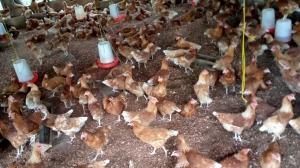
medium_Poulet%20Niger.jpg


On 6 January 2022 a new outbreak of highly pathogenic avian influenza (HPAI) (H5N1), identified on 31 December in a farm of 18,575 laying hens in Niamey, was notified to the World Organization for Animal Health (OIE) by the veterinary Authorities of Niger. In addition to the loss of poultry, avian influenza has had a negative impact on the economy, household food security and the social climate. In Niger, poultry farming is one of the livestock sectors that contributes to improving household food security, especially in rural areas. It also provides cash income for a significant proportion of the population, including women and young people. The livestock system is dominated by traditional practices, with 98% of the national livestock population.

SPREAD OF AVIAN INFLUENZA

The particularity of this disease lies in its very high mortality rate and the speed with which it spreads to other farms, resulting in considerable direct and indirect economic losses for the poultry industry. It should also be noted that, under particularly favorable conditions, it is capable of infecting certain mammals such as pigs and humans.

Transmission of the avian influenza virus to humans can occur through frequent and intense contact with respiratory secretions or excrement of infected animals. It is therefore necessary to be cautious about the re-emergence of the disease in Niger and to focus on surveillance and control of its spread.

HEALTH MEASURES TAKEN

Following the confirmation of the outbreak of highly pathogenic avian influenza (HPAI) subtype A/H5N1, sanitary measures have been taken by the Government of the Republic of Niger, in collaboration with its partners:

- all the owners of the farms concerned and the Interprofession of the Poultry Sector of the Niamey region were sensitized on the biosecurity measures to be taken (hygiene, limitation of movements in the farms);

- An Order Declaring Infection (APDI) by the Governor of the Niamey region (closing the farm, banning the movement of poultry from Commune V, IV and I to other communes in the city of Niamey) was issued;

- The other key ministries of the "One Health" committee (health, environment and livestock) were involved in active surveillance in the other farms of the commune and the poultry markets through investigations and sampling of suspected cases

FAO SUPPORTS THE FIGHT AGAINST AVIAN INFLUENZA IN NIGER

The Food and Agriculture Organization of the United Nations (FAO), through its Emergency Centre for Transboundary Animal Disease Control (ECTAD), is supporting Niger in the fight against avian influenza, which has hit the Niamey region. In March 2021, FAO ECTAD officially handed over an important batch of laboratory equipment to the Ministry of Agriculture and Livestock. The batch was made up of diagnostic kits, sampling and protection equipment, disinfectants and spraying equipment to the tune of 25 million CFA francs to strengthen the operational capacities of the veterinary services, in particular the Central Livestock Laboratory (LABOCEL) in the management of this health crisis. This equipment was acquired with funding from the United States Agency for International Development (USAID).

In April 2021, joint HPAI survey missions involving the "One Health" sections were conducted in Niger (Niamey and Zinder regions). In the Niamey region, 16 farms were surveyed, of which four were infected. In Zinder region, six farms and eight live poultry markets were investigated but LABOCEL did not confirm any new positive cases from the samples collected during the mission.

More recently, as part of the management of HPAI outbreaks in the city of Niamey, FAO ECTAD accompanied the technical services in the sanitary monitoring of the outbreaks with two missions (20 January 2022 and 27 and 28 January 2022). The first mission concluded that the source of contamination of one of the farms remains doubtful, but for the other farm, it is the introduction of infected subjects that is the cause. After the second mission, it was noted that it was difficult to identify the index case from which the disease had spread. The conclusions drawn from the missions highlighted the need to revitalize the surveillance network, strengthen the biosecurity capacities of producers, enforce the ban on the import of infected poultry and reinforce border controls.

This worrying outbreak of bird flu comes at a time when Niger, like other countries in the world, is facing the COVID-19 pandemic. Bird flu has already triggered a cull of all chickens - a cheap and nutritious food source for many people - with a negative impact on the region's food supply and economy, exacerbating an already difficult situation in the country. Also, other countries in the sub-region (Benin, Burkina Faso, Nigeria and Togo) are currently facing a resurgence of this zoonotic disease.


https://www.fao.org/africa/news/deta.../en/c/1472556/
 
Translation Google

Avian flu in Niger: more than 1,000 new cases recorded as of February 21, 2022 (latest report)

Posted on Saturday March 19th, 2022 | Nigerien Press Agency

In Niger, as of February 21, 2022, the Ministry of Livestock has identified some 92,173 poultry (including laying hens, chicks and quail) infected with avian flu. These infected subjects are all dead, killed either by the disease or by stamping out, reports the special bulletin n ° 5 of the Ministry of Livestock, having concerned the period from February 15 to 22, 2022.

According to this bulletin, the Maradi region is added to the three (3) other regions affected by the disease, namely Niamey, Dosso and Tillabéri.

The previous assessment reported 90,854 dead poultry in the regions of Niamey, Dosso and Tillabéry, during the period from February 13 to 15, 2022.

“Four outbreaks have just been registered, including three in the Niamey region and one in the Tessaoua department, Maradi region. The number lost for these three outbreaks is 1,329 subjects,” reports the latest bulletin.

Special publication no. 5 specifies that the mortality situation concerned 91,317 layers; 558 hens and 298 quails.

Since the declaration of the disease, several activities have been carried out by the authorities to deal with it, reports the last bulletin.

Upon receipt of the laboratory results (LABOCEL), the authorities immediately notified the World Organization for Animal Health (OIE), specifically through the General Directorate of Veterinary Services (DGSV). The Governors of the four Regions concerned have taken decrees to declare the infection of the disease.

The competent authorities have also carried out awareness campaigns aimed at all the owners of the farms concerned on the biosecurity measures to be taken (hygiene, limitation of movement within farms and between farms). They also proceeded to the stamping-out of living subjects, in the infected farms.

They also alerted the other key Ministries of the "One Health" committee, in this case those in charge of Public Health and the Environment. On the partner side, there is notably the support of the FAO in the framework of the management of outbreaks of avian influenza.

The bulletin also highlights the difficulties that the authorities are facing. They are mainly related to the controls of traditional farms; the lack of financial means to support active surveillance in the regions of Niamey, Tillabéry and Dosso, or the importation of poultry and poultry products from infected countries, which is still in force.

Several perspectives are envisaged within the framework of this fight. The bulletin notes the continued active surveillance of other farms in Niamey, Tillabéry, Dosso and Maradi; the implementation of communication tools at farm and market level; follow these farms and over a radius of 10 kilometers around the outbreak for at least three (3) months in order to control quarantine, disinfection and the appearance of new cases…

The authorities in charge of the matter also aim to repopulate farms three (3) months after the last case observed in the infected radius; to ensure the production of weekly reports on the situation of the disease and to retrain the agents on the knowledge of the disease and the biosecurity measures.


MSB/SML/ANP/107/March 2022.

http://news.aniamey.com/h/108824.html
 
Back
Top