• FluTrackers.com Inc. does not provide medical advice. Information on this web site is collected from various internet resources, and the FluTrackers board of directors makes no warranty to the safety, efficacy, correctness or completeness of the information posted on this site by any author or poster. The information collated here is for instructional and/or discussion purposes only and is NOT intended to diagnose or treat any disease, illness, or other medical condition. Every individual reader or poster should seek advice from their personal physician/healthcare practitioner before considering or using any interventions that are discussed on this website. By continuing to access this website you agree to consult your personal physican before using any interventions posted on this website, and you agree to hold harmless FluTrackers.com Inc., the board of directors, the members, and all authors and posters for any effects from use of any medication, supplement, vitamin or other substance, device, intervention, etc. mentioned in posts on this website, or other internet venues referenced in posts on this website.
  • We are not asking for any donations. Do not donate to any entity who says they are raising funds for us.

New York: Influenza Season 2025-26

Commonground

Senior Moderator
New York State Department of Health Encourages New Yorkers to Get Flu Vaccine As New Data Shows Severe Pediatric-Associated Illnesses


Centers for Disease Control and Prevention Releases Report on Nationwide Cases and Deaths Among Children with Influenza-Associated Encephalopathy (IAE) and Acute Necrotizing Encephalopathy (ANE)

Thirteen Suspected Cases of Pediatric IAE and ANE Reported in New York State, Including Three Pediatric Deaths

New York Reported 26 Influenza-Associated Pediatric Deaths in 2024-25 Influenza Season


ALBANY, N.Y. (September 30, 2025) – The New York State Department of Health is urging eligible New Yorkers to get the 2025-2026 seasonal influenza (flu) vaccine, following new federal data showing severe complications in children, including influenza-associated encephalopathy (IAE) and acute necrotizing encephalopathy (ANE), a rare but serious condition from the flu that affects children.

The U.S. Centers for Disease Control and Prevention's (CDC) latest Morbidity and Mortality Weekly Report (MMWR) found that during the 2024-25 flu season (October 2024 to September 2025), there were 109 reports of IAE in children reported nationwide – of which 37 (34 percent) were categorized as ANE, one of the most severe forms of the disease.

"The seasonal flu vaccine is the best way to protect against these tragedies and is the best measure of protection for babies and young children who are vulnerable to severe pediatric-related illnesses caused by the flu," State Health Commissioner Dr. James McDonald said. "As we head into the respiratory season this fall, the 2025-2026 flu vaccine is widely available. I encourage all New Yorkers to either make an appointment with a provider or stop by your local pharmacy to get vaccinated and enjoy the peace of mind that you and your family and loved ones are protected."

New York State Data:
  • In New York State, 13 suspected cases of IAE and ANE were reported.
  • Three of these cases resulted in death.
  • Among the suspect cases, nine children had not received the seasonal flu vaccine and one was ineligible for the vaccine.
  • The three deaths associated with IAE and ANE were among a total of 26 pediatric influenza-associated deaths reported statewide during the 2024-25 season.
Pediatric flu deaths have been increasing year over year from three deaths in the 2021-22 season, to 14 deaths in the 2022-23 season and 20 deaths in the 2023-24 season.

The seasonal influenza vaccine remains the best protection against serious illness and death from the flu. The flu vaccine remains available to New Yorkers aged 2 and older at participating pharmacies without a prescription. Children 6 months and older can receive the influenza vaccine at a health care provider's office.

More information about the influenza vaccine is available here.

Information about vaccine safety can be found here.

https://www.health.ny.gov/press/releases/2025/2025-09-30_get_flu_vaccine.htm
 
Last edited:
[emphasis is mine]

New York State Department of Health Announces Start of Weekly Respiratory Surveillance Report and Activation of Statewide Flu Tracker Website

Seasonal Dashboard Provides Snapshot View of Influenza, COVID-19, and RSV Activity Across State

Department Urges New Yorkers to Avoid Serious Illness by Getting Vaccinated


ALBANY, N.Y. (November 7, 2025) – The New York State Department of Health today announced the launch of the new Respiratory Surveillance Report. The Department's longstanding weekly flu report has now expanded to include COVID-19 and respiratory syncytial virus (RSV), offering a more comprehensive view of respiratory illness trends statewide. The updated report provides information on cases, hospitalizations, pediatric deaths, and outbreaks in both long-term and acute care facilities.

The Department has also reactivated the longstanding Flu Tracker dashboard, which provides a visual snapshot of laboratory-confirmed cases and hospitalizations associated with flu with options to view data by geographic location and track trends over time.

"As we head into the fall and winter seasons, when respiratory infections typically surge, you can now follow the data regarding flu, COVID and RSV along with us," State Health Commissioner Dr. James McDonald said. "Flu, COVID and RSV are vaccine preventable diseases and these vaccines are the best protection against serious illness or death."

The Department's most recent Respiratory Viruses Surveillance Report, for the week ending November 01, 2025, shows there were 1,332 lab-confirmed cases of flu, 2,141 cases of COVID-19, and 734 cases of RSV reported in New York. Additionally, 72 people were hospitalized with flu, 298 with COVID-19, and 53 with RSV. For flu and RSV, these are increases over the previous week.

While the number of reported cases is currently low, the late fall and winter months typically see a steady increase in respiratory virus infections as people are generally in close proximity and indoors, which increases transmission opportunities.

Both the Respiratory Viruses Surveillance Report and the Flu Tracker are available on the Department's Respiratory Viruses webpage, which also includes helpful information on prevention, reporting requirements, and other resources.

The expansion of the flu report to include COVID-19 and RSV is another step in the Department's ongoing activities to inform the general public about conditions that may be important to them, providing information for prevention. Similar reports include the Global Health Update Report,the Mosquito-borne Disease Activity Report and others available on the Department's website.

Symptoms of flu, COVID-19, and RSV can be similar in their early presentation. These include:
  • Fever or feeling feverish/chills
  • Cough
  • Sore throat
  • Runny or stuffy nose
  • Muscle or body aches
  • Headache
  • Tiredness
  • Vomiting or diarrhea (more common in children)
Avoiding illness by getting vaccinated remains the most effective way to prevent infection and reduce the risk of severe illness for children and adults, and for individuals who are at higher risk of serious complications from flu, COVID-19, and RSV. These vaccines are widely available, found at pharmacies, health clinics, and medical offices across the state.
  • FLU: The flu vaccine remains available to New Yorkers aged 2 and older at participating pharmacies without a prescription. Children 6 months and older can receive the flu vaccine at a health care provider's office.
  • COVID-19: New York State recently released the 2025–2026 COVID vaccine guidance that recommends COVID-19 vaccination for children (6 months to 18 years old), all adults, and individuals at higher risk, including those who are pregnant, lactating or immunocompromised. 
  • RSV: While the vaccine may be available at provider offices, there is a statewide standing order allowing pharmacists in New York State to administer the RSV vaccine to eligible individuals. This includes adults 75 years and older, people 60-75 with underlying medical conditions and pregnant people.
Simple preventative actions can also help stop the spread of respiratory viruses:
  • Wash hands often with soap and water for at least 20 seconds. If soap and water are not available, use an alcohol-based hand sanitizer.
  • Avoid touching eyes, nose and mouth with unwashed hands.
  • Avoid close contact with people who are sick.
  • Stay home when sick.
  • Cover cough or sneeze with a tissue, then throw the tissue in the trash.
  • Clean and disinfect frequently touched objects and surfaces.
In addition, individuals who experience symptoms or live with, care for, or are considered at a heightened risk of severe illness – including children five years of age or younger, pregnant people, older adults and those with underlying health conditions – should also consider wearing a well-fitting mask when around others.

To increase public knowledge about the spread of these respiratory illnesses, and the importance of vaccinations as a critical prevention step, the Department also shares information on social media platforms Instagram, X (formerly known as Twitter), and Facebook.

https://www.health.ny.gov/press/releases/2025/2025-11-07_respiratory_surveillance_report.htm
 
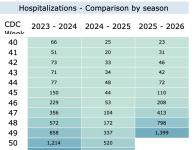
[for influenza the chart below shows hospitalizations are up 72% from last week, with a total of 214 this Season].

New York State Department of Health Respiratory Surveillance Report


The New York State Department of Health (NYSDOH) collects, compiles, and analyzes information on influenza, COVID-19, and RSV activity year-round in New York State (NYS) and produces this weekly report during the respiratory season (October through the following May)1. Data are provisional and subject to change.

During the week ending November 1, 2025

• There were 4 respiratory outbreaks in hospitals and 14 respiratory outbreaks in nursing homes for this reporting period. This represents an increase of 2 hospital and nursing home outbreaks compared with the final data from the previous week. Season to date, a total of 114 viral respiratory pathogen outbreaks have been eported from hospitals and nursing homes.

• There were no influenza-associated pediatric deaths reported this week. No influenza-associated pediatric deaths have been reported this season.

• There were no COVID-19-associated pediatric deaths reported this week. No COVID-19-associated pediatric deaths have been reported this season.

• There were no RSV-associated pediatric deaths reported this week. No RSV-associated pediatric deaths have been reported this season.

• Wastewater surveillance data can be found at https://www.health.ny.gov/environmental/wastewater/.

• As of April 28, 2025, the Health Commissioner declared influenza no longer prevalent in New York State. Accordingly, section 2.59 of the New York State Sanitary

Code (10 NYCRR § 2.59) no longer requires all healthcare and residential facilities and agencies regulated pursuant to Article 28, 36, or 40 of the Public Health Law, to ensure that all personnel, as defined in the regulation, not vaccinated against influenza for the current influenza season wear a surgical or procedure mask while in areas where patients or residents may be present.

Click to enlarge:

Screenshot 2025-11-08 at 1.30.03 PM.png


1 Information about respiratory monitoring in New York City (NYC) is available from the NYC Department of Health and Mental Hygiene website at: https://www.nyc.gov/assets/doh/respiratory-illness-data/index.html#/.

National respiratory surveillance data are available on the CDC’s Respiratory Illness Data Channel website at: https://www.cdc.gov/respiratory-viruses/data/index.html.

2 The Electronic Clinical Laboratory Reporting System (ECLRS) provides laboratories that serve New York State with a single electronic system for secure and rapid transmission of reportable disease information to the New York

State Department of Health (NYSDOH), county health departments, and the New York City Department of Health and Mental Hygiene (NYCDOHMH).

3 Hospitals report weekly the number of patients hospitalized with confirmed influenza, COVID-19, and RSV to the Health Electronic Response Data System (HERDS).

Continued: https://www.health.ny.gov/diseases/...2025-2026/docs/current_respiratory_report.pdf
 
NYS Seasonal Flu Tracker Dashboard

Influenza (also referred to as the “flu”) is a contagious respiratory illness caused by influenza viruses. Seasonal flu epidemics occur yearly during the colder months. Although the yearly impact of the flu varies, it affects the health of New Yorkers each season. Most people who get sick with the flu will have mild illness and will recover in less than two weeks without medical care. Older adults, young children, pregnant women, nursing home residents, and people with asthma, lung disease, heart disease, diabetes, or obesity, are more likely to develop flu-related complications. Getting an annual flu shot, staying home while sick, and washing your hands often help prevent the spread of the flu.

These interactive views display flu cases and hospitalizations associated with the flu each week across New York, in each region and county, and compares trends between seasons. Data can be downloaded at Health Data NY. See Data and Trends for access to the full weekly report. For more information about flu surveillance, please contact RespVirusDOH@health.ny.gov.

Visit www.health.ny.gov/FluMaskReg for information on the flu mask regulation and the current status of the Commissioner’s declaration.


Data Source:
The New York State Department of Health (NYSDOH) conducts seasonal flu surveillance from October through May. Data are updated weekly on Friday by 5 pm during the surveillance season. The data represents counts of persons with laboratory-confirmed influenza (“cases”) and counts of persons with laboratory-confirmed influenza who are hospitalized (“hospitalizations”) and are reported to the NYSDOH. Weekly and season-to-date data are displayed for the current and prior flu seasons.

For more information about this interactive visualization, please contact nysapd@health.ny.gov. For more details on data sources, definitions, and analysis methods, please see the Overview of the NYS Flu Tracker and Definitions.

If a pop-up window opens, it can be closed using ctrl + F4.

Click on images to enlarge


Screenshot 2025-11-08 at 1.49.48 PM.png


Screenshot 2025-11-08 at 1.50.36 PM.png


Screenshot 2025-11-08 at 1.51.16 PM.png


Continued: https://nyshc.health.ny.gov/web/nyapd/new-york-state-flu-tracker
 
During the week ending November 8, 2025

click on image to enlarge


Screenshot 2025-11-16 at 12.42.33 PM.png


• There were 5 respiratory outbreaks in hospitals and 15 respiratory outbreaks in nursing homes for this reporting period. This represents an increase of 1 hospital and nursing home outbreak compared with the final data from the previous week. Season to date, a total of 136 viral respiratory pathogen outbreaks have been reported from hospitals and nursing homes.

• There were no influenza-associated pediatric deaths reported this week. No influenza-associated pediatric deaths have been reported this season.

• There were no COVID-19-associated pediatric deaths reported this week. No COVID-19-associated pediatric deaths have been reported this season.

• There were no RSV-associated pediatric deaths reported this week. No RSV-associated pediatric deaths have been reported this season.

• Wastewater surveillance data can be found at https://www.health.ny.gov/environmental/wastewater/.

• As of April 28, 2025, the Health Commissioner declared influenza no longer prevalent in New York State. Accordingly, section 2.59 of the New York State Sanitary

Code (10 NYCRR § 2.59) no longer requires all healthcare and residential facilities and agencies regulated pursuant to Article 28, 36, or 40 of the Public Health

Law, to ensure that all personnel, as defined in the regulation, not vaccinated against influenza for the current influenza season wear a surgical or procedure mask while in areas where patients or residents may be present.

https://www.health.ny.gov/diseases/...2025-2026/docs/current_respiratory_report.pdf
 
From NYS Flu Tracker
Trends in New York State this Season 2025-2026
Monroe County

# of flu cases (8th week into Season)
week ending 11/15 80
week ending 1122 254

# of hospitalizations (8th week into Season)
week ending 11/15 3
week ending 11/22 13

https://nyshc.health.ny.gov/web/nyapd/new-york-state-flu-tracker

Flu cases starting to spike in Monroe County and across NY
Updated: Nov 29, 2025​

ROCHESTER, N.Y. (WROC) — Monroe County has more reported flu cases than any other upstate county in New York this season — by almost double.

According to the New York State Flu Tracker, Monroe County reported 254 cases for the week ending November 22, up 222% from the previous week.

continued: ​https://www.rochesterfirst.com/news...ting-to-spike-in-monroe-county-and-across-ny/

 
[Elllenville is a small town located in the Catskill mountains. Ellenville is a village within the town of Wawarsing, Ulster County, New York, United States. Its population was 4,167 at the 2020 census.]

Flu Cases Begin to Spike, Ellenville Regional Hospital Reports

December 4, 2025

Recent New York state health data shows that there have been more than 17,700 positive flu cases across New York state this season. Emergency rooms have begun to report a spike in patients coming into the emergency room with flu-like symptoms.

David Williams, Emergency Care PA at Ellenvile Regional Hospital, says that the the hospital has started to see a spike in flu diagnoses after the holidays. “It hasn’t even spiked yet. We’re just getting started,” said Williams.
​-snip-
“It’s definitely a good time to get vaccinated because it’s starting to hit and it’s hitting pretty fast,” he said. Getting the flu vaccine as early as possible is recommended, Williams says, “but listen, getting it any time is better than no time.”​

... https://wjffradio.org/flu-cases-begin-to-spike-ellenville-regional-hospital-reports/
 
New York Capital Region
Hospitals Restrict Visitors as Influenza Rates Spike
DECEMBER 18, 2025​


Albany Med Health System has become the latest hospital system to restrict visitors to patients in their facilities.

The new guidelines went into effect on Dec. 15 and impacted Saratoga Hospital, Glens Falls Hospital, Albany Medical Center and Columbia Memorial Hospital.

Under the new restrictions, children under 12, visitors with flu-like symptoms, rashes and diarrhea are all prohibited from visiting patients. In addition, only two visitors are allowed to visit a patient’s bedside at one time.

-snip-
Albany Med isn’t the first local hospital to implement visitor restrictions. Ellis Medicine implemented similar restrictions on Dec. 3 and Trinity Health System — which includes St. Peter’s Hospital in Albany and Samaritan Hospital in Troy — implemented the restrictions on Dec. 8.

The restrictions come amid a spike in flu cases across New York. As of Dec. 6, there have been 24,287 lab confirmed cases of flu in New York State this season resulting in 1,399 hospitalizations for the virus, according to the Department of Health. Saratoga County alone has seen 134 lab confirmed cases, a rate of 55.75 cases per 100,000 residents. These cases have resulted in 5 hospitalizations.

... https://saratogatodaynewspaper.com/hospitals-restrict-visitors-as-influenza-rates-spike/


During the week ending December 13, 2025

• As of December 2, 2025, the Health Commissioner declared influenza prevalent in New York State. At this time, Section 2.59 of the New York State Sanitary Code (10 NYCRR § 2.59) requires all health care and residential facilities and agencies regulated pursuant to Article 28, 36, or 40 of the public health law to ensure that all personnel, as defined in the regulation, not vaccinated against influenza for the current influenza season wear a surgical or procedure mask while in areas where patients or residents are typically present.

• There were 27 respiratory outbreaks in hospitals and 62 respiratory outbreaks in nursing homes for this reporting period. Season to date, a total of 399 viral respiratory pathogen outbreaks have been reported from hospitals and nursing homes.

• Influenza A is the predominant influenza virus currently circulating in New York State. Of the influenza A specimens subtyped this season, 94% have been influenza A/H3 and 6% have been influenza A/H1.

There was one influenza-associated pediatric death reported this week. One influenza-associated pediatric death has been reported this season.

• There were no COVID-19-associated pediatric deaths reported this week. No COVID-19-associated pediatric deaths have been reported this season.

• There were no RSV-associated pediatric deaths reported this week. No RSV-associated pediatric deaths have been reported this season.

• Wastewater surveillance data can be found at https://www.health.ny.gov/environmental/wastewater/.

Screenshot 2025-12-20 at 3.28.43 PM.png


https://www.health.ny.gov/diseases/...2025-2026/docs/current_respiratory_report.pdf
 
During the week ending December 20, 2025

• As of December 2, 2025, the Health Commissioner declared influenza prevalent in New York State. At this time, Section 2.59 of the New York State Sanitary Code

(10 NYCRR § 2.59) requires all health care and residential facilities and agencies regulated pursuant to Article 28, 36, or 40 of the public health law to ensure that

all personnel, as defined in the regulation, not vaccinated against influenza for the current influenza season wear a surgical or procedure mask while in areas

where patients or residents are typically present.

• There were 55 respiratory outbreaks in hospitals and 79 respiratory outbreaks in nursing homes for this reporting period. Season to date, a total of 549 viral

respiratory pathogen outbreaks have been reported from hospitals and nursing homes.

• Influenza A is the predominant influenza virus currently circulating in New York State. Of the influenza A specimens subtyped this season, 95% have been

influenza A/H3 and 5% have been influenza A/H1.

• There were no influenza-associated pediatric deaths reported this week. One influenza-associated pediatric death has been reported this season.

• There were no COVID-19-associated pediatric deaths reported this week. No COVID-19-associated pediatric deaths have been reported this season.

• There were no RSV-associated pediatric deaths reported this week. No RSV-associated pediatric deaths have been reported this season.

• Wastewater surveillance data can be found at https://www.health.ny.gov/environmental/wastewater/

Screenshot 2025-12-28 at 11.53.54 AM.png


https://www.health.ny.gov/diseases/...2025-2026/docs/current_respiratory_report.pdf
 
Back
Top