• FluTrackers.com Inc. does not provide medical advice. Information on this web site is collected from various internet resources, and the FluTrackers board of directors makes no warranty to the safety, efficacy, correctness or completeness of the information posted on this site by any author or poster. The information collated here is for instructional and/or discussion purposes only and is NOT intended to diagnose or treat any disease, illness, or other medical condition. Every individual reader or poster should seek advice from their personal physician/healthcare practitioner before considering or using any interventions that are discussed on this website. By continuing to access this website you agree to consult your personal physican before using any interventions posted on this website, and you agree to hold harmless FluTrackers.com Inc., the board of directors, the members, and all authors and posters for any effects from use of any medication, supplement, vitamin or other substance, device, intervention, etc. mentioned in posts on this website, or other internet venues referenced in posts on this website.
  • We are not asking for any donations. Do not donate to any entity who says they are raising funds for us.

New Orthobunyavirus of the Simbu serogroup discovered in cattle in Switzerland, Germany and France

Pathfinder

Editor, Senior Moderator
Translation Google

A disease of unknown origin is spreading among dairy cows

AFP

Reports of fever, diarrhea and a marked drop in milk production are multiplying in Swiss farms, without the cause of this disease yet being known, federal authorities indicated on Wednesday.

Updated: 01.08.2026 07:23

The Federal Office for Food Safety and Veterinary Affairs (Focus) " is aware of reports of an increase in cases of disease in dairy cows ".

" Several animal owners are reporting fever and diarrhea, often accompanied by a marked drop in milk production," but "the cause has not yet been identified ," he said in a statement.

Investigations are underway to examine "both metabolic and possible infectious causes".

" To date, no pathogen has been identified as an infectious cause " and "no direct link between the current heat wave and the reported cases of diarrhea has been established ," the Osav stated.

But he points out that " high temperatures nevertheless represent a significant burden, particularly for high-yield dairy cows, and can make them more vulnerable to disease ."

Like other European countries, Switzerland has been experiencing repeated heat waves in recent weeks, accompanied by a significant rainfall deficit.

The Osav reminds us that during periods of high heat, animals must be systematically protected against heat stress, in particular by ensuring they have enough water, shaded areas and appropriate cooling measures.

Furthermore, he points out that non-specific symptoms such as fever, diarrhea or a drop in milk production " can also be a sign of a highly contagious epizootic" .

Therefore, the Osav calls on animal owners to " immediately inform their veterinarian so that the necessary examinations can be carried out, if necessary ".

https://infos.rtl.lu/news/monde/une...se-propage-chez-les-vaches-laitieres-96085279

------------------------------------------------------------------------------------------

image.png


Information published on July 31, 2026

Diseases in dairy cows: the FSVO is monitoring the situation

Reports of fever, diarrhea, and sharp drops in milk production are increasing among dairy cows. Investigations involve veterinarians, industry representatives, universities, laboratories, and veterinary authorities.

The Federal Food Safety and Veterinary Office (FSVO) is aware of reports of an increase in cases of illness among dairy cows. Several animal owners are reporting fever and diarrhea, often accompanied by a significant drop in milk production. The cause has not yet been identified. Investigations are underway to examine both metabolic and potential infectious causes. These investigations are being conducted in collaboration with practicing veterinarians, Swiss Cattle Health, veterinary medicine faculties and laboratories, as well as veterinary authorities.

To date, no pathogen has been identified as the infectious cause. No direct link between the current heat wave and the reported cases of diarrhea has been established. However, high temperatures represent a significant burden, particularly for high-producing dairy cows, and can make them more susceptible to disease.

During periods of intense heat, animals must therefore be systematically protected against heat stress, in particular by ensuring they have sufficient water, shaded areas and appropriate cooling measures.

Nonspecific symptoms such as fever, diarrhea, or decreased performance can also be signs of a highly contagious epizootic disease. Pet owners should therefore inform their veterinarian immediately so that any necessary tests can be carried out.

The Federal Food Safety and Veterinary Office (FSVO) is monitoring the situation with the relevant specialist services and is constantly reassessing it. If further measures become necessary, they will be considered.

https://www.blv.admin.ch/fr/maladies-chez-les-vaches-laitieres-losav-suit-levolution

​​
 
Source: https://www.cp24.com/news/world/2026/08/03/swiss-cows-struck-by-mystery-illness/

Swiss cows struck by mystery illness
By AFP
Published: August 03, 2026 at 3:23PM EDT​

GENEVA - A virus spread by biting midges never before seen in Switzerland is thought to be responsible for a surge in sickness in Swiss dairy cows, authorities said Monday.

Several regions of the Alpine country have recorded a spike in illnesses since mid-July, with cows suffering from fever and diarrhoea and producing less milk, the Federal Food Safety and Veterinary Office (FSVO) said.

“Investigations by the Institute of Virology and Immunology (IVI) have detected an orthobunyavirus of the Simbu group in several acutely ill animals -- a virus previously unknown in Switzerland,” the FSVO said.

Genetic testing is under way to determine the exact orthobunyavirus and whether it is the cause of the observed illnesses, the office added.

Orthobunyaviruses of the Simbu group are primarily transmitted by biting midges, and no vaccines are currently available, the FSVO said.

The IVI said its preliminary findings align with evidence from France and Germany, “where the suspicion that an orthobunyavirus is circulating... is also gaining traction.”​...
 
image.png


Translation Google

Published on August 3, 2026

New Orthobunyavirus of the Simbu serogroup discovered in cattle

The IVI has detected an orthobunyavirus from the Simbu serogroup, related to the Schmallenberg virus, in samples from cattle exhibiting fever, diarrhea, and reduced milk production. This strengthens the evidence for the first occurrence of another virus from this group in Switzerland since the initial Schmallenberg virus outbreak in 2012.
kerzers%202%20web.jpg

The IVI's preliminary findings align with evidence from France and Germany, where the suspicion that an orthobunyavirus of the Simbu serogroup is circulating is also gaining traction. Initial characterizations using next-generation sequencing (NGS) at the FLI show a high degree of relatedness to the Shamonda virus. Viruses of the Simbu serogroup, which also includes the Schmallenberg virus, are found primarily in Africa, Asia, and Australia and, similar to the bluetongue virus, are transmitted by blood-sucking midges of the genus Culicoides.

It is currently unclear whether there is a connection between the current heat wave and the reported cases of illness. However, high temperatures pose a significant stress, especially for high-yielding dairy cows, and can make the animals more susceptible to disease.

Observed clinical symptoms:

Nearly all affected cattle farms report a disease event lasting approximately 14–21 days . The most common clinical symptoms are:

  • Fever (>40 °C) lasting 1–2 days
  • Massive decline in milk supply
  • Loss of appetite
  • Diarrhea
Sample material to be submitted
  • Viral genome detection (RT-qPCR) of newly ill, febrile animals:
    - Live animal: EDTA blood or serum
    - Dead animal: brain, spleen, body cavity fluid
  • Antibody detection (ELISA)
    - Live animal: Serum
    - Dead animal: Body cavity fluid
...

https://www.ivi.admin.ch/de/neues-orthobunyavirus-der-simbu-serogruppe-bei-rindern-entdeckt
----------------------------------------------------------------------------------------------------------------------------

FLI detects a new orthobunyavirus of the Simbu serogroup (“Shamonda-like”) in cattle in Germany


08/03/2026

Press Releases

The Friedrich-Loeffler-Institut (FLI) has detected a previously uncharacterised orthobunyavirus of the Simbu serogroup in samples from affected cattle in southern Germany. Following the first appearance of the Schmallenberg virus in 2011, this once again provides reliable evidence that a new virus from this group has been introduced into Germany. The newly detected virus shows the closest relationship to the Shamonda virus in all three segments. Viruses of the Simbu serogroup are found primarily in Africa, Asia and Australia. Like bluetongue virus and Schmallenberg virus, they are transmitted by blood-sucking midges of the genus Culicoides. The animals most commonly infected are ruminants, particularly cattle, sheep and goats.

Cases were first detected in cattle in Switzerland, France and southern Germany, particularly in Baden-Württemberg. The affected animals showed signs of fever and diarrhoea. In dairy cows, a decline in milk yield – in some cases significant – was also observed. These clinical signs have been observed in numerous animals and herds since July. The clinical signs were initially consistent with infection by the Schmallenberg virus. However, tests for Schmallenberg virus, as well as for other known pathogens such as bluetongue virus or epizootic haemorrhagic disease virus, proved negative.

Samples from four affected cattle herds were submitted to the FLI by the local state veterinary laboratory (Chemisches und Veterinäruntersuchungsamt Freiburg). Within 48 hours, the samples had been analysed and the pathogen further characterised. A Pan-Simbuvirus PCR revealed clear positive signals in several serum and blood samples from different farms, with Ct values of up to around 20. This indicates high viral loads at the time of sampling. Further PCR tests for viruses in this group also yielded positive results.

Whole-genome sequencing revealed that all three genome segments showed the highest sequence similarity to Shamonda viruses (at the amino acid level: S: 99 %; M: 95 %; L: 97 %). Whilst the S and L segments are also closely related to Schmallenberg virus, the M segment – which is particularly relevant for antigenicity and the immune response – shows a significantly lower degree of similarity (<50 %). The final taxonomic classification of the virus is currently pending.

Infections with viruses of the Simbu serogroup generally lead to a brief period of viraemia and only mild to moderate clinical signs in adult animals. Of particular significance, however, is the potential transmission to the foetus during pregnancy. Depending on the timing of the infection, abortions, stillbirths and severe congenital malformations may occur. In the case of e Schmallenberg virus, sheep were particularly affected by this. In some flocks, malformation was observed in up to 50 % of the offspring. In cattle, foetal malformations were less pronounced.

As regards the newly identified ‘Shamonda-like’ virus, it is not yet possible to assess whether, and to what extent, infections in pregnant animals may lead to malformation in the foetuses. Abortions, stillbirths and malformed calves or lambs from herds that may be affected should therefore be examined.

Depending on the weather, the midge season in Germany lasts until around the end of November. Midge activity is usually at its peak between July and October. Given the generally efficient transmission by midges, a further and potentially rapid spread of the virus within susceptible herds is therefore anticipated.

Viruses of the Simbu serogroup are not generally considered to be zoonotic agents and, based on current knowledge, do not pose a significant risk of infection to humans. However, in the case of newly emerging and insufficiently characterised viruses in this group, their potential zoonotic risk should be investigated as a precautionary measure and closely monitored as the situation develops.

The FLI is giving high priority to the complete characterisation of the pathogen, the epidemiological tracing of cases, and the adaptation and development of specific diagnostic methods. “Following the 2011 Schmallenberg virus outbreak, an exotic orthobunyavirus has once again been introduced into Central Europe. Investigations over the coming weeks will reveal how rapidly it is spreading, which animal species are particularly affected, and what clinical consequences can be expected. Of crucial importance is the question of whether infections during pregnancy lead to foetal malformation,” said Prof. Dr. Martin Beer, Vice-President of the Friedrich-Loeffler-Institut. In principle, vaccines can be developed against orthobunyaviruses. However, this requires sufficient lead time. The necessity and urgency of vaccine development will depend largely on the clinical and, in particular, reproductive significance of the newly introduced virus.

Database access to sequence information on the new ‘Shamonda-like virus’:
ASSEMBLY_NAME | ASSEMBLY_ACC | STUDY_ID | SAMPLE_ID | CONTIG_ACC | SCAFFOLD_ACC | CHROMOSOME_ACC amp07736 | GCA_987215895 | PRJEB123174 | ERS31023854 | | | OZ502471-OZ502473

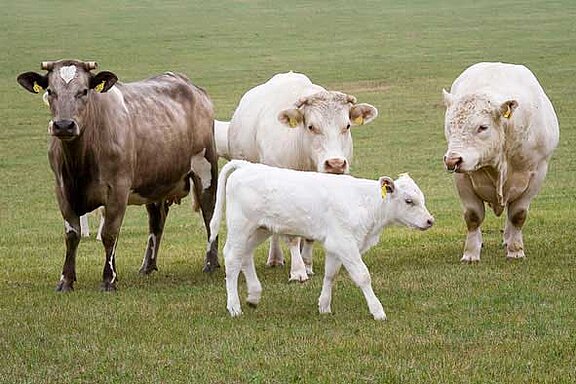
csm_Kuh-Familienbild_2014_305b841e08.jpg

Cattle family (© FLI )

For download
https://www.fli.de/en/press/press-r...serogroup-shamonda-like-in-cattle-in-germany/
 
Translation Google
​​

image.png


vignette%20vache%20stabulation%2019147_058.jpg.webp

Xavier Remongin / agriculture.gouv.fr

August 7, 2026 Info +

Cases of orthobunyavirus infection in dairy cows


The emergence of a new Shamonda-type orthobunyavirus (SHAV) was detected at the end of July on about ten dairy farms in the departments of Doubs, Jura, Ain, Haute-Savoie and Savoie. The situation is evolving.

Its impact is currently considered minor in the affected farms. In this respect, this virus is not similar to the bovine lumpy skin disease virus, which has far more significant effects on cattle health.

The Ministry of Agriculture is closely monitoring the evolution of the orthobunyavirus epizootic in collaboration with scientists and professional organizations.


Pathogen

Shamonda virus is an orthobunyavirus transmitted by biting midges (culicoides), closely related to the viruses of the Simbu serogroup, to which also belong the Schmallenberg disease virus (SBV) and the Akabane virus (AKAV).

Distribution area

The Shamonda virus was first detected in Nigeria in the mid-1960s and, until 2026, had been reported sporadically in West, East, and Southern Africa, as well as in Japan. In the summer of 2026, it appeared for the first time in Germany, Switzerland, and France.

Animal species concerned

Cattle are considered the most widespread hosts. Small ruminants could also be hosts of the virus.

Transmission

As with other viruses of the Simbu serogroup, transmission occurs primarily through midges of the genus Culicoides. This is the same vector as for bluetongue virus and epizootic hemorrhagic disease virus.

There is no evidence of significant direct animal-to-animal transmission, except for vertical transmission from mother to offspring during gestation.


Health risk to humans

This virus is not transmissible to humans and therefore does not present an impact on public health, particularly on the consumption of milk or meat.

Clinical signs

Affected cattle exhibit an acute infection phase characterized by subtle clinical signs such as fever, decreased milk production, and diarrhea. These signs are transient in most cases.
A second clinical phase could appear if the infection occurs in a pregnant female, causing abortions and significant fetal malformations, as with Schmallenberg disease.


Regulation

HAV is not a categorized disease under the European Union's Animal Health Act (AHA) and is not subject to any official surveillance or control measures. This infection is also not regulated internationally by the World Organisation for Animal Health (OIE).

Struggle

The most effective control measures rely on protecting herds from insect vectors in order to reduce the risk of infection (elimination of egg-laying sites such as liquid effluents and stagnant water areas, disinsection of means of transport).

No vaccine is currently available. There is no treatment (virucide) to eliminate the virus in animals. Culling is not mandated by regulations in cases of infection.


Recommendations for farmers and veterinarians

If the acute symptoms described above (decreased milk production, fever and diarrhea) appear in cattle during the period of activity of the insect vectors, it is recommended that the farmer contact his veterinarian to provide the necessary care (so-called "symptomatic" treatment).

Secondly, it is recommended to monitor for any potential impacts on reproduction (decreased fertility, abortion, etc.). Newborn calves showing clinical signs should also be examined.
In the event of an abortion, it is recalled the need to carry out a test for brucellosis.


https://agriculture.gouv.fr/cas-dinfections-de-vaches-laitieres-par-un-orthobunyavirus
 
Translation Google

New bovine virus identified thanks to European collaboration

By Sciences et Avenir with AFP on 06.08.2026 at 3:13 PM

A new virus that has emerged in cattle in France, Switzerland, and Germany is causing outbreaks of fever and diarrhea on several farms. This orthobunyavirus is not transmissible to humans, and its impact remains limited at this stage. Jean-Luc Guérin, professor at the National Veterinary School of Toulouse and researcher at INRAE, explains what is known about this new disease.

A new bovine virus belonging to the orthobunyavirus family has been identified in France, Switzerland, and Germany following several cases of fever and diarrhea in cows. Transmitted by small biting insects, this Shamonda-type virus is not dangerous to humans or for milk consumption. Its impact remains limited at this stage, despite temporary decreases in milk production and a possible influence on animal reproduction. Jean-Luc Guérin, professor at the National Veterinary School of Toulouse and researcher at INRAE, explains what is known about this new disease.

How did the virus appear?

This is a phenomenon that has developed gradually over several weeks. It will be difficult to trace its precise origin, but the virus seems to have developed in eastern France, particularly in the Alps, during the month of July, before circulating in Switzerland and southern Germany.

This area is particularly focused on dairy farming, with farmers who are very attentive to the health of their animals. Last year, at the same time, they had already faced lumpy skin disease and its significant consequences. This experience has heightened their vigilance and likely facilitated the rapid detection of the first cases.

However, the high temperatures have been a source of confusion, as they too can lead to a decrease in milk production.

This virus does not appear to correspond to a strain that has circulated internationally and has already been identified in genetic databases. It seems to be transmitted by small midges, which may have benefited from particularly favorable climatic conditions.

Detection required significant collaboration with veterinarians to identify the correct animals and collect the appropriate samples. The observed production declines remain temporary, generally lasting a few days before returning to normal. At this stage, the virus does not appear to cause severe illness in animals.

We are currently under considerable pressure and will be conducting analyses in several dozen farms to better understand the spread of this virus.

How was the virus identified?

From the samples received a week ago, we identified, at the end of last week, a virus close to the Schmallenberg virus, well known in the beef industry since its appearance in Europe in 2011. It belongs to the orthobunyavirus family.

To identify it, we used a metagenomics approach, a method that allows massive sequencing of samples in order to detect possible unknown infectious agents.

In recent years, technological advances have significantly improved our detection capabilities. We now have tools and laboratories capable of rapidly analyzing situations involving the emergence of unexpected diseases and obtaining results within days.

This weekend, we confirmed the presence of the virus in parallel with our German and Swiss colleagues. Only a few days elapsed between the initial diagnosis and obtaining the complete genetic sequences, which were then shared across Europe.

Rapid response is therefore crucial: starting next week, diagnostic solutions will be deployed in field laboratories across the various departments. A significant research effort is also underway to share knowledge and gain a better understanding of this virus at a European level.

What are the next steps?

Management remains relatively simple, as the observed clinical signs are mild. Since it is a viral illness, treatments are primarily symptomatic, including the use of anti-inflammatory drugs when necessary.

It will now be necessary to closely monitor the potential effects of the virus on animal reproduction, particularly the risks of abortions or fetal malformations.

Research by companies specializing in vaccine development has already begun, but developing a solution will take several months.

We must remain vigilant: there is indeed a phenomenon observed in the field that requires informing farmers and continuing monitoring. But there is no reason to panic.

https://www.sciencesetavenir.fr/nat...ie-grace-a-la-collaboration-europeenne_194143
 
Back
Top