• FluTrackers.com Inc. does not provide medical advice. Information on this web site is collected from various internet resources, and the FluTrackers board of directors makes no warranty to the safety, efficacy, correctness or completeness of the information posted on this site by any author or poster. The information collated here is for instructional and/or discussion purposes only and is NOT intended to diagnose or treat any disease, illness, or other medical condition. Every individual reader or poster should seek advice from their personal physician/healthcare practitioner before considering or using any interventions that are discussed on this website. By continuing to access this website you agree to consult your personal physican before using any interventions posted on this website, and you agree to hold harmless FluTrackers.com Inc., the board of directors, the members, and all authors and posters for any effects from use of any medication, supplement, vitamin or other substance, device, intervention, etc. mentioned in posts on this website, or other internet venues referenced in posts on this website.
  • We are not asking for any donations. Do not donate to any entity who says they are raising funds for us.

Netherlands - Q fever outbreak - 20+ deaths

Re: Netherlands - Q fever outbreak - 11 deaths

Re: Netherlands - Q fever outbreak - 11 deaths

In the meantime, the Department of Agriculture took new samples, they were positive, tomorrow they will ask permission of the judge to proceed with the culling.


Edit: permission was granted.

http://nos.nl/artikel/134765-landbouw-wil-toch-ruimen-in-belfeld.html

Q FEVER - NETHERLANDS (11): CULLING DISPUTE
*******************************************
A ProMED-mail post
http://www.promedmail.org
ProMED-mail is a program of the
International Society for Infectious Diseases
http://www.isid.org

******
[1]
Date: Fri 05 Feb 2010
Source: The Dutch News [edited]
http://www.dutchnews.nl/news/archives/2010/02/goat_cull_halted_after_q_fever.php


Goat cull halted after Q fever test problems
--------------------------------------------
The slaughter of hundreds of goats on an intensive goat farm in
Limburg was halted following a court order on Friday [5 Feb 2010]
because test results for Q fever were inconclusive. It is the 1st time
a court has stopped the cull procedure, which covers all pregnant
goats on farms where Q fever has been found.

The farm owner applied for an injunction to head off the cull after
tests for the disease came up with conflicting results. He wants vets
to take new samples and have them tested in different laboratories to
find out if his herd really is carrying Q fever.

The judge will explain his ruling on Monday, news agency ANP reported.


******
[2]
Date: Fri 5 Feb 2010
Source: Agrarisch Dagblad [trans. Mod.AS, edited]
http://www.agd.nl/1094606/Nieuws/Artikel/LTO-Onderzoek-melktank-anders-beoordelen.htm


LTO: Different view on the value of bulk milk testing results
-------------------------------------------------------------
LTO Netherlands [the Dutch Federation of Agriculture and Horticulture,
an entrepreneurial and employers' organisation] wishes the declaration
of a farm as Q fever infected, based upon a single positive test, to
be cancelled.

The milk tanks of goat and sheep dairy farms are sampled and tested
every 2 weeks. It occurs that plants are found repeatedly negative,
but following a single positive test they are culled. According LTO
Netherlands, there have been more cases similar to the one in Belfeld.
In those cases, a single positive test led to culling. In the current
case, the court denied the killing of the animals.

According to the spokesman of Minister Gerda Verburg [Agriculture],
LTO is also aware that 2 milk samplings undergo 3 tests. In the
Belfeld case, the owner requested an additional test of the goats'
milk; according to the Ministry, this complementary test did not
produce unequivocal results. This was the background to Friday's court
decision to suspend the culling, requesting additional investigation.
The plant is still officially declared infected.

Toon van Hoof, the holder of the animal health portfolio in LTO,
believes that experts should come forward with a proposal addressing
the variation in the results of the so-called bulk milk tests.


[The application of PCR for the identification of _Coxiella burnetii_
infection in milk from dairy animals was initially published in the
early 90's, addressing cow's milk. Later, it was applied in testing of
bulk milk samples and in other species.

According to a 2005 paper (Ref 1), 316 bulk tank milk samples from
dairy herds in the United States were PCR-tested during a 3-year
period (from January 2001 to December 2003) by using trans-PCR.
Positive results were confirmed by nested PCR and DNA sequencing. The
overall prevalence of _C. burnetii_ in the tested samples was 94.3
percent with little variation (93.2 to 94.7 percent) from year to
year. Samples from New York State did not show significant variation
from other states, which indicated, according to the authors, that _C.
burnetii_ infection in the dairy herds was persistent or steady, with
little temporal or regional variations, suggesting that _C. burnetii_
infections in dairy herds "are common throughout the United States."


Throughout the recent decade, PCR was applied in the detection of _C.
burnetii_ in milk of small ruminants (sheep and goats) in several
countries, including bulk milk samples (see Ref 2). Its application in
the Netherlands, within a "test and slaughter" policy, is -- to the
best knowledge of this moderator -- unique.

According to the Dutch daily De Telegraaf, the dairy goat operation in
Belfeld includes 2700 animals; the newspaper does not disclose how
many of them are pregnant, to be culled in line with the current policy.


( 2000 were pregnant, half of them delivered untill now, ed.)

References
----------
1. Kim SG, Kim EH, Lafferty CJ, Dubovi E. (2005). _Coxiella burnetii_
in bulk tank milk samples, United States. Emerg Infect Dis. ;11: Vol.
11, No. 4, April 2005 619 - 621.
http://www.cdc.gov/NCIDOD/eid/vol11no04/pdfs/04-1036.pdf

2. A. Rodolakis, M. Berri, C. He'chard, C. Caudron, A. Souriau, C. C.
Bodier, B. Blanchard, P. Camuset, P. Devillechaise, J. C. Natorp, J.
P. Vadet, and N. Arricau-Bouvery (2007). Comparison of _Coxiella
burnetii_ Shedding in Milk of Dairy Bovine, Caprine, and Ovine Herds.
J. Dairy Sci. 90:5352*5360.
http://jds.fass.org/cgi/reprint/90/12/5352.
- Mod.AS]

http://www.promedmail.org/pls/otn/f..._BACK_PAGE,F2400_P1001_PUB_MAIL_ID:1000,81230
 
Re: Netherlands - Q fever outbreaks - 11 deaths

Re: Netherlands - Q fever outbreaks - 11 deaths

Q FEVER - NETHERLANDS (12): 3 NEW OUTBREAKS
*******************************************

Date: Fri 12 Feb 2010

Source: Dutch Ministry of Agriculture press release [in Dutch, trans.
Mod.AS, edited]

http://www.minlnv.nl/portal/page?_pageid=116,1640333&_dad=portal&_schema=PORTAL&p_news_item_id=25078


Q-fever infection in Hilvarenbeek, Esch, and Liessel
----------------------------------------------------
A total of 3 dairy goat farms, in Hilvarenbeek, Esch and Liessehave,
been declared as Q-fever infected. In Hilvarenbeek, this refers to a
farm including 1050 dairy goats, in Esch 3000 and in Liessel 1030
dairy goats. The declaration followed the identification of the Q
fever bacterium in each of the 3 farms in 2 separate tests, performed
in both the Animal Health Service (GD) laboratory as well as in the
Central Veterinary Institute (CVI), in 2 different milk samples.

The Food and Consumer Product Safety Authority (VWA) of the Ministry
of Agriculture, Nature and Food Quality (LNV) has placed warning
signs on the farms. The full addresses and the locations of the
infected farms will be made public on the web-site of the VWA.


[In total, 71 dairy farms have been found infected with _Coxiella
burnetii_ in the Netherlands since October 2009, of which there are
70 goat farms and one sheep farm. The total number of commercial
dairy goat and sheep farms in the Netherlands is approximately 450.

All pregnant animals on the 1st 68 infected farms have been culled,
to be followed by the pregnant goats in the 3 newly-added farms.
These 3 farms are located in the province North Brabant, the Dutch
province with the highest density of dairy goats. The total number of
culled animals will have exceeded, by now, 40 000.

The detailed list and map of 68 Q-fever infected farms, as of 8 Feb
2010, are available at:
http://www.vwa.nl/portal/page?_page...ent_id=932575&p_node_id=2167182&p_mode=BROWSE.

Bulk milk tests (PCR) of dairy goat and sheep farms with more than 50
milking animals have become compulsory in the Netherlands as of 1 Oct
2009. On 14 Dec 2009 it became a requirement to perform the sampling
and test every 2 weeks instead of the previously requirement of every
2 months. The change was explained by the possibility that the
excretion of the bacterium may be intermittent.

According to the official policy, initial testing is carried out by
the regional animal-health service (GD) laboratory; if found
positive, a visit is paid to the farm, the issue explained to the
owners, guidelines provided and a 2nd sample taken, sent for
confirmation to the Central Veterinary Institute in Lelystad. If
confirmed, the farm is declared officially infected.

The Netherlands notified the OIE of 63 Q fever outbreaks in dairy
goats on 13 Jan 2010; the reason for notification was "unexpected
increase in incidence of a listed disease." The immediate
notification is available at:
http://www.oie.int/wahis/public.php?page=event_summary&reportid=8842>.
- Mod.AS]

http://www.promedmail.org/pls/otn/f..._BACK_PAGE,F2400_P1001_PUB_MAIL_ID:1000,81360
 
Re: Netherlands - Q fever outbreaks - 11 deaths

Re: Netherlands - Q fever outbreaks - 11 deaths

This article from Canada on a Q-fever outbreak in New Foundland 1999, published in 2001, describes exactly what happened and still happens in the Netherlands. Only difference is: in the Netherlands same thing is happening on a much bigger scale.

Your receipe for a human Q-fever outbreak:

goats+leave the straw and manure in the stable (with billions of bacteria), pile up+spread the manure on the land later+let it dry and let the dust (with bacteria) go with the wind = Q fever at humans.

This happened in New Foundland, this is what happened in the Netherlands.

Goat-Associated Q Fever: A New Disease in Newfoundland

http://www.cdc.gov/ncidod/EID/vol7no3/pdfs/hachette.pdf
 
Re: Netherlands - Q fever outbreaks - 11 deaths

Re: Netherlands - Q fever outbreaks - 11 deaths

Q FEVER - NETHERLANDS (13): HUMAN, ANIMAL
*****************************************

******
[1] Ovine, caprine

Date: Tue 16 Feb 2010
Source: Agrarisch Dagblad [in Dutch, trans. Mod.AS, edited]
http://www.agd.nl/1095261/Nieuws/Artikel/Tweede-melkschapenbedrijf-besmet-met-Q-koorts.htm


2nd dairy sheep plant with Q fever
----------------------------------
The Food and Consumer Product Safety Authority (VWA) announced that a
dairy sheep farm in Stolwijk, South Holland, has been declared Q-fever
infected. It is the 2nd dairy sheep plant declared infected in the
Netherlands [since 1 Oct 2009]. In January [2010], a dairy sheep farm
in Kraggenburg was found infected.

In addition, another dairy goat farm in Haren, North Brabant, has now
been declared infected. The current total number of Q-fever infected
farms found in the Netherlands [since 1 Oct 2009], is 73 [of which 71
are dairy goat farms].

******
[2] Human

Date: Thu 11 Feb 2010
Source: AgriHolland [in Dutch, trans. & summ. Mod.AS, edited]
http://www.agriholland.nl/nieuws/artikel.html?id=111875


11 new Q fever patients so far in 2010

--------------------------------------
According to the Dutch National Institute for Public Health and the
Environment (RIVM), 136 new human cases of Q fever have been reported
in the country during the current year [2010]. In 11 of the patients,
the onset of disease took place during 2010 and it is assumed that
they had been infected within the previous weeks. The dates of onset
of disease in the other patients are not known, but are considered to
have taken place during 2009 or even earlier. Many people report their
health complaints to their family doctors only now, following the
disease becoming a news item [eventually leading to serological
confirmation. The incubation period for acute Q fever in humans varies
from 2 to 48 days; the typical incubation period is approximately 2 to
3 weeks. Chronic Q fever can occur from months to years after
infection. - Mod.AS]

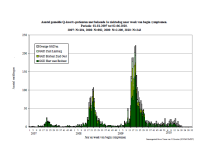
[An epidemic curve graph, showing the number of reported Dutch Q fever
patients by week of onset for the period 1 Jan 2007-10 Feb 2010, is
available at
http://www.rivm.nl/cib/binaries/Epicurve Q-koorts_tcm92-59728.pdf.

The cases are presented according to the relevant Community Health
Services (GGD): dark green - "Hart voor Brabant" (NE Brabant); medium
green - SE Brabant; light green - South Limburg; gray - others. The
annual total numbers - 2007: N=194, 2008: N=980, 2009: N=2267, 2010:
N=11.

According to a recent literature search, 53 lab-confirmed outbreaks of
Q fever in humans have been published during the years 1981-2007. The
following 6 countries experienced the largest number of confirmed
outbreaks: Germany (9), France (6), Australia (5), Canada (5), UK (5),
USA (5). The remaining 18 outbreaks were reported from various parts
of the globe. In 26 of the 53 outbreaks, sheep were regarded as source
of infection; goats in 6. Among the other animal sources, cats were
suspected in 3 smaller outbreaks. Larger outbreaks were reported from
East European countries, but lab confirmation was not available.

_C. burnetii_ can infect many species of domestic animals and
wildlife; in many species, the infection appears to be asymptomatic.

Its reservoirs may be only partially known. Sheep, goats, and cattle
seem to be the most common domesticat animal reservoirs. Wild rodents
may be important reservoirs in some areas, and cats -- particularly
following parturition -- are suspected in urban outbreaks. _C.
burnetii_ has also been isolated from dogs, rabbits, horses, pigs,
camels, buffalo, deer, pigeons, swallows, parrots, crows, geese, and
other mammals and birds. Antibodies have been found in coyotes,
raccoons, opossums, badgers, jackrabbits, black bears, musk oxen and
other species. There are also reports of _C. burnetii_ in fish and
snakes. - Mod.AS]

http://www.promedmail.org/pls/apex/..._BACK_PAGE,F2400_P1001_PUB_MAIL_ID:1000,81409

Comment :

many animals and birds and even fish can be a reservoir for the CB or Q-fever bacteria. This does not mean all these animals are a threat for human health. These other animals may infect domestic animals like sheep or goats, which can infect humans.
 
Re: Netherlands - Q fever outbreaks - 11 deaths

Re: Netherlands - Q fever outbreaks - 11 deaths

Q FEVER - NETHERLANDS (15): TWO NEW OUTBREAKS, UPDATE
*****************************************************
A ProMED-mail post
http://www.promedmail.org

******
[1]
Date: Fri 19 Feb 2010

Source: AgriHolland [Trans. Mod.AS, edited]

http://www.agriholland.nl/nieuws/artikel.html?id=112165


Q-fever infections in Lunteren and Zuidermeer
---------------------------------------------
A total of 2 new farms have been declared to be infected with Q-fever.
This relates to a dairy goat farm in Lunteren (Gelderland province)
with approximately 1160 animals and a dairy goat farm in Zuidermeer,
in the North-Holland municipality of Koggenland with 850 animals. The
pregnant animals on the infected farms are to be culled.

There are currently 75 officially declared Q-fever infected dairy
farms in the Netherlands, 73 of goats and 2 of sheep. The Food and
Consumer Product Safety Authority (VWA) of the Ministry of Agriculture
put warning signs on the 2 new farms.

The Ministers of Health and Agriculture have sent letters with
information to all those living in the area of 5-km [3 mile] radius
around the 2 farms. For the Lunteren farm this relates to the
residents of the municipalities Barneveld, Ede, Renswoude,
Scherpenzeel and Veenendaal. For the farm in Zuidermeer, it concerns
the residents of the municipalities Koggenland, Beemster, Hoorn,
Medemblik and Opmeer.

A list of all Q-fever infected farms in the Netherlands, and a map,
are available on the web-site of the VWA.


[The farm in Koggenland is the 1st to be infected in the province of
North Holland; only 2 Dutch provinces, Friesland and Zeeland, now
remain free of Q fever in dairy goat or dairy sheep farms. The
authority's forecast was that up to a third of all such commercial
farms in the Netherlands may eventually be found infected, namely up
to 130 farms.

Since end December 2009, about 41 000 goats and sheep have been
culled. According to a recently cited statement by a researcher in the
Central Veterinary Institute, no culling will be necessary in 2011. -
Mod.AS]


******
[2]
Date: Sat 20 Feb 2010 (accessed)

Source: A letter from the Ministers of Agriculture and of Health to
the Dutch Parliament on the Q-fever situation, dated 16 Feb 2010.


[Trans. Mod.AS, summarised and edited].
http://www.minlnv.nl/pls/portal/url/page/minlnv/actueel/voorlooppagina?p_file_id=51083


[The letter included, inter alia, replies to queries from MP's
(members of Parliament). The following 6 replies have been selected
due to their significant additions to available information. - Mod.AS]

1. Information requested on the possible relationship between clusters
of sick people and non-dairy farms (including mutton-type sheep).


The information on possible role of mutton-sheep in human infection
will be forwarded to the House as soon as scientific advice is obtained.

2. Requested information concerning the updated policy of animal vaccination.

According to the published regulations, all goats and sheep present on
farms which are to be vaccinated compulsorily, should be vaccinated
before 1 Jan 2011. To make sure that such vaccination is performed
prior to gestation in milk-producing and breeding farms, the final
date in this category of farms has been modified, becoming 1 Jun 2010.

3. What is the Q fever situation in other [EU] Member States?

We refer you to the recent publication of the European Food Safety
Authority (EFSA), named 'THE COMMUNITY SUMMARY REPORT ON TRENDS AND
SOURCES OF ZOONOSES AND ZOONOTIC AGENTS AND FOOD-BORNE OUTBREAKS IN
THE EUROPEAN UNION IN 2008', which was published on 28 Jan 2010. The
report paid specific attention to Q fever and to the occurrence of the
bacterium in various member states
(http://www.efsa.europa.eu/en/scdocs/scdoc/1496.htm). In addition,
the European Commission (EC) has requested EFSA to provide, in the
near future, scientific advice concerning Q fever. This advice will
cover the incidence of the disease in man and animal in Europe, a well
as the risk factors and the potential ways to control the disease.

4. In reply to a query on research and investigation during the
culling procedures:


Studies concerning the vaccine have shown that it reduces the
infection rate, abortion incidence and dissemination of the pathogen
by infected animals. At present, information is gathered by sampling
various tissues and organs, such as amniotic fluids and placentas from
the culled animals, which may come from vaccinated as well as from
unvaccinated farms. These samples will be tested for the presence of
the Q fever bacterium. This may provide knowledge concerning the
efficiency of the vaccine within the Dutch circumstances.

5. Regarding notified human cases of Q fever during 2010:

RIVM-Clb (The National Institute for Public Health and the Environment
-- Centre for Infectious Disease Control) has received since 1 Jan
2010, from 17 Municipal Health Services (GGD's), reports on 136 cases
of which the disease onset was between 2007 and early 2010. Doctors
and laboratories are officially obliged to notify each Q fever case.
In each case the GGD performs an investigation which includes contact
with the doctor or the patient, to clarify where and when the
infection had taken place. Of the 136 mentioned cases, it is known
that 11 became initially sick in 2010; 48 are known to have fallen ill
with the disease during 2009, 3 had their onset during 2008 and one
patient in 2007. No information on the date of onset is known
concerning the remaining 73 notifications.

In 2009, 6 patients were notified during the 1st 5 weeks, one of which
with onset in 2007, one in May 2008, 2 in November 2008, one in
December 2008 and one in January 2009. Since both physicians and
patients are currently more aware of the disease, RIVM-Clb expects an
increase in the number of notifications. If observed, it will be
investigated if such an increase reflects a higher disease incidence
or rather an enhanced notification rate. It is too early to make such
a judgement at the present point in time.

6. Concerning research on public health aspects of Q fever:

Current research is directed at risk factors for humans (in the
general population as well as in specific risk groups), at the impact
of infection upon pregnancy, at the development of better diagnostic
methods, at the identification of the most effective medical treatment
and at the impact of the disease on patients and upon society at large.

A case is notified by the GGD only if the diagnosis was confirmed by
laboratory test. Positive serological tests of persons who have not
(or had no) complaints, are not included in the notifications.

Most notified cases reside near infected dairy goat or dairy sheep
farms (less than 5 km). Other possible factors, such as profession or
recreation -- outdoor activities -- are under ongoing investigation.
Based upon currently available information fom the international
scientific literature, there is no evidence for a man-to-man infection
of significance. This aspect is not being investigated.

Various therapeutic treatments are being investigated by the medical
institutions and a hospital. A research project into the comparative
efficiency of the 2 main antibiotics currently in use, proposed by 2
hospitals, is under consideration.

http://www.promedmail.org/pls/otn/f..._BACK_PAGE,F2400_P1001_PUB_MAIL_ID:1000,81454
 
Re: Netherlands - Q fever outbreaks - 14 deaths

Re: Netherlands - Q fever outbreaks - 14 deaths

Third Q-fever death in 2010 reported in the Netherlands

march 4, 2010

The RIVM website today announced the 3rd Q-fever related death this year.
All had underlying medical problems.

The number of reported Q-fever patients this year rose to 197 from 195 a week ago.

Last year the number of reported patients until march 4 was 11 .

The number of known Q-fever deaths in the Netherlands increased to 14, starting from 2006.


http://www.rivm.nl/cib/themas/Q-koorts/q-koorts-professionals.jsp#index_2
 
Re: Netherlands - Q fever outbreaks - 14 deaths

Re: Netherlands - Q fever outbreaks - 14 deaths

It seems rather early in the season to draw any conclusions, however the first reports don't bring good news. In about 4 to 6 weeks we will know more.

The number of patients with chronic Q-fever is growing

In the Jeroen Bosch Hospital in Den Bosch currently forty patients with
chronic Q-fever receive treatment. Last year at the same date some fifteen patients were treated.


Chronic Q fever occurs in approximately 1 to 3 percent of the patients.

Chronic Q-fever begins with simmering complaints such as chest tightness, fever, sweating, fatigue and loss of weight.

Most people with chronic Q-fever have an inflammation of the heart valves.

Until March 17 in Netherlands this year, 247 human infections with Q fever were reported.

Last year in the same period from jan 1 to march 17 it was 13 .

http://www.agd.nl/1097291/Nieuws/Voedingstuinbouw/Aantal-patinten-met-chronische-Q-koorts-stijgt.htm
 
Re: Netherlands - Q fever outbreaks - 14 deaths

Re: Netherlands - Q fever outbreaks - 14 deaths

Source: http://www.theworld.org/2010/03/25/outbreak-of-rare-disease-in-the-netherlands/

Outbreak of rare disease in the Netherlands
By The World ⋅ March 25, 2010 ⋅ Post a comment ⋅ Yahoo! Buzz

The Netherlands is grappling with an outbreak of a rare disease. It normally strikes farm animals, but it?s now sickening hundreds of people who have no contact with farms. While most people get something like the flu or pneumonia for a few weeks, some are sick for months, and a handful have died. The disease is caused by a type of bacteria so resilient that the U.S. government considers it a bioterrorism agent. From the Netherlands, Emily Kopp reports. (Audio available after 5PM Eastern) (images courtesy of VJ Movement)...
 
Re: Netherlands - Q fever outbreaks - 14 deaths

Re: Netherlands - Q fever outbreaks - 14 deaths

Doctors call for Q-fever vaccinations

Doctors at a special Q-fever clinic in the southern Dutch city of Den Bosch have called for high-risk groups to be vaccinated against the disease.

They want caretaker Health Minister Ab Klink to quicken up the process of bringing the vaccine into use in the Netherlands. The Dutch Health Council is currently testing the vaccine. (edit: studying the literature, not testing)

It has been used in Australia to inoculate people working on sheep farms and abattoirs for ten years. Since its introduction, the number of cases has halved.

The doctors in Den Bosch want the vaccine to be given to two groups of heart patients who are more likely to develop chronic Q-fever.

At the moment doctors can only prescribe antibiotics to patients, but there are strong doubts about whether this therapy is effective.

http://www.expatica.com/nl/news/dutch-rss-news/doctors-call-for-q-fever-vaccinations_33915.html
 
Re: Netherlands - Q fever outbreaks - 14 deaths

Re: Netherlands - Q fever outbreaks - 14 deaths

From ProMED

Date: 18 Apr 2010

Source: Web-site of Dutch Ministry of Agriculture (trans. by sender,
abridged and edited]


http://www.minlnv.nl/portal/page?_p...ubject=&p_month=0&p_year=0&p_submit=&p_page=3

On Wed, 7 Apr 2010, the Minister of Agriculture answered a list of
questions from Members of Parliament (MPs). Selected items and
additional information, derived from the web-site of the Ministry of
Agriculture, are included in the following report.

1. The 'van Dijk Q fever Evaluation Commission' report, addressing
the Dutch Q-fever epidemic and its handling, will be presented in
September 2010. Initially, the report was due before summer 2010; see
20100112.0144.

2. Female goats/sheep, not culled in positive holdings since they
were not pregnant, are liable to life-long breeding ban. The minister
has appealed to non-contaminated farms to increase their available
crop of female animals for breeding, needed for the re-population of
affected farms.

3. There are indications that vegetation, moist soil conditions and
farm management contribute to increased infection rate of humans and
animals. Research is still ongoing.

4. There is no clarity as yet if specific _C. burnetii_ strains are
responsible for the Dutch Q fever epidemic. So far, 14 different
bacterium types have been identified.

5. Farms that have been negative for a year are no direct risk to
public health. However, the risk for public health around a farm that
was contaminated and then (after a year) declared disease-free, is
not totally absent since the bacterium may still persist in the
environment. There is not yet a risk profile for the environment
around a previously contaminated farm.

6. About 80 percent of the goat-holders and their family members have
been found infected. The infection rate with the general Dutch
population is 2.4 percent. These are the preliminary results of 2
studies. These data are not surprising; the disease is known to be
present in the Netherlands since the late 1950's, though on a
low-endemic level in the general public.

7. There are no data of how many animals that were vaccinated in 2008
and 2009 are still on the farms; therefore, it is not known yet how
many animals will need the booster vaccination this year.

8. As of now [7 Apr 2010], 225 000 vaccine doses have been delivered
to veterinary practices for application this year.

9. The expert advisory group will reconvene end May to decide upon
possible mitigation of the breeding ban and the introduction of
breeding animals to flocks.

10. Advice on the possible use of a human Q fever vaccine, for groups
at risk, is expected before summer 2010 from the Public Health
Council. The Australian vaccine is the only existing vaccine and used
only for workers in the industry. Therefore there is no experience
with vaccinating people with specific health risks.

11. The veterinary vaccine is being tested for efficiency at the EMA
[the European Medicines Agency, formerly known as EMEA]. Furthermore,
the GD [Animal Health Service] has tested the vaccine and concluded
that the chance of infection has been reduced in view of most animals
been vaccinated, abortions almost completely eliminated and excretion
of the bacterium considerably reduced. More information will be
available in due course.

12. Based on these data, the experts believe that in the absence of
research findings indicative of possible new deleterious
developments, there are sufficient indications to stop the breeding
and supplying ban, to stop culling and to reduce the frequency of
bulk milk testing.

13. There is a difference in Q-fever control measures required for
dairy farms in comparison to mutton farms. The reason is that there
are no indications that non-dairy farms have caused human infections.
The physiological reasons have not been sufficiently investigated but
could be related to differences in hormone and energy factors.

14. With 3 studies into the effect of antibiotics on Q-fever, there
are no indications that their application will reduce abortion or
agent's excretion. There is however the risk of developed resistance
against the antibiotic, as studies have shown.

15. There has been some commotion around vaccination these past days.
Farmers have become reluctant to vaccinate, related to rumors that
the vaccine could cause positive bulk milk tests with subsequent
cullings. Based on a limited test (by the Jeroen Bosch Hospital on 6
animals) it appears that after vaccination some DNA from _C.
burnetii_ shows in milk samples during the first 9 post-vaccination
days. There was no indication that farms have been erroneously
culled. However, this was a limited test and therefore the CVI and
RIVM have been asked by the ministers to further investigate this
issue on a larger scale. We hope that this research by the CVI and
RIVM will either give more clarity.

In addition: before a farm is declared positive, 3 samples must all
have a positive result:
1- testing by the GD (Animal Health service)
2- confirmation of the same sample by the CVI (Central Veterinarian Institute)
3- the sampling by the VWA (Food Safety Authority)

The time lapse between the 3 tests (in particular Nos 1 and 3) has
always been more than 9 days (excluding tests of animals vaccinated 2
months before sampling).

16. A study on cows in France showed that they became Q-fever free
after 4 years of vaccinations. It is too early to state the same
effectivity for the Netherlands, because the different circumstances.
The minister expects a much sooner (than 4 years) effect of
vaccination in Dutch small ruminants, because of the strict measures
taken in the Netherlands.

17. The regulations for storing and dispersing manure from Q-fever
contaminated farms have been adjusted. Contaminated farms are obliged
to keep the manure, covered, at the farm and until at least 1 Jun
2010. The regulations for not-contaminated farms have not been
changed: they may disperse the manure, when stored under coverage for
90 days on the farm.

18. Ministers Verburg (LNV/Agriculture) en Klink (VWS/Public health)
have decided to adjust the manure regulations for contaminated farms
in order to limit the risk of spreading the Q-fever bacterium,
potentially affecting public health.

19. To eliminate the Q-fever bacterium in manure, dairy goat and
sheep farmers with more than 50 animals must store and cover the
manure, facilitating the composting process. Due to this process the
temperature inside the covered heap rises, and the bacterium
eliminated. In contaminated premises, the period of manure storage
has been prolonged to 150 days.

20. Other regulations have changed as well. One of them addressed the
discontinued obligation to isolate parturient sheep or goats in dairy
goat and sheep farms, with more than 50 animals and with a public
function. This is decided because these farms have to participate in
the fortnightly bulk milk testing procedure. However, these farms may
allow visitors only after timely and full vaccination.

--
Communicated by:
Christine Bijl
European Livestock Association (ELA) Secretary
Christinebijl@gmail.com
christinebijl@planet.nl

[The number of Dutch citizens, living within a radius of 5 km of
positive farms, to whom a letter informing on the presence of a Q
fever-positive farm in their proximity has been sent, as updated by
the Ministers on 7 Apr 2010, is one million (the total population of
the Netherlands is 16.5 million).

The ministers have provided also some financial data related to the Q
fever event. So far, 45 000 animals have been culled, for which
compensations to the owners were 23 million Euros. The costs of the
control measures application, including culling, disinfection,
evaluation, transportation etc have been 11 million Euros. The costs
for vaccination, bulk tank tests and research for 2010 will,
reportedly, be 8 million Euros (this sum seems somewhat
underestimated; does it indeed cover all the relevant 2010
activities?!). Costs related to human health and economy at large
(e.g., hospitalisation, sick days, job loss, etc.) have not been
calculated yet.

Subscribers are encouraged to visit the 15 presentations of the
International Q fever Conference, Breda, the Netherlands, 25-26 Feb
2010. The conference was convened by the Central Veterinary
Institute, the Animal Health Service Deventer and the Ministry of
Agriculture, Nature and Food Quality. The purpose of the conference
was to collect and share the worldwide knowledge about Q fever in
order to find a continuing policy to fight against Q fever. Available
at
http://www.minlnv.nl/portal/page?_pageid=116,1640387&_dad=portal&_schema=PORTAL&p_node_id=4208951
- Mod.AS]


http://www.promedmail.org/pls/otn/f..._BACK_PAGE,F2400_P1001_PUB_MAIL_ID:1000,82319

Comment : more than a million letters were send to households living in a 5 km zone; when you calculate an average of 2.26 persons a household (according to official data) , the number of people living in 5 km zones is between 2 million and 2.5 million.
 
Re: Netherlands - Q fever outbreaks - 15 deaths

Re: Netherlands - Q fever outbreaks - 15 deaths

Netherlands reports 4th Q-fever fatality in 2010

RIVM (= Dutch CDC) reports the 4th Q-fever related fatality this year. Total number of reported deaths is 11 , starting from 2008.

The people who died had "underlying medical problems" , no details were published.

Other sources mention higher numbers, total at least at 15, from the start of the outbreak in 2006 .

The number of patients grows to 274, 160 of whom were infected in 2010.

Compared to last year: the total number of patient during the same period was 150.

Remember: some 60% of the Q-fever patients are a-symptomatic.

The patients who are reported are ill, they have a fever, or endocartis or hepatitis and are tested positive for Q-fever.
In a later stage the samples are tested for a second time, another testprocedure to find out if the infection is new or old: infected in 2010 or infected before.

It still is too early to draw conclusions, in a month time we will know more.

Source: http://www.rivm.nl/cib/themas/Q-koorts/q-koorts-professionals.jsp#index_2
 
Re: Netherlands - Q fever outbreak - 15 deaths

Re: Netherlands - Q fever outbreak - 15 deaths

Google translated, edited

Brabant Province is the heart of the Q-fever epidemic in the Netherlands, today this news: hardly any new infections were reported in Brabant Province during the last weeks.

It still is early in the season, it may be a little early for conclusions, in about a month we will know more.


Significantly less Q-fever

May 6, 2010

The number of Q fever patients declines sharply, particularly in Brabant. In the last three
weeks , fifteen new patients were registered.

This is significantly lower than during the same period last year. The data cover the first three
weeks of April. In the same period last year, according to figures from the Public Health Institute
in Bilthoven 382 patients were reported (45 in 2008).

There are hardly any new sick reported from Brabant. Of the fifteen last
infected, one comes from Brabant.

The decline is especially noteworthy because the
weather again this year have been very favorable for the spread of the Q-
fever; April was dry with much wind from the East.

"The policy of the Ministry of Agriculture has worked," said Jim Steenbergen of the RIVM.
"The likelihood that people
now have a new infection, from an aborted goat seems very
small. "Whether the decrease in the number of new infections is due to the culling of
pregnant goats or vaccination, is still unclear.

The total number of reports is slightly higher than last year, but this is all about old cases
which now emerge. Many reports come from people who received a letter from the Ministry of Health
after an outbreak of the bacterial disease in the area.

http://www.agd.nl/10100332/Nieuws/Artikel/Aanzienlijk-minder-Q-koorts.htm
 
Re: Netherlands - Q fever outbreak - 15 deaths

Re: Netherlands - Q fever outbreak - 15 deaths

Update RIVM (= Dutch CDC) May 12 2010

For the first time this year the number of reported patients is less then the number reported last year.

Reported Q-fever patients 2009: 367.

Reported Q-fever patients 2010: 307.


If you compare the number of patients with their first day of infection in 2010 with the numbers in 2009 and 2008 in this RIVM graph, the drop in numbers looks spectacular.

The epidemic is not over yet, 307 patients is a lot, however in the previous years we saw a peak starting in May . No peak this year until now.

http://www.rivm.nl/cib/themas/Q-koorts/q-koorts-professionals.jsp#index_2
 
Re: Netherlands - Q fever outbreak - 15 deaths

Re: Netherlands - Q fever outbreak - 15 deaths

Update RIVM (= Dutch CDC) May 19 2010

The Q-fever epidemic in the Netherlands seems to weaken.

The number of reported patients is much less then the number reported last year from jan 1 till may 19.

Reported Q-fever patients 2009: 531.

Reported Q-fever patients 2010: 318.


If you compare the number of patients with their first day of infection in 2010 with the numbers in 2009 and 2008 in this RIVM graph, the drop in numbers is spectacular.

In the previous years we saw a peak starting in May . No peak this year until now.

http://www.rivm.nl/cib/themas/Q-koorts/q-koorts-professionals.jsp#index_2

Edit:

When you look at the graph carefully, you will see the number of reported patients in 2010 in the last few weeks is less then in 2008.

It would not be surprising if the overall total in 2010 will be below the level of not only 2009, but also below the level of 2008 .
 
Last edited:
Re: Netherlands - Q fever outbreak - 15 deaths

Re: Netherlands - Q fever outbreak - 15 deaths

This report via Eurosurveillance from 2007 shows IMHO the ingredients / factors which caused the current Q-fever epidemic (starting in 2005, first warnings reported in 2006) were known and described in 2007. In other countries (f.i. UK, Bulgaria, Slovakia, Canada) similar factors were described and published, years before the start of the epidemic in the Netherlands.

It took a long time before the authorities implemented measures to control the epidemic.

Only in June 2008 Q-fever was stated a reportable (animal)disease.

Spring 2008: number of reported Q-fever patients grew from 12 in 2006, 168 in spring 2007 to 1000 in 2008 .

Probably many cases were not reported.

In 2009 mandatory vaccination of dairygoats and sheep in the "Q-fever region".

Number of human Q-fever patients exploded: 2.355 were reported.

Untill today 15 deaths were reported. Hundreds of patients still have chronical complaints.

December 2009 the decision was made to cull all pregnant goates on infected farms.

2010: nationwide mandatory vaccination of dairygoats and sheep.

Spring 2010: epidemic seems to be controlled, untill last week 333 patients were reported.


Eurosurveillance, Volume 12, Issue 32, 09 August 2007

Q fever outbreak in the Netherlands: a preliminary report

I Karagiannis (Ioannis.Karagiannis@rivm.nl)1,2, G Morroy3, A Rietveld3, AM Horrevorts4, M Hamans5, P Francken6, B Schimmer1

On 29 May 2007, a general practitioner (GP) from a rural village in the province of Noord-Brabant, in the south of the Netherlands, alerted the municipal health service about an unusual increase in pneumonia cases among adults in his practice. Cases presented with one or more of the following symptoms: fever, night sweating, muscle pain, cough and fatigue.

A second GP from a nearby village reported a similar alert soon thereafter and this led to a further investigation of the cases. Earlier in the month, the same municipal health service received an alert by a regional medical microbiologist regarding an increase in severe pneumonias that did not respond well to antibiotics.

This first cluster of cases was initially attributed to Mycoplasma pneumoniae, but more in-depth diagnostics revealed that the majority of these patients had a positive serology for acute Coxiella burnetii infection. Also, six sporadic Q fever cases were reported from the same province through the mandatory notification system from January to April 2007.

An investigation was launched to describe the outbreak, find the source and route of transmission, identify symptomatic and asymptomatic pregnant patients – who are more likely to contract chronic Q fever [1] – in the most affected area, and investigate possible links to animal reservoirs in the region in order to decide on appropriate control measures.

As Q fever is a rarely reported disease in the Netherlands, a broad case definition was used:

a confirmed case of Q fever was defined as any inhabitant of the Netherlands presenting to a GP with clinical symptoms consistent with Q fever since 1 January 2007 and who had laboratory confirmed positive serology defined as a seroconversion or fourfold increase of antibody titer using a C. burnetii CFT (home-made complement fixation test using phase 1 and 2 antigen) in samples taken at least 14 days one after the other, or showing positive for phase 2 IgM antibodies in the C. burnetii IFA (Focus diagnostics) with a 1:64 or greater dilution.

a probable case definition was also introduced only for an area in the east of the Noord Brabant region, where more cases were clustered, to better describe the outbreak there. Probable cases had clinical symptoms consistent with Q fever and either a less than fourfold increase in phase 2 IgM within 14 days, or a single serum sample positive for phase 2 IgM antibodies in a dilution of 1:20 or greater.

In all cases, Legionella spp. was excluded.

Q fever is caused by Coxiella burnetii, an intracellular bacterium. It is an almost worldwide appearing zoonosis whereby goats, sheep and cattle have been described as the most common animal reservoir for human infections. Many Q fever outbreaks worldwide are temporally linked to the lambing season, as birth products from infected animals can be an important source of environmental contamination and transmission to humans via the aerosol route [2]. At least three outbreaks of Q fever have been documented worldwide since January 2007: in the United Kingdom [3], Slovenia [4] and Australia [5].

In the Netherlands, 5-20 cases of Q fever have been reported annually between 2000 and 2006 [6]. From 1 January until 2 August 2007, 63 confirmed and probable cases with Q fever have been reported to the municipal health services throughout the Netherlands. Fifty-nine of them were in the provinces of Noord Brabant and Gelderland, of which 36 were confirmed according to the used case definition.
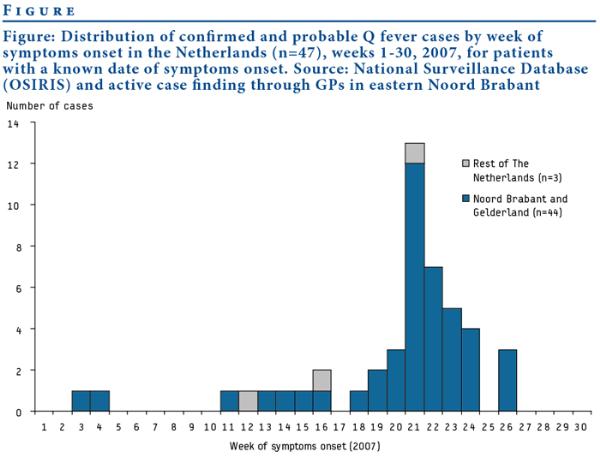
Among the 59 cases in these two provinces, 27 were living in a well defined area in the eastern part of Noord Brabant. It should be noted that retrospective active case finding was initiated in the latter area for patients with a GP consultancy after 15 May to better describe the cluster of cases there. The overall male to female ratio is 1.67 and the median age is 50 years. Date of symptoms onset is currently available for 47 of all patients. The peak of case occurrence was in week 21 of 2007. According to the data available including week 30, the last case had a symptoms onset in week 26 (Figure).

070809_Figure_QFevertmb.jpg


A trawling questionnaire was used to generate hypotheses about the possible source of the outbreak in eastern Noord Brabant area. The municipal health service undertook active case finding through the GP offices in this area, where about 11,500 inhabitants reside. The area is highly agricultural with a large population of ruminants (cattle, sheep and goats). The number of goats has been reported to be increasing during the last decade in this region, as has the degree of intensive goat farming [7]; moreover, there have been active reports of abortion waves due to C. burnetii infection among the goat population in 2006 and 2007.

Meteorological factors may also have played a role in this outbreak setting, but this remains to be investigated. April was a very dry month; only 1.5 mm of precipitation fell in the nearby weather station of Eindhoven between 22 March 2007 and 6 May 2007, while the average precipitation value for April alone is 42 mm. Weather conditions, such as dry weather and wind, have been documented to play an important role in other Q fever outbreaks [8,9].

This is the first documented outbreak of Q fever in the Netherlands, and it is currently under investigation. So far, only sporadic cases and family clusters related to direct animal contact had been observed here. It is also an example of local GPs signalling an outbreak in the Netherlands, underlining their role in early warning of outbreaks, before laboratory-confirmed cases are reported to the health services. Further studies are planned.

References:
Raoult D, Marrie TJ, Mege JL. Natural History and Pathophysiology of Q fever. Lancet Infect Dis 2005;5:219-26

Cutler SJ, Bouzid M, Cutler RR. Q Fever. J Infection 2007;54:313-8.
Q Fever Cluster in Cheltenham. Health Protection Report 1(29). HPA. Available from: http://www.hpa.org.uk/hpr/archives/2007/news2007/news2907.htm

Grilc E, Socan M, Koren N, Ucakar V, Avsic T, Pogacnik M, Kraigher A. Outbreak of Q fever among a group of high school students in Slovenia, March-April 2007. Euro Surveill 2007;12(7):E070719.1. Available from: http://www.eurosurveillance.org/ew/2007/070719.asp#1

ProMED-mail. Q Fever – Australia. ProMED-mail 2007; 30 Jul: 20020713.2244. http://www.promedmail.org (Accessed 1 August 2007)

Van Lier EA, Rahamat-Langendoen JC, van Vliet JA. Staat van Infectieziekten in Nederland 2006. RIVM Rapport 210211002/2007 (in Dutch)

Vellema P. Nieuwkomers Q-fever en pasteurellose duiken op. Geitenhouderij: tweemaandelijks blad voor alle geitenhouders 2006; 10(5):14-15. Boerhaar: Stichting Vakblad Geitenhouderij (in Dutch)

Hawker JI et al. A large outbreak of Q fever in the West Midlands: windborne spread into metropolitan area? Commun Dis Public Health 1998; 1(3):180-7.

Robert Koch Institute. Grosser Q-Fieber-Ausbruch in Jena, Juni 2005. Epidemiologisches Bulletin 2006; 45:391-398. Available online on http://www.gpk.de/downloadp/STIKO_Bulletin45_061110_Q_Fieber2005.pdf (in German)

http://www.eurosurveillance.org/ViewArticle.aspx?PublicationType=W&Volume=12&Issue=32&OrderNumber=2
 
Re: Netherlands - Q fever outbreak - 15 deaths

Re: Netherlands - Q fever outbreak - 15 deaths

Update RIVM (= Dutch CDC) juNE 3 2010

The trend still is downward.

The number of reported patients is down with 60% compared to the number reported last year from jan 1 till june 2.

Reported Q-fever patients 2009: 860.

Reported Q-fever patients 2010: 352.


http://www.rivm.nl/cib/themas/Q-koorts/q-koorts-professionals.jsp#index_2


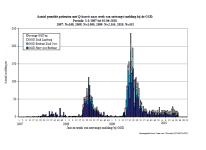
Edit: Especially from the region where the goats were vaccinated first, hardly any new patients are reported: down with 95% in april and may.


The green graph shows number of patients infected in a certain period.

qkoortsjuni1.png

The blue graph shows total number of reported patients in a certain period.

qkoortsjuni2.png
 
Re: Netherlands - Q fever outbreak - 16 deaths

Re: Netherlands - Q fever outbreak - 16 deaths

Update RIVM June 24

Q-fever epidemic is fading away

5th Q-fever death reported in 2010 - total to 16


Total of reported Q-fever patients 2010: 391

Total of reported Q-fever patients 2009: 1,400


RIVM institute also has the number of people with their 1st day of infection in a certain year.

The numbers from jan 1 to june 23:

2007 - 194

2008 - 982

2009 - 2,311

2010 - 276

Graph: http://www.rivm.nl/cib/binaries/epicurve Q-koorts_tcm92-59728.pdf
 
Re: Netherlands - Q fever outbreak - 16 deaths

Re: Netherlands - Q fever outbreak - 16 deaths

Today the National Health Council issued an advice on human vaccination in the Netherlands regarding Q-fever.

Some highlights :

We don't have research data on the risk for complications at risksgroups, however the council is estimating the risk to be low for these groups.

40% of the patients still have complaints after a year.

The Australian Q-vax will not be admitted to the Netherlands/ Europe.

However individual patients, especially those with specific heart or vascular problems can have the vaccin through their doctor.

Only for them, on an individual basis, not for other groups, including vets, slaughterhouse workers etc. , not necessary says the council.

The testing in Australia of the vaccin was limited. For instance no testing with children under 15 or pregnants. Those groups will be excluded in the Netherlands too.

More (in Dutch): http://www.flutrackers.com/forum/showpost.php?p=361257&postcount=381
 
Back
Top