• FluTrackers.com Inc. does not provide medical advice. Information on this web site is collected from various internet resources, and the FluTrackers board of directors makes no warranty to the safety, efficacy, correctness or completeness of the information posted on this site by any author or poster. The information collated here is for instructional and/or discussion purposes only and is NOT intended to diagnose or treat any disease, illness, or other medical condition. Every individual reader or poster should seek advice from their personal physician/healthcare practitioner before considering or using any interventions that are discussed on this website. By continuing to access this website you agree to consult your personal physican before using any interventions posted on this website, and you agree to hold harmless FluTrackers.com Inc., the board of directors, the members, and all authors and posters for any effects from use of any medication, supplement, vitamin or other substance, device, intervention, etc. mentioned in posts on this website, or other internet venues referenced in posts on this website.
  • We are not asking for any donations. Do not donate to any entity who says they are raising funds for us.

Nautilus Live Underwater Exploration

mixin

Well-known member
The 2012 season has started. They've completed a couple of short dives and some sonar scanning over the last few days.

Currently, they are moving to a shallower location in preparation of launching the ROVs to take sediment cores.

Last season gave us some really great views of the ocean floor :tiphat:

Live cam: http://www.nautiluslive.org/
 
Re: Nautilus Live Underwater Exploration

The Nautilus crew just completed its exploration of the mud volcanoes in the submerged Anaximander Mountains. It is currently in Marmaris, Turkey for a port stop. Cyprus is next.

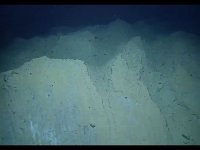
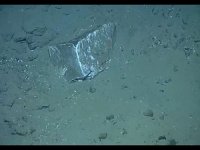
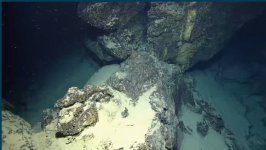
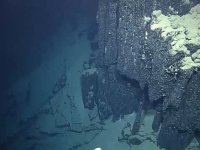
The mud volcanoes seem to vary greatly; most of what I saw during the first leg of exploration reminded me of a sandy beach. But then, along came the tall mounds. The rock in the second pic was a bit unusual.

Mud Volcano f 7.28 R.jpg

Mud Volcano d 7.28 R.jpg
 
Re: Nautilus Live Underwater Exploration

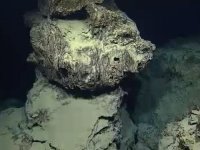
I thought the leg that was just explored was the most interesting one so far. Athina mud volcano has numerous very unusual rock formations.

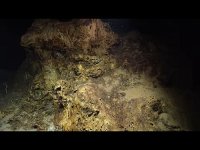
There was a lot of sediment in some areas and it appeared to be like snow-covered paths though the formations. I thought these 2 were kind of scary looking. :) The attached one shows sediment on some rocks.

Interesting Rock c R.jpg

Athena Mud Volcano.jpg
 

Attachments

  • Rock 3.jpg
    Rock 3.jpg
    40.2 KB · Views: 0
Re: Nautilus Live Underwater Exploration

Be sure to check out the Nautilus website; they have a lot of pics and videos posted.

From the last completed leg:

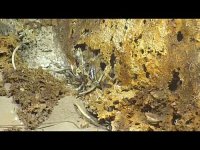
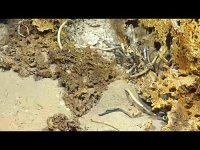
They are always interested in tube worms because they are found at the seeps. In these first 2 pics, notice the long worm in the first one, stretching from the bottom center and extending beyond the left of the screen. The motion of the ROV apparently scared it and it went back into its hole in the second one. I'm not sure; but I don't think that is a tube worm.

Tube Worms h R.jpg

Tube Worms k R.jpg


It's hard to judge size and depth just from watching the live stream; here is a white crab on one of the walls to give some perspective.

Crab a R.jpg


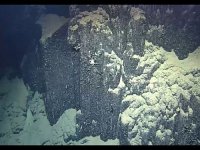
These pillars are pretty neat

Pilars R.jpg


They were excited to find this amphora; I think they dated it at ~2800 years old

Amphora R.jpg
 
Re: Nautilus Live Underwater Exploration

The new season has just begun; they are currently on their first dive in the Gulf of Mexico. :applause:

Live cam: http://www.nautiluslive.org/

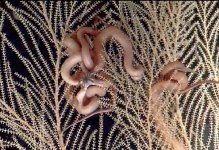
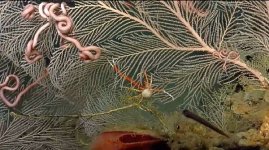
This is the first coral they stopped at; just beautiful!!

The coral is estimated to be between 1-2 meters and 100+ years old. We see Brittle Stars hanging on them, as well as a crab, clam and fish.

Brittle Stars 6.22.13.jpg

Coral Brittle Stars Crab Clam and fish 6.22.13.jpg
 
Re: Nautilus Live Underwater Exploration

Thanks, mixin! :) I hadn't seen this thread until now. What an ethereal tapestry of diverse marine life in the latest photos! The Brittle Stars are fascinating.
 
Re: Nautilus Live Underwater Exploration

Emily, this has been a really great dive. They have now brought the ROVs to the surface and I think they said they will begin transitioning to their next destination.

Here are some more screen caps from the last couple of hours.

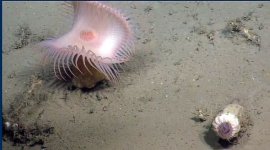
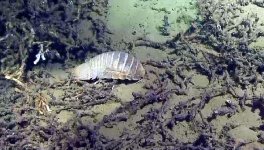
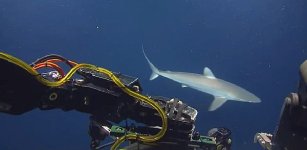
The first pic is of a couple of Flytrap Anemones and the second one is an isopod which they estimated to be the size of a football. As they were bringing the ROVs to the surface a school of about 6 large sharks took an interest in one of them.

Flytrap Anemones b 6.23.13.jpg

Isopod Football Size R 6.23.jpg

Sharks 6.23.13 r.jpg
 
Re: Nautilus Live Underwater Exploration

I love the soft color and movement of the Flytrap Anemone. Here's another perspective showing its more ferocious side:

Mex_03-hr_0.jpg

Credit: I. MacDonald (in Gulf of Mexico?Origins, Waters, and Biota. Vol. 1. Biodiversity. Felder, D. L. and Camp, D. K. (eds.) 2009. Texas A&M Press.)
Census of Marine Life: Wild and Wonderful Creatures
 
Re: Nautilus Live Underwater Exploration

Emily, that's a great pic; it kind of resembles a dragon of some sort. :D

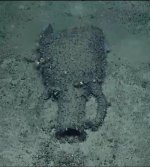
The last couple of days had some very interesting finds. They were fortunate to have a wonderful interaction with a purple octopus. It is featured in a dive highlight here: http://www.nautiluslive.org/video/2013/07/01/nautilus-dive-highlight-purple-cephalopod and there are also some pics of it in one of their albums. At one point, it laid flat out on the sea floor and curled its tentacles a bit. I wonder if it was reacting to the camera lights? Could it feel the heat from them? Whatever, it seemed to be enjoying the experience. It followed the cam for a bit by actually walking on some it its rear tentacles. I never knew they walked.

On the last dive, they dropped down to the bottom of the Florida Escarpment and worked their way up the wall. That was pretty amazing to see this huge vertical wall rising up from the sea floor. The dive pics haven't yet been posted but here are some images of the escarpment from the Center for Coastal and Ocean Mapping Joint Hydographic Center http://ccom.unh.edu/theme/law-sea/gulf-mexico-margin/florida-escarpment-obliques

I would love to see an artist's drawing (or screen caps stitched together) of what we see on some of these dives. It's kind of hard to imagine what some of these things actually look like from from a panoramic view.

Their next dive will be back in the Mississippi Canyon at 9 a.m. eastern time.
 
Re: Nautilus Live Underwater Exploration

The Nautilus is currently exploring an early 19th century shipwreck off the Texas coast. We are getting some very good looks at bottles, etc as the crew retrieves the artifacts.

I think the ship was just discovered last year and nothing is known about it. They are hoping the recovered artifacts will give them some answers to their questions.

Thanks to all involved for giving us the opportunity to see live ocean floor exploration.
 
Re: Nautilus Live Underwater Exploration

They are currently in Montserrat, beginning exploration the debris field which once was the village St. Partick's.

Here's a report on the Boxing Day Collapse, which swept the village into the ocean.

http://www.geo.mtu.edu/volcanoes/west.indies/soufriere/govt/specrep/specrep06.html

There is an interesting discussion going on... he said he wasn't sure what he expected to find but was a bit surprised that he has seen no debris and very little damage to the sea life. There are lots of healthy coral growing. They are 200 meters deep and 800 meters out from shore; so he expects the actual debris is closer to shore.
 
Re: Nautilus Live Underwater Exploration

Very neat exploration going on right now at Kick'em Jenny underwater volcano. Iron Hydroxide spires have developed since the last exploration. They are doing some testing so they may be in this spot for a while.
 
Re: Nautilus Live Underwater Exploration

The ROVs are back in the water again, exploring the debris field of Kick'em Jack. The dive will continue for about 12 hours; I'm not sure what other sites are on their agenda for today.
 
Re: Nautilus Live Underwater Exploration

Drama at sea!!

The Nautilus received a distress call several hours ago from a small vessel. The water is really rough and it has been taking on water. Nautilus has been there for about an hour or so. Nautilus has launched a small raft to (do something?)

We're being updated at the situation progresses.

That water is really rolling!

http://www.nautiluslive.org/live/channel-1
 
Re: Nautilus Live Underwater Exploration

Drama at sea!!

The Nautilus received a distress call several hours ago from a small vessel. The water is really rough and it has been taking on water. Nautilus has been there for about an hour or so. Nautilus has launched a small raft to (do something?)

We're being updated at the situation progresses.

That water is really rolling!

http://www.nautiluslive.org/live/channel-1

It certainly is rolling! I think I could get seasick watching for too long.

Latest update indicates the rescue was successful. :tiphat:

Current Status
We are escorting the vessel in distress to St. George's to ensure that it makes it there safely. We hope to dive tonight if the weather cooperates. If not, we will dive tomorrow afternoon. 14 min 15 sec ago
 
Re: Nautilus Live Underwater Exploration

The Nautilus has begun its 2014 dive season. Current status is: exploring the ridges west of the Great Bahama Bank with the ROVs Hercules and Argus. This leg is scheduled to run from June 11-15.

The second leg is scheduled for June 16-20, where they will explore the Dry Tortugas:
NOAA?s Office of National Marine Sanctuaries selected two deep-water areas off southwest Florida to better understand the ecological connectivity of deep-water biological habitats and communities to the Florida Keys National Marine Sanctuary, the Tortugas Ecological Reserve, and Pulley Ridge Habitat. Exploring the biological and geological character of these areas will aid the ongoing management plan review of the Florida Keys National Marine Sanctuary ? including the Tortugas Ecological Reserve ? by documenting the physical and biological connections of unique places at the ecological crossroads of the Gulf of Mexico, Caribbean Sea, and Atlantic Ocean. This mission is a rare opportunity to document the conditions in deep-water areas of the Reserve and evaluate the impact of management strategies on the deep-water community.

http://www.nautiluslive.org/
 
Re: Nautilus Live Underwater Exploration

Here's a couple of recent tweet photos:

<blockquote class="twitter-tweet" lang="en"><p>Happy <a href="https://twitter.com/hashtag/CephalopodWeek?src=hash">#CephalopodWeek</a> from the Corps of Exploration - we found this octopus surrounded by mussels in the Caribbean. <a href="http://t.co/46VYviF96l">pic.twitter.com/46VYviF96l</a></p>— E/V Nautilus (@EVNautilus) <a href="https://twitter.com/EVNautilus/statuses/481442028212203520">June 24, 2014</a></blockquote>
<script async src="//platform.twitter.com/widgets.js" charset="utf-8"></script>

Though this one was taken during last season, it is worth a look:

<blockquote class="twitter-tweet" lang="en"><p>.<a href="https://twitter.com/MBARI_News">@MBARI_News</a> We spotted a few Cirrothauma murrayi (like this one) last season <a href="https://twitter.com/hashtag/CephalopodWeek?src=hash">#CephalopodWeek</a> <a href="http://t.co/RQ6zTxeogf">pic.twitter.com/RQ6zTxeogf</a></p>— E/V Nautilus (@EVNautilus) <a href="https://twitter.com/EVNautilus/statuses/481475774676217857">June 24, 2014</a></blockquote>
<script async src="//platform.twitter.com/widgets.js" charset="utf-8"></script>

I hope this beauty and diversity remain to support future generations. Proposed deep-sea mining around vents is worrisome.

http://people.stfx.ca/rscrosat/trs14.pdf
Seafloor mining is another controversial issue in marine development due to recent plans to conduct mining operations in deepwater environments surrounding hydrothermal vents. Estimates indicate that there are rich deposits of valuable materials? including manganese, cobalt, iron, and diamonds?under the ocean floor. The increasing scarcity of terrestrial deposits of these elements has intensified interest in oceanic mining. Scientists and mining corporations are developing programs and models to make deep sea mining more efficient, but environmental groups oppose many of these plans because of their potential ecological hazards. For instance, current proposals for mining involve removing portions of the sediment surrounding undersea hydrothermal vents, which are host to rich communities of organisms, many of which are poorly understood by science. Mining operations could disrupt or destroy these fragile environments by shifting sediment and removing minerals that are essential to the integrity of the ecosystem. Similarly, oil and gas drilling has well-demonstrated deleterious effects on oceanic diversity and increases pollution
throughout vast areas of the marine environment.

 
Back
Top