• FluTrackers.com Inc. does not provide medical advice. Information on this web site is collected from various internet resources, and the FluTrackers board of directors makes no warranty to the safety, efficacy, correctness or completeness of the information posted on this site by any author or poster. The information collated here is for instructional and/or discussion purposes only and is NOT intended to diagnose or treat any disease, illness, or other medical condition. Every individual reader or poster should seek advice from their personal physician/healthcare practitioner before considering or using any interventions that are discussed on this website. By continuing to access this website you agree to consult your personal physican before using any interventions posted on this website, and you agree to hold harmless FluTrackers.com Inc., the board of directors, the members, and all authors and posters for any effects from use of any medication, supplement, vitamin or other substance, device, intervention, etc. mentioned in posts on this website, or other internet venues referenced in posts on this website.
  • We are not asking for any donations. Do not donate to any entity who says they are raising funds for us.

Mpox Outbreak in DRC Novel Clade I Sub-lineage - NYC HAN Update - CDC & WHO Update May 24th - ECDC Risk Statement

Michael Coston

Editor, Senior Moderator
Eurosurveillance: Ongoing Mpox Outbreak in South Kivu Province, DRC Associated With a Novel Clade I Sub-lineage


AVvXsEgVSbYEFXEPIIHad6nWv8zd6jj8l0nJFZrja_5pNtrKgk99ZQweCPV2cCZR1ocSTMUyK_wr2fz00Asz8g6fNTjE26Ivza4U0-Dyy1qrAliWlMK7oD3LN4ByWgeph1AcM2A4bS2Jlw


Countries with endemic Mpox- Credit WHO

#17,949

Clade I Mpox (formerly Monkeypox) - which is endemic to central Africa (see map at top of post) - is far more severe than the Clade IIb Mpox virus which began its world tour in 2022. It appears more transmissible, can produce more disfiguring lesions, and is associated with a much higher fatality rate.

While we've seen no indication of international spread of the Clade I Mpox virus, last year's discovery of two clusters of sexually transmitted Mpox (in MSM and sex workers) (see WHO Reports 1st Confirmed Cluster Of Sexually Transmitted MPXV Clade 1 in the DRC) - has raised concerns that - like Clade IIb - this more aggressive strain could eventually turn up outside of Africa.​


Since then we've looked at several reports and risk assessments, including:


Like all viruses, Mpox continues to evolve and diversify, as was discussed in the 2014 EID Journal article Genomic Variability of Monkeypox Virus among Humans, Democratic Republic of the Congo, where the authors cautioned:

Small genetic changes could favor adaptation to a human host, and this potential is greatest for pathogens with moderate transmission rates (such as MPXV) (40). The ability to spread rapidly and efficiently from human to human could enhance spread by travelers to new regions.


Today we have a the first report on a genomic analysis of samples from a recent outbreak in a previously unaffected region of the DRC, which reveals a novel clade I sub-linage has emerged - most likely from a zoonotic spillover - that may render current CDC tests unreliable.

First some excerpts from the Eurosurveillance report (follow the link to read it in its entirety), after which I'll return with a postscript.
Rapid communication Open Access

Ongoing Mpox Outbreak in Kamituga, South Kivu province, associated with Monkeypox virus of a novel Clade I sub-lineage, Democratic Republic of the Congo, 2024

Leandre Murhula Masirika1,2 , Jean Claude Udahemuka3,4 , Leonard Schuele5 , Pacifique Ndishimye4,6,7 , Saria Otani8 , Justin Bengehya Mbiribindi9 , Jean M. Marekani10 , Léandre Mutimbwa Mambo11 , Nadine Malyamungu Bubala9 , Marjan Boter5 , David F. Nieuwenhuijse5 , Trudie Lang12 , Ernest Balyahamwabo Kalalizi2 , Jean Pierre Musabyimana4,13 , Frank M. Aarestrup8 , Marion Koopmans5 , Bas B. Oude Munnink5,* , Freddy Belesi Siangoli14,*

https://www.eurosurveillance.org/content/10.2807/1560-7917.ES.2024.29.11.2400106

In the Democratic Republic of the Congo (DRC), the numbers of people with suspected infection with monkeypox virus (MPXV), the virus that causes mpox, have increased since the start of 2023. A total of 12,569 suspected mpox cases have been reported up to 12 November, the highest number of annual cases ever recorded [
1]. The case fatality rate has been estimated at 4.6% [1]; moreover, new cases have occurred in geographical areas of the country where the disease was previously not observed, such as Kinshasa and South Kivu province [1,2].

Despite this concerning situation, there is only limited genomic information available on the circulating viruses, which suggests that they belong to Clade I [3]. To gain more insight into the characteristics of the strains causing the epidemic, as well as assurance that current and commonly used molecular assays to diagnose MPXV infections can detect these strains, we sequenced monkeypox viral genomes from recently diagnosed cases in South Kivu, DRC.

Case definitions and patient characteristics

A case was listed as ‘suspect’ if presenting with an acute illness with fever, intense headache, myalgia, and back pain, followed by 1 to 3 days of a progressively developing rash often starting on the face and spreading on the body. A confirmed mpox case had a monkeypox virus infection which was laboratory-confirmed by PCR. A case was listed as ‘probable’ when satisfying the clinical definition of a suspected case and having an epidemiological link to a confirmed or probable case; a probable case was not laboratory-confirmed [
4].

The study involved patients from South Kivu province in the territory of Mwenga, who were hospitalised in the Kamituga hospital, which is in the Kamituga health zone. The first mpox cases in this area were reported from September 2023 onwards.

A total of 10 patients were included in the study. All were young adults in their late teenage up to the age of mid-20 years and five were male and five females. Regarding professions comprised, the majority of the concerned individuals were sex workers. For these patients, admission to the Kamituga Hospital had been based on clinical diagnosis of mpox by hospital staff. According to routines, skin lesion and oropharyngeal swabs collected from the patients had been sent to the national medical research institute of the DRC (Institut National de la Recherche Biomédicale; INRB) in Goma for MPXV infection confirmation by PCR, and all patients had tested positive for the virus.

(SNIP)

The monkeypox virus outbreak strain in South Kivu lacks the target sequence used for identifying Clade I viruses

To check if the strains obtained in the current study could be detected by commonly used molecular assays to diagnose MPXV infections, their sequences were aligned to the closely related Clade I sequence EPI_ISL_13056243. This sequence matches primer and probe sequences recommended by the United States (US) Centers for Disease Control and Prevention (CDC) to diagnose MPXV [
15]. The alignment was assessed using an in-house Primer Check Tool (https://viroscience-emc.shinyapps.io/primer-check/ ).
While the generic primers and probe still seem to be functional with only one mutation in the reverse primer, the specific Clade I virus real-time PCR target, recommended by the US CDC, is absent in the genomes of the novel MPXV strains ( Figure 2 and Supplementary Figure 3). The observed deletion is 1,114 nt in size and results in the complete deletion of the OPG032 gene. The coverage of this region ranged between 76× and 941× sequence reads depending on the sample. Due to the deletion, the rapid US CDC method to identify Clade I in newly diagnosed mpox cases is most likely not reliable for detection of the novel sub-lineage identified in the current study.


(SNIP)

Discussion

From the mpox outbreak in Kamituga, South Kivu, six near-to-complete MPXV sequences derived from local patients hospitalised with mpox were obtained. Phylogenetic analyses of these sequences together with those available for other Clade I and II viruses, placed them in a new sub-lineage near the root of Clade I, which suggests that the outbreak in this region results from a new introduction, most likely from a zoonotic reservoir. Although sequences from a small 2023 Kinshasa outbreak are not publicly available, the placement of those sequences in a published phylogenetic tree [
3] suggests that the Kamituga outbreak is not related to the outbreak in Kinshasa. Our findings therefore suggest that there are at least two independent outbreaks ongoing in DRC.

Remarkably, a large stretch of sequence in the genomes belonging to the novel MPXV sub-lineage was absent compared to other Clade I genomes, which would lead to failure of the Clade I-specific real-time PCR recommended by the US CDC [15]. A deletion in the same region is also observed in Clade II MPXV, and this was the basis for clade assignment using the CDC PCR.

Therefore, if the viruses from the new lineage were to spread internationally, this molecular surveillance tool can no longer be used to rapidly identify these Clade I virus infections while the global Clade IIb outbreak is ongoing.

Conclusion

Altogether, the findings of this study strongly suggest that whole genome sequencing of a larger subset of MPXV currently causing mpox cases in DRC, as well as public data sharing, are essential to understand the ongoing epidemic. Further studies, sequencing and analyses are ongoing, but in accordance with the above statement we believe that rapid public sharing of all available information is essential to help to better understand and contain the current mpox emergence.


Although many experts voiced surprise when Mpox clade IIb began spreading internationally in the spring of 2022, we'd seen plenty of warning signs over the years, including in PLoS NTD: The Changing Epidemiology of Human Monkeypox—A potential threat?, which had been published just months prior.

Most were ignored.​


While there are no guarantees that Clade I Mpox will follow suit, familiar warning signs are flashing once again. And round two may prove more difficult to contain than round one.

https://afludiary.blogspot.com/2024/03/eurosurveillance-ongoing-mpox-outbreak.html
 
Last edited:
Mpox Update From The CDC, A New Preprint On Transmission & Reports of Spread In Republic of Congo


AVvXsEh_ng6RvHpl074_YsZZ1-fx4lbwLRMM9csrdHQi7dhrV5mJ639KFNIpfxS91wEDvj5S18zz6xtpYeLMgQ2HwfHea_LdpFc2XPqaag7Hev3kHNSUIL5ZF4pzJssNas_ZnyIV1JfNoWfWnw9z4RRXQGjo7lKv7guCkKFd03dp4wfSZwyx6JahcM9PZg=w320-h300


#17,951

Although the declared global health emergency over the international spread of a new clade (IIb) of Mpox (formerly Monkeypox) was ended after only 10 months in the spring of 2023, we continue to see sporadic infections around the globe, while the more dangerous clade I mpox virus continues to rage (>12,000 cases in 2023) in the DRC,.

Four months ago, the WHO Reported the 1st Confirmed Cluster Of Sexually Transmitted MPXV Clade 1 in the DRC, warning that `The risk of mpox further spreading to neighbouring countries and worldwide appears to be significant.'

Last week we looked at a report in Eurosurveillance: Ongoing Mpox Outbreak in South Kivu Province, DRC Associated With a Novel Clade I Sub-lineage, which contained the first genomic analysis of samples from a previously unaffected region of the DRC.

This study revealed a novel clade I sub-linage had emerged - most likely from a zoonotic introduction - with changes that may render current CDC tests unreliable.

Over the past 48 hours there have been media reports from the DRC's neighbor, the Republic of Congo, of an outbreak of Mpox recorded in several regions not previously affected (see Republic of Congo reports its first mpox virus cases in several regions).

Since I can find no confirmation on their Health Ministry website, we may have to wait for a WHO update. But spread beyond the DRC was one of the risks mentioned last November.​

Meanwhile, we've a new preprint on the medRxiv server, which further confirms last year's finding of (primarily heterosexual) sexual transmission of Mpox clade I in the DRC.

Leandre Murhula Masirika, Jean Claude Udahemuka, Pacifique Ndishimye, Gustavo Sganzerla Martinez, Patricia Kelvin, Maliyamungu Bubala Nadine, Bilembo Kitwanda Steeven, Franklin Kumbana Mweshi, Léandre Mutimbwa Mambo, Bas B. Oude Munnink, Justin Bengehya Mbiribindi, Freddy Belesi Siangoli, Trudie Lang, Jean M. Malekani, Frank M. Aarestrup, Marion Koopmans, Leonard Schuele, Jean Pierre Musabvimana, Brigitte Umutoni, Ali Toloue, Benjamin Hewins, Mansi Dutt, Anuj Kumar, Alyson A. Kelvin, Jean-Paul Kabemba Lukusa, Christian Gortazar, David J Kelvin, Luis Flores
doi: https://doi.org/10.1101/2024.03.05.24303395


Preview PDF

Summary (abstract)

Background

In August 2023, an outbreak of mpox was reported in the eastern part, South Kivu Province, of Democratic Republic of the Congo. In this study, we aimed to investigate the origin of this outbreak and to assess how monkeypox virus spread among humans in the city of Kamituga.

Methods

We performed an observational cohort study by recruiting hospitalized patients with mpox-like symptoms. Furthermore, we compared structured, de-identified case report forms and interviews were conducted to determine the possible origins and modes of transmission of the mpox outbreak. We describe the clinical characteristics and epidemiology observed in reported infections.

Findings

During the study period (24 September 2023 to 29 January 2024), 164 patients were admitted to the Kamituga hospital, 51 individuals were enrolled in the study and interviewed, and 37 (73%) of 51 individuals received a molecularly confirmed mpox diagnosis.

The median age for males was 24 years (IQR 18-30; range 14-36) and 19 years for females (IQR 17-21; range 1-59). The cohort was comprised of 47 (92%) of 51 individuals who identified as heterosexual, and two (4%) of 51 as bisexual, with 31 (61%) of 51 individuals sexually active with more than one partner within the last six months.

The direct transmission routes are unknown; however, it is expected that the majority of infections were transmitted via occupational exposures. Out of the 51 individuals, 24 (47%) were professional sex workers (PSWs), while five (10%) were gold miners, 6 (12%) were students, and four (8%) were farmers; the remaining individual occupations were unknown.

The most common symptoms associated with clinical mpox diagnosis were fever, which was described in 38 (75%) of 51 individuals, and rash, which was described in 45 (88%) of 51 individuals. Among those with a rash, 21 (41%) of 51 individuals experienced oral lesions, and 32 (63%) of 51 presented anogenital lesions. Mpox viral DNA was detected by qPCR from vaginal, penile, and oral swabs in 37 (73%) of 51 enrolled individuals. Two deaths were reported.

Interpretation

In this observational cohort study, mpox virus infection caused symptoms in a wide age range of participants with most cases presenting in sexually active individuals. Symptoms included fever, cough, lymphadenopathy, sore throat, chills, headache, back pain, muscle pain, vomiting, nausea, conjunctivitis, and rash (oral and anogenital). Heterosexual partners dominated human-to-human contact transmission suggesting that heterosexual close contact is the main form of transmission in this outbreak. Furthermore, Professional Sex Workers (PSWs) were the dominant occupation among infected individuals, indicating that PSWs and clients may be at higher risk for developing mpox virus infections.

The changing epidemiology and genetic evolution of mpox clade I in central Africa has sparked a number of risks assessments over the past few months, including:
For now, the CDC assesses the risk to the United States from the outbreak in the DRC as low:

There have been no cases of the type of mpox spreading in DRC reported in the United States at this time. The risk to the general public in the U.S. from the type of mpox circulating in the DRC is low.

But that assessment could change. Which is why the CDC continues to update their Mpox web page , adding the following guidance yesterday (March 15th).

Signs and Symptoms March 15, 2024​

Mpox in Animals and Pets March 15, 2024​

About Mpox March 15, 2024​

During the decade leading up to Mpox clade IIb's world tour (Spring 2022), we saw repeated warnings that the virus was evolving into a more transmissible disease threat (see 2016's EID Journal:Extended H-2-H Transmission during a Monkeypox Outbreak).

A 2020 report, published by the Bulletin of the World Health Organization, warned that our waning immunity to smallpox put society at greater risks of seeing Monkeypox epidemics (see WHO: Modelling Human-to-Human Transmission of Monkeypox).​

And in early 2023, in EID Journal: Monkeypox Virus Evolution before 2022 Outbreak, researchers suggested that` . . . the most likely scenario is that there has been silent and undetected circulation of MPXV, possibly including multiple non–MPXV-endemic countries outside Africa, since the 2017–2018 outbreak.'

While there are no guarantees that Clade I Mpox will follow suit, similar warning signs are there. Just as they are for novel or avian flu, Lassa Fever, Nipah, MERS-CoV, and an increasing array of other emerging infectious diseases.​

A reminder that nature is nothing, if not persistent.​
 
Preprint: Sustained Human Outbreak of a New MPXV Clade I Lineage in Eastern Democratic Republic of the Congo

AVvXsEh_ng6RvHpl074_YsZZ1-fx4lbwLRMM9csrdHQi7dhrV5mJ639KFNIpfxS91wEDvj5S18zz6xtpYeLMgQ2HwfHea_LdpFc2XPqaag7Hev3kHNSUIL5ZF4pzJssNas_ZnyIV1JfNoWfWnw9z4RRXQGjo7lKv7guCkKFd03dp4wfSZwyx6JahcM9PZg=w320-h300


#18,011


While the global health emergency for the international spread of a new clade (IIb) of Mpox (formerly Monkeypox) ended nearly a year ago, we continue to see sporadic infections around the globe, while a more dangerous clade I mpox virus continues to rage (>12,000 cases in 2023) in the DRC.

Last month we looked at a report in Eurosurveillance: Ongoing Mpox Outbreak in South Kivu Province, DRC Associated With a Novel Clade I Sub-lineage, which contained the first genomic analysis of samples from a previously unaffected region of the DRC (the city of Kamituga).

That study revealed a novel clade I sub-linage had emerged - most likely from a zoonotic introduction - with changes that may render current CDC tests unreliable.

The changing epidemiology and genetic evolution of mpox clade I in central Africa has sparked a number of risks assessments over the past few months, including:
Today we have a preprint which further describes the outbreak of Mpox in the city of Kamituga. The authors warn in this 30-page PDF that the potential exists for this novel MPXV clade to eventually spread beyond the DRC, and potentially spark another global mpox outbreak.

Due to its length I've only posted some excerpts, I'll have a postscript after the break.
Emmanuel H. Vakaniaki, Cris Kaciat, Eddy Kinganda-Lusamaki, Aine O'Toole, Tony Wawina-Bokalanga, Daniel Mukadi-Bamuleka, Adrienne Amuri Aziza, Nadine Malyamungu-Bubala, Francklin Mweshi-Kumbana, Leandre Mutimbwa-Mambo, Freddy Belesi-Siangoli, Yves Mujula, Edyth Parker, Pauline-Chloe Muswamba-Kayembe, Sabin S. Nundu, Robert S. Lushima, Jean Claude Makangara Cigolo, Noella Mulopo-Mukanya, Elisabeth Pukuta Simbu, Prince Akil-Bandali, Hugo Kavunga, Koen Vercauteren, Nadia A. Sam-Agudu, Edward J Mills, Olivier Tshiani-Mbaya, Nicole A. Hoff, View ORCID ProfileAnne W Rimoin, Lisa E. Hensley, View ORCID ProfileJason Kindrachuk, Ahidjo Ayouba, Martine Peeters, Eric Delaporte, Steve Ahuka-Mundeke, Jean B. Nachega, Jean-Jacques Tamfum Muyembe, Andrew Rambaut, View ORCID ProfileLaurens Liesenborghs, Placide Mbala-Kingebeni
doi: https://doi.org/10.1101/2024.04.12.24305195

PDF

ABSTRACT

Background: Monkeypox virus (MPXV) attracted global attention in 2022 during a widespread outbreak linked primarily to sexual contact. Clade I MPXV is prevalent in Central Africa and characterized by severe disease and high mortality, while Clade II is confined to West Africa and associated with milder illness. A Clade IIb MPXV emerged in Nigeria in 2017, with protracted human-to-human transmission a forerunner of the global Clade II B.1 lineage outbreak in 2022. In October 2023, a large mpox outbreak emerged in the Kamituga mining region of the Democratic Republic of the Congo (DRC), of which we conducted an outbreak investigation.

Methods: Surveillance data and hospital records were collected between October 2023 and January 2024. Blood samples and skin/oropharyngeal swabs were obtained for molecular diagnosis at the National Institute of Biomedical Research, Kinshasa. MPXV genomes were sequenced and analyzed using Illumina NextSeq 2000 and bioinformatic tools.

Results: The Kamituga mpox outbreak spread rapidly, with 241 suspected cases reported within 5 months of the first reported case. Of 108 confirmed cases, 29% were sex workers, highlighting sexual contact as a key mode of infection. Genomic analysis revealed a distinct MPXV Clade Ib lineage, divergent from previously sequenced Clade I strains in DRC. Predominance of APOBEC3-type mutations and estimated time of emergence around mid-September 2023 suggest recent human-to-human transmission.
Conclusions: Urgent measures, including reinforced, expanded surveillance, contact tracing, case management support, and targeted vaccination are needed to contain this new pandemic-potential Clade Ib outbreak.

(SNIP)

DISCUSSION This report describes a novel Clade I MPXV lineage associated with sustained human-to-human transmission in an ongoing outbreak in eastern DRC. Identification of APOBEC3-related mutations – the hallmark of efficient MPXV spread via human-to-human transmission – bolsters this assertion.
Due to its distinct geographical location and divergent phylogenetic relationship, we propose to name this new Clade Ib, with the previously described Clade I renamed Clade Ia. The previous distinction between Clades IIa and IIb was borne out of a similar rationale, with the diversity within Clades IIa and IIb more than half the divergence between them. 16

(SNIP)

The situation in Kamituga echoes the 2017-2018 outbreak of Clade IIb MPXV in Nigeria. Without intervention, this localized Kamituga outbreak harbors the potential to spread nationally and internationally. Urgent measures must be implemented, including intensifying local surveillance, enhancing referral systems and case management, and implementing targeted mpox vaccination for individuals at high-risk, such as contacts of index cases, HCWs, sex workers, and men who have sex with men. 20 Given the recent history of mpox outbreaks in DRC, we advocate for swift action by endemic countries and the international community to avert another global mpox outbreak.

Like all viruses, Monkeypox continues to evolve and diversify, as discussed in the 2014 EID Journal article Genomic Variability of Monkeypox Virus among Humans, Democratic Republic of the Congo, where the authors cautioned:

Small genetic changes could favor adaptation to a human host, and this potential is greatest for pathogens with moderate transmission rates (such as MPXV) (40). The ability to spread rapidly and efficiently from human to human could enhance spread by travelers to new regions.

Which means we shouldn't be surprised if new variants, or subclades, of Mpox appear over time. Especially when very little has been done to curb the spread of the virus in endemic regions like the DRC.

Complicating matters, recent studies suggest that the protective effects of the JYNNEOS vaccine - at least in those who had not received a smallpox vaccination - wanes over a period of months (see ECCMID 2024 Study: Mpox (monkeypox) Antibodies Wane Within A Year of Vaccination).​

While there are no confirmed cases of this new clade outside of the DRC, borders and oceans no longer provide the barrier against the spread of infectious diseases they once did.

A reminder that an infectious disease threat anywhere in the world is potentially a threat everywhere.


https://afludiary.blogspot.com/2024/04/preprint-sustained-human-outbreak-of.html
 
NYC HAN Advisory: `Substantial' Increases In Mpox Infections Over Past Few Months


AVvXsEhxLHeo1KNVxj11cibGyStAaab4TEHUMm_fc8yJ_5R8rtiKdTIPZbrfxzWxPjw2Dj3NjLIGBhbY8R-r6AUyxfpBc-rQ3S0nXKuCQZDrZpVkWaXJNF_wg0iwJ6nbpEqlXE6L2stffamk8bUvk6kL9FIxSbs33sH3TthF3MYmvb8xG5HFLxGNI2dPbg=w400-h226

#18,045

While HPAI H5Nx currently has most of our attention, we continue to watch a number of other emerging disease threats, including Mpox (formerly Monkeypox) which continues to evolve as it spreads both in endemic regions of Africa, and around the world.

Although the global health emergency for the international spread of a new clade (IIb) of Mpox ended nearly a year ago, we continue to see sporadic infections around the globe, while a more dangerous clade I mpox virus continues to rage (>12,000 cases in 2023) in the DRC.​

In November of last year, the WHO Reported the 1st Confirmed Cluster Of Sexually Transmitted MPXV Clade 1 in the DRC, warning that `The risk of mpox further spreading to neighbouring countries and worldwide appears to be significant.'

The changing epidemiology and genetic evolution of mpox clade I in central Africa has sparked a number of risks assessments over the past few months, including:
Two months ago a study was published Eurosurveillance: Ongoing Mpox Outbreak in South Kivu Province, DRC Associated With a Novel Clade I Sub-lineage, which contained the first genomic analysis of samples from a previously unaffected region of the DRC (the city of Kamituga).

That study revealed a novel clade I sub-linage had emerged - most likely from a zoonotic introduction - with changes that may render current CDC tests unreliable.

Three weeks ago, in Preprint: Sustained Human Outbreak of a New MPXV Clade I Lineage in Eastern Democratic Republic of the Congo, we saw a further analysis, which called for this new lineage to be named Clade Ib, and warned of its potential to spread globally.

Whether it is the international spread of the classic clade I virus, the spread of this new (proposed) Clade Ib strain, or a resurgence of the milder clade IIb clade which began its world tour two years ago, the threat from mpox has not gone away.

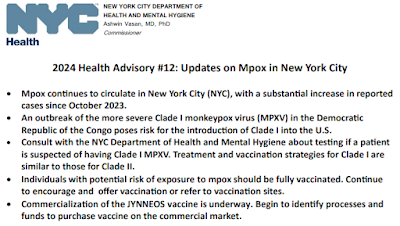
On Friday, May 3rd the New York City Health Department published the following HAN (Health Alert Network) Advisory citing increasing numbers of Mpox cases reported in the city, and the concerns over the introduction of these more dangerous clades of the virus.​

I've only posted some excerpts, so follow the link to read the release in its entirety. I'll have a bit more on the JYNNEOS vaccine after the break.

• Mpox continues to circulate in New York City (NYC), with a substantial increase in reported cases since October 2023.
• An outbreak of the more severe Clade I monkeypox virus (MPXV) in the Democratic Republic of the Congo poses risk for the introduction of Clade I into the U.S.
• Consult with the NYC Department of Health and Mental Hygiene about testing if a patient is suspected of having Clade I MPXV. Treatment and vaccination strategies for Clade I are similar to those for Clade II.
• Individuals with potential risk of exposure to mpox should be fully vaccinated. Continue to encourage and offer vaccination or refer to vaccination sites.
• Commercialization of the JYNNEOS vaccine is underway. Begin to identify processes and funds to purchase vaccine on the commercial market.

May 3, 2024

Dear Colleagues,

Mpox continues to circulate in New York City (NYC). Overall, the number of cases is low compared to the 2022 outbreak, but there have been increases in cases since October 2023. This, along with the large outbreak of the more severe Clade I monkeypox virus (MPXV) in the Democratic Republic of the Congo, highlight the need for ongoing vigilance, especially approaching the summer when increased transmission may occur.

The U.S. continues to see only Clade II cases. Reported case numbers in NYC were relatively low for most of 2023, ranging from two to 20 cases per month between January and September. Since October, there has been an increase to an average of 36 cases per month, with a peak case count of 51 cases in January 2024. Of the 256 cases from October 2023 through April 15, 2024:
• 73% (188) were not vaccinated or had received only one dose.
• 94% were among men who have sex with men.
• Most were Black or Hispanic and between the ages of 25-44.
• Most were mild; ten (3.9%) people were hospitalized.
Clade I Outbreak in the Democratic Republic of the Congo

There is an outbreak of concern of Clade I MPXV in the Democratic Republic of the Congo. There have been no reported cases of Clade I in the U.S. and no evidence of transmission outside of endemic countries of Central Africa. However, it is possible that Clade I could be introduced into the U.S. by a traveler to the Democratic Republic of the Congo or other endemic countries, or with epidemiological links to those regions.

Clade I appears to be more transmissible and cause more severe disease. Isolation vaccination (JYNNEOS, ACAM2000), and treatment (e.g., tecovirimat, brincidofovir, vaccinia immune globulin intravenous) strategies used for Clade II infections are expected to be effective for Clade I infections.

Vaccination Update

People with potential risk of exposure to mpox should receive two doses of the JYNNEOS vaccine to be fully vaccinated. It is estimated that only one in four people recommended to receive the vaccine in the U.S. are fully vaccinated. Increasing vaccine uptake is essential to preventing infections and severe disease.

On April 1, 2024, the JYNNEOS vaccine began transition to the commercial market, though no cost federal supplies are available until early summer 2024. JYNNEOS vaccine will be made available through the Vaccines for Children (VFC) Program (for eligible adolescents), likely within a few months of commercialization.

Recommendations for health care providers

1) Testing

• Given mild signs and symptoms reported by most cases since the 2022 outbreak, maintain a low threshold for mpox testing to reduce the potential for missed cases. Testing should be provided to any individual who requests it and has a sore or skin lesion that can be swabbed.

• Refer to the GOALS Framework for Sexual History Taking in Primary Care to assess testing needs and facilitate the patient-provider relationship by normalizing discussions about sexual health and behavior as a routine part of health care.

• Submit mpox specimens to a commercial or facility-based laboratory that has been approved to conduct mpox testing by New York State. If testing is not feasible, call the NYC Department of Health and Mental Hygiene (Health Department) Provider Access Line at 866-692-3641 to arrange for testing, following the NYC Public Health Laboratory specimen collection guidelines.

Be alert to the possibility of Clade I MPXV and need for specimen collection for people with symptoms and a history of travel or epidemiological links to a region of endemicity, including the Democratic Republic of the Congo, within 21 days of symptom onset.

• If Clade I MPXV is suspected, call the Provider Access Line at 866-692-3641 for immediate consultation and to arrange for testing by the Centers for Disease Control and Prevention (CDC) (currently, only CDC can test for Clade I).
2) Vaccination

• Continue to encourage vaccination for individuals for whom it is recommended and especially those with a higher risk of mpox complications (e.g., people with advanced HIV or other severe immunocompromise).
Advise those who have not yet received a second vaccine dose to do so as soon as possible, regardless of how much time has passed since their first dose.

• Start to identify processes and funds for ordering JYNNEOS on the commercial market. • Order no-cost vaccine by emailing poxvax@health.nyc.gov. The NYC Health Department anticipates being able to fulfill requests until early summer 2024.

• If you do not offer vaccination, refer to vaccinefinder.nyc.gov to find a vaccination site.


(Continue . . . )


Complicating matters, recent studies have suggested that the effectiveness of the JYNNEOS vaccine (approved in 2019) wanes significantly between 1 and 12 months, even when a person has received two doses.

Five weeks ago, in ECCMID 2024 Study: Mpox (monkeypox) Antibodies Wane Within A Year of Vaccination) we looked at a study by researchers from Erasmus MC in Rotterdam that found:
. . . recipients of the 2-Dose JYNNEOS/ IMVANEX/ IMVAMUNE mpox vaccine who did not receive a childhood smallpox vaccination (discontinued in the 1970s) experienced substantial drops in their immune response after 12 months.​

Another presentation, released at roughly the same time from Sweden (see Immune response to MPXV wanes rapidly after intradermal vaccination with MVA-BN (Jynneos)) found an even quicker loss (> 28 days) of detectable neutralizing antibodies after the second vaccination, writing:

Our findings corroborate previous data showing that intradermal MVA-BN vaccination results in neutralizing antibodies only in a proportion of vaccinees, and that a significant decline occurs already during the first months post-vaccination. Immunity after MPXV infection mounts a higher and more robust neutralizing response. In conclusion, the findings merits the study of booster doses.

Immunity is based more than just detectable neutralizing antibodies, and anecdotal reports suggest the vaccine provides significant protection, but boosters may be required sooner than originally planned (see ACIP Evidence to Recommendations for Use of JYNNEOS (orthopoxvirus) Vaccine Booster Every 2 Years).

While it remains to be seen whether the two (known) clade I strains follow clade IIb out of Africa, the virus continues to mutate and evolve, and will remain a tangible threat unless and until concerted efforts are made to contain it at its source.

https://afludiary.blogspot.com/2024/05/nyc-han-advisory-substantial-increases.html
 
CDC & WHO Mpox Updates


AVvXsEheFb2kRPnoZZs5YtVRDcorDUq7uOwpoPz1Bzn7-qqdqCJs7bLsqP32FYDBFezpuRSZUIUvg2_kgYF1SLOKjqsNtJo6UeP4E-N6xZlnKtRgmD7fEprrquKqKPJQXIsY-7GHTodxcDTRQvF4ldRcwxt2rFGAQGOk1dfv7Z0T-b-WYtd6FE180Cuomg=w400-h226


#18,084

While there had been persistent warnings for years (see here, here, and here) that Mpox (formerly `Monkeypox') could one day escape the confines of central Africa and begin a world tour, it still took the world by surprise when - in the spring of 2022 - a new clade (IIb) of the virus began spreading internationally.

Although the declared global health emergency was ended after only 10 months, we continue to see sporadic infections around the globe, and a far more dangerous clade I mpox virus continues to rage in the DRC.​

In November of last year, the WHO Reported the 1st Confirmed Cluster Of Sexually Transmitted MPXV Clade 1 in the DRC, warning that `The risk of mpox further spreading to neighbouring countries and worldwide appears to be significant.'

The changing epidemiology and genetic evolution of mpox clade I in central Africa has sparked a number of risks assessments over the past six months, including:
Last March a study was published Eurosurveillance: Ongoing Mpox Outbreak in South Kivu Province, DRC Associated With a Novel Clade I Sub-lineage, which contained the first genomic analysis of samples from a previously unaffected region of the DRC (the city of Kamituga).

That study revealed a novel clade I sub-linage had emerged - most likely from a zoonotic introduction - with changes that may render current CDC tests unreliable.

In April, in Preprint: Sustained Human Outbreak of a New MPXV Clade I Lineage in Eastern Democratic Republic of the Congo, we saw a further analysis, which called for this new lineage to be named Clade Ib, and warned of its potential to spread globally.

Complicating matters, two recent studies have suggested that the effectiveness of the JYNNEOS vaccine (approved in 2019) wanes significantly between 1 and 12 months, even when a person has received two doses.
While the public appears to greet these reports with a collective yawn - public health officials are bracing for a potential surge in clade IIb this summer - and are on alert for any signs that clade I has begun to spread internationally.

On Thursday of this week the CDC published the following MMWR report on preparing for a return of Mpox. I've only posted some excerpts from a much longer report, so follow the link to read it in its entirety.
Weekly / May 16, 2024 / 73(19);435–440
Jennifer H. McQuiston, DVM1; Richard Luce, MD2; Dieudonne Mwamba Kazadi, MD3; Christian Ngandu Bwangandu, PhD3; Placide Mbala-Kingebeni, MD; Mark Anderson, MD2; Joanna M. Prasher, PhD5; Ian T. Williams, PhD5; Amelia Phan, MPH6; Victoria Shelus, PhD1; Anna Bratcher, PhD7; Gnakub Norbert Soke, PhD1; Peter N. Fonjungo, PhD8; Joelle Kabamba, MD9; Andrea M. McCollum, PhD1; Robert Perry, MD10; Agam K. Rao, MD1; Jeff Doty, MS1; Bryan Christensen, PhD1; James A. Fuller, PhD6; Nicolle Baird, PhD1; Jasmine Chaitram, MPH11; Christopher K. Brown, PhD12; Amy E. Kirby, PhD13; David Fitter, MD14; Jennifer M. Folster, PhD15; Mushtaq Dualeh, MPH16; Regan Hartman, MPH2; Stephen M. Bart, PhD14; Christine M. Hughes, MPH1; Yoshinori Nakazawa, PhD1; Emily Sims, MPH1; CDC 2024 Clade I Mpox Response Team; Athalia Christie, DrPH17,*; Christina L. Hutson, PhD1,*
Summary

What is already known about this topic?

Compared with clade II monkeypox virus (MPXV), which caused the 2022 global mpox outbreak, clade I MPXV can result in more persons with severe illness and higher mortality.

What is added by this report?

The increasing number of reported suspected clade I mpox cases in the Democratic Republic of the Congo (DRC) poses a global threat for potential spread. No clade I cases have been reported in countries without endemic transmission. CDC is supporting DRC’s response and containment efforts and ensuring U.S. preparedness by increasing awareness and surveillance, expanding clade I diagnostic testing capacity, and communicating guidance.

What are the implications for public health practice?

U.S. clinicians and public health practitioners should be alert for possible cases in travelers from DRC and request clade-specific testing. Appropriate medical treatment is critical given the potential for severe illness, and contact tracing and containment strategies, including isolation, behavior modification and vaccination, will be important to prevent spread if any U.S. clade I mpox cases occur.

Abstract
Clade I monkeypox virus (MPXV), which can cause severe illness in more people than clade II MPXVs, is endemic in the Democratic Republic of the Congo (DRC), but the country has experienced an increase in suspected cases during 2023–2024. In light of the 2022 global outbreak of clade II mpox, the increase in suspected clade I cases in DRC raises concerns that the virus could spread to other countries and underscores the importance of coordinated, urgent global action to support DRC’s efforts to contain the virus.

To date, no cases of clade I mpox have been detected outside of countries in Central Africa where the virus is endemic. CDC and other partners are working to support DRC’s response. In addition, CDC is enhancing U.S. preparedness by raising awareness, strengthening surveillance, expanding diagnostic testing capacity for clade I MPXV, ensuring appropriate specimen handling and waste management, emphasizing the importance of appropriate medical treatment, and communicating guidance on the recommended contact tracing, containment, behavior modification, and vaccination strategies.
Introduction

The global clade II monkeypox virus (MPXV) outbreak that began in 2022 demonstrated the pandemic potential of mpox (1). Clade I MPXV is endemic in several Central African countries, including the Democratic Republic of the Congo (DRC); clade I is generally associated with higher case fatality rates (CFRs) (1.4% to >10%) compared with clade II MPXV (0.1% to 3.6%) (1–3). MPXV can spread to persons from contact with infected wildlife, or through close, prolonged contact with persons infected with MPXV; the global clade II MPXV outbreak spread primarily via sexual contact among gay, bisexual, or other men who have sex with men (MSM) (1). During 2023–2024, DRC has reported an unprecedented number of suspected clade I MPXV infections. Neighboring countries and the global community should help support DRC’s effort to contain the virus as well as prepare for the possibility of further spread. This report describes investigation of cases in DRC, CDC’s support to DRC, and U.S. public health preparedness activities to date.

(SNIP)
Discussion

Ten years ago, the 2014 West Africa Ebolavirus outbreak demonstrated the risks associated with a delayed global response to a serious pandemic threat (9). During the 2022 clade II MPXV outbreak, the United States launched a robust domestic response based on 2 decades of smallpox preparedness; however, the global public health community missed earlier opportunities to recognize the threat and help contain clade II mpox, which was spreading person-to-person in Nigeria as early as 2016 (10).

The recent increases in clade I MPXV transmission in DRC pose a new risk for global spread if the virus is not urgently contained. Reports of increased mpox in some bordering countries with endemic MPXV, including 19 confirmed cases in Republic of the Congo, reinforce this concern.†††††

In the United States, clinicians and public health practitioners should be aware of clade I MPXV and request clade-specific testing for possible cases in travelers from DRC. In addition to preparing for the possibility of spread beyond DRC, support to DRC from global partners is needed as the country works to increase testing and surveillance for clade I MPXV.

Although vaccines and therapeutics are not currently authorized for use in DRC, the National Immunization Technical Advisory Group in DRC recently released recommendations supporting their use as part of the country’s response. Collaboration among global public health partners is now urgently needed to assist DRC in procuring and delivering sufficient vaccine where it is most needed.

The CDC also published the following two reports on Mpox this week:
Meanwhile, on Friday the WHO published a framework for dealing with Mpox over the next 3 years.

WHO releases a strategic framework for enhancing prevention and control of mpox
24 May 2024
News release

Mpox continues to affect people around the world. A new
framework released today by WHO will guide health authorities, communities and other stakeholders in preventing and controlling mpox outbreaks, eliminating human-to-human transmission of the disease, and reducing spillover of the virus from animals to humans.

Mpox is a viral illness caused by the monkeypox virus (MPXV). It can cause a painful rash, enlarged lymph nodes and fever. Most people fully recover, but some get very sick. The virus transmits from person to person through close, including sexual, contact. It also has animal reservoirs in east, central and west Africa, where spillovers from animals to humans can occasionally occur, sparking further outbreaks.

There are two different clades of the virus: clade I and clade II. Clade I outbreaks are deadlier than clade II outbreaks.

A major emergence of mpox linked to clade II began in 2017, and since 2022, has spread to all regions of the world. Between July 2022 and May 2023, the outbreak was declared a Public Health Emergency of International Concern. While that outbreak has largely subsided, cases and deaths continue to be reported today, illustrating that low-level transmission continues around the world.

Currently, there is also a
major outbreak of clade I virus in the Democratic Republic of the Congo (DRC), where cases have been on the rise for decades. Since the beginning of the year, over 6500 cases and 345 deaths have been reported in the DRC. Almost half of these are among children under the age of 15 years.

The
Strategic framework for enhancing prevention and control of mpox (2024–2027) provides a roadmap for health authorities, communities, and stakeholders worldwide to control mpox outbreaks in every context, advance mpox research and access to countermeasures, and to minimize zoonotic transmission.


Since the eradication of smallpox in the 1970s, there has been a general feeling that poxviruses are a thing of the past, a relic of the 20th century. Today, few remember that in the 20th century alone, smallpox claimed upwards of 500 million lives.

While Mpox clade I is considerably less deadly, it continues to evolve - both in reservoir animal hosts and in humans - and new, potentially more problematic clades are always possible.​

But even at today's severity, the international spread of a clade I Mpox virus would constitute a major public health crisis. One which we should be trying both to avert, and working to prepare for.


https://afludiary.blogspot.com/2024/05/cdc-who-mpox-updates.html
 
ECDC Risk Statement On Mpox As Cases Continue to Spread In Africa


AVvXsEgVSbYEFXEPIIHad6nWv8zd6jj8l0nJFZrja_5pNtrKgk99ZQweCPV2cCZR1ocSTMUyK_wr2fz00Asz8g6fNTjE26Ivza4U0-Dyy1qrAliWlMK7oD3LN4ByWgeph1AcM2A4bS2Jlw


Countries with endemic Mpox- Credit WHO


#18,213

While it isn't getting the attention it deserves, for the better part of a year we've been watching the rapid spread of a new, and arguably more dangerous, Mpox clade (Ib) which was first detected in the DRC in 2023 (see WHO Reports 1st Confirmed Cluster Of Sexually Transmitted MPXV Clade 1 in the DRC).

Meanwhile the milder clade IIb virus - which began its world tour in 2022 - continues to cause sporadic outbreaks around the globe (see WHO DON Mpox - South Africa).​

Last March a study was published Eurosurveillance: Ongoing Mpox Outbreak in South Kivu Province, DRC Associated With a Novel Clade I Sub-lineage, which contained the first genomic analysis of samples from a previously unaffected region of the DRC (the city of Kamituga).

That study revealed a novel clade I sub-linage had emerged - most likely from a zoonotic introduction - which included changes that may render current CDC tests unreliable.

In April, in Preprint: Sustained Human Outbreak of a New MPXV Clade I Lineage in Eastern Democratic Republic of the Congo, we saw a further analysis, which called for this new lineage to be named Clade Ib, and warned of its potential to spread globally.

While that hasn't happened yet, the Mpox epidemic in the DRC continues to worsen, and neighboring nations are on heightened alert. In recent weeks Mpox cases have been reported in Burundi, and given limited surveillance, other cases may be flying under the radar.​

Yesterday the 8-nation EAC (East African Community) released the following statement:
EAC calls for heightened public awareness to combat spread of Monkeypox
Written on 29 July 2024. Posted in Health

East African Community Headquarters, Arusha, Tanzania, 29th July, 2024: The East African Community (EAC) Secretariat has called on EAC Partner States to educate their citizens on how to protect themselves and prevent the spread of Monkeypox (Mpox).

This follows reports from the World Health Organization (WHO) that Burundi and the Democratic Republic of Congo (DRC) are experiencing an outbreak of the viral Mpox disease.

Burundi has confirmed three (3) cases of Mpox in Bujumbura and Isare, verified by national laboratories and the WHO. The Burundian health ministry has assured the public that measures are in place to manage the disease, with patients currently receiving treatment and showing improvement.

Since 2022, the DRC has reported over 21,000 cases and more than 1,000 deaths, according to WHO. In 2023, there were 14,626 cases and 654 deaths, and by the end of May 2024, 7,851 cases and 384 deaths had been reported. Many of those infected are children under five (39%), and nearly two-thirds (62%) of the deaths are also among children. Health experts have identified a new strain of the virus in one part of the country.

Burundi borders DRC, Rwanda and Tanzania while the DRC borders five EAC Partner States: Tanzania, Burundi, Rwanda, Uganda and South Sudan.

The EAC Deputy Secretary General in charge of Infrastructure, Productive, Social and Political Sectors, Hon. Andrea Aguer Ariik Malueth, emphasised the importance of taking preventive measures to minimise the spread of Mpox.

(Continue . . . )


Amid this growing concern, yesterday the ECDC released the following statement reassuring - at least for now - that the risk of seeing this new clade Ib spreading to Europe remains `very low'.

Risk to EU/EEA from variant mpox virus ‘very low

News
29 Jul 2024

The European Centre for Disease Prevention and Control (ECDC) is working closely with Africa CDC, and local and international partners to monitor and respond to a worsening mpox outbreak in the Democratic Republic of the Congo (DRC) where a new variant of the mpox virus has emerged.

While the risk to the EU/EEA remains very low, more than 11 000 suspected cases of mpox including around 450 deaths have been reported in DRC since the beginning of 2024. Adding to concerns about the outbreak is the emergence of a new variant of the clade I mpox virus which is thought to cause more severe disease and higher mortality than the clade II variant that has circulated globally since 2022.

“I would like to stress that the risk to the EU/EEA population from the new mpox variant identified in DRC remains very low. ECDC is engaging with our partners in Africa in their efforts to contain this outbreak for the benefit of all those affected, prevent this new variant from spreading any further and reinforce future preparedness and response capabilities,” says Pamela Rendi-Wagner, Director of ECDC.

Despite concerns about the new clade I variant, current vaccines and treatments are expected to remain effective. There is no evidence that the clade I variant is circulating outside central Africa.

Experts from across ECDC have been working closely with their partners at Africa CDC to support the response to the outbreak. Through the ‘ECDC and Africa CDC partnership project’, ECDC experts are contributing to a rapid literature review to help identify gaps in the knowledge of the clade I mpox variant and guide future research. They are also supporting an in-action review of the mpox outbreak response in DRC to inform preparedness and response activities.

In addition, ECDC is preparing for an EU Health Task Force (EUHTF) deployment to DRC, enabled by the Global Outbreak Alert and Response Network (GOARN), as part of wider, proactive efforts to support global health and strengthen Europe's defences against infectious disease.

The EUHTF deployment will see an ECDC epidemiologist join colleagues from Africa CDC and the World Health Organization (WHO) on the ground in DRC to contribute to the DRC Ministry of Public Health-led outbreak response. EU Health Task Force efforts in DRC will focus on surveillance, field investigation and research projects.

Since 2022, 22 592 cases of mpox have been detected in the EU/EEA in an unrelated outbreak of the less severe clade II variant. Cases have declined steadily since their peak in July 2022. Nine EU/EEA countries reported a total of 98 cases in the four weeks up to July 5, 2024 – the most recent data available.

In the EU/EEA, the risk of infection from mpox clade II remains low for the general population and moderate among higher risk groups such as people who have multiple sexual partners and some men who have sex with men.

ECDC continues to support EU/EEA Member States in responding to the ongoing mpox clade II outbreak, issuing public health guidance, risk communication and community engagement resources and regular joint surveillance bulletins with the WHO Regional Office for Europe. ECDC assesses the overall risk from the ongoing clade II mpox outbreak in Europe as moderate for men who have sex with men and low for the broader population.


The caveat of course is that up until mid-May of 2022, the risk of Mpox Clade II spreading internationally was considered equally low. The Mpox virus was only belatedly discovered to be spreading in multiple non-endemic nations, leading to the declaration of a PHEIC (Public Health Emergency of International Concern) the following July.

As we've seen with COVID, H5N1, and other infectious disease reporting around the globe, surveillance and reporting on Mpox is often limited, or sometimes missing entirely. The WHO described this situation in their last monthly Mpox update #34:

WHO continues to encourage all countries to ensure that mpox is a notifiable disease and to report mpox cases, including reporting when no cases have been detected (known as ‘zero-reporting’, as outlined in the Standing Recommendations on mpox issued by the WHO Director General).

This report does not highlight non-reporting countries. Therefore, it should be noted that an absence of reported cases from a country may be due to the country not reporting, rather than having no cases. Reporting to WHO has been declining, therefore, the decline in reported cases should be interpreted with caution.

A reminder that an absence of evidence is not necessarily evidence of absence.

https://afludiary.blogspot.com/2024/07/ecdc-risk-statement-on-mpox-as-cases.html
 
Back
Top Bottom