

Pathfinder
Editor, Senior Moderator
Translation Google
Mpox in Africa: children particularly at risk from the new variant (WHO/UNICEF)
August 22, 2024 Health Children are particularly at risk from the new variant of monkeypox, United Nations agencies warned Thursday, as they expressed concern about the rise in the number of cases among children in Africa.
According to the United Nations Children's Fund ( UNICEF ), children and vulnerable communities are bearing the brunt of an epidemic that is spreading across East Africa, Southern Africa and the Great Lakes region.
The new variant of the mpox virus (clade Ib) has been identified in several countries in the region, raising concerns due to its potential for wider transmission in age groups, particularly among young children.
Children under 5 years old account for almost a quarter of cases
UNICEF Regional Director for Eastern and Southern Africa, Etleva Kadilli, called for special priority to be given to the needs of children in the fight against the infection.
She described the situation in Burundi as particularly alarming, where the number of infections has almost doubled in a week.
Nearly 60% of cases were detected in children and adolescents, and a fifth of cases in children under five, in a country like Burundi.
As of August 20, 2024, 170 confirmed cases of MPOX have been detected in 26 of the country's 49 districts, 45% of which are women. Children and adolescents under 20 years of age account for nearly 60% of the detected cases, with children under 5 years of age accounting for more than 20% of the cases.
“The new strain of MPOX poses a serious threat to vulnerable children and families. In addition to immediate life-saving interventions, risk communication efforts and cross-border collaboration and a focused focus on programs that support the overall well-being of children must be prioritized,” Kadilli said in a statement.
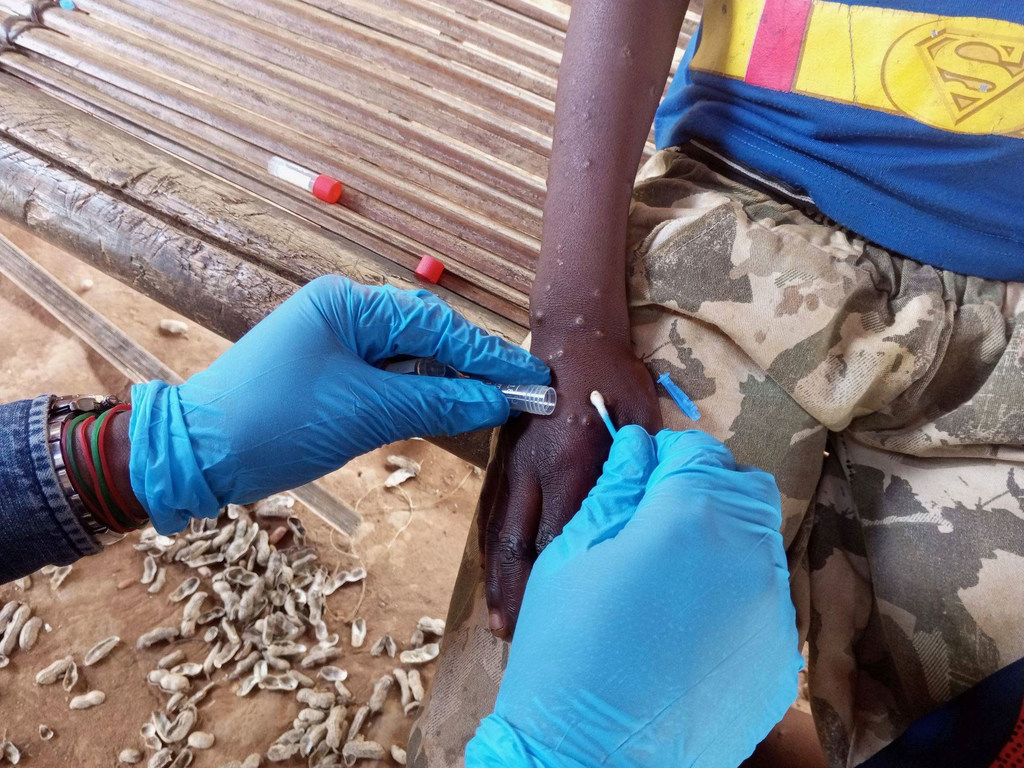
© WHO/Katson Maliro
A sample is taken from a person with MPOX.
Higher risk for children
Echoing this UNICEF alert, the UN's global health agency is concerned about the transmission of the virus at the household and child level. The World Health Organization ( WHO ) has noted a prevalence of cases among children under 5 years old in new countries affected by the disease, such as Burundi.
If it is an adult who has the disease, it is very important that they take measures to isolate themselves and prevent it.
“And as you know, children under five are at higher risk of severe disease and death. So at the household level, it is very important that someone is present. If it is an adult who has the disease, it is very important that they take measures to isolate themselves and prevent,” warned Dr. Patrick Ramadan Otim, an epidemiologist at the WHO Regional Office for Africa, during a virtual briefing.
Overall, WHO has noted “increasing community transmission.”
“But I must also clarify that in Uganda, Kenya and Rwanda, we have recorded very few cases. Uganda has recorded 3 cases, Rwanda 4 cases and Kenya only one case. So the intensity of transmission varies from one region to another,” Dr. Otim, however, put into perspective.
DRC accounts for over 90% of confirmed cases of mpox in Africa
While the MPOX epidemic is "active" in 13 countries on the African continent, the Democratic Republic of Congo (DRC) alone accounts for more than 90% of the 3,500 confirmed cases of monkeypox in the region, WHO stressed on Thursday, noting that among the affected countries on the continent, the level of prevalence is not the same.
Only two countries have reported more than 50 cases this year.
In addition to the DRC, Burundi, whose outbreak began last July, has reported 170 cases to date. The surge in smallpox cases in the DRC is due to outbreaks associated with two subclades of monkeypox virus (MPXV) clade Ia and clade Ib.
In addition to the outbreak in the eastern provinces of the DRC and Burundi, cases of MPOS due to clade Ib have been reported since July 2024 in three countries neighbouring the DRC, which had not previously reported cases: Kenya, Rwanda and Uganda.
Additionally, in 2024, clade Ia-related smallpox cases were reported in the Central African Republic and the Republic of Congo, and clade II-related cases were reported in South Africa, Cameroon, Côte d'Ivoire, Liberia, and Nigeria.
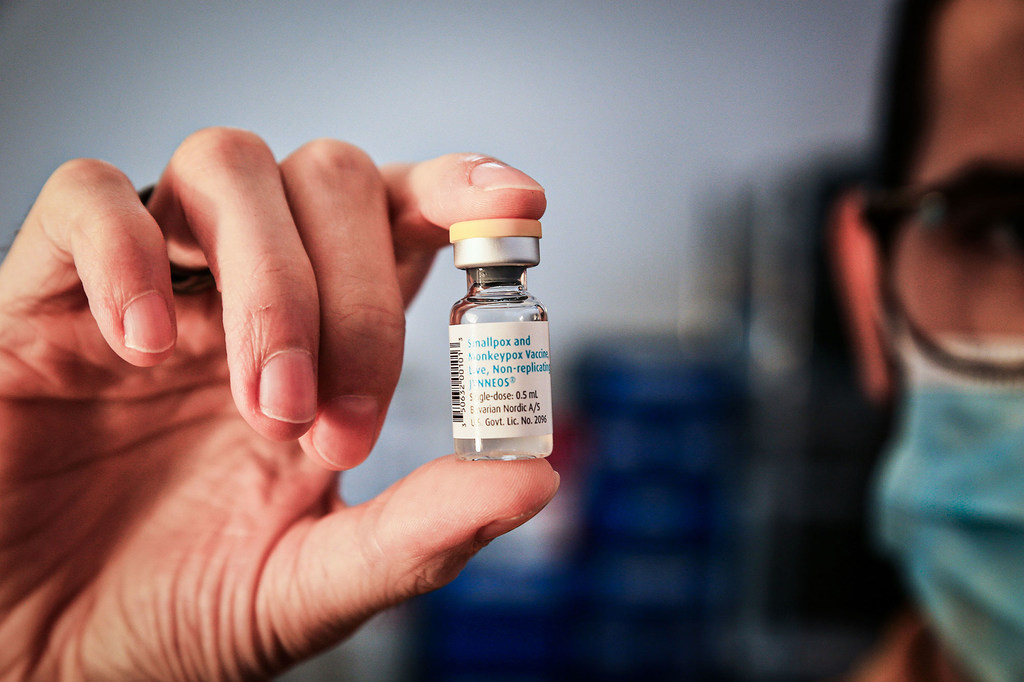
© WHO/Khaled Mostafa
A dose of MPOX vaccine.
Lack of vaccines
So, in addition to an "effective" surveillance system, the UN's global health agency is calling on the international community to concentrate resources in the DRC, Burundi and neighbouring countries that are at risk.
“There is a lot we can do and as you have heard us say, with COVID, you know, we are all in this together and everyone has a role to play,” said Dr Maria van Kerkhove, head of the WHO’s epidemic and pandemic preparedness and prevention unit.
Regarding the vaccine issue, WHO believes that it is a concern for everyone, particularly within the African continent.
“We have not deployed the vaccine in some of the areas where we would like to,” Dr. Otim insisted, adding that WHO is currently working with partners to expand access for countries in the region to import the vaccines that are currently recommended for importation.
"We have two vaccines that are currently recommended and for whatever reason in terms of production and available capacity to increase production, we do not have enough doses to be able to cover all the countries," he argued, warning that "the disease can affect anyone and in all regions of the world.
UNICEF calls for $16.5 million to fight smallpox in East and Southern Africa
For its part, UNICEF launched an appeal for $16.5 million on Thursday to intensify the fight against smallpox in East and Southern Africa.
According to the UN Fund, this urgent funding will help strengthen the response and preparedness across the region. "Funding needs will be reviewed regularly as the situation evolves rapidly," UNICEF said.
...
https://news.un.org/fr/story/2024/08/1148086
Mpox in Africa: children particularly at risk from the new variant (WHO/UNICEF)
August 22, 2024 Health Children are particularly at risk from the new variant of monkeypox, United Nations agencies warned Thursday, as they expressed concern about the rise in the number of cases among children in Africa.
According to the United Nations Children's Fund ( UNICEF ), children and vulnerable communities are bearing the brunt of an epidemic that is spreading across East Africa, Southern Africa and the Great Lakes region.
The new variant of the mpox virus (clade Ib) has been identified in several countries in the region, raising concerns due to its potential for wider transmission in age groups, particularly among young children.
Children under 5 years old account for almost a quarter of cases
UNICEF Regional Director for Eastern and Southern Africa, Etleva Kadilli, called for special priority to be given to the needs of children in the fight against the infection.
She described the situation in Burundi as particularly alarming, where the number of infections has almost doubled in a week.
Nearly 60% of cases were detected in children and adolescents, and a fifth of cases in children under five, in a country like Burundi.
As of August 20, 2024, 170 confirmed cases of MPOX have been detected in 26 of the country's 49 districts, 45% of which are women. Children and adolescents under 20 years of age account for nearly 60% of the detected cases, with children under 5 years of age accounting for more than 20% of the cases.
“The new strain of MPOX poses a serious threat to vulnerable children and families. In addition to immediate life-saving interventions, risk communication efforts and cross-border collaboration and a focused focus on programs that support the overall well-being of children must be prioritized,” Kadilli said in a statement.
© WHO/Katson Maliro
A sample is taken from a person with MPOX.
Higher risk for children
Echoing this UNICEF alert, the UN's global health agency is concerned about the transmission of the virus at the household and child level. The World Health Organization ( WHO ) has noted a prevalence of cases among children under 5 years old in new countries affected by the disease, such as Burundi.
If it is an adult who has the disease, it is very important that they take measures to isolate themselves and prevent it.
“And as you know, children under five are at higher risk of severe disease and death. So at the household level, it is very important that someone is present. If it is an adult who has the disease, it is very important that they take measures to isolate themselves and prevent,” warned Dr. Patrick Ramadan Otim, an epidemiologist at the WHO Regional Office for Africa, during a virtual briefing.
Overall, WHO has noted “increasing community transmission.”
“But I must also clarify that in Uganda, Kenya and Rwanda, we have recorded very few cases. Uganda has recorded 3 cases, Rwanda 4 cases and Kenya only one case. So the intensity of transmission varies from one region to another,” Dr. Otim, however, put into perspective.
DRC accounts for over 90% of confirmed cases of mpox in Africa
While the MPOX epidemic is "active" in 13 countries on the African continent, the Democratic Republic of Congo (DRC) alone accounts for more than 90% of the 3,500 confirmed cases of monkeypox in the region, WHO stressed on Thursday, noting that among the affected countries on the continent, the level of prevalence is not the same.
Only two countries have reported more than 50 cases this year.
In addition to the DRC, Burundi, whose outbreak began last July, has reported 170 cases to date. The surge in smallpox cases in the DRC is due to outbreaks associated with two subclades of monkeypox virus (MPXV) clade Ia and clade Ib.
In addition to the outbreak in the eastern provinces of the DRC and Burundi, cases of MPOS due to clade Ib have been reported since July 2024 in three countries neighbouring the DRC, which had not previously reported cases: Kenya, Rwanda and Uganda.
Additionally, in 2024, clade Ia-related smallpox cases were reported in the Central African Republic and the Republic of Congo, and clade II-related cases were reported in South Africa, Cameroon, Côte d'Ivoire, Liberia, and Nigeria.
© WHO/Khaled Mostafa
A dose of MPOX vaccine.
Lack of vaccines
So, in addition to an "effective" surveillance system, the UN's global health agency is calling on the international community to concentrate resources in the DRC, Burundi and neighbouring countries that are at risk.
“There is a lot we can do and as you have heard us say, with COVID, you know, we are all in this together and everyone has a role to play,” said Dr Maria van Kerkhove, head of the WHO’s epidemic and pandemic preparedness and prevention unit.
Regarding the vaccine issue, WHO believes that it is a concern for everyone, particularly within the African continent.
“We have not deployed the vaccine in some of the areas where we would like to,” Dr. Otim insisted, adding that WHO is currently working with partners to expand access for countries in the region to import the vaccines that are currently recommended for importation.
"We have two vaccines that are currently recommended and for whatever reason in terms of production and available capacity to increase production, we do not have enough doses to be able to cover all the countries," he argued, warning that "the disease can affect anyone and in all regions of the world.
UNICEF calls for $16.5 million to fight smallpox in East and Southern Africa
For its part, UNICEF launched an appeal for $16.5 million on Thursday to intensify the fight against smallpox in East and Southern Africa.
According to the UN Fund, this urgent funding will help strengthen the response and preparedness across the region. "Funding needs will be reviewed regularly as the situation evolves rapidly," UNICEF said.
...
https://news.un.org/fr/story/2024/08/1148086