

Michael Coston
Editor, Senior Moderator
MJA & EID Journal On The Rise Of Buruli Ulcer In Australia
[TABLE="class: tr-caption-container tr_bq, align: center, cellpadding: 0, cellspacing: 0"]
[TR]
[TD]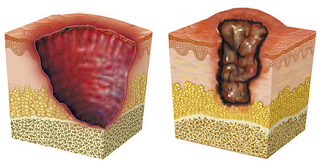 [/TD]
[/TD]
[/TR]
[TR]
[TD="class: tr-caption"]Skin Ulceration - Credit CDC[/TD]
[/TR]
[/TABLE]
#13,271
There is a popular Internet meme which says everything in Australia wants to kill you . . . which isn't precisely true. Some things there only want to maim you.
Another mystery surrounding this infection is that cases are becoming more severe. This from the January 2018 EID Journal.
This is also a reminder that vast oceans and long distances are no longer barriers to the spread of infectious diseases, and once exotic pathogens have a way of making inroads into new regions.
http://afludiary.blogspot.com/2018/0...uli-ulcer.html
[TABLE="class: tr-caption-container tr_bq, align: center, cellpadding: 0, cellspacing: 0"]
[TR]
[TD]
 [/TD]
[/TD][/TR]
[TR]
[TD="class: tr-caption"]Skin Ulceration - Credit CDC[/TD]
[/TR]
[/TABLE]
#13,271
There is a popular Internet meme which says everything in Australia wants to kill you . . . which isn't precisely true. Some things there only want to maim you.
Or so it seems.
While there are plenty of indigenous threats, in recent years a little understood skin infection - primarily reported in tropical Africa, Asia, and South America - has been increasingly reported in (often) temperate regions of Australia. It is called Buruli ulcer (aka Mycobacterium ulcerans disease), and while the pathogen is known - it is caused by a bacteria from the same family as Tuberculosis and Leprosy - how it is transmitted remains a mystery.
The World Health Organization fact sheet on this disease has just been updated: (Mycobacterium ulcerans infection)
Fact sheet
Updated April 2018
Fact sheet
Updated April 2018
Key facts
(Continue. . . .)- Buruli ulcer is a chronic debilitating disease caused by Mycobacterium ulcerans.
- It often affects the skin and sometimes bone, and can lead to permanent disfigurement and long-term disability.
- At least 33 countries with tropical, subtropical and temperate climates have reported Buruli ulcer in Africa, South America and Western Pacific regions. In Australia, an increasing number of cases have been reported since 2013.
- Partial data from 13 countries for 2017 shows 2206 cases compared to 1920 in 2016; Australia and Nigeria reporting most cases.
- Most patients in Africa are children aged under 15 years and most patients in Australia are adults.
- The mode of transmission is not known and there is no prevention for the disease.
Another mystery surrounding this infection is that cases are becoming more severe. This from the January 2018 EID Journal.
Research
Increased Severity and Spread of Mycobacterium ulcerans, Southeastern Australia
Alex Y.C. Tai , Eugene Athan, N. Deborah Friedman, Andrew Hughes, Aaron Walton, and Daniel P. O’Brien
Increased Severity and Spread of Mycobacterium ulcerans, Southeastern Australia
Alex Y.C. Tai
, Eugene Athan, N. Deborah Friedman, Andrew Hughes, Aaron Walton, and Daniel P. O’Brien Author affiliations: Barwon Health, Geelong, Victoria, Australia
Abstract
Reported cases of Mycobacterium ulcerans disease (Buruli ulcer) have been increasing in southeastern Australia and spreading into new geographic areas. We analyzed 426 cases of M. ulcerans disease during January 1998–May 2017 in the established disease-endemic region of the Bellarine Peninsula and the emerging endemic region of the Mornington Peninsula. A total of 20.4% of cases patients had severe disease.
Over time, there has been an increase in the number of cases managed per year and the proportion associated with severe disease. Risk factors associated with severe disease included age, time period (range of years of diagnosis), and location of lesions over a joint. We highlight the changing epidemiology and pathogenicity of M. ulcerans disease in Australia.
Abstract
Reported cases of Mycobacterium ulcerans disease (Buruli ulcer) have been increasing in southeastern Australia and spreading into new geographic areas. We analyzed 426 cases of M. ulcerans disease during January 1998–May 2017 in the established disease-endemic region of the Bellarine Peninsula and the emerging endemic region of the Mornington Peninsula. A total of 20.4% of cases patients had severe disease.
Over time, there has been an increase in the number of cases managed per year and the proportion associated with severe disease. Risk factors associated with severe disease included age, time period (range of years of diagnosis), and location of lesions over a joint. We highlight the changing epidemiology and pathogenicity of M. ulcerans disease in Australia.
Further research, including genomic studies of emergent strains with increased pathogenicity, is urgently needed to improve the understanding of this disease to facilitate implementation of effective public health measures to halt its spread.
Yesterday The Medical Journal of Australia published two articles - a case report and an editorial - on Mycobacterium ulcerans infection, which you'll find links to below: A severe case of Mycobacterium ulcerans (Buruli ulcer) osteomyelitis requiring a below-knee amputation
Michael J Loftus, Nicola Kettleton-Butler, Denton Wade, R Michael Whitby and Paul DR Johnson
Michael J Loftus, Nicola Kettleton-Butler, Denton Wade, R Michael Whitby and Paul DR Johnson
Med J Aust 2018; 208 (7): 290-291. || doi: 10.5694/mja17.01158
Published online: 16 April 2018
Published online: 16 April 2018
Tackling the worsening epidemic of Buruli ulcer in Australia in an information void: time for an urgent scientific response
Daniel P O'Brien, Eugene Athan, Kim Blasdell and Paul De Barro
Med J Aust 2018; 208 (7): 287-289. || doi: 10.5694/mja17.00879
Published online: 16 April 2018
While M. ulcerans is found in the environment (soil and water), it has also been detected (by PRC) in mosquitoes and other biting insects, and is known to affect small mammals (particularly possums), making for a number of plausible routes of transmission. Daniel P O'Brien, Eugene Athan, Kim Blasdell and Paul De Barro
Med J Aust 2018; 208 (7): 287-289. || doi: 10.5694/mja17.00879
Published online: 16 April 2018
If that sounds vaguely familiar, you may recall that armadillos have been linked to the spread of Leprosy in North America (seeVideo: Florida DOH On The Link Between Armadillos & Leprosy).
While the number of Australian cases remains small, and the infection can usually be treated with antibiotics (albeit with sometimes serious side effects), the outcomes are not always positive.This is also a reminder that vast oceans and long distances are no longer barriers to the spread of infectious diseases, and once exotic pathogens have a way of making inroads into new regions.
http://afludiary.blogspot.com/2018/0...uli-ulcer.html