Pathfinder
Editor, Senior Moderator
USDA Confirms Highly Pathogenic H5N2 Avian Influenza in Commercial Turkey Flock in Minnesota
Last Modified: Mar 27, 2015
CDC considers the risk to people from these HPAI H5 infections in wild birds, backyard flocks and commercial poultry, to be low
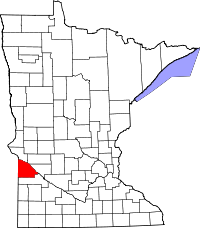
WASHINGTON, March 27, 2015 -- The United States Department of Agriculture’s (USDA) Animal and Plant Health Inspection Service (APHIS) has confirmed the presence of highly pathogenic H5N2 avian influenza (HPAI) in a commercial turkey flock in Lac Qui Parle County, Minnesota. This is the second confirmation in a commercial flock in Minnesota. The flock of 66,000 turkeys is located within the Mississippi flyway where this strain of avian influenza was previously identified. CDC considers the risk to people from these HPAI H5 infections in wild birds, backyard flocks and commercial poultry, to be low. No human infections with the virus have been detected at this time.
Samples from the turkey flock, which experienced increased mortality, were tested at the University of Minnesota Veterinary Diagnostic Laboratory and the APHIS National Veterinary Services Laboratories in Ames, Iowa confirmed the findings. APHIS is working closely with the Minnesota Board of Animal Health on a joint incident response. State officials quarantined the affected premises and birds on the property will be depopulated to prevent the spread of the disease. Birds from the flock will not enter the food system.
The Minnesota Department of Health is working directly with poultry workers at the affected facility to ensure that they are taking the proper precautions. As a reminder, the proper handling and cooking of poultry and eggs to an internal temperature of 165 ˚F kills bacteria and viruses.
As part of existing avian influenza response plans, Federal and State partners are working jointly on additional surveillance and testing in the nearby area. The United States has the strongest AI surveillance program in the world, and USDA is working with its partners to actively look for the disease in commercial poultry operations, live bird markets and in migratory wild bird populations.
USDA will be informing the World Organization for Animal Health (OIE) as well as international trading partners of this finding. USDA also continues to communicate with trading partners to encourage adherence to OIE standards and minimize trade impacts. OIE trade guidelines call on countries to base trade restrictions on sound science and, whenever possible, limit restrictions to those animals and animal products within a defined region that pose a risk of spreading disease of concern.
These virus strains can travel in wild birds without them appearing sick. People should avoid contact with sick/dead poultry or wildlife. If contact occurs, wash your hands with soap and water and change clothing before having any contact with healthy domestic poultry and birds.
All bird owners, whether commercial producers or backyard enthusiasts, should continue to practice good biosecurity, prevent contact between their birds and wild birds, and report sick birds or unusual bird deaths to State/Federal officials, either through their state veterinarian or through USDA’s toll-free number at 1-866-536-7593. Additional information on biosecurity for backyard flocks can be found at http://healthybirds.aphis.usda.gov.
Additional background
Avian influenza (AI) is caused by an influenza type A virus which can infect poultry (such as chickens, turkeys, pheasants, quail, domestic ducks, geese and guinea fowl) and is carried by free flying waterfowl such as ducks, geese and shorebirds. AI viruses are classified by a combination of two groups of proteins: hemagglutinin or “H” proteins, of which there are 16 (H1–H16), and neuraminidase or “N” proteins, of which there are 9 (N1–N9). Many different combinations of “H” and “N” proteins are possible. Each combination is considered a different subtype, and can be further broken down into different strains. AI viruses are further classified by their pathogenicity (low or high)— the ability of a particular virus strain to produce disease in domestic chickens.
The HPAI H5N8 virus originated in Asia and spread rapidly along wild bird migratory pathways during 2014, including the Pacific flyway. In the Pacific flyway, the HPAI H5N8 virus has mixed with North American avian influenza viruses, creating new mixed-origin viruses. These mixed-origin viruses contain the Asian-origin H5 part of the virus, which is highly pathogenic to poultry. The N parts of these viruses came from North American low pathogenic avian influenza viruses.
USDA has identified two mixed-origin viruses in the Pacific Flyway: the HPAI H5N2 virus and new HPAI H5N1 virus. The new HPAI H5N1 virus is not the same virus as the HPAI H5N1 virus found in Asia, Europe and Africa that has caused some human illness. Only the HPAI H5N2 virus has been detected in the Pacific, Mississippi and Central Flyways.
Detailed analysis of the virus is underway in cooperation with the U.S. Centers for Disease Control and Prevention. For more information about the ongoing avian influenza disease incident visit the APHIS website. More information about avian influenza can be found on the USDA avian influenza page. More information about avian influenza and public health is available on the CDC website.
Last Modified: Mar 27, 2015
CDC considers the risk to people from these HPAI H5 infections in wild birds, backyard flocks and commercial poultry, to be low
WASHINGTON, March 27, 2015 -- The United States Department of Agriculture’s (USDA) Animal and Plant Health Inspection Service (APHIS) has confirmed the presence of highly pathogenic H5N2 avian influenza (HPAI) in a commercial turkey flock in Lac Qui Parle County, Minnesota. This is the second confirmation in a commercial flock in Minnesota. The flock of 66,000 turkeys is located within the Mississippi flyway where this strain of avian influenza was previously identified. CDC considers the risk to people from these HPAI H5 infections in wild birds, backyard flocks and commercial poultry, to be low. No human infections with the virus have been detected at this time.
Samples from the turkey flock, which experienced increased mortality, were tested at the University of Minnesota Veterinary Diagnostic Laboratory and the APHIS National Veterinary Services Laboratories in Ames, Iowa confirmed the findings. APHIS is working closely with the Minnesota Board of Animal Health on a joint incident response. State officials quarantined the affected premises and birds on the property will be depopulated to prevent the spread of the disease. Birds from the flock will not enter the food system.
The Minnesota Department of Health is working directly with poultry workers at the affected facility to ensure that they are taking the proper precautions. As a reminder, the proper handling and cooking of poultry and eggs to an internal temperature of 165 ˚F kills bacteria and viruses.
As part of existing avian influenza response plans, Federal and State partners are working jointly on additional surveillance and testing in the nearby area. The United States has the strongest AI surveillance program in the world, and USDA is working with its partners to actively look for the disease in commercial poultry operations, live bird markets and in migratory wild bird populations.
USDA will be informing the World Organization for Animal Health (OIE) as well as international trading partners of this finding. USDA also continues to communicate with trading partners to encourage adherence to OIE standards and minimize trade impacts. OIE trade guidelines call on countries to base trade restrictions on sound science and, whenever possible, limit restrictions to those animals and animal products within a defined region that pose a risk of spreading disease of concern.
These virus strains can travel in wild birds without them appearing sick. People should avoid contact with sick/dead poultry or wildlife. If contact occurs, wash your hands with soap and water and change clothing before having any contact with healthy domestic poultry and birds.
All bird owners, whether commercial producers or backyard enthusiasts, should continue to practice good biosecurity, prevent contact between their birds and wild birds, and report sick birds or unusual bird deaths to State/Federal officials, either through their state veterinarian or through USDA’s toll-free number at 1-866-536-7593. Additional information on biosecurity for backyard flocks can be found at http://healthybirds.aphis.usda.gov.
Additional background
Avian influenza (AI) is caused by an influenza type A virus which can infect poultry (such as chickens, turkeys, pheasants, quail, domestic ducks, geese and guinea fowl) and is carried by free flying waterfowl such as ducks, geese and shorebirds. AI viruses are classified by a combination of two groups of proteins: hemagglutinin or “H” proteins, of which there are 16 (H1–H16), and neuraminidase or “N” proteins, of which there are 9 (N1–N9). Many different combinations of “H” and “N” proteins are possible. Each combination is considered a different subtype, and can be further broken down into different strains. AI viruses are further classified by their pathogenicity (low or high)— the ability of a particular virus strain to produce disease in domestic chickens.
The HPAI H5N8 virus originated in Asia and spread rapidly along wild bird migratory pathways during 2014, including the Pacific flyway. In the Pacific flyway, the HPAI H5N8 virus has mixed with North American avian influenza viruses, creating new mixed-origin viruses. These mixed-origin viruses contain the Asian-origin H5 part of the virus, which is highly pathogenic to poultry. The N parts of these viruses came from North American low pathogenic avian influenza viruses.
USDA has identified two mixed-origin viruses in the Pacific Flyway: the HPAI H5N2 virus and new HPAI H5N1 virus. The new HPAI H5N1 virus is not the same virus as the HPAI H5N1 virus found in Asia, Europe and Africa that has caused some human illness. Only the HPAI H5N2 virus has been detected in the Pacific, Mississippi and Central Flyways.
Detailed analysis of the virus is underway in cooperation with the U.S. Centers for Disease Control and Prevention. For more information about the ongoing avian influenza disease incident visit the APHIS website. More information about avian influenza can be found on the USDA avian influenza page. More information about avian influenza and public health is available on the CDC website.