<meta http-equiv="Content-Type" content="text/html; charset=utf-8"><meta name="ProgId" content="Word.Document"><meta name="Generator" content="Microsoft Word 10"><meta name="Originator" content="Microsoft Word 10"><link rel="File-List" href="file:///D:%5CDOCUME%7E1%5CADMINI%7E1%5CLOCALS%7E1%5CTemp%5Cmsohtml1%5C01%5Cclip_filelist.xml"><o:smarttagtype namespaceuri="urn:schemas-microsoft-com

ffice:smarttags" name="country-region"></o:smarttagtype><o:smarttagtype namespaceuri="urn:schemas-microsoft-com
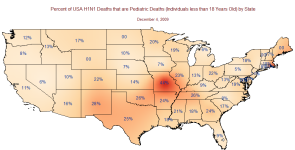
ffice:smarttags" name="place"></o:smarttagtype><!--[if gte mso 9]><xml> <o:OfficeDocumentSettings> <o:RelyOnVML/> <o:AllowPNG/> </o:OfficeDocumentSettings> </xml><![endif]--><!--[if gte mso 9]><xml> <w:WordDocument> <w:View>Normal</w:View> <w:Zoom>0</w:Zoom> <w:Compatibility> <w:BreakWrappedTables/> <w:SnapToGridInCell/> <w:WrapTextWithPunct/> <w:UseAsianBreakRules/> </w:Compatibility> </w:WordDocument> </xml><![endif]--><!--[if !mso]><object classid="clsid:38481807-CA0E-42D2-BF39-B33AF135CC4D" id=ieooui></object> <style> st1\:*{behavior:url(#ieooui) } </style> <![endif]--><style> <!-- /* Style Definitions */ p.MsoNormal, li.MsoNormal, div.MsoNormal {mso-style-parent:""; margin:0cm; margin-bottom:.0001pt; mso-pagination:widow-orphan; font-size:12.0pt; font-family:"Times New Roman"; mso-fareast-font-family:"Times New Roman"; mso-ansi-language:EN-GB;} @page Section1 {size:612.0pt 792.0pt; margin:72.0pt 90.0pt 72.0pt 90.0pt; mso-header-margin:35.4pt; mso-footer-margin:35.4pt; mso-paper-source:0;} div.Section1 {page:Section1;} --> </style><!--[if gte mso 10]> <style> /* Style Definitions */ table.MsoNormalTable {mso-style-name:"Table Normal"; mso-tstyle-rowband-size:0; mso-tstyle-colband-size:0; mso-style-noshow:yes; mso-style-parent:""; mso-padding-alt:0cm 5.4pt 0cm 5.4pt; mso-para-margin:0cm; mso-para-margin-bottom:.0001pt; mso-pagination:widow-orphan; font-size:10.0pt; font-family:"Times New Roman";} </style> <![endif]--> We need to be very careful playing the numbers game. States are obliged to provide information on children that die - including if it was H1N1 - in a way that dies not apply to adults. Therefore the only really reliable information we have relates to dead children (this applies to the <st1:country-region><st1

lace>US</st1
lace></st1:country-region> only). IF we could accurately work out what percentage of H1N1 were in children we could use the child mortality data to get a better guide to adult deaths. The numbers that are going to be comparable to the way we gather seasonal flu deaths are only going to be available afterwards by comparing total excess mortality figures against seasonal averages.
These maps may be telling us more about data collection and centralised reporting than the H1N1 deaths by age group.
<o
> </o
>