
• FluTrackers.com Inc. does not provide medical advice. Information on this web site is collected from various internet resources, and the FluTrackers board of directors makes no warranty to the safety, efficacy, correctness or completeness of the information posted on this site by any author or poster. The information collated here is for instructional and/or discussion purposes only and is NOT intended to diagnose or treat any disease, illness, or other medical condition. Every individual reader or poster should seek advice from their personal physician/healthcare practitioner before considering or using any interventions that are discussed on this website. By continuing to access this website you agree to consult your personal physican before using any interventions posted on this website, and you agree to hold harmless FluTrackers.com Inc., the board of directors, the members, and all authors and posters for any effects from use of any medication, supplement, vitamin or other substance, device, intervention, etc. mentioned in posts on this website, or other internet venues referenced in posts on this website.
  • We are not asking for any donations. Do not donate to any entity who says they are raising funds for us.

Mali - Dengue outbreak 2023- 2026

Pathfinder

Editor, Senior Moderator
Translation Google

Mali: health services on alert, after the discovery of a case of dengue fever

September 13, 2023

A patient residing in commune V of the Bamako district tested positive for the Dengue virus on September 9, 2023. The Director General of Health and Public Hygiene announced this on September 12, 2023 in correspondence.

The general director of health and public hygiene says that the patient is 44 years old and lives in Baco-Djicoroni Golf in commune 5 of the Bamako district. She tested positive for the Dengue virus on September 9. Furthermore, the Director General of Health specifies that this lady “has not made any stay in a country where the Dengue epidemic is currently raging, in particular Burkina Faso” .

An active search for additional cases was conducted in healthcare facilities and the immediate surrounding area. According to Dr Cheick Amadou Tidiane Traoré, this made it possible to carry out a rapid diagnostic test (RDT) on a person in a local polyclinic. According to the director, “ twelve (12) people who had been in contact with the patient were taken for tests. The samples were sent to the National Institute of Public Health INSP for confirmation .

Faced with this worrying situation, the Director General of Health has issued directives to the Regional Directors of Health for the implementation of immediate preventive measures. These measures aim to contain the spread of Dengue and protect the population.

Remember that the last cases of dengue fever recorded in Mali date back to 2019 and 2020.

Contact cases tested negative

The tests of these contact cases turned out to be negative. This is what the Director General of Health and Public Hygiene declared on September 13, 2023. Dr Cheick Amadou Tidiane Traoré reassures that Mali has not recorded serious cases of dengue causing death from 2019 to date. He invites people to clean up their environment and protect themselves against mosquitoes.

...
https://www.studiotamani.org/144738...-alerte-apres-la-decouverte-dun-cas-de-dengue

-----------------------------------------

Alassane Konate @Web_Journaliste
...


image.png


https://twitter.com/Web_Journaliste/status/1701687905326915756
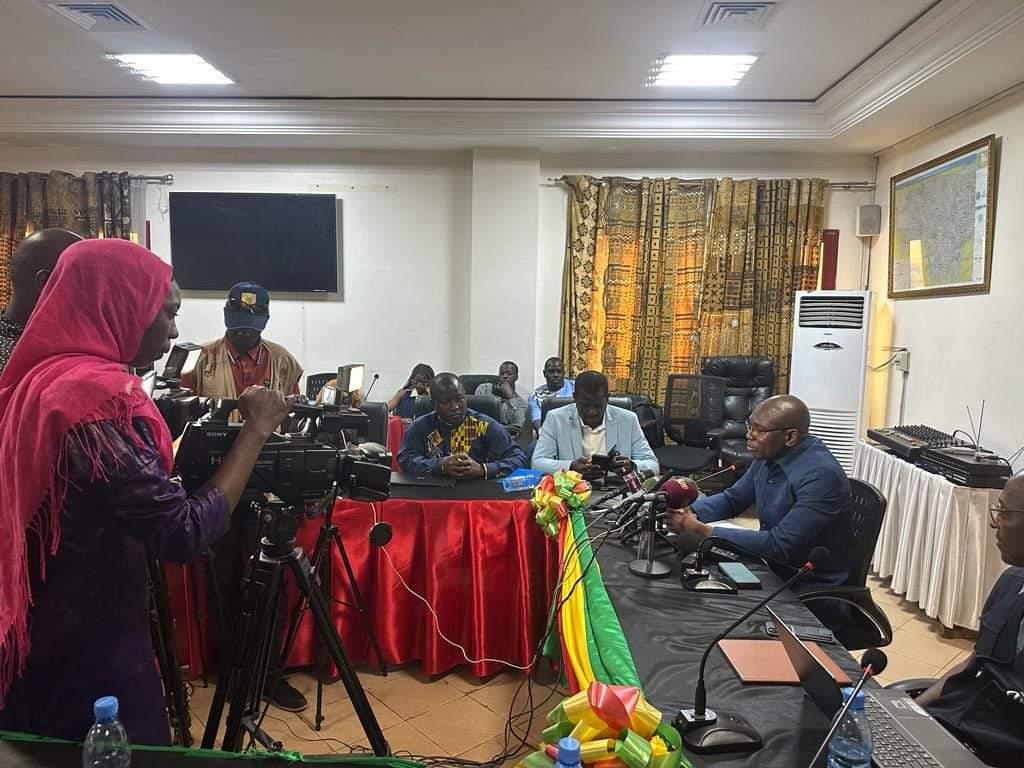
 
DENGUE EPIDEMIC, THE PRESS INVITED TO WARN POPULATIONS AGAINST ANY SPREAD.
image.png

FB_IMG_1695138307510.jpg
The Secretary General of the Ministry of Health and Social Development Dr Abdoulaye Guindo surrounded by the WHO representative in Mali, public health experts and infectious disease specialists hosted a press conference.

Objective: to warn populations against any spread of the dengue virus in our country.


In the report presented by the Deputy Director General of Health and Public Hygiene, Mr. Kalifa Keita, as of September 9, 2023, out of 65 samples tested, 12 cases were confirmed and zero deaths noted. Cases recorded in the health districts of communes 2, 4, 5 and 6 for Bamako, and 3 regions of the country.

The public health emergency operations department is in alert mode, Secretary General Doctor Guindo clarified before explaining to the press the urgency of informing the population on the good behavior and manners to adopt to avoid catching the disease. .

For information, dengue is a fever of viral origin caused by an arbovirus transmitted by Aedes mosquitoes (Ae. aegypti and Ae. Albopiticus). There are four types of arboviruses responsible for dengue, serologically different, but closely related: dengue viruses (VDEN) 1, 2, 3 and 4 of the Flaviviridae family.

The symptoms are most often flu-like (fever, headache, body aches) and appear within 3 to 14 days (4 to 7 days on average) following the mosquito bite. Dengue affects infants, young children and adults alike. Most often benign although disabling, dengue can however be complicated by hemorrhagic forms.

For prevention, the fight against vector mosquitoes and personal protection (repellent, wearing long, loose clothing, etc.) constitute the best means of reducing the epidemic risk. People residing in an area likely to be affected by an endemic or epidemic of dengue can help reduce this risk by fighting mosquitoes and in particular by destroying or drying up potential breeding grounds, which constitute any reserve of stagnant water in the area. outside or inside the home.

Around 30 journalists from the public and private press took part in the press conference. It was in the department's premises.
CCOM/MSDS


Last modified Tuesday, September 19, 2023 4:23 p.m.

http://www.sante.gov.ml/index.php/a...enir-les-populations-contre-toute-propagation


Translation Google

Fight against dengue: The awareness campaign against the epidemic launched

By The Republican-Oct 12, 2023

The dengue epidemic has accelerated in the health district of commune VI in recent weeks, with more than 9 confirmed cases. It is in order not to lower vigilance regarding dengue fever, which can be a serious illness, and to contribute to the reduction of morbidity and mortality linked to the disease, to collect information on cases of dengue fever occurred in commune VI in order to take the necessary measures to contain the disease, which was launched on the site of the displaced people of Sénou, on Tuesday October 10, 2023, the awareness campaign and support for the investigation in response to the dengue epidemic.

Dr. Diakité Lahansina, the deputy coordinator of the ONG Alliance Médicale Contre le Paludisme Santé Population (ALIMA) which financed the campaign, indicated that it aims to challenge the population of commune VI on the risks linked to this epidemic of dengue fever and the importance of implementing prevention and protection measures, even during this period, which are: consult a doctor quickly in the event of symptoms, protect yourself from mosquito bites and continue to protect yourself even when sick to protect its relatives, and eliminate larval breeding sites. He informed that the project is being implemented in Bamako and Ségou, particularly the Niono health district. The head doctor of the health district of commune VI, in his intervention, pointed out that the dengue epidemic is a reality within the commune.

According to him, the objective of the campaign is to contribute to the reduction of morbidity and mortality linked to dengue; collect information on cases of dengue fever occurring in commune VI in order to take the necessary measures to contain the disease; describe the individual characteristics of the cases in time, place and person; actively search for additional unreported cases; complete the linear list of contact cases and subjects; discuss with local authorities the measures to be taken; carry out public health actions to combat disease, etc. “Yesterday, only in commune VI, 9 cases of dengue fever were confirmed and today too we will do a lot of testing. Treatment of dengue fever is symptomatic like viral diseases.

As for the representative of the World Health Organization (WHO), he recalled the commitment of his structure in the fight against the epidemic while emphasizing that their support will not be lacking.

Moussa Samba Diallo

https://www.maliweb.net/sante/lutte...lisation-contre-lepidemie-lancee-3039148.html
 
WEEKLY BULLETIN ON OUTBREAKS
AND OTHER EMERGENCIES

Week 38: 18 - 24 September 2023
Data as reported by: 17:00; 24 September 2023

...​

Mali

Dengue


229 Cases
0 Death
0 CFR


EVENT DESCRIPTION

On 9 September 2023, the University Clinical Research
Center (UCRC) in Mali reported a case of dengue in
a 44-year-old woman living in Bacodjicoroni Golf, in
Bamako’s commune V health district. The case had
symptom onset on 31 August 2023 with fever, nausea,
cold, aches, vomiting, cough and severe fatigue.

Following the deterioration of symptoms, she visited
a local clinic on 8 September 2023, where she was
hospitalized. On 9 September 2023, the Molecular Biology
and Genomics Laboratory of the UCRC confirmed the
sample taken from the case positive for dengue virus by
real time polymerase chain reaction (RT-PCR).

In week 38 (18-24 September), 164 suspected cases were
reported, including 12 confirmed cases and 0 deaths.
As of 24 September, 229 suspected cases, including 24
confirmed by PCR, and no deaths have been reported
from 11 districts in five regions. Of all suspected cases
reported, 54.4% were male. Of the 24 confirmed cases,
21 (87.5%) are aged 20 years and older.

Bamako region had the highest number of cases (209
cases, 91.3%) reported from all six communes (districts):
Commune I (7 suspected cases, including 1 confirmed
case), Commune II (45 suspected cases, 6 confirmed),
Commune III (11 suspected cases, 1 confirmed),
Commune IV (43 suspected cases, 2 confirmed),
Commune V (45 suspected cases, 6 confirmed),
Commune VI (58 suspected cases, 5 confirmed).

The other districts reporting cases are Kalaban Coro (16
suspected, 1 confirmed) and Banamba (1 suspected, 0
confirmed) districts in Koulikoro region; Sikasso district
(1 suspected, 0 confirmed) in Sikasso region; San
district (1 suspected, 1 confirmed) in Ségou region and
Mopti district (1 suspected, 1 confirmed) in Mopti region.
Two serotypes were isolated from 18 positive samples:
DENV-1 (7 cases) and DENV-3 (11 cases).

The last reported cases of dengue fever in Mali were
recorded in 2020, with two cases in the Kayes (1) and
Koulikoro (1) regions.

PUBLIC HEALTH ACTIONS

• The Public Health Emergency Operations Center has
been activated. Strategic meetings are held regularly
at the Ministry of Health and Social Development to
coordinate the response to the outbreak and mobilize
technical and financial partners.

• The response plan was developed in collaboration with
partners, including WHO and CDC, to guide the actions
and scope of the response.

• Epidemiological surveillance is being strengthened at
all levels of the health pyramid, and national technical
guidelines on dengue fever were distributed at all levels.

• Confirmatory diagnosis is obtained by PCR at the
reference laboratories (Institut National de Santé Publique,
University Clinical Research Center, Laboratoire de
Biologie Moléculaire Appliquée (LBMA) and the Centre
d’Infectiologie Charles Mérieux).

• Vector control is implemented through the indoor
fumigation of households where confirmed cases reside.

• Risk communication is actively ongoing, involving
national health authorities, and aims to raise public
awareness through various channels about disease
prevention.

SITUATION INTERPRETATION

An outbreak of dengue has been confirmed in Mali,
coinciding with the country’s preparedness efforts.
The increased number of suspected and confirmed cases
within two weeks could be attributed to the intensified
surveillance efforts for hemorrhagic fevers following the
ongoing dengue outbreak in Burkina Faso.

The current response is challenged by a shortage of
fumigation supplies, sampling kits, and rapid diagnostic
tests. Furthermore, the affected regions are characterized
with substantial population mobility which could contribute
to the spread of the disease.


https://www.afro.who.int/countries/...gencies-bulletin-week-38-18-24-september-2023
 
WEEKLY BULLETIN ON OUTBREAKS
AND OTHER EMERGENCIES

Week 45: 06 - 12 November 2023
Data as reported by: 17:00; 12 November 2023

...

Mali

Dengue Fever


2 910 Cases
6 Deaths
0.2% CFR


EVENT DESCRIPTION

Since 9 September 2023, Mali has been contending with
a dengue fever outbreak. During epidemiological week
45 (ending 12 November 2023), a total of 504 suspected
cases of dengue fever were reported, including 49
confirmed cases and four deaths (CFR 0.8%). While there
is a slight decrease in the number of confirmed cases
reported in week 45 (n=49) compared to the previous
week 44 where 59 confirmed cases were recorded, the
number of deaths increased from zero deaths reported
in week 44 to four deaths reported in week 45.

From 9 September to 12 November 2023, a cumulative
total of 2 910 cases were reported across 14 health
districts in six health regions.Among these cases, 385
(13.2%) were laboratory-confirmed, and there were six
deaths, resulting in a Case Fatality Rate of 1.6%. The
circulating serotypes identified were DENV-1 and DENV3,
with coinfection (DENV1+3) detected in 31 laboratory
samples. More than half (n= 198, 51.4%) of the confirmed
cases were males, and most of the reported cases were
aged over 20 years, representing 85.0%.

The Bamako commune was the most affected, with 473
suspected cases, 43 confirmed cases, and two deaths
(CFR 0.4%). This could be linked to factors such as
population density, mobility, or potentially increased
access to confirmation tests.

Of note, the last dengue outbreak in Mali was in 2020 with
only two cases reported in Kayes and Koulikoro regions.

PUBLIC HEALTH ACTIONS

Regular coordination meetings for daily Dengue
fever response activities are organized at the
national level.

In collaboration with the CDC and WHO, the Ministry
of Health has developed a comprehensive dengue
fever response plan.

The Ministry of Health is mobilizing health partners to
support outbreak response activities.

Joint in-depth epidemiological investigations are
conducted by the Ministry of Health in the affected
districts.

Epidemiological surveillance has been
strengthened at all levels of the health pyramid.
Surveillance activities including the distribution of
dengue fever technical directives, investigations
around suspected cases, risk analysis,
deployment of rapid response teams, and
reinforcement of surveillance at Points of Entry
(PoE) are ongoing.

Risk communication and community engagement
activities through various channels, including faceto-face
interactions and audio-visuals are being
conducted. These activities involve educating the
population on antivectorial measures.

Laboratory activities, including sample testing
using PCR techniques and serotyping by referral
laboratories are ongoing.

Antivectorial response activities involving home
fumigation and the surroundings of confirmed
cases, are underway.

SITUATION INTERPRETATION

Three months after the report of the initial cases of
dengue fever in Bamako, the outbreak has now
spread to five additional regions with an increase
in cases.
Bamako, the capital, and the largest
urban centre in Mali plays a pivotal role in disease
transmission within Bamako and to other regions due
to its high population density and massive human
flow. Furthermore, being located on the Niger River
with a major river port, it serves as a key sub-region
commercial hub. Immediate measures, including
antivectorial activities, and surveillance, should
be reinforced to control the outbreak’s spread to
non-affected areas.
Additionally, there is an urgent
need to secure the necessary resources for the
implementation of the response plan.

https://www.afro.who.int/health-topics/disease-outbreaks/outbreaks-and-other-emergencies-updates
 
Translation Google

Mali: dengue is on the rise with more than 20 deaths, according to the health director

22 hours ago

Authorities say dengue fever is on the rise in Mali, posing a new threat to the West African country grappling with extremist attacks and political turmoil.

The director general of health and public hygiene, Dr. Cheick Amadou Tidiane Traoré, said in an interview with The Associated Press on Wednesday that his department had counted 21 deaths and 600 cases of the disease on Monday.
...
The Malian government has not officially released any figures on the disease, nor has it announced whether it has requested help from the WHO.

“Dengue is also present in Burkina Faso and Senegal, and we need to raise public awareness,” Traoré said.

The virus typically appears in more tropical environments, but was first detected in relatively arid Mali in 2008. Reports of the virus re-emerged in 2017 and 2019. There is little long-term data on its prevalence .

In August, Chad's government reported the country's first-ever dengue outbreak, with dozens of cases confirmed in the country, which, like Mali, is located in the vast Sahel region south of the Sahara Desert.
...

https://intellivoire.net/mali-dengu...s-de-20-deces-selon-le-directeur-de-la-sante/
 
Translation Google

Mali: the government and the WHO commit to the fight against the dengue epidemic

By maliweb.net-Dec 15, 202310

As part of the fight against the dengue epidemic, the World Health Organization (WHO) in partnership with the General Directorate of Health and Public Hygiene, carried out on Wednesday December 13, fumigation (spraying) of the Torokorobougou B basic school in Commune V of the Bamako district. It was under the aegis of Dr Cheick Tidiane Traoré, Director General of Health and Public Hygiene.

This fumigation (spraying) operation is part of the fight against the dengue epidemic which has been raging in Mali for several months. It marks the desire of the municipal council of Commune V to support the authorities in the fight against the disease. “Because the State alone cannot do everything ” remarked Ms. Haïdara Oumou Touré, 5e< /span> deputy mayor.

Schools are places where many mosquitoes swarm. Hence the choice of the basic school of Torokorobougou B to launch the start of the fumigation campaign in commune V. Which has a double advantage since it will not only help protect children against disease but also have a healthy environment. “In the days to come, sanitation days will be organized in the different neighborhoods of the commune V ”, announced the 5< a i=3>e deputy mayor of commune V.

Spraying is one of the methods of combating dengue fever, which is a very serious viral disease, said Dr Cheick Tidiane Traoré, Director General of Health and Public Hygiene. This disease is transmitted to humans by mosquitoes that live in our environment. It is within this framework that fumigation operations will be carried out at the level of all educational establishments. “ This is a large-scale activity that we will continue (…) in order to interrupt the disease cycle ”, explained Dr Traoré.

While inviting other municipalities to do the same, since health, he said, goes beyond the business of technicians alone. To do this, it is important and imperative to support the Department of Health in its mission to protect the population. This can only be done by helping to weed and clean up the environment where mosquitoes proliferate. “ Protecting yourself from mosquitoes by wearing long clothing and using repellents is not contraindicated. When you are sick, do not primarily self-medicate but go to a health facility where you can be screened for dengue fever. This will provide security for the patient and those around them ,” advised Dr Cheick Tidiane Traoré.

The operation took place in the presence of officials from the World Health Organization office in Mali. It should be remembered that Mali experienced the first case of dengue fever on September 9. To date, the country has recorded 629 cases including 29 deaths.

Abdrahamane SISSOKO/maliweb.net

https://www.maliweb.net/sante/mali-...te-contre-lepidemie-de-la-dengue-3046777.html
 
Translation Google

Dengue and Zika fever: Mosquitoes to blame

Published on Saturday January 6, 2024 | Mali Tribune

We are in the midst of a dengue and Zika fever epidemic in Mali. The Ministry of Health and Social Development, activated the Department of Public Health Emergency Operations (DSP) which, through the Risk Communication and Community Engagement Unit (Crec) launched an awareness campaign community in the six communes of Bamako.

For several days, officials from the information, awareness and communication unit (Crec) traveled through the six communes of Bamako to inform and raise awareness against dengue fever and Zika fever. It was the last week of 2023 in Bamako. Overall, we must defeat mosquitoes to defeat dengue fever and Zika fever, they advocated.

In Commune I, at the headquarters of the social development services directorate, Ms. Coulibaly Mah Diéfaga and a large delegation were in front of community leaders for a series of information and awareness campaigns on dengue and Zika fever. She announced that since last September, Mali has recorded cases of dengue and the number of cases continues to evolve. Today, we are in a period of epidemic and we need a change in behavior, she said.

Dengue fever and Zika fever are all transmitted by the “Aedes aegypti” mosquito, commonly called “Réal sossoni” or “Mourountini” here. “These mosquitoes are in the environment and bite people even during the day. We must clean up the environment,” advised the head of delegation. Stagnant water, waste and dirty water that remains in our yards are breeding grounds for mosquitoes. We need to clean up and this requires awareness and change.

In the days to come, in addition to Bamako, the regions will be targeted. Today all regions are affected except the northern regions. Ms. Coulibaly strongly advocated sanitation: “Let’s clean up our yards and surrounding areas. Let’s stop certain practices to beat dengue and Zika fever,” she insisted. These two diseases have the same vector of transmission, mosquitoes. And they have complications to some degree. Zika fever can cause congenital malformations in children in the event of pregnancy in a patient and complicated forms of dengue kill, according to health officials.

Koureichy Cissé

http://news.abamako.com/h/289855.html

 
WEEKLY BULLETIN ON OUTBREAKS
AND OTHER EMERGENCIES

Week 22: 27 May - 2 June 2024
Data as reported by: 17:00; 2 June 2024

...
Mali

Dengue


614 Cases
4 Deaths

0.7% CFR

EVENT DESCRIPTION

Mali continues to respond to a dengue outbreak, which
started in epidemiological week 36, 2023 (week ending
10 September). There has been a sustained downward
trend in the number of suspected and confirmed cases
and related deaths since epidemiological week 13 (week
ending 31 March 2024). In epidemiological week 21, there
was only one confirmed case of dengue in the country,
showing a significant decrease from the nine confirmed
cases in week 20.

From epidemiological week 1 to week 22, 2024, there
have been 4 605 suspected cases of Dengue in Mali, of
which 614 were confirmed positive cases and four deaths.
Cumulatively, from the outbreak’s onset in 2023 to W21,
2024, Mali has registered 9 976 suspected cases,
including 422 confirmed cases and 38 deaths, for a case
fatality ratio of 2.7%.


The cases have come from 22 health districts in six
health regions. Bamako district remains the epicentre
of the epidemic,
with 27.0% (1 253) suspected cases
since onset in 2023. Females are the most affected, with
51.8% of cases. The average age of cases is 33.8 years
(Standard deviation of 19.8 years). The most affected age
group is 20-24 years.

PUBLIC HEALTH ACTIONS

The Ministry of Health (MoH) activated its incident
management system and is currently coordinating
the response. There have been multidisciplinary
weekly coordination meetings, with representatives
from all regions of the country participating.

There are weekly strategic meetings at the Direction
Generale de la Sante et de l’Hygiene Publique for
mobilization with technical and financial partners.

Community sensitization programs to raise awareness
have been ongoing since the onset, as have capacity
building and the distribution of national guidelines.

Reference laboratories have continued to perform PCR
on samples from suspected cases to confirm cases.
The government has provided Rapid Diagnostic Test
(RDT) kits for screening and continued investigation of
cases at entry points and at all levels of the health sector.

WHO has continued to fund community screening
and support entomologic investigation activities
in all health regions.

Ongoing case management activities
include isolating suspected cases and
medical treatment of symptomatic cases.


SITUATION INTERPRETATION

The recent outbreak in Mali, among the most severe in
a decade, prompted collaborative efforts between the
government and health partners like WHO, Red Cross,
and Red Crescent.
Their concerted efforts, which included
media engagement, surveillance, and case management,
led to a significant decline in transmission. Urgent challenges
persist, notably the scarcity of fumigation supplies, sampling
kits, and RDTs. Addressing these shortages is vital to
maintaining control. Additionally, distributing insecticide
treated mosquito nets and promoting dengue prevention
at the community level are recommended for sustained
containment.

https://iris.who.int/handle/10665/377562
 
Back
Top