• FluTrackers.com Inc. does not provide medical advice. Information on this web site is collected from various internet resources, and the FluTrackers board of directors makes no warranty to the safety, efficacy, correctness or completeness of the information posted on this site by any author or poster. The information collated here is for instructional and/or discussion purposes only and is NOT intended to diagnose or treat any disease, illness, or other medical condition. Every individual reader or poster should seek advice from their personal physician/healthcare practitioner before considering or using any interventions that are discussed on this website. By continuing to access this website you agree to consult your personal physican before using any interventions posted on this website, and you agree to hold harmless FluTrackers.com Inc., the board of directors, the members, and all authors and posters for any effects from use of any medication, supplement, vitamin or other substance, device, intervention, etc. mentioned in posts on this website, or other internet venues referenced in posts on this website.
  • We are not asking for any donations. Do not donate to any entity who says they are raising funds for us.

Lithuania: 2023-2026 Avian Flu in poultry

Shiloh

Editor, Senior Moderator
Source: https://www.tv3.lt/naujiena/lietuva...-karta-po-2-metu-uzfiksuotas-zidinys-n1225162

TV3 news > Lithuania > Current affairs 2023-03-20 17:24 / source: tv3.lt
Avian flu has returned to Lithuania: the outbreak was detected for the first time in 2 years At the end of last week, a highly pathogenic bird flu of the H5N1 subtype (hereinafter - LPPG) was detected in a small farm located in the village of Urkionii in Varėna district, where 34 poultry were kept. Protection and maintenance zones have been established around the place where the birds are kept, according to the announcement of the State Food and Veterinary Service (VMVT).

March 16 of this year. VMVT specialists, who received a report about the sudden death of birds and went to the place, found all of them already dead. Restrictions applied to the farm, the place is disinfected. Specialists of the National Food and Veterinary Risk Assessment Institute confirmed after examining the samples that the poultry was killed by the H5N1 subtype virus of bird flu....
 
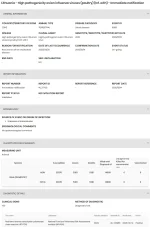
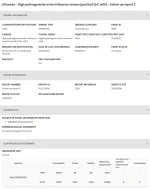
Lithuania - Influenza A viruses of high pathogenicity (Inf. with) (non-poultry including wild birds) (2017-) - Immediate notification [FINAL]

GENERAL INFORMATION
COUNTRY/TERRITORY OR ZONE
ZONE

ANIMAL TYPE
TERRESTRIAL

DISEASE CATEGORY
OIE-listed

EVENT ID
4979

DISEASE
Influenza A viruses of high pathogenicity (Inf. with) (non-poultry including wild birds) (2017-)

CAUSAL AGENT
Highly pathogenic avian influenza virus

GENOTYPE / SEROTYPE / SUBTYPE
H5N1

START DATE
2023/03/16

REASON FOR NOTIFICATION
Recurrence of an eradicated disease

DATE OF LAST OCCURRENCE
2022/09/29

CONFIRMATION DATE
2023/03/16

EVENT STATUS
Resolved

END DATE
2023/03/20

SELF-DECLARATION
NO

REPORT INFORMATION
REPORT NUMBER
Immediate notification

REPORT ID
IN_159954

REPORT REFERENCE
2-23/2701 G1

REPORT DATE
2023/05/03

REPORT STATUS
Validated

NO EVOLUTION REPORT
-

EPIDEMIOLOGY
SOURCE OF EVENT OR ORIGIN OF INFECTION
Unknown or inconclusive

EPIDEMIOLOGICAL COMMENTS
No epidemiological comment
...


NEW OUTBREAKS

OB_116029 - VILLAGE OF URKIONYS
OUTBREAK REFERENCE
-

START DATE
2023/03/16

END DATE
2023/03/20

DETAILED CHARACTERISATION
-

FIRST ADMINISTRATIVE DIVISION
Alytaus

SECOND ADMINISTRATIVE DIVISION
Varėnos

THIRD ADMINISTRATIVE DIVISION
-

EPIDEMIOLOGICAL UNIT
Backyard

LOCATION
Village of Urkionys

Latitude, Longitude
54.299233 , 24.784479

OUTBREAKS IN CLUSTER
-

MEASURING UNIT
Animal

AFFECTED POPULATION DESCRIPTION
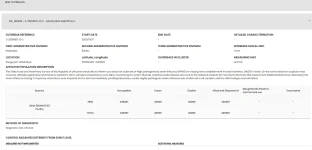
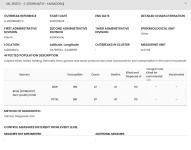
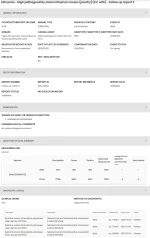
There were 34 captive birds kept in an establishment (backyard farm) – birds were kept exclusively for own consumption and never entered any market. On 16 March 2023, the State Food and Veterinary Service (SFVS) received a notification from the owner of the establishment on the sudden death of 27 birds that kept showing no other clinical signs. On the same day, official veterinarians visited the establishment, and three dead birds were taken for passive surveillance for avian influenza and sent to the National Food and Veterinary Risk Assessment Institute (National Reference Laboratory) for avian influenza testing. Temporary restrictions on the farm were imposed immediately until the laboratory results were available. Highly pathogenic avian influenza subtype H5N1 was confirmed in all samples on 17 March 2023. The rest of the birds were found dead on the same day.

SpeciesSusceptibleCasesDeathsKilled and Disposed ofSlaughtered/ Killed for commercial useVaccinated

Birds (DOMESTIC)
Non-poultry birds
NEW 34 34 34 0 0 -
TOTAL 34 34 34 0 0 -

...
https://wahis.woah.org/#/in-review/4979​
 
image.png
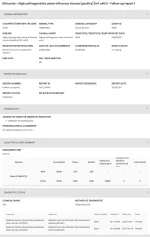
https://wahis.woah.org/#/in-review/6220
 
Related to Lance’s report above​

Translation Google

image.png


2026-06-08

Warnings to poultry farmers: bird flu outbreak in Širvintos district

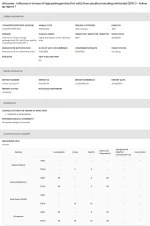
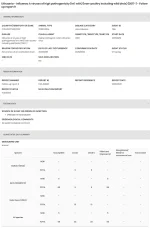
Today, June 8, the laboratory of the National Institute for Food and Veterinary Risk Assessment confirmed the presence of highly pathogenic avian influenza virus in a non-commercial poultry farm. This is the first outbreak of avian influenza in a poultry holding in Lithuania this year.

According to the owner of a farm in Vindeikiai village, Musninkai eldership, Širvintos district municipality, he suspected bird flu after noticing that 20 chickens died in one day, and another 12 chickens and one turkey the next day. After testing the samples taken, the bird flu virus was confirmed.

Specialists from the Vilnius Regional Surveillance Department of the State Food and Veterinary Service (SFVS) went to the farm, killed the remaining birds, took additional samples and began an epizootic investigation to find out how the virus could have entered the farm.

"On the farm, birds were kept both in outdoor enclosures and in farm buildings in a fenced area. However, the pond in the area increases the risk, so possible contact with wild birds cannot be ruled out. Even in a fenced area, there is still a possibility that the virus can enter through wild bird droppings or other environmental factors. The risk increases even more when domestic birds are released into the open field near water bodies where wild waterfowl congregate - the main spreaders of the bird flu virus. In such places, the probability of the virus entering the flock of kept birds remains extremely high," says Vaida Barkovskienė, Head of the Vilnius Supervision Department of the VMVT.

"We are currently taking all necessary measures to eliminate the outbreak of the disease and once again urge all bird keepers to take biosecurity requirements very seriously. Keeping birds outdoors near water bodies or in areas frequented by wild waterfowl poses a huge risk of infection, therefore it is necessary to take all possible measures to avoid contact with wild fauna," continues Vaida Barkovskienė.

Recommendations for small poultry farms:

  • Keep birds indoors or in enclosures with canopies to prevent contact with wild migratory birds.
  • Store feed for poultry in a way that protects it from wild birds, rodents and other animals that can mechanically transmit the virus.
  • Do not use water from open water bodies for watering poultry.
  • Keep domestic geese and ducks separate from other poultry.
  • Do not visit other bird keeping areas and avoid direct contact with wild birds.
If you notice signs of avian influenza in a flock of poultry, if poultry begins to die, or if you discover a dead wild waterfowl, notify your private veterinarian and the SFMS as soon as possible - by filling out a questionnaire  or by calling the SFMS at the following numbers: 1879 or +370 5 242 0108.

Update date: 2026-06-09

https://vmvt.lrv.lt/lt/visuomenei/n...pauksciu-gripo-protrukis-sirvintu-rajone-zW3/
 
Back
Top