Re: Libya: Three deaths in Derna from unidentified respiratory virus - H1N1 confirmed
Re: Libya: Three deaths in Derna from unidentified respiratory virus - H1N1 confirmed
Published Date: 2013-03-13 03:01:32
Subject: PRO/AH/EDR> Undiagnosed deaths - Libya: RFI, H1N1 susp
Archive Number: 20130313.1584077
UNDIAGNOSED DEATHS - LIBYA: REQUEST FOR INFORMATION, H1N1 SUSPECTED
*******************************************************************
A ProMED-mail post
http://www.promedmail.org
ProMED-mail is a program of the
International Society for Infectious Diseases
http://www.isid.org
Date: Tue 12 Mar 2012
Source: Libya Herald [edited]
http://www.libyaherald.com/2013/03/...rna-from-unknown-respiratory-track-infection/
So far, 3 people have died in Derna from a viral infection that the authorities suspect could be a form of the H1N1 virus. A post on the Health Ministry's Facebook page states the deaths were the result of a respiratory tract infection, causing shortness of breath, high fever, and unconsciousness.
According to a statement from the Health Ministry, the cases did not respond to conventional treatment methods used internationally.
Confirming the 3 deaths today, Tuesday [12 Mar 2013], while speaking at the press conference in Tripoli on the mass poisoning crisis, the director general of the National Centre for Disease Control, Dr Mohammed Abughalah, said 3 others in the town have fallen ill with similar symptoms. They are currently stable and receiving medication at an isolation unit to help prevent the virus from spreading.
According to Abughalah, there have been 23 similar cases in Libya in addition to the 6 in Derna -- 2 each in Beida and Benghazi, one in Marj, 3 in Misurata, 2 in Khoms, 10 in Tripoli, and 2 in Zawia. In addition to the 3 deaths in Derna, one person had died in Tripoli and another in Zawia.
However, he also said that 3 cases in Tripoli had been diagnosed as H1N1 influenza. The other cases were still being analysed.
There are suggestions that those in eastern Libya could be cases of novel coronavirus (NCoV), also known as Saudi SARS. The 1st case [of nCoV] was discovered [confirmed] in September last year [2012] in a Qatari man who had traveled to Saudi Arabia [the virus was first identified in specimens from a Saudi Arabian national who died in June 2012. The 2nd confirmed case was in a Qatari man who had traveled to Saudi Arabia and was being treated in a hospital in the UK. See prior ProMED-mail posts listed in the "see also" section for the chronology of confirmations. - Mod.MPP]. Out of the 14 cases worldwide so far, there have been 6 cases [in Saudi Arabia], 4 of them fatal. [As of 12 Mar 2013, there have been 15 confirmed cases and 9 deaths attributable to nCoV infection. Of these, 8 cases and 6 deaths have been reported from Saudi Arabia. - Mod.MPP]
In its statement today [12 Mar 2013], the Health Ministry said that "upon communication with relevant authorities, it was confirmed that other similar cases were reported in some parts of Libya as well as in some Arab countries".
It added that an isolation unit had been established and an emergency team consisting of specialised doctors and nurses formed and equipped with all necessary medical supplies. Nearby hospitals had also been contacted to cooperate and exchange information.
The World Health Organization (WHO) does not list Libya among the countries displaying the infection. However, it cautions "member states to continue surveillance for severe acute respiratory infections (SARI) and to carefully review any unusual patterns".
--
communicated by:
ProMED-mail
<promed@promedmail.org>
[From the newswire above it appears as though there may be an outbreak of H1N1 associated with fatalities in Libya. Cases have been confirmed in the capital (Tripoli), and specimens are being processed at present on cases that have occurred outside the capital.
It also appears there are concerns that some of the severe respiratory deaths outside Tripoli may not be due to H1N1 but rather due to the novel coronavirus (nCoV) known to be affecting individuals elsewhere in the Middle East sporadically. Thus far, there has only been one instance of documented person-to-person transmission of the nCoV in 2 individuals who had close contact with one of the cases in the UK, with a negative history for other potential exposures. In addition to this cluster, there was a probable cluster (though not confirmed to be person-to-person transmission) of cases in ICU staff in Jordan in May 2012, and a possible family cluster in Saudi Arabia in November 2012 (in this case, it is possible there was a common exposure history of the family members). Thus, given the presently known epidemiology of nCoV cases it is less likely that a country-wide outbreak of severe acute respiratory illness (SARI) in Libya would be due to nCoV, and more likely would be due to H1N1.
There have been reports of increased fatalities associated with H1N1 infection this current flu season in the northern hemisphere (see prior ProMED-mail posts listed below), so the occurrence of increased respiratory illness associated fatalities in Libya might well be due to H1N1 activity. ProMED-mail would greatly appreciate information on the epidemiologic and microbiological investigations of these SARI associated fatalities in Libya, including possible illnesses that might predispose for more severe disease with influenza virus infection.
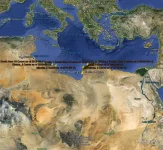
For a map of Libya showing all of the cities mentioned in the report above, see
http://www.nationsonline.org/maps/libya-map.jpg. Derna, Al Beida, Marj, and Benghazi are on the Eastern Coast near the border with Egypt.