• FluTrackers.com Inc. does not provide medical advice. Information on this web site is collected from various internet resources, and the FluTrackers board of directors makes no warranty to the safety, efficacy, correctness or completeness of the information posted on this site by any author or poster. The information collated here is for instructional and/or discussion purposes only and is NOT intended to diagnose or treat any disease, illness, or other medical condition. Every individual reader or poster should seek advice from their personal physician/healthcare practitioner before considering or using any interventions that are discussed on this website. By continuing to access this website you agree to consult your personal physican before using any interventions posted on this website, and you agree to hold harmless FluTrackers.com Inc., the board of directors, the members, and all authors and posters for any effects from use of any medication, supplement, vitamin or other substance, device, intervention, etc. mentioned in posts on this website, or other internet venues referenced in posts on this website.
  • We are not asking for any donations. Do not donate to any entity who says they are raising funds for us.

Lebanon: 2022 Cholera - outbreak over

Mary Wilson

Well-known member
Thursday 06 October 2022

Jamie Prentis | Holly Johnston

Lebanon has reported its first cholera case in almost three decades in Akkar, an impoverished region in the north that borders Syria.

The patient, a man from Syria, is in a stable condition and receiving treatment in hospital, the Lebanese Ministry of Health said.

It comes as neighbouring Syria grapples with an outbreak of cholera that has already killed at least 39 people.

"We do not have a confirmed link to the outbreak in Syria, though it is very probable," a ministry source told The National.

... Samples will be collected from sewage in all Lebanese governorates to test for cholera. The government also plans to secure vaccines and medicines, and brief hospitals and medical centres on symptoms of the disease.

https://www.thenationalnews.com/men...ebanon-records-first-cholera-case-since-1993/
 
Translation Google

Second case of cholera recorded in Akkar

Oct 7, 2022 at 11:16 a.m. Last modified Oct 7, 2022 at 11:18 a.m.

A second case of cholera has been recorded in the Akkar region, in North Lebanon. The person who has it is a Lebanese woman from the region. Her situation is stable and she has been isolated with her family at her home, according to local media. The first confirmed case in Lebanon dates from Wednesday and was announced Thursday by the Ministry of Health. He is a man in his fifties, of Syrian origin, admitted to intensive care at the Dr Abdullah Al-Rassi government hospital in Halba, in the province of Akkar. A person in contact with the patient without being aware of his condition would be at the origin of the transmission of the disease to the second person affected.

Health specialists, quoted by the daily an-Nahar fear a spread of this disease in the border areas which connect Akkar to Syria, as well as in the Syrian refugee camps, where the gatherings are important and where the risk contamination from fruits and vegetables increases. According to sources in the medical sector, quoted by the media, several cases have been diagnosed, pending the results of laboratory tests.

According to the outgoing Minister of Health, Firas Abiad, "an increase in cholera cases in Lebanon is to be expected, due to the spread of the epidemic in Syria". Mr. Abiad nevertheless reassured the Lebanese of the availability of drugs and vaccine to counter cholera. “In case of doubt or need, citizens are invited to contact 1787,” he said, during a press conference on Friday. He also assured that the "Ministry coordinates with the unions and orders concerned and with the doctors and nurses, for the implementation of training aimed at preparing them for a possible multiplication of cases of illness".

https://icibeyrouth.com/liban/134274
 
Source: https://outbreaknewstoday.com/lebanon-update-14-cholera-cases-in-akkar-governorate-48326/

Lebanon update: 14 cholera cases in Akkar Governorate
by News Desk
October 10, 2022

In a follow-up on the first cholera case reported in Lebanon since 1993, the Lebanese Ministry of Public Health reported on Monday 14 cholera cases in Akkar Governorate, which shares a border with Syria, with another 41 cases under investigation.

Five of the infected had contact with the 1st infection that was recorded last week, while six patients had mild symptoms that are being followed medically...
 
Source: https://www.thenationalnews.com/men...ecords-first-cholera-death-as-cases-reach-26/

Lebanon records first cholera death, as cases reach 26
More than 10,000 suspected cases have been reported in the past six weeks in neighbouring Syria
The National
Oct 12, 2022

Lebanon has reported its first death due to cholera, as the number of cases rose to 26 in the impoverished northern region, according to the health ministry.

Lebanon reported its first cholera cases in almost three decades last Thursday in Akkar, a region that borders Syria.

The UN said it is alarmed over the worsening cholera outbreak in Syria, the first in the country in more than a decade.

More than 10,000 suspected cases have been reported across the country in the past six weeks alone, the World Health Organisation said on Wednesday.

The developments take place as Lebanon’s economy continues to spiral, plunging three-quarters of its population into poverty. Rampant power cuts, water shortages and skyrocketing inflation have deteriorated living conditions for millions...
 
National News Agency - Ministry of Information Lebanese Republic

MoPH: 3 new Cholera cases


Friday 14 Oct 2022 - 12:00
8 hours ago

NNA - The Ministry of Public Health on Thursday announced, in a report on Cholera cases in Lebanon, that 3 new Cholera cases have been registered in the past 24 hours, thus raising the cumulative number of confirmed cases to-date to 29 in the northern regions. ...

https://www.nna-leb.gov.lb/en/متفرقات/569421/moph-3-new-cholera-cases#.Y0jRXcP-7ZU.twitter
 
FfC8zx3XEAAU70T


https://twitter.com/mophleb/status/1580971081866694656
 
Translation Google

Cholera in Lebanon: 46 new cases and 1 death

Oct 17, 2022 at 8:36 PM

Lebanon reported 46 new cases of cholera and one death on Monday, according to the daily report from the Ministry of Health. This brings to 89 the cumulative number of cases since the start of the epidemic in October, including 3 deaths.

According to the Ministry's report, 33 cases have been recorded to date in Akkar, including 18 in the village of Bebnine, 39 cases in the caza of Minnié-Denniyé including 36 cases in the village of Rihanié, 14 cases in Ersal (caza of Baalbeck) and 3 cases in Kesrouan.

https://icibeyrouth.com/dernieres-infos/139334
 
Cholera 'Spreading Rapidly' In Lebanon: Health Minister

By AFP - Agence France Presse

October 19, 2022

Lebanon warned Wednesday a cholera outbreak that has left five dead is "spreading rapidly" in the cash-strapped country, with cases rising after the extremely virulent disease spread from neighbouring Syria.

Lebanon's first cholera outbreak in decades began earlier this month as it struggles amid poor sanitation and crumbling infrastructure after three years of unprecedented economic crisis.

"The epidemic is spreading rapidly in Lebanon," Health Minister Firass Abiad told reporters.
...
https://www.barrons.com/news/cholera-spreading-rapidly-in-lebanon-health-minister-01666192507


--------------------------------------

FfbFWM-XgAAET-W


https://twitter.com/mophleb/status/1582669310392422400/photo/2
 
Source: https://www.who.int/emergencies/disease-outbreak-news/item/2022-DON416


Cholera – Lebanon

19 October 2022


Outbreak at a glance
The Ministry of Public Health of Lebanon notified WHO on 6 October 2022 of two laboratory culture-confirmed cholera cases reported from the northern part of the country. As of 13 October, a total of 18 cases have been confirmed, including two probable deaths (CFR 11.1%). This represents the first cholera outbreak in Lebanon since 1993. Responding to the current cholera outbreak may overwhelm the already fragile health system in the country.
Outbreak overview
On 6 October 2022, the Ministry of Public Health (MoPH) of Lebanon, notified WHO of two laboratory-confirmed cholera cases, confirmed by bacteria culture test, reported from North and Akkar governorates, northern Lebanon. The index case, a 51-year-old Syrian man living in an informal settlement in Minieh-Danniyeh district (North governorate), was reported to the MoPH on 5 October 2022. The patient was admitted to the hospital on 1 October with rice water stool and dehydration. Following a possible healthcare-associated transmission, the second case, a 47-year-old health worker, was reported, representing the first nosocomial infection of this outbreak.
Immediately following the confirmation of the first two cases, active case finding in the informal settlement where the index case lived, identified 10 additional cases confirmed by bacteria culture test. In addition, Vibrio cholerae was found in potable water sources, irrigation, and sewage. These positive cultures were confirmed on 9 October.
In Halba (the capital of Akkar Governorate), an additional two cases were culture-confirmed among Lebanese nationals. On 10 October, an additional four cases were culture-confirmed among Syrian nationals living in an informal settlement in Aarsal town of the Baalbek district.
As of 13 October, a total of 18 confirmed cases have been reported. The most affected age group are children under 5 years (44.4%; n=8), followed by persons aged 45 to 64 years (22.2%; n=4), 25-44 years (16.7%; n=3) and 5-15 years (16.7%; n=3). Females are disproportionally affected in the outbreak (72%; n=13). Of the total cases, 11 (61.1%) were reported from the district of Minieh - Danniyeh, four cases (22.2%) from Baalbek district and three cases (16.7%) from Akkar district (Figure 1).
In parallel, sewage water testing conducted in Ain Mraisseh in Beirut, Ghadir station in Mount Lebanon, and Bourj Hammoud also in Mount Lebanon, confirmed the presence of V. cholerae in all three sources, indicating that cholera has spread to two other regions of the country (Beirut Area and Mount Lebanon) located far from the initial confirmed cases.
Figure 1. Map of confirmed cholera cases by district, Lebanon (n=18), as of 18 October 2022.
This is the first outbreak of cholera in Lebanon since the last case was reported in 1993 with no local transmission documented since then.
At this stage of the outbreak, laboratory confirmation of cases is done by bacterial culture and MALDI-TOF spectrometry which is conducted at the Department of Experimental Pathology, Immunology, and Microbiology at the American University of Beirut, a WHO collaborating centre.
Epidemiology of cholera
Cholera is an acute enteric infection caused by ingesting the bacteria Vibrio cholerae present in contaminated water or food. Cholera transmission is closely linked to inadequate access to clean water and poor sanitation facilities or can be linked to the consumption of contaminated food items. V. cholerae can spread rapidly, depending on the frequency of exposure, the exposed population and the setting. Cholera affects both children and adults, and can be fatal if untreated.
The incubation period is between 12 hours and five days after ingestion of contaminated food or water. Due to the short incubation period of cholera, outbreaks can develop rapidly.
Most people infected with V. cholerae do not develop any symptoms, although the bacteria are present in their faeces for 1-10 days after infection and are shed back into the environment, potentially infecting other people. Among people who develop symptoms, the majority have mild or moderate symptoms, while a minority develop acute watery diarrhoea with severe dehydration, which, if left untreated, can lead to death within hours.
Cholera is an easily treatable disease. Most people can be treated successfully through prompt administration of oral rehydration solution (ORS).
The consequences of a humanitarian crisis – such as disruption of water and sanitation systems, or the displacement of populations to overcrowded camps with inadequate access to clean water and sanitation – can increase the risk of cholera transmission, should the bacteria be present or introduced.
A multi-sectoral approach including a combination of surveillance, water, sanitation and hygiene, social mobilization, treatment, and oral cholera vaccines is essential to control cholera outbreaks and to reduce deaths.

Public health response

The Ministry of Public Health has established a coordination mechanism with multi-sector partners including the Ministry of Energy and Water, WHO, UNICEF, and the International Committee of the Red Cross (ICRC).
Response measures implemented, include the following:
  1. Intensification of active surveillance and case finding in high-risk camps, informal settlements and hotspot areas, including water quality monitoring (free residual chlorine).
  2. Training of trainers for the central and peripheral teams of the surveillance unit was held on 10 and 11 October, and will be followed by training of registered local physicians, hospitals, medical centers and public health centers (PHCs) at central and peripheral levels from 19 to 25 October.
  3. Updating of surveillance protocols.
  4. Designation of nine referral governmental hospitals to act as cholera treatment centers.
  5. Development of a cholera preparedness and response plan, in collaboration with WHO and UNICEF and in agreement with all healthcare partners, that includes the following, but not limited to:
  • Improving capacity for early detection and ensuring proper linkages with WASH response through the support of integrated multisectoral field mission in the Akkar region.
  • Circulars have been issued to hospitals, health centres and health workers regarding the necessity of informing MoPH of any suspected case.
  • Distribution of 1000 Bioline rapid diagnostic tests.
  • Initial stock of medicines required to treat 400 cases was secured.
  • MoPH is exploring a potential request to the International Coordinating Group (ICG) on Vaccine Provision for oral cholera vaccine (OCV) doses to cover 400 000 refugees and hosting communities including potential vaccination for prisons.
  • The functionality of water testing laboratories is being assessed in eight hospital laboratories as a first stage to allow for quick, decentralized case identification in various Lebanese regions.
  • A crisis cell was formed to coordinate the provision of clean water, water quality monitoring, and access to adequate sanitation, targeting vulnerable groups living in informal settlements.
  • The associations of doctors and nurses and the Lebanese Society of Bacterial Diseases were contacted to develop training courses for healthcare workers on case management and methods of infection prevention and control, especially within health institutions.
  • Collaboration with relevant ministries, especially energy and water, interior, municipalities, and the environment, to provide safe water and sanitation.
WHO risk assessment

Lebanon’s health system has been hard-hit by a three-year financial crisis and an explosion at the port of Beirut in August 2020 that destroyed essential medical infrastructure in the capital. In this context, responding to a cholera outbreak may overwhelm the already fragile health system in the country.
According to The United Nations High Commissioner for Refugees (UNHCR), Lebanon hosts the largest number of refugees in the world per capita and square kilometre, with 1.5 million Syrian refugees and about 13 715 refugees of other nationalities. Additionally, there is a large population of Palestinian refugees that are particularly exposed due to unsafe WASH services in various camps (Beqaa, Trablos, Beirut, Saida, Sour), possibly with limited medical services provided.
Due to porous borders allowing free movement between Lebanon and neighbouring countries, the exportation of cholera cases is highly likely.
The current cholera outbreak in Lebanon was reported six weeks after a cholera outbreak was declared in neighbouring Syria. On 15 September 2022, WHO assessed the risk of the cholera outbreak in Syria and predicted that due to shortages of drinking water and a fragile and limited health system in Lebanon, there was a risk of a cholera outbreak should the disease be introduced into the country.
Power cuts, water shortages, and inflation have strained the already fragile health system in Lebanon. Poverty has also worsened for many Lebanese, with many families frequently rationing water, unable to afford private water tanks for consumption and domestic use.
Since the last cholera outbreak in Lebanon occurred in 1993, there is a need to update cholera surveillance and case management guidelines and re-train healthcare workers.

WHO advice

WHO recommends improving access to proper and timely case management of cholera cases, improving infection, prevention, and control in healthcare facilities, improving access to safe drinking water and sanitation infrastructure, as well as, improving hygiene practices and food safety in affected communities as the most effective means of controlling cholera.
Oral cholera vaccine should be used in conjunction with improvements in water and sanitation to control cholera outbreaks and for prevention in targeted areas known to be at high risk for cholera. Key public health communication messages should be provided to the population.
Surveillance for early case detection, confirmation and response in other provinces and regions of Lebanon should be reinforced especially at the district level while expanding community-based surveillance.
WHO does not recommend any restrictions on international travel or trade to or from Lebanon based on the currently available information.

Further information
Citable reference: World Health Organization (19 October 2022). Disease Outbreak News; Cholera - Lebanon. Available at: https://www.who.int/emergencies/dise...em/2022-DON416

 
Source: https://www.reuters.com/world/middl...refugees-sheltering-camps-lebanon-2022-10-21/

Cholera outbreak hits Syrian refugees sheltering in camps in Lebanon
By Maya Gebe
4 minute readOctober 21, 20225:16 AM EDTLast Updated 2 hours ago

QUB ELIAS, Lebanon, Oct 21 (Reuters) - Syrian refugees in displacement camps are falling victim to a cholera outbreak in Lebanon, already suffering from an economic meltdown that has slashed access to clean water and strained hospitals.

Lebanon recorded its first cholera case in early October -- signalling the return of the bacteria for the first time in 30 years. It now counts at least 220 cases and five deaths.

According to the World Health Organization, Lebanon is the latest phase of a rampaging outbreak that began in Afghanistan in June - then spread to Pakistan, Iran, Iraq and Syria...
 
Source: https://www.siasat.com/cholera-coul...fails-to-curb-spread-health-minister-2446178/


Cholera could become “endemic” if Lebanon fails to curb spread: Health minister
Photo of Indo-Asian News Service Indo-Asian News Service| Posted by Sakina Fatima | Published: 31st October 2022 11:43 am IST

Beirut: Lebanese caretaker Health Minister Firass Abiad warned that cholera could become “endemic” in the country if it failed to curb the spread of the disease.

Making the remarks during a visit to public hospitals in the Bekaa Valley on Sunday, Abiad urged Lebanon to grasp the “golden opportunity” to stop the transmission, as “the epidemic is still in its infancy and can be stopped”, reports Xinhua news agency.

The Health Ministry has been monitoring preparedness work in securing enough hospital beds for a possible surge in cholera patients, Abia added...

...The Ministry’s updated Cholera Surveillance Report shows that Lebanon logged 10 new confirmed cases and one new death, bringing the respective totals to 381 and 17, respectively...
 
WHO warns of deadly cholera outbreak in Lebanon as cases increase


cholera_lebanon.jpg


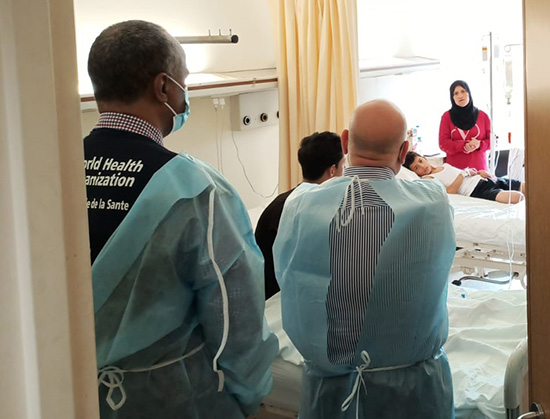
Beirut/Cairo, 31 October 2022: The first cholera outbreak in nearly three decades in Lebanon was reported to the World Health Organization (WHO) by the Ministry of Public Health on 6 October 2022 and is currently spreading to every governorate in the country.

Since the first case was confirmed on 5 October 2022, over 1400 suspected cases have been reported across the country, including 381 laboratory-confirmed cases and 17 deaths.

While the outbreak was initially confined to northern districts, it rapidly spread, with laboratory-confirmed cases now reported from all eight governorates and 18 out of 26 districts. Serotype Vibrio cholerae O1 El-Tor Ogawa was identified as the currently circulating cholera strain, similar to the one circulating in Syria.

“Cholera is deadly, but it’s also preventable through vaccines and access to safe water and sanitation. It can be easily treated with timely oral rehydration or antibiotics for more severe cases,” says Dr Abdinasir Abubakar, WHO Representative in Lebanon.

“The situation in Lebanon is fragile as the country already struggles to fight other crises – compounded by prolonged political and economic deterioration.”

WHO is joining with the Ministry of Public Health and other health partners to curb the evolving cholera outbreak. For instance, WHO and other humanitarian partners have supported the Ministry to develop a national cholera preparedness and response plan, outlining the most urgent response interventions required, while scaling up surveillance and active case-finding in hotspot areas.

Given the shortage of both health staff and medical supplies in the country, WHO has provided the two reference laboratories, three prisons and 12 hospitals designated for cholera treatment with laboratory reagents, treatment kits and rapid diagnostic tests, and deployed nurses and doctors as surge capacity to hospitals in the most affected areas. The procurement and prepositioning of additional cholera supplies are being also finalized.

Additionally, WHO is ensuring that proper clinical management practices, infection prevention and control, and cholera testing protocols are in place for the adequate referral of cases to the needed level of care. Over the past few weeks, WHO has supported a series of training sessions at central and peripheral levels to improve the early detection and reporting of suspected cases, enhance clinical management and raise awareness among the public and frontline health workers on cholera prevention and control.

Despite global shortages in cholera vaccine, WHO is supporting the Ministry of Public Health to secure 600,000 doses of cholera vaccine for the most vulnerable populations, including frontline workers, prisoners, refugees and their host communities. Additional efforts to ensure more doses are ongoing given the rapid spread of the outbreak.

The vulnerability of people in Lebanon is being exacerbated by the prolonged difficult economic conditions and limited access to clean water and proper sanitation across the country. The migration of health care workers, disrupted supply chains and unaffordable energy supply have severely weakened the response capacity of hospitals and primary health care facilities, which are now threatened by the growing outbreak and increasing caseloads.

“There is still an opportunity to limit the spread and impact of the outbreak by intensifying response interventions, including improving water and sanitation quality. We also need to raise awareness on how to prevent cholera infection so that we can lift the pressure off hospitals. The best way to prevent a cholera outbreak is to ensure people have access to clean water and appropriate sanitation and hygiene. In the long term, we need to scale up global vaccine availability as part of a holistic strategy to prevent and stop cholera outbreaks worldwide,” Dr Abubakar emphasizes.

https://www.emro.who.int/lbn/lebano...ra-outbreak-in-lebanon-as-cases-increase.html
 
Source: https://reliefweb.int/report/lebanon/lebanon-cholera-emergency-sitrep-4-8th-november-2022

Lebanon Cholera Emergency Sitrep #4, 8th November 2022
Format Situation Report
Source Action Against Hunger
Posted 8 Nov 2022
Originally published 8 Nov 2022

Situation overview

November 6th marked one month since the first cholera case was registered in Lebanon, so far, according to official data from the Lebanese Ministry of Public Health (MoPH), confirmed and suspected cases reach 2,524 (25% are children under 5 years old) and the number of deaths amounts to 18 as of 4 th November 2022...
 
WHO Director-General's opening remarks at the media briefing – 9 November 2022

9 November 2022
...
In recent weeks, we have spoken about a surge in cholera outbreaks around the world.

The latest country to be affected is Lebanon, which is now suffering a severe outbreak after nearly 30 years without cholera.

Since the first case was confirmed just over one month ago, the outbreak has spread across the country. There are now more than 2,700 cases, with 18 deaths.

The outbreak reflects the ongoing economic crisis in Lebanon, with poor access to safe water and sanitation services.

WHO is concerned that this outbreak has the potential to overwhelm the already fragile and strained health system.
...

===
https://www.who.int/director-genera...marks-at-the-media-briefing---9-november-2022
 
WHO Regional Office For The Eastern Mediterranean - 600 000 doses of cholera vaccine arrive in Lebanon amidst evolving outbreak


Beirut, 10 November 2022 – World Health Organization (WHO) has supported the Minister of Public Health of Lebanon to secure a critical shipment of 600 000 doses of cholera vaccine from the International Coordination Group (ICG) managing the global supply of cholera vaccines.

The vaccines were delivered to the Ministry of Public Health’s Central Drug Warehouse for use during a vaccination campaign to be launched on Saturday, 12 November 2022. The campaign will target all refugees and host communities aged 1 year and above, aiming to reach 70% of the target population with a weekly target of administering 200 000 doses over the coming three weeks.

“These vaccines will be a key tool to boost our response as the cholera outbreak is fast spreading in the country. The arrival of these vaccines in the country is timely and thanks to our collective efforts with the Ministry of Public Health of Lebanon, UN agencies and our partners on the ground,” says Dr Abdinasir Abubakar, WHO Representative in Lebanon.

WHO is covering the full cost of the 600 000 doses from the ICG, which manages the global oral cholera vaccine stockpile, and is providing technical guidance on the selection of target areas, development of micro plans and training of the implementing partners responsible for the vaccine deployment.

WHO and its partners also continue to support vaccination against cholera using the Shanchol vaccine donated by Sanofi for use with prisoners and health care workers. ...

Note to editors

The current cholera outbreak in Lebanon is the first in over 30 years, reflecting the ongoing deterioration in the economic situation and poor access to clean water and proper sanitation services across the country.

As of 7 November 2022, 2722 suspected cholera cases (out of which 448 are laboratory-confirmed) and 18 associated deaths (CFR 1%) were reported across the country. Of these cases, 25% are under five years of age.

https://www.emro.who.int/lbn/lebano...rive-in-lebanon-amidst-evolving-outbreak.html

https://www.emro.who.int/lbn/lebano...rive-in-lebanon-amidst-evolving-outbreak.html
 
WHO requires US$ 10.2 million to respond to the rapid cholera outbreak in Lebanon

05 November 2022: The World Health Organization (WHO) requires US$ 10.2 million for the health-related response to the ongoing cholera outbreak in Lebanon. As of 3 November 2022, the country has reported 2421 suspected cases, including 413 confirmed cases and 18 associated deaths. The outbreak continues to spread to new communities every day as a result of contaminated water at source, community and household levels.

“Lebanon is vulnerable to cholera, and this is being aggravated by the prolonged economic situation and scarce access to clean water and proper sanitation services across the country," says Dr Abdinasir Abubakar, WHO Representative in Lebanon. “We need concerted efforts to ensure that people have access to health services, clean water and sanitation, and to educate them on how to deal with cholera if anyone becomes infected.”

The health care system in Lebanon is already strained due to the current economic and social crises, and the cholera outbreak may overwhelm the already fragile health system in the country. There are many challenges in responding to the cholera outbreak, and WHO and other partners are making extra efforts to overcome these in order to control the outbreak in a timely manner. WHO’s priority is to limit the spread of the cholera outbreak, while minimizing the morbidity and mortality associated with cholera through good quality health care. ...

https://www.emro.who.int/lbn/lebano...to-the-rapid-cholera-outbreak-in-lebanon.html
 
Back
Top