• FluTrackers.com Inc. does not provide medical advice. Information on this web site is collected from various internet resources, and the FluTrackers board of directors makes no warranty to the safety, efficacy, correctness or completeness of the information posted on this site by any author or poster. The information collated here is for instructional and/or discussion purposes only and is NOT intended to diagnose or treat any disease, illness, or other medical condition. Every individual reader or poster should seek advice from their personal physician/healthcare practitioner before considering or using any interventions that are discussed on this website. By continuing to access this website you agree to consult your personal physican before using any interventions posted on this website, and you agree to hold harmless FluTrackers.com Inc., the board of directors, the members, and all authors and posters for any effects from use of any medication, supplement, vitamin or other substance, device, intervention, etc. mentioned in posts on this website, or other internet venues referenced in posts on this website.
  • We are not asking for any donations. Do not donate to any entity who says they are raising funds for us.

Lancet - Transmission and evolution of the Middle East respiratory syndrome coronavirus in Saudi Arabia: a descriptive genomic study

Laidback Al

Well-known member
Transmission and evolution of the Middle East respiratory syndrome coronavirus in Saudi Arabia: a descriptive genomic study

Matthew Cotten, Simon J Watson, Paul Kellam, Abdullah A Al-Rabeeah, Hatem Q Makhdoom, Abdullah Assiri, Jaffar A Al-Tawfiq, Rafat F Alhakeem, Hossam Madani, Fahad A AlRabiah, Sami Al Hajjar, Wafa N Al-nassir, Ali Albarrak, Hesham Flemban, Hanan H Balkhy, Sarah Alsubaie, Anne L Palser, Astrid Gall, Rachael Bashford-Rogers, Andrew Rambaut, Alimuddin I Zumla, Ziad A Memish The Lancet 20 September 2013 (Article in Press DOI: 10.1016/S0140-6736(13)61887-5)

Background

Since June, 2012, Middle East respiratory syndrome coronavirus (MERS-CoV) has, worldwide, caused 104 infections in people including 49 deaths, with 82 cases and 41 deaths reported from Saudi Arabia. In addition to confirming diagnosis, we generated the MERS-CoV genomic sequences obtained directly from patient samples to provide important information on MERS-CoV transmission, evolution, and origin.

Methods

Full genome deep sequencing was done on nucleic acid extracted directly from PCR-confirmed clinical samples. Viral genomes were obtained from 21 MERS cases of which 13 had 100%, four 85?95%, and four 30?50% genome coverage. Phylogenetic analysis of the 21 sequences, combined with nine published MERS-CoV genomes, was done.

Findings

Three distinct MERS-CoV genotypes were identified in Riyadh. Phylogeographic analyses suggest the MERS-CoV zoonotic reservoir is geographically disperse. Selection analysis of the MERS-CoV genomes reveals the expected accumulation of genetic diversity including changes in the S protein. The genetic diversity in the Al-Hasa cluster suggests that the hospital outbreak might have had more than one virus introduction.

Interpretation

We present the largest number of MERS-CoV genomes (21) described so far. MERS-CoV full genome sequences provide greater detail in tracking transmission. Multiple introductions of MERS-CoV are identified and suggest lower R0 values. Transmission within Saudi Arabia is consistent with either movement of an animal reservoir, animal products, or movement of infected people. Further definition of the exposures responsible for the sporadic introductions of MERS-CoV into human populations is urgently needed.

Full text available with free registration and login at: http://www.thelancet.com/journals/lancet/article/PIIS0140-6736%2813%2961887-5/abstract

Or from ScienceDirect at: http://www.sciencedirect.com/science/article/pii/S0140673613618875
 

Attachments

Re: Lancet - Transmission and evolution of the Middle East respiratory syndrome coronavirus in Saudi Arabia: a descriptive genomic study

H/T Laidbackal
 
Re: Lancet - Transmission and evolution of the Middle East respiratory syndrome coronavirus in Saudi Arabia: a descriptive genomic study

The Lancet: Transmission And Evolution Of MERS-CoV In Saudi Arabia


image_thumb%25255B1%25255D.png

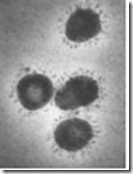
Coronavirus ? Credit CDC PHIL


# 7795


This Lancet study, which was embargoed until early yesterday evening, has already generated a good deal of knowledgeable commentary, so rather than re-inventing the wheel, I?ll provide links and excerpts from the study, the press release, Dr. Ian Mackay?s commentary, and CIDRAP?s coverage.

First stop, the Lancet study, which ? using genomic analysis - finds evidence of multiple spillovers of MERS from an (as yet, unknown) animal host into the human population in Saudi Arabia.


Copyright ? 2013 Cotten et al. Open Access article distributed under the terms of CC BY-NC-ND Published by Elsevier Ltd. All rights reserved.
The Lancet, Early Online Publication, 20 September 2013
doi:10.1016/S0140-6736(13)61887-5
Transmission and evolution of the Middle East respiratory syndrome coronavirus in Saudi Arabia: a descriptive genomic study
Matthew Cotten PhD b ?, Simon J Watson PhD b ?, Prof Paul Kellam PhD b m ?, Abdullah A Al-Rabeeah FRCS a, Hatem Q Makhdoom PhD c, Abdullah Assiri MD a, Jaffar A Al-Tawfiq MD d, Rafat F Alhakeem MD a, Hossam Madani PhD c, Fahad A AlRabiah MD g, Sami Al Hajjar MD g, Wafa N Al-nassir MD h, Ali Albarrak MD i, Hesham Flemban MD j, Hanan H Balkhy MD k, Sarah Alsubaie MD l, Anne L Palser PhD b, Astrid Gall Dr Med Vet b, Rachael Bashford-Rogers MChem b, Prof Andrew Rambaut Prof e f, Prof Alimuddin I Zumla FRCP a m n ?, Prof Ziad A Memish FRCP
Summary

Background

Since June, 2012, Middle East respiratory syndrome coronavirus (MERS-CoV) has, worldwide, caused 104 infections in people including 49 deaths, with 82 cases and 41 deaths reported from Saudi Arabia. In addition to confirming diagnosis, we generated the MERS-CoV genomic sequences obtained directly from patient samples to provide important information on MERS-CoV transmission, evolution, and origin.
Methods

Full genome deep sequencing was done on nucleic acid extracted directly from PCR-confirmed clinical samples. Viral genomes were obtained from 21 MERS cases of which 13 had 100%, four 85?95%, and four 30?50% genome coverage. Phylogenetic analysis of the 21 sequences, combined with nine published MERS-CoV genomes, was done.
Findings

Three distinct MERS-CoV genotypes were identified in Riyadh. Phylogeographic analyses suggest the MERS-CoV zoonotic reservoir is geographically disperse. Selection analysis of the MERS-CoV genomes reveals the expected accumulation of genetic diversity including changes in the S protein. The genetic diversity in the Al-Hasa cluster suggests that the hospital outbreak might have had more than one virus introduction.
Interpretation

We present the largest number of MERS-CoV genomes (21) described so far. MERS-CoV full genome sequences provide greater detail in tracking transmission. Multiple introductions of MERS-CoV are identified and suggest lower R0 values. Transmission within Saudi Arabia is consistent with either movement of an animal reservoir, animal products, or movement of infected people. Further definition of the exposures responsible for the sporadic introductions of MERS-CoV into human populations is urgently needed.
The press release, from the Wellcome Trust Sanger Institute, provides more background and detail (excerpts follow).


Genome sequencing identifies multiple chains of MERS Co-V infection in humans
Genome sequencing has identified several infection transmission chains of the Middle East Respiratory Syndrome Coronavirus (MERS-CoV) in humans. The study published in the Lancet, which produced the largest number of MERS-CoV genomes described to date, provides evidence that MERS-CoV transmission patterns are more complicated than previously considered.
<SNIP>
The findings suggest that human-to-human transmission is more complicated than expected, and indicates that additional sources of the virus, either human or animal, are involved. One possibility is that there may be undetected (and possibly asymptomatic) people who could be carrying and spreading the virus.

"The genome differences we discovered in some infected people were too great to be explained by replication errors occurring in the virus as it is passed from human to human during a single chain of infection," explained Professor Paul Kellam, senior author from the Sanger Institute. "Instead our findings suggest that different lineages of the virus have originated from the virus jumping across to humans from an animal source a number of times."

As yet no animal with MERS-CoV has been identified in the Middle East or elsewhere and studies based on small sequence fragments suggest that a common ancestor of the virus may have existed in bats many years ago. Field studies of all the likely reservoir species, including camels, bats, goats, sheep, dogs, cats, rodents and others in the Kingdom of Saudi Arabia and other middle-eastern countries are on-going.
(Continue . . .)

Next stop, Ian Mackay?sVirology Down Under Blog, where we get a virologist?s take on these findings, and a concise bullet list of the highlights (I?ve only included the first 3 of 8).

Molecular epidemiology of Middle East respiratory syndrome coronavirus (MERS-CoV)
And a newcomer to the MERS-CoV birthday celebrations! What great timing to have this released today.
The
Lancet paper accompanying those recent partial and full genome sequences has been released form its cage. It's a collaborative effort by authors affiliated with the Global Centre for Mass Gatherings Medicine (Ministry of Health Saudi Arabia), Welcome Trust Sanger Institute (United Kingdom) and many other locations.

A few highlights of the largest MERS-CoV molecular epidemiology study to date, which includes some great transmission figures and trees (hat tip to the graphics people at Lancet):

  • Genetic diversity analyses 3 distinct genotypes were identified from human cases in Riyadh
  • The Al-Ahsa hospital cluster may have had more than 1 viral introduction
  • Other clusters and stand alone cases can be represented as distinct genotypes of MERS-CoV, possibly indicating multiple different virus acquisitions from different sources
(Continue . . . .)

And last, but certainly not least, Robert Roos and Lisa Schnirring produced a report for CIDRAP news last night, that provides an excellent overview for us.

Study suggests multiple MERS-CoV introductions
Robert Roos | News Editor | CIDRAP News
Sep 19, 2013
One of the big mysteries about the Middle East respiratory syndrome coronavirus (MERS-CoV) is whether it jumped from animals to humans just once or has made that jump a number of times. A study released today indicates that the second scenario seems more likely, given the genetic diversity in virus samples from 21 Saudi Arabian patients.
Researchers from Saudi Arabia, the United Kingdom, and the United States sequenced the genomes of the 21 isolates and found too much diversity to support the idea that the virus crossed from animals to humans just once and then traveled from person to person to spark all the other cases, according to their report in The Lancet and related press releases.
The findings also suggest that human-to-human transmission is more complicated than expected and raise the possibility that people with undetected infections are spreading the virus, the authors say.
(Continue . . .)
Posted by Michael Coston at <a class="timestamp-link" href="http://afludiary.blogspot.com/2013/09/the-lancet-transmission-and-evolution.html" rel="bookmark" title="permanent link"><abbr class="published" itemprop="datePublished" title="2013-09-20T07:39:00-04:00">7:39 AM</abbr>
 
Back
Top Bottom