• FluTrackers.com Inc. does not provide medical advice. Information on this web site is collected from various internet resources, and the FluTrackers board of directors makes no warranty to the safety, efficacy, correctness or completeness of the information posted on this site by any author or poster. The information collated here is for instructional and/or discussion purposes only and is NOT intended to diagnose or treat any disease, illness, or other medical condition. Every individual reader or poster should seek advice from their personal physician/healthcare practitioner before considering or using any interventions that are discussed on this website. By continuing to access this website you agree to consult your personal physican before using any interventions posted on this website, and you agree to hold harmless FluTrackers.com Inc., the board of directors, the members, and all authors and posters for any effects from use of any medication, supplement, vitamin or other substance, device, intervention, etc. mentioned in posts on this website, or other internet venues referenced in posts on this website.
  • We are not asking for any donations. Do not donate to any entity who says they are raising funds for us.

La Reunion - Chikungunya 2024-2025

Pathfinder

Editor, Senior Moderator
Translation Google

A case of chikungunya confirmed in Reunion

August 23, 2024
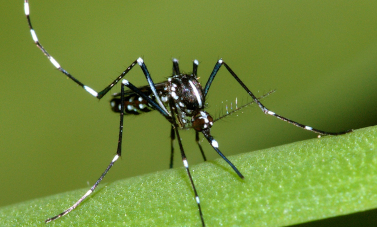
Aedes.jpg


ARS La Réunion confirmed a case of chikungunya on August 23, 2024 in a patient residing in Saint-Gilles-les-Bains. This is an indigenous contamination because the patient has not stayed abroad recently. The last indigenous case detected in La Réunion dates back more than ten years.

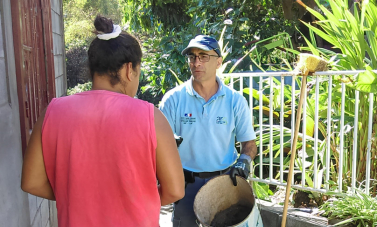
The patient is doing well. The ARS La Réunion teams have raised awareness among local residents and vector control treatments have been carried out around the person's home.


Fast support

As soon as the case was identified, ARS vector control agents went to the patient's home. A search and destruction of the egg-laying sites around the home were carried out. Insecticide treatment also began in the neighborhood.

Treatment and awareness-raising among local residents to eliminate breeding grounds and protect themselves from mosquito bites will continue next week.
Health professionals in the area and emergency services have been informed of the situation.


Epidemiological situation

Following a massive epidemic of chikungunya (pathologies transmitted by the tiger mosquito " aedes albopictus ") which occurred in Reunion between 2005 and 2006, it had now been several years since there had been any indigenous cases detected in the territory.

Although the virus was no longer circulating in the territory, continuous active surveillance was maintained for this notifiable disease. This surveillance was particularly reinforced during the dengue and Covid-19 epidemics, in order to allow early detection of chikungunya.


Recommendations to the population

Chikungunya is transmitted by mosquitoes. The population, and more particularly the inhabitants of Saint-Gilles-les-Bains, are encouraged to apply preventive measures on a daily basis to combat the spread of the virus.

Eliminate places where mosquitoes can lay their eggs

Mosquitoes multiply by laying their eggs in containers and objects containing water located around the house.

To combat mosquitoes, you must remove any larval habitats in your home or empty them every week: cups, small containers, gutters, tires, plants that retain water, etc.


Protect yourself from mosquito bites

Protect yourself by using mosquito repellent sprays, mosquito nets for children and bedridden people, diffusers/coils, long clothing, etc.
Se%20prot%C3%A9ger_1.png

Read the text transcript
Consult your doctor if you have symptoms (high fever, joint pain, headaches, extreme fatigue, etc.) and continue to protect yourself against mosquito bites.

If you are sick, to prevent serious forms of the disease:
  1. monitor your health , especially between the 4th [SUP]and[/SUP] 8th [SUP]day[/SUP] of illness
  2. Consult your doctor or emergency department if you have the following signs and symptoms: severe abdominal pain, persistent vomiting, inability to eat/drink, severe fatigue, agitation.
  3. go to the hospital if your health deteriorates
Severe forms affect all ages: infants, children, adults and the elderly. They occur in healthy people as well as in people with pathologies.
Infants can develop the same symptoms and severe forms as adults. In case of high fevers or loss of appetite, there is a risk of dehydration or malnutrition.
Parents are therefore invited to make an appointment with their doctor/pediatrician. As with adults, a deterioration in health between the 4th [SUP]and[/SUP] 8th [SUP]day[/SUP] requires a rapid consultation.

Since some diseases can damage the liver, it is recommended to strictly follow your doctor's recommendations on taking paracetamol.


...

https://www.lareunion.ars.sante.fr/un-cas-de-chikungunya-confirme-la-reunion-0
 
Translation Google

2 new cases of chikungunya in Reunion

News
August 28, 2024

ARS La Réunion informs of the very probable occurrence of two new indigenous cases of chikungunya on August 28, 2024: these are people from the entourage of the first case and residing in the same district of Saint-Gilles-les-Bains. These two new cases are awaiting confirmation from the associated national reference center of the CHU Nord.

The three infected people were not hospitalized.

Since August 23, the Agency's vector control teams have been very active: raising awareness among neighborhood residents and treating people around their homes.

ARS La Réunion invites the population, and particularly the inhabitants of Saint-Gilles-les-Bains, to protect themselves from mosquito bites and to consult a doctor in the event of symptoms.
...
https://www.lareunion.ars.sante.fr/2-nouveaux-cas-de-chikungunya-confirmes-la-reunion
 
A sixth case of chikungunya reported in Saint-Gilles-les-bains

News
September 13, 2024


Aedes.jpg


ARS La Réunion reports a sixth indigenous case of chikungunya, diagnosed by PCR and currently being confirmed by the associated National Reference Center of the CHU Nord.

This is a person residing in the same district of Saint-Gilles-les-Bains as the first 4 cases.


The ARS vector control teams, in conjunction with municipal services, are continuing their actions in this district of Saint-Gilles and in Saint-Louis.

The ARS encourages the population, including residents of Saint-Louis and Saint-Gilles-les-Bains, to protect themselves from mosquito bites, remove anything that may contain water around their homes and to consult a doctor at the first symptoms.


Actions implemented by the ARS

The risk of an epidemic can no longer be ruled out, with 6 cases recorded in two municipalities on the island.
The intervention and vector control strategy applies in the two municipalities concerned:
  1. encouragement to consult a doctor in the event of symptoms and to carry out laboratory analyses,
  2. elimination of larval breeding sites (mosquito nests) around the home,
  3. carrying out treatments (insecticides and/or larvicides),
  4. raising awareness among residents about preventive measures,
  5. distribution of repellents to priority audiences.
Health professionals and emergency services are being made aware.

...

https://www.lareunion.ars.sante.fr/un-sixieme-cas-de-chikungunya-signale-saint-gilles-les-bains-0


Translation Google

Update on the chikungunya situation in Reunion

​News
September 27, 2024

ARS La Réunion confirms the circulation of chikungunya in Saint-Gilles-les-bains.
The ARS vector control teams, in conjunction with municipal services, act as soon as a case is reported to prevent the spread of the virus in La Réunion and continue their actions around reported cases. It is important to fight collectively to stop the circulation of the virus.

ARS La Réunion encourages the population to protect themselves from mosquito bites, to remove anything that could contain water around the home and to consult a doctor at the first symptoms.

Epidemiological situation

(Public Health France data as of September 20, 2024)

Since August 23, 2024, 7 cases of chikungunya have been confirmed in Reunion:

a cluster of cases (outbreak) with 6 cases identified in Saint-Gilles-Les-Bains;
1 case reported on September 19 at the Hermitage; this case is not linked to the previous ones.
The situation indicates a possible geographical extension of the circulation of the virus.

The case reported in the commune of Saint-Louis, at this stage denied by the CNRa, is the subject of additional biological investigations.

At the end of this southern winter, the situation is characterized by a still limited density of mosquitoes.
This context is conducive to an effective collective fight before the arrival of summer, in a few weeks, with conditions more favorable to the proliferation of mosquitoes.

All stakeholders and the population are invited to exercise the utmost vigilance.
...

https://www.lareunion.ars.sante.fr/point-sur-la-situation-du-chikungunya-la-reunion
 
Translation Google

Update on the chikungunya situation in Reunion

News
November 8, 2024


vignette%20Point%20chikungunya.jpg


The ARS confirms 3 new cases of chikungunya: 2 in Saint-Gilles and 1 in Etang Salé.

The ARS vector control teams, in conjunction with municipal services, intervened as soon as they were reported in the affected neighborhoods to prevent the spread of the virus (mosquito control, awareness raising, distribution of repellents, etc.) and are continuing their actions around the other cases reported on the island.


The number of cases remains low to date. However, the latest case was recorded in a different municipality than the previous cases. This situation shows a low-level (discreet) circulation of the virus on the island, which should lead us to be extremely careful.

At the start of the southern summer, with weather conditions more favorable to the proliferation of mosquitoes, it is important to fight collectively now to stop the circulation of chikungunya. The ARS encourages the population to protect themselves from mosquito bites (sprays, mosquito nets, etc.), to remove anything that may contain water in gardens and yards, and to consult a doctor at the first symptoms.


Epidemiological situation

(Public Health France data as of November 7, 2024)

Since August 23, 2024, 14 cases of chikungunya have been confirmed in Reunion, by the Associated National Reference Center for Arboviruses (CNRa):
  1. 12 cases are located in the commune of Saint-Paul, in Saint-Gilles:
    • grouped into 2 outbreaks (clusters of cases), one in the Aigrettes district (7 cases) and the other in Ermitage (4 cases),
    • 1 isolated case, unrelated to outbreaks.
  2. 1 case reported at Etang Salé , unrelated to previous cases.
The number of cases remains low, but the last 3 cases were reported after several weeks without reporting: this situation shows low-level circulation, which should lead us all to exercise the greatest caution.

...
https://www.lareunion.ars.sante.fr/point-sur-la-situation-du-chikungunya-la-reunion-2
 
Translation Google

Update on the chikungunya situation in Reunion

News
November 22, 2024

vignette%20Point%20chikungunya.jpg


The ARS confirms 3 clusters of chikungunya cases: 2 in Saint-Gilles and 1 in Etang Salé.

The ARS vector control teams, in conjunction with municipal services, intervened as soon as they were reported in the affected neighborhoods to prevent the spread of the virus (mosquito control, awareness raising, distribution of repellents, etc.) and are continuing their actions around the other reported cases.


The number of cases remains low to date. However, the current situation indicates continued circulation of the virus in outbreaks and geographical dispersion, and calls for the greatest vigilance.

At the start of the southern summer, with weather conditions more favorable to the proliferation of mosquitoes, it is important to fight collectively now to stop the circulation of chikungunya. The ARS encourages the population to protect themselves from mosquito bites (sprays, mosquito nets, etc.), to remove anything that may contain water in gardens and yards, and to consult a doctor at the first symptoms.


Epidemiological situation

(Public Health France data as of November 22, 2024)

Since August 23, 2024, 20 cases have been confirmed:
  1. 3 outbreaks (clusters of cases): 2 in the commune of Saint-Paul in Saint-Gilles (Les Aigrettes and Ermitage) and 1 in L'Étang-Salé les hauts;
  2. 2 isolated cases at Ravine des Cabris and Saint-Gilles-les-Bains.
The last 4 cases identified in the week of November 12 were located in L'Ermitage, L'Étang-Salé and Ravine des Cabris. The current situation shows continued circulation of the virus in outbreaks and geographic dispersion, and calls for the greatest vigilance.

With the arrival of summer, climatic conditions are favourable to the development of mosquitoes and raise fears of a resurgence of vector-borne diseases in the context where two arboviruses are circulating in the territory.

https://www.lareunion.ars.sante.fr/point-sur-la-situation-du-chikungunya-la-reunion-2
 
Translation Google

Chikungunya: Reunion Island moves to level 2B of the ORSEC system Risk of development into an epidemic, collective mobilization essential

News
December 18, 2024

miniature_article_situation_chikungunya_200924.jpg


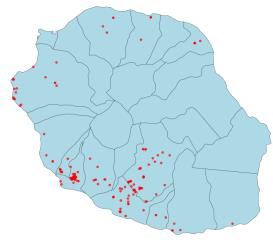
53 cases of chikungunya have been reported to ARS La Réunion since August 2024. The majority of these cases have been recorded in the south of the island.

Given the evolution of the situation and the risk of an epidemic in the coming weeks, Gérard Cotellon, Director General of ARS La Réunion, in agreement with Patrice Latron, Prefect of La Réunion, has decided to activate level 2B of the ORSEC system.


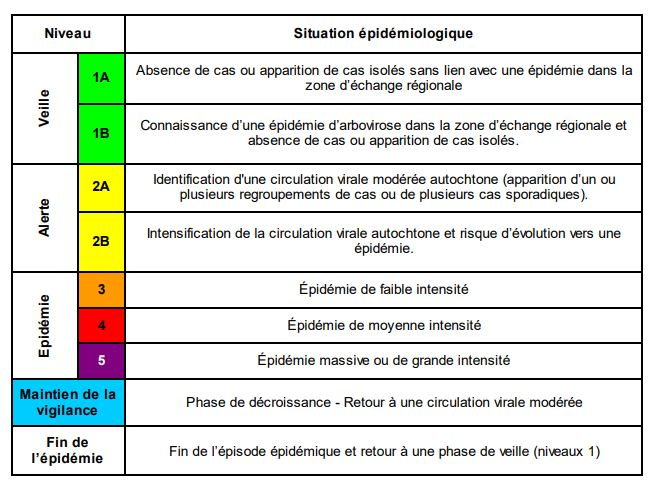
This level of fight against arboviruses: "Intensification of indigenous viral circulation and risk of development into an epidemic" corresponds in particular to a strengthening of public health actions and partnership actions with municipalities and inter-municipalities.

The ARS teams, in conjunction with municipal services, continue their awareness-raising and mosquito control operations daily in the affected neighborhoods.

The current weather conditions, which are particularly conducive to the proliferation of mosquitoes, reinforce the urgency of action: everyone's commitment is essential to avoid a chikungunya epidemic even as dengue fever continues to circulate on the island.


Epidemiological situation

(Public Health France data as of 12/17/2024)

Among the 53 cases of chikungunya recorded, four clusters of cases (outbreaks) are currently active:
  1. in the commune of Etang-Salé in the Sheunon ravine district (27 cases),
  2. in the commune of Saint-Paul, one in the Aigrettes district (7 cases) and the other in Ermitage (9 cases),
  3. in the commune of Tampon, on the Islet of Grand-Bassin,
  4. a new outbreak has emerged on Line 400 located in the municipalities of Tampon and Saint-Pierre.
Several isolated cases have also been identified in the municipalities of Saint-Pierre, Tampon and Saint-Louis over the last fortnight.

The total number of cases remains moderate and without health impact at this stage.

At the same time, dengue fever continues to circulate quietly on the island (18 cases reported since the end of August in Saint-Pierre, Saint-Joseph, Le Port and Saint-Paul), requiring increased vigilance against both viruses.


Activation of level 2B of the ORSEC device

This alert level corresponds to an “ intensification of indigenous viral circulation in anticipation of an evolution towards an epidemic ” and provides in particular:
  1. Strengthening public health and mosquito control actions across the island;
  2. Reinforced partnership actions to combat the virus with municipalities and inter-municipalities in identified areas of virus circulation:
    • sanitation actions and maintenance of public and private spaces (clearing of yard bottoms, pruning, increased waste collection, etc.),
    • awareness raising and mobilization of the population, treatment actions;
  3. The identification of reinforcements that can be mobilized in an epidemic situation for actions to combat larval breeding sites and treatment, the preparation of their possible mobilization;
  4. Strengthening information for health professionals;
  5. Checking stocks with pharmacists;
  6. Strengthening actions in health and social-medical establishments to combat mosquitoes and protect users and staff.
The involvement of municipalities and inter-municipalities through their public health actions contributes greatly to strengthening the treatment and awareness-raising actions carried out by the ARS. This mobilization is now essential to reverse the epidemic trend. The coming weeks will indeed be crucial in the fight against the spread of the disease.


The plan to combat arboviruses:
niveau%20ORSEC.JPG


The plan to combat arboviruses (dengue, chikungunya, zika) is a specific mechanism of the departmental ORSEC plan.
It describes the strategy and means of combating these mosquito-borne diseases according to different levels of risk.
The plan includes 5 levels. The transition from one level to another and the coordination of event management are ensured by:
the general director of the ARS: monitoring levels (level 1) and alert levels (level 2);
the prefect: from the outbreak of the epidemic level (levels 3 and above).


...


https://www.lareunion.ars.sante.fr/...tif-orsec-risque-devolution-en-epidemie-une-0
 
Translation Google

Chikungunya: Reunion Island in fear of a repeat of the 2006 epidemic

The Quotidien, December 27, 2024

The ARS, which has long avoided the subject of a new chikungunya epidemic, almost 20 years after the first reports of the 2005-2006 health crisis, has just activated "level 2B of the Orsec system specific to arboviruses". Should we be worried about seeing the current situation turn into a health crisis?

If the mere mention of this arbovirus that has martyred so many people from Reunion Island makes us shudder, we are better equipped against chikungunya than we were back then. Reunion Island is infinitely better equipped than it was in 2006, with a university hospital, equipment for carrying out PCRs, years of research and studies on arboviruses, and in-depth knowledge of the disease, the serious cases of which target categories of people well established by seroprevalence studies.

Another parameter – psychologically – more or less reassuring, the recent marketing of the lxchiq vaccine (Valneva), which the Social Security does not yet reimburse… while the High Authority of Health is slowly making haste, if we are to believe the absence of vaccination recommendations for France, in terms of a strategy to combat chikungunya. We may be able to have some delivered from stocks in the USA or Quebec…

Reunion Island can nevertheless boast of having been at the forefront of chikungunya. At the height of the crisis, in January 2006, there were up to 47,500 cases in one week. In 2005-2006, more than 250,000 people were infected, or 38% of the population.

We know that in the spring of 2006, researchers from the Pasteur Institute had highlighted a new mutation of CHIKV which increased the vector competence of mosquitoes from Reunion and Mayotte.

Today in scientific circles we are talking about the Indian Ocean lineage (IOL) – resulting from a mutation of the East African lineage – which struck in 2006, after Reunion Island and Mauritius, in India, the Maldives… According to a study published last February, “Pathogenicity and virulence of chikungunya virus”, the most notable adaptive mutation of CHIKV would be precisely the one that appeared in Reunion Island in 2005-2006, a period from which the virus would have continued to evolve, contributing to the emergence of new, more virulent variants…

In any case, the genotype circulating in our country today presents three mutations, the first E1-A226V, mentioned above, was identified during the 2005-2006 epidemic; the other two E1-K211E and E2-V264A are also representative of the evolution of the virus in relation to the environmental conditions it encounters, from one epidemic to another, from one region of the world to another, but are still associated with a better adaptation of CHIKV to its vector mosquitoes, in this case Aedes albopictus.

Pray to Saint-Expedit and Saint-Flytox

To return to the current epidemic context, it should be noted, for comparison purposes, that in 2009, a focus of 5 indigenous cases was identified; the same in 2010 with 112 confirmed cases and 46 probable cases. According to the INVS, the circulating strains were close to that identified in Madagascar, i.e. ECSA genotype (East/Central/South Africa), dating from the 2005-2006 epidemic, which put into perspective the theory of the maintenance of low-level viral circulation. It is therefore doubtful that 20 years later we will see a reactivation of the 2006 CHIKV...

In Madagascar, several epidemics have been recorded since then, inducing changes in the genotype in question.

In Réunion, since last August, 82 cases have been confirmed, which suggests a significant number of asymptomatic but contagious cases... However, despite a rapid response from the ARS on the ground, emergency treatment, without waiting for PCR confirmation, of areas where cases are reported, has not limited the spread of the virus carried by its stinging vector, the tiger mosquito.

These cases are distributed among 5 active outbreaks, including Trois-Mares-les-Bas, where three cases have been reported, L'Étang-Salé which has just added 20 new cases in one week to the 30 cases of last week; Grand-Bassin (2 cases), la Ligne des 400 (1 case) and 4 other cases if not nomadic, at least "isolated". And 7 other cases are already counted for the coming week...

Of course, the ARS vector control service has deployed its management measures around all the cases, but the mosquitoes are persisting due to weather conditions favourable to their rapid development.

This slow progression is reminiscent, all things considered, of what happened during the southern winter of 2005, and the televised statements of Mr. Deparis (ARS péi) – who did not respond to our interview requests – simply confirm the existence of an epidemic that is taking hold.

In 2005, Reunion Island was particularly ill-equipped to deal with arboviruses; the vector control services of the Drass had no entomological surveillance strategy, while the Department (Nassimah Dindar was president) had been absent since the eradication of malaria.

The ARS now has a significant workforce – among the largest in France, with Mayotte – dedicated to vector control, usually seasonal… 75 people in the field, assistants and health technicians, according to Boris Szklarz, a CGT union representative who recently spoke on a local channel; around thirty others in the offices or elsewhere. The ARS is even recruiting temporary workers to strengthen its ground teams. Everyone has their own seasonal workers…

How then can we explain their difficulties in blocking the broadcast?

The unions of the Regional Health Agency who demonstrated on December 5th, deplore, according to Mr. Szklarz, a presence on the ground reduced by half compared to 2006, at the height of the crisis… Even if there were legions of them to spray abundantly everything that flies, that would not change anything in the effectiveness of the fight against vectors, because many adulticides are banned such as Malathion, Fenithrothion, or Temephos. And resistance has developed in the vector mosquitoes for others, this is the case of Deltamethrin still used in Reunion on Aedes albopictus, or Permethrin used in Asia against Aedes aegypti.

As for Bacillus thuringiensis israelensis (BTI), it is an “organic” larvicide effective in aquatic environments.

There remains the mechanical fight, but all the assistants and health technicians of the ARS, if they returned to the field, would not be enough to empty and dry out all the larval breeding sites on the island in urban and peri-urban areas, not to mention the ravines. It is up to the people of Réunion to increase the effort and ensure their health security at home. The problem of the fight in Réunion is therefore less a question of personnel than of means and technologies. For the rest, we must rely on Providence and pray to Saint-Expedit and Saint-Flytox.

Philippe LE CLAIRE

https://www.lequotidien.re/actualit...a-hantise-dune-replique-de-lepidemie-de-2006/
 
Translation Google

Chikungunya: 118 cases recorded since the beginning of the year

LINFO.RE – created on 12/31/2024 at 11:03 a.m. – updated on 12/31/2024 at 11:03 a.m. - The editorial staff

According to a new epidemiological bulletin from Public Health France, 118 cases of indigenous chikungunya have been recorded in Réunion since August 2024.

Information from Public Health France:

Since 23/08, 118 cases of indigenous chikungunya have been reported in Réunion. All cases, with the exception of one probable case, are confirmed cases, PCR +. For S51, 17 cases have been reported and for S52, the provisional total is 25 cases. These cases are distributed between 5 active outbreaks. These outbreaks are those of Ermitage, Grand Bassin, Ligne des 400, Trois Mares and Etang Salé les Hauts. The outbreak of Etang Salé continues to be very active (9 cases in S51 and already 14 cases in S52 – not consolidated).

The ARS vector control service has deployed its management measures around all cases. However, we observe that the circulation of chikungunya is intensifying in the territory and continues to disperse. This dispersion is manifested by a greater difficulty in linking cases to a known focus (increase in "isolated cases"), indicating a circulation that is spreading. To date, the health impact remains relatively low, with no hospitalizations having been declared.

Regarding dengue fever, since the end of August, 34 cases have been reported. The cases were located in 10 municipalities: St Joseph, St Pierre, St Paul, le Tampon, St Denis, Le Port, St Benoit, St Louis, St Leu and three Bassins. In S50 and S51, 2 cases were reported. At the start of this southern summer, the health impact of dengue fever is negligible (no hospitalizations > 24 hours since the beginning of August and 17 visits to the emergency room).

https://www.linfo.re/la-reunion/soc...t-de-l-annee-dont-25-nouveaux-sur-une-semaine
 
Translation Google

Chikungunya: due to the acceleration of the spread of the epidemic, the prefect triggers level 3 of the ORSEC plan in Reunion

Updated on 01/13/2025


Chikungunya_large.jpg


Since August 23, 2024, the territory of Réunion has recorded 192 cases of chikungunya.

Due to the increase in the number of cases and the dispersion of outbreaks, and on the proposal of the Director General of the ARS Gérard COTTELON, Patrice LATRON, Prefect of Réunion, triggers level 3 of the ORSEC "Arboviruses" system, which corresponds to the circulation of a low-intensity epidemic.


Situation as of January 13, 2025

The municipalities in the south of Reunion Island have been the most affected since the virus appeared. The town of L'Etang-Salé has the most areas affected by the virus with 90 cases. It should also be noted that there has been an increase in the number of isolated cases, from 38% to 45%.

Coordinated actions to combat mosquitoes
  • Mobilization of vector control agents
Since the first cases appeared, 120 agents have been mobilized and carry out daily control and prevention actions. This workforce is regularly revised upwards to deal with the appearance of new cases in neighborhoods that until now were not affected by the virus.

In figures:
- 43 areas benefited from intervention
- 436 houses or apartments were visited
- 87 larval breeding sites have been eliminated
- 217 treatments were carried out
  • Public health
Partnership actions carried out with municipalities and inter-municipalities will be intensified in the areas most affected by the virus. These sanitation actions will significantly contribute to reducing the presence of mosquitoes (maintenance of public spaces, "empty yard" operations, awareness-raising among the population).

The prefect invites the people of Reunion Island to strictly comply with the instructions of the health authorities and to put into practice preventive measures and barrier gestures:
  • Eliminate places where mosquitoes can lay their eggs (containers in which water can stagnate: gutters, tires, cups, etc.);
  • Protect yourself from mosquito bites (sprays, mosquito nets, coils, long clothing, etc.);
  • Consult your doctor if you experience symptoms (fever associated with or without headaches, muscle pain, nausea, vomiting, severe fatigue, presence of spots).
https://www.reunion.gouv.fr/Actualites/Communique-de-presse/Chikungunya
 
Translation Google

Update on the chikungunya situation in Reunion

News
January 21, 2025
...
image_site_chikungunya_agir.jpg


Since August 23, 2024, 256 cases of chikungunya have been recorded.

Due to the increase and dispersion of the number of cases, and on the proposal of the Director General of the ARS Gérard COTELLON, Patrice LATRON, Prefect of La Réunion, triggered level 3 of the ORSEC "Arboviruses" system on January 13 (which corresponds to the circulation of a low-intensity epidemic.).


Current weather conditions are very favorable to the proliferation of mosquitoes. The mobilization of all stakeholders and the population is necessary to avoid a large-scale epidemic.

Chikungunya situation as of January 21, 2025

(Public Health France data)

Since August 22, 2024
  1. 256 indigenous cases recorded
  2. 1 hospitalization of +24h reported
2025-01-21-CP%20hebdo%20-%20du%2013%20au%2019%20janvier.jpg

Distribution :
  1. Saint-Paul, Hermitage: 12
  2. Salt Pond, Sheunon: 96
  3. The Stamp:
    • Grand-Bassin: 7
    • Line of 400: 11
    • 3 Mares les Bas: 13
    • Hollow arms: 4
  4. Saint-Pierre, The valley: 4
Isolated cases have also been reported in the municipalities of Les Avirons, Petite-Ile, Saint-Denis, Saint-Joseph, Sainte-Marie, Le Port and Saint-Louis.
...

https://www.lareunion.ars.sante.fr/point-sur-la-situation-du-chikungunya-la-reunion-2
 
Translation Google

Chikungunya in Reunion: week of January 20 to 26, 2025

News
January 28, 2025


rubrique_chikungunya_0.jpg


Chikungunya is spreading to more and more municipalities. From January 20 to 26, 2025, 31 new cases were reported. The municipality of Trois-Bassins reported a case for the first time. The many isolated cases raise fears of the emergence of new outbreaks in the coming days/weeks and an extension to the entire territory.

Epidemiological situation

r%C3%A9partition%20Du%2020%20au%2026%20janvier%202025.png

Six outbreaks are active to date :
  1. Sheunon Ravine (Salt Pond),
  2. the 400 Line (Saint-Pierre / Le Tampon),
  3. Hollow Arm (The Tampon),
  4. Large Basin and Three Ponds les Bas (Tampon),
  5. The Valley (Saint-Pierre).
Since August 23, 2024
  • 339 indigenous cases recorded (data for the period from January 13 to 19, after consolidation, reported 78 cases), including 200 cases in 2025
  • 2 hospitalizations of +24h reported
Due to the increase and dispersion of the number of cases, and on the proposal of the Director General of the ARS Gérard COTELLON, Patrice LATRON, Prefect of La Réunion, triggered level 3 of the ORSEC “Arboviruses” system on January 13 (which corresponds to the circulation of a low-intensity epidemic).

Strengthening a communication campaign

Launch of a communication campaign

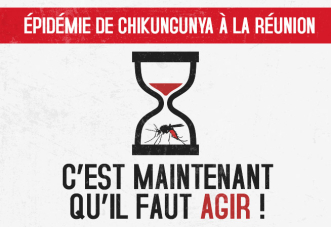
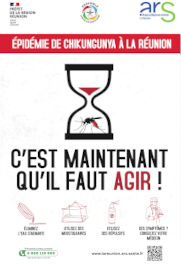
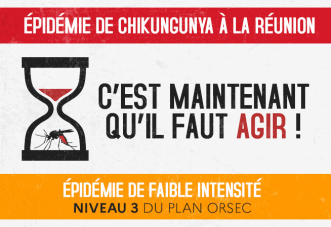
In order to inform about the disease and raise awareness among the entire population about the right actions to take, the ARS and the prefecture have launched a new communication campaign since January 27: "Chikungunya epidemic, we must act now!"
Affiche%20C%27est%20maintenant%20qu%27il%20faut%20agir.png
The campaign will run until February and is as follows:
digital campaign (Youtube, Google, local news sites)
campaign on the social networks of the ARS and the prefecture
front page banner of the Daily


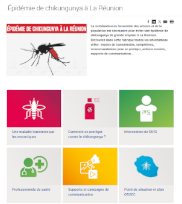
Creation of a section dedicated to chikungunya on the ARS website

Updated on a regular basis and accessible on the home page, this section contains information for different audiences:
Rubrique%20chik.png
  1. The population : illness, means of protection, vector control actions, etc.
  2. Health professionals : diagnosis, care, epidemiological point
  3. Partners : communication materials to relay prevention messages (generic poster, “Chikungunya is circulating in your neighborhood” poster, flyer, etc.)


Coordinated actions to combat mosquitoes

Mobilization of vector control agents

As soon as a case of chikungunya is reported by the doctor or the medical biology laboratory, the ARS intervenes in the area concerned, in order to reduce the risk of spreading the virus.

Public health

Partnership actions carried out with municipalities and inter-municipalities will be intensified in the areas most affected by the virus. These sanitation actions will significantly contribute to reducing the presence of mosquitoes (maintenance of public spaces, "empty yard" operations, awareness-raising among the population).

Recommendations to the population
  1. Eliminate stagnant water where mosquitoes can lay their eggs (mosquito nests):
    cups , small objects, tires, etc. Done regularly, this helps reduce the density of mosquitoes around your home and thus reduce the risk of transmitting the virus.
  2. Protecting yourself from mosquito bites:
    Repellents and mosquito nets are the most effective ways to protect yourself from mosquito bites. Diffusers or covering clothing can also be used.
  3. Consult your doctor if you experience symptoms: fever, headache, joint and/or muscle pain, nausea/vomiting, conjunctivitis, etc.
    This allows for a rapid diagnosis and ensures appropriate care to limit severe forms of the disease.

    For people who have contracted the disease, it is important to continue to protect themselves as long as symptoms persist, to avoid transmitting the virus.


https://www.lareunion.ars.sante.fr/chikungunya-la-reunion-semaine-du-20-au-26-janvier-2025-0
 
Translation Google
Update: The spread of chikungunya is confirmed across the island

News
February 4, 2025


rubrique_chikungunya_0.jpg


From 20 to 26 January 2025, 169 new cases were reported*.

Several chikungunya outbreaks are expanding, some of which could merge. The most worrying outbreaks are Bras Creux in Tampon, Ligne des 400 (Tampon/Saint-Pierre) and Ravine Sheunon in L'Etang-Salé.


Epidemiological situation

Image1.png


The following districts are affected by the appearance of cases:
  1. of Butor (Saint-Leu),
  2. from the Station Road (Saint-André),
  3. from Grand-Bassin and Trois-Mares les bas (Tampon),
  4. from La Rivière (Saint-Louis)
  5. from the Bamboo Valley-Line (Saint-Pierre)
Since August 23, 2024
  • 529 indigenous cases recorded
  • 169 new cases over the period from January 20 to 26
  • 3 hospitalizations of +24h.
    No confirmed cases among patients admitted to the emergency room.
*Between the appearance of symptoms, the medical consultation, the biological analysis and the transmission of the results to the ARS, the number of new cases is consolidated every 15 days.


Image2_0.png


Due to the increase and dispersion of the number of cases, and on the proposal of the Director General of the ARS Gérard COTELLON, Patrice LATRON, Prefect of La Réunion, triggered level 3 of the ORSEC “Arboviruses” system on January 13 (which corresponds to the circulation of a low-intensity epidemic).


...

https://www.lareunion.ars.sante.fr/...n-du-chikungunya-se-confirme-lechelle-de-lile


Translation Google
Update: Virus circulation intensifies on the island

News
February 11, 2025


rubrique_chikungunya_0.jpg


From January 27 to February 2, 2025, 204 new cases were reported*.

The municipalities of Etang Salé and Le Tampon continue to have the highest number of cases. Although there is a slight trend towards stabilization in Etang Salé, the outbreak in Le Tampon is increasing sharply.


Epidemiological situation

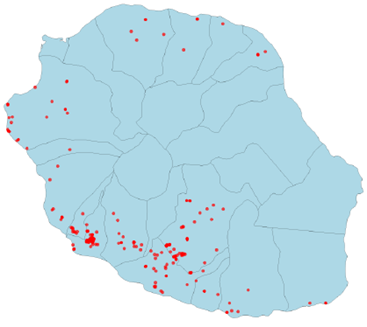
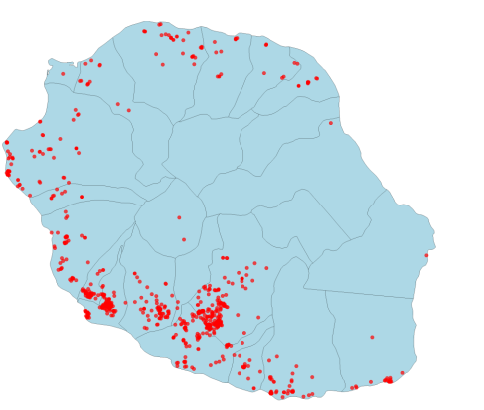
chikungunya_repartition_semaine05.jpg

The circulation of the virus is also increasing sharply in Avirons, Petite Ile, Saint-Joseph, Saint-Louis, Saint-Leu, Saint-Denis and Sainte-Marie.

The health impact remains relatively low: very limited activity in emergencies and 3 hospitalizations.

The current period of the southern summer is very favorable to the spread of arboviruses (dengue and chikungunya), particularly with the arrival of recent rains.


Since August 23, 2024

  • 783 indigenous cases recorded, including 671 since the beginning of the year
  • 204 new cases from January 27 to February 2
  • 3 hospitalizations of +24 hours
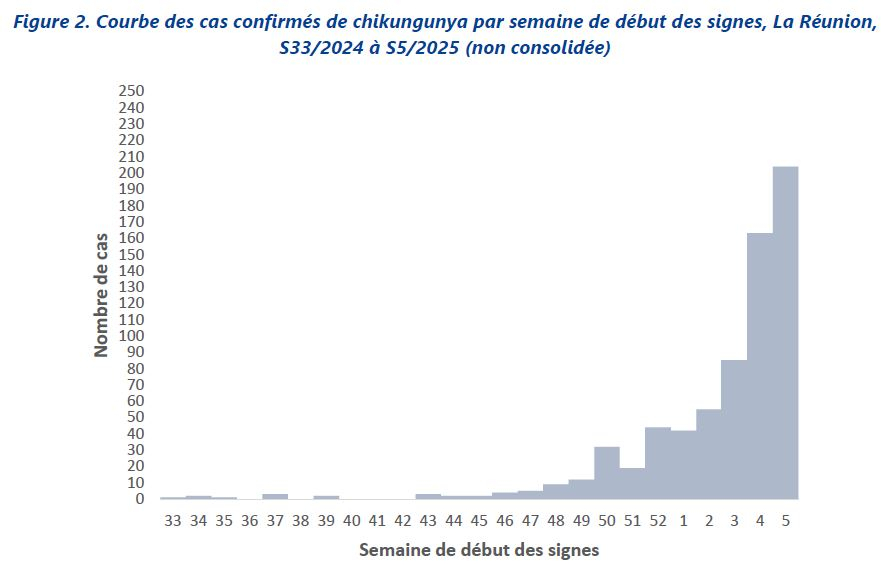
chikungunya_courbes_cas_confirmes_semaine04.jpg

*Between the appearance of symptoms, the medical consultation, the biological analysis and the transmission of the results to the ARS, the number of new cases is consolidated every 15 days.


Field actions implemented

For a collective fight, public health actions are implemented by the municipalities, in partnership with the Regional Health Agency (maintenance of public spaces, “Vid fond'cour” operations, awareness raising).

The Region, the Department, the municipalities and the inter-municipalities can request the ARS for actions to raise awareness among staff about the challenges of vector control and to relay information to the population.


Reminder of good gestures
  1. Eliminate stagnant water where mosquitoes can lay their eggs (mosquito nests):
    Bowls, small objects, tires, etc. Done regularly, this helps reduce the density of mosquitoes around your home and thus reduce the risk of transmitting the virus.
  2. Protecting yourself from mosquito bites
    Repellents and mosquito nets are the most effective means of protection. Diffusers or covering clothing can also be used.
  3. Consult your doctor if you experience symptoms : fever, headache, joint and/or muscle pain, nausea/vomiting, conjunctivitis, etc.
    This allows for a rapid diagnosis and ensures appropriate care to limit serious forms of the disease.

    For people who have contracted the disease, it is important to continue to protect themselves as long as symptoms persist, to avoid transmitting the virus.


https://www.lareunion.ars.sante.fr/point-de-situation-la-circulation-du-virus-sintensifie-sur-lile-0
 
Translation Google


Chikungunya in Reunion: week of February 3 to 9, 2025

Press release
February 18, 2025


rubrique_chikungunya_0.jpg


From February 3 to 9, 362 new cases were reported*. The epidemic continues at a steady pace. The municipalities of Tampon and Étang-Salé still have the highest number of cases, with 228 and 169 cases respectively since the beginning of the year. The presence of the virus is much more marked in Tampon, with an increase of more than 80% in cases.


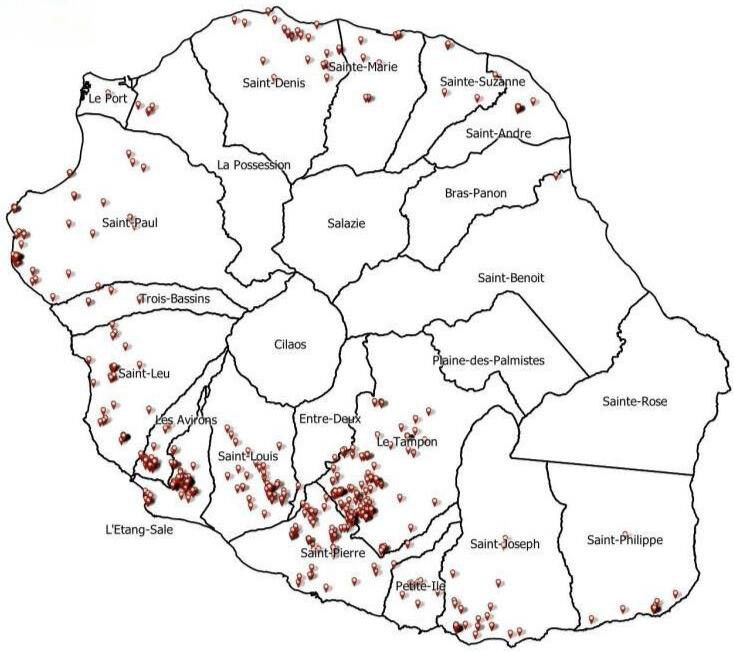
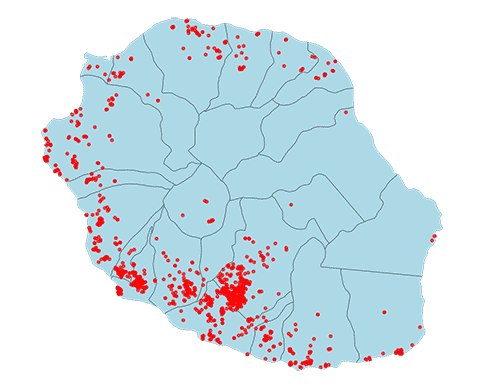
Carte%20chik%20du%203%20au%209%20f%C3%A9vrier.png

The circulation of the virus is progressing strongly:
  1. to the Oars,
  2. in Little Island,
  3. in Saint-Denis,
  4. in Saint-Joseph,
  5. in Saint-Louis,
  6. in Saint-Paul
  7. in Saint-Philippe.

The health impact remains relatively low: 8 visits to the emergency room and 7 hospitalizations.

The current period of the austral summer is very favorable to the spread of arboviruses (dengue and chikungunya), particularly with the arrival of recent rains. Given the current epidemic dynamics, dissemination to the entire island seems likely in the coming weeks.
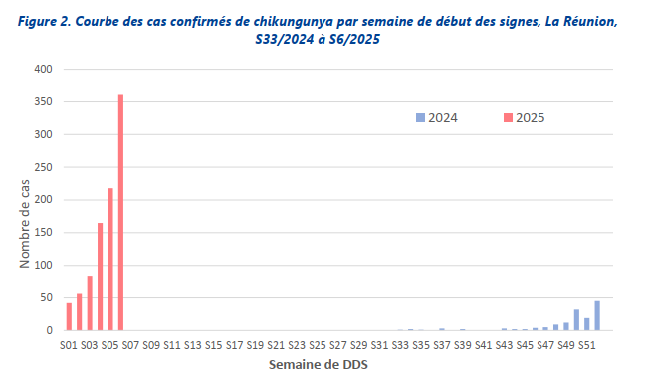
courbe%20des%20cas%20chik%20du%203%20au%209%20f%C3%A9vrier.png


Since August 23, 2024


1,069 indigenous cases recorded, including 927 since the start of the year
8 visits to the emergency room
7 hospitalizations of +24h


*Between the appearance of symptoms, the medical consultation, the biological analysis and the transmission of the results to the ARS, the number of new cases is consolidated every 15 days.

...

https://www.lareunion.ars.sante.fr/chikungunya-la-reunion-semaine-du-3-au-9-fevrier-2025-0


Translation Google

Chikungunya in Reunion: week of February 10 to 16, 2025

News
February 25, 2025


rubrique_chikungunya_0.jpg


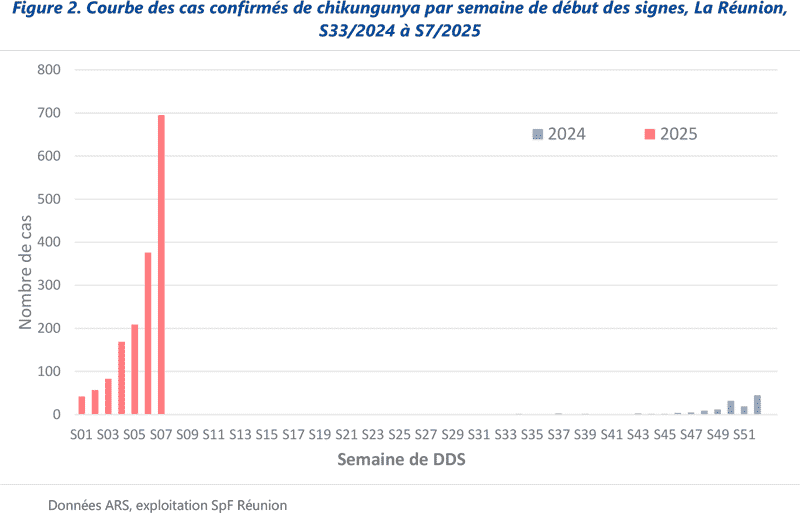
The epidemic is intensifying in the territory. From February 10 to 16, 695 new cases were reported. The current period of the southern summer (heat and rain) is very favorable to the spread of chikungunya.

Given the current epidemic dynamics, the spread to the entire island seems likely in the coming weeks.


Epidemiological situation

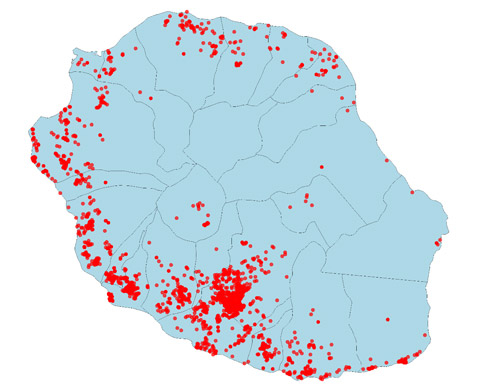
chikungunya_repartition_carte_6_16_fevrier_2025.png

The municipalities of Tampon and Etang-Salé remain the most affected, with 437 and 241 cases reported respectively since the beginning of the year.

A very strong increase is noted in Tampon, which shows an increase of more than 87% in the number of its cases.

However, the epidemic is spreading and the number of cases is increasing sharply in neighboring municipalities such as:
  1. The Oars,
  2. Little Island,
  3. Saint-Philippe
  4. Saint-Louis,
But also in the west of the island at:
  1. The Possession,
  2. Saint-Leu,
  3. Saint Paul,
  4. Three-Basins
Even the town of Cilaos is not immune to this dispersion, with 7 cases recently detected.

chikungunya_courbe_6_16_fevrier_2025.png
[COLOR=#ffffff !important]Since
August 23, 2024
  • 1,773 indigenous cases recorded, including 1,631 cases since the start of the year
  • 13 hospitalizations of +24h
...

https://www.lareunion.ars.sante.fr/chikungunya-la-reunion-semaine-du-10-au-16-fevrier-2025-actu1


Translation Google
Chikungunya in Reunion: week of February 17 to 23, 2025

News
March 5, 2025

rubrique_chikungunya_0.jpg


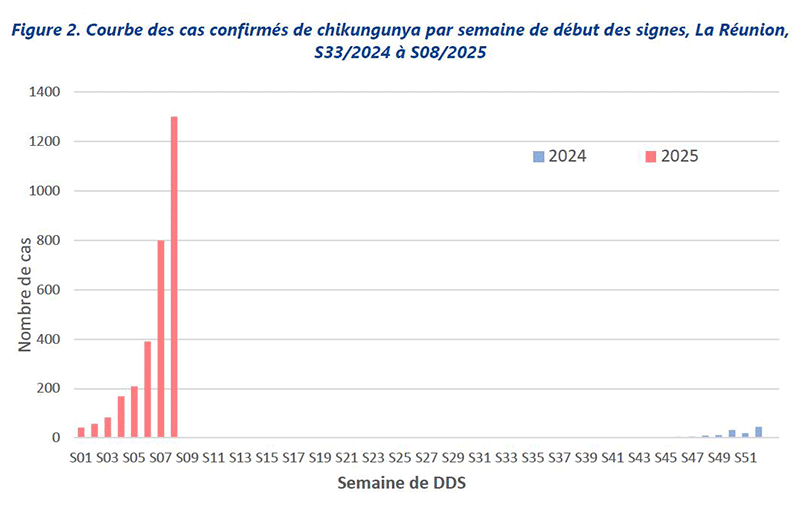
The epidemic is rapidly increasing in the territory. During the week of February 17 to 23, 2025, Reunion Island recorded 1,300 new cases of chikungunya*, an increase of more than 60% compared to the previous week.

Following the passage of the cyclone, the people of Reunion Island are encouraged to take the right steps to prevent the proliferation of mosquitoes.


This increase corresponds to the period preceding the passage of cyclone Garance. This could have ambivalent effects on the development of the virus, positive on the one hand due to the leaching effect of ravines that it could cause in the short term, but also negative due to the risk of an increase in stagnant water.
The people of Réunion are encouraged to take the right steps to prevent the proliferation of mosquitoes.


Epidemiological situation

chikungunya_repartition_carte_17_23_fevrier_2025.jpg

From January 1 [SUP]to[/SUP] February 23, 2025, 3,245 cases of indigenous chikungunya were reported in Réunion , including 1,300 from February 17 to 23, 2025.
Before the passage of Cyclone Garance, a strong progression of the epidemic was observed, especially in the cities of Tampon and Étang-Salé. Les Avirons, Petite-Île, Saint-Philippe, Saint-Louis, Saint-Paul, Saint-Leu, La Possession and Trois-Bassins also recorded a significant increase in cases.

chikungunya_courbe_17_23_fevrier_2025.png

Since August 23, 2024

  • 3,390 indigenous cases recorded, including 3,245 cases since the start of the year
  • 13 hospitalizations of +24 hours
*Between the appearance of symptoms, the medical consultation, the biological analysis and the transmission of the results to the ARS, the number of new cases is consolidated every 15 days.

...

https://www.lareunion.ars.sante.fr/chikungunya-la-reunion-semaine-du-17-au-23-fevrier-2025-0

---------------------------------------------------

Chikungunya epidemic: use of the IXCHIQ vaccine in Reunion and Mayotte

Vaccination recommendation - Published on March 5, 2025

Réunion has been in a chikungunya epidemic situation since January 13, 2025, with a resumption of circulation of the chikungunya virus in the territory since August 23, 2024.

In this context, the HAS was contacted by the Directorate General of Health (DGS) to issue an urgent opinion on the vaccination strategy to be implemented against chikungunya, with the IXCHIQ vaccine (VALNEVA laboratory), for the territories of Réunion and Mayotte, taking into account the data available to date, and the limited number of vaccine doses available, with the aim of preventing the occurrence of serious forms in populations at risk.

Who will this notice be addressed to?

It is aimed at public decision-makers.

What are the objectives of this notice?

The aim of this opinion is to define a short-term reactive strategy aimed at preventing the occurrence of serious forms in populations at risk, in the territories of Réunion and Mayotte.

Main conclusions of the opinion:

To date, and in the context of the current chikungunya epidemic in Réunion, the HAS recommends the use of the IXCHIQ vaccine in the territories of Réunion and Mayotte, prioritizing the territory of Réunion initially, in the absence of cases in Mayotte to date.

Given the prolonged nature of natural immunity, and due to a limited number of doses available, the HAS recommends vaccinating as a priority people at risk of severe forms who have never had a clinical or biological diagnosis of infection by the chikungunya virus (based on the patient's history), without however recommending pre-vaccination screening .

The population groups to be prioritized for vaccination, taking into account the number of doses of the IXCHIQ vaccine available in the short term and mobilizable in the medium term, in order of priority are as follows:

  • People aged 65 and over, especially those with comorbidities (high blood pressure, diabetes, cardiovascular disease, respiratory disease, kidney disease, liver disease and neurovascular disease);
  • People aged 18 to 64 with comorbidities.
Furthermore, due to the higher exposure to mosquitoes of vector control professionals due to their profession and their essential role in managing the epidemic, the HAS recommends that this category of the population also be given priority for vaccination in the short term.

At this stage, the HAS does not recommend the use of the IXCHIQ vaccine in pregnant women.


https://www.has-sante.fr/jcms/p_359...on-du-vaccin-ixchiq-a-la-reunion-et-a-mayotte


Translation Google
Chikungunya in Reunion: week of February 24 to March 2, 2025

News
March 12, 2025

rubrique_chikungunya.jpg

As the number of cases continues to rise, Réunion Islanders are urged to be vigilant in eliminating breeding sites.

The week of February 24 to March 2, 2025, saw a significant increase in the number of chikungunya cases: 1,766 new cases were recorded. This represents an 18% increase compared to the previous week.


Epidemiological situation

chikungunya_repartition_carte_24_fevrier_2_mars_2025.png


The southern municipalities are the most affected, this sector accounting for 72% of cases since August 2024.

Over the past few weeks, increasing viral circulation has been noted in the West and North zones: Saint-Denis (74 cases), Saint-Leu (160 cases) and Saint-Paul (174 cases).

The possible effects of Cyclone Garance on the circulation of the virus could be visible in the coming weeks.

The hospital situation remains under control, however: to date, there have been 20 additional 24-hour hospitalizations.
chikungunya_repartition_carte_24_fevrier_2_mars_2025_0.png

image.png - Click image for larger version  Name:	image.png Views:	1 Size:	15.1 KB ID:	1009718

...

https://www.lareunion.ars.sante.fr/chikungunya-la-reunion-semaine-du-24-fevrier-au-2-mars-2025-0
 
Translation Google

The worrying progression of the chikungunya epidemic in Reunion Island, the prefect triggers level 4 of the Orsec system

The epidemic situation is worsening in Réunion. A new milestone has been reached in the progression of chikungunya, with figures now approaching 2,000 weekly cases. As a result, and in light of this particularly worrying situation, Réunion Island's prefect, Patrice Latron, has decided to activate level 4 of the Orsec system, the last level before a "mass epidemic."

Harry Amourani / Andry Rakotondravola • Published on March 14, 2025 at 6:18 p.m., updated March 14, 2025 at 8:18 p.m.

The chikungunya epidemic continues to spread dangerously in Réunion. Nearly 1,800 new cases were recorded during the week of February 24, compared to 1,300 during the week preceding Cyclone Garance.

Faced with this particularly worrying situation, Prefect Patrice Latron announced this Friday, March 14, the activation of level 4 of the Orsec system, the last before the "mass epidemic."

" This level 4 requires a general mobilization of all public actors, from state services to municipalities, with the aim of containing this epidemic ," explains Gérard Cotellon, director of the ARS, the Regional Health Agency of Réunion.

A general mobilization of public actors and the population

" We are sticking to our core business of vector control ," the head of the ARS added. " Our agents will continue to carry out chemical product dispersal operations in a reasoned and reasonable manner ."

Mosquito control teams are focusing on areas with the highest number of chikungunya cases. In recent weeks, increasing viral circulation has been noted in the western and northern zones: Saint-Denis (74 cases), Saint-Leu (160 cases), and Saint-Paul (174 cases).

Free vaccination campaign to be launched soon

Gérard Cotellon also calls for social mobilization. " We must continue to visit homes and neighborhoods to give good advice ," he insists. " Namely, how to protect yourself, use insecticides, sleep under a mosquito net, but above all, everyone must be careful to ensure that there are no breeding grounds around their homes ."

To combat "chik," there's also the vaccine. 40,000 doses have been ordered by the Regional Health Agency (ARS). Vaccination will begin around mid-April. It will be free and primarily intended for at-risk individuals.

https://la1ere.francetvinfo.fr/reun...-le-niveau-4-du-dispositif-orsec-1569967.html
------------------------------------------------
Prefect of Reunion
23h ·

]#chikungunya | Triggering of level 4, “medium intensity epidemic”, of the OR-SEC plan in Réunion

1f99f.png
With more than 2,600 new cases in seven days, the Chikungunya epidemic has intensified sharply in recent weeks across the country.


270a.png
Faced with this situation, we must all act!


26a0.png
The prefect of Réunion, Patrice Latron, has decided to trigger level 4 of the ORSEC plan, requiring the reinforcement of 25 vector control agents, the reinforcement of the health reserve and the total mobilization of all communities.


Vincent BERNARD-LAFOUCRIERE, Deputy Prefect and Chief of Staff, accompanied by Gérard COTELLON, Director of the ARS, and Maurice GIRONCEL, Mayor of Sainte-Suzanne, met this afternoon with vector control agents and municipal officials working in the field.

Reunion Islanders are invited to rigorously implement preventive measures to reduce risks:
1f449.png
Eliminate places where mosquitoes can lay their eggs (containers in which water can stagnate: gutters, tires, cups, etc.);

1f449.png
Protect yourself from mosquito bites (sprays, mosquito nets, coils, long clothing, etc.);

1f449.png
Consult your doctor if you experience symptoms (fever associated with headaches, muscle pain, nausea, vomiting, severe fatigue, spots).


1f489.png
Following the decisions made by the High Authority for Health, vaccination covered by the State will also be offered to people at risk from mid-April.


image.png - Click image for larger version  Name:	image.png Views:	1 Size:	648.0 KB ID:	1009890
image.png - Click image for larger version  Name:	image.png Views:	1 Size:	580.0 KB ID:	1009891
​​
...
https://www.facebook.com/Prefet974/
 
Translation Google

Chikungunya in Reunion: week of March 3 to 9

Updated on 03/19/2025


Chikungunya-a-La-Reunion-semaine-03-au-09-mars-2025_large.jpg


The epidemic continues to progress, the territory has moved to level 4 of the OR-SEC plan "medium intensity epidemic"

Level 4 of the ORSEC plan was triggered by the prefect of Réunion, on the proposal of the director general of the ARS, because Réunion is experiencing a "medium-intensity epidemic" with the appearance of nearly 3,000 cases in 7 days. For the week of March 3 to 9, 2,888 cases were reported. The southern municipalities are the most affected by the virus, particularly Le Tampon. To date, all cities are affected by the epidemic.

> Since August 2024: 8,749 cases reported
> Since the beginning of the year: 8,600 cases recorded

Tampon-1_campaign.png


Although there is no current tension in the hospital environment, 77 patients were admitted to the emergency room between March 3 and 9, 2025. Since August, 24 people have been hospitalized, including three severe cases.

Strengthening and prioritizing vector control actions

Faced with the increase and spread of cases across the country, the ARS vector control service is adapting its system to optimize the effectiveness of interventions. A strategy for prioritizing actions has been implemented, based on three levels of intervention:

  • Priority 1 : Targeted interventions around isolated cases
    Actions implemented around each identified case aimed at rapidly reducing the risk of transmission by eliminating breeding sites.
  • Priority 2 : Interventions around cluster cases or emerging outbreaks
    Actions deployed at the level of the affected neighborhood to limit the spread and prevent the formation of active outbreaks.
  • Priority 3 : interventions within active outbreaks
    Actions reinforced by increased mobilization of local actors (municipalities, inter-municipalities and associations) in conjunction with the ARS allowing the implementation of awareness-raising and public health operations.
With the transition to level 4 of the ORSEC system on March 14, the involvement of municipalities and inter-municipal authorities is essential to support treatment and awareness-raising actions.

The LAV teams have been strengthened with:

  • The recruitment of 79 temporary workers (74 for field actions, 5 for signal validation).
  • Support from reinforcements from mainland France (an engineer for scheduling interventions)
LAV mobilization in figures
  • 150 agents daily in the field
  • 120 to 140 perimeters of around ten houses taken care of daily
  • nearly 700 home visits and 400 insecticide treatments every day
  • 20,937 houses or apartments visited (since August 2024) or 5,587 breeding sites eliminated
Call for solidarity mobilization!

This move to stage 4 of the ORSEC plan includes a stronger mobilization of the population and communities in the fight against the spread of the virus. Adopting preventive measures to reduce risks is the best way to protect yourself:

Eliminate stagnant water

  • Empty any objects that could accumulate water around your home
  • Check and maintain plants and containers that may retain water
  • Treat or empty unused inflatable pools
  • Check gutters and septic tanks
  • Cover cisterns and water reserves with cloth or mosquito netting
Only take out your bulky items the evening before collection day.

Waste left in gardens or on public roads becomes breeding grounds for mosquitoes.

Protect yourself from bites

  • Apply repellents
  • Install mosquito nets
  • Use insecticides
  • Wear long, light-colored clothing.
https://www.reunion.gouv.fr/Actuali...gunya-a-La-Reunion-semaine-03-au-09-mars-2025
 
Back
Top