

Install the app
How to install the app on iOS
Follow along with the video below to see how to install our site as a web app on your home screen.
Note: This feature may not be available in some browsers.
-
FluTrackers.com Inc. does not provide medical advice. Information on this web site is collected from various internet resources, and the FluTrackers board of directors makes no warranty to the safety, efficacy, correctness or completeness of the information posted on this site by any author or poster. The information collated here is for instructional and/or discussion purposes only and is NOT intended to diagnose or treat any disease, illness, or other medical condition. Every individual reader or poster should seek advice from their personal physician/healthcare practitioner before considering or using any interventions that are discussed on this website. By continuing to access this website you agree to consult your personal physican before using any interventions posted on this website, and you agree to hold harmless FluTrackers.com Inc., the board of directors, the members, and all authors and posters for any effects from use of any medication, supplement, vitamin or other substance, device, intervention, etc. mentioned in posts on this website, or other internet venues referenced in posts on this website.
-
We are not asking for any donations. Do not donate to any entity who says they are raising funds for us.
You are using an out of date browser. It may not display this or other websites correctly.
You should upgrade or use an alternative browser.
You should upgrade or use an alternative browser.
Kenya - Ebola: October 3, 2026+
- Thread starter sharon sanders
- Start date

Pathfinder
Editor, Senior Moderator
Ebola outbreak spreads: Eighth case in Kenya, eighth Congo province affected
...
News Agencies|Yesterday | 21:55
...
According to Kenya's director-general of health, Dr. Patrick Amoth, the latest patient is not a medical professional. His job involved cleaning utensils and bedding, and he was apparently exposed to the virus while caring for the first patient. On Saturday, he developed a fever, headache and muscle pain. He was separated from the others in quarantine and diagnosed with Ebola the following day. "Today, 38 people were tested, and one tested positive for Ebola," Amoth told Citizen TV.
The six other patients, including three relatives of the first patient, among them a 39-year-old man and a 65-year-old woman, and three health care workers who treated him, are in stable condition and receiving supportive care. Following the first patient's death, about 130 people who had come into contact with him were identified, including medical personnel. Of those, 128 remain in quarantine. Anyone who develops symptoms while in quarantine is immediately tested for Ebola.
...
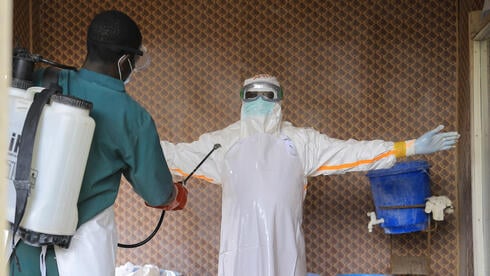
 www.ynetnews.com
--------------------------------------------------------------------------
Ebola in Kenya: 8 case raises fresh questions over hospital safety and contact tracing
Monday 19th October, 2026 07:51 AM|By Felix Kyalo
...
Worker safety
On Saturday, October 17, 2026, health authorities confirmed four additional cases, bringing the national tally to seven, including one death. Three of the four new patients were healthcare workers who had attended to the first patient, while the fourth was a close male relative.
All four were already in quarantine when their infections were detected, according to updates from the Africa Centres for Disease Control and Prevention.
The eighth case, reported the following day, has further drawn attention to the risks faced by people working in healthcare facilities, including staff who may not be directly involved in treating patients.
Hospital attendants, cleaners and laundry workers can encounter potentially contaminated materials while carrying out routine duties. Their safety depends on access to appropriate protective equipment, adequate training and strict infection prevention procedures.
...
As of Monday, October 19, 2026, the priority remains clear: identify every contact, protect healthcare workers, investigate each new infection and prevent further transmission.
Eight confirmed cases do not automatically mean uncontrolled community transmission. But the latest developments make the effectiveness of Kenya’s containment measures increasingly important, particularly in hospitals where the people caring for patients must also be protected from infection.
...

 peopledaily.digital
...
News Agencies|Yesterday | 21:55
...
According to Kenya's director-general of health, Dr. Patrick Amoth, the latest patient is not a medical professional. His job involved cleaning utensils and bedding, and he was apparently exposed to the virus while caring for the first patient. On Saturday, he developed a fever, headache and muscle pain. He was separated from the others in quarantine and diagnosed with Ebola the following day. "Today, 38 people were tested, and one tested positive for Ebola," Amoth told Citizen TV.
The six other patients, including three relatives of the first patient, among them a 39-year-old man and a 65-year-old woman, and three health care workers who treated him, are in stable condition and receiving supportive care. Following the first patient's death, about 130 people who had come into contact with him were identified, including medical personnel. Of those, 128 remain in quarantine. Anyone who develops symptoms while in quarantine is immediately tested for Ebola.
...
Ebola outbreak spreads: Eighth case in Kenya, eighth Congo province affected
All Ebola cases in Kenya are linked to one man who arrived from Congo via Uganda and died two days after landing in Nairobi; 128 contacts remain isolated; in Congo, over 4,500 have died from a rare strain with no approved vaccine or treatment
www.ynetnews.com
Ebola in Kenya: 8 case raises fresh questions over hospital safety and contact tracing
Monday 19th October, 2026 07:51 AM|By Felix Kyalo
...
Worker safety
On Saturday, October 17, 2026, health authorities confirmed four additional cases, bringing the national tally to seven, including one death. Three of the four new patients were healthcare workers who had attended to the first patient, while the fourth was a close male relative.
All four were already in quarantine when their infections were detected, according to updates from the Africa Centres for Disease Control and Prevention.
The eighth case, reported the following day, has further drawn attention to the risks faced by people working in healthcare facilities, including staff who may not be directly involved in treating patients.
Hospital attendants, cleaners and laundry workers can encounter potentially contaminated materials while carrying out routine duties. Their safety depends on access to appropriate protective equipment, adequate training and strict infection prevention procedures.
...
As of Monday, October 19, 2026, the priority remains clear: identify every contact, protect healthcare workers, investigate each new infection and prevent further transmission.
Eight confirmed cases do not automatically mean uncontrolled community transmission. But the latest developments make the effectiveness of Kenya’s containment measures increasingly important, particularly in hospitals where the people caring for patients must also be protected from infection.
...
Ebola in Kenya: 8 case raises fresh questions over hospital safety and contact tracing
Kenya’s Ebola caseload has risen to eight, putting hospital safety and contact tracing under renewed scrutiny as health authorities race to contain the Bundibugyo virus following the country’s…
peopledaily.digital
Pathfinder
Editor, Senior Moderator
Travel Advisory – Kenya Level 3 – Reconsider Travel
By U.S. Embassy Kenya
27 MINUTE READ
October 20, 2026
The Department of State renewed its Travel Advisory for Kenya on October, 19 2026.
Advisory summary was updated. The level was changed from Level 2 to Level 3 due to health risks.
Travel Advisory – Kenya
Level 3 – Reconsider Travel
C – Crime
K – Kidnapping
T – Terrorism
U – Unrest
H – Health
O – Other
Reconsider travel in Kenya due to risk of health, crime, kidnapping, terrorism, unrest, and traffic safety. Some areas have increased risk. Read the entire Travel Advisory.
Do Not Travel to the Nairobi neighborhoods of Eastleigh and Kibera due to risk of crime and kidnapping.
Do Not Travel to the counties of Garissa, Wajir, Mandera, Lamu, Tana River (except Tsavo National Park), Kilifi (north of highway C103), and coastal areas north of Malindi, due to risk of kidnapping and terrorism.
Do Not Travel to West Pokot County and western Turkana County due to risk of crime.
Do Not Travel to Marsabit and Turkana Counties within 30 miles (50 kilometers) of the border with Ethiopia due to risk of unrest.
Advisory summary
The U.S. Centers for Disease Control and Prevention (CDC) has issued a Travel Health Notice for Ebola Bundibugyo Virus Disease for Kenya .
The U.S. Centers for Disease Control and Prevention (CDC) has issued a Travel Health Notice for Ebola for the Democratic Republic of the Congo (DRC).
On May 17, the World Health Organization (WHO) declared the Ebola outbreak in the DRC and Uganda a Public Health Emergency of International Concern
Please see our section on Travel from Ebola-Impacted or Elevated Risk Countries section. Medical services in Kenya are limited. They are often unavailable in rural areas. Medical facilities in Kenya often lack sufficient medicine and equipment. Except for a few private medical facilities based in the large urban centers with enhanced capability, many health issues may require medical evacuation at your own expense. Medical facilities will usually deny service if payment is not made upfront.
Some schools, substance abuse centers, and other facilities claim to rehabilitate people, but operate with little or no government supervision. Physical and emotional abuse is common in these places. Residents, including Americans, have been held in these facilities against their will.
Americans or residents who lure individuals to Kenya under false pretenses or forcibly place Americans into such rehabilitation facilities may be subject to legal repercussions in the United States.
Crime
Violent crime can occur at any time. Violent crimes include armed carjacking, mugging, home invasion, sexual assault, and kidnapping for ransom. Petty crime is common. Criminal fraud targeting Americans is a concern.
- Local police often are unable to respond effectively to crimes.
- Crimes like robbery are common. They are often committed by individuals riding motorcycles.
- Solo travelers in particular should exercise caution. Some Americans have been victims of sexual assault in bars and resorts/hotels.
- Petty crimes often occur in crowded areas or when people are distracted.
- Schemes to defraud investors are common. Americans often fall victim to schemes involving transactions in gold and other high-value commodities. Kenyan authorities are unlikely to assist Americans in recovering losses.
- Property disputes are common in Kenya. Americans who have bought land, churches, and businesses have lost their investments or been pushed off the property by locals who claim the land or business.
Terrorists, criminal gangs, and other armed groups kidnap for ransom. Local law enforcement officials are not equipped or trained to handle the threat of kidnapping.
Terrorism
There is risk of terrorist violence, including terrorist attacks and other activity. Visit the U.S. Department of State’s country reports on terrorism to learn more.
Terrorists plot kidnappings, bombings, grenade attacks, armed assaults, suicide attacks, and other action in Kenya. Terrorists attack without warning. They have targeted:
- Kenyan and foreign government buildings
- tourist locations
- transportation hubs
- hotels and resorts
- markets and shopping malls
- places of worship
Cross-border incursions occur along the border with Ethiopia.
Demonstrations, strikes, and other political and economic protests are common. They can turn violent.
Protests often block key intersections and highways, resulting in widespread traffic jams. Protestors have also attacked vehicles containing Americans, including motorcycle taxis and safari vehicles.
Violence during protests has occurred across Kenya. This includes rock-throwing by protesters and use of deadly force by police. Violent protests are most common in Nairobi and in western Kenya.
Other – Traffic safety
Automobile accidents are one of the main causes of injury and death of Americans in Kenya. Major highways between Nairobi and Nakuru and Nairobi and Mombasa are only two lanes, and drivers frequently pass with little attention to oncoming traffic. Tourists, who may not always use seatbelts, have also been seriously injured or killed in safari vehicle accidents.
Risks in specific areas
Level: 4 – Do not travelNairobi neighborhoods of Eastleigh and Kibera
Do Not Travel for any reason to the Nairobi neighborhoods of Eastleigh and Kibera due to risk of crime and kidnapping.
Violent crime, including armed carjacking and kidnapping for ransom, may occur in these neighborhoods.
Level 4 – Do Not Travel
Counties of Garissa, Wajir, Mandera, Lamu, Tana River (except Tsavo National Park), Kilifi (north of highway C103), and coastal areas north of Malindi
Do Not Travel for any reason to the counties of Garissa, Wajir, Mandera, Lamu, Tana River (except Tsavo National Park), Kilifi (north of highway C103) and coastal areas north of Malindi, due to risk of kidnapping and terrorism.
Al-Shabaab is active in these areas. There is risk of terrorist violence, including terrorist attacks and other activity. Terrorists, criminal gangs, and other armed groups kidnap for ransom.
Level 4 – Do Not Travel
West Pokot County and western Turkana County
Do Not Travel for any reason to West Pokot County and western Turkana County due to risk of crime.
Armed bandits are active in these areas. Violent crime can occur at any time. Local police often are unable to respond effectively to crimes.
Level 4 – Do Not Travel
Marsabit and Turkana Counties within 30 miles (50 kilometers) of the border with Ethiopia
Do Not Travel for any reason to Marsabit and Turkana Counties within 30 miles (50 kilometers) of the border with Ethiopia due to risk of unrest.
These areas are prone to cross-border incursions from Ethiopia. Violence and armed conflict may occur at any time.
If you decide to travel to Kenya:
- Enroll in the Smart Traveler Enrollment Program (STEP) to get important updates and alerts from the U.S. government. Enrolling helps the U.S. government contact you or your emergency contact in an emergency.
- Review our information Terrorism and Travel to High-Risk Areas .
- Review our information on Crime Abroad and for Victims of Crime .
- Have a plan to leave in an emergency that does not depend on U.S. government help. Review our information on Crisis and Evacuations .
- Monitor local media for breaking news. Be prepared to adjust your plans.
- Stay aware of your surroundings.
- Avoid demonstrations and crowds.
- Keep a low profile.
- Stay alert in tourist spots and all other areas.
- Keep travel documents up to date and easily accessible.
- Develop a communication plan with family, your employer, or host organization. List how and when you’ll confirm you’re safe (text or call). Specify how often you’ll do this.
- Prepare a will. Designate appropriate insurance beneficiaries or draft a power of attorney.
- Establish a proof of life protocol with your loved ones. If you are taken hostage, your loved ones will know specific questions (and answers) to ask the hostage-takers to confirm that you are being held captive and alive.
- Leave DNA samples with your medical provider in case it is necessary for your family to access them for identification purposes.
- Do not physically resist any robbery attempt.
- Use caution when walking or driving at night.
- Do not display signs of wealth, like expensive watches or jewelry.
- Do not answer your door at your hotel or residence unless you know who it is.
- Stay alert when visiting banks or ATMs.
- Make sure your insurance includes medical evacuation coverage.
- Visit the Centers for Disease Control and Prevention (CDC) website for the latest Travel Health Information for Kenya .
U.S. Embassy Nairobi, Kenya
United Nations Avenue, Gigiri
+254 (0) 20 363 6000 U.S. Citizen Services – U.S. Embassy in Kenya (usembassy.gov) Contact us via the Navigator
State Department – Consular Affairs
+1-888-407-4747 for calls from the United States or Canada
+1-202-501-4444 for calls from overseas (Kenya) Kenya Country Information Enroll in Smart Traveler Enrollment Program (STEP) to receive alerts Follow us on Facebook and X: @USEmbassyKenya and @CDCKenya

Treyfish
Moderator
X
Ministry of Health
@MOH_Kenya
·
3h
One additional Ebola case has been confirmed, bringing Kenya’s total to nine. All nine cases are linked to one known cluster, with no evidence of transmission outside the group. Eight patients are stable and responding well to treatment, while 134 of 135 contacts have been traced and quarantined. #EbolaAlertKE
sharon sanders
Editor-in-Chief & President