
• FluTrackers.com Inc. does not provide medical advice. Information on this web site is collected from various internet resources, and the FluTrackers board of directors makes no warranty to the safety, efficacy, correctness or completeness of the information posted on this site by any author or poster. The information collated here is for instructional and/or discussion purposes only and is NOT intended to diagnose or treat any disease, illness, or other medical condition. Every individual reader or poster should seek advice from their personal physician/healthcare practitioner before considering or using any interventions that are discussed on this website. By continuing to access this website you agree to consult your personal physican before using any interventions posted on this website, and you agree to hold harmless FluTrackers.com Inc., the board of directors, the members, and all authors and posters for any effects from use of any medication, supplement, vitamin or other substance, device, intervention, etc. mentioned in posts on this website, or other internet venues referenced in posts on this website.
  • We are not asking for any donations. Do not donate to any entity who says they are raising funds for us.

Kansas: 2024-2026 Avian Flu in poultry

Shiloh

Editor, Senior Moderator
Source: https://kansasreflector.com/2024/01...h-case-of-deadly-avian-influenza-since-dec-1/

Kansas agriculture secretary confirms state’s 15th case of deadly avian influenza since Dec. 1
Preventing spread of pathogen a challenge, especially in backyard poultry flocks
By: Tim Carpenter - January 22, 2024 1:31 pm

TOPEKA — The Kansas Department of Agriculture confirmed Monday the 15th case of avian influenza since Dec. 1 amid a national outbreak that began in 2022 and spread to all but three states and more than 450 commercial flocks across the country.

Agriculture Secretary Mike Beam said proliferation of the pathogen was concentrated in Kansas at egg-laying facilities in McPherson and Rice counties and in gamebird facilities in Mitchell County. The most recent case in Kansas was identified Friday, Beam said.

Unlike an outbreak in 2015 that was driven by farm-to-farm transmission, he said, this round of avian flu appeared to be transmitted primarily by wild birds interacting with flocks. In most cases, entire commercial and backyard flocks at an infected location must be euthanized...

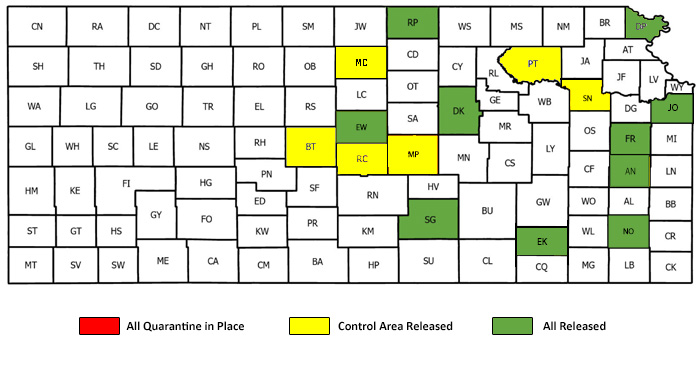
 
Avian Influenza

Highly pathogenic avian influenza (HPAI) has continued to be detected in new locations nationwide, including new counties in Kansas. As we have noted throughout the past year, this viral disease appears to be spread by the migration of wild birds which has Kansas’ domestic birds at risk once again. Poultry producers should remain vigilant, reviewing their biosecurity activities to protect the health of their birds.

We encourage poultry owners to monitor their flocks. If you have birds showing symptoms of HPAI (see list of symptoms below), contact your veterinarian or call KDA toll-free at 833-765-2006. Or email us at KDA.HPAI@ks.gov and we will call you back.

Updated information about highly pathogenic avian influenza in the U.S. can be found here: USDA HPAI web page.

02-07-24.jpg


KDA News Release 12-12-2023: Avian Influenza Identified in McPherson and Rice Counties
...

https://www.agriculture.ks.gov/divi...animal-health/animal-diseases/avian-influenza
 
United States of America - High pathogenicity avian influenza viruses (poultry) (Inf. with) - Follow up report 113


GENERAL INFORMATION

COUNTRY/TERRITORY OR ZONE
ZONE

ANIMAL TYPE
TERRESTRIAL

DISEASE CATEGORY
Listed disease

EVENT ID
4309

DISEASE
High pathogenicity avian influenza viruses (poultry) (Inf. with)

CAUSAL AGENT
Highly pathogenic avian influenza virus

GENOTYPE / SEROTYPE / SUBTYPE
H5N1

START DATE
2022/02/07

REASON FOR NOTIFICATION
Recurrence of an eradicated disease

DATE OF LAST OCCURRENCE
2020/05/28

CONFIRMATION DATE
2022/02/08

EVENT STATUS
On-going

END DATE- SELF-DECLARATION


NO REPORT INFORMATION

REPORT NUMBER
Follow-up report 113

REPORT ID
FUR_166991

REPORT REFERENCE- REPORT DATE
2024/04/18

REPORT STATUS
Validated

NO EVOLUTION REPORT

EPIDEMIOLOGY

SOURCE OF EVENT OR ORIGIN OF INFECTION
  • Unknown or inconclusive
EPIDEMIOLOGICAL COMMENTS
The USDA Animal and Plant Health Inspection Service (APHIS), in conjunction with State Animal Health and Wildlife Officials, are conducting comprehensive epidemiological investigations and enhanced surveillance in response to the HPAI H5N1 related events. Affected population counts are based on estimated inventories from the date the outbreak was first reported to the World Organisation for Animal Health. HPAI events are now closed and control areas have been released in the following States: Alabama, Alaska, Arkansas, Colorado, Delaware, Georgia, Illinois, Indiana, Iowa, Kentucky, Maine, Maryland, Mississippi, Montana, Nebraska, Nevada, New Hampshire, New Jersey, Ohio, Oklahoma, Oregon, Pennsylvania, Tennessee, Utah, Virginia and Wisconsin. These States have not had any recent HPAI events and have demonstrated: • Required surveillance in the State and control areas has been completed with negative results for HPAI. As a precaution, additional enhanced surveillance may continue in the State and area. • Depopulation of infected premises has been completed and appropriate disposal was implemented or completed. • Cleaning and disinfection of the infected premises has been completed (including, but not limited to, outside areas of premises, equipment, trucks, and other fomites). Note (26/10/2022): After reassessment by field investigators, outbreak OB_107904 has been designated as non-poultry premises and subsequently removed from this event.


QUANTITATIVE DATA SUMMARY

MEASURING UNIT
Animal

SpeciesSusceptibleCasesDeathsKilled and Disposed ofSlaughtered/ Killed for commercial useVaccinated Birds (DOMESTIC)NEW2585841-175001978283--TOTAL91111903-163606582877531--

DIAGNOSTIC DETAILS

CLINICAL SIGNS
YES

METHOD OF DIAGNOSTIC
Clinical, Diagnostic test
Gene sequencingNational Veterinary Services Laboratories (NVSL), Ames, IowaBirds6382022/02/072024/04/16Positive
Real-time reverse transcription polymerase chain reaction (rRT-PCR)National Veterinary Services Laboratories (NVSL), Ames, IowaBirds6382022/02/072024/04/16Positive
https://wahis.woah.org/#/in-review/4309

NEW OUTBREAKS

OB_134114 - ROOSEVELT 01 - ROOSEVELT COUNTY

OB_134112 - GRANT 01 - GRANT COUNTY

OB_134116 - MIAMI-DADE 03 - MIAMI-DADE COUNTY

OB_134115 - ROOSEVELT 02 - ROOSEVELT COUNTY

OB_134113 - IONIA 03 - IONIA COUNTY

OB_134111 - MEEKER 13 - MEEKER COUNTY
 
Kansas Department of Agriculture
News Releases

KDA Warns Poultry Owners of HPAI Risk

Post Date:11/27/2024 2:13 PM

The increase in migratory bird activity brings the risk of a resurgence of highly pathogenic avian influenza (HPAI), which is primarily spread by wild waterfowl. Although Kansas has not confirmed a case of HPAI in a domestic/commercial flock since April 2024, the virus has been detected in wild birds across the state over the first few weeks of November, so the Kansas Department of Agriculture reminds poultry owners that the threat of exposure to susceptible birds in Kansas is high.

Anyone involved with poultry production from the small backyard chicken owner to the large commercial producer should review their biosecurity activities to assure the health of their birds. Find guidance on biosecurity on the KDA Division of Animal Health webpage at agriculture.ks.gov/AvianInfluenza.

Highly pathogenic avian influenza is a highly contagious viral disease that can infect chickens, gamebirds, turkeys, and other birds and can cause severe illness and/or sudden death in infected birds. This outbreak has seen illness and mortality in a wider scope of bird species than past outbreaks, including wild and domestic waterfowl. Attentively monitor your birds for symptoms of HPAI which include: coughing, sneezing, nasal discharge, and other signs of respiratory distress; lack of energy and appetite; decreased water consumption; decreased egg production and/or soft-shelled, misshapen eggs; incoordination; and diarrhea. Avian influenza can also cause sudden death in birds even if they aren’t showing other symptoms.

If these symptoms are observed in your birds, immediately contact your veterinarian. If you don’t have a regular veterinarian, contact KDA’s Division of Animal Health office toll-free at 833-765-2006.

According to the U.S. Centers for Disease Control and Prevention, the recent HPAI detections do not present an immediate public health concern. Birds and eggs from the infected flock will not enter the food system. As a reminder, the proper handling and cooking of all poultry and eggs to an internal temperature of 165 ˚F is recommended as a general food safety precaution.

As part of existing avian influenza response plans, federal and state partners are working jointly on additional surveillance and testing in areas around the affected flocks. The United States has the strongest avian influenza surveillance program in the world, and USDA is working with its partners to actively look for the disease in commercial poultry operations and live bird markets and in migratory wild bird populations.

For more information about HPAI, including current status of the confirmed cases in other states as well as more information about biosecurity for your flock, go to KDA’s avian influenza webpage at agriculture.ks.gov/AvianInfluenza or call KDA at 833-765-2006.

https://www.agriculture.ks.gov/Home/Components/News/News/483/17

 
Department of Agriculture

Avian Influenza Identified in Commercial Game Bird Operations in Doniphan and Rooks Counties
December 28, 2024


The Kansas Department of Agriculture has identified highly pathogenic avian influenza (HPAI) in two game bird operations — one in Doniphan County and one in Rooks County. These mark the first commercial operations with HPAI in Kansas since early spring of 2024, although the virus has been confirmed this fall in wild birds across the state and some backyard flocks.

KDA is working with the operations with assistance from local officials to respond at the affected premises. Those premises have been placed under quarantine and the birds will be humanely depopulated and disposed of in an approved manner to prevent the spread of the disease.

In addition, KDA will be establishing a surveillance zone around the infected premises, and other farms or properties with poultry that fall within that zone will not be allowed to move birds or poultry products on or off their property without permission from KDA. The animal health team is working to locate all poultry owners in the area to ensure they know the symptoms of HPAI and are taking critical steps to protect their birds. If you own poultry and live in Doniphan or Rooks counties, please contact KDA at 833-765-2006 or KDA.HPAI@ks.gov. You can also self-report your birds at https://fs22.formsite.com/KansasDeptAg/zlb9fcr9oc/index.html.​

Continued: https://www.agriculture.ks.gov/Home/Components/News/News/495/17
​​
 
[bolding is mine]
Facebook
Sedgwick County Zoo

Sedgwick County Zoo
4h ·
1f6a8.png
IMPORTANT UPDATE:
We've recently learned of a positive case of Highly Pathogenic Avian Influenza (HPAI) identified within Sedgwick County.

While this strain doesn't pose a high risk to human health, it does put many Zoo animals at risk. To ensure their safety, we've activated our HPAI action plan. As a result, the Tropics building will be temporarily closed and Penguin Encounters will be discontinued. Our dedicated animal care staff is working tirelessly to provide the birds with the best care, following strict safety protocols.

We appreciate your understanding and support. We'll keep you updated regarding the reopening and the resumption of our Penguin Encounters.​

https://www.facebook.com/photo.php?fbid=996566249171600&set=a.3192035935745 39&type=3&ref=embed_post
 
Update on the Zoo https://flutrackers.com/forum/forum...25-avian-flu-in-poultry?p=1003578#post1003578

1/25/24

WICHITA, Kan. (KWCH) - The Sedgwick County Zoo is reopening its Tropics habitat after nearly a month of closure.
The zoo announced the reopening Saturday morning after seeing a decrease in the threat of bird flu, also known as Highly Pathogenic Avian Influenza (HPAI).
​The zoo said staff will continue testing and monitoring active cases.

https://www.kwch.com/2025/01/26/sed...s-tropics-habitat-due-decrease-bird-flu-risk/
 
Back
Top