• FluTrackers.com Inc. does not provide medical advice. Information on this web site is collected from various internet resources, and the FluTrackers board of directors makes no warranty to the safety, efficacy, correctness or completeness of the information posted on this site by any author or poster. The information collated here is for instructional and/or discussion purposes only and is NOT intended to diagnose or treat any disease, illness, or other medical condition. Every individual reader or poster should seek advice from their personal physician/healthcare practitioner before considering or using any interventions that are discussed on this website. By continuing to access this website you agree to consult your personal physican before using any interventions posted on this website, and you agree to hold harmless FluTrackers.com Inc., the board of directors, the members, and all authors and posters for any effects from use of any medication, supplement, vitamin or other substance, device, intervention, etc. mentioned in posts on this website, or other internet venues referenced in posts on this website.
  • We are not asking for any donations. Do not donate to any entity who says they are raising funds for us.

Just beginning to prep? Please start here

JJackson

In Memoriam - Senior Moderator
This is the first in what I hope others contributors will join me in making a series of posts aimed at guiding those who are just embarking on the process of prepping.

Firstly welcome & please register a username - if you have not already done so - as this will allow you to post questions & comments. It will also let your computer mark the threads you have read and where you are up to etc.

Who, What, When, Why, Where?

Who?
Well you, but not only you and your immediate family it is important to try and get friends, extended family and the wider community involved as well, if for no other reason then so they do not end up putting pressure on your supplies.

What?
Water, food, some basic medicines and some containers to protect them from insects, rodents etc. would be a good start.

When?
Now would be good. I am not advocating bankrupting your self in one giant spending spree but gradually increase stocks of the items you use on a regular basis.

Why?
If a pandemic occurs there may well be considerable disruptions to supply chains and shopping expose you to others who may be infected.

Where?
At home ? at least initially - you will need to try and find a fair bit more storage space particularly somewhere cool (but frost free), dry, dark & with some air flow for veg etc.

The link below will take you to my more detailed guide covering all these topics http://www.flutrackers.com/forum/showthread.php?t=5756

And this link to Dr Grattan Woodson?s excellent guide which covers home patient care and medication (and a great deal beside)
http://www.flutrackers.com/forum/showthread.php?t=740

The two documents above are fairly long and broad in their scope but within the various FluTrackers threads you will find a fantastic source of specific information from the relative merits of different types of water purification systems & well pumps to how to grow ginger and its uses.

We are keen to help so if there is anything specific just ask, someone may well have met your problem before, likewise if you have solved a problem tell us about it we are all here to pool our knowledge and learn.

When I have time I will try to add a post full of links to some of the more specific topics but for now please browse and post your comments or questions below.
 
Re: Just beginning to prep? Please start here

A bit more about who.

Apart from prepping for your own household it is important to try and involve others. In the event of a pandemic we all want our family, friends and neighbours to be as well prepared as we are, but how can you persuade others that what you are doing is not just an overreaction to a perceived threat? This is a one of the trickiest problems all of us here have tried to grapple with, and I don?t thing there is an easy or correct answer. The best solution seems to be to try and explain what convinced you. If you can get your audience to listen the key points are
The treat of H5N1 achieving efficient human to human transition is real.
The chances of H5N1 being significantly more sever the seasonal flu is significant.
The wonders of modern science, on this occasion, don?t have an instant fix.
Sickness, absenteeism & boarder controls are likely to disrupt supply chains.

If you can get this message home and guide your audience to this site, or some other source of information, then they can figure the rest out for themselves. The more people that have their own stores the less they will need to put themselves in danger, hence slower spread and less pressure on both the supply chain and the overwhelmed health care system.
 
Re: Just beginning to prep? Please start here

JJackson, you're right on and those are the same points I make when talking with large groups.

Also, I've found if there is some small thing you can get them to do, some small action you can get them to take that they will perceive as starting the prepping process, they are more likely to be on their way. (With large groups looking at what cleanliness patterns need to change in the workplace, I use invisible thief powder and a black light on handouts. People pass the papers, touch their faces during my presentation and the black light shows how easily germs spread at the end of my talk. Many have changed their handwashing patterns and put receptacles in bathrooms as a starter.)

But here's my point about working with friends and neighbors:
Attribution research in psychology suggests that one of the ways human beings decide what they believe is by looking at what they are doing.

"I must think that's important to some degree because I am doing it."

So how about taking someone or a group of friends or a club or neighbors to Costco or Cash and carry or just to the grocery store. For about $52 they can get 2 bags of white rice, 2 bags of dried pinto beans or lentils, a container of multivitamins and one of Vitamin C. They'll also need oil and some spices and canned tomatoes of some sort help the beans go down more easily...

I've found that getting people to take one step sets them on a path... Then you can point out that their planning and prepping action has relieved some of their stress. Being able to have a sense of control over what is controllable -- getting prepared -- lets people breathe more easily.

My hats off to those who try to find ways to get through to their loved ones, their friends, their neighbors...
.
 
Re: Just beginning to prep? Please start here

Our local supermarket has just started leaving a supply of antiseptic wipes near the door where you come in. Great idea! The handles on the carts must be almost as germy as people's keyboards or phones.
 
Re: Just beginning to prep? Please start here

Great start!

Let me add a few ideas to help those that are considering storage for the first time.

Knowledge is IMHO the most important prep. First, one needs to understand that there is a threat, and that it may affect them. Then, its possible to examine the threat (be it pandemic, hurricane, flood or other disaster, natural or manmade)

Determine just how the threat might affect you. WHat challenges would it create? What shortages or problems would you are dealing with? What items would you need to see you through?

Basic needs are ones that are life sustaining, and their lack is quickly life threatening. Man's most basic needs are Air, Shelter, Water, and Food. Consider your own personal situation- there may be some people that have another basic need that they cannot survive without- for example-someone on heart medication might add that to his personal mental list of basic needs.

Then think about your own life so far-how do you meet those needs now? Does the threat affect your ability to meet them? An example might be infrastructure failure- it may prevent clean water from flowing, loss of electricity might affect safe shelter if you cant heat your house in the dead of winter. If trucks cant roll, the food stores will not be able to restock, and shortages and store closings will soon follow.

Determine how long that threat might last- a day, a week or two, or months? Then consider how long you wish to prepare to meet that threat. And for how many people you are going to meet it for.

Once the very basic needs are met- there are other important second priority "wants" that we may consider. I will certainly survive without toilet paper-but its an item I wouldnt want to do without! Ditto mosquito repellant. Flashlights are important for me in case the electricity is out. I'm not sure how easy it would be to live with my husband if he didnt get his morning coffee- its high on my WANTS list for sure!

After the important wants are determined-then comes the lower priority- the luxury items. Chocolate is the best example of items that fit in here! What food or comfort items to do consider important, and that you really want to have? You'll see, as you do this, that you'll start thinking of things to add to each column, as the ideas start to flow. You may even change priority on some items as your personal storage programs develop.

Now, youve got an idea of what you'll need to have, for how long- and the next challenge is to figure out how much of it is needed, and how to store it safely and reliably so it is there when you need it! The best way to do that is to jot down a list on paper of the basic needs, the wants and the other ideas that come to mind.

With your list, now you figure out "how much". One easy way to determine that is to watch how much you currently consume of these needs and wants- then multiply it by the number of people, and then the length of time you are preparing for.

That seems easy until you try it! Its actually kind of daunting, since its some thing we rarely think of- we just "pick up another" at the store when we run out or run low, so dont consider just how much of an item we consume in a week, or month, or year. Most beginner preppers are quite surprised by the volumes they determine when they start to look at it.

If you are the main shopper in the household, one tip that may prove helpful is to take a notebook with you shopping. As you go up and down the aisles, you can write down the items you always buy-and then rough in an amount that you think you'll use in the time period you are preparing for.

There is a high tech way to determine just how much of things you'll want to store. There are several free food storage calculators availalbe on the internet. The best is a program you can purchase called Revelar- its pretty much the gold standard for dedicated preppers and serious survivalists.

The next step is to decide just where you are going to store your items or "preps" As mentioned above the best storage area is cool, dry and even better, dark. Look at the area, and decide how to prepare it for your preps.
Shelves, boxes, etc. Get a magic marker for writing the date on your cans, bottles and boxes.

The is just the start. But its a good one- youve come a long way already, even before the first prep item hits your door! Youve assessed the threats, your weaknesses, and started a plan to prepare for them. That puts you way ahead of most people that live at the mercy of the "just in time" world.

Take a deep breath, congratulate yourself for the progress you've made- and get ready for the interesting parts! A little research is up next. Soon, as your storage builds, you'll begin to feel the great sense of accomplishment and self satisfaction that comes from being more self reliant.
 
Re: Just beginning to prep? Please start here

Fantastic, LMonty!

Logical. Take it step by step.
 
Re: Just beginning to prep? Please start here

A bit more about What.

You need shelter, water, food and may be ? but hopefully not ? some medicine.
The balance of these is going to be very different for someone in Alaska vs Niger or farmer vs city dweller and you just need to think about your own personal circumstances. In all case there are some common problems to overcome.

You will need a lot of water and it is heavy to transport so you must consider where you are going to get it from, how you are going to transport it, how you can store it & how much storage. You will also need to make it potable for which you will need bleach or some other form of purification.

Shelter, here I am assuming you have a house to stay in but it needs to be kept habitable so you will need to cover tools and materials to effect running repairs and fuel to heat it, if your climate requires that. How much fuel, what types of fuel, how will you store it safely?

Food. I would start increasing stock levels across the board for all items you regularly use. As you do so you need to get into the habit of always using the oldest first and each item you open replace with two more until you have built up your stocks to the point you need. For those items with a short shelf life you need to find an alternative.
Having built up your supplies don?t forget to protect them from pests ? 2, 4 or 6 legged. You can not rely on utilities like mains supply of electricity, gas, water, sewage or waste disposal so have a backup plan.

Medicines. Firstly supplies of any prescription meds try and increase your stocks as much as you can. All the usual day to day medicines for cuts, bites, stings, toothache etc. For more specific information on flu treatment see the manuals linked to in the first post of this thread.

I am sorry not to be more specific but this area is well covered in the manuals referenced above and in various threads within the prepping area of the site. One thing I have learnt from reading other peoples lists is just how personal they are both in what people have stored to eat and the difficulties they have had to overcome regarding water, fuel etc.

Good luck, once you think you are nearly ready try living off your stores for a week (no fridge or freezer) and see what you learn ? adjust accordingly.
 
Re: Just beginning to prep? Please start here

This is my first post to a flu forum.
To get over my procrastination about prepping for a possible pandemic and also finish my half done prepping for an earthquake I decided to simply, without thinking much about, go down to the local Safeway and buy about 2 weeks of extra non persiherable groceries. I got the usual rice, beans, lentils, canned salmon, tuna and soups. Jugs of water. Also hand sanitizer with alcohol.
I ordered 60 n95 masks over the internet for about $60. (The ones without the exhale valve)
Since then every time I go shopping I add more.
I figure I eat about 10 servings a day. I would need about 300 servings a month.
For example a meal might be rice, lentils and a half can of veg or a salad.
Most canned goods are 2 servings.
I took the word of the makers of rice, beans, flour etc for the number of servings per package.
For the dried eggs I bought I figured 2 per servings instead of one. I didn't figure liquids like the soy milk and V8 I've got.
I made an easy solar cooker out of a car dash window shade. Perfect rice and lentils in about 1 1/2 hr. http://www.solarcooking.org
I already had a power inverter (converts 12 volts to AC). Hooks to car battery or cig lighter outlet. Those 7 or 13 watt flouresent light bulbs would be nice for reading or I could run a radio or CD player. I got a 12v, 15 watt solar panel to help keep the charge up on the car battery or just run the car a while. I also use an electric wheel chair part time with 2 12v batteries I can use as a power source.
I've drained and refilled our water heater as an emergency supply and stashed some propane cannisters for a Coleman stove.
Ken
 
Re: Just beginning to prep? Please start here

Welcome to flutrackers, KenCalif. That is an excellent start. Make sure you consider portion size in relation to the number of people you are providing for. You have to consider that you may not have refrigeration during a crisis and that you will not be able to refrigerate half open cans of soup, chili, etc. Also, make sure you try out some survival recipes with your supplies now to see what you like and what other items, such as treats, condiments, spices, etc. that you need to stock up on.
 
Re: Just beginning to prep? Please start here

Ken, thats an excellent start! And welcome.

You thought out the basics well and have an admirable start toward more self reliance. You pointed out something important- your preps are not just for one risk, but stand you in good stead for others too, like an earthquake. With hurricane season approaching, the preps other memebers are making may do them double duty, too.

I mentioned a little research in my earlier post. Kens reply points out exactly the direction I was going- how much of what will you need? Then, what is the best way to store it and keep it safe and usable in event of need?

There are two works on the internet I would consider definitive references that anyone working to self reliance should have bookmarked and ready. I highly recommend before anyone goes further that they take a moment to review them, or at least the sections that apply to their personal situation.

Considering that theres a possibility of infrastructure disruption in any natural or man-made crisis, I also recommend printing them out. Create a prep notebook of these and other important tips that you'll find as you continue your preparations. Memory is not always reliable, especially in times of crisis. A notebook of what youve deemed important enough to save may be a priceless time, effort and life saver during any crisis.

Here are the two references:

How to Find Water and Make it Safe
http://www.grandpappy.info/wwater.htm

The Ultimate Food Storage FAQ
http://waltonfeed.com/grain/faqs/
 
Re: Just beginning to prep? Please start here

OK! By now, you have read the FAQ's considered some risks that may affect you, and have some idea of how much you want to store- or at least, how long you want to prepare for.You've though of some places in your enviornment that can be used for storage-preferably dark, dry and cool. You've even realized that there are some non-consumable items that you want to store in case resupply is unlikely. In the back of your mind, youre considering how this choice is going affect your relationships with others- will you share what youre doing, and perhaps the preps themselves if needed, with others outside your household? You may wonder just how the people important in your life will react when you start this new behavior.

You're ready to be a prepper! Now, just how does one go about it?

There are two common ways that people store consumables. Some opt to purchase ready made storage programs, like those available at Walton Foods and dozens of other food storage dealers. With a simple phone call and one (usually large) charge to a credit card, you can arrange for delivery of a number of boxes and pails containing whats needed for however many people youre prepping for and whatever length of time you choose.

Its quick,easy and convenient; and the food itself has an extremely long shelf life if stored in proper conditions-at least 10 years for most of it. But there are some significant downsides to going this route. First and most noticeable is the cost- its the most expensive option.

From a standpoint of practicality, theres another issue that may be even more important than the cost- its the edibility. Many of the products that compromise the delivery are not things one eats normally.

The response of many folks who go this route is the thought "If youre hungry enough, you'll eat anything and be grateful for it"! Probably true for most of us.

But hunger isnt the only consideration to a prepper. If theres a crisis, maintaining health is likely to be crucial, too. One of the downsides in a rapid and total change of eating habits is health related- it affects our GI systems, and usually adversely for days or even weeks.

New foods, higher in fiber and containing different proteins can result in diarrhea, constipation and serious gas problems. These affects can range from annoying to debilitating. It may even be life threatening for those with food allergies. Since many of the products are not eaten in everyday life by most, or are in much higher concentration in the food storage than our daily diet, development of food allergy and intolerance is a significant issue.

Children and "picky eaters" may refuse or eat too little if whats available, resulting in decreased calorie or nutrient intake. Even if that doesnt create overt illness or GI distress, its a significant concern. The stress of crisis and change tends to diminish our immune systems ability to fight off pathogens. Adding poor food intake further affects our immune systems status adversely.

If a crisis that youre preparing for doesnt occur- than the entire expensive food storage unit tends to go to waste.

So whats the other option?

Store what you eat, and eat what you store!

Most of what we consume on a daily basis is available on our grocery store shelves. Most of it will store for at least a year or two without serious loss of quality. Our bodies are used to it, so theres less chance of creating an issue with stomach problems add to your stress (both physical and mental) during a crisis.

Consider the last few days- what meals did you eat, what did you shop for? How much of it came from cans and boxes on the shelf in the grocery store? Of the restaurant and fast food means you've eaten, how much of that can be stored at home and last for awhile on a shelf, and be easily prepared at home with the kitchen tools and appliances you already have?

Pul out your paper and pen (or your spreadsheet for the techies amongst us!) and make a list- for one week. make 7 columns, and four rows. Write in the day of the week at top of each column and breakfast, lunch, dinner and snacks down the side to label each row.

Fill in a commonly eaten and well liked meal in each slot. Avoid choosing menu items that obviously dont store well- a big green chefs salad is a great food choice, but it's not appropriate for this menu. A scrambled egg breakfast is great- but eggs wont keep long beyond the first week of a crisis even if refridgeration is available. So avoid foods that need refrigeration.

Keep your choices confined to meals that are easy and quick to prepare. If possible, choose foods that need the least preparation and cooking (and cleanup!) times. Keep in mind and build in any family food preferences you can, and remember any family dietary issues and restrictions. Chunky type soups, boxed pasta meals, and canned meals may figure prominently, because they are good storage choices.

Now, youve got an idea of just what you will eat if your storage program is needed. Its customized to your needs and preferences. The list reflects what you eat every day- so none of it will go to waste if the entire storage isnt used up in a crisis.

Break down the meals into the component parts that you purchase. Your entry for Wed night dinner- spaghetti with meat sauce- may look like this-
1 lb pasta
1 jar sauce
bread
cheese

Create a shopping list with the items collated- if youve got pasta listed twice that week, than your list will have 2 lbs pasta listed. Continue your list until youve got one full week of meals represented. Remember add to it the items that "make a difference" in satisfaction, frequently they are "condiments" such as the sprinkle parmesan cheese-or mustard, ketchup and mayo for other foods youve listed.

When youre done, youve got list of the items your family will consume, and the approximate amount of each, for one week. Youve just created the your basic food storage shopping list! That list alone will give you a storage cushion of one week, enough for most very short crisis situations, like snow storms or hurricanes. Thats an accomplishment!

For some types of crisis or disruptions, a week of storage may not be enough to see you safely through.

Just multiply the amount of each item on it by the number of weeks youre preparing for. If you want to be ready for 3 months of disruption- the very least I personally recommend- multiply each item by 13. Now youve got your basic "goal list " created.

Youre ready to start shopping!
 
Re: Just beginning to prep? Please start here

Having made some comments on Who & What we come to When?

On the face of it my glib answer of ?now? (in the opening post of this thread) would seem to cover this question, but on closer examination it is too simplistic an answer. Now, refers to a point in time but prepping is a continuous process. If done correctly you should be able to live off your preps for a period of your choosing (I have opted for 3 to 4 months comfortably, longer with rationing) starting at a time not of your choosing and with little notice. To achieve this a change of mind set is required, you need to gradually increase your holdings of everything you consume ? not just food ? until you have 3 months supply (or what every period you select) and then use the oldest first and replace it.

This system only works for items with a 3 month or greater shelf life. Perishable goods need an alternative solution to cover you from when they go bad up to 3 months (e.g. milk/powdered milk).
 
Re: Just beginning to prep? Please start here

Lets talk about a few things that will save the beginner prepper some time, money and frustration. Please chime in and add tips and techniques!

Large size cans- lots of food stores now carry extra large cans of vegetables condiments and other foods. They may be a better value than the ususal pound size cans. BUT they arent recommended for most personal or small family food storage programs. Wet pack items will need to be refridgerated after opening if not all used at once. The crisis situation that causes you to break out your storage supplies may include infrastructure problems- and there may be no electricity available to run refridgerators. Unless you're feeding a crowd, its actually cheaper to use the normal 1 pound cans, since theres no waste. Even for individuals, the smallest size cans- about 8 ounce- may cost as much as the 1 pound. It may be worth opening it, keeping it cool and eating at the next meal. Or include the leftover in soup, stew or breads that day. Depending on your climate, it may last up to 24 hrs unreferidgerated. Boil before serving to kill any bacteria that might have developed.

There is an alternative to paying high grocery store products for the specialty items that JJackson mentions. Once you get beyond preparing for just a week or two, that is. My own food storage program consists of 95% grocery store foods. But for some items, I spend much less when I buy specially packed and prepared storage foods. Egg powder, milk powder and some similar items are easier to store, and someitmes even cheaper when purchased this way. I find much of what I need at Honeyville, and use them almost exclusively because of the affordable shipping ($4.49 for the whole order in the continental US). Usual disclaimers apply, I'm just a satisfied customer. They also have oxygen absorbers and 6 gallon buckets with lids. http://www.honeyvillegrain.com/products/foodstorage.html

If any of our international members can suggest similar storage food dealers for other countries, please post the links here.
 
Re: Just beginning to prep? Please start here

Why Prep?

If you have found your way to this site and are reading this thread you are probably already aware that flu pandemics occur from time to time. Last century was fairly typical with three occurrences one fairly severe and the others quite mild. You are no doubt also aware of the H5N1 strain that is spreading through the bird population and taking its first steps in mammals. This strain is a likely candidate for the next flu pandemic and has obvious potential to be particularly nasty.

But why prep? This is a flu strain, just like seasonal flu, however it is of a type which none of us has previously met and we have no immunity to it. Severe flu pandemics kill enormous numbers of people, their death toll can exceed a world war and it all happens in about a year. As there are no effective medicines your best chance of survival is not to risk exposure ? hence the need to stock up.

Whether you plan to hole up, or need to work, you can not rely on supply chains and services functioning normally. Depending on the severity of the pandemic disruption may vary from minor inconveniences to wholesale breakdown of the social fabric, either way it would be wise to prepare to some extent.
 
Re: Just beginning to prep? Please start here

And now we come to Where.

This is not the no-brainer it might at first appear. Yes for many staying at home may be the best solution but you need to consider how well your home may stand up to a long shut down with no utilities.

How close is the nearest reliable supply of unpolluted water? Bleach will kill micro organisms but will not help if the water is polluted by heavy metals or other chemicals.

If you don?t have a garden, or access to some land to grow plants in, you may struggle to keep up an adequate diet.

Areas of high population density in cities may quickly become unsanitary in the absence of garbage collections and failure of the sewage system, and have a higher risk of civil disorder.

Even if you have the ideal environment how many people live with you? My children are convinced the greatest danger lies from each other if they are cooped you for months with no TV, computers etc. They would prefer to go and stay with relatives in a larger extended family group. Do you have older relatives who may need help?

I think the best arrangement would be a group of about a dozen, out of town with some land. If you can find a suitable place this seems a good size to provide a range of skills, some protection and some variety. The key thing now is talk to those around you about what they plan to do, make sure everyone?s preps are complimentary and progressing.

Good luck & post your tips or questions.
 
Re: Just beginning to prep? Please start here

JJackson said:
And now we come to Where.

I think the best arrangement would be a group of about a dozen, out of town with some land. If you can find a suitable place this seems a good size to provide a range of skills, some protection and some variety. The key thing now is talk to those around you about what they plan to do, make sure everyone?s preps are complimentary and progressing.

Good luck & post your tips or questions.


Spending time in the countryside was how Isaac Newton rode out the major pandemic of his time. It was what those with means (money, friends in the countryside) tried to do. Cities were bad news.

Poe's "The Masque of the Red Death" is about a party (in both senses) of wealthy folks riding out the plague in a country manor. My namesake's "The Decameron" is about just such a haven in the countryside.

I happen to live in a semi-rural area, on top of a hill with one access road, a steep hillside on three sides, a 25,000 gallon tank of water (shared with others, however, and likely to empty in a week or so of normal usage if not replenished from the well--ergo, in a longterm power outage, it will be gone unless emergency rationing is done, which I'm not betting will work).

The house is on a septic system, so sewer backups are not an issue. All that is needed is water. (And the surrounding wooded areas and hilly areas are fine for other waste disposal--I have a bunch of 6-gallon buckets and a toilet seat that fits them called "The Throne"--combine this with garbage bags (everyone should have boxes and boxes of these) and maybe some kitty litter and this provides another option.)

Power is possible with a couple of generators, though the idea wouldl be use them sparingly, and then only in the first weeks of a disruption (it's probably not a good idea to use them with most neighbors in the dark...I might gauge whether to use them based on how many others I can hear in the distance, and on any reports of raiding parties or "requisitionings" by local government). Details are not too important, but they are a nice 2.2 KW Honda with overhead valve (OHV) engine and a cheaper 5 KW Generac with "lawn mower engine" (Tecumseh). These will keep my chest freezer going for a few weeks. And in the winter, most importantly, my furnace blower (propane, from a 500-gallon tank on my property).

Not wanting to count on generator power except in the first days-weeks of an outage, I've added an 18-watt solar panel and trickle charger and deep-discharge battery. (Another 7-watt panel will be wired in parallel, for a total of 25 watts peak. This should give me about 25 WH x 6 hours of "good" sunlight per day = 150 watt-hours of stored energy. Enough to power a laptop for a few hours per day, charge some NiMH AAs and AAAs, for LED headlamps and radios, etc. Even enough to feed through a good inverter and run my furnace blower for a short time per day (I've measured the starting amps and running amps and a battery-inverter can provide this, albeit not for many hours. But getting the house warmed up can be done in small bursts.)

I also picked up a couple of portable propane heaters, including "indoor-safe" versions that attach to either small 1-lb tanks or, with an adaptor, the larger 20-ib tanks. (I also use the 20-lb tanks for an outdoor grill, for a turkey fryer rig which works well with woks, and for a Coleman stove which can be used indoors with some normal caution--"bottled gas" was the norm in many indoor kitchens for decades, so the moderns dire warnings about using bottled gas indoors are somewhat overblown.)

The propane also runs Coleman lanterns. (However, in all recent power failures at my house, of which there have been about 3 in the past year, my LED headlamp has been my primary source of light. The rest of the house may be dark, but I can walk around, read, see what I need to see, etc. A true modern marvel.)

Power, water, waste disposal, food...

(Security I won't talk about, in deference to Florida1's recent statement that this site is a pacifist site.)

In these weeks, months, years, or even "never" before a pandemic hits, my general preps are the same ones I've been making for most of the past 10 years (since I moved to my semirural place). Namely, the same ones that would be useful in a major earthquake (my house is about 3 miles from the San Andreas Fault, in California of course). Though my house survived the 1989 Loma Prieta quake with no significant damage, a larger and more disruptive quake could affect water, power, and even civil order. (A 7.5 Richter quake is likely to hit the LA area sometime in the next quarter century or so, experts estimate, and the effects could be "Katrina-like" in terms of people stranded and cut-off.) Having preps is good for earthquakes, pandemics, even other events.

In the back of my mind is always a thought of how something might be useful in some emergency. In this way I've accumulated water filters (Katadyn, FirstNeed, tablets), radios (shortwave, conventional Walkman types), alternate power sources, shelves of canned goods, several hundred pounds of rice (some of it several years old, so it'll be my food of last resort!), FRS walkie-talkie radios (useful for communicating with others in the house, and for giving one or two of to neighbors further down the hill), and a variety of other little gadgets. My LED headlamps have turned out to theb

If BF goes H2H in a big way (more than just isolated cases), my "shelter in place" plans go into effect:

-- make about 2-3 last-minute runs to Costco, Target, supermarkets for more supplies (I have about 3 months's for 3 people of canned goods, packaged goods, rice, beans, etc...more if we eat mostly rice, and buying another several 50-lb sacks of rice is cheap enough...a pound of rice per day per person is more than half the people in the world basically subsist on)

-- top of gas tanks on both vehicles, fill any unfilled gas cans. Ditto, exchange any empty propane cylinders for full ones.

-- fill every available water holder: nonfunctioning hot tub (350 gallons), two bathtubs, every pot and pan I can dig out, my water heater (70 gallons), various Rubbermaid containers (about 100 gallons), 5 50-gallon drums (bought for $20 each), collapsible water bladder called "The Bag" (200 gallons), several collapsible water carriers (about 40 gallons), all available empty water jugs (some already filled, some empty, awaiting filling with fresh water), and, then, finally:

-- inflate the el cheapo "child wading pools" bought for $10 each at the end of summer, several years ago. This water may not be safe for drinking (due to chemicals in the plastic, notably PCBs), but will be useful for washing and flushing (a septic system)

(By a rough count, about 1000 gallons of drinkable water (with some minor filtering or treating) and about 500 gallons of nonpotable water. Plus whatever I can rig to collect from my roof (probably not drinkable due to asphalt chemicals, unless I set up a food-grade tarp, etc. According to some of the wisdom on water usage, the drinking water should last 3 people for at least 6 months (1 gal/day/person), with cooking needing the rest for this time. (I don't plan to use the "gnarly" water from the wading pools or other suspect containers for even cooking, due to the PCBs.)

(Further planning for water collection will likely happen during those long weeks or months of being cooped-up at home. Which is why I've bought rolls of plastic sheeting, extra drain pipe, a few other things which might figure into schemes for diverting rainwater.)

-- plug every single battery charger in and get all batteries topped-off

(NiMHs self-discharge a few percent per day, so this is not all that useful in an extended outage...but every little bit helps)

-- contact the people I expect to stay at my house and coordinate with them--advise them to bring prescription drugs, food, security items, etc. (they will not have as much as I have, for obvious reasons...but if they can each bring several boxes of canned goods, dry goods, etc., this will be a help)

-- take pictures of house and contents for insurance purposes, in case anything happens to my house during the disruptions (I usually keep digital photos, so this is really just a last minute addition thing)

-- back up all computer files, a couple of times, and place the back-ups in a few different places

-- make more lists of things which _might_ be needed, once the urgency of a pandemic is upon me (such an event will likely "have a way of concentrating the mind," as the old saying goes) and then decide whether ONE LAST BUYING TRIP is safe to make.

By the way, I got a few boxes of N95 masks (about 60 in total). But my main gizmo is a woodworker's dust respirator, a Triton unit with a full face shield attached to a safety helmet, with a Tyvex-type flexible hood with drawstring, and a belt-mounted, battery-powered blower which sucks air in through a pre-filter and then through an N95-rated inner filter. A flexible hose between the blower and the helmet. This has some advantages: the shield is full-face, covering eyes, nose, mouth. Beards are accomodated. There is very little "backwash" (outside air pulled in around the hood), depending on how tightly the drawstring is pulled. The air intake is low and to the rear of the wearer, so this may have some small effect on the number of virus particles filtered out from a contaminated person one is facing.

(Also, I can use this Triton unit for ordinary work around my house, such as when installing insulation in my attic, working with drywall, even cutting pollen-laden brush. Or any grinding or sanding work.)

As for Tamiflu, I have none. And no prospects here in California of getting any. My main strategy is to avoid the virus for as long as possible....conceivably a treatment of some kind (either antiviral, or a better system for hydrating, sedating, etc. a sick person) will be available later in the cycles. Also, later in the cycles the hospitals may be partially running with recovered healthcare workers, presumably now safe from repeat infection (assuming another virus mutation has not happened and spread).

So, that's my plan.

In other fora where I have mentioned these plans, sometimes in even more detail, people have responded with comments good and bad. One reaction is: "I can't afford those kinds of preparations, and I don't have a place to put water tanks and pools and all that."

Well, we all do what we can. Apartment dwellers are more constrained in their options, but even they can do things which will make a serious pandemic situation more survivable:

-- they can fill Rubbermaid containers, bathtub, etc.

-- waterbeds are legal (and safe) in nearly all apartment buildings, and they can easily store 200 gallons or more (beware the algicides and fungicides!) (People who question whether water can be stored in volume on upper floors of buildings should calculate how much weight a typical party of people puts on a floor: 6-8 people standing in a small group can easily put a 1000-1500 pound load on a small patch of floor, more even than a waterbed puts on the floor. Floors are well-designed to not sag or collapse under these kinds of loads. Most times we hear about building collapses under loads of people it's because they were crowded onto a cantilevered balcony or deck. Ordinary floors can support many thousands of pounds of load--people, furniture, refrigerators, and, yes, water storage.

-- they can rig coffee tables made out of stored items. My 6-gallon buckets of rice would make a nice, if rustic, table: stacked 2 high, by 3 long, by 2 wide, this is 12 buckets of rice, beans, other items. With each bucket of white rice weighing about 50 pounds (if I recall correctly from when I weighed them several years ago), this is about 600 pounds of rice. A half pound of rice per day per person is a LOT of rice (got to have other stuff, too, else beriberi, scurvy, and other problems). So, do the math. The point is that even apartment dwellers can easily store a year's supply for a few people in a relatively small space, if they are creative about it.

-- total cost of the rice mentioned above is small: a few hundred dollars

(Do I recommend storing this much rice? Not for an apartment dweller. I use rice for the storage volume/weight and cost calculations because it makes the point that rice feeds most of the world and can easily feed pandemic avoiders. Other items, for variety and for diet, will likely cost more, but the calculations are straightforward to do.)

So, this takes care of water and food, as the bare basics.

Heat depends on location. For many, a major issue. Apartment dwellers in a cold locale, with power and gas cut off, may face serious problems. Options such as wood stoves are probably not available to them.

Sewage backup in apartment buildings is often cited as a problem. One possible fix is to find the master shut-off valve, assuming it exists, and turn it off. (Someone said recently it's now "code" for all residences to have such a shut-off or isolation valve, but probably many residences lack them, or they're rusted open, etc.)

Light is the easiet problem to solve. Either use natural light or small lanterns or LED flashlights and headlamps. I favor the LED headlamps, one for each person, plus a few spares.

A small radio, maybe even a small LCD television (Casio). Katrina folks cherished their radios, allowing them to hear what was being done to help them. (In a pandemic, the news will not be about the outside world riding in to the rescue, of course, but news will still be good to hear.)

Defensive measures as one sees fit. Extra deadbolts on doors are almost always a good idea anyway.

Sorry for the long message. Writing about preps is partly a soothing action, partly a stimulating action (as it stimulates me into thinking about things I may have overlooked).

One thing I'm NOT doing, and this was a controversial topic over on Flu Wiki, is _talking_ to my neighbors about bird flu. Most people are dismissive of such fears, as the lack of preparation for earthquakes clearly has shown over and over again, and there are significant downside risks of being known "as the guy who has stockpiles of food."

The downside for me and those in my house of being known for having stockpiles is MUCH GREATER than the upside of having, at best, 3 or so of my 10 nearest neighbors slightly prepare. (In a community of several thousand, not counting the town of 25,000 about 10 miles from me, having a few neighbors with extra preps is no upside for me. The downside is all in the dozens or more of the utterly unprepared who may _hear_ about those who have food to "share.")

I suppose there is a scenario in which my several nearest neighbors, even all 15 households on this particular hill, all get together and decide to jointly set up a security system, or even a communal stockpile of food (ugh, but that's a political point of view, so I'll say no more on this), or spend the necessary $$$ to have our main well pump fully backed-up with a large generator (though that entails the usual generator noise issues in a pandemic situation).

Well, this scenario ain't gonna happen. Knowing my neighbors, it just ain't gonna happen. And anyone who lobbies hard for it is first, not going to get people to attend any such meeting, second, not going to face any favorable reaction, third, will be dismissed as a "survivalist nut," and fourth, will be remembered as "the guy with the stockpiled food" if anything actually DOES come to pass.

Telling people about one's personal preparations, especially those living within walking distance, is a disaster waiting to unfold. Talking about preparations in a _general_ way, such as on fora like this, may help a few people, maybe a few dozen people, and maybe even help spread the preparedness meme....though years of exhorting people to have a 72-hour earthquake kit has shown that most people won't have such kits.

If there were some good way of communicating with my actual neighbors that didn't mark me as a survivalist and didn't hint to them that I have stockpile and that cut through their normal "don't bother me with this stuff" filters, I might try it. I haven't found it so far. (And, no, sending them an anonymous letter likely would have no effect. Those receptive to such a message are probably already preparing, as the bird flu and earthquake stories have been out there for long enough. Some of them may even be on this forum, one never knows.)

Again, sorry for the length. I'll shut up for a while.

-- Boccaccio

 
Re: Just beginning to prep? Please start here

Very useful post Boccaccio, Thanks.

Do you remember where you got "The Bag" and what sort of cost? That sounds like and excellent storage option if they collapse and dont cost too much. A row of those in my cellar would go a long way to solving my water storage problem.
 
Re: Just beginning to prep? Please start here

On fuel.

For fuel, if you have the means of burning wood but limited storage wood brikets are excellent, they store very tight, in 1/5 of the space firewood does.

If you don?t have a fireplace, you can improvise, the main concerns of safety are carbon monoxide and fire with makeshift devises, but in a cold climate heat is a must.

A good source of makeshift fireplaces can be found looking at how apartment dwellers in Yugoslavia had chimneys sticking out of every balcony after electricity and other heating sourses were shut of.

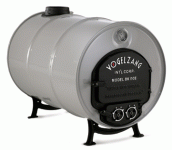
Brikets burn slow, usually about 2.5 hours but can be made to burn slower so you can use a radiant heat fireplace, you don?t need one that weighs a ton to store heat, by cutting draft you can have heat for 6 hours, this kind of slow burning does get some soot in the chimney and It must be cleaned up every week, compared to burning hot, but you have the advantage of using a cheep fireplace to keep heat till morning, the barrel stoves etc.
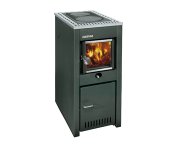
In Finland there is a descent radiant heater like model at http://www.harvia.fi/?lang=eng&prod_group=iron_stoves&product=harvia_10
(This is no advertisement, just to give you a idea of a small radiant heat warmer using wood or any other burnable fuel.)

BK150ELRG.gif

harvia10.jpg
I know of a case where the luck had totally departed this fellow and he heated for one winter by squashing up milk cartons 10 squashed ones stuck in one open one, collecting them from recycled paper bins and never was cold, this makes up to a lot of ash as paper does, but heat is esental and daily chores are different in a crisis.

You don?t want to burn newspaper as is for it makes a mess, not to talk about glossy paper.

And here is a link to heat http://www.green-trust.org/wood_heat.htm
 
Last edited by a moderator:
Re: Just beginning to prep? Please start here

JJackson said:
Very useful post Boccaccio, Thanks.

Do you remember where you got "The Bag" and what sort of cost? That sounds like and excellent storage option if they collapse and dont cost too much. A row of those in my cellar would go a long way to solving my water storage problem.


Yes, I got it from www.watertanks.com, a company in the greater San Diego area (though I bought it online). I think it was $100 or thereabouts. This was back in 1998-99. It's a vinyl bag that folds up into a box about 18 inches on a side. Mine is still in the box. I never filled it, figuring I'd do all that stuff if and when I had to. (Ditto with the children's swimming pools...there's a chance they are leaky, but duct tape or rubber cement can handle most small leaks.)

I looked for "The Bag" on this site a couple of months ago and didn't see it--the site is still there, but I didn't see mention of The Bag. Inasmuch as they are primarily a reseller, I'll bet someone else is selling one like it. After all, this bag is a lot like a water bed bladder. Searching around with Google may turn up something.

Good luck on the cellar storage. And, by the way, storage in an attic is also possible, though be real careful about leaks! (This is the main reason apartment rental managers used to be--and maybe still are--leery about people having water beds. Sometimes, I recollect, they yammered on about the weight of the waterbed, which is not really an issue, as I showed.)

My plan is to have this bag in my yard, filled if and when I think I may need it. (Even in nuclear war, not that I think this is even remotely likely anymore, there would be plenty of time where I live to use my existing water supply to fill all sorts of storage containers.)


--Boccaccio
 
Re: Just beginning to prep? Please start here

Florida1 said:
Boccaccio - Great post. Welcome and thanks for participating.


Thanks. Looks like a good site. The software is quite a bit better than the Flu Wiki site's forum system. Not their fault, for the actual software, but it was a struggle to use it. Your system here has an abundance of features, probably more than I'll ever learn.

I was trained as a physicist, and worked in the 70s and 80s for a chip company. I did spend a couple of summers working in an immunology lab, but only as a technician while in high school and college, so I don't know much about biology, as the song goes.

So my interest here is unabashedly in the "preparedness" aspects. I'm not qualified to judge evidence about sequencing, mutations, etc. I figure it'll become clear at some point whether H5N1 has mutated to H2H on a wider scale than some of apparent H2H cases in Indonesia showed.

As a physicist, I can speak about things like solar panels, alternate heat and light systems, and a little about food storage (this is well-trod ground, though, and many Web sites have excellent FAQs on shelf-life of various foods, storage methods, etc.).

I wish I could say I were more positive about influencing others, though. I just don't see any way to do it locally, in my neighborhood, without "showing my hand" in a way where the downside risk is far greater than any upside benefit to me. I can easily see that a public figure, a Walter Cronkite type, or a t.v. producer, or even a celebrity, could have a major effect by speaking out.

And people within companies can have some effect (I'm no longer working, so not me) by carefully speaking up. Even they face the downside of being branded an alarmist, a Chicken Little, a survivalist, a nut. Were I still at that chip company, I doubt I'd say anything except on the issue of telecommuting options to limit travel, to limit large meetings, to reduce travel to Europe and Asia (*), etc.

(* I realize the "travel to Asia" point can be misunderstood. I'm not saying Asia will be a source, once the jump to H2H has occurred (if it does). The chance of any particular traveller being early in the H2H cycle is small, and if and when the virus goes H2H, Asia qua Asia will probably not be an important vector: the virus will be springing up everywhere. My point about Asia is that travel on jets is bad for a lot of BF reasons, and companies will likely make much greater use of telecommuting and advanced video conferencing. A pandemic could actually massively spur the deployment of very sophisticated "telepresence" systems, beyond the simple webcams of today.)

--Boccaccio
 
Back
Top