
• FluTrackers.com Inc. does not provide medical advice. Information on this web site is collected from various internet resources, and the FluTrackers board of directors makes no warranty to the safety, efficacy, correctness or completeness of the information posted on this site by any author or poster. The information collated here is for instructional and/or discussion purposes only and is NOT intended to diagnose or treat any disease, illness, or other medical condition. Every individual reader or poster should seek advice from their personal physician/healthcare practitioner before considering or using any interventions that are discussed on this website. By continuing to access this website you agree to consult your personal physican before using any interventions posted on this website, and you agree to hold harmless FluTrackers.com Inc., the board of directors, the members, and all authors and posters for any effects from use of any medication, supplement, vitamin or other substance, device, intervention, etc. mentioned in posts on this website, or other internet venues referenced in posts on this website.
  • We are not asking for any donations. Do not donate to any entity who says they are raising funds for us.

Italy - Influenza A/H1N1 2009 - Ministry of Health Situation Updates - December 1-15, 2009 Archive.

Giuseppe

Emeritus
Influenza A/H1N1 - Situation Updates as for 1 December 2009 - Updated at 17.00 Hours CEST (Min Health, edited)

[Source RTF Document: LINK. Edited. Warning: Google Machine Translation.]
Press Release No 553 - 1 December 2009 - Ministry of Labor, Health and Social Policies - PRESS OFFICE


Updates

- About 494,915 people have been vaccinated to 22 November
- Today ended the sixth distribution of pandemic vaccines.
- A total of 5,030,851 doses of vaccine distributed.
- Total estimated cases of influenza since the beginning of the pandemic to 22 November: 3,064,933
- Total deaths related to influenza A new 1 December: 101
- Percentage of victims in relation to the total of patients with new influenza A: 0.0032 percent
- Cases which have needed respiratory assistance at 1 December: 345
- Percentage of cases that require respiratory assistance in relation to the total of patients: 0.011


Epidemic surveillance

Cases and incidence

Every Thursday we published the weekly update Influnet. The last update was released on the 47 th week (16-22 November).

The estimated weekly influenza cases in week 47 are approximately 680,000, which added to the cases reported weekly from the start of surveillance (October 19) give a total of 3,047,000 cases. For a total count since last May, these should be added about 17,000 cases reported previously by other surveillance systems for a total of 3,064,933 cases.

The regions where in week 47 has the highest number of cases in the population under observation are the brands with an incidence of 3.7 per cent, followed by Abruzzo (2.3) Emilia Romagna (1.9), Sardinia and Basilicata (1.5).

Also in week 47 of the most affected are children and adolescents from birth to 14 years, with an incidence of 3.3 percent (2.7 in children from birth to 4 years and 3.6 percent from 5 to 14). Among youth and adults ages 15 to 64 years the incidence of influenza has been 0.7 percent while among people aged 65 or over is equal to 0.1 percent.


Cases that require respiratory assistance

The regions have reported so far at the Ministry of 656 hospital admissions for severe cases of influenza, of which 345 have required ventilatory support: a fee equal to 0.011 percent of the estimated total of people who contract the new flu A.


Victims related to influenza A

The percentage of victims related to influenza A has been updated compared to the total number of cases estimated by Influnet and is equal to 0.0032 percent of patients, compared with 0.2 percent of the victims related to the normal flu. Must be considered that the percentage of victims being calculated considering the clinical cases reported to the surveillance system, because these are most likely underestimated, the value might be even lower than the estimate above.

At 17.00 hours on December 1, the victims are related to the new influenza A 101. This number includes cases for which the regional health authorities have confirmed the finding of infection by the new A/H1N1.


Situation in Italy

Total casualties 101

- Region
- Basilicata 1
- Calabria 9
- Campania 27
- Emilia Romagna 7
- Lazio 14
- Liguria 3
- Lombardia 7
- Marches 1
- Molise 3
- Piedmont 5
- Puglia 4
- Sicily 5
- Tuscany 4
- Umbria 5
- Veneto 7
- P.a. Bolzano 1


Situation in Europe (source ECDC)

Total casualties 858
in

- Great Britain 246
- Spain 135
- France 104


World situation (source ECDC)

Total victims 8568
of which:

- Brazil 1528
- United States of America 1265
- Argentina 613


Access to emergency

Every Thursday we published the weekly update of sentinel surveillance of access to the emergency room. The last update was released on the 47 th week (16-22 November.)

The network of sentinel emergency rooms reported that in 47 weeks (16-22 November), 7% of all persons who have turned to the emergency room was visited by acute respiratory syndrome. Of these, 23% were hospitalized.

Compared to 46 weeks, is decreasing the number of accesses for acute respiratory syndrome (from 10% to 7%).

The analysis, based on data from 49 of the 56 who joined the emergency room surveillance, while reflecting the different modes of access to the emergency room can be readily detected increased access to respiratory syndrome, an indirect indicator of increased activity of influenza viruses.


Vaccination of the population

Every Thursday we published the weekly update of vaccinations. The last update was released on the 47 th week (16-22 November).

In the 47 weeks were administered 161,549 doses. Start of the vaccination campaign, were administered a total for the categories as priorities for the first phase of vaccination, 494,915 doses
? health care workers, social and health that have been vaccinated 131,055, or 13% of the total estimated
? women in the second and third trimester of pregnancy were administered 14,943 doses

Currently, each region was asked to vaccinate as rapidly as women in the second and third trimesters of pregnancy and those aged 6 months to 64 years belonging to those at risk for pre-existing conditions, with priority for children belonging to these categories.


Vaccine distribution

Today, 1 December, ended the sixth distribution of pandemic vaccines, of 1,138,900 doses of pandemic vaccine in preparation multidisciplinary Regions and Autonomous Provinces. Overall, between 12 October and 1 December 2009, the doses delivered to the region was 5,030,851, and the next distribution, for a total of 2,692,530 doses (of which 239,730 Monod) will begin December 4 next.

By the end of December 2009 is expected to deliver a total of 10 million doses of pandemic vaccine in various types of packaging.


Government Actions

Updates

- 20 November 2009: it was disseminated to the Regions and Autonomous Provinces Ministerial Circular "Distribution antiviral drugs to assist Territorial reaffirming the guidance for the administration of antiviral drugs and methods of distribution on the territory of the competent local firms .

- 20 November 2009: it was disseminated to the Regions and Autonomous Provinces the ministerial circular "Supervision of hospitalizations, the serious and complicated and deaths of New Avian influenza virus A (H1N1) viruses and detection of vaccine coverage for the pandemic vaccine," updating the reporting form and procedures for its transmission.


Background

The World Health Organization on 11 June 2009 has declared a state of pandemic influenza with the transition to the phase of maximum alert.

The infection is caused by a new influenza virus H1N1 that has spread from Mexico in March 2009 from around the world.

The government immediately took all measures to counter the spread of new influenza A and protect the health of citizens.

The Ministry has set April 24 a special Crisis Unit headed by Deputy Ferruccio Fazio. Here are the main actions:


Control and containment stage

In the first phase of the spread of the disease were applied to all measures of infection control and containment measures to limit the spread of the virus. This avoided in our country a first wave of summer 2009 epidemic first hand that occurred in other European countries. Among the preventive measures more effective, please note the early identification of cases in travelers from affected areas, prophylaxis of their close contacts, promotion of hygiene rules and protective equipment such as hand washing.


Vaccination of the population

The Government has set up a vaccination strategy to cope with the new wave of epidemic influenza A (H1N1) in place in the 2009-2010 influenza season and eradicate the epidemic of new virus A (H1N1) in our country. E 'planned vaccination of 40% of the Italian population from the employees of essential services like health care personnel, and groups at risk of complications (children and adults with chronic diseases in the age group 6 months to 64 years, women pregnancy in the second and third quarter). E 'active monitoring of the vaccination campaign.


Stocks of antivirals

The Ministry has forty million doses of antiviral drugs, including three in the form of the active powder which, as they have gradually become encapsulated Military Chemical Pharmaceutical Institute in Florence, are distributed to the regions. The Ministry has also issued specific recommendations for proper use of antivirals.


Management severe cases

The Ministry has provided a first guide operators in the management of serious and complicated by new influenza virus A (H1N1) and promoted by the regions and autonomous provinces to identify the centers that make for prospective patients suffering from acute respiratory failure. It also defines the criteria for the management of patients, particularly regarding access to the ICU and the next location within the intensive care centers that make up regional networks.


Epidemic surveillance

Starting from 19 October 2009, the influenza surveillance system is based on Influnet, which collects the cases of the network of sentinel physicians reported among its clients as well as data on viruses circulating the network of accredited laboratories. The ISS also conducts random confirmation of clinical cases of serious and deepening virologic to monitor the possible emergence of resistance to antiviral drugs and record any changes in the pandemic virus.

The Ministry also conducts monitoring of hospitalized cases, of serious and deaths.


Sentinel surveillance of access to Emergency

The Ministry of Higher Health Institute have launched in collaboration with the Regional Monitoring of accesses to a specific emergency room. The data will be transmitted on a weekly basis.


Pharmacovigilance

Part of action coordinated by the crisis, the Italian Drug Agency (AIFA) has prepared a National Plan of Pharmacovigilance for monitoring the safety of pandemic vaccines and antivirals. The system has been running since October.


International Epidemiological updates

The World Health Organization November 20 reported that in Norway there was a mutation of the virus in some samples of the new AH1N1 influenza virus isolated in three patients, of whom two died. The mutation is charged with the hemagglutinin (viral protein surface) of the new influenza virus A/H1N1, and causes the substitution of a single amino acid (a glycine instead of aspartic acid). The same mutation was observed in sporadic cases, since last April, in several countries around the world both in patients with severe pneumonia and patients with benign course of disease. Following these reports, the National Institute of Health has reassessed the sequences of more than 100 strains identified by as many patients diagnosed in recent months in various Italian regions. The mutation has been found so far in only one patient suffering from a severe form of pneumonia resolved following treatment with ECMO performed in intensive care. None of the other patients examined, including those with serious or life-threatening events, showed that mutation. The Italian data confirmed that the mutation in question is not to be currently predominant in cases of serious or deadly new flu in addition, the same mutation has a sporadic and does not seem at this stage in the process of diffusion.


Read more

All information on government, the questions and answers, rules and documentation for operators on www.ministerosalute.it, games and interactive tests to understand and better combat the virus A/H1N1al site www.fermailvirus . com.

Information also via phone by calling the call center 1500 of the Ministry, available every day of the week, from 8.00 to 18.00.

--
------
 
Italy - Influenza A/H1N1 - Situation Update as for December 2nd 2009 - Updated at 17.00 Hours CEST (Min. Health, edited) - CASES: ILI (Cum.) 3,064,933, Hospitalized 674, in ICU 353, Deaths (Cum.) 107

Italy - Influenza A/H1N1 - Situation Update as for December 2nd 2009 - Updated at 17.00 Hours CEST (Min. Health, edited) - CASES: ILI (Cum.) 3,064,933, Hospitalized 674, in ICU 353, Deaths (Cum.) 107

Influenza A/H1N1 - Situation Update as for December 2nd 2009 - Updated at 17.00 Hours CEST (Min. Health, edited)

[Source RTF Document: LINK. Edited. Warning: Google Machine Translation.]

Press Release No 560 - 2 December 2009 - Ministry of Labor, Health and Policy Social - PRESS OFFICE


Updates

- About 494,915 people have been vaccinated, tomorrow will be disseminated data relating to 48 weeks (23-29 November).

- A total of 5,030,851 doses of vaccine distributed.

- Total estimated cases of influenza A/H1N1 beginning 22 November: 3,064,933

- Total deaths related to influenza A new 30 November: 107

- Percentage of victims in relation to the total of patients with new influenza A: 0.0032 percent

- Cases that have need of respiratory assistance to 30 November: 353

-Percentage of cases that require respiratory assistance in relation to the total patients: 0.011


Epidemic surveillance

Cases and incidence

Tomorrow will be distributed weekly updates about the incidence of syndromes influenza in week 48. The latest update is now available on the 47 ? weeks (16-22 November). The estimated weekly influenza cases in week 47 are about 680,000, which added to the cases reported weekly from the start of surveillance (19 October) to a total of 3,047,000 cases. For a total count since last May, Added to this are the approximately 17,000 cases reported previously by other systems surveillance for a total of 3,064,933 cases.

Regions where in week 47 has the highest number of cases compared to
population under observation are the brands with an incidence of 3.7 per cent, followed by Abruzzo (2.3) Emilia Romagna (1.9), Sardinia and Basilicata (1.5).

Even in week 47 the most affected are children and adolescents, from birth to 14 years, with incidence of 3.3 percent (2.7 in children from birth to 4 years and 3.6 percent from 5 to 14). Among young people and adults from 15 to 64 years the incidence of influenza was of 0.7 percent while among people aged 65 years and over is equal to 0.1 percent.


Cases that require respiratory assistance

Regions have reported so far at the Ministry of 674 hospital admissions for severe cases of influence, of which 353 have required ventilatory support: a fee equal to 0.011 for percent of the estimated total of people who contract the new influenza A.


Victims related to influenza A

The percentage of victims related to influenza A has been updated compared to the number total cases estimated by Influnet and is equal to 0.0032 percent of patients, compared with 0.2 per percent of the victims related to the normal influenza. Must be considered that as the percentage victims calculated considering the clinical cases reported to the surveillance system, because These are probably underestimated, the value might be even lower
the estimate above.

At 17.00 hours on 2 December the victims are related to the new influenza A 107. This number includes cases for which the regional health authorities have confirmed the finding H1N1 infection by new viruses.


Situation in Italy

Total casualties 107

- Region

- Basilicata 1

- Calabria 9

- Campania 27

- Emilia Romagna 7

- Lazio 13

- Liguria 3

- Lombardy 8

- Marches 1

- Molise 3

- Piedmont 7

- Puglia 4

- Sicily 6

- Tuscany 4

- Umbria 5

- Veneto 8

- P.a. Bolzano 1


Situation in Europe (source ECDC)

Total casualties 898

in

- Great Britain 250

- Spain 135

- France 114


World situation (source ECDC)

Total victims 8568

of which:

- Brazil 1528

- United States of America 1265

- Argentina 613


Access to emergency

The last update was released on the 47 th week (16-22 November.) Network Sentry of emergency rooms reported that in 47 weeks (16-22 November), 7%
all persons who have turned to the emergency room was visited by Syndrome
respiratory infection. Of these, 23% were hospitalized. Compared to 46 weeks, is in decline the number of accesses for acute respiratory syndrome (from 10% to 7%). The analysis, based on data from 49 of the 56 that joined the emergency room surveillance, even reflecting the different modes of access to the emergency room can help detect increasing access to early respiratory syndrome, an indirect indicator of increased activity of influenza viruses. Tomorrow will be released the new weekly update sentinel surveillance of access to the emergency room.


Vaccination of the population

In 47 weeks (16-22 November) were administered 161,549 doses. Beginning of
vaccination campaign, overall were administered for the categories considered
priority for the first phase of vaccination, 494,915 doses

? health care workers, social and health that have been vaccinated 131,055, or 13% of
estimated

? women in the second and third trimester of pregnancy were administered 14,943 doses

Currently, each region was urged to vaccinate as rapidly as women to
second and third trimesters of pregnancy and those aged 6 months to 64 years belonging to categories at risk for pre-existing conditions, with priority for children belonging those categories. The weekly update of vaccinations will be released tomorrow Thursday, December 3rd.


Vaccine distribution

Distribution vaccines on 1 December, ended the sixth distribution of pandemic vaccines, of 1,138,900 doses of pandemic vaccine in preparation multidisciplinary Regions and Provinces Autonomous. Overall, between 12 October and 1 December 2009, the doses delivered to Region was 5,030,851, and the next distribution, for a total of 2,692,530 doses (referred 239,730 Monod) will begin December 4 next. By the end of December 2009 will
provides for the delivery of a total of 10 million doses of pandemic vaccine in various types of packaging.


Government Actions

Updates

- November 20, 2009: was distributed to the Regions and Autonomous Provinces the ministerial circular "Distribution antivirals for assistance Territorial reaffirming the guidance for the administration of antiviral drugs and methods of distribution on the territory the competent local companies.

- November 20, 2009: was distributed to the Regions and Autonomous Provinces the ministerial circular "Surveillance of hospitalizations, severe and complicated forms and deaths of New Avian influenza virus A (H1N1) viruses and detection of immunization coverage for the vaccine Pandemic ", which updates the reporting form and procedures for its transmission.


Background

The World Health Organization on 11 June 2009 has declared a state of pandemic influenza with the transition to the phase of maximum alert. The infection is caused by a new influenza A/H1N1 virus that has spread from Mexico in March 2009 from around the world. The government immediately took all measures to tackle the spread of new influenza A and protect the health of citizens. The Ministry has set April 24 a special unit headed by Deputy Crisis Ferruccio Fazio. Here are the main actions:


Control and containment stage

In the first phase of the spread of the disease were applied to all measures
control and containment of infection to limit the spread of the virus. This avoided in our country a first wave of summer 2009 instead epidemic first occurred in other European countries. Among the preventive measures more effective, please note the early identification of cases in travelers from affected areas, the profile of their close contacts, the promotion of the rules of hygiene and protective equipment such as washing hands.


Vaccination of the population

The Government has prepared a vaccination strategy to cope with the wave of new epidemic influenza A (H1N1) in place in the 2009-2010 influenza season and eradicate the disease from new A virus (H1N1) in our country. E 'planned vaccination of 40% of the Italian population from workers in essential services such as health care personnel, and categories risk of complications (children and adults with chronic diseases in the age group between 6 months
64 years, pregnant women in the second and third quarter). It is active
vaccination campaign monitoring.


Stocks of antivirals

The Ministry has forty million doses of antiviral drugs, three of which form
of the active powder which, as they have gradually become encapsulated
Military Chemical Pharmaceutical Institute in Florence, are distributed to the regions. The Ministry has also issued specific recommendations for proper use of antivirals.


Management of severe cases

The Ministry has provided a first guide to operators in the management of severe, complicated by new influenza virus A (H1N1) and promoted by the Regions and Autonomous Provinces identification of the centers that make for prospective patients suffering from respiratory failure acute. It also defined the criteria for the management of patients, particularly regarding
admission to the ICU and the subsequent course of treatment within the centers intensive component regional networks.


Epidemic surveillance

Starting from 19 October 2009, the influenza surveillance system is based on Influnet, which collects the cases of the network of sentinel physicians reported among its clients and the data viruses circulating on the network of accredited laboratories. The ISS also conducts confirmations to sample of clinical cases of serious and deepening virologic to monitor the emergence of possible resistance to antiviral drugs and record any changes in the
pandemic virus.

The Ministry also conducts monitoring of hospitalized cases, of serious and
deaths.


Sentinel surveillance of access to Emergency

The Ministry of Higher Health Institute have initiated a collaboration with the Regions specific monitoring of access to the emergency room. The data will be transmitted on the basis weekly.


Pharmacovigilance

Part of action coordinated by the crisis, the Italian Drug Agency
(AIFA) has prepared a National Plan of Pharmacovigilance for safety monitoring of pandemic vaccines and antivirals. The system has been running since October.


International Epidemiological updates

The World Health Organization November 20 announced that Norway was
mutation found in some samples of the new flu virus virus AH1N1
isolated in three patients, of whom two died. The mutation is charged with the haemagglutinin (viral protein surface) of the new influenza virus A/H1N1, and causes the substitution of a single amino acid (a glycine instead of aspartic acid). The same mutation was observed in sporadic cases, since last April, in several countries of the world is Patients with severe pneumonia in patients with benign course of disease. Following such reports, the National Institute of Health has reassessed the sequences of over 100 strains
viral identified by as many patients diagnosed in recent months in various regions Italian. The mutation has been found so far in only one patient with severe form of pneumonia resolved following treatment with ECMO performed in intensive care. None of the other patients examined, including those with serious or life-threatening events, submitted such a mutation. The Italian data confirmed that the mutation in question not to be currently predominant in cases of serious or deadly new flu in addition, the same mutation has a sporadic and does not seem at this stage in the process of diffusion.


Read more

All information on government, the questions and answers, rules and
relevant documents for operators www.ministerosalute.it, games and interactive tests for understand and better combat the virus A/H1N1al www.fermailvirus.it site. Information also via Phone 1500 Call Center of the Ministry, available every day of the week from 8.00 to 18.00.

--

------
 
Italy - Influenza A/H1N1 - Situation Update as for December 3, 2009 - Updated at 17.00 Hours CEST (Min Health, edited) - CASES: ILI (Cum.) 3,455,000, Hospitalized 730, in ICU 391, Deaths (Cum.) 111

Italy - Influenza A/H1N1 - Situation Update as for December 3, 2009 - Updated at 17.00 Hours CEST (Min Health, edited) - CASES: ILI (Cum.) 3,455,000, Hospitalized 730, in ICU 391, Deaths (Cum.) 111

Influenza A/H1N1 - Situation Update as for December 3, 2009 - Updated at 17.00 Hours CEST (Min Health, edited)

[Source RTF Document: LINK. Edited. Warning: Google Machine Translation.]
Press Release - No 566 - 3 December 2009 - Ministry of Labor, Health and Social Policies - PRESS OFFICE


Updates

- The estimated new cases of the flu syndrome in the 48 th week (23-29 November) is 400,000, for a total of 3,438,000 cases from 19 October when it began monitoring Influnet current season.
- It is confirmed for the third consecutive week the reduction of access to the emergency room and the number of hospitalizations for acute respiratory syndrome, for all age groups.
- Cases which have necessitated ventilatory support to 30 November: 391
- Percentage of cases that require respiratory assistance in relation to the total of patients: 0.011
- In 48 weeks (23-29 November) were administered 116,510 doses. Start of the vaccination campaign, were administered a total, 611,425 first doses and 1666 second doses
- A total of 5,030,851 doses of vaccine distributed.
- Total estimated cases of influenza since the beginning of the pandemic to 29 November: 3,455,000
- Total deaths related to influenza A new 30 November: 111
- Percentage of victims in relation to the total of patients with new influenza A: 0.0032 percent


Epidemic surveillance

Cases and incidence

Today were circulated weekly updates about the incidence of the flu syndrome in week 48

The estimated new cases of the flu syndrome in the 48th week 400,000, for a total of 3,438,000 cases from the beginning of the surveillance Influnet (43 weeks: 19-25 October). For a total count since last May, these should be added about 17,000 cases reported previously by other surveillance systems for a total of 3,455,000 cases.

The total value of the impact of the flu syndrome in week 48 is equal to 6.64 cases per thousand attended, sharp downturn compared to the value observed in the previous week (11.19 cases per thousand power). The regions where in week 48 has the highest number of cases in the population under observation are Sardinia with an incidence of 3.2 per cent, Marche (2.5%), Friuli Venezia Giulia (1.5%)

The age group most affected is always the pediatric (0-14 years), with an incidence equal to 17.44 cases per thousand assisted (17.44 per thousand in the range of younger children of 0-4 years and 17 79 per thousand in the range 5-14 years). In the age group 15-64 years the incidence is equal to 4.41 and between individuals aged 65 years and over to 1.14 cases per thousand clients.

There is a decline in the incidence in all age groups although more accentuated in pediatric fields in which the incidence has almost halved


Cases that require respiratory assistance

The regions have reported so far at the Ministry of 730 hospital admissions for severe cases of influenza, of which 391 have required ventilatory support: a fee equal to 0.011 percent of the estimated total of people who contract the new flu A.


Victims related to influenza A

The percentage of victims related to influenza A has been updated compared to the total number of cases estimated by Influnet and is equal to 0.0032 percent of patients, compared with 0.2 percent of the victims related to the normal flu. Must be considered that the percentage of victims being calculated considering the clinical cases reported to the surveillance system, because these are most likely underestimated, the value might be even lower than the estimate above.

At 17.00 hours on 3 December the victims related to the new influenza A are 111. This number includes cases for which the regional health authorities have confirmed the finding of infection by the new A/H1N1.


Situation in Italy

Total casualties 111

- Region
- Abruzzo 1
- Basilicata 1
- Calabria 9
- Campania 27
- Emilia Romagna 7
- Lazio 13
- Liguria 3
- Lombardy 8
- Marches 1
- Molise 3
- Piedmont 7
- Puglia 7
- Sicily 6
- Tuscany 4
- Umbria 5
- Veneto 8
- P.a. Bolzano 1


Situation in Europe (source ECDC)

Total casualties 947
in

- Great Britain 250
- Spain 135
- France 114


World situation (source ECDC)

Total victims 8568
of which:

- Brazil 1528
- United States of America 1642
- Argentina 613


Access to emergency

The network of sentinel emergency rooms reported that in 48 weeks (23-29 November), 6% of all persons who have turned to the emergency room was visited by acute respiratory syndrome. Of these, 24% had been hospitalized

It is confirmed for the third consecutive week the reduction of access to the emergency room and the number of hospitalizations for acute respiratory syndrome, for all age groups. The analysis of national data is based on information from 49 of the 56 emergency room that joined the surveillance. While reflecting the different modes of access to the emergency room, the system can be readily detected the trend of accesses for respiratory syndrome, an indirect indicator of increased activity of influenza viruses.


Vaccination of the population

Today it is published the weekly update of vaccinations on the 48th week.

In 48 weeks (23-29 November) were administered 116,510 doses. Start of the vaccination campaign, were administered a total for the categories as priorities for the first phase of vaccination, 611,425 first doses of 1666 and second doses.

Health professionals, social and health that have been vaccinated 146,129, representing 14.1% of total

18,807 women were vaccinated in the second and third trimesters of pregnancy (estimated coverage at 10.8%) while people aged between 6 months and 65 years with risk conditions were administered 381,716 doses (9%)

Currently, each region was asked to vaccinate as rapidly as women in the second and third trimesters of pregnancy and those aged 6 months to 64 years belonging to those at risk for pre-existing conditions, with priority for children belonging to these categories.


Vaccine distribution

On 1 December, ended the sixth distribution of pandemic vaccines, of 1,138,900 doses of pandemic vaccine in preparation multidisciplinary Regions and Autonomous Provinces. Overall, between 12 October and 1 December 2009, the doses delivered to the regions were 5,030,851, and the next distribution, for a total of 2,692,530 doses (of which 239,730 Monod) will begin December 4 next.

By the end of December 2009 is expected to deliver a total of 10 million doses of pandemic vaccine in various types of packaging.


Government Actions

Updates

- 20 November 2009: it was disseminated to the Regions and Autonomous Provinces Ministerial Circular "Distribution antiviral drugs to assist Territorial reaffirming the guidance for the administration of antiviral drugs and methods of distribution on the territory of the competent local firms .

- 20 November 2009: it was disseminated to the Regions and Autonomous Provinces the ministerial circular "Supervision of hospitalizations, the serious and complicated and deaths of New Avian influenza virus A (H1N1) viruses and detection of vaccine coverage for the pandemic vaccine," updating the reporting form and procedures for its transmission.


Background

The World Health Organization on 11 June 2009 has declared a state of pandemic influenza with the transition to the phase of maximum alert.

The infection is caused by a new influenza virus H1N1 that has spread from Mexico in March 2009 from around the world.

The government immediately took all measures to counter the spread of new influenza A and protect the health of citizens.

The Ministry has set April 24 a special Crisis Unit headed by Deputy Ferruccio Fazio. Here are the main actions:


Control and containment stage

In the first phase of the spread of the disease were applied to all measures of infection control and containment measures to limit the spread of the virus. This avoided in our country a first wave of summer 2009 epidemic first hand that occurred in other European countries. Among the preventive measures more effective, please note the early identification of cases in travelers from affected areas, prophylaxis of their close contacts, promotion of hygiene rules and protective equipment such as hand washing.


Vaccination of the population

The Government has set up a vaccination strategy to cope with the new wave of epidemic influenza A (H1N1) in place in the 2009-2010 influenza season and eradicate the epidemic of new virus A (H1N1) in our country. E 'planned vaccination of 40% of the Italian population from the employees of essential services like health care personnel, and groups at risk of complications (children and adults with chronic diseases in the age group 6 months to 64 years, women pregnancy in the second and third quarter). E 'active monitoring of the vaccination campaign.


Stocks of antivirals

The Ministry has forty million doses of antiviral drugs, including three in the form of the active powder which, as they have gradually become encapsulated Military Chemical Pharmaceutical Institute in Florence, are distributed to the regions. The Ministry has also issued specific recommendations for proper use of antivirals.


Management of severe cases

The Ministry has provided a first guide to operators in the management of serious and complicated by new influenza virus A (H1N1) and promoted by the regions and autonomous provinces to identify the centers that make for prospective patients suffering from acute respiratory failure. It also defines the criteria for the management of patients, particularly regarding access to the ICU and the next location within the intensive-care centers that make up regional networks.


Epidemic surveillance

Starting from 19 October 2009, the influenza surveillance system is based on Influnet, which collects the cases of the network of sentinel physicians reported among its clients as well as data on viruses circulating the network of accredited laboratories. The ISS also conducts random confirmation of clinical cases of serious and deepening virologic to monitor the possible emergence of resistance to antiviral drugs and record any changes in the pandemic virus.

The Ministry also conducts monitoring of hospitalized cases, of serious and deaths.


Sentinel surveillance of access to Emergency

The Ministry of Higher Health Institute have launched in collaboration with the Regional Monitoring of accesses to a specific emergency room. The data will be transmitted on a weekly basis.


Pharmacovigilance

Part of action coordinated by the crisis, the Italian Drug Agency (AIFA) has prepared a National Plan of Pharmacovigilance for monitoring the safety of pandemic vaccines and antivirals. The system has been running since October.


International Epidemiological updates

The World Health Organization November 20 reported that in Norway there was a mutation of the virus in some samples of the new AH1N1 influenza virus isolated in three patients, of whom two died. The mutation is charged with the hemagglutinin (viral protein surface) of the new influenza virus A/H1N1, and causes the substitution of a single amino acid (a glycine instead of aspartic acid). The same mutation was observed in sporadic cases, since last April, in several countries around the world both in patients with severe pneumonia and patients with benign course of disease. Following these reports, the National Institute of Health has reassessed the sequences of more than 100 strains identified by as many patients diagnosed in recent months in various Italian regions. The mutation has been found so far in only one patient suffering from a severe form of pneumonia resolved following treatment with ECMO performed in intensive care. None of the other patients examined, including those with serious or life-threatening events, showed that mutation. The Italian data confirmed that the mutation in question is not to be currently predominant in cases of serious or deadly new flu in addition, the same mutation has a sporadic and does not seem at this stage in the process of diffusion.


Read more

All information on government, the questions and answers, rules and documentation for operators on www.ministerosalute.it, games and interactive tests to understand and better combat the virus A/H1N1al site www.fermailvirus . com.

Information also via phone by calling the call center 1500 of the Ministry, available every day of the week, from 8.00 to 18.00.

--
------
 
Italy - Influenza A/H1N1 - Situation Update as for December 4, 2009 - Updated at 17.00 Hours CEST (Min Health, edited) - CASES: ILI (Cum.) 3,455,000, Hospitalized 764, in ICU 410, Deaths (Cum.) 114

Italy - Influenza A/H1N1 - Situation Update as for December 4, 2009 - Updated at 17.00 Hours CEST (Min Health, edited) - CASES: ILI (Cum.) 3,455,000, Hospitalized 764, in ICU 410, Deaths (Cum.) 114

Influenza A/H1N1 - Situation Update as for December 4, 2009 - Updated at 17.00 Hours CEST (Min Health, edited)

[Source RTF Document: LINK. Edited. Warning: Google Machine Translation.]
Press Release No 569 - 4 December 2009 - Ministry of Labor, Health and Social Policies - PRESS OFFICE


Updates

- The estimated new cases of the flu syndrome in the 48 th week (23-29 November) is 400,000, for a total of 3,438,000 cases from 19 October when it began monitoring Influnet current season.
- It is confirmed for the third consecutive week the reduction of access to the emergency room and the number of hospitalizations for acute respiratory syndrome, for all age groups.
- Cases which have needed respiratory assistance to 4th December: 410
- Percentage of cases that require respiratory assistance in relation to the total of patients: 0.011
- In 48 weeks (23-29 November) were administered 116,510 doses. Start of the vaccination campaign, were administered a total, 611,425 first doses and 1666 second doses
- A total of 5,030,851 doses of vaccine distributed. On December 4, started the seventh deployment to the Regions and Autonomous Provinces of vaccines.
- Total estimated cases of influenza since the beginning of the pandemic to 29 November: 3,455,000
- Total deaths related to influenza A/H1N1 new to 4th December: 114
- Percentage of victims in relation to the total of patients with new influenza A: 0.0033 percent


Epidemic surveillance

Cases and incidence

Thursday, December 3 has been released the weekly update on the impact of the flu syndrome in week 48.

The estimated new cases of the flu syndrome in the 48th week 400,000, for a total of 3,438,000 cases from the beginning of the surveillance Influnet (43 weeks: 19-25 October). For a total count since last May, these should be added about 17,000 cases reported previously by other surveillance systems for a total of 3,455,000 cases.

The total value of the impact of the flu syndrome in week 48 is equal to 6.64 cases per thousand attended, sharp downturn compared to the value observed in the previous week (11.19 cases per thousand power). The regions where in week 48 has the highest number of cases in the population under observation are Sardinia with an incidence of 3.2 per cent, Marche (2.5%), Friuli Venezia Giulia (1.5%)

The age group most affected is always the pediatric (0-14 years), with an incidence equal to 17.44 cases per thousand assisted (17.44 per thousand in the range of younger children of 0-4 years and 17 79 per thousand in the range 5-14 years). In the age group 15-64 years the incidence is equal to 4.41 and between individuals aged 65 years and over to 1.14 cases per thousand clients.

There is a decline in the incidence in all age groups although more accentuated in pediatric fields in which the incidence has almost halved


Cases that require respiratory assistance

The regions have reported so far at the Ministry of 764 hospital admissions for severe cases of influenza, of which 410 have required ventilatory support: a fee equal to 0.011 percent of the estimated total of people who contract the new flu A.


Victims related to influenza A

The percentage of victims related to influenza A has been updated compared to the total number of cases estimated by Influnet and is equal to 0.0033 percent of patients, compared with 0.2 percent of the victims related to the normal flu. Must be considered that the percentage of victims being calculated considering the clinical cases reported to the surveillance system, because these are most likely underestimated, the value might be even lower than the estimate above.

At 17.00 hours of December 4, the victims are related to the new influenza A 114. This number includes cases for which the regional health authorities have confirmed the finding of infection by the new A/H1N1.


Situation in Italy

Total casualties 114

- Region
- Abruzzo 1
- Basilicata 1
- Calabria 9
- Campania 28
- Emilia Romagna 8
- Lazio 13
- Liguria 3
- Lombardy 8
- Marches 1
- Molise 3
- Piedmont 8
- Puglia 7
- Sicily 6
- Tuscany 4
- Umbria 5
- Veneto 8
- P.a. Bolzano 1


Situation in Europe (source ECDC)

Total casualties in 1024
in

- Great Britain 270
- Spain 169
- France 124


World situation (source ECDC)

Total victims 8568
of which:

- United States of America 1817
- Brazil 1528
- Mexico 656
- Argentina 613


Access to emergency

The network of sentinel emergency rooms reported that in 48 weeks (23-29 November), 6% of all persons who have turned to the emergency room was visited by acute respiratory syndrome. Of these, 24% had been hospitalized

It is confirmed for the third consecutive week the reduction of access to the emergency room and the number of hospitalizations for acute respiratory syndrome, for all age groups. The analysis of national data is based on information from 49 of the 56 emergency room that joined the surveillance. While reflecting the different modes of access to the emergency room, the system can be readily detected the trend of accesses for respiratory syndrome, an indirect indicator of increased activity of influenza viruses.


Vaccination of the population

Yesterday was published the weekly update of vaccinations on the 48th week.

In 48 weeks (23-29 November) were administered 116,510 doses. Start of the vaccination campaign, were administered a total for the categories as priorities for the first phase of vaccination, 611,425 first doses of 1666 and second doses.

Health professionals, social and health that have been vaccinated 146,129, representing 14.1% of total

18,807 women were vaccinated in the second and third trimesters of pregnancy (estimated coverage at 10.8%) while people aged between 6 months and 65 years with risk conditions were administered 381,716 doses (9%)

Currently, each region was asked to vaccinate as rapidly as women in the second and third trimesters of pregnancy and those aged 6 months to 64 years belonging to those at risk for pre-existing conditions, with priority for children belonging to these categories.


Vaccine distribution

On December 4, started the seventh deployment to the Regions and Autonomous Provinces of pandemic vaccines, totaling 2,393,000 other multi-dose vials in packs dose. After such distribution, expected on 8 December 2009, the doses delivered to the Regions and Autonomous Provinces from 12 October will be 7,423,851, to achieve by the end of December about 10 million doses: it is expected to further delivery, from 18 December to approximately altre2.600.000 doses or in part in unit-dose packaging.


Government Actions

Updates

- 20 November 2009: it was disseminated to the Regions and Autonomous Provinces Ministerial Circular "Distribution antiviral drugs to assist Territorial reaffirming the guidance for the administration of antiviral drugs and methods of distribution on the territory of the competent local firms .

- 20 November 2009: it was disseminated to the Regions and Autonomous Provinces the ministerial circular "Supervision of hospitalizations, the serious and complicated and deaths of New Avian influenza virus A (H1N1) viruses and detection of vaccine coverage for the pandemic vaccine," updating the reporting form and procedures for its transmission.


Background

The World Health Organization on 11 June 2009 has declared a state of pandemic influenza with the transition to the phase of maximum alert.

The infection is caused by a new influenza virus H1N1 that has spread from Mexico in March 2009 from around the world.

The government immediately took all measures to counter the spread of new influenza A and protect the health of citizens.

The Ministry has set April 24 a special Crisis Unit headed by Deputy Ferruccio Fazio. Here are the main actions:


Control and containment stage

In the first phase of the spread of the disease were applied to all measures of infection control and containment measures to limit the spread of the virus. This avoided in our country a first wave of summer 2009 epidemic first hand that occurred in other European countries. Among the preventive measures more effective, please note the early identification of cases in travelers from affected areas, prophylaxis of their close contacts, promotion of hygiene rules and protective equipment such as hand washing.


Vaccination of the population

The Government has set up a vaccination strategy to cope with the new wave of epidemic influenza A (H1N1) in place in the 2009-2010 influenza season and eradicate the epidemic of new virus A (H1N1) in our country. E 'planned vaccination of 40% of the Italian population from the employees of essential services like health care personnel, and groups at risk of complications (children and adults with chronic diseases in the age group 6 months to 64 years, women pregnancy in the second and third quarter). E 'active monitoring of the vaccination campaign.


Stocks of antivirals

The Ministry has forty million doses of antiviral drugs, including three in the form of the active powder which, as they have gradually become encapsulated Military Chemical Pharmaceutical Institute in Florence, are distributed to the regions. The Ministry has also issued specific recommendations for proper use of antivirals.


Management of severe cases

The Ministry has provided a first guide to operators in the management of serious and complicated by new influenza virus A (H1N1) and promoted by the regions and autonomous provinces to identify the centers that make for prospective patients suffering from acute respiratory failure. It also defines the criteria for the management of patients, particularly regarding access to the ICU and the next location within the intensive care centers that make up regional networks.


Epidemic surveillance

Starting from 19 October 2009, the influenza surveillance system is based on Influnet, which collects the cases of the network of sentinel physicians reported among its clients as well as data on viruses circulating the network of accredited laboratories. The ISS also conducts random confirmation of clinical cases of serious and deepening virologic to monitor the possible emergence of resistance to antiviral drugs and record any changes in the pandemic virus.

The Ministry also conducts monitoring of hospitalized cases, of serious and deaths.


Sentinel surveillance of access to Emergency
The Ministry of Higher Health Institute have launched in collaboration with the Regional Monitoring of accesses to a specific emergency room. The data will be transmitted on a weekly basis.


Pharmacovigilance

Part of action coordinated by the crisis, the Italian Drug Agency (AIFA) has prepared a National Plan of Pharmacovigilance for monitoring the safety of pandemic vaccines and antivirals. The system has been running since October.


International Epidemiological updates

The World Health Organization November 20 reported that in Norway there was a mutation of the virus in some samples of the new AH1N1 influenza virus isolated in three patients, of whom two died. The mutation is charged with the hemagglutinin (viral protein surface) of the new influenza virus A/H1N1, and causes the substitution of a single amino acid (a glycine instead of aspartic acid). The same mutation was observed in sporadic cases, since last April, in several countries around the world both in patients with severe pneumonia and patients with benign course of disease. Following these reports, the National Institute of Health has reassessed the sequences of more than 100 strains identified by as many patients diagnosed in recent months in various Italian regions. The mutation has been found so far in only one patient suffering from a severe form of pneumonia resolved following treatment with ECMO performed in intensive care. None of the other patients examined, including those with serious or life-threatening events, showed that mutation. The Italian data confirmed that the mutation in question is not to be currently predominant in cases of serious or deadly new flu in addition, the same mutation has a sporadic and does not seem at this stage in the process of diffusion.


Read more
All information on government, the questions and answers, rules and documentation for operators on www.ministerosalute.it, games and interactive tests to understand and better combat the virus A/H1N1al site www.fermailvirus . com.

Information also via phone by calling the call center 1500 of the Ministry, available every day of the week, from 8.00 to 18.00.

--
-----
 
Italy - Influenza A/H1N1 - Situation Update as for December 5, 2009 - Updated at 17.00 Hours CEST (Min Health, edited) - CASES: ILI (Cum.) 3,455,000, Hospitalized 764, in ICU 410, Deaths (Cum.) 114

Italy - Influenza A/H1N1 - Situation Update as for December 5, 2009 - Updated at 17.00 Hours CEST (Min Health, edited) - CASES: ILI (Cum.) 3,455,000, Hospitalized 764, in ICU 410, Deaths (Cum.) 114

Influenza A/H1N1 - Situation Update as for December 5, 2009 - Updated at 17.00 Hours CEST (Min Health, edited)

[Source RTF Document (in Italian): LINK. Edited. Warning: Google Machine Translation.]
Press Release No 571 - 5 December 2009 - Ministry of Labor, Health and Social Policies - PRESS OFFICE


Updates

- The estimated new cases of the flu syndrome in the 48 th week (23-29 November) is 400,000, for a total of 3,438,000 cases from 19 October when it began monitoring Influnet current season.
- It is confirmed for the third consecutive week the reduction of access to the emergency room and the number of hospitalizations for acute respiratory syndrome, for all age groups.
- Cases which have necessitated ventilatory support to 5 December: 410
- Percentage of cases that require respiratory assistance in relation to the total of patients: 0.011
- In 48 weeks (23-29 November) were administered 116,510 doses. Start of the vaccination campaign, were administered a total, 611,425 first doses and 1666 second doses
- A total of 5,030,851 doses of vaccine distributed. On December 4, started the seventh deployment to the Regions and Autonomous Provinces of vaccines.
- Total estimated cases of influenza since the beginning of the pandemic to 29 November: 3,455,000
- Total deaths related to influenza A/H1N1 new to 4th December: 114
- Percentage of victims in relation to the total of patients with new influenza A: 0.0033 percent


Epidemic surveillance

Cases and incidence

Thursday, December 3 has been released the weekly update on the impact of the flu syndrome in week 48.

The estimated new cases of the flu syndrome in the 48th week 400,000, for a total of 3,438,000 cases from the beginning of the surveillance Influnet (43 weeks: 19-25 October). For a total count since last May, these should be added about 17,000 cases reported previously by other surveillance systems for a total of 3,455,000 cases.

The total value of the impact of the flu syndrome in week 48 is equal to 6.64 cases per thousand attended, sharp downturn compared to the value observed in the previous week (11.19 cases per thousand power). The regions where in week 48 has the highest number of cases in the population under observation are Sardinia with an incidence of 3.2 per cent, Marche (2.5%), Friuli Venezia Giulia (1.5%)

The age group most affected is always the pediatric (0-14 years), with an incidence equal to 17.44 cases per thousand assisted (17.44 per thousand in the range of younger children of 0-4 years and 17 79 per thousand in the range 5-14 years). In the age group 15-64 years the incidence is equal to 4.41 and between individuals aged 65 years and over to 1.14 cases per thousand clients.

There is a decline in the incidence in all age groups although more accentuated in pediatric fields in which the incidence has almost halved


Cases that require respiratory assistance

The regions have reported so far at the Ministry of 764 hospital admissions for severe cases of influenza, of which 410 have required ventilatory support: a fee equal to 0.011 percent of the estimated total of people who contract the new flu A.


Victims related to influenza A

The percentage of victims related to influenza A has been updated compared to the total number of cases estimated by Influnet and is equal to 0.0033 percent of patients, compared with 0.2 percent of the victims related to the normal flu. Must be considered that the percentage of victims being calculated considering the clinical cases reported to the surveillance system, because these are most likely underestimated, the value might be even lower than the estimate above.

At 17.00 hours on 5 December the victims are related to the new influenza A 114. This number includes cases for which the regional health authorities have confirmed the finding of infection by the new A/H1N1.


Situation in Italy

Total casualties 114

- Region
- Abruzzo 1
- Basilicata 1
- Calabria 9
- Campania 28
- Emilia Romagna 8
- Lazio 13
- Liguria 3
- Lombardy 8
- Marches 1
- Molise 3
- Piedmont 8
- Puglia 7
- Sicily 6
- Tuscany 4
- Umbria 5
- Veneto 8
- P.a. Bolzano 1


Situation in Europe (source ECDC)

Total casualties in 1024
in

- Great Britain 270
- Spain 169
- France 124


World situation (source ECDC)

Total victims 8568
of which:

- United States of America 1817
- Brazil 1528
- Mexico 656
- Argentina 613


Access to emergency

The network of sentinel emergency rooms reported that in 48 weeks (23-29 November), 6% of all persons who have turned to the emergency room was visited by acute respiratory syndrome. Of these, 24% had been hospitalized

It is confirmed for the third consecutive week the reduction of access to the emergency room and the number of hospitalizations for acute respiratory syndrome, for all age groups. The analysis of national data is based on information from 49 of the 56 emergency room that joined the surveillance. While reflecting the different modes of access to the emergency room, the system can be readily detected the trend of accesses for respiratory syndrome, an indirect indicator of increased activity of influenza viruses.


Vaccination of the population

Yesterday was published the weekly update of vaccinations on the 48th week.

In 48 weeks (23-29 November) were administered 116,510 doses. Start of the vaccination campaign, were administered a total for the categories as priorities for the first phase of vaccination, 611,425 first doses of 1666 and second doses.

Health professionals, social and health that have been vaccinated 146,129, representing 14.1% of total

18,807 women were vaccinated in the second and third trimesters of pregnancy (estimated coverage at 10.8%) while people aged between 6 months and 65 years with risk conditions were administered 381,716 doses (9%)

Currently, each region was asked to vaccinate as rapidly as women in the second and third trimesters of pregnancy and those aged 6 months to 64 years belonging to those at risk for pre-existing conditions, with priority for children belonging to these categories.


Vaccine distribution

On December 4, started the seventh deployment to the Regions and Autonomous Provinces of pandemic vaccines for a total of 2,393,000 doses of other multi-dose vials in packs. After such distribution, expected on 8 December 2009, the doses delivered to the Regions and Autonomous Provinces from 12 October will be 7,423,851, to achieve by the end of December about 10 million doses: it is expected to further delivery, from 18 December to approximately altre2.600.000 doses or in part in unit-dose packaging.


Government Actions

Updates

- 20 November 2009: it was disseminated to the Regions and Autonomous Provinces Ministerial Circular "Distribution antiviral drugs to assist Territorial reaffirming the guidance for the administration of antiviral drugs and methods of distribution on the territory of the competent local firms .

- 20 November 2009: it was disseminated to the Regions and Autonomous Provinces the ministerial circular "Supervision of hospitalizations, the serious and complicated and deaths of New Avian influenza virus A (H1N1) viruses and detection of vaccine coverage for the pandemic vaccine," updating the reporting form and procedures for its transmission.


Background

The World Health Organization on 11 June 2009 has declared a state of pandemic influenza with the transition to the phase of maximum alert.

The infection is caused by a new influenza virus H1N1 that has spread from Mexico in March 2009 from around the world.

The government immediately took all measures to counter the spread of new influenza A and protect the health of citizens.

The Ministry has set April 24 a special Crisis Unit headed by Deputy Ferruccio Fazio. Here are the main actions:


Control and containment stage

In the first phase of the spread of the disease were applied to all measures of infection control and containment measures to limit the spread of the virus. This avoided in our country a first wave of summer 2009 epidemic first hand that occurred in other European countries. Among the preventive measures more effective, please note the early identification of cases in travelers from affected areas, prophylaxis of their close contacts, promotion of hygiene rules and protective equipment such as hand washing.


Vaccination of the population

The Government has set up a vaccination strategy to cope with the new wave of epidemic influenza A (H1N1) in place in the 2009-2010 influenza season and eradicate the epidemic of new virus A (H1N1) in our country. E 'planned vaccination of 40% of the Italian population from the employees of essential services like health care personnel, and groups at risk of complications (children and adults with chronic diseases in the age group 6 months to 64 years, women pregnancy in the second and third quarter). E 'active monitoring of the vaccination campaign.


Stocks of antivirals

The Ministry has forty million doses of antiviral drugs, including three in the form of the active powder which, as they have gradually become encapsulated Military Chemical Pharmaceutical Institute in Florence, are distributed to the regions. The Ministry has also issued specific recommendations for proper use of antivirals.


Management of severe cases

The Ministry has provided a first guide to operators in the management of serious and complicated by new influenza virus A (H1N1) and promoted by the regions and autonomous provinces to identify the centers that make for prospective patients suffering from acute respiratory failure. It also defines the criteria for the management of patients, particularly regarding access to the ICU and the next location within the intensive care centers that make up regional networks.


Epidemic surveillance

Starting from 19 October 2009, the influenza surveillance system is based on Influnet, which collects the cases of the network of sentinel physicians reported among its clients as well as data on viruses circulating the network of accredited laboratories. The ISS also conducts random confirmation of clinical cases of serious and deepening virologic to monitor the possible emergence of resistance to antiviral drugs and record any changes in the pandemic virus.

The Ministry also conducts monitoring of hospitalized cases, of serious and deaths.


Sentinel surveillance of access to Emergency

The Ministry of Higher Health Institute have launched in collaboration with the Regional Monitoring of accesses to a specific emergency room. The data will be transmitted on a weekly basis.


Pharmacovigilance

Part of action coordinated by the crisis, the Italian Drug Agency (AIFA) has prepared a National Plan of Pharmacovigilance for monitoring the safety of pandemic vaccines and antivirals. The system has been running since October.


International Epidemiological updates

The World Health Organization November 20 reported that in Norway there was a mutation of the virus in some samples of the new AH1N1 influenza virus isolated in three patients, of whom two died. The mutation is charged with the hemagglutinin (viral protein surface) of the new influenza virus A/H1N1, and causes the substitution of a single amino acid (a glycine instead of aspartic acid). The same mutation was observed in sporadic cases, since last April, in several countries around the world both in patients with severe pneumonia and patients with benign course of disease. Following these reports, the National Institute of Health has reassessed the sequences of more than 100 strains identified by as many patients diagnosed in recent months in various Italian regions. The mutation has been found so far in only one patient suffering from a severe form of pneumonia resolved following treatment with ECMO performed in intensive care. None of the other patients examined, including those with serious or life-threatening events, showed that mutation. The Italian data confirmed that the mutation in question is not to be currently predominant in cases of serious or deadly new flu in addition, the same mutation has a sporadic and does not seem at this stage in the process of diffusion.


Read more

All information on government, the questions and answers, rules and documentation for operators on www.ministerosalute.it, games and interactive tests to understand and better combat the virus A/H1N1al site www.fermailvirus . com.

Information also via phone by calling the call center 1500 of the Ministry, available every day of the week, from 8.00 to 18.00.

--
------
 
Re: Italy - Influenza A/H1N1 - Situation Update as for December 5, 2009 - Updated at 17.00 Hours CEST (Min Health, edited) - CASES: ILI (Cum.) 3,455,000, Hospitalized 764, in ICU 410, Deaths (Cum.) 114

Re: Italy - Influenza A/H1N1 - Situation Update as for December 5, 2009 - Updated at 17.00 Hours CEST (Min Health, edited) - CASES: ILI (Cum.) 3,455,000, Hospitalized 764, in ICU 410, Deaths (Cum.) 114

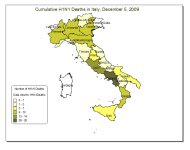
Map of Cumulative Deaths in Italy

H1N1 Deaths Italy, 20091205.jpg
 
Re: Italy - Influenza A/H1N1 - Situation Update as for December 5, 2009 - Updated at 17.00 Hours CEST (Min Health, edited) - CASES: ILI (Cum.) 3,455,000, Hospitalized 764, in ICU 410, Deaths (Cum.) 114

Re: Italy - Influenza A/H1N1 - Situation Update as for December 5, 2009 - Updated at 17.00 Hours CEST (Min Health, edited) - CASES: ILI (Cum.) 3,455,000, Hospitalized 764, in ICU 410, Deaths (Cum.) 114

Many thanks to you Laidback_Al for this map.

I am indebt with you for this:tiphat::applause:
 
Italy - Influenza A/H1N1 - Situation Update as for 6 December 2009 - Updated at 17.00 Hours CEST (edited) - CASES: ILI (Cum.) 3,455,000, Hospitalized 764, in ICU 410, Deaths (Cum.) 114

Italy - Influenza A/H1N1 - Situation Update as for 6 December 2009 - Updated at 17.00 Hours CEST (edited) - CASES: ILI (Cum.) 3,455,000, Hospitalized 764, in ICU 410, Deaths (Cum.) 114

Influenza A/H1N1 - Situation Update as for 6 December 2009 - Updated at 17.00 Hours CEST (edited)

[Source RTF Document (in Italian): LINK. EDITED. Warning: Google Machine Translation.]
Press Release No 572 - 6 December 2009 - Ministry of Labor, Health and Social Policies - PRESS OFFICE


Updates

- The estimated new cases of the flu syndrome in the 48 th week (23-29 November) is 400,000, for a total of 3,438,000 cases from 19 October when it began monitoring Influnet current season.
- It is confirmed for the third consecutive week the reduction of access to the emergency room and the number of hospitalizations for acute respiratory syndrome, for all age groups.
- Cases which have needed respiratory assistance to 6 December: 410
- Percentage of cases that require respiratory assistance in relation to the total of patients: 0.011
- In 48 weeks (23-29 November) were administered 116,510 doses. Start of the vaccination campaign, were administered a total, 611,425 first doses and 1666 second doses
- A total of 5,030,851 doses of vaccine distributed. On December 4, started the seventh deployment to the Regions and Autonomous Provinces of vaccines.
- Total estimated cases of influenza since the beginning of the pandemic to 29 November: 3,455,000
- Total deaths related to the new influenza A/H1N1 to 6 December: 114
- Percentage of victims in relation to the total of patients with new influenza A: 0.0033 percent


Epidemic surveillance

Cases and incidence

Thursday, December 3 has been released the weekly update on the impact of the flu syndrome in week 48.

The estimated new cases of the flu syndrome in the 48th week 400,000, for a total of 3,438,000 cases from the beginning of the surveillance Influnet (43 weeks: 19-25 October). For a total count since last May, these should be added about 17,000 cases reported previously by other surveillance systems for a total of 3,455,000 cases.

The total value of the impact of the flu syndrome in week 48 is equal to 6.64 cases per thousand attended, sharp downturn compared to the value observed in the previous week (11.19 cases per thousand power). The regions where in week 48 has the highest number of cases in the population under observation are Sardinia with an incidence of 3.2 per cent, Marche (2.5%), Friuli Venezia Giulia (1.5%)

The age group most affected is always the pediatric (0-14 years), with an incidence equal to 17.44 cases per thousand assisted (17.44 per thousand in the range of younger children of 0-4 years and 17 79 per thousand in the range 5-14 years). In the age group 15-64 years the incidence is equal to 4.41 and between individuals aged 65 years and over to 1.14 cases per thousand clients.

There is a decline in the incidence in all age groups although more accentuated in pediatric fields in which the incidence has almost halved


Cases that require respiratory assistance

The regions have reported so far at the Ministry of 764 hospital admissions for severe cases of influenza, of which 410 have required ventilatory support: a fee equal to 0.011 percent of the estimated total of people who contract the new flu A.


Victims related to influenza A

The percentage of victims related to influenza A has been updated compared to the total number of cases estimated by Influnet and is equal to 0.0033 percent of patients, compared with 0.2 percent of the victims related to the normal flu. Must be considered that the percentage of victims being calculated considering the clinical cases reported to the surveillance system, because these are most likely underestimated, the value might be even lower than the estimate above.

At 17.00 hours on 6 December the victims related to the new influenza A are 114. This number includes cases for which the regional health authorities have confirmed the finding of infection by the new A/H1N1.


Situation in Italy

Total casualties 114

- Region
- Abruzzo 1
- Basilicata 1
- Calabria 9
- Campania 28
- Emilia Romagna 8
- Lazio 13
- Liguria 3
- Lombardy 8
- Marches 1
- Molise 3
- Piedmont 8
- Puglia 7
- Sicily 6
- Tuscany 4
- Umbria 5
- Veneto 8
- P.a. Bolzano 1


Situation in Europe (source ECDC)

Total casualties in 1024
in

- Great Britain 270
- Spain 169
- France 124


World situation (source ECDC)

Total victims 8568
of which:

- United States of America 1817
- Brazil 1528
- Mexico 656
- Argentina 613


Access to emergency

The network of sentinel emergency rooms reported that in 48 weeks (23-29 November), 6% of all persons who have turned to the emergency room was visited by acute respiratory syndrome. Of these, 24% had been hospitalized

It is confirmed for the third consecutive week the reduction of access to the emergency room and the number of hospitalizations for acute respiratory syndrome, for all age groups. The analysis of national data is based on information from 49 of the 56 emergency room that joined the surveillance. While reflecting the different modes of access to the emergency room, the system can be readily detected the trend of accesses for respiratory syndrome, an indirect indicator of increased activity of influenza viruses.


Vaccination of the population

Yesterday was published the weekly update of vaccinations on the 48th week.

In 48 weeks (23-29 November) were administered 116,510 doses. Start of the vaccination campaign, were administered a total for the categories as priorities for the first phase of vaccination, 611,425 first doses of 1666 and second doses.

Health professionals, social and health that have been vaccinated 146,129, representing 14.1% of total

18,807 women were vaccinated in the second and third trimesters of pregnancy (estimated coverage at 10.8%) while people aged between 6 months and 65 years with risk conditions were administered 381,716 doses (9%)

Currently, each region was asked to vaccinate as rapidly as women in the second and third trimesters of pregnancy and those aged 6 months to 64 years belonging to those at risk for pre-existing conditions, with priority for children belonging to these categories.


Vaccine distribution

On December 4, started the seventh deployment to the Regions and Autonomous Provinces of pandemic vaccines for a total of 2,393,000 doses of other multi-dose vials in packs. After such distribution, expected on 8 December 2009, the doses delivered to the Regions and Autonomous Provinces from 12 October will be 7,423,851, to achieve by the end of December about 10 million doses: it is expected to further delivery, from 18 December to approximately altre2.600.000 doses or in part in unit-dose packaging.


Government Actions

Updates

- 20 November 2009: it was disseminated to the Regions and Autonomous Provinces Ministerial Circular "Distribution antiviral drugs to assist Territorial reaffirming the guidance for the administration of antiviral drugs and methods of distribution on the territory of the competent local firms .

- 20 November 2009: it was disseminated to the Regions and Autonomous Provinces the ministerial circular "Supervision of hospitalizations, the serious and complicated and deaths of New Avian influenza virus A (H1N1) viruses and detection of vaccine coverage for the pandemic vaccine," updating the reporting form and procedures for its transmission.


Background

The World Health Organization on 11 June 2009 has declared a state of pandemic influenza with the transition to the phase of maximum alert.

The infection is caused by a new influenza virus H1N1 that has spread from Mexico in March 2009 from around the world.

The government immediately took all measures to counter the spread of new influenza A and protect the health of citizens.

The Ministry has set April 24 a special Crisis Unit headed by Deputy Ferruccio Fazio. Here are the main actions:


Control and containment stage

In the first phase of the spread of the disease were applied to all measures of infection control and containment measures to limit the spread of the virus. This avoided in our country a first wave of summer 2009 epidemic first hand that occurred in other European countries. Among the preventive measures more effective, please note the early identification of cases in travelers from affected areas, prophylaxis of their close contacts, promotion of hygiene rules and protective equipment such as hand washing.


Vaccination of the population

The Government has set up a vaccination strategy to cope with the new wave of epidemic influenza A (H1N1) in place in the 2009-2010 influenza season and eradicate the epidemic of new virus A (H1N1) in our country. E 'planned vaccination of 40% of the Italian population from the employees of essential services like health care personnel, and groups at risk of complications (children and adults with chronic diseases in the age group 6 months to 64 years, women pregnant in the second and third quarter). E 'active monitoring of the vaccination campaign.


Stocks of antivirals

The Ministry has forty million doses of antiviral drugs, including three in the form of the active powder which, as they have gradually become encapsulated Military Chemical Pharmaceutical Institute in Florence, are distributed to the regions. The Ministry has also issued specific recommendations for proper use of antivirals.


Management of severe cases

The Ministry has provided a first guide to operators in the management of serious and complicated by new influenza virus A (H1N1) and promoted by the regions and autonomous provinces to identify the centers that make for prospective patients suffering from acute respiratory failure. It also defines the criteria for the management of patients, particularly regarding access to the ICU and the next location within the intensive care centers that make up regional networks.


Epidemic surveillance

Starting from 19 October 2009, the influenza surveillance system is based on Influnet, which collects the cases of the network of sentinel physicians reported among its clients as well as data on viruses circulating the network of accredited laboratories. The ISS also conducts random confirmation of clinical cases of serious and deepening virologic to monitor the possible emergence of resistance to antiviral drugs and record any changes in the pandemic virus.

The Ministry also conducts monitoring of hospitalized cases, of serious and deaths.


Sentinel surveillance of access to Emergency

The Ministry of Higher Health Institute have launched in collaboration with the Regional Monitoring of accesses to a specific emergency room. The data will be transmitted on a weekly basis.


Pharmacovigilance

Part of action coordinated by the crisis, the Italian Drug Agency (AIFA) has prepared a National Plan of Pharmacovigilance for monitoring the safety of pandemic vaccines and antivirals. The system has been running since October.


International Epidemiological updates

The World Health Organization November 20 reported that in Norway there was a mutation of the virus in some samples of the new AH1N1 influenza virus isolated in three patients, of whom two died. The mutation is charged with the hemagglutinin (viral protein surface) of the new influenza virus A/H1N1, and causes the substitution of a single amino acid (a glycine instead of aspartic acid). The same mutation was observed in sporadic cases, since last April, in several countries around the world both in patients with severe pneumonia and patients with benign course of disease. Following these reports, the National Institute of Health has reassessed the sequences of more than 100 strains identified by as many patients diagnosed in recent months in various Italian regions. The mutation has been found so far in only one patient suffering from a severe form of pneumonia resolved following treatment with ECMO performed in intensive care. None of the other patients examined, including those with serious or life-threatening events, showed that mutation. The Italian data confirmed that the mutation in question is not to be currently predominant in cases of serious or deadly new flu in addition, the same mutation has a sporadic and does not seem at this stage in the process of diffusion.


Read more

All information on government, the questions and answers, rules and documentation for operators on www.ministerosalute.it, games and interactive tests to understand and better combat the virus A/H1N1al site www.fermailvirus . com.

Information also via phone by calling the call center 1500 of the Ministry, available every day of the week, from 8.00 to 18.00.

--
------
 
Italy - Influenza A/H1N1 - Situation Update as for December 7, 2009 - Updated at 17.00 Hours CEST (Min Health, edited) - CASES: ILI (Cum.) 3,455,000, Hospitalized 764, in ICU 410, Deaths (Cum.) 114

Italy - Influenza A/H1N1 - Situation Update as for December 7, 2009 - Updated at 17.00 Hours CEST (Min Health, edited) - CASES: ILI (Cum.) 3,455,000, Hospitalized 764, in ICU 410, Deaths (Cum.) 114

Influenza A/H1N1 - Situation Update as for December 7, 2009 - Updated at 17.00 Hours CEST (Min Health, edited)

[Source RTF Document (in Italian): LINK. Edited. Warning: Google Machine Translation.]
Press Release No 577 - 7 December 2009 - Ministry of Labor, Health and Social Policies - PRESS OFFICE


Updates

- The estimated new cases of the flu-like syndrome in the 48 th week (23-29 November) is 400,000, for a total of 3,438,000 cases from 19 October when it began monitoring Influnet current season.
- It is confirmed for the third consecutive week the reduction of access to the emergency room and the number of hospitalizations for acute respiratory syndrome, for all age groups.
- Cases which have needed respiratory assistance to 4th December: 410
- Percentage of cases that require respiratory assistance in relation to the total of patients: 0.011
- In 48 weeks (23-29 November) were administered 116,510 doses. Start of the vaccination campaign, were administered a total, 611,425 first doses and 1666 second doses
- A total of 5,030,851 doses of vaccine distributed. On December 4, started the seventh deployment to the Regions and Autonomous Provinces of vaccines.
- Total estimated cases of influenza since the beginning of the pandemic to 29 November: 3,455,000
- Total deaths related to the new influenza A/H1N1 to 7 December: 114
- Percentage of victims in relation to the total of patients with new influenza A: 0.0033 percent


Epidemic surveillance

Cases and incidence

Thursday, December 4 has been released weekly updates about the incidence of the flu syndrome in week 48.

The estimated new cases of the flu syndrome in the 48th week 400,000, for a total of 3,438,000 cases from the beginning of the surveillance Influnet (43 weeks: 19-25 October). For a total count since last May, these should be added about 17,000 cases reported previously by other surveillance systems for a total of 3,455,000 cases.

The total value of the impact of the flu syndrome in week 48 is equal to 6.64 cases per thousand attended, sharp downturn compared to the value observed in the previous week (11.19 cases per thousand power). The regions where in week 48 has the highest number of cases in the population under observation are Sardinia with an incidence of 3.2 per cent, Marche (2.5%), Friuli Venezia Giulia (1.5%)

The age group most affected is always the pediatric (0-14 years), with an incidence equal to 17.44 cases per thousand assisted (17.44 per thousand in the range of younger children of 0-4 years and 17 79 per thousand in the range 5-14 years). In the age group 15-64 years the incidence is equal to 4.41 and between individuals aged 65 years and over to 1.14 cases per thousand clients.

There is a decline in the incidence in all age groups although more accentuated in pediatric fields in which the incidence has almost halved


Cases that require respiratory assistance

The regions have reported so far at the Ministry of 764 hospital admissions for severe cases of influenza, of which 410 have required ventilatory support: a fee equal to 0.011 percent of the estimated total of people who contract the new flu A.


Victims related to influenza A

The percentage of victims related to influenza A has been updated compared to the total number of cases estimated by Influnet and is equal to 0.0033 percent of patients, compared with 0.2 percent of the victims related to the normal flu. Must be considered that the percentage of victims being calculated considering the clinical cases reported to the surveillance system, because these are most likely underestimated, the value might be even lower than the estimate above.

At 17.00 on 7 December the victims related to the new influenza A are 114. This number includes cases for which the regional health authorities have confirmed the finding of infection by the new A/H1N1.


Situation in Italy

Total casualties 114

- Region
- Abruzzo 1
- Basilicata 1
- Calabria 9
- Campania 28
- Emilia Romagna 8
- Lazio 13
- Liguria 3
- Lombardy 8
- Marches 1
- Molise 3
- Piedmont 8
- Puglia 7
- Sicily 6
- Tuscany 4
- Umbria 5
- Veneto 8
- P.a. Bolzano 1


Situation in Europe (source ECDC)

Total casualties in 1066
in

-Great Britain 270
- Spain 169
- France 143


World situation (source ECDC)

Total victims 9797
of which:

- United States of America 1817
- Brazil 1528
- Mexico 671
- Argentina 613


Access to emergency

The network of sentinel emergency rooms reported that in 48 weeks (23-29 November), 6% of all persons who have turned to the emergency room was visited by acute respiratory syndrome. Of these, 24% had been hospitalized

It is confirmed for the third consecutive week the reduction of access to the emergency room and the number of hospitalizations for acute respiratory syndrome, for all age groups. The analysis of national data is based on information from 49 of the 56 emergency room that joined the surveillance. While reflecting the different modes of access to the emergency room, the system can be readily detected the trend of accesses for respiratory syndrome, an indirect indicator of increased activity of influenza viruses.


Vaccination of the population

Today it is published the weekly update of vaccinations on the 48th week.

In 48 weeks (23-29 November) were administered 116,510 doses. Start of the vaccination campaign, were administered a total for the categories as priorities for the first phase of vaccination, 611,425 first doses of 1666 and second doses.

Health professionals, social and health that have been vaccinated 146,129, representing 14.1% of total

18,807 women were vaccinated in the second and third trimesters of pregnancy (estimated coverage at 10.8%) while people aged between 6 months and 65 years with risk conditions were administered 381,716 doses (9%)

Currently, each region was asked to vaccinate as rapidly as women in the second and third trimesters of pregnancy and those aged 6 months to 64 years belonging to those at risk for pre-existing conditions, with priority for children belonging to these categories.


Vaccine distribution

On December 4, started the seventh deployment to the Regions and Autonomous Provinces of pandemic vaccines for a total of 2,393,000 doses of other multi-dose vials in packs. After such distribution, expected on 8 December 2009, the doses delivered to the Regions and Autonomous Provinces from 12 October will be 7,423,851, to achieve by the end of December about 10 million doses: it is expected to further delivery, from 18 December to approximately additional 2,600,000 doses or in part in unit-dose packaging.


Government Actions

Updates

- 20 November 2009: it was disseminated to the Regions and Autonomous Provinces Ministerial Circular "Distribution antiviral drugs to assist Territorial reaffirming the guidance for the administration of antiviral drugs and methods of distribution on the territory of the competent local firms .

- 20 November 2009: it was disseminated to the Regions and Autonomous Provinces the ministerial circular "Supervision of hospitalizations, the serious and complicated and deaths of New Avian influenza virus A (H1N1) viruses and detection of vaccine coverage for the pandemic vaccine," updating the reporting form and procedures for its transmission.


Background

The World Health Organization on 11 June 2009 has declared a state of pandemic influenza with the transition to the phase of maximum alert.

The infection is caused by a new influenza virus H1N1 that has spread from Mexico in March 2009 from around the world.

The government immediately took all measures to counter the spread of new influenza A and protect the health of citizens.

The Ministry has set April 24 a special Crisis Unit headed by Deputy Ferruccio Fazio. Here are the main actions:


Control and containment stage

In the first phase of the spread of the disease were applied to all measures of infection control and containment measures to limit the spread of the virus. This avoided in our country a first wave of summer 2009 epidemic first hand that occurred in other European countries. Among the preventive measures more effective, please note the early identification of cases in travelers from affected areas, prophylaxis of their close contacts, promotion of hygiene rules and protective equipment such as hand washing.


Vaccination of the population

The Government has set up a vaccination strategy to cope with the new wave of epidemic influenza A (H1N1) in place in the 2009-2010 influenza season and eradicate the epidemic of new virus A (H1N1) in our country. E 'planned vaccination of 40% of the Italian population from the employees of essential services like health care personnel, and groups at risk of complications (children and adults with chronic diseases in the age group 6 months to 64 years, women pregnancy in the second and third quarter). E 'active monitoring of the vaccination campaign.


Stocks of antivirals

The Ministry has forty million doses of antiviral drugs, including three in the form of the active powder which, as they have gradually become encapsulated Military Chemical Pharmaceutical Institute in Florence, are distributed to the regions. The Ministry has also issued specific recommendations for proper use of antivirals.


Management of severe cases

The Ministry has provided a first guide to operators in the management of serious and complicated by new influenza virus A (H1N1) and promoted by the regions and autonomous provinces to identify the centers that make for prospective patients suffering from acute respiratory failure. It also defines the criteria for the management of patients, particularly regarding access to the ICU and the next location within the intensive care centers that make up regional networks.


Epidemic surveillance

Starting from 19 October 2009, the influenza surveillance system is based on Influnet, which collects the cases of the network of sentinel physicians reported among its clients as well as data on viruses circulating the network of accredited laboratories. The ISS also conducts random confirmation of clinical cases of serious and deepening virologic to monitor the possible emergence of resistance to antiviral drugs and record any changes in the pandemic virus.

The Ministry also conducts monitoring of hospitalized cases, of serious and deaths.


Sentinel surveillance of access to Emergency

The Ministry of Higher Health Institute have launched in collaboration with the Regional Monitoring of accesses to a specific emergency room. The data will be transmitted on a weekly basis.


Pharmacovigilance

Part of action coordinated by the crisis, the Italian Drug Agency (AIFA) has prepared a National Plan of Pharmacovigilance for monitoring the safety of pandemic vaccines and antivirals. The system has been running since October.


International Epidemiological updates

The World Health Organization November 20 reported that in Norway there was a mutation of the virus in some samples of the new AH1N1 influenza virus isolated in three patients, of whom two died. The mutation is charged with the hemagglutinin (viral protein surface) of the new influenza virus A/H1N1, and causes the substitution of a single amino acid (a glycine instead of aspartic acid). The same mutation was observed in sporadic cases, since last April, in several countries around the world both in patients with severe pneumonia and patients with benign course of disease. Following these reports, the National Institute of Health has reassessed the sequences of more than 100 strains identified by as many patients diagnosed in recent months in various Italian regions. The mutation has been found so far in only one patient suffering from a severe form of pneumonia resolved following treatment with ECMO performed in intensive care. None of the other patients examined, including those with serious or life-threatening events, showed that mutation. The Italian data confirmed that the mutation in question is not to be currently predominant in cases of serious or deadly new flu in addition, the same mutation has a sporadic and does not seem at this stage in the process of diffusion.


Read more

All information on government, the questions and answers, rules and documentation for operators on www.ministerosalute.it, games and interactive tests to understand and better combat the virus A/H1N1al site www.fermailvirus . com.

Information also via phone by calling the call center 1500 of the Ministry, available every day of the week, from 8.00 to 18.00.

--
-----
 
Italy - Influenza A/H1N1 - Situation Update as for December 9, 2009 - Updated at 17.00 Hours CEST (Min Health, edited) - CASES: ILI (Cum.) 3,455,000, Hospitalized 764, in ICU 410, Deaths (Cum.) 137

Italy - Influenza A/H1N1 - Situation Update as for December 9, 2009 - Updated at 17.00 Hours CEST (Min Health, edited) - CASES: ILI (Cum.) 3,455,000, Hospitalized 764, in ICU 410, Deaths (Cum.) 137

Influenza A/H1N1 - Situation Update as for December 9, 2009 - Updated at 17.00 Hours CEST (Min Health, edited)

[Source RTF Document (in Italian): LINK. Edited. Warning: Google Machine Translation.]
Press Release No 582 - 9 December 2009 - Ministry of Labor, Health and Social Policies - PRESS OFFICE


Updates

- The estimated new cases of the flu syndrome in the 48 th week (23-29 November) is 400,000, for a total of 3,438,000 cases from 19 October when it began monitoring Influnet current season.
- It is confirmed for the third consecutive week the reduction of access to the emergency room and the number of hospitalizations for acute respiratory syndrome, for all age groups.
- Cases which have needed respiratory assistance to 4th December: 410
- Percentage of cases that require respiratory assistance in relation to the total of patients: 0.011
- In 48 weeks (23-29 November) were administered 116,510 doses. Start of the vaccination campaign, were administered a total, 611,425 first doses and 1666 second doses
- A total of 5,030,851 doses of vaccine distributed. On December 4, started the seventh deployment to the Regions and Autonomous Provinces of vaccines.
- Total estimated cases of influenza since the beginning of the pandemic to 29 November: 3,455,000
- Total deaths related to the new influenza A/H1N1 December 9: 137
- Percentage of victims in relation to the total of patients with new influenza A: 0.0033 percent


Epidemic surveillance

Cases and incidence

Thursday, December 4th were released weekly updates about the incidence of the flu syndrome in week 48.

The estimated new cases of the flu syndrome in the 48th week 400,000, for a total of 3,438,000 cases from the beginning of the surveillance Influnet (43 weeks: 19-25 October). For a total count since last May, these should be added about 17,000 cases reported previously by other surveillance systems for a total of 3,455,000 cases.

The total value of the impact of the flu syndrome in week 48 is equal to 6.64 cases per thousand attended, sharp downturn compared to the value observed in the previous week (11.19 cases per thousand power). The regions where in week 48 has the highest number of cases in the population under observation are Sardinia with an incidence of 3.2 per cent, Marche (2.5%), Friuli Venezia Giulia (1.5%)

The age group most affected is always the pediatric (0-14 years), with an incidence equal to 17.44 cases per thousand assisted (17.44 per thousand in the range of younger children of 0-4 years and 17 79 per thousand in the range 5-14 years). In the age group 15-64 years the incidence is equal to 4.41 and between individuals aged 65 years and over to 1.14 cases per thousand clients.

There is a decline in the incidence in all age groups although more accentuated in pediatric fields in which the incidence has almost halved


Cases that require respiratory assistance

The regions have reported so far at the Ministry of 764 hospital admissions for severe cases of influenza, of which 410 have required ventilatory support (0.011 percent of the estimated total of people who contract the new flu A).


Victims related to influenza A

The percentage of victims related to influenza A has been updated compared to the total number of cases estimated by Influnet and is equal to 0.0033 percent of patients, compared with 0.2 percent of the victims related to the normal flu. Must be considered that the percentage of victims being calculated considering the clinical cases reported to the surveillance system, because these are most likely underestimated, the value might be even lower than the estimate above.

At 17.00 hours on 9 December the victims related to the new influenza A are 137. This number includes cases for which the regional health authorities have confirmed the finding of infection by the new A/H1N1.


Situation in Italy

Total casualties 137

- Region
- Abruzzo 2
- Basilicata 1
- Calabria 13
- Campania 30
- Emilia Romagna 9
- Lazio 14
- Liguria 3
- Lombardy 8
- Marches 1
- Molise 3
- Piedmont 8
- Puglia 18
- Sicily 9
- Tuscany 4
- Umbria 5
- Veneto 8
- P.a. Bolzano 1


Situation in Europe (source ECDC)

Total casualties in 1066
in

- Great Britain 270
- Spain 169
- France 143


World situation (source ECDC)

Total victims 9797
of which:

- United States of America 1817
- Brazil 1528
- Mexico 671
- Argentina 613


Access to emergency

The network of sentinel emergency rooms reported that in 48 weeks (23-29 November), 6% of all persons who have turned to the emergency room was visited by acute respiratory syndrome. Of these, 24% had been hospitalized

It is confirmed for the third consecutive week the reduction of access to the emergency room and the number of hospitalizations for acute respiratory syndrome, for all age groups. The analysis of national data is based on information from 49 of the 56 emergency room that joined the surveillance. While reflecting the different modes of access to the emergency room, the system can be readily detected the trend of accesses for respiratory syndrome, an indirect indicator of increased activity of influenza viruses.


Vaccination of the population

Today it is published the weekly update of vaccinations on the 48th week.

In 48 weeks (23-29 November) were administered 116,510 doses. Start of the vaccination campaign, were administered a total for the categories as priorities for the first phase of vaccination, 611,425 first doses of 1666 and second doses.

Health professionals, social and health that have been vaccinated 146,129, representing 14.1% of total

18,807 women were vaccinated in the second and third trimesters of pregnancy (estimated coverage at 10.8%) while people aged between 6 months and 65 years with risk conditions were administered 381,716 doses (9%)

Currently, each region was asked to vaccinate as rapidly as women in the second and third trimesters of pregnancy and those aged 6 months to 64 years belonging to those at risk for pre-existing conditions, with priority for children belonging to these categories.


Vaccine distribution

On December 4, started the seventh deployment to the Regions and Autonomous Provinces of pandemic vaccines for a total of 2,393,000 doses of other multi-dose vials in packs. After such distribution, expected on 8 December 2009, the doses delivered to the Regions and Autonomous Provinces from 12 October will be 7,423,851, to achieve by the end of December about 10 million doses: it is expected to further delivery, from 18 December to approximately additional 2,600,000 doses or in part in unit-dose packaging.


Government Actions

Updates

- 20 November 2009: it was disseminated to the Regions and Autonomous Provinces Ministerial Circular "Distribution antiviral drugs to assist Territorial reaffirming the guidance for the administration of antiviral drugs and methods of distribution on the territory of the competent local firms .

- 20 November 2009: it was disseminated to the Regions and Autonomous Provinces the ministerial circular "Supervision of hospitalizations, the serious and complicated and deaths of New Avian influenza virus A (H1N1) viruses and detection of vaccine coverage for the pandemic vaccine," updating the reporting form and procedures for its transmission.


Background

The World Health Organization on 11 June 2009 has declared a state of pandemic influenza with the transition to the phase of maximum alert.

The infection is caused by a new influenza virus H1N1 that has spread from Mexico in March 2009 from around the world.

The government immediately took all measures to counter the spread of new influenza A and protect the health of citizens.

The Ministry has set April 24 a special Crisis Unit headed by Deputy Ferruccio Fazio. Here are the main actions:


Control and containment stage

In the first phase of the spread of the disease were applied to all measures of infection control and containment measures to limit the spread of the virus. This avoided in our country a first wave of summer 2009 epidemic first hand that occurred in other European countries. Among the preventive measures more effective, please note the early identification of cases in travelers from affected areas, prophylaxis of their close contacts, promotion of hygiene rules and protective equipment such as hand washing.


Vaccination of the population

The Government has set up a vaccination strategy to cope with the new wave of epidemic influenza A (H1N1) in place in the 2009-2010 influenza season and eradicate the epidemic of new virus A (H1N1) in our country. E 'planned vaccination of 40% of the Italian population from the employees of essential services like health care personnel, and groups at risk of complications (children and adults with chronic diseases in the age group 6 months to 64 years, women pregnant in the second and third quarter). E 'active monitoring of the vaccination campaign.


Stocks of antivirals

The Ministry has forty million doses of antiviral drugs, including three in the form of the active powder which, as they have gradually become encapsulated Military Chemical Pharmaceutical Institute in Florence, are distributed to the regions. The Ministry has also issued specific recommendations for proper use of antivirals.


Management of severe cases

The Ministry has provided a first guide to operators in the management of serious and complicated by new influenza virus A (H1N1) and promoted by the regions and autonomous provinces to identify the centers that make for prospective patients suffering from acute respiratory failure. It also defines the criteria for the management of patients, particularly regarding access to the ICU and the next location within the intensive care centers that make up regional networks.


Epidemic surveillance

Starting from 19 October 2009, the influenza surveillance system is based on Influnet, which collects the cases of the network of sentinel physicians reported among its clients as well as data on viruses circulating the network of accredited laboratories. The ISS also conducts random confirmation of clinical cases of serious and deepening virologic to monitor the possible emergence of resistance to antiviral drugs and record any changes in the pandemic virus.

The Ministry also conducts monitoring of hospitalized cases, of serious and deaths.


Sentinel surveillance of access to Emergency

The Ministry of Higher Health Institute have launched in collaboration with the Regional Monitoring of accesses to a specific emergency room. The data will be transmitted on a weekly basis.


Pharmacovigilance

Part of action coordinated by the crisis, the Italian Drug Agency (AIFA) has prepared a National Plan of Pharmacovigilance for monitoring the safety of pandemic vaccines and antivirals. The system has been running since October.


International Epidemiological updates

The World Health Organization November 20 reported that in Norway there was a mutation of the virus in some samples of the new AH1N1 influenza virus isolated in three patients, of whom two died. The mutation is charged with the hemagglutinin (viral protein surface) of the new influenza virus A/H1N1, and causes the substitution of a single amino acid (a glycine instead of aspartic acid). The same mutation was observed in sporadic cases, since last April, in several countries around the world both in patients with severe pneumonia and patients with benign course of disease. Following these reports, the National Institute of Health has reassessed the sequences of more than 100 strains identified by as many patients diagnosed in recent months in various Italian regions. The mutation has been found so far in only one patient suffering from a severe form of pneumonia resolved following treatment with ECMO performed in intensive care. None of the other patients examined, including those with serious or life-threatening events, showed that mutation. The Italian data confirmed that the mutation in question is not to be currently predominant in cases of serious or deadly new flu in addition, the same mutation has a sporadic and does not seem at this stage in the process of diffusion.


Read more

All information on government, the questions and answers, rules and documentation for operators on www.ministerosalute.it, games and interactive tests to understand and better combat the virus A/H1N1al site www.fermailvirus . com.

Information also via phone by calling the call center 1500 of the Ministry, available every day of the week, from 8.00 to 18.00.

--
------
 
Italy - Influenza A/H1N1 - Situation Update as for 10 December 2009 - Updated at 17.00 Hours CEST (Min Health, edited) - CASES: ILI (Cum.) 3,650,000, Hospitalized 804, in ICU 434, Deaths (Cum.) 137

Italy - Influenza A/H1N1 - Situation Update as for 10 December 2009 - Updated at 17.00 Hours CEST (Min Health, edited) - CASES: ILI (Cum.) 3,650,000, Hospitalized 804, in ICU 434, Deaths (Cum.) 137

Influenza A/H1N1 - Situation Update as for 10 December 2009 - Updated at 17.00 Hours CEST (Min Health, edited)

[Source document (RTF format, in Italian): LINK. Edited. Warning: Google Machine Translation.]

Press Release No 586 - 10 December 2009 - Ministry of Labor, Health and Social Policies - PRESS OFFICE


Updates

- The estimated new cases of the flu syndrome in the 49th week (November 30 to December 6) is 224,000, for a total of 3,650,000 cases from 19 October when it began monitoring Influnet current season.
- Also this week there is a continued reduction in access to emergency and the number of hospitalizations for acute respiratory syndrome, for all age groups.
- Cases which have necessitated ventilatory support at 10 December: 434
- Percentage of cases that require respiratory assistance in relation to the total of patients: 0,013
- In the 49th week (November 30 to December 6) were administered 52,662 doses. Start of the vaccination campaign, were administered a total, 689,172 first doses and 5730 second doses
- A total of 5,030,851 doses of vaccine distributed. On December 4, started the seventh deployment to the Regions and Autonomous Provinces of vaccines.
- Total estimated cases of pandemic influenza beginning at 6 December: 3,650,000
- Total deaths related to the new influenza A/H1N1 December 9: 137
- Percentage of victims in relation to the total of patients with new influenza A: 0.0033 percent


Epidemic surveillance

Cases and incidence

Thursday, December 10th were released weekly updates about the incidence of the flu syndrome in week 49.

The estimated new cases of the flu syndrome in the 49th week 224,000, for a total of 3,438,000 cases from the beginning of the surveillance Influnet (43 weeks: 19-25 October). For a total count since last May, these should be added about 17,000 cases reported previously by other surveillance systems for a total of 3,455,000 cases.

The total value of the impact of the flu syndrome in week 49 is equal to 3.73 cases per thousand attended, sharp downturn compared to the value observed in the previous week (6.68 cases per thousand power). The regions where in week 49 has the highest number of cases in the population under observation are Sardinia with an incidence of 2.0 per cent, Marche (1.1%), Autonomous Province of Trento (0.6%) and Friuli Venezia Giulia (0.6%).

The overall incidence observed in the Marche region is strongly influenced by the high number of cases in the pediatric age group reported only a small number of pediatricians and is not representative of the entire region.

The age group most affected is always the pediatric (0-14 years), with an incidence equal to 9.63 cases per thousand in the assisted group of younger children of 0-4 years and 7.94 per thousand in the range 5 -14 years). In the age group 15-64 years the incidence is equal to 2.88 and between individuals aged 65 years and over to 0.84 cases per thousand clients.

There is a decline in the incidence in all age groups although more accentuated in pediatric fields in which the incidence has almost halved


Cases that require respiratory assistance

The regions have reported so far at the Ministry of 804 hospital admissions for severe cases of influenza, of which 434 have required ventilatory support: a fee equal to 0.013 percent of the estimated total of people who contract the new flu A.


Victims related to influenza A

The percentage of victims related to influenza A has been updated compared to the total number of cases estimated by Influnet and is equal to 0.0033 percent of patients, compared with 0.2 percent of the victims related to the normal flu. Must be considered that the percentage of victims being calculated considering the clinical cases reported to the surveillance system, because these are most likely underestimated, the value might be even lower than the estimate above.

At 17.00 hours on 10 December the victims are related to the new influenza A 137. This number includes cases for which the regional health authorities have confirmed the finding of infection by the new A/H1N1.


Situation in Italy

Total casualties 137

- Region
- Abruzzo 2
- Basilicata 1
- Calabria 13
- Campania 30
- Emilia Romagna 9
- Lazio 14
- Liguria 3
- Lombardy 8
- Marches 1
- Molise 3
- Piedmont 8
- Puglia 18
- Sicily 9
- Tuscany 4
- Umbria 5
- Veneto 8
- P.a. Bolzano 1


Situation in Europe (source ECDC)

Total casualties in 1147
in

- Great Britain 270
- Spain 169
- France 158


World situation (source ECDC)

Total victims 10402
of which:

- United States of America 1929
- Brazil 1528
- Mexico 713
- Argentina 613


Access to emergency

The network of sentinel emergency rooms reported that in the 49th week (November 30 to December 6), 5.4% of all persons who have turned to the emergency room was visited by acute respiratory syndrome. Of these, 26% were hospitalized.

It is confirmed for the fourth consecutive week to reduce access to the emergency room and number of hospitalizations for acute respiratory syndrome, for all age groups. The analysis of national data is based on information from 49 of the 56 emergency room that joined the surveillance. While reflecting the different modes of access to the emergency room, the system can be readily detected the trend of accesses for respiratory syndrome, an indirect indicator of increased activity of influenza viruses.


Vaccination of the population

In the 49th week (November 30 to December 6) were administered 52,662 doses. Start of the vaccination campaign, were administered a total for the categories as priorities for the first phase of vaccination, 689,172 first doses of 5730 and second doses.

Health professionals, social and health that have been vaccinated 153,852, representing 14.64% of the total.

20,491 women were vaccinated in the second and third trimesters of pregnancy (coverage estimated at 11.4%), while people aged between 6 months and 65 years with risk conditions were administered 438,204 doses (10.4%) .

Some regions have also begun to vaccinate children and young adults ages 6 months to 27 years without risk conditions and the holders of at least one of the conditions of risk over the age of 65 years for a total of 11,468 doses administered.

Currently, each region was asked to vaccinate as rapidly as women in the second and third trimesters of pregnancy and those aged 6 months to 64 years belonging to those at risk for pre-existing conditions, with priority for children belonging to these categories.


Vaccine distribution

Ended on 8 December, the seventh deployment to the Regions and Autonomous Provinces of pandemic vaccines. The doses delivered to the Regions and Autonomous Provinces as of 12 October were 7,423,851. By the end of December it will reach about 10 million doses: it is expected to further delivery, from 18 December to approximately additional 2,600,000 doses or in part in unit-dose packaging.


Government Actions

Updates

- 20 November 2009: it was disseminated to the Regions and Autonomous Provinces Ministerial Circular "Distribution antiviral drugs to assist Territorial reaffirming the guidance for the administration of antiviral drugs and methods of distribution on the territory of the competent local firms .

- 20 November 2009: it was disseminated to the Regions and Autonomous Provinces the ministerial circular "Supervision of hospitalizations, the serious and complicated and deaths of New Avian influenza virus A (H1N1) viruses and detection of vaccine coverage for the pandemic vaccine," updating the reporting form and procedures for its transmission.


Background

The World Health Organization on 11 June 2009 has declared a state of pandemic influenza with the transition to the phase of maximum alert.

The infection is caused by a new influenza virus H1N1 that has spread from Mexico in March 2009 from around the world.

The government immediately took all measures to counter the spread of new influenza A and protect the health of citizens.

The Ministry has set April 24 a special Crisis Unit headed by Deputy Ferruccio Fazio. Here are the main actions:


Control and containment stage

In the first phase of the spread of the disease were applied to all measures of infection control and containment measures to limit the spread of the virus. This avoided in our country a first wave of summer 2009 epidemic first hand that occurred in other European countries. Among the preventive measures more effective, please note the early identification of cases in travelers from affected areas, prophylaxis of their close contacts, promotion of hygiene rules and protective equipment such as hand washing.


Vaccination of the population

The Government has set up a vaccination strategy to cope with the new wave of epidemic influenza A (H1N1) in place in the 2009-2010 influenza season and eradicate the epidemic of new virus A (H1N1) in our country. E 'planned vaccination of 40% of the Italian population from the employees of essential services like health care personnel, and groups at risk of complications (children and adults with chronic diseases in the age group 6 months to 64 years, women pregnancy in the second and third quarter). E 'active monitoring of the vaccination campaign.


Stocks of antivirals

The Ministry has forty million doses of antiviral drugs, including three in the form of the active powder which, as they have gradually become encapsulated Military Chemical Pharmaceutical Institute in Florence, are distributed to the regions. The Ministry has also issued specific recommendations for proper use of antivirals.


Management of severe cases

The Ministry has provided a first guide to operators in the management of serious and complicated by new influenza virus A (H1N1) and promoted by the regions and autonomous provinces to identify the centers that make for prospective patients suffering from acute respiratory failure. It also defines the criteria for the management of patients, particularly regarding access to the ICU and the next location within the intensive care centers that make up regional networks.


Epidemic surveillance

As of October 19, 2009, surveillance of influenza is based on Influnet system, which collects the cases of the network of sentinel physicians reported among its clients as well as data on viruses circulating the network of accredited laboratories. The ISS also conducts random confirmation of clinical cases of serious and deepening virologic to monitor the possible emergence of resistance to antiviral drugs and record any changes in the pandemic virus.

The Ministry also conducts monitoring of hospitalized cases, of serious and deaths.


Sentinel surveillance of access to Emergency

The Ministry of Higher Health Institute have launched in collaboration with the Regional Monitoring of accesses to a specific emergency room. The data will be transmitted on a weekly basis.


Pharmacovigilance

Part of action coordinated by the crisis, the Italian Drug Agency (AIFA) has prepared a National Plan of Pharmacovigilance for monitoring the safety of pandemic vaccines and antivirals. The system has been running since October.


International Epidemiological updates

The World Health Organization November 20 reported that in Norway there was a mutation of the virus in some samples of the new AH1N1 influenza virus isolated in three patients, of whom two died. The mutation is charged with the hemagglutinin (viral protein surface) of the new influenza virus A/H1N1, and causes the substitution of a single amino acid (a glycine instead of aspartic acid). The same mutation was observed in sporadic cases, since last April, in several countries around the world both in patients with severe pneumonia and patients with benign course of disease. Following these reports, the National Institute of Health has reassessed the sequences of more than 100 strains identified by as many patients diagnosed in recent months in various Italian regions. The mutation has been found so far in only one patient suffering from a severe form of pneumonia resolved following treatment with ECMO performed in intensive care. None of the other patients examined, including those with serious or life-threatening events, showed that mutation. The Italian data confirmed that the mutation in question is not to be currently predominant in cases of serious or deadly new flu in addition, the same mutation has a sporadic and does not seem at this stage in the process of diffusion.


Read more

All information on government, the questions and answers, rules and documentation for operators on www.ministerosalute.it, games and interactive tests to understand and better combat the virus A/H1N1al site www.fermailvirus . com.

Information also via phone by calling the call center 1500 of the Ministry, available every day of the week, from 8.00 to 18.00.

--
------
 
Italy - Influenza A/H1N1 - Situation Update as for 11 December 2009 - Updated at 17.00 Hours CEST (Min Health, edited) - CASES: ILI (Cum.) 3,650,000, Hospitalized 811, in ICU 439, Deaths (Cum.) 142

Italy - Influenza A/H1N1 - Situation Update as for 11 December 2009 - Updated at 17.00 Hours CEST (Min Health, edited) - CASES: ILI (Cum.) 3,650,000, Hospitalized 811, in ICU 439, Deaths (Cum.) 142

Influenza A/H1N1 - Situation Update as for 11 December 2009 - Updated at 17.00 Hours CEST (Min Health, edited)

[Source RTF Document (in Italian): LINK. Edited. Warning: Google Machine Translation.]
Press Release No 591 - 11 December 2009 - Ministry of Labor, Health and Social Policies - PRESS OFFICE


Updates

- The estimated new cases of the flu syndrome in the 49th week (November 30 to December 6) is 224,000, for a total of 3,650,000 cases from 19 October when it began monitoring Influnet current season.
- It is confirmed for the third consecutive week the reduction of access to the emergency room and the number of hospitalizations for acute respiratory syndrome, for all age groups.
- Cases which have necessitated ventilatory support to 11 December: 439
- Percentage of cases that require respiratory assistance in relation to the total of patients: 0.012
- In the 49th week (November 30 to December 6) were administered 52,662 doses. Start of the vaccination campaign, were administered a total, 689,172 first doses and 5730 second doses
- A total of 5,030,851 doses of vaccine distributed. On December 4, started the seventh deployment to the Regions and Autonomous Provinces of vaccines.
- Total estimated cases of pandemic influenza beginning at 6 December: 3,650,000
- Total deaths related to the new influenza A/H1N1 to 11 December: 142
- Percentage of victims in relation to the total of patients with new influenza A: 0.0039 percent


Epidemic surveillance

Cases and incidence

Thursday, December 11th were released weekly updates about the incidence of the flu syndrome in week 49.

The estimated new cases of the flu syndrome in the 49th week 224,000, for a total of 3,438,000 cases from the beginning of the surveillance Influnet (43 weeks: 19-25 October). For a total count since last May, these should be added about 17,000 cases reported previously by other surveillance systems for a total of 3,455,000 cases.

The total value of the impact of the flu syndrome in week 49 is equal to 3.73 cases per thousand attended, sharp downturn compared to the value observed in the previous week (6.68 cases per thousand power). The regions where in week 49 has the highest number of cases in the population under observation are Sardinia with an incidence of 2.0 per cent, Marche (1.1%), Friuli Venezia Giulia (0.6%) Autonomous Province of Trento (0.6%).

The age group most affected is always the pediatric (0-14 years), with an incidence equal to 9.63 cases per thousand in the assisted group of younger children of 0-4 years and 7.94 per thousand in the range 5 -14 years). In the age group 15-64 years the incidence is equal to 2.88 and between individuals aged 65 years and over to 0.84 cases per thousand clients.

There is a decline in the incidence in all age groups although more accentuated in pediatric fields in which the incidence has almost halved


Cases that require respiratory assistance

The regions have reported so far at the Ministry of 811 hospital admissions for severe cases of influenza, of which 439 have required ventilatory support: a quota of 0,012 percent of the estimated total of people who contract the new flu A.


Victims related to influenza A

The percentage of victims related to influenza A has been updated compared to the total number of cases estimated by Influnet and is equal to 0.0039 percent of patients, compared with 0.2 percent of the victims related to the normal flu. Must be considered that the percentage of victims being calculated considering the clinical cases reported to the surveillance system, because these are most likely underestimated, the value might be even lower than the estimate above.

At 17.00 hours on 11 December the victims are related to the new influenza A 142. This number includes cases for which the regional health authorities have confirmed the finding of infection by the new A/H1N1.


Situation in Italy

Total casualties 142

- Region
- Abruzzo 2
- Basilicata 1
- Calabria 13
- Campania 32
- Emilia Romagna 9
- Lazio 14
- Liguria 3
- Lombardia 9
- Marches 1
- Molise 3
- Piedmont 8
- Puglia 18
- Sicily 11
- Tuscany 4
- Umbria 5
- Veneto 8
- P.a. Bolzano 1


Situation in Europe (source ECDC)

Total casualties in 1227
in

- Great Britain 283
- Spain 169
- France 158


World situation (source ECDC)

Total victims 10567
of which:

- United States of America 1929
- Brazil 1528
- Mexico 713
- Argentina 613


Access to emergency

The network of sentinel emergency rooms reported that in the 49th week (November 30 to December 6), 5.4% of all persons who have turned to the emergency room was visited by acute respiratory syndrome. Of these, 26% had been hospitalized

It is confirmed for the third consecutive week the reduction of access to the emergency room and the number of hospitalizations for acute respiratory syndrome, for all age groups. The analysis of national data is based on information from 49 of the 56 emergency room that joined the surveillance. While reflecting the different modes of access to the emergency room, the system can be readily detected the trend of accesses for respiratory syndrome, an indirect indicator of increased activity of influenza viruses.


Vaccination of the population

Today it is published the weekly update of vaccinations on the 48th week.

In the 49th week (November 30 to December 6) were administered 52,662 doses. Start of the vaccination campaign, were administered a total for the categories as priorities for the first phase of vaccination, 689,172 first doses of 5730 and second doses.

Health professionals, social and health that have been vaccinated 153,852, representing 14.64% of total

20,491 women were vaccinated in the second and third trimesters of pregnancy (coverage estimated at 11.4%) while people aged between 6 months and 65 years with risk conditions were administered 438,204 doses (10.4%)

Some regions have also begun to vaccinate children and adults giovai between 6 months and 27 years without risk conditions and the holders of at least one of the conditions of risk over the age of 65 years for a total of 11,468 doses administered.

Currently, each region was asked to vaccinate as rapidly as women in the second and third trimesters of pregnancy and those aged 6 months to 64 years belonging to those at risk for pre-existing conditions, with priority for children belonging to these categories.


Vaccine distribution

Ended on 8 December, the seventh deployment to the Regions and Autonomous Provinces of pandemic vaccines. The doses delivered to the Regions and Autonomous Provinces as of 12 October were 7,423,851. By the end of December it will reach about 10 million doses: it is expected to further delivery, from 18 December to approximately additional 2,600,000 doses or in part in unit-dose packaging.


Government Actions

Updates

- 20 November 2009: it was disseminated to the Regions and Autonomous Provinces Ministerial Circular "Distribution antiviral drugs to assist Territorial reaffirming the guidance for the administration of antiviral drugs and methods of distribution on the territory of the competent local firms .

- 20 November 2009: it was disseminated to the Regions and Autonomous Provinces the ministerial circular "Supervision of hospitalizations, the serious and complicated and deaths of New Avian influenza virus A (H1N1) viruses and detection of vaccine coverage for the pandemic vaccine," updating the reporting form and procedures for its transmission.


Background

The World Health Organization on 11 June 2009 has declared a state of pandemic influenza with the transition to the phase of maximum alert.

The infection is caused by a new influenza virus H1N1 that has spread from Mexico in March 2009 from around the world.

The government immediately took all measures to counter the spread of new influenza A and protect the health of citizens.

The Ministry has set April 24 a special Crisis Unit headed by Deputy Ferruccio Fazio. Here are the main actions:


Control and containment stage

In the first phase of the spread of the disease were applied to all measures of infection control and containment measures to limit the spread of the virus. This avoided in our country a first wave of summer 2009 epidemic first hand that occurred in other European countries. Among the preventive measures more effective, please note the early identification of cases in travelers from affected areas, prophylaxis of their close contacts, promotion of hygiene rules and protective equipment such as hand washing.


Vaccination of the population

The Government has set up a vaccination strategy to cope with the new wave of epidemic influenza A (H1N1) in place in the 2009-2010 influenza season and eradicate the epidemic of new virus A (H1N1) in our country. E 'planned vaccination of 40% of the Italian population from the employees of essential services like health care personnel, and groups at risk of complications (children and adults with chronic diseases in the age group 6 months to 64 years, women pregnancy in the second and third quarter). E 'active monitoring of the vaccination campaign.


Stocks of antivirals

The Ministry has forty million doses of antiviral drugs, including three in the form of the active powder which, as they have gradually become encapsulated Military Chemical Pharmaceutical Institute in Florence, are distributed to the regions. The Ministry has also issued specific recommendations for proper use of antivirals.


Management of severe cases

The Ministry has provided a first guide to operators in the management of serious and complicated by new influenza virus A (H1N1) and promoted by the regions and autonomous provinces to identify the centers that make for prospective patients suffering from acute respiratory failure. It also defines the criteria for the management of patients, particularly regarding access to the ICU and the next location within the intensive care centers that make up regional networks.


Epidemic surveillance

As of October 19, 2009, surveillance of influenza is based on Influnet system, which collects the cases of the network of sentinel physicians reported among its clients as well as data on viruses circulating the network of accredited laboratories. The ISS also conducts random confirmation of clinical cases of serious and deepening virologic to monitor the possible emergence of resistance to antiviral drugs and record any changes in the pandemic virus.

The Ministry also conducts monitoring of hospitalized cases, of serious and deaths.


Sentinel surveillance of access to Emergency

The Ministry of Higher Health Institute have launched in collaboration with the Regional Monitoring of accesses to a specific emergency room. The data will be transmitted on a weekly basis.


Pharmacovigilance

Part of action coordinated by the crisis, the Italian Drug Agency (AIFA) has prepared a National Plan of Pharmacovigilance for monitoring the safety of pandemic vaccines and antivirals. The system has been running since October.


International Epidemiological updates

The World Health Organization November 20 reported that in Norway there was a mutation of the virus in some samples of the new AH1N1 influenza virus isolated in three patients, of whom two died. The mutation is charged with the hemagglutinin (viral protein surface) of the new influenza virus A/H1N1, and causes the substitution of a single amino acid (a glycine instead of aspartic acid). The same mutation was observed in sporadic cases, since last April, in several countries around the world both in patients with severe pneumonia and patients with benign course of disease. Following these reports, the National Institute of Health has reassessed the sequences of more than 100 strains identified by as many patients diagnosed in recent months in various Italian regions. The mutation has been found so far in only one patient suffering from a severe form of pneumonia resolved following treatment with ECMO performed in intensive care. None of the other patients examined, including those with serious or life-threatening events, showed that mutation. The Italian data confirmed that the mutation in question is not to be currently predominant in cases of serious or deadly new flu in addition, the same mutation has a sporadic and does not seem at this stage in the process of diffusion.


Read more

All information on government, the questions and answers, rules and documentation for operators on www.ministerosalute.it, games and interactive tests to understand and better combat the virus A/H1N1al site www.fermailvirus . com.

Information also via phone by calling the call center 1500 of the Ministry, available every day of the week, from 8.00 to 18.00.

--
------
 
Italy - Influenza A/H1N1 - Situation Update as for 12 December 2009 - Updated at 17.00 Hours CEST (Min Health, edited) - CASES: ILI (Cum.) 3,650,000, Hospitalized 811, in ICU 439, Deaths (Cum.) 142

Italy - Influenza A/H1N1 - Situation Update as for 12 December 2009 - Updated at 17.00 Hours CEST (Min Health, edited) - CASES: ILI (Cum.) 3,650,000, Hospitalized 811, in ICU 439, Deaths (Cum.) 142

Influenza A/H1N1 - Situation Update as for 12 December 2009 - Updated at 17.00 Hours CEST (Min Health, edited)

[Source RTF Document (in Italian): LINK. Edited. Warning: Google Machine Translation.]
Press Release No 592 - 12 December 2009 - Ministry of Labor, Health and Social Policies - PRESS OFFICE


Updates

- The estimated new cases of the flu syndrome in the 49th week (November 30 to December 6) is 224,000, for a total of 3,650,000 cases from 19 October when it began monitoring Influnet current season.
- It is confirmed for the third consecutive week the reduction of access to the emergency room and the number of hospitalizations for acute respiratory syndrome, for all age groups.
- Cases which have necessitated ventilatory support to 12 December: 439
- Percentage of cases that require respiratory assistance in relation to the total of patients: 0.012
- In the 49th week (November 30 to December 6) were administered 52,662 doses. Start of the vaccination campaign, were administered a total, 689,172 first doses and 5730 second doses
- A total of 5,030,851 doses of vaccine distributed. On December 4, started the seventh deployment to the Regions and Autonomous Provinces of vaccines.
- Total estimated cases of pandemic influenza beginning at 6 December: 3,650,000
- Total deaths related to the new influenza A/H1N1 to 11 December: 142
- Percentage of victims in relation to the total of patients with new influenza A: 0.0039 percent


Epidemic surveillance

Cases and incidence

Thursday, December 10th were released weekly updates about the incidence of the flu syndrome in week 49.

The estimated new cases of the flu syndrome in the 49th week 224,000, for a total of 3,438,000 cases from the beginning of the surveillance Influnet (43 weeks: 19-25 October). For a total count since last May, these should be added about 17,000 cases reported previously by other surveillance systems for a total of 3,455,000 cases.

The total value of the impact of the flu syndrome in week 49 is equal to 3.73 cases per thousand attended, sharp downturn compared to the value observed in the previous week (6.68 cases per thousand power). The regions where in week 49 has the highest number of cases in the population under observation are Sardinia with an incidence of 2.0 per cent, Marche (1.1%), Friuli Venezia Giulia (0.6%) Autonomous Province of Trento (0.6%).

The age group most affected is always the pediatric (0-14 years), with an incidence equal to 9.63 cases per thousand in the assisted group of younger children of 0-4 years and 7.94 per thousand in the range 5 -14 years). In the age group 15-64 years the incidence is equal to 2.88 and between individuals aged 65 years and over to 0.84 cases per thousand clients.

There is a decline in the incidence in all age groups although more accentuated in pediatric fields in which the incidence has almost halved


Cases that require respiratory assistance

The regions have reported so far at the Ministry of 811 hospital admissions for severe cases of influenza, of which 439 have required ventilatory support: a quota of 0,012 percent of the estimated total of people who contract the new flu A.


Victims related to influenza A

The percentage of victims related to influenza A has been updated compared to the total number of cases estimated by Influnet and is equal to 0.0039 percent of patients, compared with 0.2 percent of the victims related to the normal flu. Must be considered that the percentage of victims being calculated considering the clinical cases reported to the surveillance system, because these are most likely underestimated, the value might be even lower than the estimate above.

At 17.00 hours of December 12 victims related to the new influenza A are 142. This number includes cases for which the regional health authorities have confirmed the finding of infection by the new A/H1N1.


Situation in Italy

Total casualties 142

- Region
- Abruzzo 2
- Basilicata 1
- Calabria 13
- Campania 32
- Emilia Romagna 9
- Lazio 14
- Liguria 3
- Lombardia 9
- Marches 1
- Molise 3
- Piedmont 8
- Puglia 18
- Sicily 11
- Tuscany 4
- Umbria 5
- Veneto 8
- P.a. Bolzano 1


Situation in Europe (source ECDC)

Total casualties in 1227
in

- Great Britain 283
- Spain 169
- France 158


World situation (source ECDC)

Total victims 10567
of which:

- United States of America 1929
- Brazil 1528
- Mexico 713
- Argentina 613


Access to emergency

The network of sentinel emergency rooms reported that in the 49th week (November 30 to December 6), 5.4% of all persons who have turned to the emergency room was visited by acute respiratory syndrome. Of these, 26% had been hospitalized

It is confirmed for the third consecutive week the reduction of access to the emergency room and the number of hospitalizations for acute respiratory syndrome, for all age groups. The analysis of national data is based on information from 49 of the 56 emergency room that joined the surveillance. While reflecting the different modes of access to the emergency room, the system can be readily detected the trend of accesses for respiratory syndrome, an indirect indicator of increased activity of influenza viruses.


Vaccination of the population

Today it is published the weekly update of vaccinations on the 48th week.

In the 49th week (November 30 to December 6) were administered 52,662 doses. Start of the vaccination campaign, were administered a total for the categories as priorities for the first phase of vaccination, 689,172 first doses of 5730 and second doses.

Health professionals, social and health that have been vaccinated 153,852, representing 14.64% of total

20,491 women were vaccinated in the second and third trimesters of pregnancy (coverage estimated at 11.4%) while people aged between 6 months and 65 years with risk conditions were administered 438,204 doses (10.4%)

Some regions have also begun to vaccinate children and adults giovai between 6 months and 27 years without risk conditions and the holders of at least one of the conditions of risk over the age of 65 years for a total of 11,468 doses administered.

Currently, each region was asked to vaccinate as rapidly as women in the second and third trimesters of pregnancy and those aged 6 months to 64 years belonging to those at risk for pre-existing conditions, with priority for children belonging to these categories.


Vaccine distribution

Ended on 8 December, the seventh deployment to the Regions and Autonomous Provinces of pandemic vaccines. The doses delivered to the Regions and Autonomous Provinces as of 12 October were 7,423,851. By the end of December it will reach about 10 million doses: it is expected to further delivery, from 18 December to approximately additional 2,600,000 doses or in part in unit-dose packaging.


Government Actions

Updates

- 20 November 2009: it was disseminated to the Regions and Autonomous Provinces Ministerial Circular "Distribution antiviral drugs to assist Territorial reaffirming the guidance for the administration of antiviral drugs and methods of distribution on the territory of the competent local firms .

- 20 November 2009: it was disseminated to the Regions and Autonomous Provinces the ministerial circular "Supervision of hospitalizations, the serious and complicated and deaths of New Avian influenza virus A (H1N1) viruses and detection of vaccine coverage for the pandemic vaccine," updating the reporting form and procedures for its transmission.


Background

The World Health Organization on 11 June 2009 has declared a state of pandemic influenza with the transition to the phase of maximum alert.

The infection is caused by a new influenza virus H1N1 that has spread from Mexico in March 2009 from around the world.

The government immediately took all measures to counter the spread of new influenza A and protect the health of citizens.

The Ministry has set April 24 a special Crisis Unit headed by Deputy Ferruccio Fazio. Here are the main actions:


Control and containment stage

In the first phase of the spread of the disease were applied to all measures of infection control and containment measures to limit the spread of the virus. This avoided in our country a first wave of summer 2009 epidemic first hand that occurred in other European countries. Among the preventive measures more effective, please note the early identification of cases in travelers from affected areas, prophylaxis of their close contacts, promotion of hygiene rules and protective equipment such as hand washing.


Vaccination of the population

The Government has set up a vaccination strategy to cope with the new wave of epidemic influenza A (H1N1) in place in the 2009-2010 influenza season and eradicate the epidemic of new virus A (H1N1) in our country. E 'planned vaccination of 40% of the Italian population from the employees of essential services like health care personnel, and groups at risk of complications (children and adults with chronic diseases in the age group 6 months to 64 years, women pregnancy in the second and third quarter). E 'active monitoring of the vaccination campaign.


Stocks of antivirals

The Ministry has forty million doses of antiviral drugs, including three in the form of the active powder which, as they have gradually become encapsulated Military Chemical Pharmaceutical Institute in Florence, are distributed to the regions. The Ministry has also issued specific recommendations for proper use of antivirals.


Management of severe cases

The Ministry has provided a first guide to operators in the management of serious and complicated by new influenza virus A (H1N1) and promoted by the regions and autonomous provinces to identify the centers that make for prospective patients suffering from acute respiratory failure. It also defines the criteria for the management of patients, particularly regarding access to the ICU and the next location within the intensive care centers that make up regional networks.


Epidemic surveillance

Starting from 19 October 2009, the influenza surveillance system is based on Influnet, which collects the cases of the network of sentinel physicians reported among its clients as well as data on viruses circulating the network of accredited laboratories. The ISS also conducts random confirmation of clinical cases of serious and deepening virologic to monitor the possible emergence of resistance to antiviral drugs and record any changes in the pandemic virus.

The Ministry also conducts monitoring of hospitalized cases, of serious and deaths.


Sentinel surveillance of access to Emergency

The Ministry of Higher Health Institute have launched in collaboration with the Regional Monitoring of accesses to a specific emergency room. The data will be transmitted on a weekly basis.


Pharmacovigilance

Part of action coordinated by the crisis, the Italian Drug Agency (AIFA) has prepared a National Plan of Pharmacovigilance for monitoring the safety of pandemic vaccines and antivirals. The system has been running since October.


International Epidemiological updates

The World Health Organization November 20 reported that in Norway there was a mutation of the virus in some samples of the new AH1N1 influenza virus isolated in three patients, of whom two died. The mutation is charged with the hemagglutinin (viral protein surface) of the new influenza virus A/H1N1, and causes the substitution of a single amino acid (a glycine instead of aspartic acid). The same mutation was observed in sporadic cases, since last April, in several countries around the world both in patients with severe pneumonia and patients with benign course of disease. Following these reports, the National Institute of Health has reassessed the sequences of more than 100 strains identified by as many patients diagnosed in recent months in various Italian regions. The mutation has been found so far in only one patient suffering from a severe form of pneumonia resolved following treatment with ECMO performed in intensive care. None of the other patients examined, including those with serious or life-threatening events, showed that mutation. The Italian data confirmed that the mutation in question is not to be currently predominant in cases of serious or deadly new flu in addition, the same mutation has a sporadic and does not seem at this stage in the process of diffusion.


Read more

All information on government, the questions and answers, rules and documentation for operators on www.ministerosalute.it, games and interactive tests to understand and better combat the virus A/H1N1al site www.fermailvirus . com.

Information also via phone by calling the call center 1500 of the Ministry, available every day of the week, from 8.00 to 18.00.

--
------
 
Italy - Influenza A/H1N1 - Situation Update as for 13 December 2009 - Updated at 17.00 Hours CEST (Min Health, edited) - CASES: ILI (Cum.) 3,650,000, Hospitalized 811, in ICU 439, Deaths (Cum.) 142

Italy - Influenza A/H1N1 - Situation Update as for 13 December 2009 - Updated at 17.00 Hours CEST (Min Health, edited) - CASES: ILI (Cum.) 3,650,000, Hospitalized 811, in ICU 439, Deaths (Cum.) 142

Influenza A/H1N1 - Situation Update as for 13 December 2009 - Updated at 17.00 Hours CEST (Min Health, edited)

[Source RTF Document (in Italian): LINK. Edited. Warning: Google Machine Translation.]
Press Release No 594 - 13 December 2009 - Ministry of Labor, Health and Social Policies - PRESS OFFICE


Updates

- The estimated new cases of the flu syndrome in the 49th week (November 30 to December 6) is 224,000, for a total of 3,650,000 cases from 19 October when it began monitoring Influnet current season.
- It is confirmed for the third consecutive week the reduction of access to the emergency room and the number of hospitalizations for acute respiratory syndrome, for all age groups.
- Cases which have necessitated ventilatory support at 13 December: 439
- Percentage of cases that require respiratory assistance in relation to the total of patients: 0.012
- In the 49th week (November 30 to December 6) were administered 52,662 doses. Start of the vaccination campaign, were administered a total, 689,172 first doses and 5730 second doses
- A total of 5,030,851 doses of vaccine distributed. On December 4, started the seventh deployment to the Regions and Autonomous Provinces of vaccines.
- Total estimated cases of pandemic influenza beginning at 6 December: 3,650,000
- Total deaths related to the new influenza A/H1N1 to 13 December: 142
- Percentage of victims in relation to the total of patients with new influenza A: 0.0039 percent


Epidemic surveillance

Cases and incidence

Thursday, December 10th were released weekly updates about the incidence of the flu syndrome in week 49.

The estimated new cases of the flu syndrome in the 49th week 224,000, for a total of 3,438,000 cases from the beginning of the surveillance Influnet (43 weeks: 19-25 October). For a total count since last May, these should be added about 17,000 cases reported previously by other surveillance systems for a total of 3,455,000 cases.

The total value of the impact of the flu syndrome in week 49 is equal to 3.73 cases per thousand attended, sharp downturn compared to the value observed in the previous week (6.68 cases per thousand power). The regions where in week 49 has the highest number of cases in the population under observation are Sardinia with an incidence of 2.0 per cent, Marche (1.1%), Friuli Venezia Giulia (0.6%) Autonomous Province of Trento (0.6%).

The age group most affected is always the pediatric (0-14 years), with an incidence equal to 9.63 cases per thousand in the assisted group of younger children of 0-4 years and 7.94 per thousand in the range 5 -14 years). In the age group 15-64 years the incidence is equal to 2.88 and between individuals aged 65 years and over to 0.84 cases per thousand clients.

There is a decline in the incidence in all age groups although more accentuated in pediatric fields in which the incidence has almost halved


Cases that require respiratory assistance

The regions have reported so far at the Ministry of 811 hospital admissions for severe cases of influenza, of which 439 have required ventilatory support: a quota of 0,012 percent of the estimated total of people who contract the new flu A.


Victims related to influenza A

The percentage of victims related to influenza A has been updated compared to the total number of cases estimated by Influnet and is equal to 0.0039 percent of patients, compared with 0.2 percent of the victims related to the normal flu. Must be considered that the percentage of victims being calculated considering the clinical cases reported to the surveillance system, because these are most likely underestimated, the value might be even lower than the estimate above.

At 17.00 hours of December 13 victims related to the new influenza A are 142. This number includes cases for which the regional health authorities have confirmed the finding of infection by the new A/H1N1.


Situation in Italy

Total casualties 142

- Region
- Abruzzo 2
- Basilicata 1
- Calabria 13
- Campania 32
- Emilia Romagna 9
- Lazio 14
- Liguria 3
- Lombardia 9
- Marches 1
- Molise 3
- Piedmont 8
- Puglia 18
- Sicily 11
- Tuscany 4
- Umbria 5
- Veneto 8
- P.a. Bolzano 1


Situation in Europe (source ECDC)

Total casualties in 1227
in

- Great Britain 283
- Spain 169
- France 158


World situation (source ECDC)

Total victims 10567
of which:

- United States of America 1929
- Brazil 1528
- Mexico 713
- Argentina 613


Access to emergency

The network of sentinel emergency rooms reported that in the 49th week (November 30 to December 6), 5.4% of all persons who have turned to the emergency room was visited by acute respiratory syndrome. Of these, 26% had been hospitalized

It is confirmed for the third consecutive week the reduction of access to the emergency room and the number of hospitalizations for acute respiratory syndrome, for all age groups. The analysis of national data is based on information from 49 of the 56 emergency room that joined the surveillance. While reflecting the different modes of access to the emergency room, the system can be readily detected the trend of accesses for respiratory syndrome, an indirect indicator of increased activity of influenza viruses.


Vaccination of the population

Today it is published the weekly update of vaccinations on the 48th week.

In the 49th week (November 30 to December 6) were administered 52,662 doses. Start of the vaccination campaign, were administered a total for the categories as priorities for the first phase of vaccination, 689,172 first doses of 5730 and second doses.

Health professionals, social and health that have been vaccinated 153,852, representing 14.64% of total

20,491 women were vaccinated in the second and third trimesters of pregnancy (coverage estimated at 11.4%) while people aged between 6 months and 65 years with risk conditions were administered 438,204 doses (10.4%)

Some regions have also begun to vaccinate children and adults giovai between 6 months and 27 years without risk conditions and the holders of at least one of the conditions of risk over the age of 65 years for a total of 11,468 doses administered.

Currently, each region was asked to vaccinate as rapidly as women in the second and third trimesters of pregnancy and those aged 6 months to 64 years belonging to those at risk for pre-existing conditions, with priority for children belonging to these categories.


Vaccine distribution

Ended on 8 December, the seventh deployment to the Regions and Autonomous Provinces of pandemic vaccines. The doses delivered to the Regions and Autonomous Provinces as of 12 October were 7,423,851. By the end of December it will reach about 10 million doses: it is expected to further delivery, from 18 December to approximately additional 2,600,000 doses or in part in unit-dose packaging.


Government Actions

Updates

- 20 November 2009: it was disseminated to the Regions and Autonomous Provinces Ministerial Circular "Distribution antiviral drugs to assist Territorial reaffirming the guidance for the administration of antiviral drugs and methods of distribution on the territory of the competent local firms .

- 20 November 2009: it was disseminated to the Regions and Autonomous Provinces the ministerial circular "Supervision of hospitalizations, the serious and complicated and deaths of New Avian influenza virus A (H1N1) viruses and detection of vaccine coverage for the pandemic vaccine," updating the reporting form and procedures for its transmission.


Background

The World Health Organization on 11 June 2009 has declared a state of pandemic influenza with the transition to the phase of maximum alert.

The infection is caused by a new influenza virus H1N1 that has spread from Mexico in March 2009 from around the world.

The government immediately took all measures to counter the spread of new influenza A and protect the health of citizens.

The Ministry has set April 24 a special Crisis Unit headed by Deputy Ferruccio Fazio. Here are the main actions:


Control and containment stage

In the first phase of the spread of the disease were applied to all measures of infection control and containment measures to limit the spread of the virus. This avoided in our country a first wave of summer 2009 epidemic first hand that occurred in other European countries. Among the preventive measures more effective, please note the early identification of cases in travelers from affected areas, prophylaxis of their close contacts, promotion of hygiene rules and protective equipment such as hand washing.


Vaccination of the population

The Government has set up a vaccination strategy to cope with the new wave of epidemic influenza A (H1N1) in place in the 2009-2010 influenza season and eradicate the epidemic of new virus A (H1N1) in our country. E 'planned vaccination of 40% of the Italian population from the employees of essential services like health care personnel, and groups at risk of complications (children and adults with chronic diseases in the age group 6 months to 64 years, women pregnancy in the second and third quarter). E 'active monitoring of the vaccination campaign.


Stocks of antivirals

The Ministry has forty million doses of antiviral drugs, including three in the form of the active powder which, as they have gradually become encapsulated Military Chemical Pharmaceutical Institute in Florence, are distributed to the regions. The Ministry has also issued specific recommendations for proper use of antivirals.


Management of severe cases

The Ministry has provided a first guide to operators in the management of serious and complicated by new influenza virus A (H1N1) and promoted by the regions and autonomous provinces to identify the centers that make for prospective patients suffering from acute respiratory failure. It also defines the criteria for the management of patients, particularly regarding access to the ICU and the next location within the intensive care centers that make up regional networks.


Epidemic surveillance

Starting from 19 October 2009, the influenza surveillance system is based on Influnet, which collects the cases of the network of sentinel physicians reported among its clients as well as data on viruses circulating the network of accredited laboratories. The ISS also conducts random confirmation of clinical cases of serious and deepening virologic to monitor the possible emergence of resistance to antiviral drugs and record any changes in the pandemic virus.

The Ministry also conducts monitoring of hospitalized cases, of serious and deaths.


Sentinel surveillance of access to Emergency

The Ministry of Higher Health Institute have launched in collaboration with the Regional Monitoring of accesses to a specific emergency room. The data will be transmitted on a weekly basis.


Pharmacovigilance

Part of action coordinated by the crisis, the Italian Drug Agency (AIFA) has prepared a National Plan of Pharmacovigilance for monitoring the safety of pandemic vaccines and antivirals. The system has been running since October.


International Epidemiological updates

The World Health Organization November 20 reported that in Norway there was a mutation of the virus in some samples of the new AH1N1 influenza virus isolated in three patients, of whom two died. The mutation is charged with the hemagglutinin (viral protein surface) of the new influenza virus A/H1N1, and causes the substitution of a single amino acid (a glycine instead of aspartic acid). The same mutation was observed in sporadic cases, since last April, in several countries around the world both in patients with severe pneumonia and patients with benign course of disease. Following these reports, the National Institute of Health has reassessed the sequences of more than 100 strains identified by as many patients diagnosed in recent months in various Italian regions. The mutation has been found so far in only one patient suffering from a severe form of pneumonia resolved following treatment with ECMO performed in intensive care. None of the other patients examined, including those with serious or life-threatening events, showed that mutation. The Italian data confirmed that the mutation in question is not to be currently predominant in cases of serious or deadly new flu in addition, the same mutation has a sporadic and does not seem at this stage in the process of diffusion.


Read more

All information on government, the questions and answers, rules and documentation for operators on www.ministerosalute.it, games and interactive tests to understand and better combat the virus A/H1N1al site www.fermailvirus . com.

Information also via phone by calling the call center 1500 of the Ministry, available every day of the week, from 8.00 to 18.00.

--
------
 
Italy - Influenza A/H1N1 - Situation Update as for 14 December 2009 - Updated at 17.00 Hours CEST (Min Health, edited) - CASES: ILI (Cum.) 3,650,000, Hospitalized 811, in ICU 439, Deaths (Cum.) 146

Italy - Influenza A/H1N1 - Situation Update as for 14 December 2009 - Updated at 17.00 Hours CEST (Min Health, edited) - CASES: ILI (Cum.) 3,650,000, Hospitalized 811, in ICU 439, Deaths (Cum.) 146

Influenza A/H1N1 - Situation Update as for 14 December 2009 - Updated at 17.00 Hours CEST (Min Health, edited)

[Source RTF Document (in Italian): LINK. Edited. Warning: Google Machine Translation.]
Press Release No 596 - 14 December 2009 - Ministry of Labor, Health and Social Policies - PRESS OFFICE


Updates

- The estimated new cases of the flu syndrome in the 49th week (November 30 to December 6) is 224,000, for a total of 3,650,000 cases from 19 October when it began monitoring Influnet current season.
- It is confirmed for the third consecutive week the reduction of access to the emergency room and the number of hospitalizations for acute respiratory syndrome, for all age groups.
- Cases which have necessitated ventilatory support at 14 December: 439
- Percentage of cases that require respiratory assistance in relation to the total of patients: 0.012
- In the 49th week (November 30 to December 6) were administered 52,662 doses. Start of the vaccination campaign, were administered a total, 689,172 first doses and 5730 second doses
- A total of 7,423,851 doses of vaccine distributed. On December 4, started the seventh deployment to the Regions and Autonomous Provinces of vaccines.
- Total estimated cases of pandemic influenza beginning at 6 December: 3,650,000
- Total deaths related to the new influenza A/H1N1 to 14 December: 146
- Percentage of victims in relation to the total of patients with new influenza A: 0.0042 percent


Epidemic surveillance

Cases and incidence

Thursday, December 10th were released weekly updates about the incidence of the flu syndrome in week 49.

The estimated new cases of the flu syndrome in the 49th week 224,000, for a total of 3,650,000 cases from the beginning of the surveillance Influnet (43 weeks: 19-25 October). For a total count since last May, these should be added about 17,000 cases reported previously by other surveillance systems for a total of 3,455,000 cases.

The total value of the impact of the flu syndrome in week 49 is equal to 3.73 cases per thousand attended, sharp downturn compared to the value observed in the previous week (6.68 cases per thousand power). The regions where in week 49 has the highest number of cases in the population under observation are Sardinia with an incidence of 2.0 per cent, Marche (1.1%), Friuli Venezia Giulia (0.6%), Provincia Autonoma Trento (0.6%).

The age group most affected is always the pediatric (0-14 years), with an incidence equal to 9.63 cases per thousand in the assisted group of younger children of 0-4 years and 7.94 per thousand in the range 5-14 years. In the age group 15-64 years the incidence is equal to 2.88 and between individuals aged 65 years and over to 0.84 cases per thousand clients.

There is a decline in the incidence in all age groups although more accentuated in pediatric fields in which the incidence has almost halved


Cases that require respiratory assistance

The regions have reported so far at the Ministry of 811 hospital admissions for severe cases of influenza, of which 439 have required ventilatory support: a quota of 0,012 percent of the estimated total of people who contract the new flu A.


Victims related to influenza A

The percentage of victims related to influenza A has been updated compared to the total number of cases estimated by Influnet and is equal to 0.0042 percent of patients, compared with 0.2 percent of the victims related to the normal flu. Must be considered that the percentage of victims being calculated considering the clinical cases reported to the surveillance system, because these are most likely underestimated, the value might be even lower than the estimate above.

At 17.00 hours on 14 December the victims are related to the new influenza A 146. This number includes cases for which the regional health authorities have confirmed the finding of infection by the new A/H1N1.


Situation in Italy

Total casualties 146

- Region
- Abruzzi 3
- Basilicata 1
- Calabria 15
- Campania 32
- Emilia Romagna 9
- Lazio 14
- Liguria 4
- Lombardia 9
- Marches 1
- Molise 3
- Piedmont 8
- Puglia 18
- Sicily 11
- Tuscany 4
- Umbria 5
- Veneto 8
- P.a. Bolzano 1


Situation in Europe (source ECDC)

Total casualties in 1333
in

- Great Britain 283
- Spain 208
- France 171


World situation (source ECDC)

Total victims 10863
of which:

- United States of America 1929
- Brazil 1632
- Mexico 732
- Argentina 616


Access to emergency

The network of sentinel emergency rooms reported that in the 49th week (November 30 to December 6), 5.4% of all persons who have turned to the emergency room was visited by acute respiratory syndrome. Of these, 26% had been hospitalized

It is confirmed for the third consecutive week the reduction of access to the emergency room and the number of hospitalizations for acute respiratory syndrome, for all age groups. The analysis of national data is based on information from 49 of the 56 emergency room that joined the surveillance. While reflecting the different modes of access to the emergency room, the system can be readily detected the trend of accesses for respiratory syndrome, an indirect indicator of increased activity of influenza viruses.


Vaccination of the population

In the 49th week (November 30 to December 6) were administered 52,662 doses. Start of the vaccination campaign, were administered a total for the categories as priorities for the first phase of vaccination, 689,172 first doses of 5730 and second doses.

Health professionals, social and health that have been vaccinated 153,852, representing 14.64% of the total.

20,491 women were vaccinated in the second and third trimesters of pregnancy (coverage estimated at 11.4%), while people aged between 6 months and 65 years with risk conditions were administered 438,204 doses (10.4%).

Some regions have also begun to vaccinate children and young adults aged between six months and 27 years without risk conditions and the holders of at least one of the conditions of risk over the age of 65 years for a total of 11,468 doses administered.

Currently, each region was asked to vaccinate as rapidly as women in the second and third trimesters of pregnancy and those aged 6 months to 64 years belonging to those at risk for pre-existing conditions, with priority for children belonging to these categories.


Vaccine distribution

Ended on 8 December, the seventh deployment to the Regions and Autonomous Provinces of pandemic vaccines. The doses delivered to the Regions and Autonomous Provinces as of 12 October were 7,423,851. By the end of December it will reach about 10 million doses: it is expected to further delivery, from 18 December to approximately additional 2,600,000 doses or in part in unit-dose packaging.


Government Actions

Updates

- 20 November 2009: it was disseminated to the Regions and Autonomous Provinces Ministerial Circular "Distribution antiviral drugs to assist Territorial reaffirming the guidance for the administration of antiviral drugs and methods of distribution on the territory of the competent local firms .

- 20 November 2009: it was disseminated to the Regions and Autonomous Provinces the ministerial circular "Supervision of hospitalizations, the serious and complicated and deaths of New Avian influenza virus A (H1N1) viruses and detection of vaccine coverage for the pandemic vaccine," updating the reporting form and procedures for its transmission.


Background

The World Health Organization on 11 June 2009 has declared a state of pandemic influenza with the transition to the phase of maximum alert.

The infection is caused by a new influenza virus H1N1 that has spread from Mexico in March 2009 from around the world.

The government immediately took all measures to counter the spread of new influenza A and protect the health of citizens.

The Ministry has set April 24 a special Crisis Unit headed by Deputy Ferruccio Fazio. Here are the main actions:


Control and containment stage

In the first phase of the spread of the disease were applied to all measures of infection control and containment measures to limit the spread of the virus. This avoided in our country a first wave of summer 2009 epidemic first hand that occurred in other European countries. Among the preventive measures more effective, please note the early identification of cases in travelers from affected areas, prophylaxis of their close contacts, promotion of hygiene rules and protective equipment such as hand washing.


Vaccination of the population

The Government has set up a vaccination strategy to cope with the new wave of epidemic influenza A (H1N1) in place in the 2009-2010 influenza season and eradicate the epidemic of new virus A (H1N1) in our country. E 'planned vaccination of 40% of the Italian population from the employees of essential services like health care personnel, and groups at risk of complications (children and adults with chronic diseases in the age group 6 months to 64 years, women pregnancy in the second and third quarter). E 'active monitoring of the vaccination campaign.


Stocks of antivirals

The Ministry has forty million doses of antiviral drugs, including three in the form of the active powder which, as they have gradually become encapsulated Military Chemical Pharmaceutical Institute in Florence, are distributed to the regions. The Ministry has also issued specific recommendations for proper use of antivirals.


Management of severe cases

The Ministry has provided a first guide to operators in the management of serious and complicated by new influenza virus A (H1N1) and promoted by the regions and autonomous provinces to identify the centers that make for prospective patients suffering from acute respiratory failure. It also defines the criteria for the management of patients, particularly regarding access to the ICU and the next location within the intensive care centers that make up regional networks.


Epidemic surveillance

Starting from 19 October 2009, the influenza surveillance system is based on Influnet, which collects the cases of the network of sentinel physicians reported among its clients as well as data on viruses circulating the network of accredited laboratories. The ISS also conducts random confirmation of clinical cases of serious and deepening virologic to monitor the possible emergence of resistance to antiviral drugs and record any changes in the pandemic virus.

The Ministry also conducts monitoring of hospitalized cases, of serious and deaths.


Sentinel surveillance of access to Emergency

The Ministry of Higher Health Institute have launched in collaboration with the Regional Monitoring of accesses to a specific emergency room. The data will be transmitted on a weekly basis.


Pharmacovigilance

Part of action coordinated by the crisis, the Italian Drug Agency (AIFA) has prepared a National Plan of Pharmacovigilance for monitoring the safety of pandemic vaccines and antivirals. The system has been running since October.


International Epidemiological updates

The World Health Organization November 20 reported that in Norway there was a mutation of the virus in some samples of the new AH1N1 influenza virus isolated in three patients, of whom two died. The mutation is charged with the hemagglutinin (viral protein surface) of the new influenza virus A/H1N1, and causes the substitution of a single amino acid (a glycine instead of aspartic acid). The same mutation was observed in sporadic cases, since last April, in several countries around the world both in patients with severe pneumonia and patients with benign course of disease. Following these reports, the National Institute of Health has reassessed the sequences of more than 100 strains identified by as many patients diagnosed in recent months in various Italian regions. The mutation has been found so far in only one patient suffering from a severe form of pneumonia resolved following treatment with ECMO performed in intensive care. None of the other patients examined, including those with severe or life-threatening events, showed that mutation. The Italian data confirmed that the mutation in question is not to be currently predominant in cases of serious or deadly new flu in addition, the same mutation has a sporadic and does not seem at this stage in the process of diffusion.


Read more

All information on government, the questions and answers, rules and documentation for operators on www.ministerosalute.it, games and interactive tests to understand and better combat the virus A/H1N1al site www.fermailvirus . com.

Information also via phone by calling the call center 1500 of the Ministry, available every day of the week, from 8.00 to 18.00.

--
------
 
Italy - Influenza A/H1N1 - Situation Update as for 15 December 2009 - Updated at 17.00 Hours CEST (Min Health, edited) - CASES: ILI (Cum.) 3,650,000, Hospitalized 811, in ICU 439, Deaths (Cum.) 149

Italy - Influenza A/H1N1 - Situation Update as for 15 December 2009 - Updated at 17.00 Hours CEST (Min Health, edited) - CASES: ILI (Cum.) 3,650,000, Hospitalized 811, in ICU 439, Deaths (Cum.) 149

Influenza A/H1N1 - Situation Update as for 15 December 2009 - Updated at 17.00 Hours CEST (Min Health, edited)

[Source RTF Document (in Italian): LINK. Edited. Warning: Google Machine Translation.]
Press Release No 603 - 15 December 2009 - Ministry of Health - PRESS OFFICE


Updates

- The estimated new cases of the flu syndrome in the 49th week (November 30 to December 6) is 224,000, for a total of 3,650,000 cases from 19 October when it began monitoring Influnet current season.
- It is confirmed for the third consecutive week the reduction of access to the emergency room and the number of hospitalizations for acute respiratory syndrome, for all age groups.
- Cases which have necessitated ventilatory support at 14 December: 439
- Percentage of cases that require respiratory assistance in relation to the total of patients: 0.012
- In the 49th week (November 30 to December 6) were administered 52,662 doses. Start of the vaccination campaign, were administered a total, 689,172 first doses and 5730 second doses
- A total of 7,423,851 doses of vaccine distributed. On December 4, started the seventh deployment to the Regions and Autonomous Provinces of vaccines.
- Total estimated cases of pandemic influenza beginning at 6 December: 3,650,000
- Total deaths related to the new influenza A/H1N1 to 14 December: 149
- Percentage of victims in relation to the total of patients with new influenza A: 0.0042 percent


Epidemic surveillance

Cases and incidence

Thursday, December 10th were released weekly updates about the incidence of the flu syndrome in week 49.

The estimated new cases of the flu syndrome in the 49th week 224,000, for a total of 3,650,000 cases from the beginning of the surveillance Influnet (43 weeks: 19-25 October). For a total count since last May, these should be added about 17,000 cases reported previously by other surveillance systems for a total of 3,667,000 cases.

The total value of the impact of the flu syndrome in week 49 is equal to 3.73 cases per thousand attended, sharp downturn compared to the value observed in the previous week (6.68 cases per thousand power). The regions where in week 49 has the highest number of cases in the population under observation are Sardinia with an incidence of 2.0 per cent, Marche (1.1%), Friuli Venezia Giulia (0.6%), Provincia Autonoma Trento (0.6%).

The age group most affected is always the pediatric (0-14 years), with an incidence equal to 9.63 cases per thousand in the assisted group of younger children of 0-4 years and 7.94 per thousand in the range 5-14 years. In the age group 15-64 years the incidence is equal to 2.88 and between individuals aged 65 years and over to 0.84 cases per thousand clients.

There is a decline in the incidence in all age groups although more accentuated in pediatric fields in which the incidence has almost halved


Cases that require respiratory assistance

The regions have reported so far at the Ministry of 811 hospital admissions for severe cases of influenza, of which 439 have required ventilatory support: a quota of 0,012 percent of the estimated total of people who contract the new flu A.


Victims related to influenza A

The percentage of victims related to influenza A has been updated compared to the total number of cases estimated by Influnet and is equal to 0.0042 percent of patients, compared with 0.2 percent of the victims related to the normal flu. Must be considered that the percentage of victims being calculated considering the clinical cases reported to the surveillance system, because these are most likely underestimated, the value might be even lower than the estimate above.

At 17.00 hours on 15 December the victims are related to the new influenza A 149. This number includes cases for which the regional health authorities have confirmed the finding of infection by the new A/H1N1.


Situation in Italy

Total casualties 149

- Region
- Abruzzi 3
- Basilicata 1
- Calabria 16
- Campania 32
- Emilia Romagna 10
- Lazio 14
- Liguria 4
- Lombardia 9
- Marches 1
- Molise 3
- Piedmont 8
- Puglia 19
- Sicily 11
- Tuscany 4
- Umbria 5
- Veneto 8
- P.a. Bolzano 1


Situation in Europe (source ECDC)

Total casualties in 1371
in

- Great Britain 283
- Spain 208
- France 177


World situation (source ECDC)

Total victims 11033
of which:

- United States of America 1929
- Brazil 1632
- Mexico 732
- Argentina 616


Access to emergency

The network of sentinel emergency rooms reported that in the 49th week (November 30 to December 6), 5.4% of all persons who have turned to the emergency room was visited by acute respiratory syndrome. Of these, 26% had been hospitalized

It is confirmed for the third consecutive week the reduction of access to the emergency room and the number of hospitalizations for acute respiratory syndrome, for all age groups. The analysis of national data is based on information from 49 of the 56 emergency room that joined the surveillance. While reflecting the different modes of access to the emergency room, the system can be readily detected the trend of accesses for respiratory syndrome, an indirect indicator of increased activity of influenza viruses.


Vaccination of the population

In the 49th week (November 30 to December 6) were administered 52,662 doses. Start of the vaccination campaign, were administered a total for the categories as priorities for the first phase of vaccination, 689,172 first doses of 5730 and second doses.

Health professionals, social and health that have been vaccinated 153,852, representing 14.64% of the total.

20,491 women were vaccinated in the second and third trimesters of pregnancy (coverage estimated at 11.4%), while people aged between 6 months and 65 years with risk conditions were administered 438,204 doses (10.4%).

Some regions have also begun to vaccinate children and young adults aged between six months and 27 years without risk conditions and the holders of at least one of the conditions of risk over the age of 65 years for a total of 11,468 doses administered.

Currently, each region was asked to vaccinate as rapidly as women in the second and third trimesters of pregnancy and those aged 6 months to 64 years belonging to those at risk for pre-existing conditions, with priority for children belonging to these categories.


Vaccine distribution

Ended on 8 December, the seventh deployment to the Regions and Autonomous Provinces of pandemic vaccines. The doses delivered to the Regions and Autonomous Provinces as of 12 October were 7,423,851. By the end of December it will reach about 10 million doses: it is expected to further delivery, from 18 December to approximately additional 2,600,000 doses or in part in unit-dose packaging.


Government Actions

Updates

- 20 November 2009: it was disseminated to the Regions and Autonomous Provinces Ministerial Circular "Distribution antiviral drugs to assist Territorial reaffirming the guidance for the administration of antiviral drugs and methods of distribution on the territory of the competent local firms .

- 20 November 2009: it was disseminated to the Regions and Autonomous Provinces the ministerial circular "Supervision of hospitalizations, the serious and complicated and deaths of New Avian influenza virus A (H1N1) viruses and detection of vaccine coverage for the pandemic vaccine," updating the reporting form and procedures for its transmission.


Background

The World Health Organization on 11 June 2009 has declared a state of pandemic influenza with the transition to the phase of maximum alert.

The infection is caused by a new influenza virus H1N1 that has spread from Mexico in March 2009 from around the world.

The government immediately took all measures to counter the spread of new influenza A and protect the health of citizens.

The Ministry has set April 24 a special Crisis Unit headed by Deputy Ferruccio Fazio. Here are the main actions:


Control and containment stage

In the first phase of the spread of the disease were applied to all measures of infection control and containment measures to limit the spread of the virus. This avoided in our country a first wave of summer 2009 epidemic first hand that occurred in other European countries. Among the preventive measures more effective, please note the early identification of cases in travelers from affected areas, prophylaxis of their close contacts, promotion of hygiene rules and protective equipment such as hand washing.


Vaccination of the population

The Government has set up a vaccination strategy to cope with the new wave of epidemic influenza A (H1N1) in place in the 2009-2010 influenza season and eradicate the epidemic of new virus A (H1N1) in our country. E 'planned vaccination of 40% of the Italian population from the employees of essential services like health care personnel, and groups at risk of complications (children and adults with chronic diseases in the age group 6 months to 64 years, women pregnancy in the second and third quarter). E 'active monitoring of the vaccination campaign.


Stocks of antivirals

The Ministry has forty million doses of antiviral drugs, including three in the form of the active powder which, as they have gradually become encapsulated Military Chemical Pharmaceutical Institute in Florence, are distributed to the regions. The Ministry has also issued specific recommendations for proper use of antivirals.


Management of severe cases

The Ministry has provided a first guide to operators in the management of serious and complicated by new influenza virus A (H1N1) and promoted by the regions and autonomous provinces to identify the centers that make for prospective patients suffering from acute respiratory failure. It also defines the criteria for the management of patients, particularly regarding access to the ICU and the next location within the intensive care centers that make up regional networks.


Epidemic surveillance

Starting from 19 October 2009, the influenza surveillance system is based on Influnet, which collects the cases of the network of sentinel physicians reported among its clients as well as data on viruses circulating the network of accredited laboratories. The ISS also conducts random confirmation of clinical cases of serious and deepening virologic to monitor the possible emergence of resistance to antiviral drugs and record any changes in the pandemic virus.

The Ministry also conducts monitoring of hospitalized cases, of serious and deaths.


Sentinel surveillance of access to Emergency

The Ministry of Higher Health Institute have launched in collaboration with the Regional Monitoring of accesses to a specific emergency room. The data will be transmitted on a weekly basis.


Pharmacovigilance

Part of action coordinated by the crisis, the Italian Drug Agency (AIFA) has prepared a National Plan of Pharmacovigilance for monitoring the safety of pandemic vaccines and antivirals. The system has been running since October.


International Epidemiological updates

The World Health Organization November 20 reported that in Norway there was a mutation of the virus in some samples of the new AH1N1 influenza virus isolated in three patients, of whom two died. The mutation is charged with the hemagglutinin (viral protein surface) of the new influenza virus A/H1N1, and causes the substitution of a single amino acid (a glycine instead of aspartic acid). The same mutation was observed in sporadic cases, since last April, in several countries around the world both in patients with severe pneumonia and patients with benign course of disease. Following these reports, the National Institute of Health has reassessed the sequences of more than 100 strains identified by as many patients diagnosed in recent months in various Italian regions. The mutation has been found so far in only one patient suffering from a severe form of pneumonia resolved following treatment with ECMO performed in intensive care. None of the other patients examined, including those with serious or life-threatening events, showed that mutation. The Italian data confirmed that the mutation in question is not to be currently predominant in cases of serious or deadly new flu in addition, the same mutation has a sporadic and does not seem at this stage in the process of diffusion.


Read more

All information on government, the questions and answers, rules and documentation for operators on www.ministerosalute.it, games and interactive tests to understand and better combat the virus A/H1N1al site www.fermailvirus . com.

Information also via phone by calling the call center 1500 of the Ministry, available every day of the week, from 8.00 to 18.00.

--
------
 
Italy - Influenza A/H1N1 2009 - Ministry of Health Situation Updates - December 1-15, 2009 Archive.

This thread contains Italian Ministry of Health press Releases with pandemic 2009 influenza situation updates from Dec. 1 to Dec. 15, 2009.
 
Back
Top Bottom