Re: India 2012: Encephalitis, 265 deaths - Outbreaks in Bihar & Uttar Pradesh
Re: India 2012: Encephalitis, 265 deaths - Outbreaks in Bihar & Uttar Pradesh
http://www.promedmail.org/
Published Date: 2012-06-13 15:44:04
Subject: PRO/AH/EDR> Japanese encephalitis & other - India (05): (BI)
Archive Number: 20120613.1166861
JAPANESE ENCEPHALITIS AND OTHER - INDIA (05): (BIHAR)
*****************************************************
A ProMED-mail post
http://www.promedmail.org
ProMED-mail is a program of the
International Society for Infectious Diseases
http://www.isid.org
In this update:[1] Bihar (additional information)[2] Bihar (most recent)[3] Bihar (Muzaffarpur)[4] Bihar (Muzaffarpur) proposed diagnosis******[1] Bihar (additional information)Date: Mon 11 Jun 2012
Source: Outlook India, Press Trust of India (PTI) report [summ., edited]
http://news.outlookindia.com/items.aspx?artid=765373
Altogether 100 children have died and 57 others were undergoing treatment at various hospitals due to outbreak of the acute encephalitis syndrome (AES) in Bihar since May this year [2012], state's Health Minister Ashwani Chaube said today [11 Jin 2012]. As many as 260 children contracted symptoms of the AES and of them 100 have died and 57 others were admitted in various hospitals for treatment, he told reporters. The remaining children were cured during treatment at the hospitals, Chaube said.
A laboratory to diagnose viral fever related symptoms have been set up at Gorakhpur where the cases of the Japanese encephalitis has declined in recent years, but the centre was yet to consider request to set up such a laboratory in Bihar, Jharkhand, and Poorvanchal region despite the need for it, Chaube said.
The Central government has also not taken the initiative for mass vaccination to prevent the outbreak of the AES despite a request made by the state government in this regard, the Health Minister said, adding that he would visit New Delhi shortly to meet Union Health Minister Gulam Nabi Azad to demand 300 000 vaccinations for children below 15 years.
Chaube said that the state government will soon prepare a Detailed Project Report (DPR) to set up infrastructure for testing Japanese encephalitis in Patna, Gaya, and Muzaffarpur district.
On declaring AES an epidemic, he said that such a demand has been made from various quarters, including the medical fraternity and the state government will make a recommendation to the Centre in this regard.
--
Communicated by:
Ronan Kelly
[This report implies that Japanese encephalitis virus (JEV) infection is suspected in these cases, hence the proposal to establish laboratory diagnostic capability locally. The comment on lack of a vaccination campaign also implies a JEV etiology for at least some of these cases.
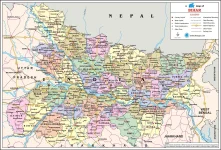
A HealthMap/ProMED-mail interactive map showing the location of Bihar state can be accessed at
http://healthmap.org/r/1*O9. - Mod.TY]
******
[2] Bihar (most recent)
Date: Wed 13 Jun 2012
Source: Outlook India, Press Trust of India (PTI) report [edited]
http://news.outlookindia.com/items.aspx?artid=765579
An official said 18 more children died of acute encephalitis syndrome (AES) in Bihar since yesterday [12 Jun 2012], taking the toll due to the disease since May 2012 to 129. 48 children have died in Kejriwal hospital in Muzaffarpur, while PMCH hospital at Patna has recorded the death of 46 children till date, Additional Secretary in the Health department RP Ojha said.
He said 24 children have fallen victim to the disease as per records of SKMCH hospital in Muzaffarpur and 11 deaths have occurred at ANMCH at Gaya.
Altogether 348 children suffering with symptoms of AES were undergoing treatment at different hospitals in Bihar, he added.
Bihar Health minister Ashwani Chaube had said yesterday [12 Jun 2012] that a total of 111 children had died due to AES in Bihar since May [2012].
Chief Minister Nitish Kumar has asked the Union Health secretary to send a Central team for tackling the disease.
The state government has decided to launch a campaign in the affected areas to create awareness against the disease and ensure treatment of the affected children.
He had also lamented the absence of a laboratory in the state for expeditiously identifying viral-related symptoms [etiologies] and said last year [2011] the government had requested the Centre to set up one similar to that in Pune.
--
Communicated by:
Ronan Kelly
[The number of cases continues to accelerate rapidly, and a demand for a locally available diagnostic lab is reiterated. - Mod.TY]
******
[3] Bihar (Muzaffarpur)
Date: Wed 13 Jun 2012
Source: The Times of India (TOI), Times News Network (TNN) [edited]
http://timesofindia.indiatimes.com/...ldren-in-Muzaffarpur/articleshow/14077696.cms
Children of poor families of rural parts of Tirhut division, the killer disease, now given the name of acute encephalitis syndrome (AES), has claimed the lives of more than 75 children younger than 10 years at Muzaffarpur since its outbreak on 27 May 2012.
The most unfortunate part of the story is that no specific medicine is being used by the doctors to treat the patients and they are being treated according to their symptoms. In fact, there is no specific drug to cure the AES, according to SKMCH deputy superintendent Dr Sunil Shahi. However, Dr Shahi informed that a new symptom has been found in majority of the patients that their blood sugar level has been found to be far below normal. Most of them have been found to have sugar only 10 to 50. [Hypoglycemia may be explained by presence of the systemic inflammatory response syndrome plus starvation. - Mod.DK]. Inflammation of brain tissues has also been found in most of the cases. Convulsion and high fever are common among them.
The calamity has assumed such an alarming proportion that chances of its cure are bleak. As many as 117 patients have been admitted to Kejriwal Hospital and 57 at SKMCH in the last 16 days. It is now evident that the disease is linked to weather. It occurs only in May-June every year. As the temperature has soared to 41 deg C [106 deg F], 13 new cases have been admitted to the SKMCH on Tuesday [12 Jun 2012] alone. Kejriwal Hospital's administrator VV Giri said the situation is more serious than last year. Only 92 cases had been admitted to this hospital and only 30 of them had expired in a span of 30 days in 2011, whereas 117 had already been admitted and of them 42 had expired in a span of 16 days this time. As both the heat and humidity are still at their peak, more such cases are bound to come. Kejriwal Hospital's attending physician Dr Vidya Shreeprabha said on Tuesday that the condition of all the 35 patients is very serious. It may be difficult to predict how many of them will survive. But no stone is left unturned to save them. The ward is overcrowded with patients and their attendants. 2 of the 4 air-conditioners of the ward are not working. The overall scenario of the ward is pathetic as half of the patients are surviving on oxygen.
The parents had wrapped up their children with wet cloth to control the fever, while some keep crying due to uneasiness. Most of them are lying in an unconsciousness state.
The state health department has provided free medicines to the hospital. Giri claimed that now the hospital is not charging anything in advance from attendants since 8 Jun [2012]. The government has also given 2 ambulances to this hospital for carrying patients to SKMCH and their home. All the hapless families are poor, depending mostly on daily wages. None of the affected children are from urban areas. They live under unhygienic conditions and drink only impure water. All the children are suffering from malnutrition.
[Byline: Priti Nath Jha]
--
Communicated by:
Ronan Kelly
[As the number of cases increases rapidly, the ability of the hospital and its staff to care for them appears stretched to the limit. - Mod.TY]
******
[4] Bihar (Muzaffarpur) proposed diagnosis
Date: June 2012
Source: Indian Pediatrics [edited]
http://www.indianpediatrics.net/june2012/502.pdf
Ref: Gopal Shankar Sahni: Recurring Epidemics of Acute Encephalopathy in Children in Muzaffarpur, Bihar. 2012. Indian Pediatrics, 49(6): 502-3.
----------------------------------------------------------------------
Muzaffarpur district, suffers repeated epidemics of acute encephalopathy in children for the past 16-17 years. An outbreak of this mystery disease, with high case fatality (63.3 per cent) was reported in children from Muzaffarpur district, Bihar, in June 2011. We report here our findings of the investigations carried out to confirm the etiology and to describe the clinico-epidemiological features.
Clinically, the presentation indicated acute encephalitis syndrome (AES). We studied 80 children from age group of 2-10 (median, 3.5) years belonging to a low socioeconomic background. Almost all cases were from rural areas. Following clinical criteria were used to select a case of AES: rapid onset of unconsciousness in a previously healthy child after attack of convulsion, and presence of fever higher than 40 deg C [104 deg F].
The main presenting features were fever and convulsions (100 per cent), unconsciousness (100 per cent), decerebrate rigidity (50 per cent), tachycardia (80 per cent), tachypnea (80 per cent), and absent splenomegaly. The CSF was normal but under raised pressure (100 per cent). Hematological investigations revealed leukocytosis with neutrophil predominance (80 per cent). Biochemical investigation revealed hyponatremia (90 per cent), hypokalemia (5 per cent), mild raised SGPT (50-100IU/L) (30 per cent), mild raised blood urea (40-50mg/dL) (40 per cent), and normal creatinine.
Smears for malarial parasites were negative. CT scan was done in 8 cases; 2 showed feature of cerebral edema, rest was normal. ECG showed non-specific ST changes and tachyarrhythmia.
The requisite clinical samples were collected from 55 patients and sent to National Institute of Virology, Pune and the National Communicable Disease Center, New Delhi for virological testing. These included 31 CSF samples, 59 serum samples, 19 nasal swabs, 48 throat swabs, 44 rectal swabs, 2 urine samples, 2 postmortem brain needle biopsy material by nasal route, and 1 postmortem liver biopsy specimen. All clinical samples were negative for known virus causing acute encephalitis like JE, Nipah, West Nile, and Chandipura viruses [tests used not mentioned. - Mod.TY]. Some specimens were processed for the discovery of novel agents. However, no agent has been found which can be attributed to the cause of the mystery disease in Muzaffarpur.
The presentation, seasonal distribution, climatic condition, and investigations of the cases did suggest a diagnosis of encephalopathy of heat stroke (HS), as similar picture has been described in few other studies also. Between April-June, the climate of Muzaffarpur is extremely hot and humid (28/40 deg C, [82-104 deg F] 90 per cent humidity) and most epidemics occurred at the height of temperature (38-40 deg C [100-104 deg F]) and humidity (70-80 per cent) suggesting the possibility of HS. The number of cases suddenly decreases with the onset of rain and resultant sudden drop in temperature.
--
Communicated by:
Ronan Kelly
[
Interestingly, this report does not mention low blood sugar levels, which surely would have been tested for. Without an indication of the test used to detect the presence of viruses, it is difficult to know how sensitive and specific they might have been, nor is there any indication that serological tests (paired sera) might have been done on surviving individuals.
Testing of samples at a WHO reference laboratory would add additional in formation to exclude or include a battery of viruses associated with encephalitis, especially enteroviruses. Previous reports from Bihar and Uttar Pradesh states have indicated that at least a minority of acute encephalitis cases are due to JEV infections. This does not exclude the possibility that some cases might be due to heat stroke. - Mod.TY]