• FluTrackers.com Inc. does not provide medical advice. Information on this web site is collected from various internet resources, and the FluTrackers board of directors makes no warranty to the safety, efficacy, correctness or completeness of the information posted on this site by any author or poster. The information collated here is for instructional and/or discussion purposes only and is NOT intended to diagnose or treat any disease, illness, or other medical condition. Every individual reader or poster should seek advice from their personal physician/healthcare practitioner before considering or using any interventions that are discussed on this website. By continuing to access this website you agree to consult your personal physican before using any interventions posted on this website, and you agree to hold harmless FluTrackers.com Inc., the board of directors, the members, and all authors and posters for any effects from use of any medication, supplement, vitamin or other substance, device, intervention, etc. mentioned in posts on this website, or other internet venues referenced in posts on this website.
  • We are not asking for any donations. Do not donate to any entity who says they are raising funds for us.

India - Bird Flu in POULTRY/ANIMALS Feb 5th - 10th 2008

Status
Not open for further replies.
Re: India - Bird Flu in Poultry/Animals Feb 5th +

Re: India - Bird Flu in Poultry/Animals Feb 5th +

Central team to visit Orissa, AP to probe Anthrax deaths
Thursday February 7 2008 00:00 IST
<SMALL>PTI</SMALL>
http://ad.doubleclick.net/clk;18237...ties.com/mailer/GEMSLP/newinpresstextlink.htm
<SMALL>NEW DELHI: The Union Health Ministry is sending a team to Orissa and Andhra Pradesh amidst reports of deaths due to anthrax in the two states.

While five deaths have been reported from Koraput district in Orissa, five people were afflicted with the disease in Andhra Pradesh's Nellore district, Director of National Institute of Communicable Diseases (NICD) Dr Shivlal told reporters here on Wednesday.

"The disease is endemic in certain areas of Orissa like Koraput because of the large tribal population there which consumes the meat of dead animals," he said.

In Andhra Pradesh, the infections have been reported in a sheep farm where nearly 200 animals were down with the disease.

In both the cases, the disease was transmitted from animals to human through the skin, he said.

"The government has launched a massive awareness drive among the tribal population and an NICD team will leave for the areas tomorrow," Shivlal said.:tiphat: http://www.newindpress.com/NewsItem...ge=L&Title=B+R+E+A+K+I+N+G++++N+E+W+S&Topic=0
</SMALL>
 
Re: India - Bird Flu in Poultry/Animals Feb 5th +

Re: India - Bird Flu in Poultry/Animals Feb 5th +

Culling relief: Man held for forgery
Biswabrata Goswami
KRISHNAGAR, Feb. 6: At a time when several culling teams in Nadia are reportedly under pressure from local politicians to exaggerate the number of birds killed so that more compensation can be claimed, Mr Subodh Mondol, a resident of Tehatta-II block in Nadia, was arrested today for forging government documents Another three persons who are accused of the same charges are reportedly absconding.
Following a report published in The Statesman on 1 February, the district administration initiated a probe against the ?influential persons? and found Mr Mondol responsible for forging slips which were issued to the affected families, for providing compensation according to the birds culled.
The report also highlighted how these ?influential persons? pressured the members of the various culling teams. Narrating his experience, a culling team member said: ?If we kill 10 birds of an affected family, we are asked to put the figure at 20 so that the families owning them can claim more compensation ~ part of which will be pocketed by village politicians?. According to the Tehatta police, the accused Mr Mondol after failing to convince the culling team members forged the slips. Mr Onkar Singh Meena, DM, Nadia said, ?A few persons were involved in forging our documents in an effort to grab compensation. But, we have foiled their plans and the police have arrested one of them. An FIR has been lodged with the Tehatta police.
?On being alerted by the report published in The Statesman, I have asked all the panchayat members and BDOs to hang up the Master Rolls in their panchayats and block offices by which every persons could see the names and the number of birds culled. The initiative has been taken to keep the whole operation transparent?, Mr Meena added:tiphat: http://www.thestatesman.net/page.news.php?clid=6&theme=&usrsess=1&id=189317
 
Re: India - Bird Flu in Poultry/Animals Feb 5th +

Re: India - Bird Flu in Poultry/Animals Feb 5th +

Epidemic outbreaks
Though the bird flu virus in major districts in Bengal and North Bengal has been widespread, much remains to be learned about the epidemic wherein, unlike most avian flu viruses that mainly affect the respiratory tract,
A(H5N1) has been found to damage the liver and
kidneys in humans, writes Arunayan Sharma

Birds are in great danger. They are posing threat to our lives as they have been detected as carrier of the deadly virus known as Avian Influenza or Bird Flu. Although threat is mainly for the domesticated varieties of poultry chickens and ducks but can pass through wild variety of migratory birds. Avian influenza viruses have been found in many bird species, but are most often found in migratory waterfowl. Wild birds, especially waterfowl and shorebirds, have been a reason of concern for long time in poultry industry as a source for influenza infections in poultry birds. The first influenza virus was from marine birds and it was classified as subtype H5N3. Other wild birds yielding influenza viruses include various species of shorebirds, gulls, quail, pheasants, and ratites (ostrich and rhea). Bird flu is considered lethal.
With recent out break of this disease among poultry birds in various districts including Malda, North and South Dinajpur of West Bengal millions of chickens either died of infection or were put to death. The majority of waterfowl migration takes place within geographic areas. Many species other than waterfowl follow these same migratory pathways from their breeding grounds to the wintering grounds and return to the breeding grounds. Influenza virus has been found in wild birds throughout the year, but waterfowl are the only group in which these viruses are always found.
?Bird flu? is a phrase similar to ?Swine flu or ?Human flu? refers to an illness caused by many different strains of influenza viruses that have adapted to a specific host. All known viruses that cause influenza in birds belong to the species: Influenza ?A?virus. All subtypes (but not all strains of all subtypes) of Influenza ?A? virus are adapted to birds, which is why for many purposes avian flu virus is the Influenza ?A? virus ( ?A? does not stand for ?avian?). Adaption is non-exclusive. Being adapted towards a particular species does not preclude adaptions, or partial adaptions, towards infecting different species. In this way strains of influenza viruses are adapted to multiple species, though may be preferential towards a particular host.
In domestic birds, the indicators of disease are not diagnostic because they are highly variable and they depend on the strain of virus, bird species involved, and a variety of other factors including age and sex. Signs of disease may appear as respiratory or reproductive abnormalities. Included are such nonspecific manifestations as decreased activity, food consumption and egg production; ruffled feathers; coughing and sneezing; diarrhea; and even nervous disorders, such as tremors. Observable symbols of illness have not been described for wild birds. In domestic chickens and turkeys, certain virus subtypes like H5N2 and H7N7, respectively, are usually highly virulent and may cause up to 100 percent mortality in infected flocks. Too little is known about the impact of influenza viruses on the reproductive performance of wild birds to assess whether they are affected in the same manner as poultry.
Avian influenza viruses in wild birds cannot be effectively controlled because of the large number of virus subtypes and the high frequency of virus genetic mixing resulting in new virus subtypes. Also, virus has been recovered from water and fecal material in areas of high waterfowl use. The virus has been recovered from poultry houses more than 100 days after flock depopulation for markets. In the domestic bird industry, preventing the entry of the virus into poultry flocks is the first line of defense. Vaccines are selectively used to combat less virulent forms of this disease. Antibody present in the blood of recovered and vaccinated birds prevents virus transmission. Therefore, these birds pose little risk to other birds. Flocks are generally killed when they are infected with highly virulent viruses. In the past, the poultry industry and the wildlife conservation community have been in conflict regarding wildlife refuge development and other waterbirds habitat projects. Much remains to be learned about avian flu. Unlike most flu viruses ? which mainly affect the respiratory tract ? the A (H5N1) has been found to damage the liver and kidneys of humans. In some birds, it even attacks the central nervous system, causing the animal to flop around before it finally dies. It is feared that the virus may develop the ability to spread from person to person through close contact. That would mean going a step closer to the possibility of an epidemic. The focus has now being shifted from preventing the spread of the flu among animals to limiting the probability of human infection. This is being done through awareness initiatives like encouraging farmers to keep chickens out of their homes, wash their hands after contact with poultry and cook meat and eggs at 70 degrees and above. The pattern of human infection remains a mystery. Of those infected many were children who may have contracted the disease simply because they are closer to the ground and thus more likely to breathe in the exhalations.
On the other hand, there have been no cases of infection among the workers involved in culling chickens because they are taking precautions during their work.
Once the highly unstable A (H5N1) virus infects a person, it already has its effect gone through a huge number of possible combinations through random genetic recombination, a constant reshuffling of its genome that produces nonviable viral particles could, in theory, produce something terrifying. Genetic factors in distinguishing between ?human flu viruses? and ?avian flu viruses? include: PB2: (RNA polymerase): Amino acid (or residue) position 627 in the PB2 protein encoded by the PB2 RNA gene. Until H5N1, all known avian influenza viruses had a Glu at position 627, while all human influenza viruses had a lysine. HA: (hemagglutinin): Avian influenza HA bind alpha 2-3 sialic acid receptors while human influenza HA bind alpha 2-6 sialic acid receptors. Swine influenza viruses have the ability to bind both types of sialic acid receptors. Pandemic flu viruses have some avian flu virus genes and some human flu virus genes. Both the H2N2 and H3N2 pandemic strains contained genes from avian influenza viruses. Swine were considered the original ?intermediate host? for influenza, because they supported reassortment of divergent subtypes. However, other hosts appear capable of similar coinfection (e.g., many poultry species), and direct transmission of avian viruses to humans.
In spite of their pandemic connection, avian influenza viruses are noninfectious for most species. When they are infectious they are usually asymptomatic, so the carrier does not have any disease from it. Thus while infected with an avian flu virus, the animal doesn?t have a ?flu?. Typically, when illness (called ?flu?) from an avian flu virus does occur, it is the result of an avian flu virus strain adapted to one species spreading to another species (usually from one bird species to another bird species). So far as is known, the most common result of this is an illness so minor as to be not worth noticing. But with the domestication of chickens and turkeys, humans have created species subtypes (domesticated poultry) that can catch an avian flu virus adapted to waterfowl and have it rapidly mutate into a form that kills in days over 90 per cent of an entire flock and spread to other flocks and kill 90 per cent of them and can only be stopped by killing every domestic bird in the area. Until H5N1 infected humans in the 1990s, this was the only reason avian flu was considered important. Since then, avian flu viruses have been intensively studied; resulting in changes in what is believed about flu pandemics, changes in poultry farming, changes in flu vaccination research, and changes in flu pandemic planning. H5N1 has evolved into a flu virus strain that infects more species than any previously known flu virus strain, is deadlier than any previously known flu virus strain, and continues to evolve becoming both more widespread and more deadly causing. The highly pathogenic Influenza A virus subtype H5N1 virus is an emerging avian influenza virus that has been causing global concern as a potential pandemic threat. It is often referred to ?bird flu? or ?avian influenza? even though it is only one subtype of avian influenza causing virus. H5N1 has killed millions of poultry in a growing number of countries throughout Asia, Europe and Africa. Health experts are concerned that the co-existence of human flu viruses and avian flu viruses (especially H5N1) will provide an opportunity for genetic material to be exchanged between species-specific viruses, possibly creating a new virulent influenza strain that is easily transmissible and lethal to humans.
Since the first H5N1 outbreak occurred in 1997, there has been an increasing number of HPAI H5N1 bird-to-human transmissions leading to clinically severe and fatal human infections. However, because there is a significant species barrier that exists between birds and humans, the virus does not easily cross over to humans, though some cases of infection are being researched to discern whether human to human transmission is occurring. Although millions of birds have become infected with the virus since its discovery, 206 humans have died from the H5N1 in twelve countries according to WHO data as of November 2007. Epidemioloigists are afraid that next time if such a virus mutates, it could pass from human to human. If this form of transmission occurs, another big pandemic could result which would be a major threat for the human society.
Wild birds can carry the viruses, but usually do not get sick from them. The H5N1 virus is endemic in much of Asia and has spread into parts of Europe and Africa. Currently, close contact with infected poultry has been the primary source for human infection. Though rare, there have been isolated reports of human-to-human transmission of the virus. Genetic studies confirm that the influenza a virus H5N1 mutates rapidly. Should it adapt to allow easy human-to-human transmission, a pandemic could ensue ? it has not done so to date. At this time, it is uncertain whether the currently circulating H5N1 virus will lead to a global disease outbreak in humans ? a pandemic. The reported symptoms of avian influenza in humans have ranged from typical influenza-like symptoms (fever, cough, sore throat, and muscle aches) to eye infections (conjunctivitis), acute respiratory distress, viral pneumonia and other severe, life-threatening complications.
Avian Influenza have been found not just in chickens and ducks, but also in teal, Canada geese, gray herons, feral pigeons as well as the black-headed gull and a peregrine falcon. Avian influenza is non-clinical viral infection of wild birds caused by a group of viruses known as type A influenzas. These viruses are maintained in wild birds by fecal-oral routes of transmission. The virus subtypes are identified and classified on the basis of two broad types of antigens, hemagglutinan (H) and neuraminidase (N); 15 H and 9 N antigens have been identified among all of the known type A influenzas. Different combinations of the two antigens appear more frequently in some groups of birds than others. In waterfowl, for example, all 9 of the neuraminidase subtypes and 14 of the 15 hemagglutinin subtypes have been found, and H6 and H3 are the predominant subtypes. In shorebirds and gulls, 10 different hemagglutinin subtypes and eight neuraminidase subtypes have been found. Many of the antigenic combinations of subtypes are unique to shorebirds. H9 and H13 are the predominate subtypes. More influenza viruses from shorebirds infect waterfowl than chickens. Hemagglutinin subtypes H5 and H7 are associated with virulence or the ability to cause severe illness and mortality in chickens and turkeys. However, two viruses with the same subtype antigens can vary in virulence for domestic birds.
Vaccines to protect humans against H5N1 viruses currently are under development. In addition, research is underway to make large quantities of vaccine more quickly. So far, research suggests that two antiviral medicines, oseltamavir (Tamiflu) and zanamavir (Relenza), may be useful treatments for H5N1 avian influenza. Some adverse reactions have been reported in children. However, H5N1 viruses are generally resistant to two other available antiviral medications, amantadine and rimantadine, so they cannot be used to. The deadly bird flu virus, which has killed millions of birds and dozens of people in East and South-East Asia, Central Asia, recently reached in West Bengal and parts of North Bengal in Malda and North and South Dinajpur district. The government of West Bengal is still discussing strategies to prepare for the virus, in case migratory birds carry it there from Asia. But in India and its sleepy poultry markets in particular, health and hygiene seem low on the priority list.
In the past years, India has checked random samples of chicken blood for H5N1, the virus that has caused havoc in other parts of Asia. But traders and farmers at and poultry retailers, are not armed with precautions. Traders shrug off fears. No disease can hurt Indians as we cook chicken in high temperatures and with hot spices no germs can survive at this temperature. Eventually, the samples are sent to Bhopal, where the High Security Animal Disease Laboratory scans them for H5N1. India set up this system a year ago when the avian flu struck South-East Asia. The Bhopal testing and diagnostic facility is only the fifth of its kind in the world, and the first in a developing country.
Every winter, birdwatchers and ornithologists eagerly await the arrival of migratory birds. In India, migratory birds come from the northern part of the globe. Such movement, however, sometimes poses the threat of disease, a phenomena that has of late assumed large proportions. Malda with its numerous big wetlands attracts large numbers of migratory birds every year. Home to various migratory birds, the district is facing the danger of bird flu. A spate of deaths, including the first possible case of human-to-human transmission, has stirred fears of a broader outbreak thus raising the chances of a human pandemic. But little can be done to stop the menace: a vaccine is yet to be made available. A recent survey by the Centre for Ecological Engineering found that poultry breeders and chicken sellers were unaware of the disease.
However, the Centre for Ecological Engineering is organising awareness programmes on this Bird Flu to the village peoples where migratory waterbirds are arrived in close proximity of their backyard poultry farming. If avian flu starts spreading among humans, health experts warn it could lead to a disaster. The government is not equipped with proper medicines and medical teams. Birdwatchers traveling to North Bengal should be careful and take some precautions while going for waterfowl census in the wetlands. Anything unusual should be promptly should be reported immediately to the concerned authority. However, one need not unnecessarily panic. It is important not to give in to rumours ? that the chicken being sold in the local markets are not infected. It is advised to avoid chicken preparations irrespectively convinced by local poultry traders that Indian system of chicken cooking is safe for you. Prevention is better than cure.

(The author is the director of the Centre for Ecological Engineering Malda.):tiphat: http://www.thestatesman.net/page.news.php?clid=31&theme=&usrsess=1&id=188411

 
Re: India - Bird Flu in Poultry/Animals Feb 5th +

Re: India - Bird Flu in Poultry/Animals Feb 5th +

Avian flu ~ and the actual need of the hour
Yumnam Rupachandra
WEST BENGAL is in the grip of avian Influenza. Unlike in Manipur, the virus has spread despite the government?s efforts to contain it. Mercifully, so far no human case has been reported but the danger is far from over because there is the far more serious possibility of the virus doing a ?shift? or mutating to one that can be passed on from one human to another. If this happens, the fear of a pandemic, that scientists dealing in the virus fear, may not be far away. It does not help to panic in the face of a possible pandemic but there is an urgent need to create public awareness, an understanding of the virus and failure to tackle it arises.
Despite Manipur and Maharashtra having been affected by the H5N1 strain of bird flu ? which is also the strain currently affecting West Bengal ? its implication and potent is something health and veterinary officials and administrators, even the media, are yet to understand. It?s a ?clear and present danger? that as yet has to be cleared.
It is a big challenge for the international community as the world has never seen the kind of widespread affliction of this virus as visible today. Scientists and animal health monitors across the globe are baffled at the scale, worried at the potential of it mutating ? a shift as they call it ? to a strain that could do a species jump and affect humans. This worry is not without cause or history.
Across the globe different strains of this virus ? an A type has mutated to kill nearly 53 million or 23 times the population of Manipur (2.3 million) since 1918. Surprisingly it is from a small farm in Kansas in the USA that the first pandemic originated. Known as Spanish Flu caused by the H1N1 strain, it killed 500,000 in the USA alone and anything between 20 and 50 million worldwide. The second pandemic by another subtype H2N2, known as Asian Flu, killed another 70,000 in the USA and two million worldwide between 1957-58. The third and last pandemic by H3N2, called Hongkong Flu, killed 50,000 in the USA and a million worldwide between1968-69.
?This is a scary scenario but we need not panic?, said Dan Rutz of the Centre for Disease Control and Prevention, Atlanta, who briefed media from Afghanistan, Bangladesh and India in a series of workshops organised by the American Center in New Delhi and Kolkata. Pandemics rarely occur and despite reports of avian influenza, we don?t have a pandemic, he stressed.
But the USA is certainly on its toes. Though stringent quarantine laws on livestock imports and isolation of America from Europe and the Asian mainland has so far spared that country from a current outbreak, it is not taking any chances.
At the International Ministerial Conference on Avian and Pandemic Influenza in New Delhi (December 4-6, 2007) the US team pledged $434 million to underscore its country?s commitment in fighting the virus.
The US concern is understandable given the fact that the recent outbreak, which has been identified as caused by the highly fatalistic H5N1 strain, killed 206 of 335 human cases in 12 countries. This is a high 61 per cent fatality rate, something quite disturbing for the scientistific community as well as health officials. Luckily so far there have been no cases of human-to-human transmission and this is an area that scientists are worried about. Because if and when it does take place ? and scientists believe it is likely but difficult to predict, given the present situation ? increased mobility of the population across nations, more urbanisation and the increasing number of elderly with chronic medial problems ? the affect is going to be devastating.
Manipur is now joined by West Bengal where H5N1 has been positively identified at a farm in Birbhum. Like in Manipur, hundreds of thousands of poultry have been culled, which fact has drawn international attention. For the next several months, poultry markets will be hit. But there are lessons to be learned from the Manipur experience where everything was apparently carried out by the book. The local dailies were full of what went amiss. It would benefit officials to go through stories on bird flu in Manipur in local dailies which recorded the entire episode. All that can be said is that it was a well laid plan poorly executed. There was a lack of coordination amongst all involved government agencies, including law enforcers who did not know what to do with people smuggling birds out of culling zones to how much the compensation would be for a turkey ? the price of which was not on the list of birds to be culled.
Officials from across the states, including West Bengal, rushed to Manipur for an experience of what is clearly emerging as not only a major animal health problem but a human health problem as well. At the end they all patted themselves on the back for a job well done and Manipur was declared virus-free. But what they failed to discover were the chinks in their armour. Many still believe that had H5N1 been really present, the manner in which the containment process was taken up, the virus would have beaten the fighters hands down ? much the way it is apparently doing in West Bengal. That the poultry farmers as well as the public have failed to understand the implications has not helped the situation either in Manipur?s case or West Bengal?s
Clearly the need of the hour is for a clearer understanding of the threat perception of the virus. :tiphat:

http://www.thestatesman.net/page.news.php?clid=14&theme=&usrsess=1&id=189034
 
Re: India - Bird Flu in Poultry/Animals Feb 5th +

Re: India - Bird Flu in Poultry/Animals Feb 5th +

'High alert on Indo-Pak borders'
OCCIPIED SRINAGAR (February 07 2008): After the outbreak of an avian flu was reported in Pakistan, the government here has put its monitoring centres stationed along the Line of Control and International Borders on "extra alert".

"We have kept our field officers on extra alert in the border regions to monitor any emergency arisen due to the outbreak of H5N1 virus in Pakistan," said Dr Farooq Kaloo, deputy director Animal Husbandry.

"The field officials have been asked to remain vigilant within the 5-km strip from the actual border." Having close geographic proximity with Kashmir, there is every possibility that the bird flu disease might spread from Pakistan to this side. The government sounded alert in occupied Kashmir after some media reports from Pakistan suggested that the deadly virus has been detected in birds there.

Kaloo said that his department was collecting information on daily basis from its centres to ascertain that no virus from across the border reaches here. "We are also taking help of army and BSF in this connection since they are familiar with the area. They are collecting samples of birds and sending it to us. We have also asked them to keep an eye on unusual mortality of birds. Besides, they are also educating people of these regions about the dreaded disease."

Meanwhile, the government has banned the import of poultry and poultry products from Uttar Pardesh (UP), Bihar, West Bengal and Chattisgarh. "The ban was slapped today on birds, eggs and feed that come from these states after bird flu was found there," Kaloo said.

The department has constituted more than 900 field centres for the surveillance of the disease. Kaloo said that they have also intensified checking of the poultry trucks at the main entry points to the valley.

The scientists around the world have found that migratory birds are the main carriers of the bird flu virus. Getting sensitised by this, the government has also taken some precautionary steps to tackle the disease.

"Special units have been deputed to the major wetlands of the valley to keep an eye on any unusual mortality among the migratory birds. They are collecting samples on daily basis which are then send to Bhopal for examination," Kaloo informed.

"However, till date no migratory bird has been detected with H5N1 virus," he added. Few days back, two migratory birds were found dead in the Gahrana wetland in Jammu. The officials suspecting that birds might die due to viral attack later sent the samples of dead birds to Bhopal. Though, the report is yet awaited.

The strain of avian influenza among birds is highly communicable among birds. It can also prove deadly to humans. Since 2003, the flu virus has killed at least 210 people worldwide.
:tiphat: http://www.brecorder.com/./index.php?id=690939&currPageNo=1&query=&search=&term=&supDate=
 
Re: India - Bird Flu in Poultry/Animals Feb 5th +

Re: India - Bird Flu in Poultry/Animals Feb 5th +

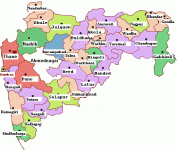
Jalgaon District is north in Maharashtra State;

200 birds found dead in Jalgaon

Jalgaon, Feb 7: Around 200 chickens have been reportedly found dead in this district, the sources said.

According to the sources, the blood samples of the dead chickens have been sent to Bhopal for tests.

India is struggling to contain its worst avian influenza -epidemic, in spite of culling 3.4m birds and setting up a 5km poultry exclusion zone round the state of West -Bengal, the epicentre of the outbreak.

The government's failure to reassure farmers that they will receive fair compensation for birds culled by rapid response teams has left experts scrambling to stop the disease entering the crowded markets of Calcutta and Delhi and led to a crisis of confidence in India's -poultry industry.

The latest outbreak of the H5N1 strain of bird flu, confirmed on January 15, is proving more difficult to contain than earlier manifestations at large poultry farms in the states of Maharashtra and Gujarat in 2006 and, last year, in Manipur.

Roughly 80 per cent of rural households in West Bengal keep hens and ducks in their backyards to supplement their incomes, a practice encouraged by the state government, which distributes millions of chicks to poor communities each year.

The ministry of agriculture in New Delhi claimed yesterday that "unusual mortality" of poultry birds in West Bengal was coming down significantly, although 1.3m birds had died of the disease there. The preventive culling of birds to create a poultry-free cordon round the state was under way in Assam but had not yet begun in neighbouring Bihar, Jharkhand and Orissa.

The spread of the disease to 13 of West Bengal's 19 districts, and strong suspicions that it has already jumped the exclusion cordon, have prompted a collapse of chick- en prices across the country and a ban on Indian poultry exports by at least eight countries.


http://www.saharasamay.com/samayhtml/articles.aspx?newsid=94338

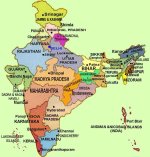
indiamap1.jpg Maharashtra districts.gif
 
Re: India - Bird Flu in Poultry/Animals Feb 5th +

Re: India - Bird Flu in Poultry/Animals Feb 5th +

Dhaka blames India for bird flu spread</ARTTITLE>
8 Feb 2008, 0202 hrs IST
spacer.gif
,
spacer.gif
Kounteya Sinha
spacer.gif
,
spacer.gif
TNN

NEW DELHI: In the case of illegal immigration into India, Bangladesh's response has always been a flat denial. With regard to the bird flu ravaging West Bengal it is one better: Not only does Dhaka see no link with the infected poultry, it is actually arguing that illegally procured birds from India spread the flu in Bangladesh.

Far from being willing to consider whether the traffic of infected poultry which ended up in small pens in West Bengal might have triggered the bird flu leading to culling of lakhs of birds, Bangladesh officials claimed that the traffic was one way ? from India into Bangladesh.

Bangladesh fishing and livestock secretary Syed Ataur Rehman told TOI from Dhaka that the government had taken exception to public statements made by some Indian politicians that the virus came to India through illegal poultry trade from Bangladesh. He said: "Such allegations are unfair. Actually, poultry is illegally brought into Bangladesh by Indians and not the other way round. We have lodged an official protest with India's MEA over such public comments." Senior Indian officials monitoring the flu point out that there could, indeed, be a two-way trade in poultry.

But they are stumped by the claim that it in only India that is the source of infected birds in Bangladesh. Besides officials in West Bengal, Union agriculture minister Sharad Pawar had said that the H5N1 virus that has infected 13 districts of Bengal entered from Bangladesh.

India had made a formal request to the Bangladesh government to share the genetic history and information of its virus.

Health secretary Naresh Dayal had told TOI : "If we see that the virus circulating in Bengal is the same as the Bangladeshi type, we can almost be certain that illegal trade of infected poultry from Bangladesh into India was the cause of the present outbreak."

On another count, Bangladesh is being more cooperative. The genetic sequencing of the highly pathogenic H5N1 avian influenza strain, that is currently wreaking havoc in Bangladesh, has been completed and the eastern neighbour is willing to share the data with India.

It, however, has one condition: that India, in a reciprocal gesture, allow Bangladesh to study the genetic details of the H5N1 virus strain that hit Maharashtra, Manipur and is presently wreaking havoc in West Bengal. Rahman admitted that the genetic sequencing of the virus, that has been circulating in Bangladesh since March 2007, had been completed by the OIE Reference Laboratory for Avian Influenza in Weybridge, UK.

In reaction, India's animal husbandry secretery Pradeep Kumat told TOI : "India is willing to share virus samples with Bangladesh."

Adding that Bangladesh's foreign ministry has already communicated this to India's external affairs ministry, Rahman said that a joint secretary level officer, Parikhit Dutta Ray, has been appointed as a liaison officer in Dhaka to especially deal with India's requests, including setting up joint monitoring teams, sharing virus information and control and containment operations. :tiphat: http://timesofindia.indiatimes.com/...or_bird_flu_spread/rssarticleshow/2765576.cms
 
Re: India - Bird Flu in Poultry/Animals Feb 5th +

Re: India - Bird Flu in Poultry/Animals Feb 5th +

No new cases of avian influenza detected in affected districts districts in West Bengal remains at 14. According to information available here, a total population of 33.98 lakhs is under surveillance.

In 0-3 km area, 1919 people with fever have been detected of which three had exposure to sick/infected birds.

In the 3-10 km area, a total of 2033 people have been detected with fever of which two had exposure history.

These cases have been followed up. No suspected human cases of avian influenza have been detected in any of the affected districts.

http://www.deepikaglobal.com/ENG_full.asp?catcode=ENG3&mcode=National

 
Re: India - Bird Flu in Poultry/Animals Feb 5th +

Re: India - Bird Flu in Poultry/Animals Feb 5th +

Jalgaon District is north in Maharashtra State;

200 birds found dead in Jalgaon

Jalgaon, Feb 7: Around 200 chickens have been reportedly found dead in this district, the sources said.

According to the sources, the blood samples of the dead chickens have been sent to Bhopal for tests.

India is struggling to contain its worst avian influenza -epidemic, in spite of culling 3.4m birds and setting up a 5km poultry exclusion zone round the state of West -Bengal, the epicentre of the outbreak.

The government's failure to reassure farmers that they will receive fair compensation for birds culled by rapid response teams has left experts scrambling to stop the disease entering the crowded markets of Calcutta and Delhi and led to a crisis of confidence in India's -poultry industry.

The latest outbreak of the H5N1 strain of bird flu, confirmed on January 15, is proving more difficult to contain than earlier manifestations at large poultry farms in the states of Maharashtra and Gujarat in 2006 and, last year, in Manipur.

Roughly 80 per cent of rural households in West Bengal keep hens and ducks in their backyards to supplement their incomes, a practice encouraged by the state government, which distributes millions of chicks to poor communities each year.

The ministry of agriculture in New Delhi claimed yesterday that "unusual mortality" of poultry birds in West Bengal was coming down significantly, although 1.3m birds had died of the disease there. The preventive culling of birds to create a poultry-free cordon round the state was under way in Assam but had not yet begun in neighbouring Bihar, Jharkhand and Orissa.

The spread of the disease to 13 of West Bengal's 19 districts, and strong suspicions that it has already jumped the exclusion cordon, have prompted a collapse of chick- en prices across the country and a ban on Indian poultry exports by at least eight countries.


http://www.saharasamay.com/samayhtml/articles.aspx?newsid=94338

View attachment 2336 View attachment 2337
Map updated

http://maps.google.com/maps/ms?ie=U...4.046464,83.232422&spn=18.476134,32.34375&z=5
 
Re: India - Bird Flu in Poultry/Animals Feb 5th +

Re: India - Bird Flu in Poultry/Animals Feb 5th +

Culling may be tough in Mayurbhanj
Saturday February 9 2008 08:49 IST
<small>ENS</small>

<small>BHUBANESWAR: Though the High Court directive has brought some relief to the people and poultry, the proposed ‘culling’ of chicken within 5-km radius of West Bengal border in Mayurbhanj district seems to be an arduous task - realising the ‘attachment’ of the tribals with the indigenous breed of the ‘red fowl’ species and its ethno spiritual role.

Of course, out of 123 samples sent in two phases from the district to the Bhopal-based High Security Animal Disease Laboratory, not a single sample was found positive and this proves that the ‘Mayurbhanj’ breed of fowl commonly called as ‘hansli’ variety by the tribals with a typical long neck and red feather coat is not affected by the deadly ‘H5N1’ influenza virus.

But the government had already deployed 15 teams headed by as many numbers of vaterinary assistant surgeons to execute the task ignoring the lab report and the ‘social angle’ of the whole issue, says tribal leader Sukhlal Hansda of Raikadjharan village adding even the offer price of the chicken irrespective of the ‘gender’ is a paltry Rs 40 while the ‘game birds’ used in cock-fights are sold at a price of Rs 1,000 - 2,000 and in some cases even some enthusiasts may quote more than that to the owner.

Poultry farming, especially with the local ‘hansli’ variety among the tribals is a source of livelihood. So without providing an alternate earning source if the culling is ever executed then there would be a stiff opposition and the State Government and the Centre would be responsible for that, Hansda said.

According to anthropologist A. Bose, even cocks are offered to tribal gods as food and the Santhals in particular while praying for their chief deity ‘Marang Buru’ offer only ‘hansli’ cocks. Even in the sal forests or near a tribal hamlet their temple or ‘jahira sthan’ is always seen with such offerings.

“Culling of the poultry would definitely affect the breed of this indigenous variety and its viability,” Bose added saying even the ecological web will be disrupted with killing all the fowls as they help in controlling pests and insects in and around habitations and crop fields.

The door-to-door survey in the particular area of Mayurbhanj has identified 83,782 birds from 152 villages of 18 gram panchayats, sources said.

But the surprising part of the whole controversy has also got some political colour as the Jharkhand Mukti Morcha (JMM) activists might take the opportunity and make an ‘issue’ to ‘fight’ against the ruling alliance in the coming Assembly polls.:tiphat: http://www.newindpress.com/NewsItems.asp?ID=IEQ20080208222803&Page=Q&Title=ORISSA&Topic=0&
</small>
 
Last edited by a moderator:
Re: India - Bird Flu in Poultry/Animals Feb 5th +

Re: India - Bird Flu in Poultry/Animals Feb 5th +

Fish costlier in Kolkata

<SMALL>From our ANI Correspondent
</SMALL><SMALL></SMALL>
Kolkata, Feb 9: West Bengal Fish sellers are making a killing after the State Government's ban on chicken sales in the wake of the outbreak of H5N1 strain of bird flu virus. <TABLE cellSpacing=0 cellPadding=3 width=255 align=left border=0><TBODY><TR><TD><TABLE cellSpacing=0 cellPadding=0 border=0><TBODY><TR><TD bgColor=#ffffff colSpan=3 height=1>
spacer.gif
</TD></TR><TR><TD width=1 bgColor=#ffffff height=21>
spacer.gif
</TD><TD align=left width=100 bgColor=#ffffff height=20><TABLE cellSpacing=0 cellPadding=2 align=right border=0><TBODY><TR><TD><SCRIPT type=text/javascript><!-- google_ad_client = 'pub-9743520551274558'; google_ad_width = 250; google_ad_height = 250; google_ad_format = '250x250_as'; google_color_border = 'FFFFFF'; google_color_bg = 'FFFF99'; google_color_link = '000000'; google_color_url = '999999'; google_color_text = '000000'; google_ad_channel = '4898485360'; //--></SCRIPT><SCRIPT src="http://pagead2.googlesyndication.com/pagead/show_ads.js" type=text/javascript> </SCRIPT></TD></TR></TBODY></TABLE></TD><TD width=1 bgColor=#ffffff height=21>
spacer.gif
</TD></TR><TR><TD bgColor=#ffffff colSpan=3 height=1>
spacer.gif
</TD></TR></TBODY></TABLE></TD></TR></TBODY></TABLE>

Bird flu has spread to 13 of West Bengal's 19 Districts.

"More than 3.4 million birds have been culled in the State since H5N1 virus was first reported last month," a West Bengal State official said.

The West Bengal Government has banned the sale of chicken across the State till February 12 and the fish sellers in the State are making the most of it as chicken eaters are now switching to fish.

"Chicken has been banned in the wake of bird flu in the State. Before the outbreak of bird flu, 'rohu' (a popular fish variety) was selling at 70-75 rupees per kilograms. But now after the outbreak we get it at 80 rupees and then we sell it for 120 rupees per kilograms," said Amit Das, a fish seller in Kolkata.

The customers are mainly Bengalis, who are known for their fascination for fish.

"Earlier Hilsa (a fish variety) cost 200 rupees. I was spending 200 rupees on fish and now I have to spend 500. Bengalis cannot live without fish and these sellers are taking advantage of that," said Rita Das, a customer.
:tiphat: http://www.dailyindia.com/show/214774.php/Fish-costlier-in-Kolkata
 
Re: India - Bird Flu in Poultry/Animals Feb 5th +

Re: India - Bird Flu in Poultry/Animals Feb 5th +

Cops henpecked at Writers? as chickens come home to roost

<TABLE class=font_size cellSpacing=0 cellPadding=0 width=132 align=right border=0><TBODY><TR><TD vAlign=top width=58>Font Size - </TD><TD width=63>-A +A
</TD></TR></TBODY></TABLE>
Mohammed Safi Shamsi

Posted online: Saturday , February 09, 2008 at 02:30:32
Updated: Saturday , February 09, 2008 at 02:48:26

Print Email To Editor Post Comments


Kolkata, February 8 Unable to get any political mileage from the culling issue, the workers of the Congress party vented their frustration today by making a chicken run of the Writers? Buildings.

The procedure involved bombarding the security guards with live chickens. And it was carried out with a precision befitting a commando operation.
There was no advance notification from the marauders. Nor was there any prior intelligence of their plan among the ruling party.
But out of the blue, around 1 pm, about two dozen men packed in cabs ? representing Congress party?s Burrabazar youth wing unit ? stormed the Writers? VIP gate with over a dozen chicken.
The policemen manning the gate just had minutes to cordon off the entrance. And after the recent taste of mob fury at Dinhata and Bankura, they were in no mood to retaliate.
Not that they were in a state to.
What they were ready for was assault from human agency - stones, bricks and even the odd bottle. But the running, squawking, pecking, flapping, scared birds had the officers on duty chickening out in no time.
As per ?unofficial? reports, two policemen were seen rushing for first aid - the injuries involved pecks in the elbow and the below the knee.
The commotion gave the Congress workers sufficient time to squat, show posters and shout slogans about bird flu infections and the police firing at Dinhata in front of the lenses.
While it was relatively easier to round up the Congress workers, it took a while for the policemen, no spring chicken themselves, to ?arrest? the hopping, flapping, hiding chicken.
Traffic flow in the vicinity was severely affected, though for a short time.
Finally the men and the chicken were all packed into three police vans and sent to the central lock-up at Lal Bazar.
While the men were released later, the fate of the chicken is still undecided: ?We have handed over the chicken to a local dealer to keep them in safe custody. The Kolkata Municipal Corporation has refused to take away the birds as Kolkata has not been declared a culling zone,? Vineet Goyal, deputy commission (headquarters) told The Indian Express.
Chief municipal health officer Dr DD Chattopadhyay contradicted the police version: ?We were not contacted by Lal Bazar. And if we were, what can we to do? Do we have place for keeping chicken??
The gimmick, however, has put the Congress state leadership in a spot, even though the ruling party is yet to cry foul.
Senior state Congress leader Pradip Bhattacharya said the demonstration is justified if it was against improper distribution of compensation money to the affected families: ?They are a frontal organisation, and don?t require any permission from the state committee,? he added.
As for another senior leader, Manash Bhunia, ?I won?t comment? seemed the only handy response. :tiphat: http://www.expressindia.com/latest-...riters-as-chickens-come-home-to-roost/270996/
<!--Story End-->
zero.gif

<!--Page Next Previous Start-->Go to
<!--Page Next Previous end--><!-- Rateing Start--><!-- Rateing End--><!--content End--><!--Ads by google start here-->
 
Re: India - Bird Flu in Poultry/Animals Feb 5th +

Re: India - Bird Flu in Poultry/Animals Feb 5th +

<table align="center" border="0" cellpadding="0" cellspacing="0" width="1004"><tbody><tr><td><table border="0" cellpadding="0" cellspacing="0" width="1004"><tbody><tr><td><table align="right" border="0" cellpadding="0" cellspacing="0" width="100%"><tbody><tr><td width="30%">Saturday, 9 February 2008</td><td class="subtopnavigation" align="right" width="70%">TEHELKA INITIATIVES: http://www.thetehelkafoundation.org/</td></tr></tbody></table></td><td width="5">
</td></tr><tr><td width="5">
</td><td height="5" width="994">
</td><td width="5">
</td></tr></tbody></table><map name="Map"><area shape="RECT" coords="21,13,206,65" href="http://www.tehelka.com/"><area shape="RECT" target="_blank" coords="836,14,968,64" href="http://www.tehelkahindi.com/"></map></td></tr><tr><td><table align="left" border="0" cellpadding="0" cellspacing="0" width="1004"><tbody><tr><td height="410" valign="top" width="5">
</td><td valign="top" width="750"><table border="0" cellpadding="0" cellspacing="0" width="750"><tbody><tr><td valign="top" width="1">
</td><td valign="top" width="741"><table border="0" cellpadding="0" cellspacing="0" width="100%"><tbody><tr><td valign="top"><!-- START OF 16 Feb Includes--><script language="javascript">function addBookmark(title,url) { if ( window.sidebar ) { window.sidebar.addPanel(title, url,""); } else if( document.all ) { window.external.addFavorite( url, title); } else if( window.opera && window.print ) { return true; } } </script><table align="center" border="0" cellpadding="4" cellspacing="0" width="100%"><tbody><tr><td valign="top"><table border="0" cellpadding="4" cellspacing="0" width="100%"><tbody><tr><td><table dwcopytype="CopyTableCell" align="center" border="0" cellpadding="4" cellspacing="0" width="100%"><tbody><tr><td align="right">[FONT=Arial, Helvetica, sans-serif]From Tehelka Magazine, Vol 5, Issue 6, Dated Feb 16, 2008[/FONT]</td></tr></tbody></table></td></tr><tr><td bgcolor="#005e9c"><table border="0" cellpadding="0" cellspacing="0" height="25" width="100%"><tbody><tr><td width="584">[FONT=Verdana, Arial, Helvetica, sans-serif]BUSINESS & ECONOMY[/FONT]</td><td width="11">
</td><td width="155">
[FONT=Verdana, Arial, Helvetica, sans-serif]poultry[/FONT]
</td></tr></tbody></table></td></tr></tbody></table>[FONT=Arial, Helvetica, sans-serif]The Chicken And Egg Puzzle[/FONT]
[FONT=Arial, Helvetica, sans-serif]West Bengal will be chicken-less this week. But the scare of avian flu has doomed its Rs 800-crore poultry market, writes TUMPA MANDAL[/FONT]
[FONT=Arial, Helvetica, sans-serif]

[/FONT][FONT=Arial, Helvetica, sans-serif]
poultry.jpg
[/FONT][FONT=Arial, Helvetica, sans-serif]TRUCKS LADEN with eggs from Andhra Pradesh have always been a heartwarming sight for Sanjeeb Bose and Kunal Dutta, two smalltime egg merchants who operated out of their store in South Kolkata. Today, that would be a nightmarish sight ? because they would have to be destroyed. Dutta and Bose are just two of West Bengal numerous egg merchants who have had to down shutters for over a week, incur huge losses and wonder what to do next as West Bengal reels under a severe invasion of avian flu which has spread to 13 of the state?s 19 districts and wreaked havoc in the state?s Rs 800-crore poultry market. In one horrific incident witnessed by Dutta, a week ago, local CPM cadre working under instructions from state authorities, destroyed 10 truckloads of eggs from Andhra Pradesh as part of the state government?s preventive measures.[/FONT]
[FONT=Arial, Helvetica, sans-serif]Post carnage, a local woman asked a cadre: ?Are you telling me packed eggs from Andhra Pradesh, which have no linkages to the West Bengal bird flu, are dangerous for consumption?? He had no answer. In his non-committal attitude lies the crux of the crisis that has gripped West Bengal. Officially, an estimated 150,000 chicken contracted avian flu. The state government culled nearly 17 lakh chickens and is contemplating culling another 5 lakhs. The virus has affected around four percent (22 lakh birds) of the state?s poultry stocks and impacted 5 lakh across the 13 district unabated, across the state. ?The current losses are in the region of Rs 150 crore,? Dasgupta told TEHELKA. [/FONT]
[FONT=Arial, Helvetica, sans-serif]Across the state, shops, restaurants and hotels have put up notices saying chicken meat, duck meat and egg products were not on offer, prompting West Bengal Poultry Owners Association director Prasun Roy to call it the biggest crisis faced by the industry. ?Nothing is working. Some ministers have urged people to consume poultry products but the rest have sent cadre to cull the birds. It is only causing confusion,? says Roy, wondering whether the state government will compensate those who suffered losses. ?It will be a Herculean task to recover the money.? Says a chef at the city?s Oberoi Grand Hotel: ?We are very, very careful. Chicken and egg are offered with a mandatory caution notice that is kept next to the table. ? [/FONT]
[FONT=Arial, Helvetica, sans-serif]THE OUTBREAK is also taking a toll on the state?s poultry exports. Till last week, eight countries ? including Oman, Sri Lanka, Qatar, Kuwait, Bahrain and the UAE ? have stopped import of poultry products from India. ?We have lost 60 percent of our business in the live chicken segment,? says Arambagh Hatcheries vice president Partha Sen. Madan Mohan Maity, chairman of the state unit of NECC, agrees: ?There will soon be a total crash of the wholesale market in the state.? Industry sources admit West Bengal is losing Rs 16.5 crore a day on account of the avian flu. [/FONT]
[FONT=Arial, Helvetica, sans-serif]Soon, the crisis will impact exports from Andhra Pradesh, which produces 5 crore eggs and six lakh broiler chickens a day and is the country?s biggest supplier. ?Imagine the magnitude of losing the almost Rs 3 crore business from West Bengal,? says Maity as culling goes on unabated, across the state. But with most of the state gripped by fear, not helped by the fact that some poultry owners tried to smuggle chicken from affected districts to unaffected ones, spreading avian flu, no one seems ready to listen.[/FONT]
</td></tr><tr><td height="20">
</td></tr><tr><td height="5">
[FONT=Arial, Helvetica, sans-serif]From Tehelka Magazine, Vol 5, Issue 6, Dated Feb 16, 2008[/FONT]​
</td></tr></tbody></table></td></tr></tbody></table></td></tr></tbody></table>:tiphat: http://www.tehelka.com/story_main37.asp?filename=Bu090208chicken_egg.asp</td></tr></tbody></table></td></tr></tbody></table>
 
Re: India - Bird Flu in Poultry/Animals Feb 5th +

Re: India - Bird Flu in Poultry/Animals Feb 5th +

State likely to lift poultry ban


By SUBRATA CHATTOPADHYAY
Kolkata, Feb. 8: With bird flu leading to a substantial impact on the backyard poultry products in West Bengal, the state government is contemplating to lift the ban imposed on the sale and movement of poultry products in the areas where the deadly H5N1 virus has been detected.
State animal resources development minister Anisur Rehman on Friday said, "As the unusual death of chickens has come down at almost zero-level, we may consider the demands of the poultry owners to revoke our decision of ban on business of chickens."
The state government will on February 15 start releasing one-time relief of Rs 500 to the affected people whose birds have been lost in the culling operation, the minister said, adding that the administration in the affected districts was preparing a comprehensive list of those families.
Later, Mr Rehman said, "Culling is almost over and we are now conducting mopping up operations which will be completed soon in the infected areas." More than 36 lakhs of poultry population in the state has been culled since the bird flu outbreak was first reported last month. He also said that tests of at least 28 people, including several veterinary staff with symptoms of influenza, had turned out to be negative for H5N1.
Meanwhile, vaccination drive began on Tuesday in Mathabhanga in Cooch Behar district, where six cows have died of anthrax.:tiphat: http://www.asianage.com/presentatio...kolkata/state-likely-to-lift-poultry-ban.aspx
 
Re: India - Bird Flu in Poultry/Animals Feb 5th +

Re: India - Bird Flu in Poultry/Animals Feb 5th +

Bird flu: Govt issues alert in east UP
Reports of illegal poultry imports from bird flu-affected districts of West Bengal prompted the decision
ARSHAD AFZAL KHAN
Posted online: Sunday, February 10, 2008 at 0006 hrs IST
Faizabad, February 9
Reports of illegal poultry imports from the bird flu-affected districts of West Bengal to the eastern part of Uttar Pradesh via Bihar has led to the Uttar Pradesh government to issue an alert here.

The state government has directed the rapid action teams of the Animal Husbandry Department to keep vigil in the area and immediately report if there are any unnatural poultry deaths, Chief Veterinary Officer, Faizabad, Dr Narendra Kumar told The Indian Express.

All the district officers in Faizabad and Devipatan divisions have been directed to maintain regular surveillance of all poultry imports from West Bengal.

According to experts, the smuggling of birds, including chickens, quails, partridges, starlings, can act as a ? carrier? of the bird flu virus.

Senior veterinary scientist Dr Raji Rai said after bird flu gripped certain districts of West Bengal, the big operators there started shifting their livestock to Bihar.

Since east UP shares a border with Bihar and is a big market of poultry, so they are filling the market with the smuggled birds from West Bengal, he added.

Rai said that the area has been officially declared a high-risk area for the disease.

Confirming the reports, Dr P C Diwedi, veterinary officer of Divisional Veterinary Laboratory, said the eventuality of bird flu hitting the state could not be denied if the smuggling of birds from West Bengal continues.

?We are collecting serums of chickens and other birds on regular basis and sending them to the regional disease diagnostic laboratory in Pune,? said Dr Diwedi.

http://www.indianexpress.com/printerFriendly/271130.html
 
Re: India - Bird Flu in Poultry/Animals Feb 5th +

Re: India - Bird Flu in Poultry/Animals Feb 5th +

Bird flu: Govt issues alert in east UP
Reports of illegal poultry imports from bird flu-affected districts of West Bengal prompted the decision
ARSHAD AFZAL KHAN
Posted online: Sunday, February 10, 2008 at 0006 hrs IST
Faizabad, February 9

According to experts, the smuggling of birds, including chickens, quails, partridges, starlings, can act as a ? carrier? of the bird flu virus.


http://www.indianexpress.com/printerFriendly/271130.html

Sounds like its almost time for the other shoe to drop.
 
Re: India - Bird Flu in Poultry/Animals Feb 5th +

Re: India - Bird Flu in Poultry/Animals Feb 5th +

<table class="formlayout" summary=""><tbody><tr><td align="right" nowrap="nowrap">Archive Number</td><td align="left" nowrap="nowrap">20080208.0518</td></tr><tr><td align="right" nowrap="nowrap">Published Date</td><td align="left" nowrap="nowrap">08-FEB-2008</td></tr><tr><td align="right" nowrap="nowrap">Subject</td><td align="left" nowrap="nowrap">PRO/AH> Undiagnosed deaths, caprine - India (03): (West Bengal), RFI</td></tr></tbody></table>

UNDIAGNOSED DEATHS, CAPRINE - INDIA (03): (WEST BENGAL), RFI****************************************************

A ProMED-mail post<http://www.promedmail.org>
ProMED-mail is a program of theInternational Society for Infectious Diseases<http://www.isid.org>[1]
Date: Thu 7 Feb 2008From: David E. Price [edited]<price16@llnl.gov>
Re: Undiagnosed deaths, caprine - India (02): (West Bengal), RFI 20080126.0329-------------------------------------------
The statement [in the above posting], which disputes that pigs have been shown to be infected by H5N1 HPAI is incorrect.

Published research by the USA's Agricultural Research Service's Exotic and Emerging Avian Viral Diseases Research Unit shows that, while it doesn't cause serious disease, H5N1 HPAI definitely can infect pigs.

"Groups of 4 animals were intranasally inoculated with 10 6 EID50 of A/Vietnam/1203/04 (VN/04) or A/Muscovy duck/ Vietnam/209/06 (Dk/VN/06) viruses.""Histological examination revealed lobular lymphocytic bronchopneumonia and focal alveolitis in the lungs of pigs infected with both H5N1 viruses. Conclusions. Pigs had limited susceptibility to infection with avian influenza H5N1 viruses."See Pathogenesis of avian influenza A (H5N1) viruses in pigs for details:<http://ars.usda.gov/research/publications/publications.htm?SEQ_NO_115=210959> [For subscribers' convenience, the abstract is copied and included in the commentary below. - Mod.AS]There are several other interesting research projects involving H5N1 and pigs documented on the site.--David E. Price, SRO, CHMMSenior Safety Analyst(Nuclear, Chemical, Biological, and Explosives Accident/Safety Analyses) Nonproliferation, Homeland and International Security (NHI) Lawrence Livermore National Laboratory<price16@llnl.gov>[We are grateful to Dr. Peter Roeder, the author of the observations in 'Undiagnosed deaths, caprine - India (02)' for promptly forwarding his following response to the above.]******[2]

Date: Fri 8 Feb 2008From: Peter Roeder<peter.roeder@taurusah.com>

I have no reason to doubt the validity of the observation even though I have only seen the abstract of the paper. I note from this that virus was detected in the upper respiratory tract of swine up to 5 days after they had been intranasally inoculated with an avian influenza virus of unstated origin; another isolate from a duck seems not to have replicated at all. I see no evidence of systemic infection and the pigs showed no signs of clinical disease; nor am I sure of the aetiological link between the lung lesions described in one pig and the avian influenza virus infection. Could it be that the observations relate to limited virus replication primarily on the mucosal surface of the upper respiratory tract? I would wish to see the full paper.What I should have stated explicitly was that I was referring to evidence of infection occurring in field situations not as a result of experimental infections conducted in laboratory conditions. I would expect that any number of species could be experimentally infected to variable degrees but that is a different issue. It is to me an enigma as to why natural transmission to, between and from swine does not seem to have occurred. If anyone has any data showing that it does occur, it would be very useful if this could be reported.--Dr Peter Roeder, BVetMed, MSc, PhD, MRCVS<peter.roeder@taurusah.com>

[For subscribers' convenience, see the mentioned abstract:"Lipatov, A.S., Kwon, Y., Lager, K.M., Suarez, D.L., Swayne, D.E. 2007.

Pathogenesis of avian influenza A (H5N1) viruses in pigs [abstract]. In: Proceedings of the Research Conference on Orthomyxoviruses, September 21-24, 2007, Woods Hole, Massachusetts. p. 26.Background.Genetic reassortment of avian influenza H5N1 viruses with currently circulating human influenza A strains is one possibility that could lead to efficient human-to-human transmissibility. Domestic pigs which are susceptible to infection with both human and avian influenza A viruses are one of the natural hosts where such reassortment events could occur. To begin to study this possibility we characterized the pathogenesis of H5N1 influenza in a pig model.Methods.3-week-old male domestic pigs (PIC 1050's, a cross between a Land Race x Large White Cross) were used in the experiments. Groups of 4 animals were intranasally inoculated with 10 6 EID50 of A/Vietnam/1203/04 (VN/04) or A/Muscovy duck/ Vietnam/209/06 (Dk/VN/06) viruses. Pigs were observed daily and 2 pigs from each group were euthanized on day 5 and day 14 after virus inoculation to collect organ samples. Body weight of infected pigs was measured daily; nasal and rectal swabs for virus detection were collected on days 1, 3, 5, 7, 9, and 11.Results.Inoculation of pigs with both H5N1 viruses did not result in disease with visible clinical signs or significant weight loss. VN/04 virus was detected in nasal swabs of inoculated pigs on days 1 (2 animals, titers 10 1.5 EID50 and 10 2.25 EID50/1.0 ml of collection fluid), 3 (1 pig, titer 10 2.25 EID50) and 5 (1 pig, titer 10 3.75 EID50). Dk/VN/06 virus was not detected in nasal or rectal swabs. VN/04 virus was not detected in any of organs samples collected on day 5. Dk/VN/06 virus was isolated from lungs of 1 pig (titer 10 5.75 EID50/g) and nasal turbinate of another animal (titer 10 2.5 EID50/g). Histological examination revealed lobular lymphocytic bronchopneumonia and focal alveolitis in the lungs of pigs infected with both H5N1 viruses.Conclusions.Pigs had limited susceptibility to infection with avian influenza H5N1 viruses. Inoculation of pigs with VN/04 and Dk/VN/06 viruses resulted in asymptomatic infection restricted only to the respiratory tract in contrast to mouse and ferrets animal models, where these viruses are highly pathogenic and replicate systemically."Our request for further information on the dead goats, particularly laboratory results of samples from the goats, is included again. - Mod.AS][see also:Undiagnosed deaths, caprine - India (02): (West Bengal), RFI 20080126.0329....................arn/ejp/dk
 
Last edited by a moderator:
Re: India - Bird Flu in Poultry/Animals Feb 5th +

Re: India - Bird Flu in Poultry/Animals Feb 5th +

Pawar tells states to lift curbs on poultry movement</ARTTITLE>
10 Feb 2008, 0251 hrs IST
spacer.gif
,
spacer.gif
Kounteya Sinha
spacer.gif
,
spacer.gif
TNN
spacer.gif
<TABLE cellSpacing=0 cellPadding=0 width="100%" border=0><TBODY><TR><TD style="PADDING-TOP: 5px" colSpan=2><TABLE cellSpacing=0 cellPadding=0 width="100%" border=0><TBODY><TR><TD style="FONT-SIZE: 11px">
photo.cms
Print</TD><TD style="PADDING-LEFT: 20px; FONT-SIZE: 11px">
photo.cms
Save</TD><TD style="PADDING-LEFT: 20px; FONT-SIZE: 11px">
photo.cms
EMail</TD><TD style="PADDING-LEFT: 20px; FONT-SIZE: 11px">
photo.cms
Write to Editor</TD></TR><TR><TD colSpan=4 height=2></TD></TR><TR><TD colSpan=5>
</TD></TR><TR><TD colSpan=4 height=5></TD></TR></TBODY></TABLE></TD></TR></TBODY></TABLE><TABLE cellSpacing=0 cellPadding=0 width="100%" border=0><TBODY><TR><TD vAlign=top align=left><!--google_ad_region_start=article-->NEW DELHI: Lift the ban on import of poultry immediately. This is the gist of a strongly worded letter sent to all states recently by Union agriculture minister Sharad Pawar.

The minister has taken strong exception to his home state of Maharashtra banning import of poultry, eggs and feed from across the country as a precautionary measure against bird flu. The ban also covered Andhra Pradesh which supplies Maharashtra over 40% of its poultry products. A similar move, that is being considered by states like Chhattisgarh, has worried the agriculture ministry which says such "over-reactions" will adversely hurt the country's poultry industry.

According to Pawar, the ban on movement and sale of poultry products has only been imposed on the 13 districts of West Bengal where the highly pathogenic H5N1 bird flu virus has been detected.

Animal husbandry secretary Pradeep Kumar told TOI: "The Centre has written to all the states other than West Bengal not to impose any restrictions on the inter-state movement of poultry and poultry products."

A ministry official said: "Pawar's letter has been sent to all chief secretaries. Maharashtra has been told to lift the ban with immediate effect. States contemplating similar action have been advised against it. There is really no threat from poultry in any other state. Such bans covering all states are unjust. Ban on import should only be on poultry from the affected areas."

The move has seriously affected the poultry industry in states like Orrisa, Assam, West Bengal, Jharkhand and Bihar.
Maharashtra's animal husbandry minister Anees Ahmed had said the ban would be in effect till the Centre declares West Bengal as a bird flu-free state. "AP, which sends nearly 50 lakh eggs to Maharashtra every day, is the biggest sufferer of such a restriction," an official said.

Meanwhile, with no further reports from HSADL, Bhopal, of any sample testing positive from any part of Bengal, the state government is planning to review the ban imposed on the movement and sale of chicken and eggs from all across the state. Bengal's animal resources development minister Anisur Rahman said there would be review meeting on February 12 to see when the ban could be lifted. He, however, added that it would be lifted in consultation with the Centre on confirmation that mopping-up operations were complete.

Kumar, on his part, said: "We don't intend to lift poultry trade ban in Bengal very soon." According to Rahman, Bengal has incurred a loss of Rs 500 crore due to bird flu outbreak in the state since January 15. India has in the meantime has replenished its fast depleting reserve of oseltamavir ? the most effective drug to treat the H5N1 virus infection in humans.

The health ministry had written to pharma companies to supply fresh stocks of the drug as fast as possible. One company on Friday supplied the ministry 10 lakh doses of Tamiflu. Till Thursday, India's reserves had fallen to 45,000 doses.

Under the bird flu preparedness plan, the ministry had decided to stockpile 10 lakh capsules of oseltamivir at any given point of time. WHO has, however, stockpiled three million doses of Tamiflu:tiphat: http://timesofindia.indiatimes.com/...n_poultry_movement/rssarticleshow/2770366.cms

</TD></TR></TBODY></TABLE>
 
Re: India - Bird Flu in Poultry/Animals Feb 5th +

Re: India - Bird Flu in Poultry/Animals Feb 5th +

Dead birds in Raj Bhavan fuel flu scare

Kolkata, February 10, 2008


First Published: 01:12 IST(10/2/2008)
Last Updated: 01:24 IST(10/2/2008)


<!--Start of animated box--><TABLE class=animatedbox cellSpacing=0 cellPadding=0 width="47%" border=0><TBODY><TR><TD vAlign=top align=left width="100%" colSpan=3><TABLE cellSpacing=0 cellPadding=0 width="100%" border=0><TBODY><TR><TD vAlign=top align=left></TD><TD class=dropshadowtop vAlign=top align=middle width="100%"></TD><TD vAlign=top align=left></TD></TR></TBODY></TABLE></TD></TR><TR><TD class=dropshadowleft vAlign=top align=left></TD><TD width="100%"></TD><TD class=dropshadowright vAlign=top align=right> </TD></TR><TR><TD vAlign=top align=left colSpan=3><TABLE cellSpacing=0 cellPadding=0 width="100%" border=0><TBODY><TR><TD vAlign=top align=left></TD><TD class=dropshadowbottom vAlign=top align=left width="100%"></TD><TD vAlign=top align=left colSpan=2></TD></TR></TBODY></TABLE></TD></TR></TBODY></TABLE>
<!--End of top module--><!--Start of the story-->Bengal's bird flu scare has the Raj Bhavan aflutter because two birds with no external injuries were found dead on its premises on Monday.
But like its tardy culling operations in the state, the animal resource development department has kept the governor's residence waiting for a report, five days after the dead birds were found.
Fed up with the lax approach, a senior official of the Raj Bhavan on Wednesday rang up the department's babus to ask what had been done to the samples. The department, realising then that the samples had come from the Raj Bhavan, immediately sent them to the Bhopal High Security Animal Disease Laboratory by air at a cost of Rs 35,000.
The Raj Bhavan contacted the animal resource department on Monday itself when the dead birds were found. Paramedics from the Belgachhia Regional Disease Diagnostic Laboratory rushed to Gopal Krishna Gandhi's official residence to collect the samples. The sample collection was done in 45 minutes and the Raj Bhavan told that it would soon be informed if the birds had died of avian influenza that has gripped the state.
But after the samples went to the laboratory, no tests were conducted for the next 24 hours. The preliminary tests are done at the Kolkata laboratory before being sent to Bhopal.
It was only after a senior official of the Raj Bhavan contacted the principal secretary Dilip Chakrabarty of the animal resource development department that the Kolkata laboratory stirred.
The samples finally went to Bhopal, but had the government acted fast, it could have sent these with a consignment of other samples that left for Bhopal early this week and saved the Rs 35,000 the state spent in sending them separately.
A senior official attached with the Kolkata laboratory said the samples tested negative for bird flu, a small relief to the Raj Bhavan, perhaps.:tiphat: http://www.hindustantimes.com/Story...dline=Dead+birds+in+Raj+Bhavan+fuel+flu+scare
 
Re: India - Bird Flu in Poultry/Animals Feb 5th +

Re: India - Bird Flu in Poultry/Animals Feb 5th +

Treyfish

<TABLE cellSpacing=3 cellPadding=3 width=510 border=0><TBODY><TR><TD width=512></TD></TR><TR><TD width=512>Bengal govt to compensate 700,000 Bird flu affected families
Kolkata, Feb 9 (UNI) After the massive culling of chickens that took a heavy toll on the state's poultry farming, the West Bengal government braces up for compensating families affected by bird flu. As about 3.7 million birds had been killed to check the outbreak of avian flu, the number of families facing economic disaster, stood at a staggering 700,000. All these families used to depend on backyard farming for livelihood. '' Altogether 3.7 million chickens have been culled in 16 districts and about 700,000 families have been affected by it. Rs 100 crore will be needed to be disbursed as grant to these people,'' Finance Minister Asim Dasgupta today told newspersons. He said the state government had urged the Centre to bear 50 per cent of the total grant. Dr Dasgupta said the state government would start giving a one-time compensation of Rs 500 to each of the affected families from February 15. ''Chickens will be provided free of cost to the poorest families,'' he added. Following an initiave taken by the state government, banks agreed to disburse a loan of Rs 600 crore among the affected families to restart business, the minister said.
:tiphat: http://www.deepikaglobal.com/ENG3_sub.asp?ccode=ENG3&newscode=13992</TD></TR></TBODY></TABLE>
 
Status
Not open for further replies.
Back
Top