• FluTrackers.com Inc. does not provide medical advice. Information on this web site is collected from various internet resources, and the FluTrackers board of directors makes no warranty to the safety, efficacy, correctness or completeness of the information posted on this site by any author or poster. The information collated here is for instructional and/or discussion purposes only and is NOT intended to diagnose or treat any disease, illness, or other medical condition. Every individual reader or poster should seek advice from their personal physician/healthcare practitioner before considering or using any interventions that are discussed on this website. By continuing to access this website you agree to consult your personal physican before using any interventions posted on this website, and you agree to hold harmless FluTrackers.com Inc., the board of directors, the members, and all authors and posters for any effects from use of any medication, supplement, vitamin or other substance, device, intervention, etc. mentioned in posts on this website, or other internet venues referenced in posts on this website.
  • We are not asking for any donations. Do not donate to any entity who says they are raising funds for us.

Iceland: Bird flu in mammals 2024 - 2025

Commonground

Senior Moderator
Jauary 8, 2025

A highly pathogenic strain of avian influenza has been detected in a cat in Iceland. A ten-week-old kitten fell ill and died shortly before Christmas. Authorities have not issued warnings against letting cats roam outdoors.


A ten-week-old kitten in Iceland became seriously ill and died shortly before Christmas. An autopsy revealed it was infected with the H5N5 strain of avian influenza, or bird flu, which has been detected in wild birds and poultry.

According to the Icelandic Food and Veterinary Authority (MAST), this is the first reported case of this strain infecting a household pet submitted to the World Organisation for Animal Health.

Immediate biosecurity measures were implemented to prevent the spread of the infection, and contact tracing is ongoing.

The Tilraunastöð HÍ í meinafræði að Keldum (Pathology Laboratory at Keldur, University of Iceland) reported two days ago that the strain was found in the kitten, which was sent there for examination after its death on 22 December.

https://www.ruv.is/english/2025-01-08-ten-week-old-kitten-dies-from-severe-bird-flu-432497

 
(Translated) Icelandic Food and Veterinary Authority (MAST) Statement

https://www.mast.is/is/um-mast/frettir/frettir/fuglainfluensa-i-ketti

Avian influenza in cats
News - 07.01.2025


The Icelandic University of Iceland's Pathology Laboratory at Keldur notified the Icelandic Food and Veterinary Authority on January 6 that a kitten that arrived at the laboratory for autopsy had been diagnosed with a severe strain of avian influenza (H5N5). This is the same strain that has been detected in wild birds in Iceland since September last year and on one poultry farm in early December. The Icelandic Food and Veterinary Authority immediately issued instructions for disease control to prevent the spread of the infection and is now working to trace the infection. Symptoms of the disease in this cat included loss of appetite, weakness, stiffness, tremors, seizures and other neurological symptoms. Cat owners are asked to contact a veterinarian immediately if they notice such symptoms in their cats.

The cat diagnosed with bird flu was a 10-week-old kitten that died on December 22. The littermate the kitten was from and another kitten from the same litter died after a short illness two days earlier. They were not tested. The kitten's other littermates had left the home before the illness occurred and are all asymptomatic today. The cats are from Ísafjörður, but the kitten diagnosed with the infection had arrived in Reykjavík. The owners of all the cats have been contacted.

The Icelandic Food and Veterinary Authority believes that it is most likely that the cats were infected by an infected wild bird. At present, there is no evidence of infection in more cats, but the Icelandic Food and Veterinary Authority asks cat owners and veterinarians to be on the lookout for symptoms that may indicate avian influenza infection. There have been a number of diagnoses in wild birds in recent months, and therefore there is some risk that cats can become infected while hunting or from carcasses they come across. However, the Icelandic Food and Veterinary Authority does not believe the risk is so great that there is reason to warn against letting cats outside. People are, however, reminded to always maintain general hygiene when interacting with animals and caring for them. General information about avian influenza and guidelines for disease prevention can be found on the website of the Directorate of Health . It is worth noting that the risk of infection for people caused by the avian influenza virus is low, according to information on the website of the European Centre for Disease Prevention and Control (ECDC) .

In recent years, avian influenza has been increasingly detected in various species of mammals around the world. The most common type is the highly pathogenic H5N1 strain. This trend clearly demonstrates the virus's ability to adapt to new animal species. One of the greatest concerns worldwide is the current outbreak of avian influenza in dairy cows in the United States caused by the highly pathogenic H5N1 strain. However, the genotype of the virus in question has not yet been identified anywhere else in the world. Detailed information about this can be found on the websites of the United States Department of Agriculture USDA and the United States Centers for Disease Control and Prevention ( CDC) .

Few cases of the virulent H5N5 strain have been reported in mammals. This strain has been mainly found in wild birds in the Arctic, but last year it was also found in red foxes and lynx in Norway, otters in the Netherlands, lynxes in Finland, and red foxes, skunks, and raccoons in Canada. No cases of this strain in domestic animals have been reported to the World Organisation for Animal Health (WOAH) to date.

In recent years, WOAH has placed great emphasis on combating the spread of avian influenza and published on its website in December a call for all nations of the world to place greater emphasis on monitoring and actions to prevent the spread of dangerous avian influenza viruses.

The Icelandic Food and Veterinary Authority reiterates its recommendation to the public to report wild birds and wild mammals found dead, when the cause of death is not obvious. This is best done by registering a tip on the Icelandic Food and Veterinary Authority website. It is important to clearly describe the location, preferably by recording coordinates.


image.png
https://wahis.woah.org/#/in-review/6168
 
More from this report:
...
EPIDEMIOLOGICAL COMMENTS

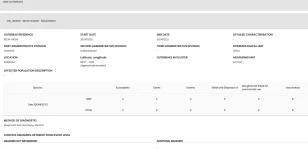
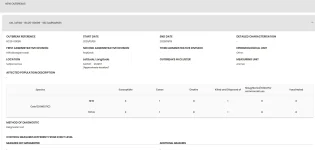
Three cats (one adult female and two 10 week old kittens) from the same household died on December 20., 21. and 22. after they had been ill for only a few days. The main clinical signs were lethargy, anorexia, cramps and stiffness. Other kittens from the same litter had been rehomed before those three got sick and they have not shown any symptoms. The most probable source of infection is wild birds. HPAI H5N5 have been diagnosed in a few wild birds in Iceland since September last year.
...
 
My bolding


The strain of bird flu is still being identified
News - 22.01.2025


The H5N5 avian influenza strain is still being detected in wild birds, and the University of Iceland's Pathology Laboratory at Keldur has now also confirmed the detection of the virus in a mink that was found dead in Vatnsmýrin in Reykjavík on January 17. No new cases have been detected in cats or other mammals.
The Icelandic Food and Veterinary Authority receives numerous reports of wild bird deaths every day . Samples are taken for testing if the birds come from areas or species in which the virus has not been detected before.
After tests on samples from a number of greylag geese confirmed the presence of avian influenza, it is assumed that there is an overwhelming probability that greylag geese found dead in the capital area died from avian influenza and are therefore no longer being sampled. The Icelandic Food and Veterinary Authority estimates, in cooperation with the Reykjavík Animal Services, that approximately 150 greylag goose carcasses have been found since the beginning of the year in Reykjavík, and since last week also elsewhere in the capital area.
When a strain of H5N5 avian influenza emerged on a turkey farm in December, a number of measures were ordered. These included the culling of all birds in the affected house, strict movement restrictions in a designated area around the farm, increased disease control, monitoring, cleaning and disinfection. These measures were successful in preventing further spread of the virus among poultry.
The Icelandic Food and Veterinary Authority encourages poultry owners to always be on the lookout for signs of disease and to take the utmost precautions. Due to the number of wild birds infected with avian influenza, there remains a high risk of the infection entering poultry houses. We would like to remind you of the general order issued by the Minister in December on preventive measures. It states that all those who keep poultry and other birds are obliged to follow the following rules:
  1. Birdhouses and their surroundings:
    1. The birds should be kept indoors in covered enclosures or houses.
    2. Good separation between poultry and wild birds must be ensured.
    3. Houses and buildings should be bird-proof.
    4. It must be ensured that nothing in the environment of the birdhouses attracts wild birds.
    5. Caps should be fitted to all vertical ventilation ducts in poultry houses, except where they are exhaust ducts for mechanical ventilation.
    6. Bird netting should be installed over all ventilation ducts, openings and windows in birdhouses.
  2. Care and handling:
    1. All unauthorized persons shall be prohibited from accessing birdhouses.
    2. Everyone who cares for the birds must wear protective clothing (overalls and boots), which is used only there, and they must also wash and disinfect their hands before and after caring for the birds.
  3. Feed and drinking water:
    1. The birds' food and drinking water must not be accessible to wild birds.
    2. Drinking water sources must be well-maintained so that surface water and bird droppings do not enter them.
  4. Transportation:
    1. Exhibitions and other gatherings with birds are prohibited.
    2. Birds should not be moved between locations unless it is known that the health of the birds in both locations is good.
    3. All transports of birds shall be recorded, including when the transports took place and where and from where they were transported. The record shall be accessible to the Icelandic Food and Veterinary Authority if requested.
  5. Waste:
    1. All waste from bird houses must be disposed of in a way that does not pose a risk of infection to poultry and other captive birds.
Because there is much evidence that avian influenza is still quite widespread in wild birds, the Icelandic Food and Veterinary Authority still recommends that cat owners try to prevent their cats from coming into contact with wild birds.
No cases of avian influenza have been detected in dogs, but it cannot be ruled out that dogs can also be infected with the virus. It is therefore also recommended that dog owners ensure that their dogs do not come into contact with wild birds.
It is also worth pointing out that it cannot be ruled out that infection can be hidden in the droppings of infected birds, which are now common in greylag geese. Dog owners should therefore try as much as possible to prevent their dogs from eating goose droppings.
The Icelandic Food and Veterinary Authority reiterates its recommendation to the public to report wild birds and wild mammals found dead, when the cause of death is not obvious. This is best done by registering a tip on the Icelandic Food and Veterinary Authority's website. It is important to include a photo with the report and to clearly describe the location, preferably by recording coordinates. Further information is also available on the Icelandic Food and Veterinary Authority's website about what people should do if they find sick or dead wild birds or wild mammals.
The general rule for carcasses of wild birds that are not likely to be infected with avian influenza is to leave them lying around. If, on the other hand, they are located in such a way that they need to be removed, they can be placed in a double plastic bag and thrown away in general waste. However, this does not apply if the bird is of a species that is unusual for the location in question, for example a jay in a yard. In such cases, the carcass should not be removed but should be reported to the Icelandic Food and Veterinary Authority and the authority's decision on sampling should be awaited.
When wild animals are found sick or in distress, they should be reported immediately to the relevant municipality and be careful not to come too close to them or handle them unless you are using good personal protective equipment, if there is a possibility that they may be carrying a contagious disease. In the capital area, the Reykjavík Animal Service is responsible for rescuing sick or injured wild birds and removing carcasses of large birds and birds of species known to be infected with avian influenza (email address dyr@reykjavik.is , phone 8227820).
The Icelandic Food and Veterinary Authority's website has a lot of useful information about avian influenza in animals . It also has a dashboard that shows the number and location of wild birds that have been sampled and the results of their research.


https://www.mast.is/is/um-mast/frettir/frettir/skaed-fuglainfluensa-enn-ad-greinast
 
Back
Top