• FluTrackers.com Inc. does not provide medical advice. Information on this web site is collected from various internet resources, and the FluTrackers board of directors makes no warranty to the safety, efficacy, correctness or completeness of the information posted on this site by any author or poster. The information collated here is for instructional and/or discussion purposes only and is NOT intended to diagnose or treat any disease, illness, or other medical condition. Every individual reader or poster should seek advice from their personal physician/healthcare practitioner before considering or using any interventions that are discussed on this website. By continuing to access this website you agree to consult your personal physican before using any interventions posted on this website, and you agree to hold harmless FluTrackers.com Inc., the board of directors, the members, and all authors and posters for any effects from use of any medication, supplement, vitamin or other substance, device, intervention, etc. mentioned in posts on this website, or other internet venues referenced in posts on this website.
  • We are not asking for any donations. Do not donate to any entity who says they are raising funds for us.

IAEA - International Atomic Energy Agency Updates

Re: IAEA - International Atomic Energy Agency Updates

Fukushima Nuclear Accident Update (22 March 2011, 4:15 UTC)
Japanese authorities have reported that they will measure radioactivity in the marine environment around the Fukushima Daiichi nuclear power plant. The monitoring will be conducted from 22-23 March by the Japan Agency for Marine-Earth Science and Technology (JAMSTEC). Sea water sampling from eight locations will be sampled and analysed by the Japan Atomic Energy Agency (JAEA), and results will be provided on 24 March. The analysis will include radionuclide concentrations found in sea water and dose rate. The IAEA will continue to follow this information.

Fukushima Nuclear Accident Update (21 March 2011, 23:15 UTC)
Status of Fukushima Daiichi Nuclear Power Plant

Japanese authorities have notified the IAEA that efforts to restore power for the Fukushima Daiichi nuclear plant are on-going. As of 19 March at 21:46 UTC, the power centre at Unit 2 had received electricity. Work to restore electricity to Units 3 and 4 is continuing.

White smoke was reported seen emanating from Unit 2 on 21 March at 9:22 UTC. Grayish smoke was reported seen emanating from unit 3 at 6:55 on 21 March, and this was reported to have "died down" two hours later. All workers at Units 1 through 4 evacuated after the smoke at Unit 3 was seen. The IAEA is seeking further information at this time on the status of workers at the site.

Japanese authorities have also reported that water has been sprayed over the Common Spent Fuel Pool; this started on 21 March at 1:37 UTC. The IAEA is seeking further information on this development and will report further as updates are received from Japan.

http://iaea.org/newscenter/news/tsunamiupdate01.html
 
Re: IAEA - International Atomic Energy Agency Updates

Fukushima Nuclear Accident Update (23 March 2011, 01:10 UTC)
Restoring Power to Fukushima Daiichi

Without electrical power, cooling systems at Fukushima Daiichi's six reactors cannot operate. Many of the problems facing the nuclear power plant stem from the loss of electrical power at the site following the massive earthquake and tsunami on 11 March. The earthquake cut off external power to the plant and the tsunami disabled backup diesel generators.

Japanese officials have been working to restore power to the facility, and their efforts are organized in three phases.

Units 1 and 2

Reactor cooling systems at these units are severely hampered. There is suspected damage to the nuclear fuel in both units. Workers successfully connected off-site electrical supplies to a transformer at Unit 2 on 19 March and later to at least one electrical distribution panel inside the plant. Technicians are conducting diagnostic tests to determine the integrity of the reactor's electrical systems.

Japanese authorities plan to connect Unit 1 sometime after Unit 2. Because of the degraded condition of the Unit 1 reactor building, this work may take more time compared to Unit 2, the reactor building sustained significantly less damage since the earthquake struck.

Units 3 and 4

Reactor cooling systems at Unit 3 are severely hampered. There is suspected damage to the reactor's fuel, and the condition of its spent fuel pool is uncertain. Unit 4 had been shut down for routine maintenance - and all its fuel was removed to the reactor building's spent fuel pool - prior to the earthquake. There is therefore no concern about fuel in the reactor core, but considerable concern about the fuel in the spent fuel pool.

Workers are moving toward restoring electricity to both units, but their progress is uncertain.

Units 5 and 6

Both units had been shut down for routine maintenance prior to the earthquake, reducing their cooling needs somewhat, but not entirely. On 17 March operators were able to start one of the Unit 6 diesel generators. On 19 March, workers successfully connected the second diesel generator in Unit 6. The two generators were used to power cooling systems in both reactors, which then achieved a safe, cold shutdown configuration. Off-site power was restored to Unit 5 on 21 March.

Restoring external power to the power plant does not mean the reactors will immediately resume normal safety function. The earthquake and tsunami may have inflicted considerable damage in addition to knocking out electricity supplies. Since the extent of this damage (and therefore the extent of necessary repair) is unknown, it is not possible to accurately estimate a work schedule. Progress of efforts to restore power may be impaired by heavy gloves or respirators required to permit the operators to work in the reactors following the damage inflicted by the earthquake and tsunami.

As power is restored, workers will perform checks to make certain the conditions are safe to restart individual components. They will check for grounds and ensure circuits remain intact. If damage is discovered, a decision will have to be made whether to perform repairs or move on to the next component on a prioritised list. Nuclear reactors, especially safety related equipment, incorporate multiple layers of redundancy. So a problem in one component does not necessarily mean a specific safety function will be unrecoverable. It is more likely that operators will move on to the redundant equipment in an effort to determine the most intact system and focus their restoration efforts there. This process takes time.

Fukushima Nuclear Accident Update (22 March 2011, 23:15 UTC)
Summary of Conditions at Fukushima Daiichi Nuclear Power Plant

Located on the Eastern coast of Japan, the six nuclear power reactors at Daiichi are boiling water reactors (BWRs). A massive earthquake on 11 March disabled off-site power to the plant and triggered the automatic shutdown of the three operating reactors - Units 1, 2 and 3. The control rods in those units were successfully inserted into the reactor cores, ending the fission chain reaction. The remaining reactors - Units 4, 5 and 6 - had previously been shut down for routine maintenance purposes. Backup diesel generators, designed to start up after losing off-site power, began providing electricity to pumps circulating coolant to the six reactors.

Soon after the earthquake, a large tsunami washed over the reactor site, knocking out the backup generators. While some batteries remained operable, the entire site lost the ability to maintain normal reactor cooling and water circulation functions.

Here is the current status of the six reactors, based on documents and confirmed by Japanese officials (new information from 22 March in bold):
Unit 1

Coolant within Unit 1 is covering about half of the fuel rods in the reactor, and Japanese authorities believe the core has been damaged. High pressure within the reactor's containment led operators to vent gas from the containment. Later, an explosion destroyed the outer shell of the reactor building above the containment on 12 March.

There are no indications of problems with either the reactor pressure vessel or the primary containment vessel.

Efforts to pump seawater into the reactor core are continuing.

No precise information has been available on the status of the spent fuel pool.

On 18 March, Japan assigned an INES rating of 5 to this Unit.

→ Further information on ratings and INES scale.

On 19 March, the containment vessel pressure indication was restored.

Unit 2

Coolant within Unit 2 is covering about half of the fuel rods in the reactor, and Japanese authorities believe the core has been damaged. Following an explosion on 15 March, Japanese officials expressed concerns that the reactor's containment may not be fully intact. As of 19 March, 11:30 UTC, officials could no longer confirm seeing white smoke coming from the building. Smoke had been observed emerging from the reactor earlier. White smoke/vapour was observed again from 9:22 UTC on 21 March and diminished to nearly invisible by 22:11 UTC the same day. During the time of smoke emission, an increase in radiation dose rates was reported at 9:30 UTC 21 March. TEPCO then ordered an evacuation of plant personnel, though workers returned as of 00:00 UTC 22 March.

Efforts to pump seawater into the reactor core are continuing.

On 20 March, workers began pumping 40 tonnes of seawater into the spent fuel pool. Spent fuel temperature remains relatively stable with readings between 49?C and 53?C.

Restoration work to return power to all units continues, with progress at Unit 2 the most advanced. A distribution panel (power center) of Unit 2 has been connected to off-site electricity supply, and individual components in the unit are being checked prior to being energized.


On 18 March, Japan assigned an INES rating of 5 to this Unit.

Unit 3

Coolant within Unit 3 is covering about half of the fuel rods in the reactor, and Japanese authorities believe the core has been damaged. High pressure within the reactor's containment led operators to vent gas from the containment. Later, an explosion destroyed the outer shell of the reactor building above the containment on 14 March. Indicated containment pressure has stabilized over the past 24 hours.

Following the explosion, Japanese officials expressed concerns that the reactor's containment may not be fully intact. White smoke has been seen emerging from the reactor, but on 19 March it appeared to be less intense than in previous days. Grey smoke was observed on 21 March in the southeast corner of Unit 3 from 6:55 UTC. After two hours this smoke turned to a white color and gradually diminished. By 22:11 21 March, the smoke was observed to be "ceasing." As reported under the Unit 2 update, during the time of smoke emission, an increase in radiation dose rates was reported at 9:30 UTC on 21 March. TEPCO then ordered an evacuation of plant personnel, though workers returned as of 00:00 UTC 22 March.

Efforts to pump seawater into the reactor core are continuing. Of additional concern at Unit 3 is the condition of the spent fuel pool in the building. There are indications that there is inadequate cooling water level in the pool, and Japanese authorities have addressed the problem by dropping water from helicopters into the building and spraying water from trucks. Spraying from trucks continued on 20 March. There is no data on the temperature of the water in the pool.

On 18 March, Japan assigned an INES rating of 5 to this Unit.

Unit 4

All fuel from Unit 4 had been removed from the reactor core for routine maintenance before the earthquake and placed into the spent fuel pool. The building's outer shell was damaged on 14 March, and there have been two reported fires - possibly including one in the area of the spent fuel pool on 15 March - that were extinguished spontaneously.

Authorities remain concerned about the condition of the spent fuel pool, and Japanese Self Defence Forces began spraying water into the building on 20 March. As of 8:17 UTC on 22 March, a concrete pump was pumping water into the spent fuel pool at a rate of 50 tonnes per hour. The reported plan was to pump water at this rate for 3 hours.

On 18 March, Japan assigned an INES rating of 3 to this site.

Units 5 and 6

Shut down for routine maintenance before the earthquake, both reactors achieved cold shutdown on 20 March. The reactors are now in a safe mode, with cooling systems stable and under control, and with low temperature and pressure within the reactor.

Instrumentation from both spent fuel pools had shown gradually increasing temperatures over the past few days. Officials configured two diesel generators at Unit 6 to power cooling and fresh-water replenishment systems in the spent fuel pools and cores of Units 5 and 6. As of 20 March, temperatures in both pools had decreased significantly. /p>

Workers have opened holes in the roofs of both buildings to prevent the possible accumulation of hydrogen, which is suspected of causing explosions at other units.

...


http://iaea.org/newscenter/news/tsunamiupdate01.html
 
Re: IAEA - International Atomic Energy Agency Updates

Fukushima Daiichi Nuclear Accident Update (23 March, 20:00 UTC)
Brief update on state of Fukushima Daiichi reactors

Japanese authorities today announced a number of developments at Fukushima Daiichi nuclear power plant, where reactor cooling systems were disabled following the massive earthquake and tsunami on 11 March.

At Units 1, 2, 3, and 4, workers have advanced the restoration of off-site electricity, and the lights are working in Unit 3's main control room.

Black smoke was seen emerging from the Unit 3 reactor building, spurring the temporary evacuation of workers from Units 3 and 4. The emission of smoke has now decreased significantly.

Crews continued today to use a concrete pump truck to deliver high volumes of water into the Unit 4 spent fuel pool, where there are concerns of inadequate water coverage over the fuel assemblies.

At Units 5 and 6, workers have successfully restored off-site power to the reactor, which had previously reached a safe, cold shutdown status.

Briefing on Fukushima Nuclear Accident (23 March 2011, 15:30 UTC)
On Wednesday, 23 March 2011, Graham Andrew, Special Adviser to the IAEA Director General on Scientific and Technical Affairs, briefed both Member States and the media on the current status of nuclear safety in Japan. His opening remarks, which he delivered at 15:30 UTC at the IAEA headquarters in Vienna, are provided below:

There are some positive developments related to the availability of electrical power supply to the Fukushima Daiichi nuclear power plants, although the overall situation remains of serious concern.
AC power is now available at Units 1, 2 and 4. Power has been restored to some instrumentation in all Units except Unit 3. At Unit 3, the main control room has lighting, but no power to its equipment or instruments. As a positive development instrumentation, as it becomes available, is providing more data that can be assessed by experts.
The pressure in the reactor pressure vessel and drywell of Unit 3 is stable. However, pressure has increased in both the reactor pressure vessel and the drywell of Unit 1, where seawater injection has been increased. Until heat can be removed from Unit 1, pressure tends to increase as water is injected. The reactor feed water system is being used, in addition to water injection through fire extinguisher lines.
Pressure readings in Unit 2 appear to be less reliable. Only limited data is available concerning the reactor pressure vessel and reactor containment vessels' integrity of Unit 2. Temperature readings in the reactor pressure vessels of Units 1 and 3 were high and of some concern. The temperature has now dropped in Unit 1 following the start of seawater injection via feed-water pipes. Indications are that the temperature at Unit 2 is stable.
Units 5 and 6 continue to have off-site power and remain in cold shutdown.
Dose rates measured in the containment vessels and suppression chambers of Units 1, 2, and 3 are available and are being studied.
Periodic water spraying of Units 2, 3, and 4 and the common spent fuel pool has continued.
Radiation Monitoring

The IAEA radiation monitoring team took additional measurements at distances from 30 to 73 km from the Fukushima nuclear power plant. Results from gamma dose-rate measurements in air ranged from 0.2 to 6.9 microsievert per hour. The beta-gamma contamination measurements ranged from 0.02 to 0.6 Megabecquerel per square metre.

The second IAEA monitoring team has now arrived in Japan. The two teams in Japan will continue to work closely with the Japanese authorities. Monitoring will be undertaken in the areas of Fukushima and Tokyo. Measurements will be taken to determine more precisely the actual composition of the radionuclides that have been deposited.

More data has become available from the Japanese authorities. The measurements indicate that the radiation dose rates at the Daiichi site are decreasing. Absent further releases from the site, this is to be expected as relatively short lived radionuclides such as Iodine-131 decay away. At the Daiini site, small spikes have been observed in gamma dose rate measurements; these are most likely to be the result of releases carried by the wind from the nearby Daiichi site.

The deposition of iodine-131 and caesium-137 varies across some ten Prefectures from day to day, but the trend is generally upward. In contrast, environmental radiation monitoring data in the Fukushima Prefecture outside the 20km evacuation zone, shows mostly decreasing values.

Monitoring of the marine environment is being undertaken by the Japanese Ministry of Education, Culture, Sport, Science and Technology (MEXT). High levels of iodine-131 and caesium-137 were measured close to the effluent discharge points Units 1 to 4 of Fukushima Daiichi (i.e. before dilution by the ocean). Future monitoring will cover eight locations 30 km off the coast at 10 km intervals. Results for seawater and the atmosphere above the sea should be available in the next few days. IAEA experts from the Marine Environment Laboratory, Monaco will assess this data.

Since yesterday, the IAEA has received further information from the Japanese Ministry of Health, Labour and Welfare regarding the presence of radioactivity in milk, drinking water and vegetables. The results of some samples were above the limits specified in Japanese regulations concerning limits for food and water ingestion.

In Fukushima prefecture six raw milk samples, and in Ibaraki prefecture three spinach samples, showed concentrations of Iodine-131 in excess of limits. We understand that the Prime Minister of Japan, Mr. Naoto Kan, has today issued instructions to food business operators to cease, for the time being, the distribution of, and for the public to cease the consumption of, certain leafy vegetables (e.g., spinach, komatsuna, cabbages) and any flowerhead brassicas (broccoli, cauliflower) produced in Fukushima Prefecture. The Prime Minister has ordered food business operators not to distribute, for the time being, any fresh raw milk and parsley in Ibaraki Prefecture.

We have also been advised that the Ministry of Health, Labour and Welfare has encouraged Ibaraki and Chiba Prefectures to monitor seafood products.

The Tokyo Metropolitan Water Office stated that levels of iodine-131 in tap water at a purification plant were found to be above the limits for drinking water for infants but below the level for adults. The Ministry of Health Labour and Welfare, has requested that tap water in Tokyo is not used as drinking water for infants.

So, in summary: there are some positive indications on the site; precautionary restrictions around the site on certain foodstuffs; and monitoring of the environment is continuing beyond the evacuation zone and at sea. No significant risk to human health has been identified.

→ Watch Video http://www.youtube.com/watch?v=w22HvkIEY8M
:: View Presentation http://www.slideshare.net/iaea/technical-briefing-on-the-situation-in-japan-23-march-2011
 
Re: IAEA - International Atomic Energy Agency Updates

Fukushima Nuclear Accident Update Log
Updates of 25 March 2011
Staff Report


Fukushima Daiichi Nuclear Accident Update (25 March, 15:45 UTC)

Japanese authorities have informed the IAEA that on March 24, examinations of the thyroid glands in 66 children (14 of which are infants) were conducted near the evacuation area around the Fukushima nuclear plant. The exams were conducted at the Kawamata Town Health Center (40-50 kilometres from Fukushima Daiichi NPP) and Kawamata Town Yamakiya Branch Office (30-40 kilometres from Fukushima Daiichi NPP).

According to a 25 March 2011 Nuclear and Industrial Safety Agency press release, the results of the examinations indicated that the dose rate "of all the 66 children including 14 infants from 1 to 6 years old had no big difference from the level of background and was at the level of no problem in light of the view of Nuclear Safety Commission."

Regarding developments at the Fukushima Daiichi nuclear power plant, 'white smoke' was reported at Units 1, 2 and 4 from 21:20 UTC on 24 March. Sea water injection to Units 1, 2, 3 and 4 continues as of 23:00 UTC 24 March. The IAEA is seeking further information on the latest status of all Units and spent nuclear fuel at Fukushima Daiichi NPP.

Fukushima Nuclear Accident Update (25 March 2011, 05.15 UTC)
Update on Conditions of Fukushima Daiichi Nuclear Power Plant

At Unit 1 workers have advanced the restoration of off-site electricity and lighting in the Unit's main control room was recovered as of 24 March, 11:30 UTC. They are now checking the availability of the cooling system.

While the pressure in the reactor vessel remains high, Japanese authorities are reporting that it has stabilized.

At Unit 2 engineers are working for the recovery of lighting in the main control room, and the instrumentation and cooling systems.

At Unit 3, around 120 tonnes of seawater was injected in the spent fuel pool via the cooling and purification line. The operation was carried out between 23 March, 20:35 UTC and 24 March, 07:05 UTC.

Work was under way for the recovery of the instruments and cooling systems. However, it had to be suspended because three workers were exposed to elevated levels of radiation on 24 March.

At Unit 4, the spent fuel pool was sprayed with around 150 tonnes of water using concrete pump truck. The operation was carried out between 24 March, 05:36 UTC and 06:30 UTC of the same day.

At Units 5 and 6, repair of the temporary pump for Residual Heat Removal (RHR) was completed as of 24 March, 07:14 UTC, and cooling started again 21 minutes later.

At the Common Spent Fuel, the power supply was restored as of 24 March, 06:37 UTC and cooling started again 28 minutes later. Work is now under way for the recovery of the lighting and instrumentation systems.

As of 24 March, 09:40 UTC, the water temperature of the pool was around 73 ?C.

As of 24 March, 10:30 UTC workers continue to inject seawater into the reactor pressure vessels of Units 1, 2 and 3 and are preparing to inject pure water.

Fukushima Nuclear Accident Update (25 March 2011, 02.50 UTC)
As previously reported, three workers at the Fukushima Daiichi nuclear power plant were exposed on 24 March to elevated levels of radiation. The IAEA has received additional information on the incident from the Japanese authorities.

The three were contracted workers laying cables in the turbine building of the Unit 3 reactor. Two of them were found to have radioactivity on their feet and legs.

These were washed in the attempt to remove radioactivity, but since there was a possibility of Beta-ray burning of the skin, the two were taken to the Fukushima University Hospital for examination and then transferred to Japan's National Institute of Radiological Sciences for further examination. They are expected to be monitored for around four days.

It is thought that the workers ignored their dosimeters' alarm believing it to be to be false and continued working with their feet in contaminated water.

The Nuclear and Industrial Safety Agency (NISA) of Japan instructed TEPCO to review the radiation control system immediately in order to avoid similar incidents in the future.

As of 24 March, 19:30 Japan time, the number of workers at the Fukushima Daiichi nuclear power plant found to have received more than 100 millisieverts of radiation dose totalled 17 including the three contract workers. The remaining fourteen are TEPCO's employees.


http://iaea.org/newscenter/news/tsunamiupdate01.html
 
Re: IAEA - International Atomic Energy Agency Updates

Fukushima Daiichi Nuclear Accident Update (26 March, 05:15 UTC)
Brief Update on State of Fukushima Daiichi Reactors

Japanese authorities today confirmed a number of developments at the nuclear reactors at Fukushima Daiichi.

Unit 1

Workers have restored lighting in the control room and have recovered some instrumentation. As of 25 March, fresh water is now being pumped into the reactor pressure vessel (RPV) instead of seawater.

Unit 2

Seawater injection into the reactor pressure vessel continues, and RPV pressures remain stable.

Unit 3

Workers are now pumping fresh water into the RPV, while seawater is pumped into the spent fuel pool. In addition, firefighters sprayed water into the reactor building yesterday from the outside.

Unit 4

With no fuel in the RPV, concerns remain focused on the condition of the spent fuel pool, and workers continued to use a concrete pump truck to pour water into the pool from above while pumping seawater into the pool through the fuel pool cooling line.

Units 5 and 6

Both reactors have achieved safe, cold shutdown, and their fuel pool temperatures have stabilised at acceptable levels.


Fukushima Daiichi Nuclear Accident Update (26 March, 01:30 UTC)
Radioactive Materials Found in Japanese Seawater Sampling -- UPDATED

Japanese authorities today reported data on radiation samples collected 30 kilometres off shore of the Fukushima Daiichi nuclear power plant on 24 March, and the levels of iodine-131 and cesium-137 showed slight variations from data collected at the same locations on 23 March (see previous update.

A vessel from the Japan Agency for Marine-Earth Science and Technology (JAMSTEC) collected water samples at eight points 30 kilometres from the coastline and found measurable concentrations of iodine-131 and cesium-137. The iodine concentrations measured were about at Japanese regulatory limits, and the cesium levels were well below those limits.

The IAEA?s Marine Environmental Laboratory in Monaco has received the data and offered this preliminary analysis:

Dilution, both into deeper layers and by dispersion along the prevailing ocean currents will lead to a rapid decrease of the initial surface contamination.

For the short term, iodine-131 will be the relevant radionuclide as far as doses are concerned, but for the long term, cesium-137 will be the more important radionuclide in the marine environment. It will be possible to follow this nuclide over long distances for several years.

It can be expected that radionuclides will take months or years to reach other shores of the Pacific. The main transport of contamination takes place by atmospheric transport over long distances.

http://iaea.org/newscenter/news/tsunamiupdate01.html
 
Re: IAEA - International Atomic Energy Agency Updates

Fukushima Daiichi Nuclear Accident Update (27 March 2011, 9:00 UTC)
According to the Japanese Prime Minister's office, TEPCO has begun work to remove water that has accumulated in the turbine buildings at the Fukushima Daiichi nuclear power plant. Workers have started to remove water from the Unit 1 turbine building to its main condenser and are making preparations to do the same at Unit 2. (A main condenser's function in a nuclear power plant is to condense and recover steam that passes through the turbine.) Work to remove water from the turbine buildings in Units 3 and 4 is currently under consideration.

Removal of water from the turbine buildings is an important step to continue power restoration to the plant.

The IAEA is seeking further updates from Japanese authorities on the progress of this process and will update as information becomes available.

Fukushima Daiichi Nuclear Accident Update (27 March, 03:00 UTC)
As previously reported, three workers at the Fukushima Daiichi nuclear power plant were exposed on 24 March to elevated levels of radiation. The IAEA has received additional information on the incident from the Japanese authorities.

For two of the three workers, significant skin contamination over their legs was confirmed. The Japanese authorities have stated that during medical examinations carried out at the National Institute of Radiological Sciences in the Chiba Prefecture, the level of local exposure to the workers� legs was estimated to be between 2 and 6 sieverts.
While the patients did not require medical treatment, doctors decided to keep them in hospital and monitor their progress over coming days.

Fukushima Daiichi Nuclear Accident Update (27 March, 01:15 UTC)
Brief Update on State of Fukushima Daiichi Reactors

AC Power-Units 1 to 4

The restoration work of off-site (i.e., grid) power is still in progress. Off-site power is now connected to Units 1 to 4.
Power distribution panels in the Power Centres of Units 2 and 4 have been connected to the off-site electricity supply, but individual components are still being checked prior to being energised.
The lighting in units 1, 2 and 3 control rooms has been restored. Some instrumentation was recovered for units 1, 2 and 4. However, due to the extent of damage inflicted by the earthquake and tsunami, at present it is not possible to estimate when the equipment may be returned to service.

AC Power-Units 5 and 6

Off-site power has been restored.

Unit 1

Fresh water continues to be injected into the reactor pressure vessel.
As of 23:00 UTC 25 March, white smoke was confirmed to be emanating continuously from the reactor building.
Water sample taken from the stagnant water on the basement floor of the turbine building shows the presence of iodine-131, cesium-137 and cesium-134 to a level comparable to that measured in the turbine building of unit 3 where three workers were exposed to elevated levels of radiation on 24 March.

Unit 2

Fresh water continues to be injected into the reactor pressure vessel.
As of 23:00 UTC 25 March, white smoke was confirmed to be emanating continuously from the reactor building.
The spent fuel pool temperature increased and then stabilized at 57 degrees Celsius as of 00:30 UTC 26 March.
(most recent reading has it up again to 70C -Ro http://www.meti.go.jp/press/20110327001/20110327001-3.pdf

Unit 3

Fresh water is being injected into the reactor pressure vessel.
The temperature at the bottom of reactor pressure vessel has decreased to 100.4 degrees Celsius at 13:00 UTC 26 March. Seawater injection to the spent fuel pool is on-going.
White smoke emanating from the reactor building was still being observed as of 23:00 UTC 25 March.
The dose rate in the reactor containment vessel and suppression chamber continued to decrease to 36.1 sieverts per hour and 1.4 sieverts per hour, respectively, as of 13:00 UTC 26 March.

Unit 4

From March 22 to March 25, 130 to 150 tonnes of seawater was poured into the spent fuel pool each day using a concrete pump. Sea water was also poured in through spent fuel cooling system from 21:05 UTC 24 March to 01:20 25 March.
White smoke was still being observed coming from the reactor building as of 23:00 UTC 25 March.

Unit 5

The reactor remains in cold shutdown. Off-site power has been restored. The reactor water temperature increased to 43.8 degrees Celsius.
The temperature in the spent fuel pool increased to 42.8 degrees Celsius as of 02:00 UTC 26 March.

Unit 6

The reactor remains in cold shutdown. Off-site power has been restored. The reactor pressure vessel water temperature decreased to 21.3 degrees Celsius.
The spent fuel pool water temperature has slightly increased to 30.0 degrees Celsius.


http://iaea.org/newscenter/news/tsunamiupdate01.html
 
Re: IAEA - International Atomic Energy Agency Updates

IAEA Briefing on Fukushima Nuclear Accident (27 March 2011, 13:30 UTC)
1. Current Situation

The situation at the Fukushima Daiichi plant remains very serious.

The restoration of off-site power continues and lighting is now available in the central control rooms of Units 1, 2 and 3. Also, fresh water is now being injected into the Reactor Pressure Vessels (RPVs) of all three Units.

Radiation measurements in the containment vessels and suppression chambers of Units 1, 2 and 3 continued to decrease. White ?smoke? continued to be emitted from Units 1 to 4.

Pressure in the RPV showed a slight increase at Unit 1 and was stable at Units 2 and 3, possibly indicating that there has been no major breach in the pressure vessels.

At Unit 1, the temperature measured at the bottom of the RPV fell slightly to 142 ?C. At Unit 2, the temperature at the bottom of the RPV fell to 97 ?C from 100 ?C reported in the Update provided yesterday. Pumping of water from the turbine hall basement to the condenser is in progress with a view to allowing power restoration activities to continue.

At Unit 3, plans are being made to pump water from the turbine building to the main condenser but the method has not yet been decided. This should reduce the radiation levels in the turbine building and reduce the risk of contamination of workers in the turbine building restoring equipment.

No notable change has been reported in the condition of Unit 4.

Water is still being added to the spent fuel pools of Units 1 to 4 and efforts continue to restore normal cooling functions.

Units 5 and 6 remain in cold shutdown.

We understand that three workers who suffered contamination are still under observation in hospital.

2. Radiation Monitoring

Dose rates at the Fukushima site continue to trend downwards.

In 28 of the 45 prefectures for which data are available, no deposition of radionuclides was detected in the period 18 to 25 March. In seven of the other 17 prefectures, the estimated daily deposition was less than 500 becquerel per square metre for iodine-131 and less that 100 becquerel per square metre for caesium-137.

On 26 March, the highest values were observed in the prefecture of Yamagata: 7500 becquerel per square metre for iodine-131 and 1200 becquerel per square metre for caesium-137. In the other prefectures where deposition of iodine-131 was reported, the daily range was from 28 to 860 becquerel per square metre. For caesium-137, the range was from 2.5 to 86 becquerel per square metre.

In the Shinjyuku district of Tokyo, the daily deposition of iodine-131 on 27 March was 220 becquerel per square metre, while for caesium-137 it was 12 becquerel per square metre.

No significant changes were reported in the 45 prefectures in gamma dose rates compared to yesterday. In general, gamma?dose rates tend to decrease due to the decay of short-lived radionuclides such as iodine-131.

Two IAEA teams are currently monitoring in Japan. One team made gamma dose-rate measurements in the Tokyo region at 8 locations. Gamma-dose rates measured ranged from 0.08 to 0.15 microsievert per hour, which is within or slightly above the normal background. The second team made additional measurements at distances of 30 to 41 km from the Fukushima nuclear power plant. At these locations, the dose rates ranged from 0.9 to 17 microsievert per hour. At the same locations, results of beta-gamma contamination measurements ranged from 0.03 to 3.1 Megabecquerel per square metre.

The first results of aerial surveys of gamma dose rates by the Japanese authorities have been received by the Incident and Emergency Centre. These are being analysed and will be presented when more detailed data have been received.

New data from monitoring of the marine environment, carried out from 24 March 22:55 UTC to 25 March 03:32 UTC about 30 km offshore, show a decrease in both caesium-137 and iodine 131. The contamination at these locations is influenced by aerial deposition of fallout as well as by the migration of contaminated seawater from the discharge points at the reactor. The measured radiation doses rates above the sea remain consistently low (between 0.04 and 0.1 microsievert per hour). The first results of model predictions received from the SIROCCO Group at the University of Toulouse are being assessed.

Recommendations relating to the restriction of drinking water consumption, based on measured concentrations of iodine-131, remain in place in seven locations (in one location for both adults and infants, and in six locations for infants).

As far as food contamination is concerned, samples taken from 23 to 25 March in five prefectures showed iodine-131 in unprocessed raw milk, but the levels were far below the regulation values set by the Japanese authorities. Caesium-137 was also detected in samples of unprocessed raw milk taken on 23 March in Chiba prefecture, but at levels far below the Japanese regulation values. Caesium-137 was not detected in any of the samples taken from 24-25 March in the other four prefectures.

Based on samples taken on 22 and 24-25 March, three prefectures (Chiba, Ibaraki and Tochigi) reported iodine-131 in celery, parsley, spinach, and other leafy vegetables above the regulation values set by the Japanese authorities. Caesium-137 was also detected above the regulation values in one sample of spinach taken on 24 March in Tochigi prefecture, but in the remaining two prefectures, the results were below regulation values.

The Joint FAO/IAEA Food Safety Assessment Team arrived in Tokyo on Saturday. It will meet regulatory officials in various prefectures where food contamination has been detected. The team left for Fukushima early today. The Mission will assist and provide advice on sampling protocols, analytical procedures, data collected to date, and actions taken by the Japanese authorities for the control of contaminated foods.

→ IAEA Summary of Fukushima Reactor Unit Status http://www.slideshare.net/iaea/table-summary-of-reactor-unit-status-at-27march0500-utc-draft

http://iaea.org/newscenter/news/tsunamiupdate01.html
 
Re: IAEA - International Atomic Energy Agency Updates

IAEA Briefing on Fukushima Nuclear Accident (29 March 2011, 16:30 UTC)
On Tuesday, 29 March 2011, the IAEA provided the following briefing on the current status of nuclear safety in Japan:

1. Current Situation

The situation at the Fukushima Daiichi plant remains very serious.

Accumulated contaminated water was found in trenches located close to the turbine buildings of Units 1 to 3. Dose rates at the surface of this water were 0.4 millisieverts/hour for Unit 1 and over 1 000 millisieverts/hour for Unit 2 as of 18:30 UTC on 26 March. The Nuclear Safety Commission of Japan suggests that higher activity in the water discovered in the Unit 2 turbine building is supposed to be caused by the water, which has been in contact with molten fuel rods for a time and directly released into the turbine building via some, as yet unidentified path. An investigation is underway as to how the water accumulated in the trenches. Measurements could not be carried out at Unit 3 because of the presence of debris.

Fresh water has been continuously injected into the Reactor Pressure Vessels (RPVs) of Units 1, 2 and 3. From today at Unit 1, the pumping of fresh water through the feed-water line will no longer be performed by fire trucks but by electrical pumps with a diesel generator. The switch to the use of such pumps has already been made in Units 2 and 3. At Unit 3, the fresh water is being injected through the fire extinguisher line.

At Unit 1, there has been an increase in temperature at the feed-water nozzle of the RPV from 273.8 ?C to 299 ?C. The temperature at the bottom of the RPV remained stable at 135 ?C. Temperatures at Unit 2 appear relatively stable at the same measurement points. At Unit 3, the temperature at the feed-water nozzle of the RPV is about 61.5 ?C and 120.9 ?C at the bottom of the RPV. The validity of the RPV temperature measurement at the feed water nozzle is still under investigation.

With the increase in temperature at Unit 1, there has been a corresponding increase in Drywell pressure. In the Drywell of Unit 2, the indicated pressure dropped slightly and is just above atmospheric.

It is planned to begin pumping fresh water into the spent fuel pool of Unit 4 today, on 29 March.

Units 5 and 6 remain in cold shutdown.

2. Radiation Monitoring

On 28 March, deposition of iodine-131 was detected in 12 prefectures, and deposition of cesium-137 in 9 prefectures. The highest values were observed in the prefecture of Fukushima with 23 000 becquerel per square metre for iodine-131 and 790 becquerel per square metre for caesium-137. In the other prefectures where deposition of iodine-131 was reported, the range was from 1.8 to 280 becquerel per square metre. For caesium-137, the range was from 5.5 to 52 becquerel per square metre. In the Shinjyuku district of Tokyo, the daily deposition of both iodine-131 and cesium-137 was below 50 becquerel per square metre. No significant changes were reported in the 45 prefectures in gamma dose rates compared to yesterday.

As of 28 March information on radioactivity in drinking water collected mainly from the Japanese Ministry of Health, Labour and Welfare indicates that recommendations for restrictions based on I-131 concentration remain in place only in four locations in the prefecture of Fukushima. To date, no recommendations for restrictions have been made based on Cs-137. The Japanese limits for the ingestion of drinking water by infants is 100 becquerel per litre.

Five soil samples, collected at distances between 500 and 1 000 metres from the exhaust stack of Unit 1 and 2 of the Fukushima Nuclear Power Plant on 21 and 22 March, were analysed for plutonium-238 and for the sum of plutonium-239 and plutonium-240. (Due to analytical reasons, the isotopes plutonium-239 and plutonium-240 cannot be measured separately). Plutonium-238 was detected in 2 of the 5 samples, while plutonium-239/240 was detected in all samples as expected.

Concentrations reported for both, plutonium-238 and plutonium-239/240 are similar to those deposited in Japan as a result of the testing of nuclear weapons. The ratio of the concentrations of plutonium-238 and plutonium-239/240 in two of the samples indicate that very small amounts of plutonium might have been released during the Fukushima accident, but this requires to be further clarified.

As far as food contamination is concerned, 63 samples taken from 24 - 29 March, and reported on from 27 - 29 March, for various vegetables, fruit (strawberries), mushrooms, eggs, seafood and pasteurized milk in eight prefectures (Chiba, Fukushima, Gunma, Ibaraki, Miyagi, Niigata, Tochigi and Yamagata), stated that results for iodine-131, caesium-134 and caesium-137 were either not detected or were below the regulation values set by the Japanese authorities.

The Joint FAO/IAEA Food Safety Assessment Team met with local government authorities in Ibaraki prefecture on Monday and provided advice related to contamination of food and the environment, including the mechanisms and persistence of such contamination, examples of remediation strategies, international standards and sampling plan designs and radionuclide transfer from soil to plants, particularly as related to rice production in the area.

Local government authorities briefed the FAO/IAEA Team on the extent of contamination in Ibaraki, the principle agricultural products affected, the main production areas and production methods (greenhouse, open-air) and levels of contamination found.

The FAO/IAEA team is also meeting with the local authorities in Tochigi prefecture today, and will meet with local government officials in Gunma tomorrow.

Sea Water Samples

No new results from the marine monitoring stations 30 km off-shore were reported for 27 or 28 March. However, new analyses in seawater 330 m east to the discharges point of NPP Units 1 - 4 were made available for 27 March. These concentrations show a significant decrease from 74 000 Becquerel per litre of iodine-131, 12 000 Becquerel per litre of cesium-137, and 12 000 Becquerel per litre of cesium-134 on 26 March to 11 000 Becquerel per litre of iodine-131 and 1 900 Becquerel per litre of cesium-137 on 27 March.

Sea water samples were also collected daily at a location 30 m from the common discharge point for Units 5 - 6. These results also show an increase in the radionuclide concentrations on 26 March. The sea water samples collected on March 27 show as well a decrease of the radionuclide concentration.


It can be expected that the data will be quite variable in the near future depending on the discharge levels. In general, dilutions by ocean currents and into deeper waters as well decay of short lived radionuclides e.g. I-131 or I-132 will soon lead to lower values.

Marine Organisms

First analyses were reported in fish carried out by the National Research Institute of Fishery Research. 5 samples of fish were collected from the port of Choshi (Chiba prefecture) and 4 of 5 samples showed Cs-137 concentrations below limit of detection. In one sample Cs-137 was found with 3 Bq/kg (fresh weight) and it was reported that it was slightly above the limit of detection. This concentration is far below any concern for fish consumption.

It is still too early to draw conclusions for expected concentrations on marine food, because the situation may change rapidly, however, it is expected that the detected initial concentrations of seawater will soon drop to lower values by dilution and the levels in marine food will most likely not reach levels above given limits for consumption, (presuming that discharges of contaminated seawater from the reactor will not continue). It is not expected that fish or other marine food will be collected in a close area to the NPP Fukushima at the present situation. Some marine algae are known to accumulate in particular I-131 and Tc-99m. However, these values will soon be of no concern due to the short half-lives of the radionuclides mentioned.

Modelling Marine Dispersion

The Group SIROCCO of the Observatoire Midi-Pyren?es of the University of Toulouse, CNRS, is continuing to carry out model calculations. The model is based on an ocean circulation and current weather conditions and they results showed an initial north-eastern transport of liquid releases from the damaged reactors and the contaminated water would reach the northern monitored stations between 1 and 2 weeks later.

A model with tracer release directly in the sea show an along shore propagation in the southern direction and a northeast propagation moving away from the coast.


With tracer release from atmospheric deposition, the propagation stretch offshore entering the Kuro-Shivo current in few days.

The first results are shown in Fig. 3 and 4. The data are converted into Bq/L by assuming arbitrary discharge or aerial release activities, respectively. The results should just be taken as indication of the dilution capacity and transport route of sea water.

→ View Presentation http://www.slideshare.net/iaea/iaea-briefing-on-fukushima-nuclear-accident-29-march-2011-1630-utc
→ IAEA Summary of Reactor Unit Status http://www.slideshare.net/iaea/summary-of-reactor-unit-status-at-29-march-2011

http://iaea.org/newscenter/news/tsunamiupdate01.html
 
Re: IAEA - International Atomic Energy Agency Updates

IAEA Briefing on Fukushima Nuclear Accident (30 March 2011, 16.30 UTC)
On Wednesday, 30 March 2011, the IAEA provided the following information on the current status of nuclear safety in Japan.

1. Current Situation

Overall at the Fukushima Daiichi plant, the situation remains very serious.

With respect to the water that is present in the turbine buildings. In Unit 1, water has continued to be pumped into the condenser with 3 pumps (6.5 ton/hour each) and the water level has reduced from 40cm to 20cm. In Unit 2 from 07.45 UTC, pumping of water from the Condensate Storage Tank into the Surge Tank was started so that the that condenser can be drained to the Condensate Storage Tank and contaminated water can be pumped out from the Turbine building into the condenser. The same process of pumping the water from the Condensed Water Storage Tank into the Surge Tank was started on Unit 3 at 08.40 UTCon March 28.

Near the Unit 3 building, 3 workers spilled water over themselves when removing a flange from seawater pipes on the residual heat removal system (RHR). After showering, contamination was not detected.

Fresh water has been continuously injected into the Reactor Pressure Vessel (RPV) through feed-water line at an indicated flow rate of 8.0 m3/h at Unit 1. The pumping of freshwater into the RPV has been switched from fire trucks to temporary electrical pumps with diesel generator. At Units 2 and 3 fresh water is being injected continuously through the fire extinguisher line at an indicated rate of 7 m3/h using a temporary electric pump.

The indicated temperature at the feed water nozzle of the RPV of Unit 1 has decreased from 323 oC to 281 oC and at the bottom of RPV remained stable at 134 oC. There is a corresponding decrease in Drywell pressure. At Unit 2 the indicated temperature at the feed water nozzle of the RPV has increased from 154 oC to 177 oC and at the bottom of RPV has increased from 78 oC to 88 oC. Indicated Drywell pressure remains at atmospheric pressure. For Unit 3 the indicated temperature at the feed water nozzle of the RPV is about 75 oC and at the bottom of RPV is about 116 oC. The validity of the RPV temperature measurement at the feed water nozzle is still under investigation.

With respect to the Spent Fuel Pools. It was planned to commence the pumping of water into the Unit 1 Spent Fuel Pool by concrete pumping truck from 29 March. Also on 29 March pumping of fresh water into the Unit 2 spent fuel pool commenced via a temporary electrical pump. The temperature of the spent fuel pool is 46o C as of 19:00 UTC 29 March. For Unit 4 it was planned to commence pumping freshwater into the spent fuel pool on March 29. The IAEA has not received information on implementation of spraying activities in units 1 and 4.

Units 5 and 6 remain in cold shutdown


2. Radiation Monitoring

The majority of the recently measured radioactivity levels in drinking water are being reported below the levels established by the Japanese authorities which are 100 Bq/L of I-131 for infants; 300 Bq/L for adults and 200 Bq/L of Cs-137 for infants and adults. Previously imposed recommendations for restrictions on drinking water are being lifted in most of the affected locations. As of 28 March, recommendations for restrictions based on I-131 concentration remain in place in one village in the Fukushima prefecture. In three other locations of the Fukushima prefectures, restrictions continue to apply for infants only.

Two IAEA teams are currently monitoring radiation levels and radioactivity in the environment in Japan. On 29 March, one team made gamma dose-rate measurements in the Tokyo region at 8 locations. Gamma-dose rates measured ranged from 0.02 to 0.19 microsievert per hour, which is within or slightly above the background.

The second team made additional measurements at distances of 32 to 62 km, at directions North to Northwest from the Fukushima nuclear power plant. At these locations, the dose rates ranged from 0.5 to 6.8 microsievert per hour. At the same locations, results of beta-gamma contamination measurements ranged from 0.05 to 0.45 Megabecquerel per square metre.

Based on measurements of I-131 and Cs-137 in soil, sampled from 18 to 26 March in 9 municipalities at distances of 25 to 58 km from the Fukushima Nuclear Power Plant, the total deposition of iodine-131 and cesium-137 has been calculated. The results indicate a pronounced spatial variability of the total deposition of iodine-131 and cesium-137. The average total deposition determined at these locations for iodine-131 range from 0.2 to 25 Megabecquerel per square metre and for cesium-137 from 0.02-3.7 Megabecquerel per square metre. The highest values were found in a relatively small area in the Northwest from the Fukushima Nuclear Power Plant. First assessment indicates that one of the IAEA operational criteria for evacuation is exceeded in Iitate village. We advised the counterpart to carefully access the situation. They indicated that they are already assessing.

As far as food contamination is concerned, 35 samples taken from 25-29 March, and reported on 29 March, for various vegetables, fruit (strawberry), seafood, pork and unprocessed raw milk in nine prefectures (Chiba, Gunma, Ibaraki, Kanagawa, Nagano, Niigata, Saitama, Tochigi and Yamagata), stated that results for iodine-131, caesium-134 and caesium-137 were either not detected or were below the regulation values set by the Japanese authorities.

The Joint FAO/IAEA Food Safety Assessment Team met with local government officials in Tochigi prefecture on 29th March and provided advice related to contamination of food and the environment.

Local government officials briefed the FAO/IAEA Team on the extent of contamination in Tochigi, the principle agricultural products affected, the main production areas and production methods (greenhouses, open-air), levels of contamination found (principally in air, tap/ground water and vegetables) and imminent plans to monitor soil contamination. A field visit also took place to a spinach producer outside Utsanomiya City.

Based on these latest discussions with the Tochigi authorities, it is apparent that the focus of the Joint FAO/IAEA mission has changed to some extent from the mechanisms of contamination to remediation strategies and techniques related to plant and animal production, food traceability and water/soil characterization.

The FAO/IAEA team is also meeting with the local government officials in Gunma prefecture today.

No new results from the marine monitoring stations 30 km off-shore as well as from close to the discharge, were reported since 27 March.

One IAEA staff member of the Monaco marine laboratory will fly to Japan on 31 March in order to join the Japanese team assessing marine environment.

The IAEA continues activities under the Joint Radiation Emergency Management Plan of the International Organisations through regular video/teleconferences. As of March 30 the WHO liaison officer is working in the IEC.

In response to the request for data on measurement, the IEC has received information from Singapore. The Singapore Authorities have sent reports on measurements in food imported from Japan (cabbages). Some samples were over the Codex Alimentarius values recommended for international trade. In Singapore no increase in gamma dose rates have been observed and no fission products have been found in air samples.

http://iaea.org/newscenter/news/tsunamiupdate01.html
 
Re: IAEA - International Atomic Energy Agency Updates

IAEA Briefing on Fukushima Nuclear Accident (31 March 2011, 14:00 UTC)
Presentations:
→ Summary of Reactor Status, 31 March 2011, 14.00 UTC
http://www.slideshare.net/iaea/summary-of-reactor-status-31-march-2011-1400-utc


On Thursday, 31 March 2011, the IAEA provided the following information on the current status of nuclear safety in Japan.

1.Current Situation

Overall at the Fukushima Daiichi plant, the situation remains very serious.

The Unit 1 condenser is full. Pumping water from the Unit-1 turbine building basement to the Unit-1 condenser has been stopped as of 22:30 UTC on 28 March. For Units 2 and 3, in order to prepare for removal of the water from the turbine building basement, pumping of water from the condenser to the suppression pool water surge tank started at 07:45 UTC 29 March and 08:40 UTC March 28 respectively.

For Unit 1 fresh water has been continuously injected into the Reactor Pressure Vessel (RPV) through the feed-water line at an indicated flow rate of 8 m3/h using a temporary electric pump with diesel backup. In Unit 2 fresh water is injected continuously through the fire extinguisher line at an indicated rate of 8 m3/h using a temporary electric pump with diesel backup. In Unit 3 fresh water is being injected continuously at about 7 m3/h into the reactor core through the fire extinguisher line using a temporary electric pump with diesel backup.

The indicated temperature at the feed water nozzle of the RPV on Unit 1 has decreased from 281 ?C to 251 ?C and at the bottom of RPV decreased from 134 ?C to 128 ?C. There appears to be a corresponding decrease in RPV pressure with a slight decrease in Drywell pressure. The indicated temperature at the feed water nozzle of the RPV of Unit 2 has increased from 177 ?C to 181 ?C. The temperature at the bottom of RPV was not reported. Indicated Drywell pressure remains at atmospheric pressure. The indicated temperature at the feed water nozzle of the RPV in Unit 3 is about 89 ?C and at the bottom of RPV is about 114 ?C. The validity of the RPV temperature measurement at the feed water nozzle is still under investigation.

No further information is available regarding the plan to commence the pumping of water into the Unit 1 Spent Fuel Pool by concrete pumping truck from 29 March. On Unit 2 the temporary electric pump supplying water to the spent fuel pool experienced a malfunction. Spent fuel pool water supply was changed to a fire truck pump but a crack was discovered in a hose on 30 March 04:10 UTC. Pumping water to the spent fuel pool was therefore stopped. Pumping was subsequently restored and water was fed into spent fuel pool in Unit 2 from 10:05 UTC on March 30. Water injection into the spent fuel pool in Unit 4 by concrete pump was completed at 09:33 UTC on March 30.

Units 5 and 6 remain in cold shutdown

2. Radiation Monitoring

On 30 March, deposition of iodine-131 was detected in 8 prefectures, and deposition of cesium-137 in 12 prefectures. On 30 March in the prefectures where deposition of iodine-131 was reported, the range was from 2.5 to 240 becquerel per square metre. For caesium-137, the range was from 3 to 57 becquerel per square metre. In the Shinjyuku district of Tokyo, the daily deposition of both iodine-131 and cesium-137 on 30 March was below 30 becquerel per square metre. No significant changes were reported in the 45 prefectures in gamma dose rates compared to yesterday.

Most of the previously imposed recommendations for restrictions on drinking have been lifted. As of 28 March, recommendations for restrictions based on I-131 concentration remain in place in four villages of in the Fukushima prefecture, in three of these villages, restrictions continue to apply for infants only.

Two IAEA teams are currently monitoring radiation levels and radioactivity in the environment in Japan. On 30 March, one team made gamma dose-rate measurements in the Tokyo region at 7 locations. Gamma-dose rates measured ranged from 0.03 to 0.28 microsievert per hour, which is within or slightly above the background. The second team made additional measurements at 7 locations in the Hirono area, South of Fukushima-Daiichi NPP. The measurement locations were at distances of 23 to 39 km from the Fukushima nuclear power plant. The dose rates ranged from 0.5 to 4.9 microsievert per hour. At the same locations, results of beta-gamma contamination measurements ranged from 0.04 to 0.34 Megabecquerel per square metre.

Since our briefing of yesterday, significant data related to food contamination has been submitted by the Japanese Ministry of Health, Labour and Welfare. Seventy-six samples were taken from 28-30 March, and reported on 30 March. Analytical results for 51 of the 76 samples for various vegetables, fruit (strawberry), seafood (sardines), and unprocessed raw milk in eight prefectures (Chiba, Fukushima, Gunma, Ibaraki, Kanagawa, Niigata, Saitama, and Yamagata), indicated that iodine-131, caesium-134 and caesium-137 were either not detected or were below the regulation values set by the Japanese authorities. However, it was reported that analytical results in Fukushima prefecture for the remaining 25 of the 76 samples for broccoli, cabbage, rapeseed, spinach and other leafy vegetables, indicated that iodine-131 and/or caesium-134 and caesium-137 exceeded the regulation values set by the Japanese authorities.

The Joint FAO/IAEA Food Safety Assessment Team met with local government officials in Gunma prefecture on Wednesday. Farmers and producers were also represented and the meeting attracted media coverage. The questions to the IAEA/FAO team mainly focused on technical issues of remediation strategies, including the implications of long term releases if the NPP is not stabilized, the disposal of contaminated produce, mechanisms of 131I and 137Cs contamination, other possible radionuclides that may be produced/should be monitored, contamination of fruit and mushrooms, occupational exposure risks in the handling animals and agricultural products, feeding strategies for animals in affected areas, monitoring of soil and fallout and remediation strategies and methodologies. There were also discussions with producers and farmer organizations over the development of strategies for the next cropping season.

Local government officials briefed the FAO/IAEA Team on current knowledge of the extent of contamination in Gunma prefecture, including the principal agricultural products affected and levels of contamination found.

The Joint FAO/IAEA Team presented their report and responded to inquires at a follow-up inter-ministerial meeting in Tokyo. The meeting was attended by representatives of the Japanese Cabinet Office, Ministry of Foreign Affairs, Ministry of Health, Labour and Welfare and the Ministry of Agriculture. Strong interest was expressed as to the remediation of the agricultural land, continued possible contamination of agricultural products, and the need to maintain communication with relevant ministries in the future.

New results from the marine monitoring stations 30 km off-shore were reported for 28 March. These results indicate a decrease for the northernmost sampling station for I-131 and a slight increase for Cs-137 as compared to values measured on 27 March. For sampling points situated towards the south of the transect an increase has been recorded, both for I-131 and for Cs-137 as compared to the previous day, with maximum concentrations in water below 30 Bq/l and 20 Bq/l respectively, still considerably lower than the maxima recorded on 23 March. This increase can be correlated with trends in concentrations measured close to the discharge points.

The latest analyses in seawater 330 m south of the discharge point of NPP Units 1-4, and 30 m north of the discharge point of Units 5-6 were made available for 29 March. In particular readings of 130 000 Bq/l of I-131, 32 000 Bq/l of Cs-137 and 31 000 Bq/l of Cs-134 were reported near Units 1 - 4.

The Russian Federation, Singapore, Ireland and Switzerland reported the detection of very small amounts of iodine-131 and cesium-137 in air. Highest levels found are in the order of a few millibecquerel per cubic meter. The levels are not of any radiological concern.
http://iaea.org/newscenter/news/tsunamiupdate01.html
 
Re: IAEA - International Atomic Energy Agency Updates

IAEA Briefing on Fukushima Accident (1 April 2011, 14.30 UTC)
Presentations:
→ Fukushima - Background Information on Operational Intervention Levels, 1 April 2011 http://www.slideshare.net/iaea/fuku...-operational-intervention-levels-1-april-2011
→ Fukushima Marine Environment Monitoring , 1 April 2011 http://www.slideshare.net/iaea/pres-2-japan-marine-brief010411
→ Radiological Monitoring and Consequences of the Fukushima Nuclear Accident , 1 April 2011 http://www.slideshare.net/iaea/radi...ushima-nuclear-accident-1-april-2011-1430-utc
→ Summary of Reactor Status , 1 April 2011 http://www.slideshare.net/iaea/summary-of-reactor-status-1-april-2011-1300-utc


On Friday, 1 April 2011, the IAEA provided the following information on the current status of nuclear safety in Japan.

1.Current Situation

Overall at the Fukushima Daiichi plant, the situation remains very serious.

The Unit 1 condenser is full. In preparation for transferring water in the basement of the turbine building to the condenser, water in the condenser storage tank is being transferred to the suppression pool surge tank since 31 March, 03:00 UTC. Water in the trench was transferred to a water tank at the central environmental facility process main building. In order to prepare for removal of the water from the turbine building basement in Unit 2, pumping of water from the condenser to the suppression pool water surge tank started at 07:45 UTC 29 March. For Unit 3 pumping of water from the condenser to suppression pool water surge tank was started at 08:40 UTC March 28 and was completed at 23:37 UTC on 30 March.

For Unit 1 fresh water has been continuously injected into the Reactor Pressure Vessel (RPV) through the feed-water line at an indicated flow rate of 8 m3/h using a temporary electric pump with diesel backup. In Unit 2 fresh water is injected continuously through the fire extinguisher line at an indicated rate of 8 m3/h using a temporary electric pump with diesel backup. In Unit 3 fresh water is being injected continuously at about 7 m3/h into the reactor core through the fire extinguisher line using a temporary electric pump with diesel backup.

The indicated temperatures at the feed water nozzle of the RPV and bottom of RPV on Unit 1 are stable at 256 ?C and 128 ?C respectively. There is a slight decrease in RPV and Drywell pressures. The indicated temperature at the feed water nozzle of the RPV of Unit 2 is stable at 165 ?C. The temperature at the bottom of the RPV was not reported. Indicated Drywell pressure remains at atmospheric pressure. The indicated temperature at the feed water nozzle of the RPV in Unit 3 is stable at 101 ?C and at the bottom of RPV is also stable at 112 ?C. Indicated Drywell pressure remains slightly above atmospheric pressure. The validity of the RPV temperature measurement at the feed water nozzle is still under investigation.

The pumping of water into the Unit 1 Spent Fuel Pool by concrete pumping truck was started at 04:03 UTC on 31 March. Fresh water was sprayed to the spent fuel pool at the Unit 3 by the concrete pump on 31 March and to the spent fuel pool on Unit 4 on the 1st April.

Units 5 and 6 remain in cold shutdown

2. Radiation Monitoring

On 31 March, deposition of iodine-131 was detected by the Japanese authorities in 8 prefectures, and deposition of cesium-137 in 10 prefectures. In these prefectures where deposition of iodine-131 was reported, on 31 March, the range was from 29 to 1350 becquerel per square metre. For caesium-137, the range was from 3.6 to 505 becquerel per square metre. In the Shinjyuku district of Tokyo, the daily deposition for iodine-131 was 50 becquerel per square metre and for cesium-137 it was 68 becquerel per square metre. No significant changes were reported in the 45 prefectures in gamma dose rates compared to yesterday. As of 28 March, recommendations for restrictions on drinking water are in place at two locations in the Fukushima prefecture and restrictions continue to apply for infants only. The IAEA monitoring team made additional measurements at 9 locations West of Fukushima-Daiichi NPP. The measurement locations were at distances of 30 to 58 km from the Fukushima nuclear power plant. The dose rates ranged from 0.4 to 2.3 microsievert per hour. At the same locations, results of beta-gamma contamination measurements ranged from 0.01 to 0.49 Megabecquerel per square metre. The other team who had made monitoring measurements in Tokyo during the last week, has finished its activities.

Since our written briefing of yesterday, significant data related to food contamination was reported on 31 March by the Japanese Ministry of Health, Labour and Welfare. Reported analytical results covered 2 samples taken on 15 March and 109 samples from 27-31 March. Analytical results for 98 of the 111 samples for various vegetables, spinach and other leafy vegetables, fruit (strawberry), seafood, various meats (beef, chicken and pork) and unprocessed raw milk in eight prefectures (Chiba, Fukushima, Gunma, Ibaraki, Kanagawa, Niigata, Tochigi, and Tokyo), indicated that iodine-131, caesium-134 and caesium-137 were either not detected or were below the regulation values set by the Japanese authorities. However, it was reported that analytical results in Chiba, Fukushima, Ibaraki and Tochigi prefectures for the remaining 13 of the total 111 samples for spinach and other leafy vegetables, parsley and beef indicated that iodine-131 and/or caesium-134 and caesium-137 exceeded the regulation values set by the Japanese authorities.

The following restrictions are in place (Ministry of Health, Labour and Welfare Press Releases 21 and 23 March 2011):

Fukushima: Distribution and consumption of leafy vegetables (including broccoli, cabbage, cauliflower, kakina, komatsuna and spinach), turnip and unprocessed raw milk. Ibaraki: Distribution of spinach, kakina, parsley and unprocessed raw milk.
Gunma: Distribution of spinach and kakina.
Tochigi: Distribution of spinach and kakina.

The Joint FAO/IAEA Food Safety Assessment Team has completed its mission and presented its report to the Japanese Cabinet Office, Ministry of Foreign Affairs, Ministry of Health, Labour and Welfare and the Ministry of Agriculture, Fisheries and Forestry on 31 March. The IAEA members of the Team are returning to Vienna today.

The Agency, in agreement with the Japanese government, will dispatch two reactor experts to Japan. They will hold meetings with the Nuclear Safety Commission, NISA, TEPCO and other Japanese counterparts from Monday 4 April onwards. The objective of this visit is to exchange views with Japanese technical experts and to get first-hand information about the current status of reactors at Fukushima Daiichi, measures being taken and future plans to mitigate the accident.

The following countries have provided the monitoring data to the IAEA�s Incident and Emergency Centre � Belgium, Bulgaria, Canada, Finland, France, Greece, Ireland, Italy, Malaysia, Russian Federation, Spain, Switzerland and Singapore.


http://iaea.org/newscenter/news/tsunamiupdate01.html
 
Re: IAEA - International Atomic Energy Agency Updates

IAEA Briefing on Fukushima Nuclear Accident (2 April 2011, 12:00 UTC)
Presentations:
→ Summary of Reactor Status, 2 April 2011, 12.00 UTC http://www.slideshare.net/iaea/summary-ofreactorstatus02april20111200utc


On Saturday, 2 April 2011, the IAEA provided the following information on the current status of nuclear safety in Japan:

1.Current Situation

Overall at the Fukushima Daiichi plant, the situation remains very serious.

In preparation for transferring water in the basement of the Unit 1 turbine building to the condenser, water in the condenser storage tank is being transferred to surge tank of the suppression pool since 31 March 03:00 UTC. Water in the trench was transferred to a water tank at the central environmental facility main building. The water level in the trench was reduced by 1 metre to 1.14 metre below the top of the trench on 31 March. On Unit 2 in order to prepare for removal of the water from turbine building basement, pumping of water from the condenser to suppression pool water surge was started 29 March 07:45 UTC and was finished 1 April 02:50 UTC. On Unit 3 in order to prepare for removal of the water from turbine building basement, pumping of water from the condenser to suppression pool water surge was started 28 March 08:40 UTC and completed 30 March 23:37 UTC.

In a press release on the 2nd April NISA reported the following. Water with dose rate of greater than 1000 millisievert/hr was confirmed by TEPCO at around 00:30 UTC on 2nd April in a pit housing cables located next to the Unit 2 sea water inlet point. There exists a crack on the sidewall of the pit, about 20cm in length, and water inside the pit is confirmed to be leaking directly to the sea. The isotopic analysis of water samples from inside the pit, the sea and near the seawater inlet bar screen filter is in process. Currently a plan to patch the pit with concrete is underway to stop the leakage. An investigation on the leakage path to this pit is on-going and measures to stop leakage to the sea will be implemented.

Transfer of fresh water from a US Navy barge to the 'filtered water tank' started on 1 April 06:58 UTC, and was suspended on 1 April 07:25 UTC due to a connection failure. A second US Navy barge left Onahama port and planned to arrive 2 April 00:30 UTC.

On Unit 1 fresh water has been continuously injected into the reactor pressure vessel through the feed-water line at an indicated flow rate of 8 m3/h using a temporary electric pump with diesel backup. The indicated temperature at the feed water nozzle of the RPV has decreased from 256 ?C to 249 ?C and at the bottom of RPV decreased from 128 ?C to 119 ?C. There was a corresponding decrease in RPV pressure and Drywell pressure.

Fresh water is injected continuously through fire extinguisher line on Unit 2 at an indicated rate of 9 m3/h using a temporary electric pump with diesel backup. The indicated temperature at the feed water nozzle of the RPV has decreased from 165 ?C to 161 ?C. The temperature at the bottom of RPV was not reported. Indicated Drywell pressure remains at atmospheric pressure.

On Unit 3 Fresh water is being injected continuously at an indicated rate of 7 m3/h into the reactor core through the fire extinguisher line using a temporary electric pump with diesel backup. The indicated temperature at the feed water nozzle of the RPV is about 119 ?C and at the bottom of RPV is about 90 ?C.

Fresh water (90 T) was pumped into the spent fuel pool in Unit 1 using a concrete pumping truck on 31 March. In Unit 2, injection of water into spent fuel pond using the temporary pump was restarted on 1 April 05:56 UTC. Fresh water (180 T) was pumped into the spent fuel pool on Unit 4 using a concrete pumping truck on 1 April.

Units 5 and 6 remain in cold shutdown with plant systems operating on off-site AC power.

2. Radiation Monitoring

On 1 April, deposition of iodine-131 was detected in 7 prefectures ranging from 7 to 74 becquerel per square metre. Deposition of cesium-137 in 9 prefectures was reported on April 1st ranging from 2.9 to 76 becquerel per square metre. Reported gamma dose rates in the 45 prefectures showed no significant changes compared to yesterday.

The Ministry of Agriculture, Forestry and Fisheries of Japan informed the IAEA that, because of winter conditions, most cattle, pigs and chickens are presently kept indoors. Animals are primarily fed on stored dried grass, silage and grain that has not been contaminated by the releases from the Fukushima Daiichi NPP.

On 31 March, NISA reported that among the workers at the Fukushima Daiichi plant, 21workers have received doses exceeding 100 mSv. No worker has received a dose above 250 mSv, which is the dose limit for emergency workers.

On the 30 March, 180 000 Bq/l of I-131 and 15 000 Bq/l of Cs -137 were detected in the vicinity of the discharge water outlet of Unit 4.

The data reported for 27th - 30th March indicated that the levels at 30 m from the common discharge point of Units 5 and 6 were relatively constant at 45 000 - 55 000 Bq/l for I-131 and 10 000 - 15 000 Bq/l for Cs-137.

In addition to the 8 sampling points 30 km from the coast two additional monitoring stations were added in the South, 10km and 20 km from shore. The values reported for 28 and 30 March indicate a non-uniform distribution and trend.


http://iaea.org/newscenter/news/tsunamiupdate01.html
 
Re: IAEA - International Atomic Energy Agency Updates

IAEA Briefing on Fukushima Nuclear Accident (3 April 2011, 12:00 UTC)
Presentations:
→ Summary of Reactor Status, 3 April 2011, 12.00 UTC http://www.slideshare.net/iaea/summary-of-reactor-unit-status-3-april-2011-0600-utc


On Sunday, 3 April 2011, the IAEA provided the following information on the current status of nuclear safety in Japan:

1.Current Situation at the plant

Overall at the Fukushima Daiichi plant, the situation remains very serious.

On 2nd April, transferring of water from the Unit 1 condenser storage tank to the surge tank of the suppression pool was completed in preparation for transferring water in the basement of the Unit 1 turbine building to the condenser. Also on the 2nd April Transferring of water from the Unit 2 condenser storage tank to the surge tank of the suppression pool was started in preparation for transferring water in the basement of the Unit 1 turbine building to the condenser.

A second US Navy barge arrived on 2nd April carrying fresh water to be transferred to the 'filtered water tank'.

TEPCO has identified a possible leakage path from the Turbine building of Unit 2 to the sea via a series of trenches/tunnels used to provide power to the sea water intake pumps and supply of service water to the reactor and turbine buildings. As of 2nd April 07:25 UTC the pouring of concrete was started in an attempt to stop the water leakage. As of 2nd April 10:15 UTC, pouring of concrete had ceased and no significant decrease in the rate of leakage was observed. There is a plan to inject polymer to attempt to stop the leakage. TEPCO announced on 2nd April that, following the detection of highly contaminated water leaking through a crack found in a pit near Unit 2, they had added 3 additional sampling points at 15km from Fukushima Daiichi and Fukushima Daiini.

Fresh water has been continuously injected into the Reactor Pressure Vessel of Unit 1 through the feed-water line at an indicated flow rate of 8 m3/h using a temporary electric pump with diesel backup. Fresh water is being injected continuously into the RPVs in Units 2 and 3 at indicated rates of 9 m3/h and 7 m3/h respectively through the fire extinguisher lines using temporary electric pumps with diesel backup.

In Unit 1 the indicated temperature at the feed water nozzle of the RPV is relatively stable at 259?C and at the bottom of RPV at 117?C. The RPV pressure indications are fluctuating and Drywell pressure is slightly decreasing. In Unit 2 the indicated temperature at the feed water nozzle of the RPV has decreased slightly from 161?C to 153?C. The temperature at the bottom of RPV was not reported. Indicated Drywell pressure remains at atmospheric pressure. The indicated temperature at the feed water nozzle of the RPV in Unit 3 is stable at 118?C and at the bottom of the RPV is about 92?C. The validity of the RPV temperature measurement at the feed water nozzle is still under investigation.

Injection of water into the spent fuel pool in Unit 2 using the temporary pump was restarted on 1st April.

Units 5 and 6

Both units remain in cold shutdown with plant systems operating on off-site AC power.

Common Spent Fuel Storage Facility

The Common Spent Fuel Pool temperature is stable. TEPCO tested an 'anti-scattering' agent (2000 l) on 500 m2 area around the Common Spent Fuel Storage facility on 1st April. The purpose of spraying is to prevent radioactive particles from being dispersed from the plant by winds and rain.

2. Radiation Monitoring

On 2nd April, deposition of iodine-131 was detected in 7 prefectures ranging from 4 to 95 becquerel per square metre. Deposition of cesium-137 in 6 prefectures was reported on 2nd April ranging from 15 to 47 becquerel per square metre. Reported gamma dose rates in the 45 prefectures showed no significant changes compared to yesterday.

Most of the previously imposed recommendations for restrictions on drinking water have been lifted. As of 2nd April, one recommendation for the restriction based on iodine-131 concentration was in place in one village in the Fukushima prefecture, which applied for infants only. Meanwhile, also in this village, the iodine-131 level in drinking water has dropped below 100 becquerel per litre, which is the recommended restriction level for intake by infants. The restriction is still in place as a precautionary measure of the local authority.

Currently, one IAEA monitoring team is working in the Fukushima region. On 2 April, measurements were made at 7 locations at distances of 32 to 62 km, North and Northwest to the Fukushima nuclear power plant. The dose rates ranged from 0.6 to 4.5 microsievert per hour. At the same locations, results of beta-gamma contamination measurements ranged from 0.09 to 0.46 megabecquerel per square metre.

3. BWR experts

The two agency experts in BWR technology have arrived in Japan. The objective of this expert visit is to have a direct exchange of views with the Japanese counterparts.

4. TEPCO Employees

TEPCO had been investigating two employees who had been missing since the earthquake of 11th March. On 2nd April NISA reported that on the afternoon of 30th March the two employees were found dead in the -1 Level of the Turbine Building of Unit 4.


http://iaea.org/newscenter/news/tsunamiupdate01.html
 
Re: IAEA - International Atomic Energy Agency Updates

Fukushima Nuclear Accident Update (3 April 2011, 17:15 UTC)
Japanese authorities today informed the IAEA of the following developments at the Fukushima Daiichi nuclear power plant:

In Units 1, 2 and 3, external power supply is now being used to power the pumps that are injecting fresh water into the reactors, thus replacing temporary electrical pumps.

The switch to external power supply occurred on 3 April at:

03:02 UTC (12:02 Japan time) for Unit 1.
03:12 UTC (12:12 Japan time) for Unit 2.
03:18 UTC (12:18 Japan time) for Unit 3.

Some lighting has been reactivated in the turbine buildings of Units 1, 2, 3 and 4.

http://iaea.org/newscenter/news/tsunamiupdate01.html
 
Re: IAEA - International Atomic Energy Agency Updates

IAEA Briefing on Fukushima Nuclear Accident (4 April 2011, 12:15 UTC)
Presentation:
→ Summary of Reactor Status
http://www.slideshare.net/iaea/summary-of-reactor-unit-status-at-04-april-2011-0500-utc

On Monday, 4 April 2011, the IAEA provided the following information on the current status of nuclear safety in Japan:

1. Current Situation

Power supply to the temporary electric pumps for water supply to the Reactor Pressure Vessels (RPV) of Units 1, 2 and 3 was switched from the temporary mobile power supply to the off-site power supply on 3 April.

Lighting in a part of Units 1 - 4 Turbine Building was restored on 2 April.

On 2 April, transferring of water from the Unit 1 condenser storage tank to the surge tank of the suppression pool was completed in preparation for transferring water in the basement of the Unit 1 turbine building to the condenser. Also on 2 April, transferring of water from the Unit 2 condenser to the condenser storage tank was started in preparation for transferring water in the basement of the Unit 1 turbine building to the condenser.

A second US Navy barge arrived on 2 April carrying fresh water that is being transferred to the first barge which is pumping water to the "filtered water tank".

TEPCO has identified a possible leakage path from the Turbine Building of Unit 2 to the sea via a series of trenches/tunnels used to provide power to the sea water intake pumps and supply of service water to the reactor and turbine buildings. Initial attempts on 2 April to stop the leak, by pouring concrete into the pit, were not successful. On 3 April, the top of the trench was broken open and polymer was poured into the trench in an attempt to stop the leakage of water to the sea through the pit, but leakage has not stopped as of 00:00 UTC on 4 April.

NISA have advised the IAEA that TEPCO have been given permission by the Government of Japan to discharge 10 000 ton of low level contaminated water from their radioactive waste treatment facility to the sea. This is in order to have sufficient capacity to store highly contaminated water found in the basement of the Unit 2 Turbine Building.

In addition TEPCO will discharge 1 500 ton of low level contaminated water in the sub-drain pit for Units 5 and 6 to prevent the water in the pit from leaking into the reactor buildings and potentially damaging safety-related equipment.

TEPCO has estimated that the potential additional annual dose to a member of the public would be approximately 0.6 millisieverts (mSv), if they ate seaweed and seafood caught, from near the plant, every day for a year.

As of 07:00 UTC, 4 April the discharge had not yet commenced. The IAEA have asked NISA for additional information.

In Unit 1 fresh water has been continuously injected into the reactor pressure vessel through the feed-water line at an indicated flow rate of 6 m3/h using off-site power. In Unit 2 and Unit 3 fresh water is being injected continuously into the reactor pressure vessels through the fire extinguisher line indicated rates of 8 m3/h and 7 m3/h respectively using off-site power.

In Unit 1 the indicated temperature at the feed water nozzle of the RPV decreased from 253 ?C to 243 ?C and at the bottom of RPV it was stable at 113 ?C. The RPV pressure indications are fluctuating and Drywell pressure is slightly increasing. The reliability of RPV pressure indications is in question. In Unit 2 the indicated temperature at the feed water nozzle of the RPV has decreased from 153 ?C to 140 ?C. The temperature at the bottom of RPV was not reported. Indicated Drywell pressure remains at atmospheric pressure. In Unit 3 the indicated temperature at the feed water nozzle of the RPV is stable at 114 ?C and at the bottom of RPV is about 90 ?C. The validity of the RPV temperature measurement at the feed water nozzle is still under investigation.

70 T of water was injected via the Spent Fuel Cooling System line to the spent fuel pool In Unit 2 by a temporary pump on 1 April. There has been no change in status in Units 4, 5 and 6. The temperature in the Common Spent Fuel Storage Facility was 32 ?C at 23:10 UTC on 2 April.

2. Radiation Monitoring

Gamma dose rates are monitored in all prefectures continuously. Since 23 March, reported gamma dose rates in the 45 prefectures have decreased.

On 4 April the IAEA monitoring team made measurements at 7 locations at distances of 30 to 41 km South and Southwest of the Fukushima nuclear power plant. The dose rates ranged from 0.7 to 12.5 microsievert per hour. At the same locations, results of beta-gamma contamination measurements ranged from 0.1 to 2.0 megabecquerel per square metre.

Since our written briefing of 1 April 2011, significant data related to food contamination was reported on 1 April (33 samples), 2 April (64 samples) and 3 April (37 samples) by the Japanese Ministry of Health, Labour and Welfare. These reported analytical results covered a total of 134 samples taken on 15 March (2 samples), 29 - 31 March (77 samples) and 1 - 2 April (55 samples). Analytical results for 133 of the 134 samples for various vegetables, spinach and other leafy vegetables, mushrooms, fruit (strawberries), various meats (beef and pork), seafood and unprocessed raw milk in twelve prefectures (Chiba, Fukushima, Gunma, Ibaraki, Kanagawa, Kyoto, Niigata, Saitama, Shizuoka, Tchigi, Tochigi and Tokyo), indicated that iodine-131, caesium-134 and/or caesium-137 were either not detected or were below the regulation values set by the Japanese authorities. One sample of shiitake mushrooms taken on 1 April in Fukushima prefecture was above the regulation values set by the Japanese authorities for both iodine-131 and caesium-134/caesium-137.

Seawater is monitored by TEPCO near the discharge points of Daiichi and Daiini plants. For Daiichi Units 1 - 4, seawater is monitored 330 m south of the common discharge point; for Daiichi Units 5 and 6 seawater is sampled 30 m south of the common discharge point. On 1 April an additional 3 points at 15 km from these sites were added following the discovery of highly contaminated water leaking into the sea from the pit near Unit 2.

IAEA Activities

The two Agency experts in BWR technology have arrived in Japan. The objective of this expert visit is to have a direct exchange of views with the Japanese counterparts. They met with officials of NISA, TEPCO, the Japanese Atomic Energy Commission and the Nuclear Safety Commission. They will also visit the off-site emergency response center and possibly visit the Fukushima Daiichi site.

The marine expert from the IAEA Environment Laboratories Monaco travelled to Japan to observe and provide advice on the collection and analysis of seawater samples. He was embarked to the Research Vessel MIRAI on 2 April and was on board until the morning of 4 April.


http://iaea.org/newscenter/news/tsunamiupdate01.html
 
Re: IAEA - International Atomic Energy Agency Updates

Fukushima Nuclear Accident Update (6 April 2011, 15:15 UTC)
Japanese authorities have informed the IAEA that TEPCO has been authorized to begin injection of nitrogen into the primary containment vessel (PCV) of Unit 1 at the Fukushima Daiichi nuclear power plant. Injection of nitrogen is intended to displace oxygen inside the containment vessel, thereby reducing a risk of explosion due to the combustible combination of hydrogen and oxygen.

IAEA Briefing on Fukushima Nuclear Accident (6 April 2011, 14:00 UTC)
Presentation:
→ Summary of Reactor Status http://www.slideshare.net/iaea/summary-of-reactor-unit-status-6-april-2011-0500-utc

On Wednesday, 6 April 2011, the IAEA provided the following information on the current status of nuclear safety in Japan:

1. Current Situation

Overall, the situation at the Fukushima Daiichi plant remains very serious.

TEPCO has identified a possible leakage path from the Turbine building of Unit 2 to the sea via a series of trenches/tunnels used to provide power to the sea water intake pumps and supply of service water to the reactor and turbine buildings. On 4 April, a tracer was used in an attempt to determine where the water was coming from. The tracer was also injected into two new bore holes that had been drilled near the pit. On 5 April it was confirmed that the tracer was seen leaking from the crack into the sea. Coagulation agents (liquid glass) were injected into the holes drilled around the pits to block leakage of water. It was reported that the leakage has currently stopped at 20:38 UTC on 5 April. Work continues to prevent further releases to the sea.

According to the TEPCO Press Release of 4 April, approximately 10 000 T of water from the radioactive waste treatment plant and 1 500 T of subsurface waters stored in the sub drain pits of Unit 5 and 6 are being discharged to the sea to provide room to store water with higher levels of radioactivity in a safer manner. The discharges started at 10:00 UTC and 12:00 UTC respectively on 4 April. TEPCO has estimated that these discharges would increase the effective dose to a member of the public by 0.6 mSv, if he/she were to eat seaweed and seafood from the discharge area every day for a year. It should be noted however that the movements of all ships, including fishing boats, are restricted within a 30km zone from the NPP, based on the hazardous area set by the Maritime Safety Agency. Also, Fukushima prefecture reported that no fishing has started beyond a 30km zone from the NPP in this prefecture.

In Unit 1 fresh water is being continuously injected into the reactor pressure vessel through feed-water line at an indicated flow rate of 6 m3/h using a temporary electric pump with off-site power. Fresh water is being injected continuously into the RPVs through the fire extinguisher lines in Units 2 and 3 at indicated rates of 8 m3/h and 7 m3/h respectively using a temporary electric pump with off-site power.

In Unit 1 the indicated temperature at the feed water nozzle of the RPV decreased from 234 ?C to 222 ?C and at the bottom of RPV stable at 115 ?C. Instrumentation "B" for Reactor Pressure indicates that the pressure in the RPV is increasing and instrumentation "A" indicates that it has stabilized. NISA has indicated that some instruments in the reactor vessel may not be working properly. Drywell pressure is stable. In Unit 2 the indicated temperature at the feed water nozzle of the RPV is stable at 141 ?C. The temperature at the bottom of RPV was not reported. Indicated Drywell pressure remains at atmospheric pressure. The indicated temperature at the feed water nozzle of the RPV in Unit 3 is stable at 85 ?C and at the bottom of the RPV is about 115 ?C.

Additional water was injected via Spent Fuel Cooling System line to the spent fuel pool in Unit 2 by a temporary pump on 4 April.

Power is available to instrumentation in Unit 3.

There has been no change in status on Units 4, 5, 6 and the Common Spent Fuel Storage Facility.

2. Radiation Monitoring

On 5 April, low levels of deposition of both iodine-131 and cesium-137 were detected in 5 and 7 prefectures respectively. The values for iodine-131 ranged from 12 to 70, for cesium-137 from 3.6 to 41 becquerel per square metre.

Gamma dose rates reported for 6 April showed no significant changes compared to yesterday. Since 23 March, values have tended to decrease. Gamma dose rates were reported for 45 prefectures to be between 0.02 to 0.1 microsievert per hour. In one prefecture the gamma dose rate was 0.16 microsievert per hour. These values are within or slightly above the natural background of 0.1 microsievert per hour.

As of 4 April, iodine-131 and cesium-134/137 was detectable in drinking water in a few prefectures. All values were far below levels that would initiate recommendations for restrictions of drinking water. As of 6 April, one restriction for infants related to I-131 (100 Bq/l) remains in place as a precautionary measure in only one village of the Fukushima prefecture.

On 6 April the IAEA monitoring team made measurements at 7 locations at distances of 23 to 39 km South and Southwest of the Fukushima nuclear power plant. The dose rates ranged from 0.04 to 2.2 microsievert per hour. At the same locations, results of beta-gamma contamination measurements ranged from 0.03 to 0.36 megabecquerel per square metre.

Since our written briefing of yesterday, data related to food contamination was reported on 5 April by the Japanese Ministry of Health, Labour and Welfare. These reported analytical results covered a total of 41 samples taken on 24 March (1 sample), 30 March (1 sample), 1 April (1 sample), 2 April (9 samples) and 4 April (29 samples). Analytical results for 40 of the 41 samples for various vegetables, spinach and other leafy vegetables, fruit (strawberries), chicken, poultry eggs, unprocessed raw milk and seafood in eight prefectures (Chiba, Fukushima, Gunma, Ibaraki, Kanagawa, Niigata, Saitama and Tokyo) indicated that iodine-131, caesium-134 and/or caesium-137 were either not detected or were below the regulation values set by the Japanese authorities. One sample of seafood (sand lance) taken on 4 April (offshore) in Ibaraki prefecture was above the regulation value set by the Japanese authorities for caesium-134/caesium-137.

TEPCO is responsible for near-shore sampling, taking samples of surface seawater. The near shore sampling point for Daiichi Units 1 - 4 is located 330 m south of their common discharge point. The near-shore sampling point for Daiichi Units 5 and 6 is located 30 m north of their common discharge point.

Samples near discharge areas are collected daily. Until 3 April a general decreasing trend was observed. However, after the discharge of contaminated water at 4 April, an increase from about 11 kBq/l at 09:00 UTC to 41 kBq/l at 14:00 UTC for I-131, and from 5.1 kBq/l at 09:00 UTC to 19 kBq/l for both, Cs-134 and Cs-137 at 14:00 UTC was detected.

There were no new data for off shore monitoring compared to yesterday's briefing.

3. IAEA Activities

The two agency experts in BWR technology in Japan are continuing their mission and will be joined by a third agency expert to have additional meetings with TEPCO at the end of the week. The marine expert from the IAEA Environment Laboratories Monaco, who joined the sampling campaign on the research vessel MARAI, returns to Vienna today.

Fukushima Nuclear Accident Update (6 April 2011, 08:15 UTC)
Leakage of Highly Contaminated Water into Sea

According to Japanese authorities, the leak of highly contaminated water from the cable storage pit located next to the Unit 2 inlet point at Fukushima Daiichi nuclear power plant has stopped as of 20:38 UTC on 5 April.

Workers had employed measures to stop the flow of water directly to the sea since 2 April, when the leak was first observed.

On April 2, concrete was poured into the pit in an attempt to stop the water leakage to the ocean, but no significant decrease in leakage was observed.

From 4:47 UTC to 5:30 UTC on 3 April, the top of the trench was broken open and polymer was poured into the trench to stop the leakage of water, but this measure was not successful.

Approximately 13 kg of liquid tracer was injected into the pit at 22:08 UTC, 3 April. The tracer was also injected into two new bore holes that had been drilled near the pit.

At 4:15 UTC, 5 April it was confirmed that the tracer was seen leaking from the crack into the sea.

At 6:07 UTC, 5 April coagulation agents (liquid glass) were injected into the holes drilled around the pits. The leakage was reported to have ceased at 20:38 UTC on April 5. Work continues to prevent further releases to the sea.

The photographs below represent the status of leakage before and after:


...

http://iaea.org/newscenter/news/tsunamiupdate01.html
 
Re: IAEA - International Atomic Energy Agency Updates

IAEA Briefing on Fukushima Nuclear Accident (7 April 2011, 18:00 UTC)
Presentation:
→ Summary of Reactor Status http://www.slideshare.net/iaea/table-summary-of-reactor-unit-status-at-07april0700-utc
→ Radiological Monitoring and Consequences http://www.slideshare.net/iaea/7th-april-rad-pres
→ Status of Fukushima Units http://www.slideshare.net/iaea/7-april-tech-pres
→ Marine Environment Monitoring http://www.slideshare.net/iaea/7-april-marine-pres

1. Current Situation

Overall, the situation at the Fukushima Daiichi plant remains very serious although there are early signs of recovery in some functions such as electrical power and instrumentation.

On 6th April it was reported that the leakage of water from the sidewall of the pit closest to the sea has stopped after coagulation agents (liquid glass) were injected into the holes drilled around the pits. Work continues to prevent further releases to the sea.

According to the TEPCO Press Release of 4th April, approximately 10,000 T of water from the radioactive waste treatment plant and 1,500 T of subsurface waters stored in the sub drain pits of Unit 5 and 6 are being discharged to the sea to provide room to store water with higher levels of radioactivity in a safer manner. TEPCO has estimated that these discharges would increase the effective dose to a member of the public by 0.6 mSv, if he/she were to eat seaweed and seafood from 1 km from the discharge point every day for a year. It should be noted however that the movements of all ships, including fishing boats, are restricted within a 30km zone from the NPP.

In Unit 1 fresh water is being continuously injected into the reactor pressure vessel through the feed-water line at an indicated flow rate of 6 m3/h using a temporary electric pump with off-site power. Fresh water is being injected continuously into the RPVs through the fire extinguisher lines in Units 2 and 3 at indicated rates of 8 m3/h and 7 m3/h respectively using a temporary electric pump with off-site power.

As of 6th April, TEPCO started injecting nitrogen gas to Unit 1 containment vessel to provide an inerted atmosphere to reduce the possibility of hydrogen combustion within the containment vessel.

On Unit 1 the indicated temperature at the feed water nozzle of the RPV is 224? and at the bottom of RPV it is 117?. Instrumentation ?B? for Reactor Pressure indicates that the pressure in the RPV is increasing and instrumentation ?A? indicates that it has stabilized. NISA has indicated that some instruments in the reactor vessel may not be working properly. Drywell pressure has increased slightly due to the injection of nitrogen. In Unit 2 the indicated temperature at the feed water nozzle of the RPV is stable at 143?. The temperature at the bottom of RPV was not reported. Indicated Drywell pressure remains at atmospheric pressure. The indicated temperature at the feed water nozzle of the RPV in Unit 3 is 88? and at the bottom of RPV is about 115?.

Additional water was injected via the Spent Fuel Cooling System line to the spent fuel pool by a temporary pump on 4th April.

There has been no change in status on Units 4, 5, 6 and the Common Spent Fuel Storage Facility

2. Radiation monitoring

On 6th April, low levels of deposition of both I-131 and Cs-137 were detected in 4 and 6 prefectures respectively. The values reported for I-131 ranged from 3.4 to 10 becquerels per square metre, for Cs-137 from 4.9 to 19 becquerels per square metre. Gamma dose rates continue decreasing . There is no significant change in gamma dose rates reported for 6th April compared to yesterday.

As of 5th April, I-131 and Cs-134/137 was detectable in drinking water in a small number of prefectures. All values were well below levels that would initiate recommendations for restrictions of drinking water. As of 6th April, one restriction for infants related to I-131 (100 Bq/l) is in place as a precautionary measure in only one village of the Fukushima prefecture.

TEPCO is responsible for near-shore sampling, taking samples of surface seawater. Samples near discharge areas are collected daily. Until 3rd April a general decreasing trend was observed. However, after the discharge of contaminated water at 4th April, an increase from about 11 kBq/l as measured at 09:00 to 41 kBq/l at 14:00 for I-131; from 5.1 kBq/l at 09:00 to 19 kBq/l for both, Cs-134 and Cs-137 at 14:00 was recorded. On the 5th April a decrease was observed as compared to the previous day, with seawater concentration of 5 kBq/l for Cs-137 and 11 kBq/l for I-131.

Since 4th April TEPCO added 3 new sampling points 15 km offshore, in addition to the already established 3 sampling points at the same distance, this resulting in a total of 6 sampling points situated along a north-south transect at a distance of 15 km from the coast.

Levels of radionuclides reported at these l?ations for the 5th of April are in the range 57 - 200 Bq/l for I-131, 18 - 310 Bq/l for Cs-134 and 18 - 320 Bq/l for Cs-137.

There were no new data for 30 km off shore monitoring, carried out under the responsibility of MEXT, compared to yesterday?s briefing.

On 6th April the marine expert from the IAEA Environment Laboratories Monaco completed his mission in Japan. From the 2nd to 4th April he embarked on the research vessel MIRAI to observe the sampling conducted 30 km offshore. He visited the JAEA laboratory in Tokai where the gamma spectrometric analyses are performed. He briefed representatives of the Japanese Government

Since our written briefing of yesterday, data related to food contamination were reported on 6th April by the Japanese Ministry of Health, Labour and Welfare. These reported analytical results covered a total of 78 samples taken on 3rd April (2 samples), 4th April (39 samples), 5th April (35 samples) and 6th April (2 samples). Analytical results for 52 of the 78 samples for various vegetables, spinach and other leafy vegetables, fruit (strawberry) and unpr?essed raw milk in eight prefectures (Fukushima, Gunma, Hyogo, Ibaraki, Kanagawa, Niigata, Saitama and Yamagata) indicated that I-131, Cs-134 and/or Cs-137 were either not detected or were below the regulation values set by the Japanese authorities. However, it was reported that analytical results for 26 of the total 41 samples taken in Fukushima prefecture for various vegetables, spinach and other leafy vegetables indicated that I-131 and/or Cs-134/Cs-137 exceeded the regulation values set by the Japanese authorities.

On 5th April, the Japanese Ministry of Health, Labour and Welfare issued a press release indicating that a new provisional regulation value was set for I-131 at a limit of 2000 Bq/kg in fishery products.

As of 4th April, food restrictions (distribution and/or consumption) are in place in four prefectures (Fukushima, Ibaraki, T?higi, and Gunma) and in certain l?ations in Chiba prefecture (Katori City, Tako Town and Asahi City).

In Fukushima, there are restrictions on the consumption of leafy vegetables, headed and non-headed leafy vegetables (e.g. spinach, komatsuna, cabbage), and flower-headed brassicas (br?coli, cauliflower). There are also restrictions on the distribution of headed and non-headed leafy vegetables, flower-headed brassicas (including turnips), spinach, kakina and unpr?essed raw milk produced in the prefecture.

In Ibaraki, there are restrictions on the distribution of unpr?essed raw milk, parsley, spinach and kakina produced in the prefecture.

In Chiba, there are restrictions on the distribution of spinach produced in Katori City and Tako Town. There are also restrictions on the distribution of spinach, chingensai, shungiku, sanchu, celery and parsley produced in Asahi City.

In Gunma and T?higi, there are restrictions on the distribution of spinach and kakina produced in these prefectures.

3. IAEA Activities

The two agency experts in BWR technology are in Japan to have a direct exchange of views with the Japanese counterparts. They met with officials of NISA, TEPCO, the Japanese Atomic Energy Commission and the Nuclear Safety Commission. They visited the off-site emergency response center and the Fukushima Daiichi site. A third agency expert will join the team in Tokyo to have follow-up meetings with TEPCO and NISA at the end of the week.

The following countries have submitted monitoring data and/or links to national websites where data is available: Austria, Belgium, Bulgaria, Canada, China, Finland, France, Greece, Iran, Ireland, Italy, Malaysia, Poland, Romania, Russian Federation, Singapore, Spain, Sweden, Switzerland, and Ukraine.

http://iaea.org/newscenter/news/tsunamiupdate01.html
 
Re: IAEA - International Atomic Energy Agency Updates

IAEA Briefing on Fukushima Nuclear Accident (8 April 2011, 15:00 UTC)
Presentation:
→ Summary of Reactor Status http://www.slideshare.net/iaea/summary-of-reactor-unit-status-8-april-2011-0700-utc

On Friday, 8 April 2011, the IAEA provided the following information on the current status of nuclear safety in Japan:

1. Earthquake of 7 April

The IAEA confirms that an earthquake occurred in Japan at 14:32 UTC, 7 April. The IAEA International Seismic Safety Centre has rated it as a 7.1 magnitude, revised from an initial 7.4 magnitude. The epicenter of the earthquake was 20 km from the Onagawa nuclear power plant and approximately 120 km from the Fukushima Daiichi and Daini nuclear power plants.

The IAEA has been in contact with NISA and can confirm the status of the following nuclear facilities:

Fukushima Daiichi Nuclear Power Plant

No changes have been observed at the on-site radiation monitoring posts. The injection of water into the reactor pressure vessels of Units 1, 2 and 3 was not interrupted.

Fukushima Daini Nuclear Power Plant

No changes have been observed of the readings at the on-site radiation monitoring posts.

Onagawa Nuclear Power Plant

All reactors have been in cold shutdown since 11 March earthquake.

Two out of the three lines supplying off-site power to the site were lost following the 7 April earthquake. Off-site power continues to be supplied through the third line.

Cooling of the spent fuel pool was temporarily lost, but has subsequently been restored.

No change has been observed in the readings from the on-site radiation monitoring post. The status of the plant is currently being checked.

Tokai Daini Nuclear Power Plant

Tokai Daini nuclear power plant remains in cold shutdown since the 11 March earthquake. No abnormality has been observed.

Higashidori Nuclear Power Plant

The Higashidori nuclear power plant was shut down and in a maintenance outage at the time of the 7 April earthquake. Off-site power was lost temporarily. Emergency power supply to the site operated as expected until off-site power was restored. All the fuel had been removed from the reactor core and stored in the spent fuel pool. Cooling of the spent fuel pool is operational.

Tomari Nuclear Power Plant (in Hokkaido)

At the time of the 7 April earthquake Tomari Unit 1 and Unit 2 were in operation. Following the 7 April earthquake, the Hokkaido Electric Power Company reduced the generating power to 90% of capacity.

Rokkasho Reprocessing Plant

The Rokkasho Reprocessing Plant and uranium enrichment facility lost off-site power. Emergency power supply to the site is operating.

2. Current Situation

Overall, the situation at the Fukushima Daiichi plant remains very serious although there are early signs of recovery in some functions such as electrical power and instrumentation.

As of 6 April, TEPCO started injecting nitrogen gas to Unit 1 containment vessel to reduce the possibility of hydrogen combustion within the containment vessel.

The leakage of highly contaminated water from the 20 cm crack in the cable storage pit of Unit 2 directly to the sea reported on 2 April was stopped by injection of coagulation agents (liquid glass) on 5 April. Additional activities to secure the leak were reported finished on 6 April.

To prevent discharge of contaminated water from the Fukushima Plant to the open sea, construction work was carried out at the breakwater in the southern part of the Plant on 5 April.

In Unit 1 fresh water has been continuously injected into the reactor pressure vessel through feed-water line at an indicated flow rate of 6 m3/h using a temporary electric pump with off-site power. In Units 2 and 3 fresh water is being injected into the reactor pressure vessels continuously through the fire extinguisher lines at indicated rates of 8 m3/h and 7 m3/h using temporary electric pumps with off-site power.

The reactor pressure vessels' temperatures remain above cold shutdown conditions (normally less than 95 ?C). In Unit 1 indicated temperature at the feed water nozzle of the RPV is 224 ?C and at the bottom of RPV is 117 ?C. The pressure in the RPV is increasing as indicated on both channels of instrumentation. NISA has indicated that some instruments in the reactor vessel may not be working properly. Drywell pressure is increasing slightly due to the addition of nitrogen. In Unit 2 the indicated temperature at the feed water nozzle of the RPV is 144 ?C. The temperature at the bottom of RPV was not reported. Indicated Drywell pressure remains at atmospheric pressure. In Unit 3 the indicated temperature at the feed water nozzle of the RPV is 88 ?C and at the bottom of RPV is 112 ?C. Fresh water was sprayed onto the spent fuel pool by concrete pump vehicle (50t/h) from 21:53 UTC, 6 April.

No change in status in Units 4, 5 and 6 and the Common Spent Fuel Storage Facility.

2. Radiation Monitoring

On 7 April, low levels of deposition of both iodine-131 and cesium-137 were detected in 5 and 4 prefectures respectively. The values reported for iodine-131 ranged from 3.8 to 20 becquerel per square metre, for cesium-137 from 9.7 to 25 becquerel per square metre.

Gamma dose rates continue to decrease. For Fukushima, on 7 April a dose rate of 2.3 ?Sv/h, for the Ibaraki prefecture a gamma dose rate of 0.16 ?Sv/h was reported. Dose rates reported for the Eastern part of the Fukushima prefecture, for distances of more than 30 km to Fukushima-Daiichi, range from 0.2 to 28 ?Sv/h.

As part of a new measurement program carried out by MEXT in cooperation with universities, gamma dose rates have also been measured in 26 cities in 13 prefectures for the period 5 to 7 April. In 19 cities, all measurements are below 0.1?Sv/h. In a further five cities, some measurements are up to 0.21?Sv/h. In the city of Tsukuba in the prefecture of Ibaraki, dose rates are in the range 0.17 to 0.2 0 ?Sv/h. In Fukushima City, the range is 0.42 to 0.5 ?Sv/h. typical normal background levels are in the range 0.05 to 0.1 ?Sv/h.

As of 6 April, iodine-131 and cesium-137 was detectable in drinking water in a few prefectures at levels far below those that would initiate recommendations for restrictions of drinking water. As of 7 April, one restriction for infants related to I-131 (100 Bq/l) remains in place as a precautionary measure in only one village of the Fukushima prefecture.

Since our written briefing of yesterday, data related to food contamination was reported on 7 April by the Japanese Ministry of Health, Labour and Welfare. These reported analytical results covered a total of 63 samples taken from 5 - 7 April. Analytical results for 62 of the 63 samples for various vegetables, spinach and other leafy vegetables, various meats, unprocessed raw milk and seafood in nine prefectures (Chiba, Fukushima, Gunma, Hyogo, Ibaraki, Kanagawa, Niigata, Tochigi and Yamagata) indicated that I-131, Cs-134 and/or Cs-137 were either not detected or were below the regulation values set by the Japanese authorities. One sample of spinach (grown outdoors) taken on 6 April in Ibaraki prefecture was above the regulation value set by the Japanese authorities for I-131.

TEPCO is conducting a programme for seawater (surface sampling) at a number of near-shore and off-shore monitoring locations. The near-shore sampling point for Daiichi Units 1 - 4 is located 330 m south of their common discharge point. The near-shore sampling point for Daiichi Units 5 and 6 is located 30 m north of their common discharge point.

Until 3 April a general decreasing trend was observed at these sampling points. After the discharge of contaminated water on 4 April, a temporary increase has been reported. On 5 April a decrease was again observed at these points.

At the Daini site, near-shore samples are being collected at two locations: directly north of the common discharge point of Daini, and close to Iwasawa Beach, which is south of Daini nuclear power plant. The latter monitoring point is 16 km south of Daiichi nuclear power plant on the northern boundary of TEPCO's Hirono thermal power plant. Starting from 2 April, TEPCO collected samples at three additional sampling points lying on a north-south transect that runs parallel to the coast but at a distance of 15 km from the shore. On 4 April, a further set of three sampling points, also at 15 km from the shore, was added. All six sampling locations lie along a north-south transect.

Since 5 April TEPCO is sampling daily at 6 points situated 15 km offshore along a north-south transect. Levels of radionuclides reported at these locations for 5 of April are in the range 57 - 200 Bq/l for I-131, 57 - 310 Bq/l for Cs-134 and 18 - 320 Bq/l for Cs-137. Values of Cs-134 and Cs-137 measured at the sampling points situated at the North and South ends of the transect are considerably lower than those measured at the stations directly offshore from the release points.

MEXT initiated the off-shore monitoring program on 23 March. Initially, the monitoring was carried out at 8 points lying on a north-south transect parallel to the coast and 30 km off-shore. Sampling points 1 to 8 are separated by about 10 km. On 28 March, points 9 and 10 were added to the off-shore sampling scheme. Points 8, 9 and 10 lie in one line perpendicular to the coast. Points 8 to 10 are also separated by 10 km. On 4 of April MEXT added two sampling points to the north-west of sampling point 1. These are referred as point A and B. Monitoring at off-shore points consist of:

Measurements of ambient dose rate in air;
Collection and analysis of surface sample of seawater; and
Collection and analysis of samples of sea water collected 10 metres above the sea water bottom.
On 8 April the only data reported concerned the 15 km offshore north-south transect.

4. IAEA Activities

A team of three Agency experts in BWR technology continue to meet with TEPCO and NISA officials in Tokyo and are expected to be back in Vienna on 13 April 2011.

In addition to those reported in previous briefs the following countries have submitted monitoring data and/or links to national websites where data is available: Denmark, Germany, Lithuania, Luxembourg, Mexico and Portugal.


http://iaea.org/newscenter/news/tsunamiupdate01.html

 
Re: IAEA - International Atomic Energy Agency Updates

IAEA Briefing on Fukushima Nuclear Accident (9 April 2011, 15:00 UTC)
Presentation:
→ Summary of Reactor Status http://www.slideshare.net/iaea/summary-of-reactor-unit-status-at-09-april2011

On Saturday, 9 April 2011, the IAEA provided the following information on the current status of nuclear safety in Japan:

1. Current Situation

Earthquake of 7 April

The IAEA confirms that an earthquake occurred in Japan at 14:32 UTC 7th April. The IAEA International Seismic Safety Centre has rated it as a 7.1 magnitude, revised from an initial 7.4 magnitude. The epicenter of the earthquake was 20 km from the Onagawa nuclear power plant and approximately 120 km from the Fukushima Daiichi and Daini nuclear power plants. With the recovery of external power at the Rokkasho Reprocessing Plant, all sites reported on yesterday have external power.

Changes to Fukushima Daiichi Plant Status

In Units 1, 2 and 3, 60,000 tons of contaminated water need to be removed from the turbine buildings and trenches. This water will be transferred to the condensers of each unit and the Radioactive Waste Treatment facility. In addition, temporary storage tanks have been ordered to provide additional capacity for the water and will be located adjacent to the Radioactive Waste Treatment facility.

Nitrogen gas is continuing to be injected into the Unit 1 containment vessel to reduce the possibility of hydrogen combustion within the containment vessel. The pressure in this containment vessel is increasing due to the addition of nitrogen.

In Unit 1 fresh water is being continuously injected into the reactor pressure vessel through feed-water line at an indicated flow rate of 6 m3/h using a temporary electric pump with off-site power. In Units 2 and 3 fresh water is being continuously injected through the fire extinguisher lines at indicated rates of 8 m3/h and 7 m3/h respectively using temporary electric pumps with off-site power.

In Unit 1 the pressure in the RPV is increasing as indicated on both channels of instrumentation. NISA has indicated that some instruments in the reactor vessel may not be working properly. In Units 2 and 3 Reactor Pressure Vessel and Drywell pressures remain at atmospheric pressure.

RPV temperatures remain above cold shutdown conditions, typically less than 95 ?C. In Unit 1 temperature at the feed water nozzle of the RPV is 246 ?C and at the bottom of the RPV is 119 ?C. In Unit 2 the temperature at the feed water nozzle of the RPV is 141 ?C. The temperature at the bottom of the RPV was not reported. In Unit 3 the temperature at the feed water nozzle of the RPV is 89 ?C and at the bottom of the RPV is 110 ?C.

The concrete pump vehicle continued to spray fresh water to the spent fuel pool in Unit 3 on 8 April.

There has been no change in status in Units 4, 5 and 6 and the Common Spent Fuel Storage Facility

2. Radiation monitoring

On 8th April, low levels of deposition of both iodine-131 and cesium-137 were detected in 10 and 7 prefectures respectively. The values reported for iodine-131 ranged from 1 to 46 becquerel per square metre, for cesium-137 from 5 to 42 becquerel per square metre.

Gamma dose rates are measured daily in all 47 prefectures and the values continue to decrease. For Fukushima, on 8th April a dose rate of 2.3 ?Sv/h, for the Ibaraki prefecture a gamma dose rate of 0.15 ?Sv/h were reported. The gamma dose rates reported for the other 45 prefectures were below 0.1?Sv/h.

Since the end of March, MEXT has set up an additional monitoring programme in cooperation with local universities. Measurements are made in 26 cities in 13 prefectures. As of 8th April, in 17 cities, the gamma dose rates were below 0.1 ?Sv/h. In 8 other cities, gamma dose rates ranged from 0.13 to 0.17 ?Sv/h, In Fukushima City, a value of 0.42 ?Sv/h was observed. Typical normal background levels are in the range 0.05 to 0.1 ?Sv/hr.

The IAEA Team in Fukushima made measurements on the 8th April at 8 different locations at distances of 24 to 42 km, in Northwesterly directions from the Fukushima nuclear power plant. At these locations, the dose rates ranged from 1.6 to 56 microsievert per hour. At the same locations, results of beta-gamma contamination measurements ranged from 0.2 to 5.0 Megabecquerel per square metre. The highest beta-gamma contaminations have been determined at distances of less than 30 km.

Since our written brief of yesterday, data related to food contamination has not been reported. However, on 8th April the Ministry of Health, Labour and Welfare reported that the Emergency Response headquarters had approved the lifting of restrictions on the distribution of unprocessed raw milk in certain locations in Fukushima prefecture (city of Kitakata and the towns of Aizumisato, Bandai, Inawashiro, Michima, Minamiaizu and Simogo) and on the distribution of spinach and kakina in Gunma prefecture.

As reported in the brief of 8th April TEPCO is conducting a programme for seawater (surface sampling) at a number of near-shore and off-shore monitoring locations as illustrated in the Map 1


Map 1: TEPCO Seawater Sampling Locations http://iaea.org/newscenter/news/pdf/9_april_2011_1.pdf

Until 3rd April a general decreasing trend was observed at the sampling points TEPCO 1 to TEPCO 4. After the discharge of contaminated water on 4th April, a temporary increase has been reported.

On 6th April at the near-shore sampling points TEPCO 1, TEPCO 3 and TEPCO 4 a decrease in the concentration of I-131 and Cs-137 have been reported. However, at the sampling point TEPCO 2 an increase in the concentration of I-131 (from about 20 kBq/l on 5th April to about 40 kBq/l) and Cs-137 (from about 15 kBq/l on 5th April to about 25 kBq/l) was observed.

For the six sampling points TEPCO 5 to TEPCO 10 on 6th April levels of I-131 below 0.4 kBq/l and Cs-137 below 0.2 kBq/l were measured.

MEXT Off-shore Monitoring Programme

As reported in the brief of 8th April, MEXT initiated the off-shore monitoring program on 23rd March and subsequently points 9 and 10 were added to the off-shore sampling scheme. On 4th April, MEXT added two further sampling points to the north and west of sampling point 1. These are referred to as points A and B on the map below.


Map 2: MEXT Seawater Sampling Locations http://iaea.org/newscenter/news/pdf/9_april_2011_2.pdf

0n 9 April new data have been reported for samples taken on the 5th April. These data were for the sampling points MEXT3 and MEXT5. At MEXT3 there was an increase from about 3 Bq/l on 1st April to about 10 Bq/l on 5th April for I-131. At MEXT5 there was an increase from about 12 Bq/l on 1st April to about 65 Bq/l for I-131and from about 15 Bq/l to about 40 Bq/l for Cs-137 on 5th April.

No new data for the other sampling points have been reported.

3. IAEA Activities

A team of three agency experts in BWR technology continue to meet with TEPCO and NISA officials in Tokyo.

http://iaea.org/newscenter/news/tsunamiupdate01.html
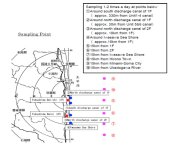
 
Re: IAEA - International Atomic Energy Agency Updates

IAEA Briefing on Fukushima Nuclear Accident (10 April 2011, 15:00 UTC)
Presentation
→ Summary of Reactor Status http://www.slideshare.net/iaea/table-summary-of-reactor-unit-status-at-10april0700-utc

On Sunday, 10 April 2011, the IAEA provided the following information on the current status of nuclear safety in Japan:

1. Current Situation

Earthquake of 7th April

External power has been restored at all sites affected by the 7th April earthquake. The 3 litres of water that were spilled at Onagawa NPP have been cleaned up.

Changes to Fukushima Daiichi Plant Status

Overall, the situation at the Fukushima Daiichi plant remains very serious but there are early signs of recovery in some functions such as electrical power and instrumentation.

In Units 1, 2 and 3, 60,000 tons of contaminated water need to be removed from the turbine buildings and trenches. This water will be transferred to the condensers of each unit and the Radioactive Waste Treatment facility. In addition, temporary storage tanks have been ordered to provide additional capacity for the water and will be located adjacent to the Radioactive Waste Treatment facility. In Unit 2 water transfer from the condenser to the condensate storage tank was completed on 9th April.

Nitrogen gas is being injected into the Unit 1 containment vessel to reduce the possibility of hydrogen combustion within the containment vessel. The pressure in this containment vessel is increasing due to the addition of nitrogen.

In Unit 1 fresh water is being continuously injected into the reactor pressure vessel through feed-water line at an indicated flow rate of 6 m3/h using a temporary electric pump with off-site power. In Units 2 and 3 fresh water is being continuously injected through the fire extinguisher lines at indicated rates of 7 m3/h and 7 m3/h respectively using temporary electric pumps with off-site power.

In Unit 1 the pressure in the RPV is increasing as indicated on both channels of instrumentation. NISA has indicated that some instruments in the reactor vessel may not be working properly. In Units 2 and 3 Reactor Pressure Vessel and Drywell pressures remain at atmospheric pressure.

RPV temperatures remain above cold shutdown conditions, typically less than 95?C. In Unit 1 temperature at the feed water nozzle of the RPV is 235?C and at the bottom of the RPV is 120?C. In Unit 2 the temperature at the feed water nozzle of the RPV is 145?C. The temperature at the bottom of the RPV was not reported. In Unit 3 the temperature at the feed water nozzle of the RPV is 97?C and at the bottom of the RPV is 109?C.

The concrete pump vehicle sprayed fresh water (90 T) to the spent fuel pool in Unit 4 on 9th April.

There has been no change in status in Units 4, 5 and 6 and the Common Spent Fuel Storage Facility

2. Radiation monitoring

On 9th April, deposition of both iodine-131 and cesium-137 was detected in 5 and 6 prefectures respectively. The values reported for iodine-131 ranged from 7.8 to 650 becquerel per square metre and for cesium-137 from 3.3 to 370 becquerel per square metre. The highest deposition was reported for both, iodine-131 and cesium-137, in the prefecture of Ibaraki.

Gamma dose rates are measured daily in all 47 prefectures, the values tend to decrease. Dose rates are also reported daily for the Eastern part of the Fukushima prefecture, these values are decreasing as well. As of 9th April, the gamma dose rates, reported for distances of more than 30 km to Fukushima-Daiichi, ranged from 0.2 to 26 μSv/h.

In an additional monitoring programme, set up by MEXT in cooperation with local universities, measurements are made in 27 cities in 14 prefectures. As of 9th April, in 19 cities, the gamma dose rates were below 0.1 μSv/h. In 7 cities, gamma dose rates range from 0.13 to 0.21 μSv/h. In Fukushima City, a value of 0.46 μSv/h was observed. Typical normal background levels are in the range of 0.05 to 0.10 μSv/hr.

As of 7th April, iodine-131 and cesium-137 was detectable in drinking water in a few prefectures at levels far below those that would trigger recommendations for restrictions of drinking water. As of 7th April, one restriction for infants related to I-131 (100 Bq/l) is in place as a precautionary measure in only one village of the Fukushima prefecture.

On 9th April, the IAEA Team made measurements at 8 different locations in the Fukushima area at distances of 32 to 62 km, North and North West from the Fukushima nuclear power plant. At these locations, the dose rates ranged from 0.4 to 3.7 microsievert per hour. At the same locations, results of beta-gamma contamination measurements ranged from 0.03 to 0.19 Megabecquerel per square metre.

3. Marine Monitoring

As reported in the brief of 8th April TEPCO is conducting a programme for seawater (surface sampling) at a number of near-shore and off-shore monitoring locations as illustrated in Map 1

Map 1: TEPCO Seawater Sampling Locations

seawater-sampling-1-100411.jpg

Until 3rd April a general decreasing trend was observed at the sampling points TEPCO 1 to TEPCO 4. After the discharge of contaminated water on 4th April, a temporary increase has been reported. On 10th April new data (7th April sampling day) for all TEPCO sampling points have been reported. At the near-shore sampling points TEPCO 1, TEPCO 3 and TEPCO 4 a further decrease with respect to the results for the sampling day 5th April, in the concentration of I-131 and Cs-137 have been reported. At the sampling point TEPCO 2 a further increase in the concentration of I-131 (from about 40 kBq/l on 6 April to about 150 kBq/l) and Cs-137 (from about 25 kBq/l on 6th April to about 65 kBq/l) was observed.

For the six sampling points TEPCO 5 to TEPCO 10th on April 7th the following has been reported: as TEPCO 5, TEPCO6 and TEPCO10 a further decrease of the levels of I-131 below 0.2 kBq/l and of Cs-137 below 0.1 kBq/l were measured.

At TEPCO7 an increase of the level of I-131 has been recorded. At TEPCO8 and TEPCO9 an increase in the levels of both I-131 and Cs-137 has been measured. The reading at TEPCO 9 is from about 0.07 kBq/l (6th April) to about 0.37 kBq/l for I-131 and from about 0.05 kBq/l to about 0.21 kBq/l for Cs-137.

MEXT Off-shore Monitoring Programme

As reported in the brief of 8th April MEXT initiated the off-shore monitoring program on 23rd March and subsequently points 9 and 10 added to the off-shore sampling scheme. On 4th April, MEXT added two sampling points to the north and west of sampling point 1. These are referred to as points A and B on the map below.

Map 2: MEXT Seawater Sampling Locations

seawater-sampling-2-100411.jpg

n 10th April new data have been reported (7th April sampling day) for the sampling points MEXT6 and MEXT10. At MEXT6 sampling point an increase in I-131 (from about 18 Bq/l on 3rd April to about 57Bq/l) and Cs-137 (from about 10Bq/l on 3rd April to about 20 Bq/l) has been measured. At MEXT10 the level of I-131 remains about 35 Bq/l as on the 3rd of April; Cs-137 is no longer detectable.

No new data for the other sampling points have been reported at the date of 10th April.

4. IAEA Activities

The team of three agency experts in BWR technology will conclude their mission on Monday with meetings with NISA, MOFA(Ministry of Foreign Affairs), MEXT, Atomic Energy Commission (AEC), and Nuclear Safety Commission (NSC).

In addition to those reported in previous briefs the following countries have submitted monitoring data and/or links to national websites where data is available: USA, Czech Republic and Latvia.

http://iaea.org/newscenter/news/tsunamiupdate01.html
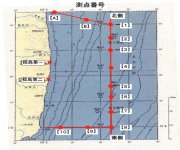
 
Back
Top