

Pathfinder
Editor, Senior Moderator
Translation Google
Hit by two cyclones in 10 days, Madagascar launches an appeal for help
February 13, 2026 Humanitarian aid
In ten days, cyclones Fytia and Gezani struck Madagascar, leaving 400,000 people in a state of emergency. Heavy rains, flooding, and violent winds caused considerable damage.
The Malagasy government has declared a state of national disaster and launched an appeal for international aid, while the World Food Programme ( WFP ) warns of rising humanitarian needs in a context of limited resources.
In Tamatave, for example, the second largest city on the island, the extent of the damage is impressive.
“Authorities have indicated that 80% of the city has been damaged. The city is operating with approximately 5% of its electricity supply and there is no water,” said Tania
Goosens, WFP Representative in Madagascar, during a regular UN press briefing in Geneva, noting that their office and a warehouse on site were completely destroyed.
Malagasy authorities report 38 deaths, 374 injuries, and more than 260,000 people affected. Families have lost their homes, and numerous buildings, businesses, schools, and even the hospital have suffered significant damage.
Families on the street
“During my visit, I saw families trying to salvage what little remained of their homes; many are spending the night in houses whose roofs have been torn off, while the rains are frequent. Uprooted trees and debris litter the city streets. It is difficult to obtain fuel,” testified Ms. Goosens, who is returning from a UN mission in this province.
These poignant accounts of the destruction and daily hardships faced by the population illustrate the urgency of the humanitarian intervention that had been prepared by UN agencies before the arrival of Cyclone Gezani.
In collaboration with the Malagasy government and the Red Cross, the World Food Programme (WFP) successfully provided advance financial assistance to 11,000 of the most vulnerable households to help them cope with the shock of this latest disaster, a first for the country. This early action enabled families to purchase food, protect their essential belongings, and better prepare before the storm hit.
Thanks to this early assistance, families were better prepared to face the immediate impact of the disaster, while the World Food Programme (WFP) is now continuing its operations to assist even more people affected. With its remaining food supplies, including fortified biscuits and rice, the UN agency aims to help 18,000 people impacted by the two cyclones.
This is the IOM.
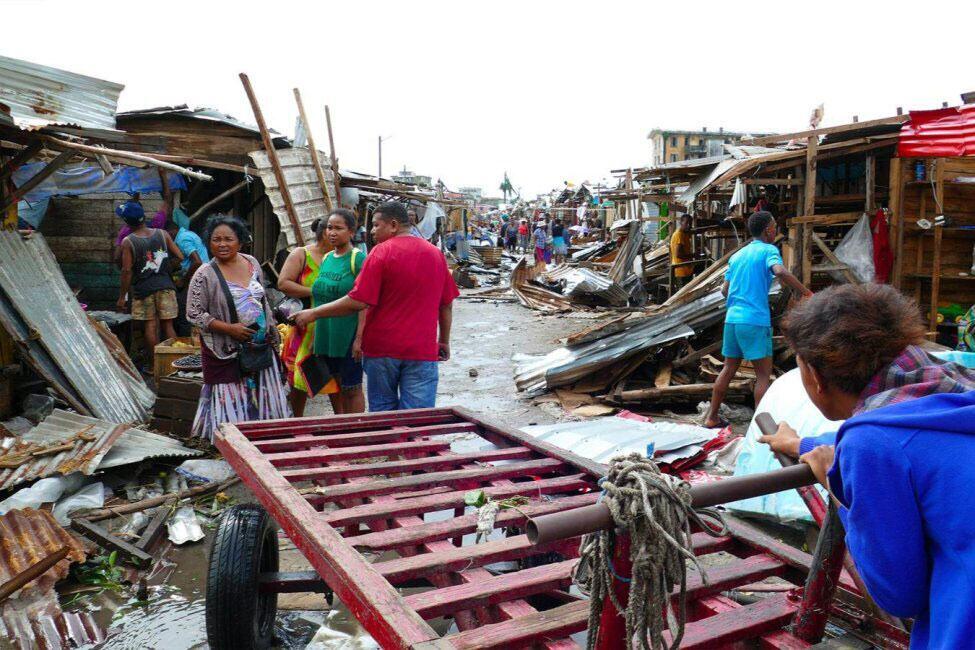
In northeastern Madagascar, considerable damage to homes and essential infrastructure is visible following the passage of Cyclone Gezani.
Lack of funding
This emergency aid comes in an already worrying context, where the Malagasy population was facing significant food insecurity.
Before the cyclones, 1.57 million people were suffering from food insecurity, including 84,000 facing a food emergency. According to the UN agency, this figure is expected to rise to 1.8 million.
"Beyond the planned anticipatory measures and rapid interventions, no funding is available to deal with cyclones, and urgent donor support is essential to ensure rapid delivery and fill the gaps in the delivery of aid to people affected by cyclones," insisted Ms. Goosens.
Faced with this lack of funding and the urgency of the needs, cash assistance appears to be a key solution for quickly supporting communities and strengthening local markets. “Families tell us they have lost everything. Many have taken refuge in damaged houses or temporary sites, without knowing how they will get their next meal.”
But the agency faces a shortfall of $18.3 million for the next six months. These constraints have already forced the WFP to limit aid during the lean season in some parts of the country to just 10% of the initially planned beneficiaries.
https://news.un.org/fr/story/2026/02/1158403
Hit by two cyclones in 10 days, Madagascar launches an appeal for help
February 13, 2026 Humanitarian aid
In ten days, cyclones Fytia and Gezani struck Madagascar, leaving 400,000 people in a state of emergency. Heavy rains, flooding, and violent winds caused considerable damage.
The Malagasy government has declared a state of national disaster and launched an appeal for international aid, while the World Food Programme ( WFP ) warns of rising humanitarian needs in a context of limited resources.
In Tamatave, for example, the second largest city on the island, the extent of the damage is impressive.
“Authorities have indicated that 80% of the city has been damaged. The city is operating with approximately 5% of its electricity supply and there is no water,” said Tania
Goosens, WFP Representative in Madagascar, during a regular UN press briefing in Geneva, noting that their office and a warehouse on site were completely destroyed.
Malagasy authorities report 38 deaths, 374 injuries, and more than 260,000 people affected. Families have lost their homes, and numerous buildings, businesses, schools, and even the hospital have suffered significant damage.
Families on the street
“During my visit, I saw families trying to salvage what little remained of their homes; many are spending the night in houses whose roofs have been torn off, while the rains are frequent. Uprooted trees and debris litter the city streets. It is difficult to obtain fuel,” testified Ms. Goosens, who is returning from a UN mission in this province.
These poignant accounts of the destruction and daily hardships faced by the population illustrate the urgency of the humanitarian intervention that had been prepared by UN agencies before the arrival of Cyclone Gezani.
In collaboration with the Malagasy government and the Red Cross, the World Food Programme (WFP) successfully provided advance financial assistance to 11,000 of the most vulnerable households to help them cope with the shock of this latest disaster, a first for the country. This early action enabled families to purchase food, protect their essential belongings, and better prepare before the storm hit.
Thanks to this early assistance, families were better prepared to face the immediate impact of the disaster, while the World Food Programme (WFP) is now continuing its operations to assist even more people affected. With its remaining food supplies, including fortified biscuits and rice, the UN agency aims to help 18,000 people impacted by the two cyclones.
This is the IOM.
In northeastern Madagascar, considerable damage to homes and essential infrastructure is visible following the passage of Cyclone Gezani.
Lack of funding
This emergency aid comes in an already worrying context, where the Malagasy population was facing significant food insecurity.
Before the cyclones, 1.57 million people were suffering from food insecurity, including 84,000 facing a food emergency. According to the UN agency, this figure is expected to rise to 1.8 million.
"Beyond the planned anticipatory measures and rapid interventions, no funding is available to deal with cyclones, and urgent donor support is essential to ensure rapid delivery and fill the gaps in the delivery of aid to people affected by cyclones," insisted Ms. Goosens.
Faced with this lack of funding and the urgency of the needs, cash assistance appears to be a key solution for quickly supporting communities and strengthening local markets. “Families tell us they have lost everything. Many have taken refuge in damaged houses or temporary sites, without knowing how they will get their next meal.”
But the agency faces a shortfall of $18.3 million for the next six months. These constraints have already forced the WFP to limit aid during the lean season in some parts of the country to just 10% of the initially planned beneficiaries.
https://news.un.org/fr/story/2026/02/1158403