AlaskaDenise
In Memoriam
* Pregnancy, obesity big risk factors for flu death
* Elderly patients also more likely to die
By Maggie Fox, Health and Science Editor
WASHINGTON, Aug 20 (Reuters) - About half of people who have died from swine flu have been pregnant or had other health conditions, especially diabetes and conditions linked with obesity, French researchers reported on Thursday.
And although older people seem to be less likely than others to get infected, if they do get the new H1N1 flu, they are more likely to die, the team at the French Institute for Public Health Surveillance in St. Maurice, France, reported.
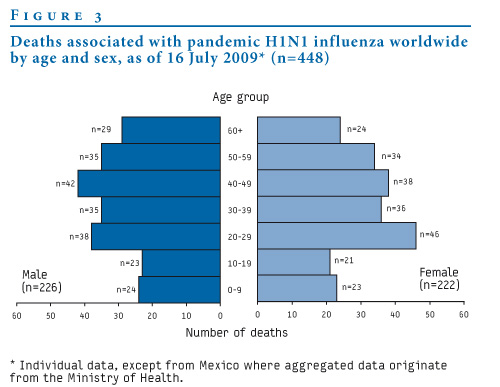
"Most deaths (51 percent) occurred in the age group of 20-49 year-olds, but there was considerable variation depending on country or continent," the researchers wrote in Eurosurveillance.
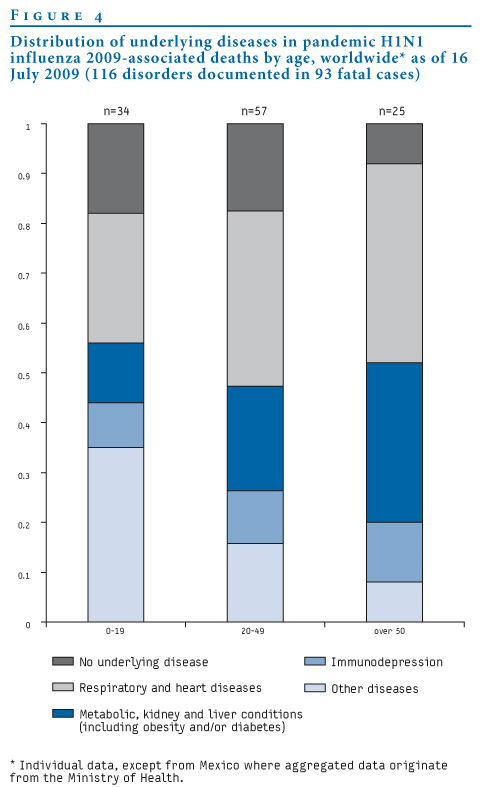
"There was documented underlying disease in at least 49 percent of documented fatal cases worldwide to date," they added. "Two risk factors are noticeable: pregnancy and obesity."
Several governments have said pregnant women should be first to be immunized when vaccines become available.
The study also suggested children are not as hard-hit as feared. "Although previous reports suggested that cases of pandemic H1N1 influenza 2009 occurred mainly in children, the mean and median age of the 343 fatal cases in our analysis were 37 years," they wrote.
Twelve percent of people who died were 60 or older. In contrast, more than 90 percent of deaths from seasonal influenza are in people over the age of 65.
HEALTHY VICTIMS
"A high proportion of young children (27 percent of the 0-9 year-olds) and young adults (22 percent of the 20-29 year-olds) had no documented underlying disease, while 60 percent of people over the age of 60 years had heart or respiratory disease," the French team added.
"Diabetes and obesity were the most frequently identified underlying conditions and were found in fatal cases over the age of 20 years."
Several reports have suggested a link with obesity but researchers are not clear whether obesity itself raises the risk of severe complications from H1N1 swine flu, or whether obese people have other conditions that have not been diagnosed.
The case fatality rate for H1N1 swine flu is less than 1 percent -- about 0.4 percent, the researchers said. This is a little higher than for seasonal influenza but lower than the 2 percent to 3 percent fatality rate estimated for the 1918 Spanish influenza pandemic.
They also noted that it is difficult and dangerous to try to estimate fatality rates while an epidemic is ongoing, in part because serious cases and deaths get reported first.
First reports in New York, for instance, suggested a case fatality rate of 0.2 percent, they wrote. But later reports took into account mild cases.
"A telephone survey estimated that in fact 250,000 cases had occurred in that city of 8.3 million inhabitants, resulting in an estimated case fatality rate of 0.0008 percent," they added.
"The pandemic, however, is far from over, and deaths will unfortunately continue to occur."
Companies making vaccines include AstraZeneca's (AZN.L) MedImmune unit, CSL (CSL.AX), GlaxoSmithKline Plc (GSK.L), Novartis AG (NOVN.VX) and Sanofi-Aventis SA (SASY.PA).
Roche AG and Gilead Sciences Inc's (ROG.VX) Tamiflu and Glaxo's Relenza can treat influenza, and are currently recommended for people who have a high risk of complications or death.
http://www.reuters.com/article/europeCrisis/idUSN20537892
* Elderly patients also more likely to die
By Maggie Fox, Health and Science Editor
WASHINGTON, Aug 20 (Reuters) - About half of people who have died from swine flu have been pregnant or had other health conditions, especially diabetes and conditions linked with obesity, French researchers reported on Thursday.
And although older people seem to be less likely than others to get infected, if they do get the new H1N1 flu, they are more likely to die, the team at the French Institute for Public Health Surveillance in St. Maurice, France, reported.
"Most deaths (51 percent) occurred in the age group of 20-49 year-olds, but there was considerable variation depending on country or continent," the researchers wrote in Eurosurveillance.
"There was documented underlying disease in at least 49 percent of documented fatal cases worldwide to date," they added. "Two risk factors are noticeable: pregnancy and obesity."
Several governments have said pregnant women should be first to be immunized when vaccines become available.
The study also suggested children are not as hard-hit as feared. "Although previous reports suggested that cases of pandemic H1N1 influenza 2009 occurred mainly in children, the mean and median age of the 343 fatal cases in our analysis were 37 years," they wrote.
Twelve percent of people who died were 60 or older. In contrast, more than 90 percent of deaths from seasonal influenza are in people over the age of 65.
HEALTHY VICTIMS
"A high proportion of young children (27 percent of the 0-9 year-olds) and young adults (22 percent of the 20-29 year-olds) had no documented underlying disease, while 60 percent of people over the age of 60 years had heart or respiratory disease," the French team added.
"Diabetes and obesity were the most frequently identified underlying conditions and were found in fatal cases over the age of 20 years."
Several reports have suggested a link with obesity but researchers are not clear whether obesity itself raises the risk of severe complications from H1N1 swine flu, or whether obese people have other conditions that have not been diagnosed.
The case fatality rate for H1N1 swine flu is less than 1 percent -- about 0.4 percent, the researchers said. This is a little higher than for seasonal influenza but lower than the 2 percent to 3 percent fatality rate estimated for the 1918 Spanish influenza pandemic.
They also noted that it is difficult and dangerous to try to estimate fatality rates while an epidemic is ongoing, in part because serious cases and deaths get reported first.
First reports in New York, for instance, suggested a case fatality rate of 0.2 percent, they wrote. But later reports took into account mild cases.
"A telephone survey estimated that in fact 250,000 cases had occurred in that city of 8.3 million inhabitants, resulting in an estimated case fatality rate of 0.0008 percent," they added.
"The pandemic, however, is far from over, and deaths will unfortunately continue to occur."
Companies making vaccines include AstraZeneca's (AZN.L) MedImmune unit, CSL (CSL.AX), GlaxoSmithKline Plc (GSK.L), Novartis AG (NOVN.VX) and Sanofi-Aventis SA (SASY.PA).
Roche AG and Gilead Sciences Inc's (ROG.VX) Tamiflu and Glaxo's Relenza can treat influenza, and are currently recommended for people who have a high risk of complications or death.
http://www.reuters.com/article/europeCrisis/idUSN20537892