• FluTrackers.com Inc. does not provide medical advice. Information on this web site is collected from various internet resources, and the FluTrackers board of directors makes no warranty to the safety, efficacy, correctness or completeness of the information posted on this site by any author or poster. The information collated here is for instructional and/or discussion purposes only and is NOT intended to diagnose or treat any disease, illness, or other medical condition. Every individual reader or poster should seek advice from their personal physician/healthcare practitioner before considering or using any interventions that are discussed on this website. By continuing to access this website you agree to consult your personal physican before using any interventions posted on this website, and you agree to hold harmless FluTrackers.com Inc., the board of directors, the members, and all authors and posters for any effects from use of any medication, supplement, vitamin or other substance, device, intervention, etc. mentioned in posts on this website, or other internet venues referenced in posts on this website.
  • We are not asking for any donations. Do not donate to any entity who says they are raising funds for us.

Haiti - Cholera outbreak 2022 - 2023

Mary Wilson

Well-known member
October 2, 2022 6:43 PM UTC

By Harold Isaac and Ralph Tedy Erol

PORT-AU-PRINCE, Oct 2 (Reuters) - Haiti on Sunday said it has confirmed one case of cholera and was studying several suspected cases, signaling the return of the disease that killed some 10,000 people in a 2010 outbreak that has been blamed on a United Nations peacekeeping force.

Haiti's Health Ministry said in a statement that one case had been confirmed in the Port-au-Prince area and that there were suspect cases in the town of Cite Soleil outside the capital.

The ministry urged citizens to take sanitary measures such as washing hands and consuming clean drinking water to avoid catching the disease. ...

https://www.reuters.com/business/he...ra-is-investigating-suspect-cases-2022-10-02/
 
Melina Miles on Twitter
Tweeting mainly about #Haiti #humanrights #justice #climatechange I work with
@HaitiResponse @Project3L @ManifestHaiti


Just as the Ministry of Health in #Haiti has confirmed a positive case of #cholera & suspected cases in Cite Soleil, the Caribbean Bottling Company reported that as of today they have run out of diesel & can no longer produce or distribute clean drinking water in Haiti

1:24 PM · Oct 2, 2022

https://twitter.com/melindayiti/status/1576639330080079873?cxt=HHwWgoCqhcHHrOErAAAA
 
Haiti reports cholera deaths for first time in 3 years

Oct 02, 2022 7:05 pm

PORT-AU-PRINCE, Haiti (AP) — Haiti’s government on Sunday announced that at least eight people have died from cholera, raising concerns about a potentially fast-spreading scenario and reviving memories of an epidemic that killed nearly 10,000 people a decade ago.

The cases - the first cholera deaths reported in three years - came in a community called Dekayet in southern Port-au-Prince and in the gang-controlled seaside slum of Cite de Soleil, where thousands of people live in cramped, unsanitary conditions.

“Cholera is something that can spread very, very quickly,” warned Laure Adrien, director general of Haiti’s health ministry.

... The United Nations said in a statement that it is working with Haiti’s government to “mount an emergency response to this potential outbreak,” stressing that health teams need to be guaranteed safe access to areas where cases have been reported.

The deaths come as a lack of fuel and ongoing protests shut down the availability of basic services across Haiti, including medical care and clean water, which is key to helping fight cholera and keep patients alive.

https://www.jamaicaobserver.com/latest-news/haiti-reports-cholera-deaths-for-first-time-in-3-years/
 
October 4, 2022

snip


The crisis-wracked Caribbean nation said Sunday that at least seven people had died from cholera, raising fresh fears of a resurgent epidemic nearly three years after Haiti's last confirmed case.

Multiple suspected cases had been detected in Carrefour-Feuilles on the edge of the capital Port-au-Prince, and in the coastal neighbourhood of Cite Soleil.

The areas are entirely controlled by gangs and access to them has been very difficult since the end of July 2022.

Conditions in Haiti have worsened in recent weeks with blockades, fuel shortages, protest marches, looting and general strikes.

"This situation greatly complicates the humanitarian response", WHO spokesman Christian Lindmeier told reporters in Geneva.

"The situation is evolving rapidly, and it is possible earlier cases have been undetected."

He said the death toll figures could be "much higher".

more...


https://medicalxpress.com/news/2022-10-haiti-cholera-toll.html
 
UN supports government efforts following cholera outbreak in Haiti


Oct 3, 2022

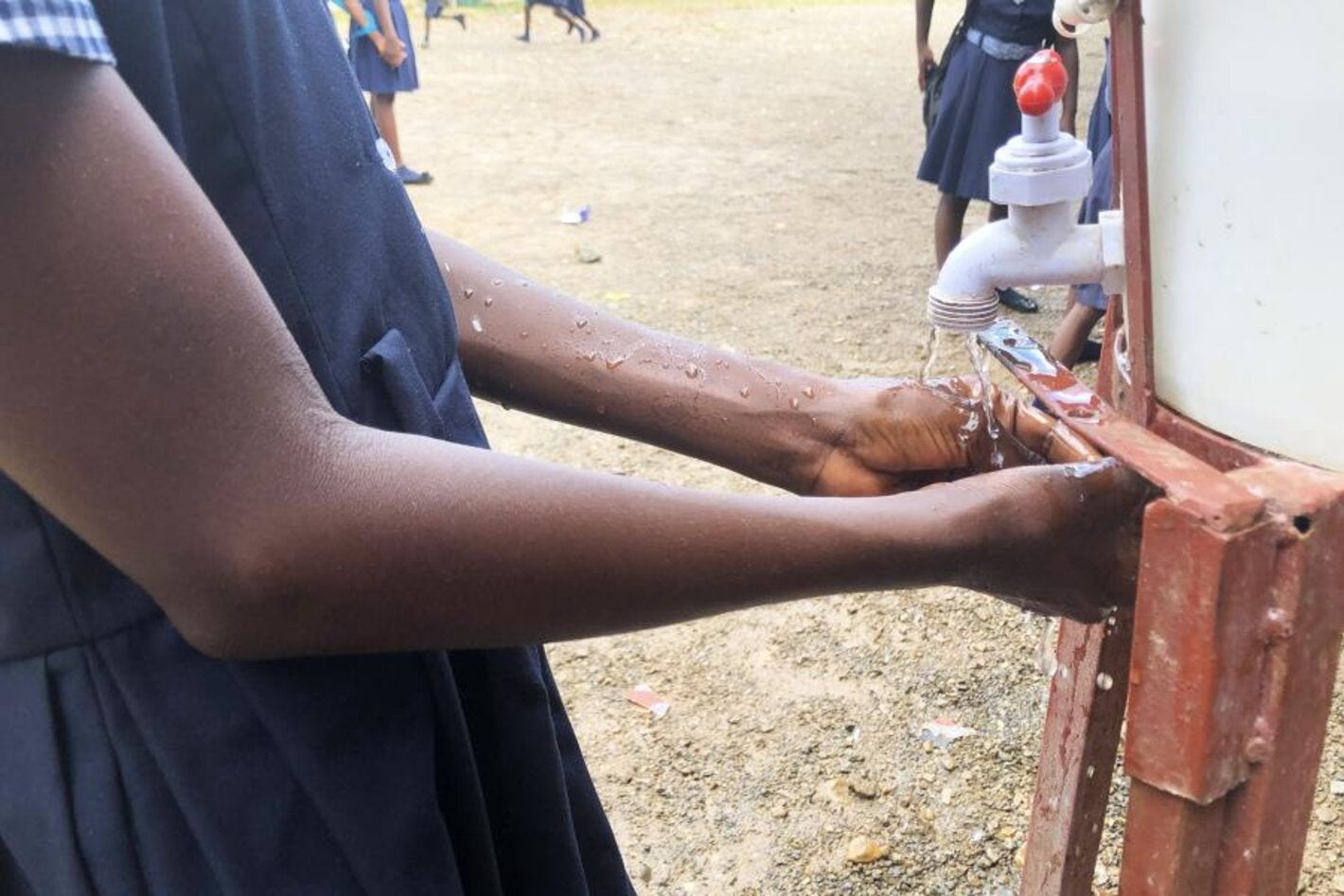
un_haiti-daniel_dickinson_washing_hands_helps_to_prevent_the_spread_of_cholera.jpg


Port-au-Prince, October 2, 2022 – The United Nations is supporting the Government of Haiti's efforts to contain an outbreak of cholera and provide emergency measures to save lives, following the confirmation of a positive case and the identification of several suspected cases in the metropolitan region of Port-au-Prince.

The case was identified thanks to the cholera surveillance mechanism, set up by the Haitian authorities and supported by the United Nations. He was confirmed as positive at the National Public Health Laboratory in Port-au-Prince on Sunday, October 2. Other suspected cases are currently under investigation.

The United Nations is actively monitoring the situation and working with the government to organize an emergency response to this potential outbreak, focused not only on limiting the spread of the disease, but also on informing the population on how to take action. immediate action to save lives at home. Additional support will consist of expanded surveillance, increased water and sanitation supplies, development of cholera treatment centers and strengthened case management.

Specialized emergency response teams are ready to be deployed to support affected communities. However, in the current socio-political context, it is imperative that these teams be guaranteed safe access to areas where cases have been confirmed or suspected, in order to help mitigate the risk of a significant outbreak.

The United Nations calls on all Haitian citizens to remain vigilant and take proactive measures to prevent the spread of cases within the community. These measures consist of:
  • boil water for drinking and cooking
  • washing hands regularly with soap and potable/treated water (boiled or chlorinated)
  • protect food from pests (rodents and insects)
  • use latrines
Anyone who has symptoms of acute watery diarrhea and vomiting should seek medical attention immediately and should stay hydrated using oral rehydration salts which can be made at home by combining one liter of clean water, six teaspoons of sugar and ½ teaspoon of salt. Infants should receive at least half a liter of oral rehydration salts daily while children should receive one liter. Adults should consume three liters a day.

The United Nations is committed to standing with the Haitian people and Haitian authorities as they seek to contain this outbreak.


https://www.paho.org/en/news/3-10-20...-cholera-haiti
 
Translation Google

Haiti: first cholera deaths in three years - WHO


October 3, 2022

More than three years after the end of the cholera epidemic in Haiti, at least seven people have died of this disease in the country, announced Monday the American branch of the World Health Organization (WHO).

"After more than 3 years without any case of cholera reported in Haiti, on October 2, 2022, national authorities reported two confirmed cases of Vibrio cholerae O1 in the metropolitan area of ​​the Haitian capital, Port-au-Prince", indicated in its latest status report the Pan American Health Organization (PAHO).

According to a count made on Sunday, October 2, 2022, “more than 20 suspected cases of cholera, including 7 fatalities, preceding these areas were detected by health personnel”.

On October 2, 2022, two cases were confirmed as Vibrio cholerae O1 among samples tested by Haitian health authorities.


Rise in cases of severe acute diarrhea among hospitalized patients

In addition, as of October 2, 2022, “clusters of suspected cases and deaths are being investigated in various communes of the Ouest department, including the communes of Cité Soleil and Port-au-Prince” , added the US branch of the UN World Health Agency.

During the epidemiological week, health facilities located in certain sectors of the communes of Port-au-Prince and Cité Soleil reported an increase in cases of severe acute diarrhea among hospitalized patients, including children and adults.

Most of these victims suffering from diarrheal disease died in their neighborhood and could not go to the hospital", indicated the UN humanitarian agencies, noting the problems of access for ambulances and patients to care facilities, after the installation of various roadblocks to protest against rising fuel prices.


Roadblocks and insecurity prevent patients from accessing health facilities

Faced with this resurgence of cases, the Pan American Health Organization is working in coordination with Haitian public health authorities to support the response. Furthermore, it recommends that other Member States strengthen their surveillance systems to rapidly detect cases of cholera and outbreaks of acute diarrheal diseases, and update their preparedness and response plans.

Between October 2010 and February 2019, the cholera virus caused more than 820,000 cases, including some 10,000 deaths in Haiti. The outbreak of the disease comes as "gang violence continues to affect Port-au-Prince and other cities".

According to the WHO, access to the affected areas is difficult. “Consequently, the timely assessment of the epidemiological situation is complex,” regrets the UN agency.

In addition, the shipment of biological samples from health facilities to reference laboratories could also be affected by fuel shortages. “These factors would have an impact on the dynamics of cholera resurgence and on the severity of the disease in patients suffering from acute diarrhea,” the WHO said.


Specialized UN emergency response teams ready to deploy

More broadly, the United Nations is actively monitoring the situation and working with the government to organize an emergency response to this potential outbreak. This response is focused not only on limiting the spread of the disease, but also on informing the population on how to take immediate measures to save lives at home, said the Office of the Resident Coordinator.

According to the UN, specialized emergency response teams are ready to be deployed to support affected communities. Additional support will consist of expanded surveillance, increased water and sanitation supplies, development of cholera treatment centers and strengthened case management.

“However, in the current socio-political context, it is imperative that these teams be guaranteed safe access to areas where cases have been confirmed or suspected, in order to help mitigate the risk of a significant outbreak,” warned the United Nations.

On Monday, UN Secretary-General António Guterres expressed deep concern for the health and safety of people in Haiti following the confirmation of these positive cholera cases.

He called for "immediate and unimpeded access on the ground to facilitate the delivery of fuel for humanitarian purposes," his spokesman said in a press statement.
Fuel deliveries have been blocked at the port since mid-September, which has disrupted not only the daily lives of the Haitian people, but also the ability and capacity of the United Nations and the international community to respond to an emerging crisis. worsen.

“The Secretary-General calls on all stakeholders to work together at this time of crisis, to ensure that the progress made over the past 12 years in the fight against cholera is not eroded,” said his spokesperson. .


https://news.un.org/fr/story/2022/10/1128457
 
U.S. Embassy in Haiti

Security Alert to U.S. Citizens from Embassy Port-au-Prince- Authorized Departure Status


The U.S. Department of State has temporarily authorized departure for direct-hire U.S. government personnel and their family members in Port-au-Prince beginning October 7, 2022. Ongoing instability due to fuel shortages have resulted in the disruption of infrastructure, including sanitation and the availability of medical supplies, potable water and food. Sixty cases of cholera have been identified in Port-au-Prince as of October 4. The U.S. government remains extremely limited in its ability to provide emergency services to U.S. citizens in Haiti, and is unable to provide shuttle or transportation services. Food and water insecurity is an increasing concern.

U.S. Embassy Port-au-Prince reminds U.S. citizens that Haiti has the highest Travel Advisory level (Level 4: DO NOT TRAVEL) for kidnapping, crime, and civil unrest. Local police generally lack the resources to respond effectively to requests for assistance. U.S. citizens should depart Haiti now in light of the current health and security situation and infrastructure challenges. These issues may limit access to essential services in an emergency, including access to banks, money transfers, urgent medical care, internet and telecommunications, and public and private transportation options. Please see information on What the Department of State Can and Can’t Do in a Crisis.

If you are visiting or living in Haiti and have not yet enrolled in the Smart Traveler Enrollment Program (STEP), we strongly encourage you to do so. STEP is a free service that allows U.S. citizens and nationals traveling and living abroad to enroll their trip with the nearest U.S. Embassy or Consulate so that we can provide important security and other information to the U.S. citizen community in Haiti.

Actions to take:
  • Do not travel to Haiti;
  • U.S. citizens in Haiti should return to the U.S.
  • Have emergency supplies of food, water and medications;
  • Ensure drinking water has been treated;
  • Use extreme caution while traveling in the country;
Assistance:
  • U.S. Embassy Port-au-Prince, Haiti
Tabarre 41, Route de Tabarre

Emergencies: +509-2229-8000

Non-emergency inquiries: acspap@state.gov

Website: https://ht.usembassy.gov/
  • Contact the State Department’s Bureau of Consular Affairs
1-888-407-4747 toll-free from the United States and Canada

1-202-501-4444 from other countries
By U.S. Mission Haiti | 7 October, 2022 | Topics: Alert

https://ht.usembassy.gov/security-alert-to-u-s-citizens-from-embassy-port-au-prince-authorized-departure-status/
 
Source: https://www.paho.org/en/documents/cholera-haiti-risk-assessment

PAHO: Cholera Haiti - Risk assessment

After more than three years with no cases of cholera reported in Haiti, on 2 October 2022, the national authorities reported two confirmed cases of Vibrio cholerae O1 in the greater Port-au-Prince area. Clusters of suspected cases and deaths are under investigation in various communes of Ouest Department. In epidemiological week (EW) 39 of 2022 (ending 2 October), healthcare facilities reported an increase in cases of severe acute diarrhea among hospitalized patients, including both children and adults. As of 2 October, more than 20 suspected cases of cholera, including seven fatalities, were detected by healthcare personnel.

Haiti has been experiencing a security crisis due to violence from armed gangs in Port-au-Prince and other cities which has exacerbated the humanitarian crisis in the country. The current vulnerabilities include malnutrition, internally displaced persons (IDPs), non-functional structures, limited or lack of access to health services, fuel shortages, limited access to safe water and poor sanitation and hygiene facilities, amongst others. These factors would have an impact on the dynamics of the cholera resurgence and on the severity of the disease in patients with acute diarrhea. Access to the affected areas is difficult and therefore, timely assessment of the epidemiological situation and provision of health care for cases is complex.

The security crisis has also impacted the capacity of the public health system and the international organizations to respond effectively. Haiti experienced the first outbreak of cholera ever confirmed in the country beginning in October 2010, affecting over 820,000 people and killing 9,792 persons until January 2019 (between 2010 and 2016, between 27,000 and 340,000 cases of cholera were reported annually in Haiti, with a case fatality ratio (CFR) between 0.8-2.2%). Based on this, the national risk is assessed as very high. In the Region of the Americas, since 2010, confirmed cases of cholera have predominantly been reported from Haiti, followed by the Dominican Republic, Cuba, and Mexico. Sporadic imported cases have also been reported in other countries in the Region. While there is greater capacity in other countries to detect and control outbreaks of cholera, concurrent emergencies in the region have stretched out and weakened these capacities. Based on this, the regional risk is assessed as moderate.

9 Oct 2022
 
Translation Google


Haiti / Health: the cholera epidemic rages at the national penitentiary

The Info Net
24 hours ago

Several cholera-related deaths have been recorded at the national penitentiary. The first reports report more than 23 prisoners dead from diarrhoea, hunger and misery. The Office of Legal Assistance to Vulnerable People, BAJAPVU reports 16 cases of death due to cholera during the period from October 6 to 7, 2022.

The Office of Legal Assistance to Vulnerable Persons, BAJAPVU criticizes the behavior of the judicial authorities who, according to him, do not take any measures to fight against prolonged preventive detention. He also expresses his concerns about the degrading situation of the detainees and issues a cry of alarm to the competent authorities, in order to take all the necessary measures to bring an urgent solution to this situation.

BAJAPVU says it regrets that the fundamental rights of prisoners continue to be trampled on in Haiti. It asks the Ministry of Public Health and Population (MSPP) to set up an emergency unit dealing with health aspects in the various prison centers of the country, more particularly in the national penitentiary, in order to avoid more cases of mortality from cholera.

https://lefiletinfo.com/haiti-sante-lepidemie-de-cholera-fait-rage-au-penitencier-national/
 
UN News
UN chief calls for ‘enhanced security support’ for Haiti, as crisis worsens; cholera deaths mount

10 October 2022

Amid a deteriorating security situation in Haiti, UN Security-General António Guterres called on Sunday for the Security Council to consider deploying armed forces to help the country address immense humanitarian concerns.

In a statement, Mr. Guterres announced that he has submitted a letter to the Council, containing options for enhanced security support to Haiti.

The move by the UN chief comes a week after Haitian Prime Minister Ariel Henry sent out a request to the international community, for a “specialized armed force” to intervene in a country which has effectively ground to a halt.

in a statement released on Saturday, the US Government State Department said that it was reviewing the Haitian Government’s request, in coordination with international partners, to “determine how we can increase our support to help address Haiti’s fuel shortage and security constraints.” However, the composition of such an armed force has, so far, not been specified, and no commitments to send troops have been made by any UN Member States.

Last month, gangs blockaded the Verreux fuel terminal, Haiti’s main fuel port, leading to major gas and diesel shortages, and causing businesses and hospitals to shut down. ...

Cholera cases grow: 16 confirmed deaths

Cholera cases are continue to grow amid the worsening insecurity. On Monday, the UN Spokesperson Stéphane Dujarric, said that as of Sunday, there were 32 confirmed cases, 224 suspected, and 16 confirmed deaths.

“Despite access and logistical challenges, we and our humanitarian partners are supporting the Ministry of Health on the cholera response”, said the UN Spokesperson. “More than 43 health facilities around Port-au-Prince and the Centre region have been identified and will be used to treat cholera patients.”

Twelve health facilities are currently receiving patients for treatment, while water points have been installed and water and sanitation teams have begun to do training and chlorination interventions.

Risk Communication and Community Engagement efforts are ongoing, said Mr. Dujarric, and currently target one million people a day with text messages in creole.


National prison alert

Cases have also been identified in the national prison in Port-au-Prince. As of yesterday, according to the authorities, there were 2 confirmed, with nine deaths and 39 suspected cases of cholera.

The national authorities are investigating the situation to identify the source, the UN Spokesperson told correspondents in New York, and they have been mounting an urgent response.

“The UN system has provided the national prison authority with an ad hoc protocol to prevent and minimize, as much as possible, the outbreak and its implications.”

https://news.un.org/en/story/2022/10/1129372
 
WHO Director-General's opening remarks at media briefing – 12 October 2022

12 October 2022
...
Now to Haiti, where we are deeply concerned about the outbreak of cholera in the capital Port au Prince and surrounding areas.

According to the Ministry of Public Health and Population, as of last Saturday there were 224 suspected cases of cholera and 16 deaths.

One quarter of suspected cases are among children aged under five years.

On Sunday, the ministry also confirmed a cholera outbreak in the National Penitentiary of Port-au-Prince, with 39 suspected cases and nine deaths.

The situation is evolving rapidly, and it is possible that earlier or additional cases have not been detected.

The surveillance mechanism set up by the Haitian Government, with the support of WHO and other partners, is operating under extremely difficult circumstances.

The affected areas are very insecure, and controlled by gangs, which makes it very difficult to collect samples, and delays laboratory confirmation of cases and deaths.

In addition, fuel shortages are making it harder for health workers to get to work, causing health facilities to close and disrupting access to health services for people who live in some of the most deprived communities.

WHO is working with the Ministry of Health and our partners to coordinate the response, including for surveillance, case management, water and sanitation, vaccination and community engagement.

But to bring this outbreak under control, we need secure access to the affected areas
----------
https://www.who.int/news-room/speec...g-remarks-at-media-briefing---12-october-2022
 
Source: https://www.who.int/emergencies/disease-outbreak-news/item/2022-DON415


Cholera - Haiti

12 October 2022


Situation at a glance
After more than 3 years with no reported cases of cholera in Haiti, on 2 October 2022, the national authorities reported two confirmed cases of Vibrio cholerae O1 in the greater Port-au-Prince area.
The current cholera outbreak is taking place in Port-au-Prince and Cité Soleil. These are areas that are experiencing civil unrest with several thousand people having been displaced as a result of the increase in violence.
Description of the cases
Between 25 September and 8 October 2022, the Haiti Ministry of Public Health and Population (MSPP per its acronym in French) reported 32 laboratory-confirmed cases of Vibrio cholerae (including two identified as serogroup O1), and 224 suspected cases from Port-au-Prince and Cité Soleil. A total of 189 cases have been hospitalized, of which 16 deaths have been reported. Of the total reported cases, 55% are males and 49% are aged 19 years or younger. The most affected age group is 1 to 4-year-olds (Figure 3).


The first cholera outbreak was reported in Haiti in October 2010. Nationally, a total of 820 000 cases of cholera including 9792 deaths were reported between October 2010 and February 2019 (Figure 4). The last confirmed case of cholera was reported in January 2019 in I’Estère in the Artibonite department of Haiti. The country did not report a single confirmed case of cholera in the three years from January 2019 to January 2022.

Epidemiology of Cholera
Cholera is an acute enteric infection caused by ingesting the bacteria Vibrio cholerae present in contaminated water or food. It is mainly linked to inadequate sanitation and insufficient access to safe drinking water. It is an extremely virulent disease that can cause severe acute watery diarrhoea resulting in high morbidity and mortality, and can spread rapidly, depending on the frequency of exposure, the exposed population and the setting. Cholera affects both children and adults and can be fatal if untreated.
The incubation period is between 12 hours and five days after ingestion of contaminated food or water. Most people infected with V. cholerae do not develop any symptoms, although the bacteria are present in their faeces for 1-10 days after infection and are shed back into the environment, potentially infecting other people. Among people who develop symptoms, the majority have mild or moderate symptoms, while a minority develop acute watery diarrhoea with severe dehydration. Cholera is an easily treatable disease. Most people can be treated successfully through prompt administration of oral rehydration solution (ORS).
The consequences of a humanitarian crisis – such as disruption of water and sanitation systems, or the displacement of populations to inadequate and overcrowded camps – can increase the risk of cholera transmission, should the bacteria be present or introduced.
A multisectoral approach including a combination of surveillance, water, sanitation and hygiene, social mobilization, treatment, and oral cholera vaccines is essential to control cholera outbreaks and to reduce deaths.

Public health response

Emergency response activities are being conducted by the Ministry of Health, WHO and other partners as below.
  • The Incident Management Support Team (IMST) has been activated for outbreak response activities
  • Regular epidemiological alerts are being published by WHO for enhanced information sharing and wider community awareness about the current epidemiological situation.
  • Updated information on the event has been provided to the other Member States through the International Health Regulations (IHR) National Focal Points (NFPs) network.
  • Support has been provided to Haiti health authorities for control and response actions as well as resources such as cholera kits.
  • Event-based surveillance has been strengthened to monitor official and unofficial reports for information regarding the local situation.
  • The multisectoral response plan has been developed with a focus on case management, water, hygiene and sanitation (WASH), vaccination, communication and psychosocial support, strengthening preparedness in unaffected departments, and advocating to improve security conditions to facilitate the response.
  • WHO is working in coordination with the public health authorities to characterize this event and support the response.
WHO risk assessment

The current cholera outbreak in Haiti, combined with the ongoing crisis related to gang violence, social unrest, and insecurity, has strained the health system’s response capacity. In addition, the country is highly vulnerable and at risk of natural hazards, which have exacerbated previous humanitarian crises.
The overall risk assessed for this outbreak is very high at the national level, due to the following reasons:
  1. The current socio-economic situation, ongoing humanitarian crisis and poor health conditions are affecting a large proportion of the population leaving them vulnerable to the risk of cholera infection and recurrence of cholera.
  2. In the affected areas of Port-au-Prince metropolitan area and southern departments, there are 24 200 internally displaced people who have been displaced due to gang violence.
  3. Limited access of the general population to safe drinking water and to sanitation facilities.
  4. Due to the insecurity, the public health system and international partners have limited human resources in Haiti, reducing the capacity to respond.
  5. Logistics issues and lack of access to fuel and insecurity lead to difficulties to import supplies and challenges to access the affected areas. Therefore, timely assessment of the epidemiological situation is complex. Additionally, for the same reasons the shipment of biological samples from healthcare facilities to reference laboratories could also be hampered.
The risk at the regional level is assessed as moderate, due to the following reasons:
  1. Since 2010, confirmed cases of cholera have predominantly been reported from Haiti, followed by the Dominican Republic, Cuba, and Mexico.
  2. Sporadic imported cases have also been reported in other countries in the Region. However, there is greater capacity in other countries to detect and control outbreaks of cholera. Neighboring Dominican Republic which is likely the most at risk of an increase in cases, has the capacity to detect and control cholera.
The risk at the global level was assessed as low.
WHO will continue to evaluate the epidemiological situation in Haiti.

WHO advice

WHO recommends improving access to proper and timely case management of cholera cases, improving access to safe drinking water and sanitation infrastructure, as well as improving infection, prevention, and control in healthcare facilities. These measures along with the promotion of preventive hygiene practices and food safety in affected communities are the most effective means of controlling cholera. Targeted public health communication messages are a key element for a successful campaign.
Oral cholera vaccine (OCV) should be used in conjunction with improvements in water and sanitation to control cholera outbreaks and for prevention in targeted areas known to be at high risk for cholera.
Given the re-emergence of cholera in Haiti, WHO recommends that Member States strengthen and maintain surveillance for cholera for the early detection of suspected cases and to provide adequate treatment and prevent its spread. Early and adequate treatment limits the case fatality ratio (CFR) of hospitalized patients to less than 1%.
WHO does not recommend any travel or trade restrictions on Haiti based on the currently available information.

Further information
Citable reference: World Health Organization (12 October 2022). Disease Outbreak News; Cholera - Haiti. Available at: https://www.who.int/emergencies/dise...em/2022-DON415


See all DONs related to this event
Read more about Cholera

 
Cholera outbreak in Haiti 2022 - Situation Report 1
117781-paho-sitrep-n1cholera-haiti13102022-f0.png

DOWNLOAD(406.19 KB)

  • After more than 3 years with no cases of cholera reported in Haiti, on 2 October 2022, the national authorities reported two confirmed cases of Vibrio cholerae O1 in the greater Port-au-Prince area. As of 12 October, the Ministry of Health (MSSP) has reported 47 cases confirmed and 35 deaths in Ouest and Center Departments.
  • Civil unrest, lack of access to affected populations and fuel and logistics constrains are hindering the emergency response operations.
  • Difficulties accessing water presents a high risk to expand the epidemic to other departments in the country.
  • PAHO/WHO is working hand in hand with the Ministry of Health (MSPP) and other international agencies and partners in support of the National Cholera Response plan, which includes the following 5 pillars defined by health authorities:

    ▪ Laboratory and epidemiological surveillance
    ▪ Case management
    ▪ Water, sanitation, and hygiene (WASH)
    ▪ Communications and community engagement ▪ Vaccination

    ▪ Crosscutting sectors logistics and coordination
  • To avoid the loss of life, PAHO/WHO is supporting the scale up of case management by providing lifesaving medical supplies to the MSPP and partners to open and run Cholera Treatment Centers (CTCs) in the most affected areas.
14 Oct 2022

https://www.paho.org/en/documents/ch...ation-report-1
 
Translation Google

Cholera: even more cases

Written by: Gerard Hirsh Resil, 10/15/22082

Cholera continues to spread in the country. Several suspected cases and deaths are being investigated in several health centers in the country, according to the words of Jean Marc Biquet, project coordinator at Doctors Without Borders in Turgeau. Proof that the disease is gaining ground.

Indeed, MSF is currently saturated with suspected cases, and has had to transfer patients to other centres. Jean Marc Briquet, project coordinator on behalf of MSF, says he has received since September 29 to date about 200 proven cases of cholera, not counting those who have been referred elsewhere for space saturation.

An emergency within an emergency

Haiti is facing a crisis involving multiple factors, including a complex socio-political situation and a shortage of fuel affecting all sectors of life, especially health services, which have a direct impact on the responses to be given, especially in times of crisis. like this one.

Access to communities affected by cholera is very difficult, said MSF 's head of medical activities who, according to him, complicates the real -time evaluation of the epidemiological evolution of the disease.

" Hospitals were already struggling to stay open due to the limited mobility of their staff and the lack of fuel, now comes the addition of cholera emergencies , all this to tell you how delicate the situation is," said Mr. Samson. .

In addition, the project coordinator Jean Marc Biquet returned to the socio-political crises and the security crisis which have, in a way, limited access to drinking water and sanitation services . These factors, he says, have an impact on the dynamics of disease resurgence.

Response from health actors

In response to this resurgence of the disease, the MSPP, in the words of its Director General Lauré Adrien, has set in motion its incident management system at regional and national levels in close coordination with health centers and health structures to support the response nationwide.

Finally, as the rainy season progresses in the country, rapid interventions are essential to stem the cholera epidemic . The epidemic amplifies the already urgent humanitarian needs.

Recall that during the period from October 2010 to February 2019, at least 820,000 cases, including about 10,000 cholera-related deaths, were reported in the country. This disease is resurfacing in a difficult socio-political context where the population lacks everything.

Gerard Hirsh Brazil
-------------------------------------
https://www.lenational.org/post_article.php?pol=2706
 
Translation Google

Cholera: without fuel we will not be able to do anything, alarms Dr Pape

Posted on 2022-10-21 | lenouvelliste.com
...
The head of the Gheskio centers, Jean William Pape, was the guest of Panel Magik this Friday to comment on the evolution of the cholera epidemic in Haiti. According to him, the shortage of fuel prevents saving lives, especially in disadvantaged neighborhoods. " It is a disaster. The department did everything it could do. The problem lies in the shortage of fuel. This shortage has caused the worst humanitarian crisis I have experienced in Haiti for 40 years. Cholera outbreaks are found in slums, plagued by unsanitary conditions and where clean water is not available. But without fuel we will not be able to fly to their rescue,” he said. “I don't see how we're going to get out of this crisis if the fuel isn't accessible. It is mandatory,” he pleaded.

Data shared by the Ministry of Health establishes that children are the most affected by this wave. An observation shared by Jean William Pape. “Unlike the previous epidemic, young children are more affected. These children are vulnerable to all infectious diarrhoea. While they are in a situation of severe or moderate malnutrition, their immunity drops considerably. The majority of the cases we receive are children. Our CTC down town is saturated,” he described. Because children are more affected by the epidemic, Dr. Pape suggests mass distribution of oral serum to families.

While the fuel crisis is responsible for the outbreak's resurgence, Dr Pape paradoxically believes it has also slowed its spread. “Without fuel, public transport is at a standstill. So there is no population movement. The epidemic cannot spread to the whole country in a few weeks as was the case in 2010", he pointed out, suggesting that the authorities take advantage of this reprieve in order to set up contingency plans in the departments that are not yet affected, ”he suggests.

https://lenouvelliste.com/article/2...nt-on-ne-pourra-rien-faire-salarme-le-dr-pape
 
Translation Google

Cholera: more than 1,700 suspected cases, according to UNICEF

Posted on 2022-10-24 | the newcomer . com

"Since the start of the cholera epidemic in Haiti, children under the age of 14 have accounted for nearly half of the 1,700 suspected cases. Gang violence, fuel shortages and street blockades hamper humanitarian access clean water and health services for patients, increasing the risk of women and children dying from the disease," a UNICEF statement said.

“When you can't get clean water from the tap in your home, when you don't have soap or water purifying tablets and you don't have access to health services, you may not survive cholera or other waterborne diseases. The devastating impact of fuel restrictions and violence has made children the main victims of the epidemic,” said Bruno Maes, UNICEF Representative in Haiti.

As of October 22, the Ministry of Public Health and Population had reported 1,752 suspected cases and 40 deaths from cholera in Haiti, nearly half of them in the vulnerable urban area of ​​Cité Soleil in the capital. "It is feared that the actual number is significantly higher due to reporting issues," the statement said.

As the waterborne disease spreads in Haiti, health centers, including those with cholera treatment centers, have limited access to fuel to operate normally, as armed gangs have blocked access to the Haiti's main port and fuel terminals. Many health workers and families at risk of cholera struggle to find safe routes to health facilities amid insecurity and high transport costs. Even when they reach a health service, they are likely to be without electricity, as there is no fuel to run the generator. Transporting water by tanker truck, the main source of drinking water for many areas of Haiti,

“About 70,000 gallons of fuel are needed to serve 9 of the 16 cholera treatment centers in Port-au-Prince and some partner hospitals. So far, UNICEF has only been able to secure a third of that amount. , which endangers the lives of many women and children affected by cholera. Access of health personnel to suspected cases in communities is a major challenge, preventing the monitoring, surveillance and reporting of cholera cases" , deplores the United Nations body.

https://lenouvelliste.com/article/238675/cholera-plus-de-1-700-cas-suspects-selon-lunicef
 
Source: https://www.laprensalatina.com/haiti-cholera-outbreak-kills-almost-100/

Haiti cholera outbreak kills almost 100
Online News EditorNovember 4, 2022

Port-au-Prince, Nov 4 (EFE).- A cholera outbreak in Haiti has so far caused 97 deaths, the Ministry of Public Health and Population said Friday.

In its latest report, the department specified that there are 4,194 suspected cases, 502 confirmed and 3,698 hospitalized.

The average age of hospitalized people is 19 years and the positivity rate is 38.49 percent, while among the suspected cases, 59.63 percent are men and 40.37 percent women.

The department of Haiti most affected by cholera is Ouest, which includes Port-au-Prince, with over 450 confirmed cases.

The capital has the highest number of cases – 1,848 suspected and 154 confirmed – with the epicenter in impoverished and densely populated neighborhood Cité Soleil, with almost 1,000 suspected cases and 69 confirmed.

Also heavily affected is the main civilian prison in Port-au-Prince, with 368 suspected cases and 14 confirmed cases...
 
Translation Google

Overwhelmed by cases of cholera and malaria, Pestel and the Cayemittes Islands call for help

Posted on 2022-11-07 | the newcomer . com

In a voice note shared via social networks, the mayor of the municipality of Pestel, Marie-Elène Lespérance asks for human and material reinforcements for the health center of her municipality overwhelmed by the cases of cholera and malaria, coming from her region and of the Cayemittes Islands.

“Yesterday, Saturday November 5, out of 30 suspected cases, the majority of whom are children, only 27 tested positive for cholera. Nine of them were found to have been diagnosed on Sunday November 6. The others are cases of malaria “, explained to the newspaper the medical director of the health center of Pestel, Dr Fedelin Semerant.

According to what the doctor and the mayor Marie-Elène Lespérance reported, these people from Pestel and the Cayemites islands fell ill because of the lack of basic social services on the island. Many of the inhabitants of these municipalities continue to defecate in nature for lack of toilets, they have no access to drinking water, regrets Dr. Semerant.

Due to lack of fuel, the majority of those infected could not go to the only health center in the region, namely the Pestel hospital. Meanwhile, cases continue to multiply in Pestel and on the Cayemittes Islands.

Faced with this situation, which is getting worse day by day, the medical director, says he fears the worst, he wishes and makes several requests to the central and local authorities so that they can focus on raising awareness and to come lend a hand to the weak teams, which are trying to hold on for the moment.

In addition, in a note dated November 5, the Health Department of Grand'Anse issues a cry of alarm and informs that due to the shortage of inputs and the chronic scarcity of fuel, it wishes to receive without delay, to be able to provide case management, the following items: ringer lactate, chlorine, clean gloves, antibiotics, ORS and cholera beds.

However, the Health Department of Grand'Anse was able to "collect some inputs to strengthen the UNHCR of Corail, the center of Pestel and the center of Pointe Sable, thanks to the logistical support of the HHF", can we read in this document, signed by Dr. Angello Duvelson.

https://lenouvelliste.com/article/2...stel-et-les-iles-cayemittes-appellent-a-laide
 
Source: https://www.cnn.com/2022/11/09/americas/haiti-cholera-deaths-136-intl-latam/index.html

Haiti’s cholera death toll rises to 136 as outbreak gets ‘worse and worse every day’
By Etant Dupain
Published 2:31 PM EST, Wed November 9, 2022

A deadly resurgence of cholera in Haiti has claimed 136 lives so far, according to the Caribbean nation’s health ministry.

Eighty-nine of the people who were infected died in a hospital or in cholera treatment centers, while 47 of them died at home, according to the Haitian Health Ministry’s statement.

The Haitian government is working with international health organizations to respond to the crisis.

“We have been receiving 250 people a day lately. There’s a surge in cases in most parts of the metropolitan area. This is very concerning for us as we have a limited capacity with around 350 beds in our cholera treatment centers,” said Alexandre Marcou, a communications officer for medical NGO Médecins Sans Frontières, speaking to CNN on Wednesday...
 
Back
Top