

Pathfinder
Editor, Senior Moderator
Guinea worm a greater challenge than smallpox
By Madison Park, CNN<SCRIPT type=text/javascript>cnnAuthor = "By Madison Park, CNN";</SCRIPT>
<SCRIPT type=text/javascript>if(location.hostname.indexOf( 'edition.' ) > -1) {document.write('April 6, 2010 -- Updated 1303 GMT (2103 HKT)');} else {document.write('April 6, 2010 9:03 a.m. EDT');}</SCRIPT>April 6, 2010 9:03 a.m. EDTApril 6, 2010 9:03 a.m. EDTApril 6, 2010 9:03 a.m. EDT
<!--endclickprintinclude--><!-- google_ad_section_end --><!--startclickprintexclude--><!--endclickprintexclude--><!-- google_ad_section_start --><!-- CONTENT --><!--startclickprintinclude--><SCRIPT language=JavaScript type=text/javascript>var clickExpire = "-1";</SCRIPT><!-- REAP --><!--startclickprintexclude--><!--===========IMAGE============-->
 <!--===========/IMAGE===========-->
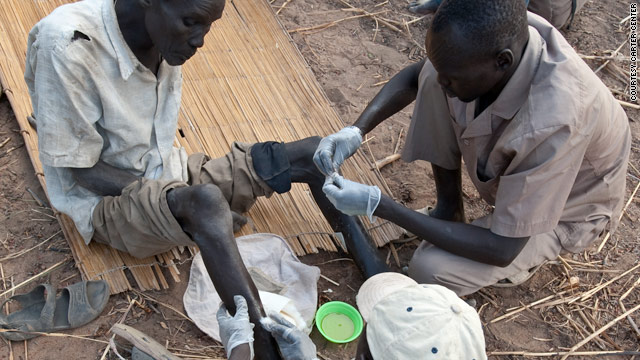
<!--===========CAPTION==========-->Dario Mere, who lives in Terekeka county of southern Sudan receives treatment on his leg from two health workers.
(CNN) -- Since 1980, one disease has been erased from the face of the Earth: smallpox. Health officials believe Guinea worm disease will soon be next.
Public health officials hope the rare disease, which remains only in sub-Saharan Africa, will be eradicated by 2015. About 85 percent of the 3,000 world cases are in southern Sudan; the remaining 15 percent are reported in Ghana, Ethiopia and Mali.
Thirty years ago, the World Health Organization declared that smallpox had been eradicated after an intense global vaccination campaign and development of surveillance programs to identify and contain cases.
For more on Guinea worm disease: Vanquishing the 'fiery serpent'
An effective vaccine was key in eradicating the scourge, said Dr. D.A. Henderson, who directed the WHO global smallpox eradication campaign from 1966 to 1977.
"One hundred percent of the people were protected with a single vaccination, and it protected for 10 years," said Henderson, now a professor of medicine and public health at the University of Pittsburgh. "Smallpox was the worst disease, so there was motivation for a lot of people and governments to be rid of the disease."
In comparison, Guinea worm disease is an obscure condition and has no vaccine. Eradicating the painful worm depends on getting access to clean water and changing people's behavior.
"I am persuaded that the Guinea worm effort is entirely possible," Henderson said. "It's going to be difficult because most of the problem is in southern Sudan where there is lot of hostility and fighting."
Guinea worm disease is usually non-fatal, but causes crippling pain and can immobilize its victims from being able to work, farm and function.
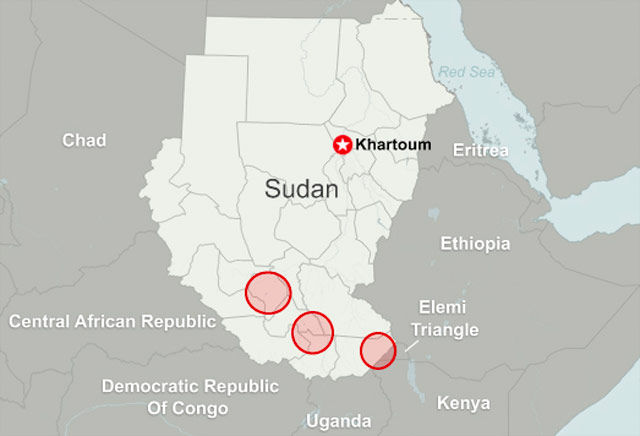 <CITE class=expCaption>Map: Guinea worm trouble spots</CITE><SCRIPT type=text/javascript> if(typeof currExpandable != "string") { currExpandable = ''; } currExpandableHeight = 436; var mediaObj = new Object(); mediaObj.type = 'flash'; mediaObj.contentId = ''; mediaObj.source = 'http://i.cdn.turner.com/cnn/interactive/2010/03/health/map.sudan.focal.points/single.tab.explainer.swf';</SCRIPT>
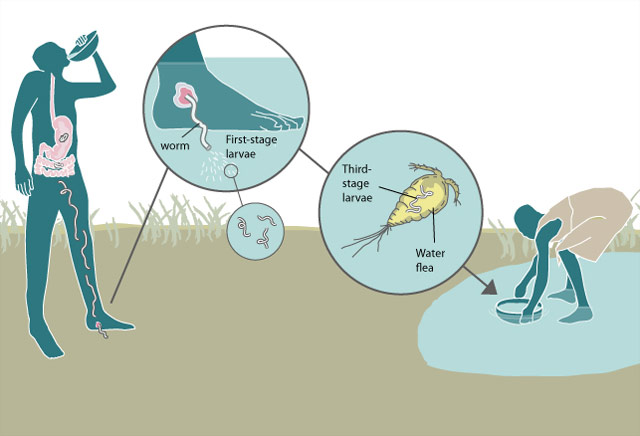 <CITE class=expCaption>Graphic: Life cycle of the guinea worm</CITE>
<CITE class=expCaption></CITE>
<CITE class=expCaption>.../</CITE>
<CITE class=expCaption></CITE>
<CITE class=expCaption>Complete story at:</CITE>
<CITE class=expCaption></CITE>
<CITE class=expCaption>http://www.cnn.com/2010/HEALTH/04/06/eradicating.diseases.who/?hpt=Sbin</CITE>
By Madison Park, CNN<SCRIPT type=text/javascript>cnnAuthor = "By Madison Park, CNN";</SCRIPT>
<SCRIPT type=text/javascript>if(location.hostname.indexOf( 'edition.' ) > -1) {document.write('April 6, 2010 -- Updated 1303 GMT (2103 HKT)');} else {document.write('April 6, 2010 9:03 a.m. EDT');}</SCRIPT>April 6, 2010 9:03 a.m. EDTApril 6, 2010 9:03 a.m. EDTApril 6, 2010 9:03 a.m. EDT
<!--endclickprintinclude--><!-- google_ad_section_end --><!--startclickprintexclude--><!--endclickprintexclude--><!-- google_ad_section_start --><!-- CONTENT --><!--startclickprintinclude--><SCRIPT language=JavaScript type=text/javascript>var clickExpire = "-1";</SCRIPT><!-- REAP --><!--startclickprintexclude--><!--===========IMAGE============-->
<!--===========CAPTION==========-->Dario Mere, who lives in Terekeka county of southern Sudan receives treatment on his leg from two health workers.
(CNN) -- Since 1980, one disease has been erased from the face of the Earth: smallpox. Health officials believe Guinea worm disease will soon be next.
Public health officials hope the rare disease, which remains only in sub-Saharan Africa, will be eradicated by 2015. About 85 percent of the 3,000 world cases are in southern Sudan; the remaining 15 percent are reported in Ghana, Ethiopia and Mali.
Thirty years ago, the World Health Organization declared that smallpox had been eradicated after an intense global vaccination campaign and development of surveillance programs to identify and contain cases.
For more on Guinea worm disease: Vanquishing the 'fiery serpent'
An effective vaccine was key in eradicating the scourge, said Dr. D.A. Henderson, who directed the WHO global smallpox eradication campaign from 1966 to 1977.
"One hundred percent of the people were protected with a single vaccination, and it protected for 10 years," said Henderson, now a professor of medicine and public health at the University of Pittsburgh. "Smallpox was the worst disease, so there was motivation for a lot of people and governments to be rid of the disease."
In comparison, Guinea worm disease is an obscure condition and has no vaccine. Eradicating the painful worm depends on getting access to clean water and changing people's behavior.
"I am persuaded that the Guinea worm effort is entirely possible," Henderson said. "It's going to be difficult because most of the problem is in southern Sudan where there is lot of hostility and fighting."
Guinea worm disease is usually non-fatal, but causes crippling pain and can immobilize its victims from being able to work, farm and function.
<CITE class=expCaption></CITE>
<CITE class=expCaption>.../</CITE>
<CITE class=expCaption></CITE>
<CITE class=expCaption>Complete story at:</CITE>
<CITE class=expCaption></CITE>
<CITE class=expCaption>http://www.cnn.com/2010/HEALTH/04/06/eradicating.diseases.who/?hpt=Sbin</CITE>