
• FluTrackers.com Inc. does not provide medical advice. Information on this web site is collected from various internet resources, and the FluTrackers board of directors makes no warranty to the safety, efficacy, correctness or completeness of the information posted on this site by any author or poster. The information collated here is for instructional and/or discussion purposes only and is NOT intended to diagnose or treat any disease, illness, or other medical condition. Every individual reader or poster should seek advice from their personal physician/healthcare practitioner before considering or using any interventions that are discussed on this website. By continuing to access this website you agree to consult your personal physican before using any interventions posted on this website, and you agree to hold harmless FluTrackers.com Inc., the board of directors, the members, and all authors and posters for any effects from use of any medication, supplement, vitamin or other substance, device, intervention, etc. mentioned in posts on this website, or other internet venues referenced in posts on this website.
  • We are not asking for any donations. Do not donate to any entity who says they are raising funds for us.

Governor Jindal: We Need Federal Government to Join Us in the Fight to Protect Our Way of Life

Pathfinder

Editor, Senior Moderator
Gov. Jindal: Heavy Oil Now in Louisiana's Wetlands


4622169487_3e8a456bc8.jpg
<SCRIPT type=text/javascript>Y.E.onDOMReady(show_notes_initially);</SCRIPT>
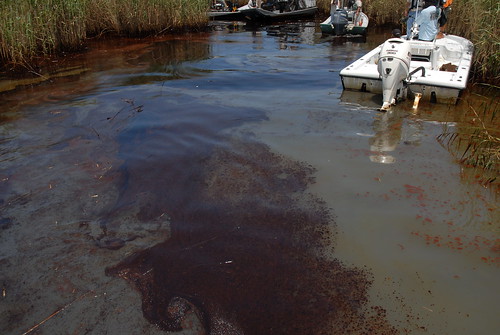
<SCRIPT type=text/javascript>F.decorate(_ge('photo_notes'), F._photo_notes).notes_go_go_go(4622169487, 'http://farm5.static.flickr.com/4019/4622169487_3e8a456bc8_t.jpg', '3.1444');</SCRIPT><FORM id=fave_form style="VISIBILITY: hidden" method=post>Thick oil pools in the waters along Louisiana?s coast. Governor Bobby Jindal toured oil impacted marshlands by boat on May 19, 2010, near Pass a Loutre.
Photo courtesy of Governor Jindal?s Office. </FORM>
4622169925_487611b80e.jpg
<SCRIPT type=text/javascript>Y.E.onDOMReady(show_notes_initially);</SCRIPT>
4622170539_dc66cba326.jpg
<SCRIPT type=text/javascript>Y.E.onDOMReady(show_notes_initially);</SCRIPT>
<SCRIPT type=text/javascript>F.decorate(_ge('photo_notes'), F._photo_notes).notes_go_go_go(4622170539, 'http://farm5.static.flickr.com/4019/4622170539_dc66cba326_t.jpg', '3.1444');</SCRIPT><FORM id=fave_form style="VISIBILITY: hidden" method=post>Photo courtesy of Governor Jindal?s Office. </FORM>
<FORM id=fave_form style="VISIBILITY: hidden" method=post>VENICE (May 19, 2010)</FORM>
Today, Governor Bobby Jindal joined Plaquemines Parish President Billy Nungesser and other local officials for a meeting and boat tour off the coast of Plaquemines Parish in the Pass a Loutre area where he observed firsthand substantial oil impact on Louisiana?s wetlands. The Governor and local officials rode through and inspected thick, dark oil that has made its way into the state?s fragile wetlands. The Governor held a press conference in Venice following the tour where he renewed his plea to the Army Corps of Engineers to issue an emergency permit so the dredging plan can begin quickly.

Governor Jindal said, ?We saw some heavy oil stranded in the wetlands. The oil is no longer just a projection or miles from our shore. The oil is here. It is on our shores and in our marsh.

?To put this in perspective, our state has already lost 2,300 square miles of coastal lands since the 1930s. This is like losing the entire state of Rhode Island or Delaware. This is the same area that is home to one of our nation's most productive estuaries. We have been working aggressively to reverse this trend of coastal land and wetlands loss.

?Today ? we saw clearly that this oil has the potential to stop and reverse the progress we have made in the last two years. Our state was on track to have the lowest rate of land loss in 80 years as a result of our efforts and investments in our coast. Our shrimpers were rebounding, our oyster fishermen were recovering and our coastal communities were rebuilding.

?This spill fundamentally threatens Louisiana's way of life. The oil is here and the time to act is now. We are asking the Corps to approve our dredging plan today without any further delay. We have already asked the Coast Guard to approve advancing the resources we will need to implement this plan, including barges and other dredging ships, so we can get to work quickly.?

OIL IMPACT

According to NOAA, the total amount of Louisiana shoreline with oil impact to date is 34.52 miles. DEQ has confirmed shoreline impacts to date on: the Chandeleur Islands, Whiskey Island, Raccoon Island, South Pass, East Fourchon/Elmers Island, Grand Isle, Trinity Island, Brush Island, and the Pass a Loutre area.

DREDGING PLAN

The Governor repeated his call for the Corps to quickly approve the dredging plan to build ?sand booms? along the alignment of the state?s historic barrier islands in the Chandeleurs, Barataria Bay and Timbalier Bay. CPRA filed for an emergency permit last week from the Army Corps of Engineers. Once the Corps approves the plan, land is expected to begin being built in around ten days.

In anticipation of receiving a permit from the Corps, the state has already begun steps to prioritize and determine the capacity of each sand borrow site needed to construct the sand boom. The state has boats out conducting surveys. Magnetometers were used to identify existing pipelines, and side-scan sonar used to develop images of the seafloor. Sampling and assessments are being performed to identify contaminated sediments and to ensure that the materials are safe and the receiving areas are clean.

STRATEGIES TO PROTECT LOUISIANA?S COAST

Governor Jindal said, ?In Plaquemines, just like our other coastal areas, we are leaning forward to explore multiple avenues for protecting our coast.

We know booming is one option ? but we cannot only count on boom to protect our coast, especially as the supply of boom continues to fall short of what is needed to protect many areas.

?We continue to be concerned about the shortage of boom in parishes west of the river and we?re pushing the Coast Guard and BP for more boom in these and other sensitive areas.?

The Governor reiterated that he is not simply waiting for more boom, and instead, the state continues to pursue alternative options to booming.

Governor Jindal said, ?We are aggressively pursuing booming alternatives, as that is only one tool in the toolbox.?


The Governor provided an update on various alternative projects being pursued to contain the oil:
  • Elmer?s Island at Grande Isle: National Guard engineers continue to backfill gaps and conduct maintenance in the vicinity of Elmer?s Island where they closed a 785-foot gap last week.
  • Port Fourchon Sandbag Drop Operations: About 30 engineers from the 928th Engineer Company are filling five total gaps in the vicinity of Thunder Bayou in Port Fourchon. Teams are currently working simultaneously in the vicinity of Thunder Bayou and also on the western side of Elmer?s Island. Engineers are working from each end to the center to backfill five cuts on the island. Gap 1 on the east end is now 80 percent complete and Gap 5 on the west end is about 85 percent complete. The National Guard already closed a large 150-foot gap there last week.
  • Tiger Dam Project at Southwest Pass: Around 42 engineers from the 528th Engineer Battalion are working to secure 7.1 miles in Southwest Pass with Tiger Dams. Approximately 1.5 miles of the Tiger Dam is now completed and Guardsmen are currently assembling, laying out, and inflating additional sections. National Guardsmen have already positioned 92 pallets of Tiger Dam to Grand Isle for future deployment ? which is around 7 miles of dam material.
  • Sand Fill: CPRA and the National Guard have also leaned forward and identified approximately 40 total locations where gaps in barrier islands could be filled with sandbags or dump trucks of sand. This strategy would complement a more complete and extensive dredging/sand booming plan.
As of this morning, the National Guard has now dropped 220 sandbags on Pelican Island to completely fill the first gap there, which was around 200 feet. They will begin to fill the second gap there today. There are eight gaps total in the plan for Pelican Island and another six gaps that need to be filled with sand bags in the plan for Scofield Island. Also, the National Guard?s staging area in Buras is now operational ? which allows Blackhawks lifting the sandbags to make more trips more quickly and help speed up the work there.
  • Hesco Baskets: The state also recently got approval to deploy Hesco baskets on the backside of Grand Isle, Lafourche and in Cameron Parish to protect the shorelines there. Today, representatives from the National Guard, DNR and Lafourche Parish are meeting to coordinate Hesco basket placement in Lafourche.
Freshwater Diversions: The state is also already running a variety of freshwater diversions to push freshwater out to protect the shore.

http://emergency.louisiana.gov/Releases/05192010-oil.html
 
Re: Gov. Jindal: Heavy Oil Now in Louisiana's Wetlands

Re: Gov. Jindal: Heavy Oil Now in Louisiana's Wetlands

Unbelievable.

Thanks to you, Treyfish, Muscade, and everyone who is following this.

A real public health threat and disaster.

:(
 
Re: Gov. Jindal: Heavy Oil Now in Louisiana's Wetlands

Re: Gov. Jindal: Heavy Oil Now in Louisiana's Wetlands

Governor Jindal Meets with Coastal Parish Leaders, Announces New Strategies to Protect Coast to Fill Void

BATON ROUGE (May 23, 2010) - Today, Governor Bobby Jindal met with parish leaders from across the coast to assess resources and announce strategies they are pursuing to fill the void they are currently seeing in response efforts to stop the oil spill. Before the meeting, Governor Jindal joined Plaquemines Parish President Nungesser for a meeting and boat tour of Cat Island off the coast of Plaquemines Parish, where they saw first-hand some substantial oil impact on a bird sanctuary that included Louisiana?s state bird, the Brown Pelican, which only recently was removed from the Endangered Species List.

Governor Jindal said, ?Today, we went on a boat tour and saw first-hand the damage at Cat Island off the coast of Plaquemines Parish. It is clear that the resources needed to protect our coast are still not here. Boom, skimmers, vacuums, jack up barges are all in short supply. Oil sits and waits for clean up ? and every day more of our marsh dies.

?We met here again with coastal parish leaders ? just like we all did when we formed our own detailed parish protection plans when it became clear that BP did not have any detailed plans of their own ? because we know we have to take action and take matters into our own hands if we are going to win this fight to protect our coast. We met with key state officials, parish presidents, emergency operations professionals, levee district officials and others to discuss strategies to fill the void we are currently seeing in response efforts to stop this oil.

?We came up with a number of new strategies designed to fill the current void in response efforts. We developed a strategy for state and parish officials to conduct daily coastal surveys of Louisiana?s coast and offshore areas. Wildlife and Fisheries will be the lead patrol agents, examining the coast along their seven existing patrol divisions. Their efforts will be supported by the National Guard and parish officials, as needed. We will communicate our findings to BP and the Coast Guard on a daily basis to ensure our coast is closely monitored and quickly cleaned. We will report these findings publicly each day so media and the public can keep updated.

?We have also identified additional equipment and personnel available from parishes, state agencies and levee districts that will help us take our own proactive measures to keep oil out of our of marshes. We plan to use this equipment to expand ongoing efforts by the National Guard to close gaps in our coastal areas. We already have 40 cuts identified and 14 prioritized.

We are identifying additional cuts and we will work to expedite fill-in efforts wherever we can with equipment from the state and parishes pooled together. The National Guard is requesting Chinooks to help expedite these operations.?

For the meeting, Governor Jindal was joined by Plaquemines Parish President Billy Nungesser, St. Tammany Parish President Kevin Davis, Lafourche Parish President Charlotte Randolph, St. Bernard Parish President Craig Taffaro, Terrebonne Parish President Michel Claudet, St. Mary Parish President Paul Naquin, Grand Isle Mayor David Carmardelle, Jean Lafitte Mayor Tim Kerner, Jefferson Parish Councilman Chris Roberts,
The Governor emphasized the requests ? including the state?s dredging plan ? made to BP and federal agencies that have yet to be granted while miles of Louisiana?s shoreline continue to be impacted by oil. According to NOAA, more than 65 miles of Louisiana?s shoreline has now been impacted by oil. To put this in perspective ? this is more than the total sea coastline of Delaware and Maryland combined.

Governor Jindal said, ?On May 2nd ? 21 days ago ? we met with the Coast Guard, the President and federal officials here in Venice. At that time, we leaned forward and requested a large amount of resources that our parishes would need under a worst-case scenario response to this oil spill.

In fact, the very next day, May 3rd, we announced all of our coastal parish detailed protection plans ? in the absence of any detailed plan from BP ? and I said that we had formally requested three million feet of absorbent boom, five million feet of hard boom and 30 ?jack up? barges.

?I said at the time that we did not expect to get all these resources the very next day, but that we saw the slow timeframe for turning around the requests we made and we wanted to lean forward and request the resources required to protect coastal Louisiana under the worst case scenario. Today is May 23rd. We have received a total of 786,185 feet of hard boom to date. Not even a million feet.

?A total of 643,148 feet of hard boom out of this total has been deployed and the remaining 143,037 feet of hard boom is sitting in staging areas, while often contractors sit and wait for orders from BP on where to deploy it. While this boom sits, oil is hitting our shores. Mile after mile of our shoreline is now oiled. This also means we are running out of boom on hand to deploy.

?On April 30th, we requested a Commercial Fisheries Failure from the U.S. Department of Commerce to activate critical assistance to our fishermen and our multi-billion a year fishing industry that is suffering from this oil spill. This request has still not been granted as of today.

?We have also been waiting on a decision on our dredging/sand-boom plan from the U.S. Army Corps of Engineers for nearly two weeks. We made modifications suggested by the Corps and answered every question they submitted in the same day. Even more than all of our written responses ? a picture is worth a thousand words. For days, we have had press conferences showing how sand-booming works. We have showed pictures of sand in Fourchon actively holding oil back from traveling further inland.

?I want to be clear about this ? We have only two options: we can fight the battle of removing oil in our thousands of miles of fragmented wetlands that serve as a critical nursery for wildlife or we can stop the oil 15 to 20 miles off of our coast at sand booms. Every day we are not given the authorization to move forward and create more of these sand booms is another day where that choice is made for us and more and more miles of our shore are hit by oil.?

OIL IMPACT</U>

DEQ has confirmed shoreline impacts to date on Chandeleur Island, Whiskey Island, Trinity Island, Raccoon Island, South Pass, Fourchon Beach, Grand Isle, Elmers Island, Pass a L?Outre, Brush Island, and Marsh Island.

SCAT operations yesterday afternoon recorded heavy oil impact at South Pass and Pass a L?Outre with sporadically impacted shoreline; sheen on Timbalier Bay; emulsified oil patches around E. Timbalier; oiled beach at Fourchon; oiling on E. Timbalier Island ? and an unconfirmed report of a dead bird in this area.

BOOM ALTERNATIVES</U>
The Governor provided an update on the various projects the state is undertaking as an alternative to booming:

Hesco Baskets: TheNational Guard has deployed 1 mile of Hesco baskets in the Port Fourchon area.

Elmer?s Island at Grande Isle: National Guard engineers continue to conduct maintenance on the land bridge.

Port Fourchon Sandbag Drop Operations: Engineers are filling five total gaps in the vicinity of Thunder Bayou in Port Fourchon. Engineers have already filled Gap 1 and Gap 5, and theyare working on Gap 3.

Tiger Dam Project at Southwest Pass: Engineers are working to secure 7.1 miles in Southwest Pass with Tiger Dams. Approximately 2.5 miles of the Tiger Dam is now completed and Guardsmen also erected an additional 2 miles of single layer Tiger Dam to provide initial coverage over the shoreline.

Sand-Fill: CPRA and the National Guard have also leaned forward and identified approximately 40 total locations where gaps in our barrier islands could be filled with sandbags or dump trucks of sand. This strategy would complement a more complete and extensive dredging/sand booming plan.

As of this morning, the National Guard has now dropped 625 sandbags on Pelican Island to completely fill four of the 8 gaps on the island. They are working to fill the fifth gap there today.

Freshwater Diversions: We are operating all freshwater diversions controlled by the state.

http://emergency.louisiana.gov/Releases/05232010-jindal.html
 
Re: Gov. Jindal: Heavy Oil Now in Louisiana's Wetlands

Re: Gov. Jindal: Heavy Oil Now in Louisiana's Wetlands

Governor Jindal Meets with Federal Officials, Stresses Need for Better Coordination of Response Efforts

PORT FOURCHON (May 24, 2010) - Today, Governor Bobby Jindal met with U.S. Department of Homeland Security Secretary Janet Napolitano, U.S. Department of Interior Secretary Ken Salazar, Coast Guard Admiral Mary Landry, BP COO Doug Suttles, congressional leaders and local officials to emphasize the substantial oil impact on Louisiana?s coast and why it?s critical for resources to be quickly and effectively deployed to mitigate the impact of the oil spill. Governor Jindal also outlined the strategies he is pursuing with coastal parish leaders in order to fill the void they are seeing in response efforts to the oil spill. The Governor called the response effort disjointed and said that has meant too little too late for the oil hitting the coast.

Governor Jindal said, ?Over the past weeks, I have visited a different parish and city each day and met with local officials. We have often met to discuss resources we would need to protect the coast, and unfortunately, now our visits also include an on-the-ground assessment of the damage caused by this oil spill. For anyone who has seen this damage and the impact of the oil first-hand you cannot escape the fact that this spill fundamentally threatens our way of life in Louisiana.

?Yesterday, we went out on a boat to Cat Island in Plaquemines Parish and we saw islands covered in oil where our Brown Pelicans nest. Many of the birds we could see were oiled, some to the point where they could not fly. Wildlife and Fisheries tells us the most severely oil birds are likely not even visible because they will move to the inside center of the island. The Brown Pelican, of course, is our Louisiana state bird ? and it was just recently removed from the Endangered Species List. The oil on those islands yesterday may kill off much of the island ? in addition to damaging the bird population.

?Just a few days ago, we took a boat out to Pass a L?Outre and saw thick black and brown colored oil covering much of the perimeter of the marsh out there. Again ? wildlife experts tell us this marsh may die in 5 to 7 days after the oil hits it.

?It is clear that the resources needed to protect our coast are not here.

Boom, skimmers, vacuums, and jack up barges are all in short supply. Every day oil sits and waits for clean up more of our marsh dies.

?Yesterday, we met again with coastal parish leaders ? just like we did when we formed our own detailed parish protection plans ? because we know we have to take action and take matters into our own hands if we are going to win this fight to protect our coast.

?We met with parish leaders, emergency professionals and levee district officials to discuss strategies to fill the void we are currently seeing in response efforts to stop this oil. To be clear ? our goal is to stop this oil before it gets into our marshes. The marsh is not a sandy beach. It is very difficult to clean up and environmental experts say trying to clean it up in some places could do even more harm than good.

?This means we have to stop this oil before it comes into our marsh. We have already initiated a number of strategies to do this, including: Tiger Dams, Hesco baskets, sand-bag drop operations, fresh-water diversions, sand-fill operations, and the proposal of our sand-boom plan. Because we cannot simply wait for the U.S. Army Corps of Engineers to approve the sand-booming plan, we redirected a dredge conducting restoration work on East Grand Terre ? which is east of Grand Isle ? to immediately begin constructing a sand berm as called for in the state?s barrier island plan.?
Dredging was already underway to restore the barrier island in East Grand Terre under the state?s coastal restoration program. This will help to remove oil offshore Louisiana?s mainland before it reaches Louisiana?s intricate coastal wetlands and estuary.

The Governor outlined the strategy he announced yesterday with coastal parish leaders.

Governor Jindal said, ?Working with parish leaders yesterday, we came up with new, additional strategies designed to fill the current void in response efforts. We developed a strategy for state and parish officials to have better situational awareness of the oil?s movement within Louisiana?s coast and offshore areas.

?Wildlife and Fisheries has divided the coast into sections and will be patrolling these sectors continuously so that containment and cleanup efforts can be operationalized quickly. Their efforts will be supported by the National Guard and parish officials. We will communicate our findings to the Coast Guard and BP on a daily basis to ensure our coast is continuously monitored and quickly cleaned. We will report these findings publicly each day so media and the public can keep updated and BP is held accountable for their cleanup efforts.

?We also asked that the Coast Guard refocus their efforts so that they have greater command and control on the ground where action needs to be taken quickly to save our coast. We asked for the Coast Guard to forward-deploy personnel with decision-making authority in every basin area of the coast so they can work closely with parish officials there and see the impact of the oil first-hand so they are better able to have eyes on the problem and respond quickly.?

?We have been frustrated with the disjointed effort to date that has too often meant too little too late to stop the oil from hitting our coast. We need folks in each basin that can mobilize resources quickly to contain oil when it arrives, not wait 24 hours or 48 hours. BP is the Responsible Party but we need the federal government to make sure they are held accountable and that they are indeed responsible. Our way of life depends on it. The actions taken to respond to this oil today are determining the future of our state.?

The Governor noted that part of the strategy includes identifying additional resources to enable the state to continue to lean forward and protect the coast.

Governor Jindal said, ?We have also identified additional equipment and personnel available from parishes, state agencies and levee districts that will help us take our own proactive measures to keep oil out of our of marshes. We plan to use this equipment to expand ongoing efforts by the National Guard to close gaps in our coastal areas. We already have 40 cuts identified and 14 prioritized. We are identifying additional cuts and we will work to expedite fill-in efforts wherever we can with equipment from the state and parishes pooled together. The National Guard is requesting Chinooks to help expedite these operations.?

The Governor also outlined the resources requested from the Coast Guard and BP to effectively respond to the oil spill.

Governor Jindal said, ?On May 2nd we leaned forward and requested the resources that our parishes would need under a worst-case scenario response to this oil spill. In fact, the very next day, we announced all of our coastal parish detailed protection plans and detailed that we had formally requested three million feet of absorbent boom, five million feet of hard boom and 30 ?jack up? barges.

?Today is May 24th and we have received a total of 815,569 feet of hard boom to date. Not even a million feet. 680,249 feet of this total has been deployed and 135,320 feet of hard boom sits and waits to be deployed. In the last 24 hours, we have received only 5,040 feet of hard boom. We need more boom, we need more resources, we need the materials we have requested to fight this oil and keep it out of our marsh and off of our coast.

?We continue to wait on a decision on our dredging/sand-boom plan from the U.S. Army Corps of Engineers. We made modifications suggested by the Corps and answered every question they submitted in the same day.

We have showed pictures of sand-boom in Fourchon actively holding oil back from traveling into the marsh. We know this strategy works and that is why we took matters into our own hands yesterday to do more of these sand-fills ourselves, while we wait on approval to dredge the larger areas.

?To date ? just under 70 miles of our coast has been hit by oil. This is more than the sea shoreline of Maryland and Delaware combined. To be clear ? We have only two options: we can stop the oil 15 to 20 miles off of our coast at sand booms or we can fight the battle of removing oil in our thousands of miles of fragmented wetlands that serve as a critical nursery for wildlife. Every day we are not given the authorization to move forward and create more of these sand-booms with dredging is another day where that choice is made for us and more and more miles of our shore are hit by oil.?

http://emergency.louisiana.gov/Releases/05242010-jindal.html
 
Re: Gov. Jindal: Heavy Oil Now in Louisiana's Wetlands

Re: Gov. Jindal: Heavy Oil Now in Louisiana's Wetlands

May 25, 2010


States hit by oil spill prepare to seize control of botched clean-up


Fury over the handling of the BP oil disaster intensified yesterday as state officials challenged federal authorities, accusing them of bureaucratic fumbling and betrayal as the slick took over 65 miles of Louisiana coastline.

Even as the oil company continued to empty toxic dispersant into the Gulf of Mexico ? defying an order by the US Environmental Protection Agency (EPA) to stop, and using data protection regulations to keep details of its content secret ? those fighting the spill complained that they were being made to seek formal permission for their efforts, resulting in critical delays.

Millions of feet of protective boom requested weeks ago have not arrived. Fishing boats commissioned by BP to help to set up defences remain idle, prompting parish officials in Louisiana to commandeer 30.

In the absence of a long-awaited permit from the US Army Corps of Engineers to start creating offshore sand barriers, the mayor of one city said he had even contemplated resorting to piracy.

Bobby Jindal, the Louisiana Governor, said that he and others were ?taking matters into our own hands? and would be prepared to fight the Government in court. ?I urge you to take counsel with others in the Administration . . . before allowing the New Orleans District to provoke an unnecessary constitutional confrontation between state and federal governments at a time that we all ought to rise above petty jurisdictional concerns to work together to prevent an unprecedented environmental disaster in the making,? Buddy Caldwell, the attorney-general of Louisiana, wrote to the commanding general of the Army Corps of Engineers.

Craig Taffaro, president of the St Bernard Parish, said: ?Either the coastguard has to side with its American citizens and protect its communities, or it has to side with a major world corporation named BP and betray American citizens in that process.?

Billy Nungesser, president of the neighbouring Plaquemines Parish, said that coastguard officials ?should all lose their jobs?. ?None of them gives a rat?s a** about this marsh,? he said.


/.../

http://www.timesonline.co.uk/tol/news/world/us_and_americas/article7135511.ece
 
Re: Gov. Jindal: Heavy Oil Now in Louisiana's Wetlands - Time for Studies is Over, We Need Action

Re: Gov. Jindal: Heavy Oil Now in Louisiana's Wetlands - Time for Studies is Over, We Need Action

Governor Jindal on Dredging Plan: Time for Studies is Over, We Need Action

Gov. Jindal Says Coast Guard?s Area Contingency Plans Already Included Land Barriers

NEW ORLEANS (June 1, 2010) - Today, Governor Bobby Jindal attended the National Incident Command Barrier Island Berm Meeting with Coast Guard Admiral Thad Allen to discuss the state?s sand-booming/dredging plan to protect Louisiana?s coast from the oil spill. At a press conference following the meeting, Governor Jindal stressed that the time for studies and discussion is over and it?s critical for dredging to begin immediately.
Governor Jindal said, ?The time for studies and discussion is over. We need action. Today will only have been productive if we get approval for our plan. Approval of this plan is not a multiple choice test. It?s a pass-fail test and the federal government doesn?t need to be making excuses for BP. BP is the Responsible Party for this spill and we need the federal government to hold them accountable and ensure they are indeed responsible.

?We are in a fight to protect our coasts and our Louisiana way of life. Like any fight, we need to use every tool we can. We have already deployed hard boom, soft boom, Hesco baskets, Tiger Dams, dropped sand bags, filled in gaps with sand, and also proposed a sand-boom/dredging plan to use sand booms to stop oil from getting into our marshes.

?To be clear ? these kinds of land barriers ? or berms ? were already included in the Area Contingency Plans the Coast Guard had on file even before this oil spill occurred. Specifically, the Coast Guard?s contingency plan says: ?Temporary berms, dikes and dams can also serve as effective barriers against oil contamination of sensitive natural resources and economic amenities.? The plan goes on to say that ?The object of berms, dikes and dams is to keep oil outside an inlet because there are often abundant natural resources and economically significant areas that use the sheltered waters of bays and estuaries within.?

?We agree with the effectiveness of these kinds of sand booms and that is why we proposed 24 segments totaling around 100 miles of sand booms weeks ago. Last week, the Coast Guard only approved BP to fund the construction of one of these segments ? on Pelican Island, while the Army Corps of Engineers had approved a total of six segments. Today, we pointed out again to the Coast Guard that the effectiveness of sand booms ? or berms ? is already clearly laid out in the Area Contingency Plans that were on file with the Coast Guard even before this spill.?

Governor Jindal highlighted the effectiveness of sand-booming to protect the coast. The Governor said, ?To give you an idea how sand booming will be effective in our fight to protect our coast from this oil, CPRA estimates that about 100 miles of barrier islands will help protect about 4,000 miles of our shoreline. We could have already constructed around 10 miles of this sand boom if our plan had been approved three weeks ago when we first submitted it ? on May 11th.

?According to NOAA, about 126 miles of our coastline has now been impacted by oil. Again ? this is why we need to be fighting this oil 15 to 20 miles off of our coast and not up in the fragile marshland.
The Governor emphasized that in his meeting with President Obama, the President noted it would take two to three days to make a decision on having BP pay for the other five segments.

Governor Jindal said, ?When we met with the President on Friday, we discussed the importance of our sand-boom plan and we shared with him our frustration with waiting for weeks after we first submitted the plan just to get approval to begin construction on one segment while six of the 24 were authorized. The President told us Friday that within two to three days federal officials would make a decision about whether or not they will force BP to pay for the other five segments of the plan that the Army Corps of Engineers already approved.

?We are frustrated that it took two weeks to get any kind of response. We are frustrated that the federal government then only agreed to make BP pay for one segment while the Corps approved six segments for construction. We are frustrated that they said the other five would not be approved because they needed to ensure the ?effectiveness? of sand-boom even through the Area Contingency Plan already calls sand-booming an ?effective? measure.

The Governor said he was frustrated that BP has yet to provide the funds to start work on the first approved segment. Governor Jindal said, ?Even on this one approved segment, we are frustrated that BP has still not given us the funds we need to begin construction ? or started work on the segment themselves. We are asking the Coast Guard to step in and force them to immediately give the state the funds we need to begin work or have them begin doing the work directly themselves. We need to get to work. We need to be out there protecting our shores ? not holding more meetings to discuss ideas. We are calling on them to get started on this segment today. Let?s get to work today.?

The Governor reiterated his call for the Coast Guard and the federal government to force BP to pay for the remaining five segments that have been approved.

Governor Jindal said, ?Today, we are also calling on the Coast Guard and the federal government again to force BP to pay for the remaining 5 segments already approved ? and then our entire 24-segment plan from the northern Chandeleurs to the Isle Dernieres chain. Our entire coast is important. The top kill failed. We know this will be a marathon for Louisiana and we cannot allow the federal government to make excuses for BP. BP is the responsible party but we need the federal government to ensure they are responsible.?

SEVEN AREAS FOR STATE PROACTIVE ACTION


The Governor highlighted seven areas where the state continues to move ahead to protect Louisiana?s coast.
  1. Protecting Marshes: In Plaquemines, Jefferson, Orleans and St. Bernard parishes the state is working with parish officials to establish a Marsh Fringe Barrier ? a combination of plugs and berms ? to keep surface oil from penetrating our interior marshes. In Lafourche and Terrebonne parishes, they are identifying east to west canals that could be fortified with boom to serve as a seal to prevent surface oil from further intruding into the marshes there. CPRA is also working with National Guard to look for key points to fill in sand in St. Tammany and Jefferson parishes. Yesterday, the National Guard also conducted a boat reconnaissance mission in Plaquemines Parish to identify approximately 14 miles of gaps in the parish coastline.
  2. Trinity Bayou Fill: The National Guard also conducted an aerial reconnaissance mission with state coastal restoration personnel to the Timbalier Islands and Trinity Bayou to develop action plans for gap fill operations there. Based on this mission, the National Guard finished filling a 115-foot gap near Trinity Bayou.
  3. Hesco Baskets: The National Guard has deployed two and a half miles of Hesco baskets in the Fourchon area.
  4. Landbridges: National Guard engineers continue to conduct maintenance on the land bridges at Elmer?s Island and Thunder Bayou ? which have been actively holding oil back from entering interior wetlands. National Guard engineers have filled five gaps in the vicinity of Thunder Bayou in Port Fourchon.
  5. Tiger Dams: National Guard engineers have secured over 4 ? miles of the 7.1 miles of Tiger Dams needed in Southwest Pass. In support of Jefferson Parish and Grand Isle, National Guard engineers have positioned approximately 2 miles of Tiger Dams out of the 6 miles needed.
  6. Sand-Fill Operations: CPRA and the National Guard have leaned forward and identified approximately 40 total locations where gaps in barrier islands could be filled with sandbags or dump trucks of sand. This strategy would complement a more complete and extensive dredging/sand booming plan. On Pelican Island, the National Guard has dropped over 1,720 sandbags to date. Six of the eight gaps on Pelican Island have been completed and they are continuing work on the seventh gap on Pelican Island today. They are also working on the first gap on Scofield Island and have filled in more than 785 sandbags to date. The state also requested that BP augment these efforts with private contractors and the state is still awaiting BP?s response to this request.
  7. Freshwater Diversions: The state is currently operating all freshwater diversions they control to flush fresh water down into the Gulf.
OIL IMPACT UPDATE
Today, DEQ confirmed shoreline impacts at South Pass, Pilot Bayou/Johnson Pass, Pass a Loutre/Redfish Bay, the Chandeleur Islands, Grand Isle/Elmer?s Island, Grand Terre Island, Brush Island, Lake Raccourci, Chenier au Tigre, Trinity Island, Fourchon Beach, Timbalier Bay, Shoreline of Lake Felicity, and Marsh Island.

In the last 24 hours, the state has just received only 10,500 feet of hard boom.

http://emergency.louisiana.gov/Releases/06012010-dredging.html
 
Re: Gov. Jindal: Heavy Oil Now in Louisiana's Wetlands - Time for Studies is Over, We Need Action

Re: Gov. Jindal: Heavy Oil Now in Louisiana's Wetlands - Time for Studies is Over, We Need Action

PRESS RELEASE

Gov. Jindal to BP: Stop Stalling, Start Dredging Immediately or Get Out of the Way

GRAND ISLE (June 3, 2010) - Today, following a visit to the state?s dredging operations at East Grand Terre, Governor Bobby Jindal announced that the state is executing an emergency contract to immediately begin mobilizing dredges and start work on the six sand-boom segments approved by the White House. The Governor said he sent BP an ultimatum today with two choices ? sign a contract and start dredging immediately or provide the funds now and let the state start dredging. Governor Jindal stressed that BP needs to stop stalling so dredging can begin right away to protect Louisiana?s coast.

Governor Jindal said, ?This morning, I authorized the state to execute an emergency contract with Shaw and Bean Dredging to immediately mobilize dredges and get to work on the six sand boom/dredging segments the White House approved yesterday to help us in our fight to protect the coast. We have also asked the Army Corps of Engineers to free up their contracted dredges as feasible. We expect to see dirt above water on the Chandeleur Islands in 10 days, unless BP forces additional delays.

?We sent BP an ultimatum this morning and told them they have two choices ? either they can do this themselves or they can send us a check and get out of the way so the state can do it. I talked to the President last night and the White House again this morning ? and we are demanding that BP stop stalling us with lawyers and paperwork and get to work on these segments, as the President ordered.?

At the Governor?s visit to East Grand Terre, he had a first-hand look at the state?s dredging operations there to build a sand-berm and block the oil from spreading into fragile marshland. The state recently redirected a dredge already conducting coastal restoration work at East Grand Terre to build a sand-berm.

There was substantial oil impact next to the sand-berm, which would have drifted into fragile marshland had the dredging operation not been conducted. Within the oil build-up, the Governor viewed heavily oiled birds including a number of Brown Pelicans. The Louisiana Department of Wildlife and Fisheries (LDWF) was contacted immediately to deploy biologists to visit East Grand Terre and rescue the birds. LDWF later reported that their biologists rescued around 20 oiled birds from the East Grand Terre area.

Governor Jindal said, ?We just came back from East Grand Terre. We activated that dredge to start work on our sand boom efforts a few weeks ago, in the absence of any action from BP or the federal government on sand boom efforts at that time.

?It was exactly a week ago today when we first landed on East Grand Terre to see our state dredge in action building sand boom. Even after seven full days we still do not have the first dime from BP to begin dredging on even the first segment of sand boom that the Coast Guard approved last week. We know that BP has a lot of money to pay a lot of lawyers to drown us in a lot of contracts and red tape for a long time. We need the federal government to make sure that does not happen. We need these funds immediately to get to work. We are in a fight to protect our way of life and they haven?t given us the first penny to get to work on these projects. This is BP?s spill. BP is the responsible party, and we need the federal government to hold them responsible.

?CPRA estimates that about 100 miles of sand berms will help protect about 4,000 miles of our shoreline. We could have already constructed around 10 miles of this sand boom if our plan had been approved 22 days ago when we first submitted it ? on May 11th. According to NOAA, about 140 miles of our coastline has now been impacted by oil. Again ? this is why we need to be fighting this oil 15 to 20 miles off of our coast and not up in the fragile marshland. We continue to ask the Coast Guard and the federal government to approve our entire 24-segment sand boom plan, by giving us the permits and approvals we need to work on the other 18 segments we proposed. Our entire coast is important.?


NATIONAL GUARD PROTOTYPE

Governor Jindal said the Louisiana National Guard is moving forward today in deploying a prototype barge with oil suction capabilities. The Coast Guard just last night approved plans for the National Guard to place oil suction equipment on a military float bridge or barges that can transport the vacuums into marsh areas for clean-up operations.

Today, the National Guard is locating float bridge equipment in Buras to begin construction of this military float barge while also working with BP to contract commercial barge and suction equipment to build this first prototype. The National Guard will do a reconnaissance mission in Plaquemines Parish today to identify an area of the marsh that will be the best place to start clean up efforts once the construction of this vacuum barge prototype is complete.


GRANDE ISLE PROTECTION EFFORTS

Grand Isle David Mayor Carmardelle has been working on the development of a plan to close the passes to the east and west of Grand Isle. The Governor said the state previously placed requests for high-sea boom on these islands, but this boom has not been made available and the passes have allowed for oil to get into Barataria Bay.

Governor Jindal said, ?The mayor, together with Jefferson Parish President Theriot, the Jefferson Parish Council and others developed a plan to narrow the passes with rock and to establish active sorbent and vacuum operations from barges closing the remaining gaps on the passes. The barges would be anchored down and then chained together to provide for a contiguous barrier across the passes. This will accomplish two goals. First, it will help to prevent more oil from getting into Barataria Bay, and second, it will actually facilitate the removal of oil.


SIX AREAS FOR STATE PROACTIVE ACTION


In addition to the state?s dredging work at East Grand Terre, there are six areas where the state is moving ahead to fight to protect the coast:
  1. Protecting Marshes: In Plaquemines, Jefferson, Orleans and St. Bernard parishes the state is working with parish officials to establish a Marsh Fringe Barrier ? a combination of plugs and berms ? to keep surface oil from penetrating interior marshes. In Lafourche and Terrebonne parishes, they are identifying east to west canals that could be fortified with boom to serve as a seal to prevent surface oil from further intruding into the marshes there. CPRA is also working with National Guard to look for key points to fill in sand in St. Tammany and Jefferson Parishes. The National Guard also conducted a boat reconnaissance mission in Plaquemines Parish to identify approximately 14 miles of gaps in the parish coastline.
  2. Hesco Baskets: The National Guard has deployed two and a half miles of Hesco baskets in the Fourchon area.
  3. Landbridges: National Guard engineers continue to conduct maintenance on the landbridges at Elmer?s Island and Thunder Bayou ? which have been actively holding oil back from entering interior wetlands. National Guard engineers have filled five gaps in the vicinity of Thunder Bayou in Port Fourchon.
  4. Tigers Dams: National Guard engineers have secured over 5 ? miles of the 7.1 miles of Tiger Dam needed in Southwest Pass ? and they expect to finish by the end of the week. In support of Jefferson Parish and Grand Isle, National Guard engineers have positioned approximately 4 miles of Tiger Dams out of the 6 miles needed.
  5. Sand-Fill Operations: CPRA and the National Guard have leaned forward and identified approximately 40 total locations where gaps in barrier islands could be filled with sandbags or dump trucks of sand. This strategy would complement a more complete and extensive dredging/sand booming plan. On Pelican Island, the National Guard has dropped over 2,200 sandbags to date. Six of the eight gaps on Pelican Island have been completed and they are continuing work on the 7th gap on Pelican Island today. They are also working on the 1st gap on Scofield Island and have filled in more than 1,030 sandbags to date. The state also requested that BP augment these efforts with private contractors and the state is still awaiting BP?s response. The National Guard also filled a 115-foot gap near Trinity Bayou.
  6. Freshwater Diversions: The state is currently operating all freshwater diversions under their control to flush fresh water down into the Gulf.

OIL IMPACT UPDATE


DEQ reports that the following areas have been impacted by oil to date: South Pass, Pilot Bayou/Johnson Pass, Pass a Loutre/Redfish Bay, the Chandeleur Islands, Grand Isle/Elmer?s Island, Grand Terre Island, Brush Island, Lake Raccourci, Chenier au Tigre, Trinity Island, Fourchon Beach, Timbalier Bay, Shoreline of Lake Felicity, and Marsh Island. Clean up operations are scheduled for today in the Chandelier Islands, Brush Island and Fourchon. In the last 24 hours, the state has received 99,490 feet of hard boom and 18,390 feet of hard boom has been deployed by BP and the Coast Guard.
###​


Re: Gov. Jindal to BP: Stop Stalling, Start Dredging Immediately or Get Out of the Way

Re: Gov. Jindal to BP: Stop Stalling, Start Dredging Immediately or Get Out of the Way

PRESS RELEASE

Governor Jindal: Glad President Came to LA; BP Has Sent Us Press Releases and Lawyers But Still No Money for Sand Booming Work

NEW ORLEANS (June 4, 2010) - Governor Bobby Jindal released the following statement today regarding his meeting with President Obama and elected officials in New Orleans, concerning the response efforts to the ongoing BP oil spill:

?I am glad the president came today. Every time he comes to Louisiana the pace of the response efforts quickens and things get done. Shortly before his first visit during this spill, Admiral Allen was named as Incident Commander. Before his visit last week, the Coast Guard called for BP to pay for one of the segments in our sand boom plan and before his visit this week, the Coast Guard called on BP to pay for the construction of all six segments approved by the Corps ? although BP still hasn?t given the state a dime to pay for the work.

?Just as we said yesterday, we told the President we are moving ahead without BP. We already signed contracts to begin this work with Shaw and Bean Dredging. We put in a request to the Army Corps of Engineers this morning to release their available dredges and they have indentified four dredges ? including one located close to the site that is most likely to be available ? the MV CALIFORNIA. I met with the CEO of Shaw today and they said that if the US Army Corps of Engineers will allow them to borrow sand closer to the dredging sites, which we will replace, we could see sand by Monday.

?We are moving forward with or without BP. We gave them two choices ? they can either send us a check, get out of the way and let us start this work, or they can sign a contract and do it themselves. We are going ahead without them. Last night, we met with Admiral Allen and he said he feels like he is making progress in getting BP to actually pay for this work.

To date, BP has done a great job in sending us press releases and attorneys, but they haven?t sent us any money to dredge.?

Governor Jindal also stressed the need to ensure BP is paying claims to Louisiana residents in a timely and responsible fashion. The Governor said,
?The Department of Social Services and the Workforce Commission have made repeated requests to review BP?s claims process and data, but BP still has not shared their full claims data for individuals and businesses. We are concerned about reports from citizens and parish officials that many people have not been paid by BP. According to information from BP, more than half of the claims for lost income have not even been processed and less than 25 percent of business interruption claims have been paid. In fact, the Attorney General?s Office filed a petition for discovery and investigation in state court today to order BP to produce information that the state needs to monitor their claims processes.

?Our people deserve to be fully compensated for their losses. Instead of BP shelling out $50 million on an ad campaign that promises to do good work in responding to this spill, BP should just focus on actually doing a good job and spend the $50 million on assistance to our people, our industries and our communities that are suffering as a result of this ongoing spill.?

While meeting with the President today, Governor Jindal also stressed his serious concerns about the President?s recent suspension of deepwater drilling activity. Governor Jindal said, ?I shared my concerns about the President?s six-month suspension of activity at 33 permitted deepwater drilling rigs, including 22 deepwater drilling rigs off Louisiana?s coast. Our Department of Economic Development estimates that the active drilling suspension alone will result in a loss of 3,000 to 6,000 Louisiana jobs in the next two to three weeks and potentially over 10,000 Louisiana jobs within a few months. We risk losing more than 20,000 existing and potential new Louisiana jobs over 12 to 18 months, if this federal panel takes longer than six months to do their reviews and write their reports.

?We absolutely want drilling to be done safely, but it shouldn?t take months of federal government committees and meetings. We need effective oversight of this industry. The federal government needs to do their job quickly so that thousands of Louisianians don?t lose their jobs.?

During the meeting with the President, the Governor also stressed the importance of the Coast Guard approving the use of rocks and barges to block oil from entering into the Barataria Bay. This proposal will protect Grand Isle, Lafitte, and hundreds of thousands of acres of prime fishing grounds in Jefferson and Plaquemines Parishes from oil pollution. The Governor said, ?Mayor Carmardelle has been working on the development of a plan to close the passes to the east and west of Grand Isle. This plan will use rocks and barges to narrow the passes and establish active sorbent and vacuum operations from barges closing the remaining gaps.

The barges would be anchored down and then chained together to provide for a contiguous barrier across the passes to prevent more oil from getting into Barataria Bay, and facilitate the removal of oil.?

http://emergency.louisiana.gov/Releases/06042010-president.html
 
Re: Gov. Jindal to BP: Stop Stalling, Start Dredging Immediately or Get Out of the Way

Re: Gov. Jindal to BP: Stop Stalling, Start Dredging Immediately or Get Out of the Way

<TABLE cellSpacing=0 cellPadding=0 width="100%" border=0><TBODY><TR><TD vAlign=top align=left>


capt.photo_1276649255659-2-0.jpg


<!-- end photoProvider --><CITE id=photoTimestamp>Wed Jun 16, 5:53 AM ET</CITE>

Researcher collects oil in Bay Jimmy
A researcher collects oil for study in Bay Jimmy on June 15 off of Grand Isle, Louisiana.


PRESS RELEASE


Governor Jindal: Failure Not An Option In The War Against Oil Spill

GRAND ISLE (June 15, 2010) - Today, Governor Bobby Jindal took a boat out to Bay Jimmy off of Grand Isle to see the heavy oil that has now moved into Barataria Bay, threatening a rich estuary that is one of the best fishing areas in the state and the country. Governor Jindal joined Grand Isle Mayor David Carmedelle and other local officials at a press conference following the trip to Bay Jimmy to highlight the need for more urgency and action from the federal/BP response.

Governor Jindal said, ?The oil we saw today in Bay Jimmy is thick, heavy, black crude. It is killing the marsh and we even saw dead crabs and dead fish. On a normal day, there would be dozens of shrimp boats and fishing boats out there with big catches, but instead we had vacuum barge operations working to suction up the heavy oil that is now coating this important wildlife habitat. This spill is having a direct impact on our way of life.

?When I met with the President in Mississippi yesterday, I stressed to him again that we need the federal government and BP to intensify their efforts and treat this oil spill like a war. We need to be using everything we have in this fight to save our coast. The U.S. Coast Guard told us on Saturday that they could deploy more skimmers, but that could take four to five weeks. They said they could increase boats in the Vessels of Opportunity Program, but there is a lack of situational awareness due to airspace limitations.

We need results. We are in a war to protect our coast and failure is not an option.

?We need the Coast Guard to deploy all the resources they have ? including military air traffic control assets if needed. Federal officials could also relax regulations to free up non-essential oil fighting resources from ports and refineries ? as we have suggested before. We cannot simply wait and hope for the best. We need action to win this war.

?Right here in Grand Isle, Mayor Carmedelle has been working on the development of a rocks and barge plan to narrow the passes to the east and west of Grand Isle for weeks now. The Mayor and I met with the President over a week ago about this and we stressed the importance of the Coast Guard approving the use of these rocks and barges quickly in order to help block oil coming into the passes to Barataria Bay. Today, we saw heavy black oil in this area.

This is after we first asked for hard ocean boom to protect this area, then multiple skimmers. Neither of those resources came. The Mayor is now working to get the Army Corps of Engineer?s final approval for the rock and barge plan because we absolutely must do something to protect the bay. While the Coast Guard gave their sign off for this plan in two of the passes into Barataria Bay ? Coup Abel Pass and Four Bayou Pass, we still need their approval on the plan to block off the other three passes ? Caminada Pass, Barataria Pass, and Pass Ronquille. Doing nothing ? or waiting and just hoping for the best ? is not an option.?

The Governor also gave an update on the state?s use of vacuum barges, which the state created in order to speed along clean up efforts in the marsh on beaches.

Governor Jindal said, ?In Plaquemines Parish, the National Guard?s oil suction operations are ongoing and they are using a military and a civilian vacuum barge. These two barges have removed over 10,350 gallons of oil to date.

The National Guard now has 11 operational vacuum barges and they are working to outfit an additional four systems.

We are also asking the Coast Guard to approve the use of an additional 14 vacuum barges. We know these operations are effective and we are pushing to get them into every area where they can help protect our marshes and our shores.?

Sand Boom/Dredge Update

Governor Jindal said the submerged pipeline for the N. Chandeluers dredging operation is in place from Hewes Point, the sand source for the work, to the sand placement area in the Chandeluers. The dredge in the N. Chandeluers is now actively working to pump sand on that island to begin creating the sand boom protection there.
The required pre-construction field surveys including island surveys and wildlife observation are currently underway for the segment E4 and W9 - Pelican Island.

Update on Additional State Proactive Actions
  • East Grand Terre Dredging: The state is continuing to operate dredging/sand boom project at East Grande Terre Island by Grand Isle.
  • Protecting Marshes: Orleans, Terrebonne and St. Bernard parishes are working with the state to establish a Marsh Fringe Barrier ? a combination of plugs and berms.
  • Hesco Baskets: The National Guard has deployed two and a half miles of Hesco baskets in Fourchon. In Cameron Parish, the National Guard has deployed more than 3,800 feet of HESCO barrier on the shoreline ? and they are working to complete a total of eight miles.
  • Landbridges: National Guard engineers are maintaining the landbridges at Elmer?s Island and Thunder Bayou ? where they have already filled five gaps in the vicinity of Thunder Bayou in Port Fourchon.
  • Tigers Dams: National Guard engineers have finished the 7.1 miles of Tiger Dam needed in Southwest Pass. In support of Jefferson Parish and Grand Isle, National Guard engineers have positioned approximately 7.8 miles of double layer barrier. On Elmer?s Island, the National Guard has placed around 2,000 feet of Tiger Dam.
  • Sand-Fill Operations: On Pelican Island, the National Guard has dropped over 3,300 sandbags to date ? completing eight of the eight gaps. They are also working on three of the six gaps on Scofield Island and have filled in more than 5,600 sandbags there to date. In Plaquemines Parish, Guardsmen have completed emplacing small sandbags in six locations to reinforce the retention levee.
  • Freshwater Diversions: The state is currently operating all state freshwater diversions.
http://emergency.louisiana.gov/Releases/06152010-governor.html


</TD></TR></TBODY></TABLE>
 
Governor Jindal: We Are in a War Against This Oil, Need Real Results

Governor Jindal: We Are in a War Against This Oil, Need Real Results

Governor Jindal: We Are in a War Against This Oil, Need Real Results

FORT PIKE, NEW ORLEANS (June 16, 2010) - Today, Governor Bobby Jindal took a helicopter out to the Northern end of the Chandeluers Island chain to see the state-led dredging operations under way there along with Plaquemines Parish President Billy Nungesser, St. Tammany Parish President Kevin Davis and St. Bernard Parish President Craig Taffaro.

Governor Jindal said, ?We saw the operations underway on the Northern Chandeluers today. It was a great sight to see these barrier islands being enhanced to protect our interior wetlands from the oil that continues to surge toward our coast. We are absolutely in a war to protect our way of life and seeing all of the supply ships and the huge dredger operation out there blowing sediment to create sand boom shows just how intense our efforts must be in this battle. Thankfully, we finally prevailed in getting this segment and five others in our 24-segment sand boom plan approved by the Corps of Engineers and the Coast Guard, and funded by BP, after fighting red tape and bureaucracy for many weeks.

?The Great Lakes Cutterhead Dredge, called the California, arrived onsite this past weekend and began initiation procedures, safety protocols, and hookup of floating flexible discharge pipes between the dredge and the discharge pipe. Over ten support vessels, including barges, crew quarters and ferries have been mobilized to the site. The California is dredging and moving an average of 54,000 cubic yards of dirt a day. Thus far, 108,000 cubic yards of material have been placed as the beginning base for the barrier berm. We can already see the beginning of the above water segment of the berm beginning to form. Dredging has also begun on the west side of the Mississippi River - with the Stuyvesant dredging Cubit?s Gap in the mouth of the river and moving the material toward site W9, Pelican Island.

?Under our implementation plan, over 150 vessels will be working on six segments concurrently. Each segment will be treated as a separate project with dredges and other equipment working simultaneously. We expect ten dredges to be working on these projects, making this one of the largest and most intense dredging projects in our nation's history.

Once completed, the roughly 40 miles of sand berms will benefit and protect 2,000 to 3,000 miles of tidal shoreline - keeping our battle against this oil well away from our interior marshes and wetlands.?
Governor Jindal also commented on President Obama?s speech from the White House Tuesday night. The Governor said, ?I was glad the President took time to address the spill last night and bring national attention to our ongoing needs. The bottom line is that we know the President is good at speeches but we need the federal government to understand that we are in a war to protect our way of life. What we want is results ? we want them to show us that failure is not an option.?

The Governor added that, ?DSS Secretary Kristy Nichols sent a letter this morning following up on the President?s announcement that he is bringing in a third party organization to ensure all claims from this disaster are paid. This announcement seems like a good step forward in a process that has been very frustrating to date. The state has requested access to BP?s claims database and procedures for weeks now and we have received only drips and drabs of information from BP. Their claims system absolutely needs to be reformed and whatever the final system is, the state must be assured full and complete access to the claims system in order to ensure our people?s claims are being handled fairly and quickly. We are also concerned that around 75 percent of small business claims being turned into the SBA are being rejected and we are asking the SBA to improve their process so our people are getting the help they need while their businesses are suffering from this spill.

?Again, no one in Louisiana wants a claims check from BP or an unemployment check - I want to be clear on that point. All of our workers and businesses would much rather go back to work. We want BP to clean up this oil and restore our water and our marshes to their healthy and productive status before this spill. But, the losses for many have already been significant and we will absolutely ensure that BP is held responsible for every loss associated with this spill. In particular, we are asking federal officials how this new independent claims process will be established, how it will operate in conjunction or away from the current system, and what degree of transparency it will have to ensure the state has access to claims information.

?Last night, the President also mentioned that he was calling for a long-term study to restore our coast. We?ve had many studies throughout the years and we are sharing with federal officials an outline for rebuilding coastal Louisiana. More important than studies, again, is action. We already have $9 billion in projects authorized by Congress. We need to move forward on projects, not have another study. We also need to get our fair share of OCS drilling revenue, just as many states get for on-shore drilling. Making OCS revenues for off-shore drilling match the current formula for on-shore drilling would be a tremendous help in giving us the funding we need to restore our coast. We also support our delegation?s efforts to speed up revenue sharing with the state to allow us to restore our coast.

?On the drilling moratorium, the President did not announce an expedited process as we had hoped he would ? which could save tens of thousands of Louisiana jobs that the six-month, or longer, deepwater drilling moratorium threatens. We are worried that the Administration still doesn?t understand that this moratorium is a job-killer for our state. This is about our jobs, our economy, and our way of life. Lt. Gov. Scott Angelle is in DC today meeting with Secretary Salazar and ask him to listen to his own experts ? the eight out of 15 of his own scientists who studied this issue and are against the six-month drilling moratorium.?

During the press conference at Fort Pike today, Governor Jindal expressed concern about a recent move by the Coast Guard to shut down vacuum barge operations so barges could be inspected and certified with the Coast Guard. The Governor said, ?I brought this up on the White House conference call this morning and stressed that we were very concerned about any pause in these operations that are actively removing oil from our shores and our marshes. The federal government needs to do their inspection and certification process quickly and ensure these barges operate safely. We cannot afford to lose weeks or even days in our war against this oil.?

The Governor also stressed again the need for a quick resolution on Grand Isle Mayor David Carmadalle?s plan to narrow the five passes into Barataria Bay and protect the interior wetlands there. Mayor Carmadalle continues to work to get the Army Corps of Engineer?s final approval for the rock and barge plan.


Update on Other State Proactive Action
  • East Grand Terre Dredging: The state is continuing dredging/sand boom at East Grande Terre.
  • Protecting Marshes: In Orleans, Terrebonne and St. Bernard parishes the state is working with parish officials to establish a Marsh Fringe Barrier ? a combination of plugs and berms.
  • Hesco Baskets: The National Guard has deployed two and a half miles of Hesco baskets in Fourchon. In Cameron Parish, the National Guard has deployed more than one mile out of the eight miles needed.
  • Landbridges: National Guard engineers are maintaining the landbridges at Elmer?s Island and Thunder Bayou ? where they have already filled five gaps in the vicinity of Thunder Bayou in Port Fourchon.
  • Tigers Dams: National Guard engineers have FINISHED the 7.1 miles of Tiger Dam needed in Southwest Pass. In support of Jefferson Parish and Grand Isle, National Guard engineers have POSITIONED approximately 7.8 miles of double layer barrier and 4 miles of top layer. On Elmer?s Island, the National Guard placed around 2,000 feet of Tiger Dam needed to protect the low-lying areas there.
  • Sand-Fill Operations: On Pelican Island, the National Guard has dropped over 3,300 sandbags to date ? completing all 8 of the 8 gaps there. They are also working on the six gaps on Scofield Island and have filled in more than 5,800 sandbags to date. In Plaquemines Parish, Guardsmen completed the reinforcement of the retention levee with 4,900 sandbags.
  • Freshwater Diversions: The state is currently operating all state freshwater diversions.
http://emergency.louisiana.gov/Releases/06162010-governor.html
 
Governor Jindal: We Need Federal Government to Join Us in the Fight to Protect Our Way of Life

PRESS RELEASE
Governor Jindal: We Need Federal Government to Join Us in the Fight to Protect Our Way of Life

BURAS (June 17, 2010) - Today, Governor Bobby Jindal went to Delta Marina in Plaquemines Parish to check on the status of eight barges that had been held at dock for over 24 hours because the Coast Guard shut down all 16 oil-fighting vacuum barges early yesterday, claiming their operations needed to be halted until inspections and certifications could be done. The Governor also viewed the heavy oil impact in Barataria Bay and around Bay Jimmy and East Grand Terre ? where vacuum operations were underway earlier this week, before being shut down yesterday under the Coast Guard?s orders.

Governor Jindal said, ?We were told Wednesday morning that the Coast Guard was shutting down our vacuum barge operations so they could inspect and certify all the vessels we are using in our fight against this oil spill. We asked them to do these inspections quickly and if they could do them without shutting down ongoing operations that are cleaning up the oil that is killing our marsh. Before the shut down yesterday, oil suction operations using military and civilian vacuum barges had suctioned thousands of gallons of oil out of the marsh already and thousands more could have been removed yesterday if these operations wouldn?t have been shut down.

?We currently have operational vacuum barges ? either military or civilian - in Bay Jimmy, Red Fish Bay, Pass A Loutre, Blind Bay, Four Bay Pass, Barataria Bay and two in Cat Island. All these barges had to stop their operations yesterday under the Coast Guard?s orders. Another eight vacuum barges were staged in Empire and awaiting deployment. Those eight were also awaiting Coast Guard inspection as of this morning until they were told the barges no longer needed to be inspected.

?On our way to Buras this morning, we received word from the Coast Guard that they no longer needed to do inspections and that vacuum barge operations could continue. The frustration here is that we spent weeks talking to the Coast Guard about this new, common sense idea for cleaning out the marsh. At first, we were only allowed to produce a prototype ? and once that was seen to be successful, as we knew it would be, we asked for many more of these suction barges to be deployed to coastal communities across the state. Then, after about a week of use, they were shut down because the Coast Guard wanted to inspect them. Now, they have been told they don?t need these inspections.

?It is frustrating because it doesn?t seem like the left hand knows what the right hand is doing. There is no streamlined system here. This is why we keep stressing that we need to see more of a sense of urgency from the Coast Guard, federal officials and BP. We are in a war here ? we are in a war against this oil that absolutely threatens our way of life.

?When we asked the Coast Guard to do their checks quickly yesterday they said they were facing some delays because they couldn?t get in touch with a contractor. They then asked the National Guard for contact information and the National Guard agreed to send it to them but said that the contractor was under the Coast Guard and BP. The Coast Guard official who asked apparently did not know how to even get a phone number for the BP contractor. That type of disorganization is delaying our efforts in fighting this war.

?The Coast Guard is the agency that approved all of these vacuum barges to be deployed into the marsh. It is not only frustrating that they later decided to take them offline and inspect them, it cost us more than 24 we in our fight against the heavy oil we saw sitting around these barges, hurting our fragile marsh. We are in a war to save our coast from this oil and we need the federal government to join with us in this fight to protect our way of life.?

Governor Jindal also gave an update on the sand boom/dredging operations in the northern Chandeleurs. The Governor said, ?We have hopper dredges operating west of the river and one cutterhead dredge operating east of the river. Dredge California continues to deposit material on the Chandeleurs. Machinery to shape the placed material into the berm there is expected to be in place today. The California is dredging and moving an average of 54,000 cubic yards of dirt a day.?

Thus far, around 162,000 cubic yards of material have been placed as the beginning base for the barrier berm. Under our implementation plan, over 150 vessels will be working on the six segments concurrently. Each segment will be treated as a separate project with dredges and other equipment working simultaneously. We expect ten dredges to be working on these projects, making this is one of the largest and most intense dredging projects in our nation's history. Once completed, the roughly 40 miles of sand berms will benefit and protect 2,000-3,000 miles of tidal shoreline.

Governor Jindal also said that Grand Isle Mayor David Camardelle had another meeting today with the Coast Guard on his plan to narrow the passes to the east and west of Grand Isle. Governor Jindal and the Mayor have been pushing to get the rock and barge plan finalized for weeks. The Mayor and the Governor met with President Obama almost two weeks ago about this and stressed the importance of the Coast Guard approving the use of the rocks and barge plan quickly in order to help block oil coming into the passes to Barataria Bay. The Governor noted the state needed multiple lines of defense to keep oil out of its wetlands and off of the coast. The Governor and the Mayor have been pushing for more high sea boom and skimmers for weeks to protect the passes, and since the promised resources have not arrived, the state is now pushing for a combination of barges, rocks, and vacuum barges.

Governor Jindal said, ?We saw the oil coming into Barataria Bay again today. It looks even worse than it did two days ago. The Barataria Bay?s fragile marsh ecosystem supports much of our shrimping and fishing ? which is part of one of the richest estuaries in the world. This is another reason why we cannot afford to lose any time vacuuming up these areas and getting this oil out of the marsh.?


Update on Continued State Action In War Against Oil
  • East Grand Terre Dredging: The state is continuing dredging at East Grande Terre.
  • Protecting Marshes: In Orleans, Terrebonne and St. Bernard parishes the state is working with parish officials to establish a Marsh Fringe Barrier ? a combination of plugs and berms.
  • HESCO Baskets: The Louisiana National Guard has deployed two and a half miles of Hesco baskets in Fourchon. In Cameron Parish, the National Guard has deployed more than 1 ? mile out of 8 miles needed.
  • Landbridges: Louisiana National Guard engineers are maintaining the landbridges at Elmer?s Island and Thunder Bayou ? where they have already filled five gaps in the vicinity of Thunder Bayou in Port Fourchon.
  • Tigers Dams: Louisiana National Guard engineers have FINISHED the 7.1 miles of Tiger Dam needed in Southwest Pass. In support of Jefferson Parish and Grand Isle, National Guard engineers have POSITIONED approximately 7.8 miles of double layer barrier and 4 ? miles of top layer. On Elmer?s Island, the National Guard placed around 2,000 feet of Tiger Dam needed to protect the low-lying areas there.
  • Sand-Fill Operations: On Pelican Island, the Louisiana National Guard has dropped over 3,300 sandbags to date ? completing all eight gaps there. They are also working the remaining four of six gaps on Scofield Island and have filled in more than 6,540 sandbags to date. In Plaquemines Parish, Guardsmen completed the reinforcement of the retention levee with 4,900 sandbags.
  • Freshwater Diversions: The state is currently operating all state freshwater diversions.
http://emergency.louisiana.gov/Releases/06172010-fight.html
 
Re: Governor Jindal: We Need Federal Government to Join Us in the Fight to Protect Our Way of Life

PRESS RELEASE

Governor Jindal Meets with Coast Guard, BP on Next Steps for Oil Spill Response Efforts

BATON ROUGE (July 29, 2010) - Today, Governor Bobby Jindal joined coastal parish presidents to meet with Retired Coast Guard Admiral Thad Allen, Admiral Paul Zukunft and BP COO Doug Suttles to discuss oil spill response efforts going forward. Following the meeting, the Governor held a media availability with the coastal parish presidents.

Governor Jindal said, "We had a good meeting with the Coast Guard and BP. The meeting was contentious at times, but it was productive. We think it's critical to have these types of meetings more frequently. Decisions on response efforts should not be made from the top down by the Coast Guard and BP. It's important for our coastal leaders to be part of all decisions that impact our coast. The Coast Guard estimates there are still millions of gallons of oil in the water that threaten our coastline.

This is a marathon for our state and it's not done for us until our coast and wetlands are fully restored so our people can get back to their way of life.

"We talked to the Coast Guard and BP about our experience with the response to Tropical Depression Bonnie and the Coast Guard's movement of resources. We agree that there should be different response plans based on the storms. For minor storms, equipment for oil spill response efforts should be kept within parishes and close to the water. The Coast Guard agreed with this request.

"We also spoke about the next steps for the response effort after the relief well is in place and what that means for the shifting of resources. We agreed that rather than responding to and rejecting a plan presented to the state and parishes that it would be better for each parish to come up with their own plan. This is the same type of approach we took at the beginning of this crisis. Indeed, we worked with coastal leaders to create response plans because the plans from the Coast Guard and BP lacked detail. Parish Presidents know their areas better than anyone and it doesn't make sense for us to accept or reject a one-size-fits-all plan on how resources will be shifted. For instance, it's important that sub-surface oil be included as a trigger to decide how resources are moved. We will work with coastal leaders to develop their new plans and they will be submitted on Tuesday of next week to BP and the Coast Guard.

"This was also an opportunity to express our concerns about mental health funding for the workers and their families that have been devastated by this spill. To date, BP has not yet agreed to any mental health funding. BP did say they would be working with the Substance Abuse and Mental Health Services Administration, or SAMSA, on requests from the state and that they would have an announcement sometime next week.

"Finally, we raised concerns about confusion with the claims process. We continue to ask for better access to claims data and changes to protocols. We did not receive a firm commitment, but federal representatives did indicate that the U.S. Department of Justice shares our concerns."

http://emergency.louisiana.gov/Releases/07292010-jindal.html
 
Re: Governor Jindal: We Need Federal Government to Join Us in the Fight to Protect Our Way of Life

Governor Jindal Calls on BP to Fund Louisiana?s Long-Term Seafood Safety Plan

VENICE (August 2, 2010) - Today, Governor Bobby Jindal met with commercial fishermen at Cypress Cove Marina in Venice and called on BP to fund the state?s long-term seafood safety plan. Calling the plan part of BP?s obligation to fully restoring the coast, Governor Jindal said the plan is critical to ensuring the long-term viability of the industry in Louisiana.

Governor Jindal said, ?Much of our water is now reopened to recreational fishing and now our commercial fishing is beginning to come back. As we move forward with more re-openings, this is absolutely a critical time to put in place a long-term recovery plan for our Louisiana seafood industry.

?We submitted proposals to BP to conduct a five-year fishery resource-monitoring plan and to increase testing and sampling. We need BP to approve this plan right away so we can move forward on our plan to conduct 400 samplings of shrimp, crab, oysters, and finfish each month in all coastal parishes and waters to guarantee the safety of the state?s seafood and fisheries and to complement the ongoing water sampling.

?Under our seafood plan, the state will also ramp up monitoring and sampling activities to expedite knowledge of fishery areas that are safe so Louisiana can open these waters and get fishermen back in their boats as soon as possible.

?We also submitted a long-term 20-year seafood safety plan to BP on May 29, 2010, to fund the creation of a Louisiana Wild Seafood Certification Program that will enable us to oversee seafood processing from catch to retail. This will allow our Louisiana seafood harvesters and processors to certify that their products adhere to best practices, guaranteeing quality for American consumers and demonstrating that people in Louisiana stand behind their products. Again ? we call on BP to immediately approve the funding for this long-term seafood safety and marketing plan. We want the world to know that Louisiana seafood is not only safe ? but continues to be the best seafood in the world.?


GOVERNOR JINDAL?S DEEP SEA FISHING TRIP

On Wednesday of last week, the Governor joined leaders from sportfishing and conservation associations to go deep sea fishing in the Gulf as part of his Agenda for Revitalizing Louisiana. On his trip, the party caught both mangrove snapper and cobia. This past weekend, the Governor and his family grilled and ate the mangrove snapper.

The Governor was joined by Center for Coastal Conservation President Jeff Angers, American Sportfishing Association President and CEO Mike Nussman, International Game Fish Association President Rob Kramer, Sport Fishing Magazine Editor Doug Olander, and Tide Magazine Editor Ted Venker.


REOPENING OF COMMERCIAL FISHING AREAS

Last week, the Louisiana Department of Wildlife and Fishers (LDWF) in partnership with the U.S. Food and Drug Administration (FDA), ordered an emergency reopening of commercial fishing areas that were previously closed due to the BP oil spill. Commercial fishing reopened specifically for finfish and shrimp in portions of state waters east of the Mississippi River in Orleans, St. Tammany, St. Bernard Parishes and here in Plaquemines.

These reopenings were ordered following the completion of comprehensive testing by the NOAA in consultation with the FDA. The FDA advised that following extensive sensory testing and analytical chemistry results, the fish samples tested from previously closed areas are safe for consumption.

The Louisiana Department of Health and Hospitals (DHH) also opened oyster areas 1, 4, and 6 last week. These areas are also east of the Mississippi River, but away from the Chandeleur Sound area.
LDWF continues to push for the FDA to reopen crab fishing in these newly opened areas as well. Federal officials told the state that testing crabmeat takes longer than the tissue samples of shrimp and finfish. The state is asking them to conclude this testing as quickly as possible so these areas can also be opened to crabbers.

Governor Jindal said, ?This is certainly great news for our oystermen, fishermen and seafood processors who have been sidelined because of the oil spill. Our commercial fishermen supply one-third of the domestic seafood that is eaten in the continental United States and this reopening helps to ensure that restaurants and consumers will continue to be supplied with safe and quality seafood from Louisiana.

?We opened waters for commercial seafood in consultation with the FDA not only to ensure safety, but also to protect our first-class brand of our seafood. While these reopenings are a positive step, we continue to urge the FDA to test samples from the waters that remain closed so commercial fishermen across our coast can get back on the water.

?This is another part of our ongoing work to revitalize Louisiana. Our people want to go back to work. They don?t want a BP check or an unemployment check. We know our fishermen want to be back out there on the water doing the work they love. We are doing everything we can to make sure they get back out there as quickly as possible.

?Of course, there are still many areas that remain closed to commercial fishing ? including the Chandeleur Sound area east of the river and the area from the mouth of the Mississippi River over west past the Houma Navigation Canal ? which includes the Grand Isle area. We have sent thousands of samples to the FDA and we are working with them to reopen these areas as soon as the waters are safe. We want our fishermen to be back out on the water.?


UPDATE ON PARISH RESPONSE PLANS

Governor Jindal said, ?We met with parish leaders last week and again over the weekend to develop a transition plan that outlines the conditions and steps under which boom, skimmers, sorbents and other oil protection and removal-related equipment will be shifted, downsized or removed. We also met with Coast Guard Admiral Paul Zukunft this weekend to make it clear that no boom, skimmers or other equipment should be withdrawn until the parishes, state and Coast Guard agree upon a transition plan.

?An estimate from the federal government indicates that as much as 1.5 million barrels of oil may remain unaccounted for in the Gulf. Oil and sheen were observed from the Chandeleurs to Lafourche Parish just last week. Now is not the time to withdraw resources or capabilities. It is important that we don?t just look at the oil on the surface, but also the oil that remain below the surface.

?The parishes and state will continue to fight to protect our coast, our communities and our way of life in Louisiana.?

http://emergency.louisiana.gov/Releases/08022010-fund.html
 
Back
Top