• FluTrackers.com Inc. does not provide medical advice. Information on this web site is collected from various internet resources, and the FluTrackers board of directors makes no warranty to the safety, efficacy, correctness or completeness of the information posted on this site by any author or poster. The information collated here is for instructional and/or discussion purposes only and is NOT intended to diagnose or treat any disease, illness, or other medical condition. Every individual reader or poster should seek advice from their personal physician/healthcare practitioner before considering or using any interventions that are discussed on this website. By continuing to access this website you agree to consult your personal physican before using any interventions posted on this website, and you agree to hold harmless FluTrackers.com Inc., the board of directors, the members, and all authors and posters for any effects from use of any medication, supplement, vitamin or other substance, device, intervention, etc. mentioned in posts on this website, or other internet venues referenced in posts on this website.
  • We are not asking for any donations. Do not donate to any entity who says they are raising funds for us.

Global Security: Pandemic Influenza - Homeland Security

MHSC

Senior Moderator
http://www.globalsecurity.org/security/ops/hsc-scen-3.htm


Pandemic Influenza

Homeland Security Planning Scenarios

Scenario 3: Biological Disease Outbreak

The term "influenza" refers to illness caused by influenza virus. This is commonly also called "flu", but many different illnesses cause "flu-like" systemic and respiratory symptoms such as fever, chills, aches and pains, cough, and sore throat. In addition, influenza itself can cause many different illness patterns, ranging from mild common cold symptoms to typical "flu" to life-threatening pneumonia and other complications, including secondary bacterial infections.


In mild cases (in resistant or partially immune hosts), the symptoms are like those of a common cold. In more severe cases, symptoms typically start suddenly with chills and abrupt onset of fever (101?F to 102?F), prostration and generalized aches and muscular pain or tenderness (most pronounced in the back and legs). Headache may be prominent, often with sensitivity to light and aching behind the eyes. Respiratory tract symptoms may be mild at first, with scratchy sore throat, burning deep to the sternum, non productive cough, and some times runny nasal discharge or stuffy nose.
Later, the lower respiratory illness becomes dominant; cough can be persistent and productive. In severe cases, sputum may be bloody. Gastro-intestinal symptoms, such as abdominal pain, nausea and vomiting, may also occur rarely, and are more commonly seen in children than adults. After 2 to 3 days, acute symptoms subside and fever usually resolves, although cough and malaise can persist for over 2 weeks.


Thus, the symptoms of influenza are often non-specific and wide-ranging, making influenza difficult to differentiate from other causes of respiratory illness based on the clinical presentation alone. Complications of influenza include viral and/or bacterial pneumonia, heart failure, muscle aches and inflammation (?myositis?), Reye syndrome, and inflammation of the brain (?encephalopathy?), among others.


The estimated number of influenza-associated hospitalizations among elderly patients has increased substantially over the past two decades. Although national estimates of influenza-associated deaths have been important in understanding the epidemiology of influenza over time and in planning for future epidemics and pandemics, mortality incompletely reflects the severity of influenza infections because many severe illnesses do not result in death.
Researchers at the Centers for Disease Control and Prevention, Atlanta, and colleagues estimated in 2004 that the annual average number of hospitalizations associated with the circulation of the influenza virus over two decades. The researchers found there were 226,054 primary and 294,128 any listed respiratory and circulatory hospitalizations associated with influenza virus infections on average each season (and annual averages of 94,735 primary and 133,900 any listed pneumonia and influenza hospitalizations associated with the influenza virus infections). Highest rates of influenza-associated primary respiratory and circulatory hospitalizations were found in persons 85 years and older.


After adjusting for length of each influenza season, influenza-associated rates of primary pneumonia and influenza hospitalizations increased over time among elderly. There were no significant increases in the rates of influenza-associated primary respiratory and circulatory hospitalizations after adjusting for the length of the influenza season. Children younger than five years had rates similar to those found among the 50 through 64 year-old age group. Persons aged 5 years through 49 years had the lowest rates of hospitalizations associated with influenza. More than 200,000 respiratory and circulatory hospitalizations are associated with influenza each year in the United States, substantially more than estimates of pneumonia and influenza hospitalizations. Significant numbers of influenza-associated hospitalizations in the United States occur among the elderly, and the numbers of these hospitalizations have increased substantially over the last two decades due in part to the aging of the population.
Mission Areas Activated:

Prevention/Deterrence/Protection ? Prevention is currently impossible. Protection requires pre-pandemic preparedness, providing more vaccines and conducting more vaccine research and development, antiviral drug stockpiling, and increased surveillance capacity to track illness patterns.


Emergency Assessment/Diagnosis ? U.S. influenza surveillance systems will be activated. However, more information is needed regarding attack rate measurements.


Emergency Management/Response ? Preparedness plans should contain clear guidelines on setting priorities for the use of scarce resources such as vaccines, drugs, and hospital beds. Federal and state governments have such plans in progress but not all are complete.


Incident/Hazard Mitigation ? Success depends on the availability of scarce resources and how well these resources are distributed. Timely, effective public information communication is also important.


Public Protection ? Due to late-onset symptoms and the rapid rate at which the disease spreads, evacuation and quarantine are not recommended. Protection will rely on vaccines and antiviral drugs to prevent spread of the disease.


Victim Care ? Will rely on the use of antiviral drugs for treatment. Hospitalization and mechanical ventilators will be necessary for many and likely be in short supply. However, at-home care and over-the-counter medications may be helpful for some. A large number of fatalities will likely occur, requiring mortuary and burial services.


Investigation/Apprehension ? Investigation is dependent on disease surveillance, although the current system has distinct limitations.


Recovery/Remediation ? Not required.

<table border="1"><tbody><tr> <td>Casualties</td> <td nowrap="nowrap"> DHS: 15% attack rate: 87,000 fatalities; 300,000 hospitalizations
DHS: 35% attack rate: 207,000 fatalities; 733,800 hospitalizations
CDC: moderate 89,000 fatalities
CDC: severe: 207,000 fatalities
HHS: Moderate: 209,000 fatalities; 865,000 hospitalizations
HHS: Severe: 1,903,000 fatalities; 9,900,000 hospitalizations </td> </tr> <tr> <td>Infrastructure Damage</td> <td>None</td> </tr> <tr> <td>Evacuations / Displaced Persons</td> <td>Isolation of exposed persons</td> </tr> <tr> <td>Contamination</td> <td>None</td> </tr> <tr> <td>Economic Impact</td> <td>DHS: $70 to $200 billion
CDC: $71 to $166 billion
HHS: up to $450 billion </td> </tr> <tr> <td>Potential for Multiple Events</td> <td>Yes, would be nearly worldwide, with sucessive waves at intervals of months over several years </td> </tr> <tr> <td>Recovery Timeline</td> <td>Several months</td></tr></tbody></table>
 
Re: Global Security: Pandemic Influenza - Homeland Security

http://www.globalsecurity.org/security/ops/hsc-scen-3_flu-transmission.htm


Flu Transmission

Influenza can be highly contagious, particularly among persons without pre-existing antibodies against influenza, such as young children during the inter-pandemic phase influenza and anyone during a pandemic. Roughly 50% of all infections are however asymptomatic; asymptomatic infection is especially common in children. The influenza virus is transmitted in most cases by droplets through the coughing and sneezing of infected persons, but it can be transmitted as well by direct contact.


Direct-contact transmission involves skin-to-skin contact and physical transfer of microorganisms to a susceptible host from an infected or colonized person, such as occurs when personnel turn patients, bathe patients, or perform other patient-care activities that require physical contact. Direct-contact transmission also can occur between two patients (e.g., by hand contact), with one serving as the source of infectious microorganisms and the other as a susceptible host. Indirect-contact transmission involves contact of a susceptible host with a contaminated intermediate object, usually inanimate, in the patient's environment. Contact transmission of influenza may occur through either direct skin-to-skin contact or through indirect contact with virus in the environment. Transmission via contaminated hands and fomites has been suggested as a contributing factor in some studies. However, there is insufficient data to determine the proportion of influenza transmission that is attributable to direct or indirect contact.


Droplet transmission occurs when contagious droplets produced by the infected host are propelled a short distance through coughing or sneezing and can come into contact with another person's conjunctiva, mouth or nasal mucosa. Influenza can be transmitted by large droplets, which generally travel 3 to 6 feet. Since these droplets generally are large (greater than 10 micrometers) and do not stay suspended in the air, this mode of transmission is not affected by special air handling or control of room pressures. Large droplets appear to be the primary route of nosocomial [hospital acquired] transmission.


Droplet nuclei (airborne) transmission entails the production of infectious droplet nuclei, generally 5 micrometers or less in diameter. In contrast with larger droplets, these droplets can remain suspended in the air and be disseminated by air currents in a room or through a facility to be inhaled by a susceptible host. Small droplet nuclei and aerosols can remain suspended in the air for prolonged periods and travel significant distances. Small particles appear to be more infectious, with both the degree of infectivity and the severity of illness and is directly related to particle size. Aerosols smaller than 10 microns have been shown to cause more severe disease and require a smaller inoculum than large intranasal droplets. Preventing the spread of droplet nuclei requires the use of special air handling and ventilation procedures.


There is no evidence that influenza transmission can occur across long distances (e.g., through ventilation systems) or through prolonged residence in air, as seen with airborne diseases such as tuberculosis. Organisms transmitted in this manner must be capable of sustaining infectivity, despite desiccation and environmental variation that generally limit survival in the airborne state. However, transmission may occur at shorter distances through inhalation of small-particle aerosols (droplet nuclei), particularly in shared air spaces with poor air circulation. An experimental study involving human volunteers found that illness could be induced with substantially lower virus titers when influenza virus was administered as a small droplet aerosol rather than as nasal droplets, suggesting that infection is most efficiently induced when virus is deposited in the lower rather than the upper respiratory tract.


Direct transmission involves direct body-to-body surface contact. Indirect transmission occurs via contact with contaminated intermediate objects such as contaminated hands or inanimate objects such as needles or countertops. Aside from being actually coughed or sneezed upon by an infected person, the most common way to catch the flu is by touching something which has been coughed on or sneezed upon by an infected person. For instance, the person that used the shopping cart before you had the flu. They covered their mouth with their hand when they coughed then used that very hand to push the cart around the store. Now your hands are touching the same place. Without thinking while shopping, you rub your eye or nose and you have introduce the virus to your most vulnerable point of infection. Good hand washing does more to prevent the spread of flu than anything else.


Evidence supporting the relative contribution of each route of transmission for influenza is limited; however, droplet transmission is thought to be the predominant form of spread in a setting with an appropriate number of air exchanges and standard ventilation. In the absence of appropriate ventilation and air exchange, airborne transmission may play a greater role, such as in a crowded space where air exchange is limited.
Flu Transmissibility / Reproductive Number

Influenza viruses are genetically variable, and transmissibility is difficult to predict. With a novel flu virus the R0 will start out low, probably a little above 1, and then with each generation of transmission it will increase as the virus adapts to the human population. The speed with which transmissibility can improve highlights the unpredictability of influenza viruses. The reproduction, or transmissibility (RO) rates refer to the average number of secondary cases of disease generated by a typical primary case in a susceptible population; an RO rate of 1.0 would thus indicate no transmission.


The reproductive number at a given time, represented as R(t), is the average number of secondary cases infected by each primary case infected at time t. This number must be held steadily below one for the spread of the virus to decline; while this objective may or may not be possible for pandemic influenza without a vaccine, the level of R(t) is perhaps the best single measure of the effectiveness of control measures at a given time.
The reproduction, or transmissibility (RO) rates are situation specific and can be highly variable, with person-to-person transmission probabilities are highest in households; lower in the day-care centers, playgroups, and schools; and even lower in the neighborhoods and population at large. For influenza a person with flu-like symptoms at a workplace may not self-isolate before the end of the working day, which will be a substantial delay on influenza's rapid time scale of development and spread.
Flu may spread rapidly because it has a very short generation time, even if it has a low R0. One study assumed human viral reproduction, or transmissibility rate (RO) [the "reproductive number"], ranging from about 1.0 to 2.0, and set the generation time (Tg), meaning the average interval between infection of an individual and infection of contacts, at 2.6 days. This Tg factor was arrived at on the basis of analysis of past estimates of transmissibility of respiratory diseases and is less than the approximately 4 days assumed in most past modeling studies, say the authors. A predicted attack rate of 50% to 60% derived from these factors was consistent with the first two waves of past flu pandemics.


Influenza, which has a very short generation time, will spread very quickly even if each individual does not spread it to many others. ?(t) can be estimated from experimental infections. Some suggest a mean of 3 days (when variance = 0.5 ? mean2), whereas viral shedding peaking at 2 days suggests that S(t) has an estimated mean of 2 days. This results in a range of attack rate estimates of 30% < ? < 50%.


Some analyses report that influenza typically has a transmission rate of about 10. But others suggest that flu is not as highly transmissible in a community setting as has been imagined. The R0 for the 1918 pandemic was estimated to be only 1.8 in one study, while the 1918 pandemic strain's R0 was estimated at around 2 by another estimate. According to another analysis, the estimated proportion of the population with A/H1N1 immunity before September 1918 implied a median basic reproductive number of less than 4. Another study estimated R0=1.89 from influenza case incidence data for the first wave of pandemic influenza A (H3N2) starting in July 1968 in Hong Kong. These results suggested that the reproductive number for 1918 pandemic influenza was not large relative to many other infectious diseases. Other recent estimates of R0 for seasonal and pandemic flu typically range from 1.5 to 3. Estimates of the reproductive number (R) from England and Wales (1958-1973), for a mixture of influenza types and subtypes, ranged from 1.4 to 2.6. In contrast, SARS had an R0 of 3 (excluding super-spreaders), and measles has an R0 of 10 to 15, pertussis (16 - 18) or polio (8 - 12).


Estimates of R0 based on the initial epidemic growth rate may underestimate the true value of R0. Data from an influenza outbreak in an English boarding school has been used to estimate model parameters by trajectory matching. The most commonly used framework for epidemiological systems, the SIR (susceptible - infectious - recovered) model, yields an R0 of 4.38, whereas for the SEIR (susceptible - exposed - infectious - recovered) model yields an R0 of 16.9. A maximum bound for R0 can be obtained by analyzing the case data from an outbreak of the 1978 H1N1 flu in a boys boarding school, yielding an upper bound of R0 < 21.


Another estimate of the reproductive number for 1918 influenza was made by fitting a deterministic SEIR (susceptible - exposed - infectious - recovered) model to pneumonia and influenza death epidemic curves from 45 US cities: the median value was less than three. The estimated proportion of the population with A/H1N1 immunity before September 1918 implies a median basic reproductive number of less than four. These results suggested that the reproductive number for 1918 pandemic influenza is not large relative to many other infectious diseases.


If the basic reproductive number (R0) was below 1.60, some simulations show that a prepared response with targeted antivirals would have a high probability of containing the disease. The higher the R0, however, the lower the likelihood of containing the virus. When the R0 is set at 2.4, for example, the outbreak quickly grows uncontrollably large in most cases of some simulations.
 
Re: Global Security: Pandemic Influenza - Homeland Security

http://www.globalsecurity.org/security/ops/hsc-scen-3_flu-season.htm


Flu Season

Influenza-like illness (ILI) is defined as a temperature of > 100.0?F (> 37.8?C) and either cough or sore throat in the absence of a known cause. Levels of influenza activity are 1) no activity, 2) sporadic-small numbers of laboratory-confirmed influenza cases or a single influenza outbreak reported but no increase in cases of ILI, 3) local-outbreaks of influenza or increases in ILI cases and recent laboratory-confirmed influenza in a single region of a state, 4) regional-outbreaks of influenza or increases in ILI cases and recent laboratory-confirmed influenza in at least two but less than half the regions of a state, and 5) widespread-outbreaks of influenza or increases in ILI cases and recent laboratory-confirmed influenza in at least half the regions of a state.


Influenza incidence exhibits strong seasonal fluctuations in temperate regions throughout the world, concentrating the mortality and morbidity burden of the disease into a few months each year. Influenza is more likely to spread in the winter than the summer. This may be caused by an increased infectiousness of the disease, an increased susceptibility of people, or an increased number contacts with others that might result in transmitting the infection during the winter. For example, people may spend more time indoors.


The reason that more people catch the flu in the winter appears to be that small seasonal changes in flu transmission at the individual level are greatly amplified as the disease spreads through communities. The underlying cause of seasonal fluctuations in transmission may be too small to measure. Large fluctuations in the number of flu cases between winter and other seasons may be caused by very small changes in the number of people infected by a single infectious person. These small changes in transmission rate are amplified by interactions between the evolving virus and the changing level of immunity that people have to specific strains.


The cause of influenza's seasonality has remained elusive. Studies have failed to establish whether these transmission changes are due to direct effects of temperature and humidity on transmission, to changes in mixing patterns [e.g., school terms or simply more time spent indoors], or to other factors, such as increased viral production under winter conditions. In fact, it may be impossible to establish the underlying cause of seasonality in influenza epidemics, since the large observed oscillations in incidence can be generated by seasonal changes in the transmission rate that are too small to measure. The large oscillations in incidence may be caused by undetectably small seasonal changes in the influenza transmission rate that are amplified by dynamical resonance.


Data can be evaluated quantitatively, and graphic representation of this information, known as epidemic curves (epi-curves), may prove especially useful in this endeavor. These visual representations depict case frequency over time, and are initially used to obtain tentative answers to questions concerning origin, propagation, incidence, prevalence, and likely modes of transmission. The nature of the epidemic curve varies with the pathogen. The frequency curve for most infectious diseases resembles a logarithmic normal curve. Epidemics such as infuenza have distinctive patterns of initiation and spread.


flu-1999.gif


During the 1999-2000 season, influenza type A(H3N2) was the predominant strain circulating in the United States. Influenza activity (virus isolation, morbidity and mortality) peaked between mid-December and mid-January. The percentage of respiratory specimens testing positive for influenza viruses peaked at 33% during mid to late December. During the previous 3 influenza seasons (1996-97, 1997-98, and 1998-99), the peak percentages of respiratory specimens testing positive for influenza viruses ranged from 28% to 34%.


flu-2000.gif


The 2000-01 influenza season was mild in the United States and was the first season since 1995-96 that influenza A(H3N2) viruses did not predominate. The percentage of patient visits for influenza-like illness (ILI) peaked at 4% for 4 consecutive weeks during mid- January and early February. During the previous 3 influenza seasons, the peak percentage of patient visits for ILI ranged between 5% and 7%. On the basis of data from state and territorial epidemiologist reports, influenza activity peaked during late January and early February, when 38 states reported regional or widespread influenza activity. The peak number of states reporting regional or widespread activity during the previous 3 years ranged from 43 to 46.


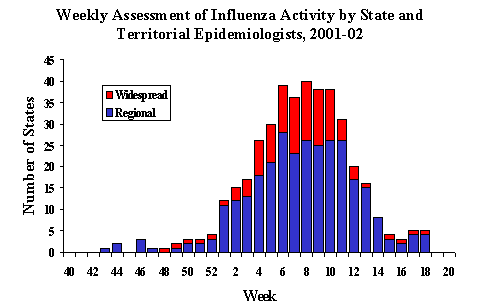
flu-2001.gif


The 2001-02 influenza season was mild to moderate in the United States and influenza A(H3N2) viruses predominated. On the basis of data from state and territorial epidemiologist reports, influenza activity peaked during mid-February, when 40 states reported regional or widespread influenza activity.


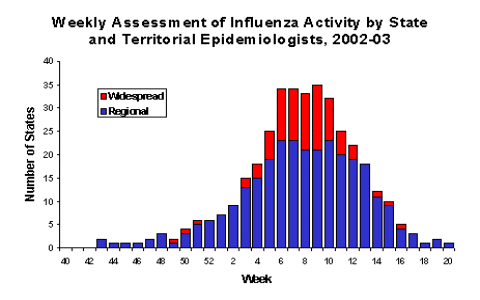
flu-2002.gif


The 2002-03 influenza season was mild in the United States; influenza A(H1)? and B viruses circulated widely, and the predominant virus varied by region and time of season. Influenza morbidity peaked during early-to-mid February 2003, and pneumonia and influenza mortality peaked during late February 2003. Human infections with avian influenza A(H5N1) and A(H7N7) viruses were reported in Hong Kong and the Netherlands, respectively. Influenza activity peaked during late February, when 35 states reported regional or widespread influenza activity. The peak number of states reporting regional or widespread activity during the previous 3 years ranged from 38 to 44. During the 2002-03 season, one or more states reported regional influenza activity during 30 consecutive weeks from the week ending October 26, 2002 through the week ending May 17, 2003.


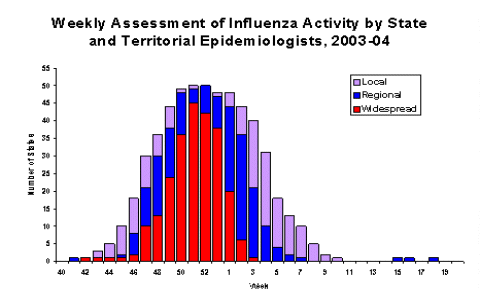
flu-2003.gif


The 2003-04 US influenza season began earlier than most seasons and was moderately severe. The influenza activity level definitions changed for the 2003-04 influenza season to include the addition of a local activity level. In past seasons, this level of activity was most likely reported as regional influenza activity. On the basis of data from state and territorial epidemiologist reports, influenza activity peaked during late December, when 50 states reported local, regional, or widespread influenza activity. The peak number of states reporting regional or widespread activity during the previous 4 seasons ranged from 35 to 44.


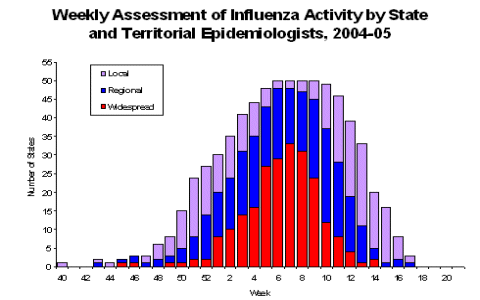
flu-2004.gif


During the 2004-05 U.S. season, influenza activity occurred at low levels from October to mid-December, steadily increased during January and peaked in mid-February. Influenza activity peaked during the week ending February 19 (week 7) when 15 states reported regional influenza activity and 33 reported widespread activity. Outbreaks of avian influenza A (H5N1) among poultry continued to be reported in Southeast Asia throughout the 2004-05 season. From mid-December 2004 to June 28, 2005 these outbreaks were associated with human infections and deaths in Vietnam (60 cases and 18 deaths) and Cambodia (4 cases, all fatal).
 
Re: Global Security: Pandemic Influenza - Homeland Security

http://www.globalsecurity.org/security/ops/hsc-scen-3_pandemic-influenza.htm

Pandemic Influenza

Influenza pandemics can occur when a novel strain of virus causes an epidemic that spreads over a wide geographic area and affects an exceptionally high proportion of the population. Intervals between previous pandemics have varied from 11 to 42 years with no recognisable pattern. The last pandemic was in 1968/69. Prior to that pandemics occurred in 1957/58 and 1918/19. The impact of the next pandemic could have a devastating effect on the health and well being of the American public. Widespread illness in the community will also increase the likelihood of sudden and potentially significant shortages of personnel who provide other essential community services.


Influenza pandemics have occurred throughout recorded history and have been documented since the 16th century. There have been substantial differences between them, including between the three pandemics of the last century. There is therefore considerable uncertainty about both the timing of a future pandemic and its precise impact - the severity of illness caused by the new virus strain, the rapidity of its spread and the groups of the population which will be most susceptible are all unknown factors. Nonetheless, for planning purposes, reports of previous pandemics give an interesting insight into the likely range of impact.

Cause of Pandemics

Influenza pandemics occur when there is a notable genetic change (termed genetic shift) in the circulating strain of influenza. Because of this genetic shift, a large portion of the human population is entirely vulnerable to infection from the new pandemic strain.


Three virus types, influenza A, B and C, can cause respiratory illness and are easily transmitted in crowded and enclosed spaces. Regional and widespread epidemics are most often attributed to influenza A and B viruses, while type C is associated with mild illness, sporadic cases, or minor outbreaks. Influenza A causes the most severe disease in humans, and is the most likely to trigger a pandemic.


Influenza A and B possess two surface glycoprotein's: the hemagglutinin (H) and neuraminidase (N). The H subtypes are epidemiologically most important, as they govern the ability of the virus to bind to and enter cells, where multiplication of the virus then occurs. The N subtypes govern the release of newly formed virus from the cells. Influenza A viruses are further subdivided into subtypes dependent on differences in these surface glycoprotein's. Although only two influenza A subtypes currently co-circulate globally in humans (H1N1 and H3N2), at least 16 distinct antigenic subtypes of HAs (H1 to H16) and nine NAs (N1 to N9) have been identified in wild aquatic birds.


A minor change in these antigens (antigenic drift) may result in epidemics, since incomplete protection remains from past exposure to similar viruses. A major change (antigenic shift) may result in a worldwide pandemic if the virus, for which humans have no protection, is efficiently transmitted from human to human. Antigenic shift occurs only with influenza A viruses. Influenza A viruses were the cause of the three Pandemics in the 20th Century.


Difficulty in controlling illness from one flu season to the next is due to changes in virus types A and B. Both undergo constant, but relatively subtle mutations (antigenic drift), accounting for the different influenza epidemiology, strains, and vaccines seen from year to year. As they lack a proof-reading mechanism, the small errors that occur when the virus copies itself are left undetected and uncorrected. As a result, influenza A viruses undergo constant stepwise changes in their genetic make-up. This strategy, known as antigenic drift, works well as a short-term survival tactic for the virus: the speed with which slight variations develop keeps populations susceptible to infection.


Pandemics occur when an entirely new subtype of influenza A virus emerges (antigenic shift) through recombination of human and animal antigens (swine or avian). Not all antigenic shifts cause a pandemic, but if a novel subtype is virulent and easily transmitted, a pandemic is probable. Apart from being highly unstable and prone to small mutational errors, influenza viruses have a segmented genome, consisting of eight genes, that allows easy swapping of genetic material - like the shuffling of cards - coinfecting a host with two different viruses. If this new "hybrid" virus contains the right mix of genes, causing severe disease and allowing easy and sustainable human-to-human transmission, it will ignite a pandemic. This works well as a long-term survival tactic: immunologically, a new virus subtype starts from scratch and is guaranteed a very large population of susceptible hosts.

Flu Pandemics in History

Influenza pandemics are believed to have occurred for at unpredictable intervals for many centuries. Since the first well-described pandemic of influenza-like disease occurred in 1580, 31 influenza pandemics have been documented.


In 412 BC Hippocrates, the father of medicine, described a flu-like disease for the first time at Perinthus in North Greece. Diodorus Siculus recorded an epidemic that swept through the Athenian army in Sicily. Some historians have speculated that influenza may have contributed to the demise of Athens in 404 BC.


The term, influenza, from the Italian word meaning "influence", was coined 1357 AD. Popular belief at that time blamed the development of flu on the influence of the stars.


In 1485 the "sweating sickness", a flu-like malady, sickened hundreds of thousands of people in Britain. The Lord Mayor of London, his successor, and six aldermen died. The Royal Navy could not leave port due to the sickness of sailors. Doctors prescribed tobacco juice, lime juice, emetics, cathartics, and bleeding in attempts to cure their patients.


The first recorded global spread of flu swept out of Asia in 1580, then infected Africa, Europe and ultimately America, where over 90 percent of the populace was afflicted. Mortality was extremely high, with doctors treating their patients by bleeding them.


During the 18th century at least three pandemics occurred (1729-1730, 1732-1733, and 1781-1782). The 1781 pandemic was a major outbreak that caused high mortality among the elderly that spread across Russia from Asia. Other major outbreaks occured in 1889-1890 and in 1900.


The Spanish Flu of 1918 is considered the most severe of all influenza outbreaks to date, but the pandemic of 1830 through 1832 was similarly severe - it simply occurred when the world's population was smaller. Four major influenza epidemics were recorded between 1830 and 1848. The 1830-1831 epidemic may have originated in China; and in 1833 influenza advanced westward out of Russia into Europe. In 1836-1837, influenza diffusion was largely north to south, and in 1847-1848 the disease swept through the Mediterranean to southern France and thence elsewhere in Western Europe. Each of the four epidemics spread rapidly and caused very high morbidity rates. Although case-mortality rates were always low, each epidemic killed thousands of people, with most deaths being among the elderly. Many writers have described all four outbreaks as pandemics, but true pandemics, presumably caused by major new viral types, are clearly identifiable only in 1830-1831 and 1833. The status of the 1836-1837 outbreak is unclear, but there was no pandemic in 1847-1848.


The 1889 pandemic was believed to have originated in China. It rapidly spread via Russia throughout Europe (known as the "Russian Flu"). It spread thence to North America and then Japan. It reached North America in December 1889 and spread to Latin America and Asia in February of 1890. Approximately 1 million people were known to have died as a result of this pandemic.

1918 Spanish Influenza Pandemic

The Spanish Influenza pandemic is the catastrophe against which all modern pandemics are measured. Before the 1918 epidemic, one has to go back to the black death (bubonic plague) of 1346 to find a similarly devastating epidemic in terms of total numbers of deaths. The "Spanish" attribution of the epidemic, common in the literature, is thought to be a result of the fact that the press in neutral Spain was not censored during World War I, and therefore some early printed reports of the flu originated from Spain. The spread of influenza in the US during the second wave of the 1918 pandemic began in Mid-Septebmer, and within three weeks, influenza had spread across the entire country.


Given the empirical infuenza epidemic curve and infection rates observed in the United States in 1918, it has been estimated that a very large proportion of the population was infected with the Spanish Flu in 1918, and thereafter immune to the virus. According to these estimates, only a very small proportion of the population remained susceptible to influenza after the pandemic {too small to support the initiation of another epidemic the following season. But another influenza epidemic that did in fact occur in 1919, is a puzzle. The virus may have evolved to such an extent in 1918 that could re-infect individuals in 1919. Or the virus could have persisted in 1919 due to heterogeneities in the host population and "pockets" of remaining susceptibles. Or perhaps the virus may have evolved a greater ability to spread, allowing it to persist despite the small number of susceptible hosts to support it.


As expected, many of the deaths in 1918 were from pneumonia caused by secondary bacterial infections. But Spanish flu also caused a form of primary viral pneumonia, with extensive hemorrhaging of the lungs, that could kill the perfectly fit within 48 hours or less. Many people died from this very quickly. Some people who felt well in the morning became sick by noon, and were dead by nightfall. Those who did not succumb to the disease within the first few days often died of complications from the flu (such as pneumonia) caused by bacteria.


The male death rates in 1918 far exceed the female death rates among adults. One of the most unusual aspects of the Spanish flu was its ability to kill young adults. The reasons for this remain uncertain. In general the rate of death is highest for the very young and older persons. The 1918 pandemic followed a strikingly different pattern, with the highest mortality in young persons 25-30 years old. With the Spanish flu, mortality rates were high among healthy adults as well as the usual high-risk groups. The attack rate and mortality was highest among adults 20 to 50 years old. The severity of that virus has not been seen again in humans.


The reasons for this difference are still poorly understood. It is believed that a subset of victims experienced a primary viral pneumonia which caused a very rapid clinical decline and death. It is widely belived that cytokine storming [Immune-complexes-mediated pathogenesis] could be one of the mechanisms that resulted in damaging the lung tissue. Normally, when the lungs are under attack from a virus, T-cells, defenders from the immune system, are then sent to the site of the infection. The presence of T-cells initiate a second immune system attack by chemicals, known as cytokines, that cause inflammation. A cytokine is a small protein released by cells that has a specific effect on the interactions between cells, on communications between cells or on the behavior of cells. The cytokines includes the interleukins, lymphokines and cell signal molecules, such as the interferons, which trigger inflammation and respond to infections. When the lungs are infected with the flu virus, the T cells release chemical signals that cause them to stay longer in the lungs. The systemic symptoms of seasonal flu are caused by cytokine release, which is part of the human immune response.


A Cytokine storm [a systemic inflammatory response syndrome] -- immune system "friendly fire" -- is believed to be the underlying reason for the high death rate among young adults. It results when too many immune cells are in an endless loop of calling even more cytokines. During the flu infection the immune system has an "all hands on deck" attitude to the viral assault. More T cells are always arriving, and they in turn release more signal and stay longer, leading to a build up of T cells and chemical signals. The exaggerated immune response produces inflammatory molecules that lead to too many cells clogging up the airways and preventing efficient transfer of oxygen into the bloodstream. This Acute Respiratory Distress Syndrome [ARDS] is what makes the Cytokine storm so deadly in pandemic flu. It is suggested that the high death rate among healthy young adults was due to their strong immune systems producing a cytokine storm. The very young and very old would have had weaker immune systems, and thus weaker immune responses that would not result in a cytokine storm.


One researcher suggested that many of the apparently healthy young adults who died in 1918 were in fact infected with tuberculosis, explaining the unusually high mortality rates among young adults. Tuberculosis death rates plummeted after 1918, which can be explained by the fact that many TB sufferers died of the flu and therefore were not around to die later, nor to pass the TB bacillus to others. Just after 1918, TB death rates experience their steepest decline of the century, and this decline is much more pronounced for males than for females. [Fortunately, tuberculosis prevalence is much lower than in 1918, which bodes well for our potential susceptibility to a repeat of 1918.]


It is estimated that approximately 20 to 40 percent of the worldwide population became ill during the Spanish Flu. The number of worldwide dead due to the 1918 pandemic was initially reported as 20,000,000. A consensus has formed among experts now that the death toll was at least 40 million, and possibly much higher. Nobel laureate Frank MacFarlane Burnet believed deaths were at least 50 million, and may bave reached 100 million. Between September 1918 and April 1919, approximately 500,000 to 675,000 deaths from the flu occurred in the US alone. Western Samoa and Iceland avoided the 1918 flu entirely through the use of travel restrictions.


Though the identification of aetiology of the pandemic was not possible at that time, modern day molecular biological techniques have tried to unravel its mystery. Modern techniques have permitted a reconstitution of some parts of the genome of the 1918 agent by amplifying fragments of viral RNA obtained from different sources. One of them was anatomopathologic samples of lungs from patients who died of the disease in 1918. Other samples were obtained after the exhumation of victims of Spanish flu in Alaska and in Svalberg whose bodies had been buried in permafrost ground. Genetic sequences were obtained by genic amplification of viral RNA extracted from the lung fragments and were compared to recent human and animal viruses. The comparison showed that the hemagglutin of the 1918 virus was of the H1 subtype belonging to a subgroup of strains infecting human and pigs, but also sharing avian determinants. Sequence analysis indicates that many avian characteristics are present in critical locations of the hemagglutinin gene such as receptor, antigenic and glycosylation sites suggesting an avian relationship. However, the virus is closely related to human and swine viruses. Equivalent findings were obtained from the study of the neuraminidase gene: the enzymatic site is preserved but avian characteristics are found in antigenic and glycosylation sites. These results suggest that the 1918 virus borrowed determinants from avian strains but was already present in mammals for a prolonged period before the pandemic started.

1957 Asian Flu Pandemic

In 1957, which was on the whole a much milder illness than that of 1918, the global death toll was estimated to be around 2 million. In 1957, the Asian flu pandemic resulted in about 70,000 deaths in the United States. An excess 30,000 deaths occurred in England and Wales of which 6,716 were ascribed to influenza itself. Estimates in the UK ranged from 1.3 to 3.5 deaths/1,000 cases. An estimate from 29 British general practices was 2.3 deaths per 1,000 cases attended.


In February 1957, the Asian influenza pandemic was first identified in the Far East. Immunity to this strain was rare in people less than 65 years of age, and a pandemic was predicted. In preparation, vaccine production began in late May 1957, and health officials increased surveillance for flu outbreaks.


Unlike the virus that caused the 1918 pandemic, the 1957 pandemic virus was quickly identified, due to advances in scientific technology. Vaccine was available in limited supply by August 1957. The virus came to the US quietly, with a series of small outbreaks over the summer of 1957. When US children went back to school in the fall, they spread the disease in classrooms and brought it home to their families. Infection rates were highest among school children, young adults, and pregnant women in October 1957. Most influenza-and pneumonia-related deaths occurred between September 1957 and March 1958. The elderly had the highest rates of death.


During the 1957-1958 pandemic, a WHO expert panel found that spread within some countries followed public gatherings, such as conferences and festivals.16 This panel also observed that in many countries the pandemic broke out first in camps, army units and schools; suggesting that the avoidance of crowding may be important in reducing the peak incidence of an epidemic.


During the first wave of the Asian influenza pandemic of 1957-1958, the highest attack rates were seen in school aged children. This has been attributed to their close contact in crowded settings. A published study found that during an influenza outbreak, school closures were associated with significant decreases in the incidence of viral respiratory diseases and health care utilization among children aged 6-12 years.


In 1957, up to 50% of British schoolchildren developed influenza, but even those schools which were severely disorganised had returned to normal 4 weeks after the appearance of the first case. In residential schools in the UK, attack rates reached 90%, often affecting the whole school within a fortnight.


In Liverpool in 1957 12.6-19.4% of nurses were absent during the first 4 weeks of the epidemic; in one hospital, nearly a third were absent at the peak. During September and October 1957, the two main months of the epidemic in the UK, it was estimated between 25,000 and 30,000 more cases of acute respiratory infection were admitted to NHS hospitals in England and Wales than would have been expected at that time of year. Hospital admission and bed bureaux could barely cope with the demand placed upon them.


In 1957, of patients with pneumonia studied mainly in London teaching hospitals, 28% of those with staphylococcal pneumonia and 12% with non-staphylococcal pneumonia died. The death rate among patients with pneumonia fell during the course of the epidemic from around 20% to 13%. Deterioration can be very rapid and a high proportion of those hospitalised who die, do so within 48 hours of admission, ie so rapidly that antibiotics may have little or no effect.


Vaccine production for the Asian flu began about 3 months after the first outbreaks occurred in China. The first cases in the US occurred in the summer, with a peak in October following school openings. The first doses of vaccine became available in September and by mid-October at the peak of the US pandemic fewer than half of the approximately 60 million doses produced had been delivered.


By December 1957, the worst seemed to be over. However, during January and February 1958, there was another wave of illness among the elderly. This is an example of the potential "second wave" of infections that can develop during a pandemic. The disease infects one group of people first, infections appear to decrease and then infections increase in a different part of the population.


Other pandemics had a faster spread than in 1957, in general the weekly profile for these pandemics had a higher peak and a shorter base.
The conventional wisdom conveys China's Great Leap Forward famine as a man-made disaster where misguided economic policies precipitated widespread famine and world record-breaking population losses. Barbara Sands reconstructed regional population and grain availability data to find more complex patterns than those suggested by classic famine. While allowing for considerable excess mortality in this period, she suggested that portions of it were due to the influenza pandemic of 1957, an alternative explanation of the Great Leap Forward famine.

1968 Hong Kong Flu

The most recent influenza pandemic occurred in 1968 with the Hong Kong Flu (H3N2) outbreak, which resulted in nearly 34,000 deaths in the United States. The 1968/69 pandemic, which was milder than 1957, is thought to have caused around 1 million deaths worldwide. In early 1968, the Hong Kong influenza pandemic was first detected in Hong Kong. 1968. It then spread worldwide during the following two winters, causing greater morbidity in some countries the first winter and others the second. The first cases in the US were detected as early as September of 1968, but illness did not become widespread in the US until December 1968. Deaths from this virus peaked in December 1968 and January 1969. Those over the age of 65 were most likely to die. The same virus returned a year later, in late 1969 and early 1970 [peaking in the UK in January 1970] and in 1972. The number of deaths between September 1968 and March 1969 for this pandemic was 33,800, making it the mildest pandemic in the 20th century.


In the 1968 pandemic vaccine became available one month after the outbreaks peaked in the US.


There could be several reasons why fewer people in the US died due to this virus. First, the Hong Kong flu virus was similar in some ways to the Asian flu virus that circulated between 1957 and 1968. Earlier infections by the Asian flu virus might have provided some immunity against the Hong Kong flu virus that may have helped to reduce the severity of illness during the Hong Kong pandemic. Second, instead of peaking in September or October, like pandemic influenza had in the previous two pandemics, this pandemic did not gain momentum until near the school holidays in December. Since children were at home and did not infect one another at school, the rate of influenza illness among schoolchildren and their families declined. Third, improved medical care and antibiotics that are more effective for secondary bacterial infections were available for those who became ill.

1976 Swine Flu Pandemic Scare

On 27 January 1976, an outbreak of respiratory disease was identified at Ft. Dix, New Jersey. On February 12 the CDC influenza laboratory notified the CDC Director that a swine influenza virus strain (H1N1) had been isolated from patients that possessed hemagglutinin and neuraminidase subtypes that had not circulated for more than 50 years. Experience had led scientists to conclude that introduction of a new strain inevitably resulted in a pandemic. On 24 March 1976 President Ford met with CDC, FDA, and NIH representatives and other experts. There was a unanimous recommendation to initiate mass immunization.


The first vaccine dose was given 7.5 months after the virus was identified. By 9.5 months, 150 million doses of vaccine had been produced under a federal contract. The first vaccine was shipped to State Health Departments on 22 September 1976 and the first injections were given on 01 October 1976. Vaccination programs proceeded based on state plans and capacities, with some aggressively implementing mass vaccination and others implementing more limited programs. Overall, between October 1 and December 16, more than 40 million civilians were vaccinated. In November 1976, several cases of Guillain-Barr? syndrome (GBS) - a severe neurological condition associated with paralysis that may include the respiratory muscles and may be fatal - were reported from Minnesota. On 16 December 1976, based on CDC's recommendation and after consultation with the President, the Assistant Secretary for Health announced the suspension of the swine influenza vaccination program.

Recent Pandemic Flu Scares

The Russian Flu scare began in May 1977, when influenza A/H1N1 viruses isolated in northern China spread rapidly, and caused epidemic disease in children and young adults (< 23 years) worldwide. This was a "benign" pandemic, primarily involving persons born after the 1950s. The 1977 virus was similar to other A/H1N1 viruses that had circulated prior to 1957. In 1957, the A/H1N1 virus was replaced by the new A/H2N2 viruses. Because of the timing of the appearance of these viruses, persons born before 1957 were likely to have been exposed to A/H1N1 viruses and to have developed immunity against A/H1N1 viruses. Therefore, when the A/H1N1 reappeared in 1977, many people over the age of 23 had some protection against the virus and it was primarily younger people who became ill from A/H1N1 infections. By January 1978, the virus had spread around the world, including the United States. Because illness occurred primarily in children, this event was not considered a true pandemic. Vaccine containing this virus was not produced in time for the 1977-78 season, but the virus was included in the 1978-79 vaccine.


The most recent pandemic "scares" was the Avian Flu Scare in 1997 and 1999. In 1997, at least a few hundred people became infected with the avian A/H5N1 flu virus in Hong Kong and 18 people were hospitalized. Six of the hospitalized persons died. This virus was different because it moved directly from chickens to people, rather than having been altered by infecting pigs as an intermediate host. In addition, many of the most severe illnesses occurred in young adults similar to illnesses caused by the 1918 Spanish flu virus. To prevent the spread of this virus, all chickens (approximately 1.5 million) in Hong Kong were slaughtered. The avian flu did not easily spread from one person to another, and after the poultry slaughter, no new human infections were found.


In 1999, another novel avian flu virus - A/H9N2 - was found that caused illnesses in two children in Hong Kong. Although both of these viruses have not gone on to start pandemics, their continued presence in birds, their ability to infect humans, and the ability of influenza viruses to change and become more transmissible among people is an ongoing concern.
Several novel virus alerts have been issued since 1977, none of which progressed to a pandemic. These include isolated cases and limited clusters of swine H1N1 influenza virus infections, avian H5N1 infections in 2003 (two persons hospitalized), avian H7N7 in 2003 (83 human illnesses, including one death), and avianH5N1 in 2004 (34 human illnesses, including 23 deaths as of May 2004). Control measures have included culling of poultry and protection of those who may have been exposed to the avian influenza virus, particularly those with high-level exposure (e.g., those doing the culling).


Very limited person-to-person transmission occurred during the 1976 Swine influenza outbreak in the US, the 1997 H5N1 avian influenza outbreak in Hong Kong, and also during the 2003 H7N7 avian influenza outbreak in the Netherlands. None of these outbreaks progressed to the next pandemic level possibly because none of these viruses were animal/human reassortants and, in case of the avian influenza outbreaks, aggressive efforts to eliminate the domestic animal reservoir were carried out.
 
Last edited:
Re: Global Security: Pandemic Influenza - Homeland Security

http://www.globalsecurity.org/security/ops/hsc-scen-3_bird-flu.htm


Bird Flu / Avian Influenza

There has been a lot of recent concern that "bird flu" [which can refer to a number of influenza viruses that occur in birds] could become causes of human disease in some situations. Avian influenza (AI) has been recognized as a highly lethal generalized viral disease of poultry since 1901. It has since been found that AI viruses cause a wide range of disease syndromes, ranging from severe to mild, in domestic poultry.


All influenza viruses have the potential to change. Many of the strains that circulate in wild birds are either non-pathogenic or mildly pathogenic for poultry. However, a virulent strain may emerge either by genetic mutation or by reassortment of less virulent strains.


It is possible that an avian influenza virus could change so that it could infect humans and could spread easily from person to person. The experience with the H5N1 virus in humans to date suggests that the virus is very different from a normal flu virus, which makes it difficult to predict exactly how it will behave if it gains the ability to transmit efficiently between humans. Because these viruses do not commonly infect humans, there is little or no immune protection against them in the human population. If an avian virus were able to infect people and gain the ability to spread easily from person to person, an influenza pandemic could begin. An influenza pandemic is a global outbreak of influenza and occurs when a new influenza virus emerges, spreads, and causes disease worldwide. Past influenza pandemics have led to high levels of illness, death, social disruption and economic loss.


Influenza A viruses infecting birds are usually at one of two extremes of virulence. Avian influenza is widespread in populations of wild birds, but typically has low lethality (so-called Low Pathogenic Avian Influenza - LPAI). Low pathogenic avian influenza viruses cause a localized infection with little or no disease unless exacerbated by other organisms or poor environmental conditions. Highly pathogenic avian influenza (HPAI) viruses cause a systemic disease in chickens and turkeys with rapid death, which often approaches 100% death rate. The H5N1 virus kills and kills quickly. The duration of symptomology in infected poultry was about 4 to 6 hours only. Signs noted in poultry are compatible with a massive cytokine disregulation.


The avian H5N1 virus is widespread and endemic in much of Asia with spread to Europe. Highly Pathogenic Avian Influenza of the form H5N1 seems to have originated in south-east Asia, but in recent years has spread to Kazahkstan, Romania, Turkey, Greece, Croatia and southern Russia. There is continuing concern that migrating wild birds may further spread HPAI.


Genetic studies confirm that H5N1, like other influenza viruses, is continuing to change and evolve. The avian H5N1 virus is becoming more deadly in a growing number of bird species and mammals. When compared with H5N1 viruses from 1997 and early 2004, H5N1 viruses now circulating are more lethal to experimentally infected mice and to ferrets (a mammalian model) and survive longer in the environment.


H5N1 appears to have expanded its host range, infecting and killing mammalian species previously considered resistant to infection with avian influenza viruses. Wild birds and domestic ducks may be infected asymptomatically, providing a reservoir for infection of other domestic poultry species. The virus is able to transmit directly from birds to some mammals and in some circumstances to people. There is sporadic spread directly from animals to humans with suspected human-to-human transmission in rare instances.


The behavior of the virus in its natural reservoir, wild waterfowl, may be changing. The spring 2005 die-off of upwards of 6,000 migratory birds at a nature reserve in central China, caused by highly pathogenic H5N1, was highly unusual and probably unprecedented. In the past, only two large die-offs in migratory birds, caused by highly pathogenic viruses, are known to have occurred: in South Africa in 1961 (H5N3) and in Hong Kong in the winter of 2002?2003 (H5N1).


While H5N1 is the greatest current pandemic threat, other avian influenza subtypes have also infected people in recent years. In 1999, H9N2 infections were identified in Hong Kong; in 2003, H7N7 infections occurred in the Netherlands; and in 2004, H7N3 infections occurred in Canada. Such outbreaks have the potential to give rise to the next pandemic, reinforcing the need for continued surveillance and ongoing vaccine development efforts against these strains.


Direct avian-to-human influenza transmission was unknown before 1997. Outbreaks of highly pathogenic avian influenza in poultry in East Asia (H5N1), Canada (H7N3), and the Netherlands (H7N7), and their subsequent transmission to humans, intensified concern over the emergence of a novel strain of influenza with pandemic potential. In 2003, highly pathogenic strains of avian influenza virus, including the H5N1 and H7N7 subtypes, again crossed from birds to humans and caused fatal disease.


Infected birds shed flu virus in their saliva, nasal secretions, and feces. Susceptible birds become infected when they have contact with contaminated excretions or surfaces that are contaminated with excretions. It is believed that most cases of bird flu infection in humans have resulted from contact with infected poultry or contaminated surfaces.


The incubation period of Avian Flu in birds is usually 3 to 7 days, depending upon the isolate, the dose of inoculum, the species, and age of the bird. The exact incubation period for bird flu in humans is unclear, though illness seems to develop within one to five days of exposure to the virus. People infected with the most virulent type of bird flu virus - (A) H5N1 - may develop life-threatening complications, particularly viral pneumonia and Acute Respiratory Distress Syndrome, the most common cause of bird flu-related deaths [as was the case with the 1918 Spanish Flu].
Bird Flu in Humans

Of all viruses in the avian flu pool, H5N1 is of particular concern for human health for two reasons. First, H5N1, though strictly an avian pathogen, has a documented ability to pass directly from birds to humans. Second, once in humans, H5N1 causes severe disease with very high mortality. These two features combine to make H5N1 of concern for a third and greater reason: its potential to ignite an especially severe pandemic.


The main route of human infection is direct contact with infected poultry or surfaces and objects contaminated with their feces or blood. To date, most human cases have occurred in rural and periurban areas where households keep small poultry flocks that roam freely, often entering homes and sharing children's outdoor play areas. Large quantities of the virus are excreted in the feces of infected poultry. In countries where poultry is relied upon for income and food, families slaughter and consume birds that are ill. Exposure occurs during slaughtering, defeathering, butchering and preparation of poultry for cooking. Infection in humans occurs with consumption of inadequately cooked poultry or raw poultry products such as duck's blood. There is no evidence that properly cooked poultry or eggs are a source of infection. It is not understood why some people but not others become infected with similar exposures.


As of October 2005 there had been only 116 confirmed cases of this strain of flu being transmitted from infected birds to people, all of them in Asia. But 60 of those people have died -- a death rate greater than 50 percent, making it one of the most virulent strains ever seen. The estimated case fatality rate in known human cases vastly exceeds the 1% experienced with the other two pandemics in 1957 and 1968. The experience in poultry, the other non-reservoir susceptible species, is that both the exposed flock attack rate and case fatality rate are very high, close to 100%. If the speed and pathogenic mechanism is similar in humans, the US health care system may be unable to keep a fatality rate near a 1% level, even with an adequate (quality and quantity) surge capacity in the US. While significant improvements have been made in medical care over the last 90 years, health care providers and volunteers may again be afraid and reluctant to aid the ill, and as the capacity to safely handle the ill becomes overtaxed, care centers will be avoided by the general public.


The primary viral infection is rarely the direct cause of mortality. Instead, infected persons die of cardiac disease (usually patients with pre-existing co-morbidities) or succumb to secondary bacterial pneumonia. Around 25% of all mortality during a typical influenza season is due secondary bacterial infections. During pandemic influenza, around 70% of influenza cases are complicated by bacterial co-infections. Despite this association being appreciated since 1803 and being the focus of the majority of research following the 1918 pandemic, little is known about the pathogenesis of either cardiac death or secondary bacterial infections following influenza.
A striking feature of the 1997 Hong Kong H5N1 outbreak was the presence of primary viral pneumonia in severe cases. When pneumonia occurs in influenza patients, it is usually a complication caused by a secondary bacterial infection. In the H5N1 cases, pneumonia was directly caused by the virus, did not respond to antibiotics, and was frequently rapidly fatal. Many other cases, too mild to be detected, were almost certainly occurring, thus expanding opportunities for coinfections.


H5N1 has become progressively more pathogenic in poultry and in the mammalian mouse model, and is now hardier than in the past, surviving several days longer in the environment. It is not known with certainty why H5N1 causes such severe disease in children and young adults, with death frequently following multi-organ failure in addition to severe respiratory disease. Similarities between H5N1 and the 1918 virus include the severity of disease, its concentration in the young and healthy, and the occurrence of primary viral pneumonia in the absence of secondary bacterial infection. The present high lethality of H5N1 would probably not be retained in an H5N1-like pandemic virus, as an avian influenza virus is expected to lose pathogenicity when it acquires the improved transmissibility needed to ignite a pandemic.


The newly formed International Partnership on Avian and Pandemic Influenza, announced by President Bush at the United Nations General Assembly on September 14, 2005, was created to improve international surveillance, transparency, timeliness, and response capabilities. Over 200 delegates from 88 countries and nine international organizations attended the first Senior Officials meeting on October 7, 2005. This initiative will strive for complete transparency, rapid response capabilities, and cooperative surveillance, and will facilitate the sharing of epidemiological data and samples among nations and with the World Health Organization.
Avian Flu Human-to-Human Transmission

With the H5N1 strain now endemic in birds in large parts of Asia, the probability that this potential for a pandemic will be realized has increased. The world has never before seen outbreaks of avian influenza on the scale of those that have swept through large parts of Asia, including densely populated China.


A pandemic may occur when three conditions have been met: a new influenza virus subtype emerges; it infects humans causing serious illness; and it spreads easily and sustainably among humans. The H5N1 virus meets the first two conditions. The risk that it will acquire the ability to have efficient and sustained human-to-human transmission is present as long as opportunities for human infections occur. These opportunities will persist as long as the virus continues to circulate in domestic birds, perhaps for years to come.


The relatively low frequencies of influenza A (H5N1) illness in humans despite widespread exposure to infected poultry indicate that the species barrier to acquisition of this avian virus is substantial.
  1. The avian viruses thrives in the gut of birds, where the temperature is 37 degrees Celsius. The human respiratory has a temperature of 33 degrees to 34 degrees Celsius, below the permissive temperature that is optimal for viral reproduction. Nasopharyngeal replication is less than in human influenza. In human cases, the majority of fecal samples tested have been positive for viral RNA, whereas urine samples were negative. The high frequency of diarrhea among affected patients and the detection of viral RNA in fecal samples, including infectious virus in one case, suggest that the virus replicates in the gastrointestinal tract in humans. In the late 1960s and early 1970s, a large collection of influenza virus temperature-sensitive (ts) mutants, derived from differing strains, was generated in several laboratories worldwide. Such ts mutants were selected for growth at a permissive temperature (usually between 31?C and 36?C, depending on the study), but were significantly inhibited for replication at a higher nonpermissive temperature (usually between 38?C and 42?C).
  2. Influenza viruses enter the airway epithelium through specific target cells. In this respect there are striking differences between human and avian viruses. Human viruses preferentially infect nonciliated cells, whereas avian viruses mainly infect ciliated cells. This pattern correlated with the predominant localization of receptors for human viruses (2-6-linked sialic acids) on nonciliated cells and of receptors for avian viruses (2-3-linked sialic acids) on ciliated cells. Although avian influenza viruses can infect human airway epithelium, their replication may be limited by a nonoptimal cellular tropism.
  3. The hemagglutinin (HA) protein enables the virus to bind to and enter cells. The protein covers the surface of the influenza virus and acts as a sort of spike that first attaches to the host cell. The protein also helps the virus membrane fuse with the cell membrane, so that the virus can enter the cell being attacked. The avian virus is presently unable to attach itself effectively to certain types of human cells. The host range of influenza A viruses is associated with differences in the specificity of HA for attachment to sialic acid-containing receptors on susceptible cells, reflecting the preponderance of these terminal sugar moieties in the different hosts. Changes in preference for moieties have been observed to accompany establishment of avian viruses in human and porcine hosts. Only 2 amino acid changes in the receptor-binding pocket of H5 lead to a virus that efficiently recognizes receptors on human cells. By 2005 viruses isolated from healthy ducks in southern China since 1999 had progressively acquired the ability to replicate and cause disease in mice -- a single amino acid substitution enabled the virus to infect and become lethal for mice. The 1918 virus had a lot of features of avian viruses. But the shape of its binding site allows it to bind to human cells. When that happened, there wasn?t anything stopping it from infecting human cells. A number of studies have concluded that avian influenza viruses can acquire the ability to recognize and bind to human cells while they are in the respiratory tract of pigs. The findings support the notion that pigs act as mixing vessels that alter avian virus strains so that they can cause an influenza pandemic.
By 2005 intensified surveillance of contacts of patients by reverse -transcriptase ?polymerase -chain -reaction (RT-PCR) assay led to the detection of mild cases, more infections in older adults, and an increased number and duration of clusters in families in northern Vietnam, findings suggesting that the local virus strains may be adapting to humans.


Some epidemiological features of human H5N1 infections occurred in northern Viet Nam during January through April 2005 appeared to differ in some respects from those seen in 2004 in other parts of Asia, and in the concurrent period in southern Viet Nam. These included an increase in the number of case clusters in the north compared with the south, a prolonged interval between the first and last cases in clusters, detection of sub-clinical infections, an expanded age range of cases and fewer fatal cases. Investigators were not able to prove that human-to-human transmission had occurred. However the pattern of disease appeared to have changed in a manner consistent with this possibility. These differences suggest that the epidemiology of H5N1 infections may be evolving in Asia. The changes in epidemiological patterns are consistent with the possibility that recently emerging H5N1 viruses may be more infectious for humans.


The pathogenicity of influenza viruses is a polygenic trait. Although the virulence of avian influenza virus is polygenic, the hemagglutinin (HA) surface glycoprotein plays a pivotal role. It initiates infection by mediating virus binding to cell receptors and by promoting release of the viral RNP through membrane fusion. The HA glycoprotein is also clearly a major determinant of host range restriction, primarily because of its role in host cell recognition.


The argument that a highly lethal virus will not become easily transmissible assumes that the highly lethal virus incapacitates its victim before the victim can infect potential new hosts. But H5N1, like other flu viruses, has a few days of asymptomatic viral shedding before the patient victim is incapacitated. Bird flu cases in Vietnam exhibited a latency period of 2 to 4 days, and an average of 3 days. This is possibly longer than that of ordinary seasonal flu. There is thus no apparent selective pressure toward a milder H5N1. Indeed, the worst strains of H5N1 have been growing deadlier over the last several years.


No can know how the pandemic virus that emerges will behave. It is possible that it will be less deadly than the current H5N1, or less transmissible than typical flu, or more so on both counts. Those infected with influenza are contagious both before they become symptomatic and after they feel well again, making it extremely difficult, if not impossible, to stop the spread of the virus across the globe.
 
Re: Global Security: Pandemic Influenza - Homeland Security

http://www.globalsecurity.org/security/ops/hsc-scen-3_flu-pandemic-timeline.htm


Flu Pandemic Timeline / Event Dynamics

A pandemic may not occur for many years, and when it occurs it may or may not be severe. In 1999, the World Health Organization (WHO) Secretariat published guidance for pandemic influenza and defined the phases of a pandemic. Updated guidance was published in 2005 to redefine these phases. This schema is designed to provide guidance to the international community and to national governments on preparedness and response for pandemic threats and pandemic disease. Compared with the 1999 phases, the new definitions place more emphasis on pre-pandemic phases when pandemic threats may exist in animals or when new influenza virus subtypes infect people but do not spread efficiently.


  • Interpandemic Period
    • Phase 1. No new influenza virus subtypes have been detected in humans. An influenza virus subtype that has caused human infection may be present in animals. If present in animals, the risk of human infection or disease is considered to be low
    • Phase 2. No new influenza virus subtypes have been detected in humans. However, a circulating animal influenza virus subtype poses a substantial risk of human disease
    Pandemic Alert Period
    • Phase 3. Human infection(s) with a new subtype but no human-to-human spread or at most rare instances of spread to a close contact
    • Phase 4. Small cluster(s) with limited human-to-human transmission but spread is highly localized, suggesting that the virus is not well adapted to humans
    • Phase 5. Larger cluster(s) but human-to-human spread is still localized, suggesting that the virus is becoming increasingly better adapted to humans but may not yet be fully transmissible (substantial pandemic risk)
    Pandemic Period
    • Phase 6. Pandemic phase: increased and sustained transmission in the general population
    Postpandemic Period
    • Return to the Interpandemic Period (Phase 1)
Viruses are known to survive on non-porous surfaces such as steel and plastic, for up to 24 to 48 hours after inoculation and from cloth, paper, and tissues for up to 8 to 12 hours. Viable virus can be transferred from non-porous surfaces to hands for 24 hours and from tissues to hands for 15 minutes.

The patterns of infection for pandemic influenza may or may not resemble those of seasonal flu. The incubation period (the time between acquiring the infection until becoming ill) for annual epidemic influenza is 1-4 days, with an average of 2 days. Adults typically are infectious the day before symptoms begin through approximately 5 days after illness onset. The exact incubation period for bird flu in humans is unclear, though illness seems to develop within one to five days of exposure to the virus. Viral shedding and the risk for transmission are normally greatest during the first 2 days of illness. Viral shedding, and the period during which a person may be infectious to others, generally peaks on the second day of symptoms.


Children will shed the greatest amount of virus and, therefore are likely to pose the greatest risk for transmission. Children can be infectious for more than 10 days, and young children can shed virus for up to 6 days before their illness onset. The length of time of viral shedding may be prolonged during initial infection with a new influenza subtype. Severely immuno-compromised persons can shed virus for weeks or months.


A patient's close contacts may include family, friends, work colleagues, classmates, fellow passengers, and/or healthcare providers. Management of contacts might include passive or active monitoring without activity restrictions and/or quarantine at home or in a designated facility. Quarantine may be lifted as soon as the exposed contact has remained without signs or symptoms of disease for a complete incubation period for influenza disease. Experience with seasonal influenza suggests the incubation period is 1-4 days, with an average length of 2 days. However, the clinical behavior of a novel influenza virus may be different and could potentially be as long as 10 days. Pandemic influenza preparedness activities should plan for containment measures that may last between 1-10 days. For the purposes of the HHS plan, 10 days was referred to as the incubation period; however, public health authorities should be prepared to adjust the time frame as more is known about the virus.
Antiviral medications can be used both to prevent infection (prophylaxis) and to reduce complications in persons who have been infected. To prevent infection they would need to be taken as long as the virus is circulating. To be effective in treating persons who have been infected they need to be started ideally within 48 hours of onset of symptoms. *Treatment requires a total of 10 capsules and is defined as 1 course. Post-exposure prophylaxis (PEP) also requires a single course. Prophylaxis (P) is assumed to require 40 capsules (4 courses) though more may be needed if community outbreaks last for a longer period.


While the typical flu season predictably occurs from November through March, during pandemics, flu can vary from this script with outbreaks at any time of the year. The seasonality of a pandemic cannot be predicted with certainty. The largest waves in the US during 20th century pandemics occurred in the fall and winter. Experience from the 1957 pandemic may be instructive in that the first US cases occurred in June but no community outbreaks occurred until August and the first wave of illness peaked in October.


The scope and pace of an influenza pandemic may defy accurate prediction. The disease may appear in many different parts of the Nation almost simultaneously, or disease may occur in only one or a few communities, and if not contained there, proceed to affect other communities.


When planning and preparing for the next influenza pandemic, there are two equally important timelines: how fast the disease spreads, and how quickly a vaccine can be created and distributed. Due to the rapid spread of the influenza pandemic and the time required to develop, test, produce, and distribute an effective vaccine, the disease will likely arrive in the United States before a "significant" number of people can be vaccinated. The implication of this is that, as part of any pandemic influenza preparation and response plan, there must be a mechanism for allocating the vaccine among the population.


If the virus gradually improves its transmissibility among humans through adaptive mutation, clusters of cases would be indicative, and sensitive surveillance might detect them. In the alternative scenario, in which a fully transmissible pandemic virus emerges following a reassortment event, the resulting explosion of cases would be difficult for any surveillance system to miss. The doubling time for an epidemic curve was about three days in the 1918 pandemic. The high attack rate and exceptionally high case fatality proportion (CFP) of 1918 influenza caused an unusual and massive increase in the number of pneumonia and influenza (P&I) deaths.


In the previous century, pandemics traveled from continent to continent along sea lanes, with global spread complete within six to eight months. The 1957 pandemic, during an era with much less globalization, spread to the US within 4-5 months of its detection in China, and the 1968 pandemic spread to the US from Hong Kong within 2-3 months. As was amply demonstrated by the SARS outbreak, modern travel patterns may significantly reduce the time needed for pandemic influenza viruses to spread globally to a few months or even weeks. The major implication of such rapid spread of an infectious disease is that there will be only minimal time to implement preparations and responses once pandemic viruses have begun to spread. The speed of international spread has no direct effect on mortality, but could compromise response capacity should large parts of the world experience almost simultaneous outbreaks. Many of the public health interventions that successfully contained SARS will not be effective against a disease that is far more contagious, has a very short incubation period, and can be transmitted prior to the onset of symptoms.


Most experts believe that there will be one to six months between the identification of a novel influenza virus and the time that widespread outbreaks begin to occur in the US. Outbreaks are expected to occur simultaneously throughout much of the US, preventing relocation of human and material resources. Because populations will be fully susceptible to an H5N1-like virus, rates of illness could peak fairly rapidly within a given community. The effect of influenza on individual communities will be relatively prolonged - six to eight weeks, though possibly up to twelve weeks. (Their highlighting, not mine.-MHSC)


A pandemic will last much longer than most public health emergencies and may include "waves" of influenza activity separated by months. In 20th century pandemics, a second wave of influenza activity occurred 3 to 12 months after the first wave. In 1957 the second wave began 3 months after the peak of the first wave, while in 1968 the second wave began 12 months after peak of the first wave. The first wave of the 1918 flu occurred in the spring of that year ending in March. That flu was very severe by usual standards but the second wave beginning 6 months later in September was the most fatal. During the 1918 pandemic, the deadly second wave was responsible for more than 90% of the deaths for the entire pandemic. The third wave occurred more than a year later, during the following 1919-1920 winter/spring, and was the mildest of all.


Once a potential pandemic strain of influenza virus is identified, it takes several months before a vaccine will be widely available. With the current technologies, it will take at least five or six months before vaccines based on a new influenza strain can be produced on a large scale. After inoculation, it takes about 2 weeks for adults and up to 6 weeks for children to achieve optimal protection under a one-dose regimen, with an additional 4 weeks if a booster shot is needed a month later. Production of a vaccine would take a minimum of six months after isolation of the circulating strain, and given the capacity of all the current international vaccine manufacturers, supplies during the following six months would be limited to fewer than a billion monovalent doses. Pandemic vaccine production using current technologies might not be available before the second pandemic wave.


Globally and nationally, a pandemic might last for at least one year and up to three years, while disease outbreaks in local communities may last 5 to 10 weeks. Pandemics end simply because all or most susceptible persons within the population have contracted the infection and have either died, developed immunity or been vaccinated. (my highlighting-MHSC)
 
Re: Global Security: Pandemic Influenza - Homeland Security

http://www.globalsecurity.org/security/ops/hsc-scen-3_flu-pandemic-deaths.htm


Flu Pandemic Morbidity / Mortality

Pandemic years are associated with many more cases of influenza and a higher case fatality rate than that seen in seasonal flu outbreaks. It is common to encounter clinical attack rate ranges for seasonal flu of 5% to 15% in the literature. For pandemic flu, clinical attack rates are reported in the range of 25% to 50%.


During a typical year in the United States, 30,000 to 50,000 persons die as a result of influenza viral infection. Frequently cited numbers are 20,000 deaths each year, and 37,000 annual deaths. About 5-10% of hospitalizations for influenza lead to fatal outcome in adults.


In normal years, although most influenza infection is in children, the serious morbidity and mortality is almost entirely among elderly people with underlying chronic disease. During influenza epidemics from 1979?80 through 2000?01, the estimated overall number of influenza-associated hospitalizations in the United States ranged from approximately 54,000 to 430,000/epidemic. An average of approximately 226,000 influenza-related excess hospitalizations occurred per year, with 63% of all hospitalizations occurring among persons aged > 65 years.


Influenza-related deaths can result from pneumonia and from exacerbations of cardiopulmonary conditions and other chronic diseases. Deaths of older adults account for > 90% of deaths attributed to pneumonia and influenza. In one study of influenza epidemics, approximately 19,000 influenza-associated pulmonary and circulatory deaths per influenza season occurred during 1976?1990, compared with approximately 36,000 deaths during 1990--1999. Estimated rates of influenza-associated pulmonary and circulatory deaths/100,000 persons were 0.4--0.6 among persons aged 0?49 years, 7.5 among persons aged 50--64 years, and 98.3 among persons aged > 65 years.


A different pattern may emerge in a pandemic. The 1918-19 pandemic affected mainly healthy young adults and seemed to spare those at the extremes of life. In the USA, the mortality rate during the 1918 pandemic pandemic was around 2.5%. Similarly, in 1957, the brunt fell on schoolchildren and young adults.


The number of hospitalizations and deaths will depend on the virulence of the pandemic virus. Estimates differ about 10-fold between more and less severe scenarios. Published estimates based on extrapolation of the 1957 and 1968 pandemics suggest that there could be 839,000 to 9,625,000 hospitalizations, 18-42 million outpatient visits, and 20-47 million additional illnesses, depending on the attack rate of infection during the pandemic. Estimates based on extrapolation from the more severe 1918 pandemic suggest that substantially more hospitalizations and deaths could occur. The demand for inpatient and intensive-care unit (ICU) beds and assisted ventilation services could increase by more than 25% under the less severe scenario.


Because the virulence of the influenza virus that causes the next pandemic cannot be predicted, two scenarios were presented by CDC, HHS and DHS based on extrapolation of past pandemic experience. The DHS estimates are suspect (their highlighting-MHSC), since they appear to derive from a 1999 analysis that was based on the 1997 US population of 265 million. By 2005 the US population was about 295 million, so the DHS estimates are about 10% low simply due to the growth in population.


According to the Centers for Disease Control and Prevention (CDC), it has been estimated that in the absence of any control measures such as vaccination and drugs, a ?medium-level? influenza pandemic in the United States could kill 89,000 to 207,000 people, affect from 15 to 35 percent of the U.S. population, and generate associated costs ranging from $71 billion to $167 billion. Another Centers for Disease Control and Prevention (CDC) estimate suggested that, in the United States alone, up to 200 million people will be infected, 50 million people will require outpatient care, two million people will be hospitalized, and between 100,000 and 500,000 persons will die. These numbers are significantly higher than the estimates used by the Deparment of Homeland Security. The HHS notes that the death rate associated with the 1918 influenza applied to the current population would produce 1.9 million deaths in the United States and 180 million to 360 million deaths globally. It is most noteworthy that the "Low" scenario presented by HHS corresponds to the "High" scenario presented by DHS. (Their highlighting-MHSC)


By 2005 the observed human avian flu case fatality rate declined to 34% (16/47) in northern Viet Nam, but was 83.3% (20/24) in southern Viet Nam. The case fatality rate in Thailand was 71% (12/17) and 100% in Cambodia (4/4) in 2004. The case fatality rate was 89% among those younger than 15 years of age in Thailand. Death occurred an average of 9 or 10 days after the onset of illness (range, 6 to 30) and most patients have died of progressive respiratory failure.


Avian Influenza (H5N1) viruses isolated from humans in Asia in 2004 exhibited increased virulence in laboratory test mammals compared to the viruses isolated from 1997 human cases. By one authoritative estimate, an H5N1 avian influenza that is transmittable from human to human could be devastating: assuming a mortality rate of 20 percent and 80 million illnesses, the United States could suffer 16 million deaths.


Undetected cases might imply that infections with H5N1 influenza may be more common than previously thought, suggesting that the overall case fatality rate may not be as high as previously suggested. It also raises the question of whether mild and/or asymptomatic cases of avian flu allow the virus more opportunities to mix, or "re-assort," with human-adapted flu viruses. This genetic mixing increases the likelihood of generating a virus that is able to efficiently spread from person to person.


<table border="1"> <tbody><tr> <th colspan="3">HHS Health Outcomes</th></tr> <tr><th>Characteristic</th><th> Moderate (1958/68-like)</th><th> Severe (1918-like)</th></tr> <tr><td>Illness</td><td> 90 million (30%)</td><td> 90 million (30%)</td></tr> <tr><td>Outpatient medical care</td><td> 45 million (50%)</td><td> 45 million (50%)</td></tr> <tr><td>Hospitalization</td><td> 865,000</td><td> 9,900,000</td></tr> <tr><td>ICU care</td><td> 128,750</td><td> 1,485,000</td></tr> <tr><td>Mechanical ventilation</td><td> 64,875</td><td> 742,500</td></tr> <tr><td>Deaths</td><td> 209,000</td><td> 1,903,000</td></tr> </tbody></table>
Mean DHS estimates (5th, 95th percentiles) of the impact of the next influenza pandemic in the United States without any large-scale and/or effective interventions

<table border="1"> <tbody><tr> <th>DHS Health Outcomes</th> <th>15% Gross Attack Rate*
(5th, 95th percentiles)</th> <th>35% Gross Attack Rate
(5th, 95th percentiles)</th> </tr> <tr> <td align="center">Fatalities</td> <td align="center">87,000
(54,400; 122,200)</td> <td align="center">207,000
(127,200; 285,300)</td> </tr> <tr> <td align="center">Hospitalizations</td> <td align="center">314,400
(210,400; 417,200)</td> <td align="center">733,800
(491,000; 973,500)</td> </tr> <tr> <td align="center">Outpatient visits</td> <td align="center">18.1 million
(17.5; 18.7)</td> <td align="center">42.2 million
(40.8; 43.7)</td> </tr> <tr> <td align="center">Self-care ill</td> <td align="center">21.3 million
(20.6; 21.9)</td> <td align="center">49.7 million
(48.2; 51.2)</td> </tr> <tr> <td colspan="3">*Percent Gross Attack Rate refers to the percentage of the entire U.S. population that will have a clinical case of influenza.</td> </tr> </tbody></table>

Based on the DHS estimates, the economic impact, in 2004 US dollars, would range from $87 billion (15% gross attack rate) to $203 billion (35% gross attack rate). These estimates include a value for time lost from work but do not include any estimate due to economic disruption or long-term health care costs.


Property damage is minimal. Service disruption, however, could be severe due to worker illness. Health care systems will be severely stressed, if not overwhelmed, and first responders are also likely to be severely strained.
 
Re: Global Security: Pandemic Influenza - Homeland Security

http://www.globalsecurity.org/security/ops/hsc-scen-3_flu-pandemic-hazards.htm

Flu Pandemic Secondary Hazards / Events

The 20th century pandemics have shared similar characteristics: in each pandemic, about 30% of the U.S. population developed illness, with about half seeking medical care. The greatest secondary hazard will be the problems caused by shortages of medical supplies (e.g., vaccines and antiviral drugs), equipment (e.g., mechanical ventilators), hospital beds, and health care workers.


Having a detailed system for allocating resources potentially can reduce such difficulties. This system ideally should be in place well before an influenza pandemic actually occurs. Also of particular concern is the real likelihood that health care systems, particularly hospitals, will be overwhelmed. Another important secondary hazard is the disruption that might occur in society. Institutions, such as schools and workplaces, may close because a large proportion of students or employees are ill. A large array of essential services may be limited because workers are off work due to pandemic influenza. Travel between cities and countries may be sharply reduced.


The healthcare system will be severely taxed if not overwhelmed due to the large number of illnesses and complications from influenza requiring hospitalization and critical care. CDC models estimate increases in hospitalization and intensive care unit demand of more than 25% even in a moderate pandemic. In a pandemic, everything from syringes to hospital beds, respirators, masks and protective equipment would be in short supply. Ventilators will be the most critical shortage in a pandemic.


The response to an influenza pandemic will pose substantial physical, personal, social, and emotional challenges to healthcare providers, public health officials, and other emergency responders and essential service workers. During an influenza pandemic, however, the occupational stresses experienced by healthcare providers and other responders are likely to differ from those faced by relief workers in the aftermath of a natural disaster.


Globally and nationally, a pandemic might last for more than a year, while disease outbreaks in local communities may last 5 to 10 weeks. Medical and public health responders and their families will be at personal risk for as long as the pandemic continues in their community. Special planning is therefore needed to ensure that hospitals, public health agencies, first-responder organizations, and employers of essential service workers are prepared to help employees maximize personal resilience and professional performance. An essential part of this planning effort involves the creation of alliances with community-based organizations and nongovernmental organizations with expertise in and resources for psychosocial support services or training.


The pandemic is expected to have substantial impact on the healthcare system with large increases in demand for healthcare services placed on top of existing demand. Healthcare workers (HCW) will be treating influenza-infected patients and will be at risk of repeated exposures. Further, surge capacity in this sector is low. To encourage continued work in a high-exposure setting and to help lessen the risk of healthcare workers transmitting influenza to other patients and HCW family members, this group was highly prioritized. In addition, increases in bed/nurse ratios have been associated with increases in overall patient mortality. Thus, substantial absenteeism may affect overall patient care and outcomes.


Healthcare workers and other emergency responders should be provided with information on what to do if they or their children or other family members experience stigmatization or discrimination because of receiving vaccines or antiviral drugs before other people. Stigmatization and discrimination (e.g., being shunned as a perceived source of contagion) can be especially difficult and potentially dangerous during an infectious disease outbreak.


During an influenza pandemic, state and local health agencies should consider implementing workforce resilience programs that meet the special needs of deployed workers-including workers who do not change job site but whose assignments shift to respond to the pandemic-and the central operations personnel who support them around the clock. First-responder or nongovernmental organizations that send employees or volunteers to assist patients at home or in hospitals might establish similar programs.


During a pandemic wave in a community, between 25% and 30% of persons will become ill during a 6 to 8 week outbreak. Among working-aged adults, illness attack rates will be lower than in the community as a whole. A CDC model suggests that at the peak of pandemic disease, about 10% of the workforce will be absent due to illness or caring for an ill family member. Impacts will likely vary between communities and work sites and may be greater if significant absenteeism occurs because persons stay home due to fear of becoming infected.


Only limited information is available from which to assess potential impacts on critical infrastructure sectors such as transportation and utility services. Because of changes in business practices and the complexity of networks, information from prior pandemics is not considered applicable.


Critical infrastructure sectors fulfill one or more of the following criteria: have increased demand placed on them during a pandemic, directly support reduction in deaths and hospitalization; function is critical to support the healthcare sector and other emergency services, and/or supply basic necessities and services critical to support of life and healthcare or emergency services.


Maintaining certain key functions is important to preserve life and decrease societal disruption. Heat, clean water, waste disposal, and corpse management all contribute to public health. Ensuring functional transportation systems also protects health by making it possible for people to access medical care and by transporting food and other essential goods to where they are needed.


Critical infrastructure groups that have impact on maintaining health include public safety or transportation of medical supplies and food; implementing a pandemic response; and maintaining societal functions. Public safety workers included police, fire, 911 dispatchers, and correctional facility staff (2.99 million). Utility workers are essential for maintenance of power, water, and sewage system functioning (364,000). Transportation workers transport fuel, water, food, and medical supplies as well as public ground public transportation (3.8 million). Telecommunications/IT is essential network operations and maintenance (1.08 million).


Persons directly involved with influenza vaccine and antiviral medication manufacturing and distribution and essential support services and suppliers (e.g., growers of pathogen-free eggs for growth of vaccine virus) production activities.


Key government leaders and health decision-makers will be needed to quickly move policy forward on pandemic prevention and control efforts. Public safety workers (firefighters, police, and correctional facility staff, including dispatchers) are critical to maintaining social functioning and order and will contribute to a pandemic response, for example by ensuring order at vaccination clinics and responding to medical emergencies.


Utility service workers (water, power, and sewage management) are prioritized as the services they provide are also essential to the healthcare system as well as to preventing additional illnesses from lack of these services unrelated to a pandemic. Transportation workers who maintain critical supplies of food, water, fuel, and medical equipment and who provide public transportation, which is essential for provision of medical care and transportation of healthcare workers to work and transportation of ill persons for care. Telecommunication and information technology services critical for maintenance and repairs of these systems are also essential as these systems are now critical for accessing and delivering medical care and in support of all other critical infrastructure.


Mortuary services will be substantially impacted due to the increased numbers of deaths from a pandemic and the fact that impact will be high in the elderly, a growing segment of the population. The timely, safe, and respectful disposition of the deceased is an essential component of an effective response. Pandemic influenza may quickly rise to the level of a catastrophic incident that results in mass fatalities, which will place extraordinary demands (including religious, cultural, and emotional burdens) on local jurisdictions and the families of the victims. A catastrophic incident involving mass fatalities will require federal assistance to transport, process, and store deceased victims and support final disposition and personal effects processing. Most local jurisdictions will be severely strained to handle mass fatalities or may experience profound difficulties.


DoD Health Affairs indicates that 1.5 million service members would require immunization to continue current combat operations and preserve critical components of the military medical system. Should the military be called upon to support civil authorities domestically, immunization of a greater proportion of the total force will become necessary. These factors should be considered in the designation of a proportion of the initial vaccine supply for the military.
 
Re: Global Security: Pandemic Influenza - Homeland Security

http://www.globalsecurity.org/security/ops/hsc-scen-3_flu-pandemic-mitigation.htm


Flu Pandemic Mitigation

A wide range of non-medical interventions - from personal hygiene and the wearing of masks to quarantine and the screening of travellers - can potentially reduce opportunities for transmission and slow international spread. Although many of these non-medical interventions were tested during the emergency response to SARS, their use during the different conditions of an influenza pandemic has not been systematically evaluated. Consideration of their use during a pandemic is particularly important, as non-medical interventions will be the principal protective tools so long as supplies of effective vaccines and antivirals remain scarce.


The effectiveness of many interventions will depend on the behavior of the virus as determined by its pathogenicity, principal mode of transmission (droplet or aerosol), attack rate in different age groups, duration of virus shedding, and susceptibility to antivirals. If, for example, it is known that children are the most severely affected age group, or play a major role in transmission, health authorities will be in a better position to make decisions about the effectiveness of school closure, travel measures (children travel less frequently than adults), and quarantine (children cannot be separated from their parents).


Practical and common sense measures, such as frequent handwashing, covering your mouth and nose while sneezing or coughing, and staying home from work or school if you are ill with influenza-like illness, may be important to help prevent the spread of pandemic influenza. Respiratory viruses such as those those that cause flu are highly contagious and can survive for two days on skin, furniture, doorknobs and other hard surfaces.


A clinical study on hand washing has shown a reduction in total respiratory illnesses although the study subjects were not tested specifically for influenza. A separate study demonstrated that hand sanitation using a commercially available ethanol-based hand rub had viricidal activity against influenza viruses. Although the effectiveness of hand washing or the use of other forms of hand hygiene on influenza transmission have not been studied, this measure is prudent based on the available data and the relative ease of instituting hand hygiene measures.


The influenza virus can survive on surfaces for hours to days, depending on the surface, but it survives on hands for less than 5 minutes. Hand washing has been shown to reduce transmission of respiratory illness, in general, in the specific setting of military trainees, but there is no specific scientific evidence related to flu. While it is reasonable to recommend that those who are in contact with the sick wash their hands, there is no evidence to support the notion that frequent routine hand washing during an epidemic will provide additional protection against transmission of the virus.


The ability of containment strategies to substantially slow the spread of pandemic influenza may be limited by the short incubation period for influenza, the large proportion of asymptomatic infections, and the non-specific nature of clinical illness from influenza infection. These challenges may lead to difficulty in identifying infected persons, in quarantining contacts of infected person prior to onset of illness, and in marshalling the substantial resources that would be needed to initiate and monitor the use of containment measures.


Opportunities for averting a pandemic or appreciably slowing its spread would end once efficient and sustained human-to-human transmission was established, as the containment of influenza at this stage is considered virtually impossible. At some point, efforts to prevent international spread through travel-related measures would also become ineffective. As levels of morbidity and mortality mount during a pandemic, measures that made good sense at earlier phases - such as isolation of patients, contact tracing, and voluntary quarantine of contacts - would cease to be effective or feasible.


During prior pandemics, use of masks, closing of schools, and restrictions on large public gatherings and meetings were recommended to prevent community spread. These strategies, however, generally were not found to be effective, possibly because they tended to be instituted late in the outbreak and were not strictly adhered to, or because the control measures were not appropriate to the principle modes of transmission of influenza virus. Successful quarantines were rare.


Even during severe pandemics not everyone is affected, opening opportunities to maximize the proportion who remain uninfected. In this phase, measures such as simple hand washing and the use of masks and voluntary quarantine for symptomatic persons could help reduce transmission, while travel-related measures, such as exit screening for persons departing from affected areas, might dampen or delay international spread.


With the emergence of a new pandemic strain, several basic epidemiologic quantities (in addition to the reproductive number) will be unknown, and knowledge of these quantities will be important to the scientifically based design of control measures.


The effectiveness of various potential mitigation strategies is highly dependendent on the precise nature of a novel pandemic influenza virus. It is important to develop principles for what interventions should be implemented when. Specific means of assessing the usefulness of these and other interventions should be developed so that they can be maintained with public support if appropriate, or discontinued if ineffective and disruptive. Plans should also be made to determine who will bear the costs of reduced work attendance, unavailability of childcare, and other likely consequences of such interventions, if they are implemented.
 
Re: Global Security: Pandemic Influenza - Homeland Security

http://www.globalsecurity.org/security/ops/hsc-scen-3_flu-pandemic-medicine.htm


Flu Pandemic Mitigation - Medicine

The single best way to prevent influenza is to get vaccinated each fall. In the absence of vaccine, however, there are other ways to protect against influenza. Four antiviral drugs (amantidine, rimantidine, oseltamivir and zanamivir) are approved and commercially available for use in treating influenza. Three of them (amantidine, rimantidine, and oseltamivir) are approved for prevention (chemoprophylaxis) against influenza. All of these drugs are prescription drugs, and a doctor should be consulted before their use.


Do not take antibiotics for the flu. They won?t work against the flu virus.
Flu Vaccine

The possibility that there would be sufficient vaccine early in the pandemic to vaccinate the majority of the population or sufficient antiviral drugs to provide prophylaxis for highrisk persons is extremely remote.


The best method of preventing and reducing the severity of the flu is the timely development, distribution, and administration of influenza vaccine. Influenza vaccination is used during interpandemic years to reduce deaths and disease. However, vaccine is unlikely to be available in time or in sufficient quantities for use during the initial wave of a pandemic. The US-based vaccine production capacity was assumed at 3 to 5 million 15?g doses per week with 3 to 6 months needed before the first doses are produced. Two doses per person were assumed to be required for protection. Subsequent results of an NIH clinical trial of influenza A (H5N1) vaccine suggest that higher doses of antigen will be needed to elicit a good immune response; thus, these assumptions could potentially substantially overestimate the amount of vaccine that would be produced. Priority would be given to vaccine and antiviral manufacturers and others essential to manufacturing and critical support (~40,000). Priority would also be given to medical workers and public health workers (8-9 million) who are involved in direct patient contact, other support services essential for direct patient care, and vaccinators.


The surge capacity that will be needed for a pandemic response cannot be met by egg-based vaccine production alone, as it is impractical to develop a system that depends hundreds of millions of 11-day old specialized eggs on a standby basis. In addition, because a pandemic could result from an avian influenza strain that is lethal to chickens, it is impossible to ensure that eggs will be available to produce vaccine when needed.


In contrast, cell culture manufacturing technology can be applied to influenza vaccines as they are with most viral vaccines (e.g., polio vaccine, measles-mumps-rubella vaccine, chickenpox vaccine). In this system, viruses are grown in closed systems such as bioreactors containing large number of cells in growth media rather than eggs. The surge capacity afforded by cell-based technology is insensitive to seasons and can be adjusted to vaccine demand, as capacity can be increased or decreased by the number of bioreactors or the volume used within a bioreactor. In addition to supporting basic research on cell-based influenza vaccine development, HHS is currently supporting a number of vaccine manufacturers in the advanced development of cell-based influenza vaccines with the goal of developing US-licensed cell-based influenza vaccines produced in the United States.


Vaccinating the entire U.S. population does not guarantee everyone will be protected from influenza-related illness and death. It is uncertain how well vaccines can help prevent or control the spread of a pandemic influenza virus. Vaccines against various strains differ in their ability to produce antibodies to neutralize the virus, and each person?s immune system may respond somewhat differently. Limited studies have shown that when the vaccine provides a good antibody response to the virus, approximately 70 to 90 percent of healthy young adults may be protected from influenza.


This protection drops to about 30 to 40 percent for the elderly and those suffering from chronic illness or disease.
Flu Medications

Antiviral chemoprophylaxis is also effective in preventing influenza or reducing the severity of illness. There are two classes of antiviral agents: the M2 inhibitors, amantadine (Symmetrel?) and rimantadine (Flumadine?); and the neuraminidase inhibitors, oseltamivir (Tamiflu?) and zanamivir (Relenza ?). The M2 inhibitors are effective against most strains of influenza A but are not effective against influenza B. In addition, some strains of influenza A, including the current H5N1 strain posing a potential pandemic risk, are resistant to the M2 inhibitors. The neuraminidase inhibitors are effective against both influenza A and influenza B. Resistance to the neuraminidase inhibitors has been rare, but recent reports from Asia indicate that some strains of H5N1 may be partially resistant to these agents as well.


Antiviral medications for treatment or prevention of pandemic influenza could have an important interim role, but may also be in short supply. Two groups of antiviral drugs are available for the treatment and prophylaxis of influenza. These are the adamantanes (amantadine and rimantadine) and the neuraminidase inhibitors (oseltamivir and zanamivir). The adamantanes may be effective against pandemic strains, but concern exists about adverse reactions and the development of antiviral resistance. Resistance to amantadine has been demonstrated in a number of avian H5 strains and its use for treatment of influenza is not recommended.


The primary source of antiviral drugs for a pandemic response will be the supply of antiviral drugs that have been stockpiled. Before annual influenza seasons about 2 million treatment courses of oseltamivir are available in the US. US-based production of oseltamivir is being established; expected capacity is projected at about 1.25 million courses per month.


Oseltamivir (trade name Tamiflu) is a well tolerated orally active neuraminidase inhibitor which significantly reduces the duration of symptomatic illness and hastens the return to normal levels of activity when initiated promptly in patients with naturally acquired influenza. It therefore represents a useful therapeutic alternative to zanamivir (especially in patients who prefer oral administration or who have an underlying respiratory disorder) and the M2 inhibitors amantadine and rimantadine (because of its broader spectrum of anti-influenza activity and lower likelihood of resistance) in patients with influenza. In addition, although annual vaccination remains the best means of influenza prevention, there may be a place for oseltamivir in providing household prophylaxis or adjunctive prophylaxis in high-risk vaccinated patients during an outbreak of the disease.


The approximate 10-fold higher frequency of resistance emergence in children compared to adults treated with oseltamivir is likely indicative of the outcomes during pandemic influenza. Patterns of cross-resistance vary with particular neuraminidase mutations and virus type, such that zanamivir retains full activity against the most commonly recognized N1 mutation that confers high-level resistance to oseltamivir. Since H5N1 strain would likely show this mutation if sufficient selective drug pressure, some have argued that more emphasis on potential use of zanamivir and development of alternative agents is appropriate.


Inhaled zanamivir is not approved for prophylaxis in the US -- although it is approved for this indication in other countries and is clearly effective. Zanamivir is a neuraminidase inhibitor taken using an inhaler (diskhaler). Virtually none is absorbed from the respiratory tract. It is licensed for the treatment of influenza A and B in people aged 12 or older, if given within 48 hours of onset of symptoms and when influenza is circulating in the community. Zanamivir is contra-indicated in women who are pregnant or breast-feeding and should be used cautiously in people who have unstable chronic illness or compromised immune systems. The dose is 10mg by inhalation twice daily for 5 days. Some elderly and disabled people may have difficulty using the diskhaler.


Rimantadine {trade name Flumadine}is used to prevent and treat infections caused by influenza A virus. This medication is sometimes prescribed for other uses. Rimantadine will not work for colds, other types of flu, or other virus infections. Rimantadine comes as a tablet and a liquid to take by mouth. It usually is taken once or twice a day for 2-12 weeks. Although rimantadine is approved only for prophylaxis of infection among children, certain specialists in the management of influenza consider it appropriate for treatment among children. This medicine may cause some people to become dizzy or confused, or to have trouble concentrating.


Amantadine is an 'M2 inhibitor' active only against influenza A (it has no activity against influenza B). It is taken orally, excreted through the kidneys and licensed for the treatment and prophylaxis of influenza A. Amantadine is not licensed in the UK for use in children under 10 and contraindicated in individuals subject to convulsions, a history of gastric ulceration/severe renal disease and when pregnant or breast-feeding. It should be used cautiously in individuals who are in confused or hallucinatory states, suffer underlying psychiatric conditions, or have liver, kidney or cardiovascular disorders. It has a number of drug interactions and some strains of influenza A virus rapidly develop resistance when exposed to amantadine. This is reported to be more common when the agent is used for both prophylaxis and treatment in the same household. The treatment dose is 100mg daily for 4-5 days for treatment and 100mg for up to 6 weeks for prophylaxis. Higher incidence of adverse reactions associated with higher doses have been reported. Authorities E do not recommend the use of amantadine for treatment or prevention of seasonal influenza, but it may have a place, particularly in prophylaxis, in an influenza pandemic, if the pandemic virus is susceptible.


There are many issues around the use of antiviral medications, one of the main ones being that they do not exist in large quantities. Although they are not used commonly during normal epidemic years, it is likely that in a pandemic scenario there will more demand for such drugs. Given the very limited supply, difficult issues arise in the area of prioritizing them and also with respect to determining how much of the available supply should be used for prophylaxis and for treatment. At present there is a small national stockpile of antiviral medications, and it is possible that the stockpile will be larger in the future. It is important to realize that while antiviral medications may be beneficial to some in terms of averting infection or reducing complications, they may not be able to markedly alter the course of a pandemic at a population level.


Antivirals are most efficiently used for treatment. If the available stock is less than the clinical attack rate it will be necessary to limit treatment to priority groups. For a given stockpile, the stock available for use in treatment will depend on how much is used for prophylaxis (be it targeted prophylaxis for containment, or prophylaxis of essential workers or their contacts).


Although the main purpose of antiviral treatment is to reduce the severity of the disease, treating all clinical cases with antivirals might also decrease the overall attack rate. There is considerable uncertainty as to the extent of the reduction possible. Some models suggest a reduction of up to one third. This suggests, for example, that treating all cases in an outbreak for which the attack rate would be 50% without treatment might only require enough antiviral courses for ~35% of the population.


Personal stockpiles are not recommended in the draft national pandemic preparedness plan for use of antiviral drugs during a pandemic. The plan calls for use of limited supplies of antiviral drugs for treatment rather than prophylaxis and for targeting priority groups (i.e., persons requiring hospitalization, persons at risk for severe influenza) for antiviral use during a pandemic. Personal stockpiles could make less drug available in the private sector for treatment of priority groups should a pandemic arise in the near future.


Personal stockpiling may result in shortages of drug for use in treatment and prevention of seasonal influenza infections. There is no pandemic occurring currently. Although many experts are concerned that the expanding avian influenza A H5N1 outbreak may result in a pandemic, it is not known when the pandemic might begin, the specific virus that will ultimately emerge, and the associated health impacts. The drug might not be effective in preventing severe illness or death and the optimal dose is not known for the current avian H5N1 strain.


How will persons know when to initiate treatment? The drug will be wasted if taken for non-influenza infection or when a pandemic is not occurring. If the virus is susceptible, the drug should be administered early in the course of illness when symptoms may be nonspecific. The shelf life is limited and may give false assurance if relied upon after expiration or after suboptimal storage conditions. Inequitable distribution: The drug is expensive and if shortages occur, persons who do not choose to stockpile or cannot afford to stockpile might subsequently have less access to the drug.
IgG Antibodies

If a pandemic were to occur, not only would the world need a preventive vaccine, it would also need effective treatments. A quick jolt of antibodies able to ward off a deadly flu strain could help protect individuals already exposed or at risk of exposure. NIAID-funded researchers Stephen Cape, Ph.D., and Robert Sievers, Ph.D., of Aktiv-Dry, a biotechnology firm in Boulder, CO, think they have the answer: flu-fighting IgG antibodies that are inhaled as a dry powder rather than injected. "In earlier studies, IgG antibodies have proven effective in fighting influenza in mice when delivered into the nasal cavity or the lungs," says Dr. Cape. "In powder form, they have the potential to be very useful in a global pandemic."


According to the two researchers, one of the foremost benefits of powdered influenza antibodies is their stability at room temperature, allowing them to be stored for long periods of time in the field. "This would be particularly useful in developing countries, where refrigeration may not be available," adds Dr. Sievers. In addition, the size of the particles is extremely small. One puff could deliver a high concentration of antibodies to the lungs with fewer side effects than an injection into muscle.


The technology used to produce the powdered antibodies employs carbon dioxide, which turns the antibodies, mixed in solution, into a fine mist. The mist is later dried in the presence of warm nitrogen to yield a powder. After the powder has been tested for optimal particle size and antigen-binding ability, it will be sprayed into the lungs of mice to assess the level of protection the antibodies provide when the mice are exposed to influenza.
Herbal Remedies

There is adequate substantiation for the claim that Sambucol is effective in reducing the symptoms and duration of influenza A and B. Sambucus nigra L. products - Sambucol - are based on a standardized black elderberry extract. They are natural remedies with antiviral properties, especially against different strains of influenza virus. Sambucol was shown to be effective in vitro against 10 strains of influenza virus. In a double-blind, placebo-controlled, randomized study, Sambucol reduced the duration of flu symptoms to 3-4 days. Convalescent phase serum showed a higher antibody level to influenza virus in the Sambucol group, than in the control group. Sambucol Elderberry Extract and its formulations activate the healthy immune system by increasing inflammatory cytokine production. Sambucol might therefore be beneficial to the immune system activation and in the inflammatory process in healthy individuals or in patients with various diseases. Sambucol could also have an immunoprotective or immunostimulatory effect when administered to cancer or AIDS patients, in conjunction with chemotherapeutic or other treatments.


Curcumin is a spice principle in, and constitutes approximately 4 percent of, turmeric, the ingredient that gives curry its yellow hue. Some have speculated that curcumin in high doses might inhibits the cytokine storms that are a leading cause of death from pandemic influenza, but this remains speculation. Curcumin's immuno-modulating and anti-oxidant activities suggest that it might be a useful adjunct in the treatment of illnesses characterized by inflammation. NF-kappa B plays a critical role in the transcriptional regulation of proinflammatory gene expression in various cells. Cytokine-mediated activation of NF-kappa B requires activation of various kinases, which ultimately leads to the phosphorylation and degradation of I kappa B, the NF-kappa B cytoplasmic inhibitor. The food derivative curcumin has been shown to inhibit NF-kappa B activity in some cell types.
 
Re: Global Security: Pandemic Influenza - Homeland Security

http://www.globalsecurity.org/security/ops/hsc-scen-3_flu-pandemic-quarantine.htm


Flu Pandemic Mitigation - Quarantine and Isolation

The CDC differentiates between Quarantine and Isolation. Isolation is the separation of a person or group of persons from other people to prevent the spread of infection. A Quarantine is the restriction of activities or limitation of freedom of movement of those presumed exposed to a communicable disease in such a manner as to prevent effective contact with those not so exposed.
Isolation

Isolation means separation, during the period of communicability, of a person infected with a communicable disease, in a place and under conditions so as to prevent direct or indirect transmission of an infectious agent to others. It may mean extremely limited contact with an ill person who is diagnosed with or suspected of having a communicable disease. The isolation can occur in a hospital setting in a negative airflow room (prevents potentially contaminated air from going back into the hospital) for very infectious airborne diseases. Isolation usually requires health care providers and visitors to use clothing protectors, masks or respirators, goggles and gloves as a means of protecting the visitors but also to protect the patient from exposure to new diseases that their weakened immune system may not be able to overcome.


The degree of viral shedding in flu is directly proportional to the severity of symptoms and height of fever. Therefore, virus is shed to a greater degree by symptomatic individuals as compared with those who are asymptomatic. As a result, isolating the sick might be expected to reduce transmission and therefore slow the spread of disease. But since asymptomatic infected individuals begin shedding virus for at least a day prior to exihibiting symptoms, patient isolation is highly unlikely to halt the spreads of a pandemic.
Quarantine

Quarantine means restrictions, during or immediately prior to a period of communicability, of activities or travel of an otherwise healthy person who likely has been exposed to a communicable disease. The restrictions are intended to prevent disease transmission during the period of communicability in the event the person is infected. This period is commonly known as the "incubation" period of a disease. This means they have been exposed to an individual with a communicable disease and may be developing the disease as well. Some diseases are not communicable until symptoms appear; other diseases may be communicable for hours or days before the person shows any signs of the disease. Quarantine can be accomplished by a variety of means including having the person stay in their own home and avoid contact with others (including family members) to having the person or group of persons stay in a designated facility, to restricting travel out of an impacted area.


While in Quarantine the contact remains separated from others for a specified period (up to 10 days after potential exposure), during which s/he is assessed on a regular basis (in person at least once daily) for signs and symptoms of influenza disease. Persons with fever, respiratory, or other early influenza symptoms require immediate evaluation by a trained healthcare provider. Restrictions may be voluntary or legally mandated; confinement may be at home or in an appropriate facility. Whenever possible, contacts would be quarantined at home. Home quarantine requires the fewest additional resources, although arrangements must still be made for monitoring patients, reporting symptoms, transporting patients for medical evaluation if necessary, and providing essential supplies and services. Home quarantine is most suitable for contacts with a home environment that can meet their basic needs and in which unexposed household members can be protected from exposure. Because onset of symptoms may be insidious, it may be prudent to minimize interactions with household members during the period of quarantine, if feasible. Quarantined persons should minimize interactions with other household members to prevent exposure during the interval between the development and recognition of symptoms. Precautions may include 1) sleeping and eating in a separate room, 2) using a separate bathroom, and 3) appropriate use of personal protective equipment.


In extreme circumstances, public heath officials may consider the use of widespread or community-wide quarantine, which is the most stringent and restrictive containment measure. Strictly speaking, "widespread community quarantine" is a misnomer, since "quarantine" refers to separation of exposed persons only and (unlike snow days) usually allows provision of services and support to affected persons. Like snow days, widespread community quarantine involves asking everyone to stay home. It differs from snow days in two respects: 1) It may involve a legally enforceable action, and 2) it restricts travel into or out of an area circumscribed by a real or virtual "sanitary barrier" or "cordon sanitaire" except to authorized persons, such as public heath or healthcare workers.


It is difficult to imagine a quarantine enforcement situation that would require the use of deadly force by police or military agencies. Indeed, the very question of using deadly force in this context illustrates a lack of understanding of quarantine methods. During the recent SARS pandemic, compliance with quarantine was generally quite good in those countries that had to impose it. In addition, complete quarantine is not necessary to stop an epidemic.


DTRA ASCO commissioned a Rand study on the role of the uniformed military in quarantine and natural disasters. It was noted that in one exercise involving use of chemical weapons, local authorities decided to turn incident command over to the military, citing lack of relevant experience.


Interestingly, the National Guard also demurred for the same reason. The study did not resolve exactly when, by whom, and under what circumstances military support would be requested. The report indicated that 1) the military would be involved if the base was hit, but under local civilian control outside the gates, and 2) following one international incident (bombing of embassy in Nairobi) military assets arrived on site, but no one could tell them what to do.


National Guard and Reserve personnel train to their purely military mission. Specific training for quarantine enforcement would require development of a detailed mission description and appropriate training courses, and reprioritization of missions so as to afford the time necessary to provide that training. As long as military support is limited to communications, logistics, and engineering, no additional training is necessary. Armed national guardsmen were in evidence in airports and major train stations after 9-11, though mostly for show and it is doubtful if they ever intended to use their weapons. If quarantine were invoked, it might be similarly comforting to see the national guard on duty at supermarkets, banks, and so on, as a very visible indication of continuity of government.


The United States Marines have two different rules of engagement (ROE). The first is "close and secure." This a military action which potentially involves lethal force against the enemy. The second, "close and save," is intended to assume control of a situation and to preserve lives. Thus, some senior military leaders understand they have to change the way they do things. In addition, there are pockets of specialized knowledge within the military. For example, the military police know how to deal with non-military personnel, how to search a car, and so on. Infantry soldiers do not have this range of training and experience.


The US military is required to assist the Red Cross by congressional mandate. For example, the military coordinates closely in efforts to assist in stabilizing refugee situations. The military in general is not geared to do this, but increasing modular medical training for military units is coming into vogue.


Some mathematical models of quarantine for flu show that there must be a nearly perfect degree of limitation of travel to be effective. Other analyses suggest that these measures do not have to be absolute to be effective. Modeling exercises suggest that partial quarantine can be effective in slowing the rate of disease spread, especially when combined with vaccination.(Their highlighting-MHSC)


The short incubation period for influenza makes it difficult to identify and quarantine contacts of pandemic influenza-infected persons before they become ill and have spread infection to others. By contrast, the longer incubation periods for smallpox (about 14 days) and SARS (up to 10 days) make this a more effective control strategy for those infections. Consequently, quarantine is unlikely to be an effective measure in controlling pandemic flu.(Their highlighting-MHSC)


In general quarantine has been ineffective, at the most postponing epidemics of influenza by a few weeks to 2 months and even the most severe restrictions on travel and trade have gained only a few weeks. The exception was Australia, in 1918, when maritime quarantine was instituted. This delayed the onset of illness in Australia until 1919 when the virus appeared to have lost some of its virulence. The subsequent epidemic was of milder illness but longer duration than in other countries. Nonetheless, 60% of the mortality was in people aged 20-45 years.


Influenza is predicted to be very difficult to control even with 90% quarantining and contact tracing because of the high level of pre-symptomatic transmission. Quarantining and contact tracing for influenza would probably be infeasible because of the very short incubation (2 days) and infectious (3-4 days) periods.


Pandemic flu would probably take about a month to build up from a few to around a thousand cases and then perhaps only 2 to 4 weeks to spread from Asia. Imposing a 90% restriction on air travel might delay the peak of a pandemic wave by only 1 to 2 weeks. On the other hand a 99.9% travel restriction might delay a pandemic wave by 2 months. If there is a substantial seasonal effect on the transmissibility of pandemic flu it might, theoretically, be possible to "buy" enough time to shift what would otherwise have been a winter outbreak to the spring (or a spring outbreak to the summer), when the lower transmissibility would result in a smaller initial outbreak wave. (my highlighting-MHSC)
 
Last edited:
Re: Global Security: Pandemic Influenza - Homeland Security

http://www.globalsecurity.org/security/ops/hsc-scen-3_flu-pandemic-distancing.htm


Flu Pandemic Mitigation - Social Distancing

Two ways of increasing social distance activity restrictions are to cancel events and close buildings or to restrict access to certain sites or buildings. These measures are sometimes called "focused measures to increase social distance." Depending on the situation, examples of cancellations and building closures might include: cancellation of public events (concerts, sports events, movies, plays) and closure of recreational facilities (community swimming pools, youth clubs, gymnasiums).


Closure of office buildings, stores, schools, and public transportation systems may be feasible community containment measures during a pandemic. All of these have significant impact on the community and workforce, however, and careful consideration should be focused on their potential effectiveness, how they can most effectively be implemented, and how to maintain critical supplies and infrastructure while limiting community interaction. For example, when public transportation is cancelled, other modes of transportation must be provided for emergency medical services and medical evaluation.


In general, providing information to domestic and international travellers (risks to avoid, symptoms to look for, when to seek care) is a better use of health resources than formal screening. Entry screening of travellers at international borders will incur considerable expense with a disproportionately small impact on international spread, although exit screening would be considered in some situations.


Although data is limited, school closures may be effective in decreasing spread of influenza and reducing the overall magnitude of disease in a community. In addition, the risk of infection and illness among children is likely to be decreased, which would be particularly important if the pandemic strain causes significant morbidity and mortality among children. Children are known to be efficient transmitters of seasonal influenza and other respiratory illnesses. Anecdotal reports suggest that community influenza outbreaks may be limited by closing schools. Results of mathematical modeling also suggest a reduction of overall disease, especially when schools are closed early in the outbreak. During a Pandemic Period, parents would be encouraged to consider child care arrangements that do not result in large gatherings of children outside the school setting.
There is some evidence that big gatherings of people encourage spread of flu, and measures to flatten the epidemic curve can helpful in easing the most intense pressure on health services. Limiting public gatherings can be an effective preventive measure for diseases that are transmitted through the air [unlike flu] - especially for diseases that are transmitted by individuals with no symptoms [such as flu]. Often, public health experts recommend limiting exposures to others-such as frequently occurs during influenza season. There is a big difference between recommending limited public gatherings and enforcing a more specific and uniform requirement. In making a decision to close gathering places, the impact on economy, education, and access to food / water / other necessities needs to be balanced with the ability to effectively protect the public through such means.


During the 1957-1958 pandemic, a WHO expert panel found that spread within some countries followed public gatherings, such as conferences and festivals. This panel also observed that in many countries the pandemic broke out first in camps, army units and schools; suggesting that the avoidance of crowding may be important in reducing the peak incidence of an epidemic.


During the first wave of the Asian influenza pandemic of 1957-1958, the highest attack rates were seen in school aged children. This has been attributed to their close contact in crowded settings. A published study found that during an influenza outbreak, school closures were associated with significant decreases in the incidence of viral respiratory diseases and health care utilization among children aged 6-12 years.


Given a pandemic strain causing significant morbidity and mortality in all age groups and the absence of a vaccine, the WHO consultation on priority public health interventions before and during an influenza pandemic concluded that authorities should seriously consider introducing population-wide measures to reduce the number of cases and deaths. These would include population-wide measures to reduce mixing of adults (furlough non-essential workers, close workplaces, discourage mass gatherings). Decisions can be guided by mathematical and economic modelling.


The Center for Biosecurity of University of Pittsburgh Medical Center [UPMC] argued that idea that the cancellation of public gatherings or the imposition of travel restrictions might limit the spread of disease are scientifically unfounded, and that presenting them has the potential to create false expectations about what can be accomplished by government officials and their proposed containment measures. The UK Government, for instance, has concluded that closing schools and other educational facilities would have a limited effect on the epidemic. There would be a major reduction in the numbers of students affected. On the other hand, there would be little reduction in the number of cases in the rest of the population. The UK Government concluded that there was little evidence that cancelling large public events would have any significant impact on the course of the epidemic.
Reverse Quarantine / Snow Days / Self-Shielding

Implementation of "snow days" - asking everyone to stay home - involves the entire community in a positive way, is acceptable to most people, and is relatively easy to implement. A "snow day" occurs when winter weather makes travel sufficiently hazardous that officials request that employees/students not report to work/school. In the context of a disease epidemic, a "snow day" would be declared to reduce public gatherings and limit contact among people. Snow days may be instituted for an initial 10-day period, with final decisions on duration based on an epidemiologic and social assessment of the situation. States and local authorities need to consider recommendations to the public for acquisition and storage of necessary provisions including type and quantity of supplies needed during snow days. Snow days can effectively reduce transmission without explicit activity restrictions (i.e., quarantine). Consideration would be given to personnel who maintain primary functions in the community (e.g., law enforcement personnel, transportation workers, utility workers [electricity, water, gas, telephone, sanitation]).


Compliance with snow days might be enhanced by "self-shielding" behavior (i.e., many people may stay home even in the absence of an official snow day ["reverse quarantine"]). Reverse quarantine involves the sequestration of people to reduce the likelihood of their exposure to the contagion. Short-term, voluntary home curfew is known as shelter-in-place or self-shielding. Self-shielding refers to self-imposed exclusion from infected persons or those perceived to be infected (e.g., by staying home from work or school during an epidemic). There has been essentially no discussion of these measures in the context of pandemic influenza.


Limiting public gatherings may also function as "reverse quarantine" in which individuals who have not been exposed to a communicable disease are asked to stay home or otherwise limit their exposure to others who may be carrying a communicable disease. This technique was said by some to be an important strategy in preventing transmission of influenza in 1918 and in the polio epidemic of the 1950s.


The self shielding construct was developed as a response to the threat of terrorist use of biological agents. The essential features are that people will remain at-home for a few days, or for a few weeks at most, and that the disease epidemic is thus aborted, prevented or minimized. Shielding can be undertaken by individuals, families or communities. It constitutes a positive action for the public, and engages them in plans and preparations before an incident. The shielding concept also offers advantages in insuring the continuation of some normalcy of finance, legal, and social institutions. The very planning to remain in the home and community will serve a positive mental health purpose during and following an incident. The period of incubation prior to development of an infectious stage of each disease and the period of disease will determine the required period for quarantine or the alternative of shielding. By one estimate this would range from 7 days for Anthrax to 28 days for Viral Hemorrhagic Fevers.


The purpose of shielding in responding to bio-terror attacks is to allow individuals, families and groups to undertake self-imposed exclusion from contact with the disease state, and infected persons, while encouraging those who are shielding to engage in appropriate routine activities. For those excluded from contact the important criteria will be to maintain a "shielded" status by ensuring no contact with anyone in the quarantine, isolation or asymptomatic groups, and that they self-monitor for signs of disease. In the case of smallpox this self-monitoring requires nothing more than monitoring their body temperature twice daily. If during the course of any 24 hour period the individual develops two successive fevers >101 F (38 C) they notify health department personnel and not have direct contact with other persons until they can be transported to an appropriate facility (i.e. Type C facility) for further evaluation.
 
Re: Global Security: Pandemic Influenza - Homeland Security

http://www.globalsecurity.org/security/ops/hsc-scen-3_flu-pandemic-home-care.htm


Flu Pandemic Home Care

Home care will be the predominant mode of care for most people infected with influenza. During the Novel Virus Alert Phase, individuals should discuss with their health care provider specific recommendations for both vaccination and chemoprophylaxis. This page is not medical advice, but rather an inventory of issues to discussion with your health care provider.


Most patients with pandemic influenza will be able to remain at home during the course of their illness and can be cared for by other family members or others who live in the household. Anyone residing in a household with an influenza patient during the incubation period and illness is at risk for developing influenza. A key objective in this setting is to limit transmission of pandemic influenza within and outside the home. When care is provided by a household member, basic infection control precautions should be emphasized (e.g., segregating the ill patient, hand hygiene). Infection within the household may be minimized if a primary caregiver is designated, ideally someone who does not have an underlying condition that places them at increased risk of severe influenza disease. Although no studies have assessed the use of masks at home to decrease the spread of infection, use of surgical or procedure masks by the patient and/or caregiver during interactions may be of benefit.


The term ?flu? is much used and abused. Some people use the term ?stomach flu? as an informal way of saying ?gastroenteritis of unknown etiology.? Sometimes people confuse cold and flu, which share some of the same symptoms and occur at the same time of the year (cold and flu season). However, the two diseases are very different. Most people get a cold several times each year, and the flu only once every several years. Others think that ?flu? is any kind of illness with aches and fever with or without respiratory symptoms. In reality, influenza is none of these things. Influenza is a specific, often severe, respiratory viral infection caused by influenza viruses. The whole body suffers from it.


Typical symptoms include:
The flu usually begins abruptly, with a fever between 102 to 106?F (with adults on the lower end of the spectrum). Other common symptoms include a flushed face. Some people have dizziness or vomiting. The fever usually lasts for two or three days, but can last 5 days.

Somewhere between day 2 and day 4 of the illness, the "whole body" symptoms -- chills, weakness, lack of energy, loss of appetite, and aching of the head, back, arms, legs -- begin to subside, and respiratory symptoms begin to increase.

The virus can settle anywhere in the respiratory tract, producing symptoms of a cold, croup, sore throat, bronchiolitis, ear infection, or pneumonia. The most prominent of the respiratory symptoms is usually a dry, hacking cough. Most people also develop a sore (red) throat and a headache. Nasal discharge and sneezing are common. These symptoms (except the cough) usually disappear within 4-7 days.

Sometimes there's a second wave of fever at this time.

Often the person continues to feel sick for several days. Cough and tiredness usually last for weeks after the rest of the illness is over.

Sometimes the person can have complications, such as dehydration or pneumonia.


The disease is characterized by abrupt onset of constitutional and respiratory symptoms, including fever, chills, muscle aches, headache, malaise, nonproductive cough, sore throat, and runny nose. Upper respiratory and constitutional symptoms tend to predominate in the first several days of illness, but lower respiratory symptoms, particularly cough, are common after the first week. In children, nausea and vomiting and, occasionally, ear infection are also symptoms.


Since several other respiratory pathogens (including adenovirus, respiratory syncytial virus, parainfluenza virus, rhinovirus, coronavirus, human metapneumovirus, Mycoplasma pneumoniae and Legionella) can also cause a similar clinical picture, definitive diagnosis of influenza requires laboratory confirmation. However, laboratory testing is not necessary for all patients. In the presence of a community outbreak of respiratory illness, a presumptive diagnosis can be made based on knowledge of the predominant agent causing the outbreak.


Uncomplicated influenza gets better with or without treatment, but may cause substantial discomfort and limitation of activity before getting better. Complications of influenza can include bacterial infections, viral pneumonia, and cardiac and other organ system abnormalities. People with chronic medical conditions may have increased risk of complications when they get influenza. Many other diseases, including serious infections such as rapidly progressive bacteremias, may start with symptoms that resemble influenza and may need to be considered in treatment decisions. Many people with uncomplicated influenza use over-the-counter medicines to help lessen their symptoms.


Here are some tips to keep from spreading your germs to others, and to keep from catching someone else?s germs.


Keep your germs to yourself:

  • [*] Cover your nose and mouth with a tissue when sneezing, coughing or blowing your nose.

    [*] Throw out used tissues in the trash as soon as you can.

    [*] Always wash your hands after sneezing, blowing your nose, or coughing, or after touching used tissues or handkerchiefs. Wash hands often if you are sick.

    [*] Use warm water and soap or alcohol-based hand sanitizers to wash your hands.

    [*] Try to stay home if you have a cough and fever.

    [*] See your doctor as soon as you can if you have a cough and fever, and follow their instructions, including taking medicine as prescribed and getting lots of rest.
    [*] If asked to, use face masks provided in your doctor?s office or clinic?s waiting room; follow their instructions to help stop the spread of germs.
Keep the germs away:

  • [*] Wash your hands before eating, or touching your eyes, nose or mouth.
    [*] Wash your hands after touching anyone else who is sneezing, coughing, blowing their nose, or whose nose is running.
    [*] Don?t share things like cigarettes, towels, lipstick, toys, or anything else that might be contaminated with respiratory germs.
    [*] Don?t share food, utensils or beverage containers with others.
Plan Ahead

People should plan ahead and think about what they need to have in their house in case someone in their household were to become infected with influenza and need to receive care at home. If you live alone, are a single parent of young children, or are sole caregiver for a frail or disabled adult, it would be a good idea to have some items stored in your home in case of illness:

Have enough fluids (e.g. water, juice, soup) available to last for 2 weeks.
Have enough basic household items (e.g. tissues) to last for 2 weeks.
Have acetaminophen and a thermometer in the medicine cabinet. Do you know how to use/read a thermometer correctly? If not, ask someone to show you how.
Think of someone you could call upon for help if you became very ill with the flu and discuss this possibility with him or her.
Think of someone you could call upon to care for your children if you were required to work and their school or day care was closed because of the influenza pandemic; discuss the possibility with them.

Infection Control Measures in the Home


All persons in the household should carefully follow recommendations for hand hygiene (i.e., handwashing with soap and water or use of an alcohol-based hand rub) after contact with an influenza patient or the environment in which care is provided.
Although no studies have assessed the use of masks at home to decrease the spread of infection, use of surgical or procedure masks by the patient and/or caregiver during interactions may be of benefit. The wearing of gloves and gowns is not recommended for household members providing care in the home.
Soiled dishes and eating utensils should be washed either in a dishwasher or by hand with warm water and soap. Separation of eating utensils for use by a patient with influenza is not necessary.
Laundry can be washed in a standard washing machine with warm or cold water and detergent. It is not necessary to separate soiled linen and laundry used by a patient with influenza from other household laundry. Care should be used when handling soiled laundry (i.e., avoid ?hugging? the laundry) to avoid contamination. Hand hygiene should be performed after handling soiled laundry.
Tissues used by the ill patient should be placed in a bag and disposed with other household waste. Consider placing a bag for this purpose at the bedside.
Normal cleaning of environmental surfaces in the home should be followed.

Management of Well Persons in the Home

Persons who have not been exposed to pandemic influenza and who are not essential for patient care or support should not enter the home while persons are actively ill with pandemic influenza.
If unexposed persons must enter the home, they should avoid close contact with the patient.
Persons living in the home with the pandemic influenza patient should limit contact with the patient to the extent possible; consider designating one person as the primary care provider.
Household members should monitor closely for the development of influenza symptoms and contact a telephone hotline or medical care provider if symptoms occur.

Management of Influenza Patients


Persons who have a sudden onset of influenza-like symptoms (e.g. headache, fever, chills, cough, chest pain, sore throat, muscle aches, weakness, exhaustion) should do the following:

Remain at home at least until all symptoms have resolved (approximately 4-5 days)
Take medication as needed to relieve the symptoms of the flu.
  • Decongestants, such as phenylephrine, and pseudoephedrine, produce a narrowing of blood vessels. This leads to clearing of nasal congestion, but it may also cause an increase in blood pressure in patients who have high blood pressure. OTC drugs to relieve stuffy noses often contain more than one ingredient. Some of these products are marketed for allergy relief and others for colds. They usually contain both an antihistamine and a nasal decongestant. The decongestant ingredient unstuffs nasal passages; antihistamines dry up a runny nose. But some of these products may also contain aspirin or acetaminophen, and some contain a decongestant alone. Closely related products with similar names may have different ingredients. There are other medications in the form of nasal drops and sprays sold OTC for this purpose. As with pills, some of these are long acting (up to 12 hours) and some are shorter acting. And, as with pills, most have some side effects. Many of the products contain a nasal decongestant such as oxymetazoline or phenylephrine. When used for more than three days or more often than directed by the label, these drops or sprays can sometimes cause a "rebound" effect, in which the nose gets more stuffy. Other nose drops and sprays are formulated with a saline (salt) solution and can be used for dry nose or to relieve clogged nasal passages.
  • Dextromethorphan, an antitussive, is used to relieve a nonproductive cough caused by a cold, the flu, or other conditions. Dextromethorphan comes as a liquid or as a lozenge to take by mouth. It is usually taken every 4-8 hours as needed. Do not take more than 120 mg of dextromethorphan in a 24-hour period. Refer to the package or prescription label to determine the amount contained in each dose. The lozenge should dissolve slowly in your mouth. Drink plenty of water after taking a dose. Follow the directions on the package or prescription label carefully, and ask your doctor or pharmacist to explain any part you do not understand.
  • Antipyretics are fever-reducing medications; the term comes from the Greek word pyresis, which means fire. Ibuprofen (Motrin) and acetaminophen (Tylenol) are generally recognized as safe and effective single analgesic-antipyretic active ingredients. These two antipyretics can be taken together or on an alternating 4 hour schedule. Ibuprofen provides greater temperature decrement and longer duration of antipyresis than acetaminophen when the two drugs are administered in approximately equal doses.
  • Never give aspirin to children or teenagers who have flu-like symptoms (and particularly fever) without first speaking to your doctor. Giving aspirin to children and teenagers who have influenza can cause a rare but serious illness called Reye syndrome. Reading the label becomes especially important when it comes to products containing aspirin (acetylsalicylic acid) or their chemical cousins, other salicylates, which are used to reduce fever or treat headaches and other pain.
  • A person's fluid needs are greater when that person has fever. Drink lots of fluids (water and other non-alcoholic, non-caffeinated beverages) to avoid becoming dehydrated. Start with sips of any fluid other than caffeinated beverages. Drinking too much fluid at once can bring on more vomiting. Electrolyte solutions available in drugstores are usually best. Sport drinks contain a lot of sugar and can cause or worsen diarrhea.
  • If you have diarrhea, it's a good idea to rest, eat only small amounts of food at a time, and drink plenty of fluids to prevent dehydration. Avoid over-the-counter diarrheal medications unless specifically instructed to use one by your doctor. Certain infections can be made worse by these drugs. When you have diarrhea, your body is trying to get rid of whatever food, virus, or other bug is causing it. OTC products marketed to stop diarrhea may contain loperamide (Imodium A-D), or attapulgite (Diasorb, Kaopectate and others), or bismuth subsalicylate (Pepto-Bismol and others).
Use either a traditional glass thermometer for each person [don't cross-contaminate patients], or a digital thermometer with lots of disposable sleeves. The thermometers are a few dollars. The sleeves are a dollar or so per hundred.
Get plenty of bed rest
Do not smoke
Restrict visitors to their home
Cover mouth and nose with a tissue when coughing or sneezing.
Keep at least 3 feet away from others.
Patients should not leave the home during the period when they are most likely to be infectious to others (i.e., 5 days after onset of symptoms). When movement outside the home is necessary (e.g., for medical care), the patient should follow cough etiquette (i.e., cover the mouth and nose when coughing and sneezing) and wear procedure or surgical masks if available.

To protect the patients infected with influenza, individuals having contact with the patient, and the community in general, certain infection control measures should be practiced: Wash hands often with warm soap and water, scrubbing for 15-20 seconds
Family members should wash hands or use waterless hand sanitizer after contact with the patient
Do not share eating utensils or drinks
Do not rub eyes, touch nose or mouth
Patients should cover their mouths and noses with tissue when coughing or sneezing, dispose of used tissues immediately after use and wash hands after using tissues
In general, wearing goggles or a face shield for routine contact with patients with pandemic influenza is not necessary. If sprays or splatter of infectious material is likely, goggles or a face shield should be worn as recommended for standard precautions.
In the absence of visible soiling of hands, approved alcohol-based products for hand disinfection are preferred over antimicrobial or plain soap and water because of their superior microbiocidal activity, reduced drying of the skin, and convenience.
Physically separate the patient with influenza from non-ill persons living in the home as much as possible.

In a pandemic influenza event, some individuals who are cared for at home may develop complications. Should complications develop, these individuals should seek medical care immediately, either by calling the doctor or going to an emergency room. Upon arrival, the receptionist or nurse should be told about the symptoms so that precautions can be taken (providing a mask and or separate area for triage and evaluation).
  • Warning Signs to seek urgent medical care:
    • In children, these include:
      1. High or prolonged fever for more than 4-5 days
      2. Fast breathing or trouble breathing
      3. Bluish skin color
      4. Not drinking enough fluids
      5. Changes in mental status, somnolence, irritability
      6. Seizures, confusion or seizures
      7. Influenza-like symptoms improve but then return with fever and worse cough
      8. Worsening of underlying chronic medical conditions (for example, heart or lung disease, diabetes)
      9. Cough becomes productive of yellow sputum

    In adults, these include:
    • 1. High or prolonged fever for more than 4-5 days
      2. Difficulty breathing or shortness of breath
      3. Cough becomes productive of yellow sputum
      4. Pain or pressure in the chest
      5. Near-fainting or fainting
      6. Confusion or seizures
      7. Severe or persistent vomiting [2 to 3 times in 24 hours] (vomiting is usually present in young children and elderly persons with influenza infection)
      8. Skin color changes (lip and hands)
Persons should seek medical attention at their physician?s office, urgent care facility or hospital emergency department if they are at high risk for the development of complications

People age 65 and older, people of any age with chronic medical conditions and very young children are more likely to get complications from influenza.
Pregnant women also have an increased risk for pneumonia, lung insufficiency, and death after an influenza infection.
 
Last edited:
Re: Global Security: Pandemic Influenza - Homeland Security

http://www.globalsecurity.org/security/ops/hsc-scen-3_ppe.htm


Personal Protective Equipment (PPE)

In all cases, following principles apply:
PPE reduces but does not completely eliminate the possibility of infection.
PPE is only effective if used correctly and at all times where contact may occur.
Any contact between contaminated (used) PPE and surfaces / clothing / people outside the isolation area must be avoided.
Used PPE must be sealed in appropriate disposal bags and sterilized or decontaminated. If staff temporarily leave the isolation area, a complete change of PPE and hand washing required.
The use of PPE does not replace basic hygiene measures such as hand-washing, washing is still essential to prevent transmission.
Exposure to the infected patient should be kept to an absolute minimum necessary for the level of care required.
Who should use PPE?
The staff team assigned to care for the patient should be kept to a minimum. Staff should be strictly supervised and be experienced in infection control. PPE should be used by:
All those who are handling infected or suspected to be infected poultry and poultry products. These include cullers and animal husbandry/veterinary staff.
All doctors, nurses and health care workers who provide direct patient care to avian influenza cases (keep to minimum necessary for patients' condition);
All support staff including medical aides, X-ray technicians, cleaners, transport staff, laundry staff (keep staff to the minimum necessary, designate avian influenza laundry staff, etc.);
All laboratory staff who handle patient specimens from suspect cases (keep to the minimum the staff necessary for laboratory procedures);
Family members who care for avian influenza patients (visits should be avoided where possible);
The patient(s) should wear a mask (N95 preferable) when other people are in the isolation area.
Contacts and international travellers during home isolation/quarantine must wear a mask (N95 preferable)
Personal Protective Equipment
The items included are:
Masks (N-95; N/P/R-100, If not available N80 or surgical masks as last resort)
Gloves
Gloves and aprons
Hair Covers
Eye protective ware (goggle)
Boots or shoe covers Storage / positioning of the supplies
The PPE stock should be stored where it can be readily accessed at all times (24 hours a day), and is available for dispatch to a facility/transport where suspected influenza patients are involved.
The stock must be accessible after hours and on weekends. Hand washing
It is the single most important and effective component for preventing the transmission of infection. Running water and soap with friction should be ideally used for 15 to 20 seconds. It is important to dry hands after washing. A 70% alcohol-based hand rub solution after hand washing can be used.
Hand washing should be done:
After removing gloves
Before and after patient contact or contact with potentially infected material
After contact with blood and body fluids
After taking samples
After taking blood pressure or vital signs from patient
After using bath room
After blowing/wiping nose
Before eating and preparing food.
When leaving the isolation unit. Linen handling
Designated laundry staff should put patient's linen in bags and seal in the isolation room itself.
Laundry staff should wear full PPE.
Washing should be done in laundry with hot water and detergent, bleach may be added if compatible with the detergent being used. Waste disposal
The practices as approved by the Hospital Infection Control Committee or hospital authorities must be followed. Some of these are:
Puncture proof and leak proof containers should be used for sharps.
Waste should be collected in designated color coded plastic bags for sterilization and disposal.
Double bag system for transport should be used. Cleaning and disinfection of hospital environment and equipment
The practices as approved by the Hospital Infection Control Committee or hospital authorities must be followed. Some of these are:
Cleaning staff should wear full PPE
Cleaning should be done thoroughly to be followed by disinfection
Isolation, X-ray and changing rooms should be cleaned and disinfected
Items and areas requiring cleaning and disinfection are:
Bedside table, bed stand, accessible areas of bed and floors (Use 0.1% sodium hypochlorite as disinfectant)
If any surface is grossly contaminated, pour 1% sodium hypochlorite first and leave it for 10-15 minutes to be followed by cleaning and usual disinfection (0.1% sod. hypochlorite).
Basins and bedpans should be cleaned and disinfected before being used for another patient.
Spray disinfectant is prohibited. Respirators

Surgical masks are not respirators and are not certified as such; they do not protect the user adequately from exposure. The primary purpose of a surgical facemask is to help prevent biological particles from being expelled by the wearer into the environment. Persons suspected of having avian influenza should be separated from others and asked to wear a surgical mask. If a surgical mask is not available, tissues should be provided and patients should be asked to cover their mouth and nose when coughing. The benefit of wearing masks by well persons in public settings has not been established and is not recommended as a public health control measure at this time. Surgical masks are not adequate PPE for airborne infections. Even though influenza is primarily spread via droplet, there may also be airborne spread. An N95 respirator or PAPR should be recommended, at least in the initial stages of a pandemic and while supplies last.
In contrast to healthcare workers who necessarily have close contact with ill patients, the general public should try to avoid close contact with ill individuals. Nevertheless, persons may choose to wear a mask as part of individual protection strategies that include cough etiquette, hand hygiene, and avoiding public gatherings. Mask use may be most important for persons who are at high risk for complications of influenza and those who are unable to avoid close contact with others or must travel for essential reasons such as seeking medical care.


Respirators are designed to help reduce the wearer's exposure to airborne particles. Respirators protect the user in two basic ways. The first is by the removal of contaminants from the air. Respirators of this type include particulate respirators, which filter out airborne particles; and "gas masks" which filter out chemicals and gases. Other respirators protect by supplying clean respirable air from another source. Respirators that fall into this category include airline respirators, which use compressed air from a remote source; and self-contained breathing apparatus (SCBA), which include their own air supply.
Respirators are designed to reduce exposures of the wearer to airborne hazards. Biological agents, such as viruses, are particles and can be filtered by particulate filters with the same efficiency as non-biological particles having the same physical characteristics (size, shape, etc.). However, unlike most industrial particles there are no exposure limits established for biological agents. Therefore, while respirators will help reduce exposure to avian influenza viruses, there is no guarantee that the user will not contract avian flu. Respirators may help reduce exposures to airborne biological contaminants, but they don't eliminate the risk of exposure, infection, illness, or death.


Beards, long mustaches, and stubble may interfere with a good seal and cause leaks into the respirator. Many medical facemasks, not approved as respirators, do not seal tightly to the face allowing airborne hazards to enter the breathing zone. Even those medical facemasks that appear to seal tightly to the face have not been designed to protect the wearer from airborne hazards. Therefore, they should not be considered an equivalent substitute for government-approved respirators.


According to CDC and WHO, because of the uncertainty in transmission and risk of serious disease, isolation precautions identical to caring for patients with severe acute respiratory syndrome (SARS) should be used for health care workers who are exposed to patients with known or suspected avian influenza. These include gloves, gown, eye protection and US NIOSH certified N-95, European CE certified EN143P2 / EN149 FFP2, or comparable national/regional particulate respirators. An N-95 filters at least 95% of airborne particles. Higher level particulate respirators may also be used. Disposable PPE should be properly discarded, and non-disposable PPE should be cleaned and disinfected. Hand hygiene measures should be performed after removal of PPE.


Recent CDC infection control guidance documents provide recommendations that health care workers protect themselves from diseases potentially spread through the air (such as SARS or Tuberculosis) by wearing a fit-tested respirator at least as protective as a NIOSH-approved N-95 respirator. The N95 only offers protection down to .3 microns, and viruses are smaller than this -- human SARS coronaviruses measure between .1 and .2 microns. But viruses often travel on larger particles, such as globs of mucus, which can be filtered. Available data suggest that infectious droplet nuclei may range in size from 1 mm to 5 mm; therefore, respirators used in health care settings should be able to efficiently filter the smallest particles in this range.


An N-95 respirator is one of nine types of disposable particulate respirators. Particulate respirators are also known as "air-purifying respirators" because they protect by filtering particles out of the air you breathe. Workers can wear any one of the particulate respirators for protection against diseases spread through the air -- if they are NIOSH approved and if they have been properly fit-tested and maintained. NIOSH-approved disposable respirators are marked with the manufacturer's name, the part number (P/N), the protection provided by the filter (e.g. N-95), and "NIOSH."


An N100 mask is well suited for those who want NIOSH's highest rated filtration efficiency in a maintenance free respirator. It provides a minimum filter efficiency of 99.97% against non-oil based particles. It is nearly 200 times more effective than the N95 filter, and is also about ten times more expensive.
 
Re: Global Security: Pandemic Influenza - Homeland Security

http://www.globalsecurity.org/security/ops/hsc-scen-3_ref.htm


Pandemic Influenza References

Pandemic Influenza Documents

Reports

2005
2004
Policy Documents

National
Department of Health and Human Services
Department of Defense
Pandemic Influenza News Links

ABC News
All The Web
Google News
Nature Magazine
Reuters AlertNet
topix.net
Yahoo News
US Government Pandemic Influenza Links

pandemicflu.gov
CDC Avian Flu
CDC Emerging Infectious Diseases [EID]
CDC Flu Activity
CDC Flu Morbidity and Mortality Weekly Report
CDC Emerging Infectious Diseases [EID]
CDC Prevention and Control of Influenza
DOS Travel Info
FDA Anti-Viral Drugs
HHS Pandemics
HHS Pandemic Plan
NIH NIAID Focus on Flu
NIH NIAID Antigenic Shift Diagram
NIH NIAID Antigenic Drift Diagram
NIH NIAID Reverse Genetics
NIH NIAID Reassortment
OSHA Guidance for Protecting Workers
USDA Aphis
USDA ARS
Other Government Pandemic Influenza Links

Canada Public Health Agency
FAO Bi-weekly Maps of Avian Flu Outbreaks
Singapore Ministry of Health Bird Flu Website
State Flu Plans
UK Department of Health
WHO Outbreak News
WHO Situation Updates
WHO Current Situation
Other Institutional Pandemic Influenza Links

Center for Infectious Disease Research & Policy
Center for Biosecurity of UPMC
Center for Biologic Counterterrorism and Emerging Diseases
Wilson Center
Personal Pandemic Influenza Links

birdflumonitor.com
bird-flu-information.info
Flu Pandemic Preparation
fluwiki - Pandemic Preparedness Guides
Intrade a trading exchange for Politics
H5N1 Blog News and Resources about Avian Flu
Recombinomics Dr. Henry L Niman
survivetheflu.com
avianflu.typepad.com
iflu.org
thepoultrysite.com
Pandemic Influenza Articles

Pandemic Influenza Books

The Threat of Pandemic Influenza: Are We Ready? Workshop Summary National Academy of Sciences, Board on Global Health (BGH) (2005)
 
Re: Global Security: Pandemic Influenza - Homeland Security

I think we should be flattered-

Herbal Remedies

There is adequate substantiation for the claim that Sambucol is effective in reducing the symptoms and duration of influenza A and B. Sambucus nigra L. products - Sambucol - are based on a standardized black elderberry extract. They are natural remedies with antiviral properties, especially against different strains of influenza virus. Sambucol was shown to be effective in vitro against 10 strains of influenza virus. In a double-blind, placebo-controlled, randomized study, Sambucol reduced the duration of flu symptoms to 3-4 days. Convalescent phase serum showed a higher antibody level to influenza virus in the Sambucol group, than in the control group. Sambucol Elderberry Extract and its formulations activate the healthy immune system by increasing inflammatory cytokine production. Sambucol might therefore be beneficial to the immune system activation and in the inflammatory process in healthy individuals or in patients with various diseases. Sambucol could also have an immunoprotective or immunostimulatory effect when administered to cancer or AIDS patients, in conjunction with chemotherapeutic or other treatments.


Curcumin is a spice principle in, and constitutes approximately 4 percent of, turmeric, the ingredient that gives curry its yellow hue. Some have speculated that curcumin in high doses might inhibits the cytokine storms that are a leading cause of death from pandemic influenza, but this remains speculation. Curcumin's immuno-modulating and anti-oxidant activities suggest that it might be a useful adjunct in the treatment of illnesses characterized by inflammation. NF-kappa B plays a critical role in the transcriptional regulation of proinflammatory gene expression in various cells. Cytokine-mediated activation of NF-kappa B requires activation of various kinases, which ultimately leads to the phosphorylation and degradation of I kappa B, the NF-kappa B cytoplasmic inhibitor. The food derivative curcumin has been shown to inhibit NF-kappa B activity in some cell types.


Its entirely posible that the collated early internet work on this that team members here contributed to may be responsible for the writers becoming aware of this! Its so cooincidental that they include two of the main compounds we have researched, and mention that speculation part without attribution! If there isnt a connection, at least we have the satisfaction of knowing we are on the right track. :) That feels good.
 
Re: Global Security: Pandemic Influenza - Homeland Security

There's nothing I've seen other than speculation, as to this 6-8 week referenced time for a pandemic wave. The only authoritative chart I've seen is that posted by the UK Govt. It shows what is shown in posting #3 above.
16-17 weeks, from start to finish, with a very high spike in the middle.

Any plan that does not use this window of time is a discounting of a reasonable, and historical depiction of pandemic's timeline. Readers here should not reject the UK government out of hand. While it is a much more challenging planning process, the longer wave must be anticipated and prep'd for.
 
Last edited by a moderator:
Back
Top